All about dinosaurs, fossils and prehistoric animals by Everything Dinosaur team members.
7 06, 2017

T. rex Sheds Its Feathers?

By |2023-07-25T07:47:34+01:00June 7th, 2017|Categories: Dinosaur and Prehistoric Animal News Stories, Dinosaur Fans, Main Page|6 Comments

The Scaly Skin of Tyrannosauroids

So, it is published!  A team of eminent scientists, some of the leading lights in palaeontology, have published in the Royal Society Biology Letters details of research that questions whether Late Cretaceous tyrannosaurids, including the iconic Tyrannosaurus rex sported a coat of feathers.

Research into T. rex Feathers

At Everything Dinosaur, we have known about the fossils upon which this research is based, for some time.  Indeed, we are aware of a number of research projects taking place exploring the evidence for integumentary coverings in the Dinosauria.  This new study looks at skin impressions from several Late Cretaceous, giant tyrannosaurs and concludes that despite early tyrannosauroids having feathers, T. rex and its near relatives, most likely had scaly skin.

A Fluffy, Feather Covered Tyrannosaurus rex
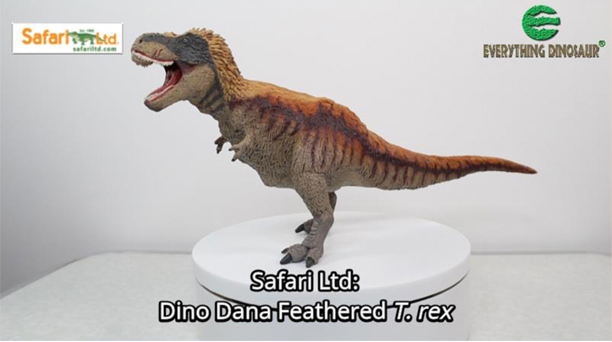
Dino Dana feathered T. rex video showcase.

The Dino Dana feathered T. rex video showcase titles.  A feathered T. rex.

Picture credit: Everything Dinosaur

The image (above) shows the Dino Dana feathered T. rex figure.

To view this range: Wild Safari Prehistoric World.

The research has generated some surprising headlines, looks like many media outlets have got into a bit of a flap:

“Feather furore: T. rex may not have been fluffy after all, skin study suggests” – The Guardian.

“Tyrannosaurus rex had scaly skin:  Here are the controversial reasons why scientists think the dinosaur was NOT covered in feathers” – Mail Online

“Jurassic Park may have been right about the T-rex after all” – Silicon Republic

“Here’s what it would feel like to pet a T. Rex” – National Geographic

Some quick points:

  • If you publish a story that features Tyrannosaurus rex lots of media outlets are likely to cover it.
  • You can expect some sensational headlines.
  • Expect numerous faux pas when it comes to the “Tyrant Lizard King” – rapped knuckles for Silicon Republic and National Geographic!  No hyphen in T-rex, no capital letter for the trivial name etc.

What Does the Study Show?

The research team led by Dr Phil Bell (University of New England, New South Wales, Australia), examined the fossilised skin impressions associated with a partial skull and postcranial material of a Tyrannosaurus rex specimen “Wyrex” from the Hell Creek Formation of Montana.  These fossils are part of the vertebrate fossil collection at the Houston Museum of Natural Science, hence one of the co-authors, Robert T. Bakker’s (curator of palaeontology at the Houston museum), involvement in the study.

The specimen represents around 30% of an entire skeleton, it was excavated from upper Maastrichtian strata near the town of Baker (Montana), in 2003 and it was formerly part of the Black Hills Institute fossil collection (BHI 6230), hence the participation in the study by Pete Larson (Black Hills Institute of Geological Research, South Dakota).  The gracile form of the skeleton suggests that “Wyrex” was male.

Preserved Skin Impression on the Neck of “Wyrex”
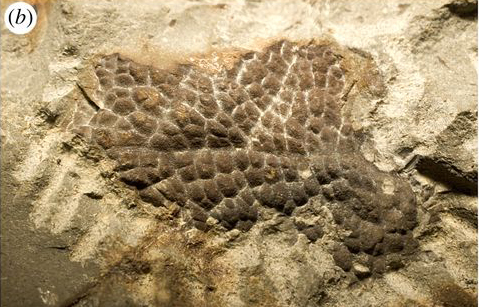
Tyrannosaurus rex skin impression.

Preserved integument from the neck (b) of T. rex specimen HMNS 2006.1743.01

Picture credit: Biology Letters

“Wyrex” is Special

“Wyrex” is special, as in association with the fossilised bones and teeth, several patches of the integument are preserved as impressions.  These impressions represent skin from the neck, the pelvic area and from the tail.  The tail skin impressions are the most numerous, but all of them combined do not represent a very large part of the surface area of a T. rex.  The patches are very small ranging in size from less than a postage stamp in area to an impression of approximately 30 square centimetres, a tail skin impression that that would have covered less than a third of the screen on an average mobile phone.  Although these impressions are very small, any form of integument preservation is remarkable and they have provided an invaluable insight.

Integument of Tyrannosaurus rex (HMNS 2006.1743.01)
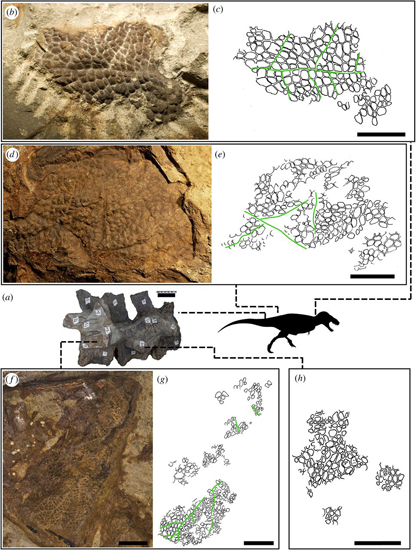
The extent of the skin impressions.

The extent of the skin impressions on the “Wyrex” specimen.

Picture credit: Biology Letters

Skin Impressions on Tyrannosaurus rex Fossil

The picture above shows impressions and where they are located on the T. rex (see silhouette).  Three bones are shown (a), they are bones from near the base of the tail (caudal vertebrae 6-8) which are associated with skin impressions (f), (g) and (h).  Integument from the neck (b, c) and from the ilium (pelvis) in (d, e).  The line drawings show the great variation in the size and shape of the scales.  The researchers highlight the variety of the scales, some are elliptical, some are elongated, whilst others are irregular six-sided polygons.

Note the scale bars, in a lot of the media coverage, the actual size of the impressions has not been reported, the scale bars in the picture above:

(a) = 10 centimetres, (b-e) = 5 millimetres and (f-h) = 10 millimetres

Not Just Tyrannosaurus rex Skin in the Study

To the north of Montana, lies the Canadian Province of Alberta.  Geography lesson over, but noting the location of Montana is significant, as scientists from the University of Alberta and the Royal Tyrrell Museum (also in Alberta), have played a part in this research.  Illustrious figures from the world of palaeontology such as Professor Phil Currie and Scott Persons (University of Alberta) and Darren Tanke (Royal Tyrrell Museum).  These luminaries along with Nicolás Campione (Uppsala University, Sweden), have helped compile a new data set plotting tyrannosauroid integument against body size.

This study looked at fossil skin impressions from a number of other Late Cretaceous relatives of T. rex, monsters such as Albertosaurus, Gorgosaurus, Daspletosaurus, all from North America, plus Tarbosaurus from Asia.

The Late Cretaceous Daspletosaurus (Fossils found in Montana and Alberta)
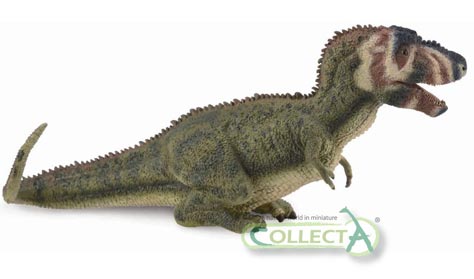
A sitting Daspletosaurus.

The fearsome tyrannosaurid Daspletosaurus.

Picture credit: Everything Dinosaur

The model (above) is the CollectA Prehistoric Life Daspletosaurus.

To view this model range: CollectA Prehistoric Life Replicas.

Large-bodied Forms had Scaly Skin

The research team conclude that these large-bodied forms possesses scaly, reptilian-like skin.  By mapping integument against body size against the tyrannosauroids, a more extensive data set than just the Tyrannosauridae family, the team postulate that large body-size evolved two times in the evolutionary history of this substantial group.  Early tyrannosauroids such as Yutyrannus (Y. huali), which was feathered, was part of one branch of the tyrannosauroids that became giants and gigantism occurred again in later tyrannosaurids such as T. rex, Gorgosaurus, Albertosaurus et al.

The data suggests that shaggy, feathery coats as found in some early tyrannosauroids, were lost by the Albian faunal stage (around 112 million years ago).  Later tyrannosaurs, those that were the ancestors of the very last members of the Tyrannosauridae to evolve, did not have feathery coats.

 Yutyrannus Roamed Northern China 125 Million Years Ago
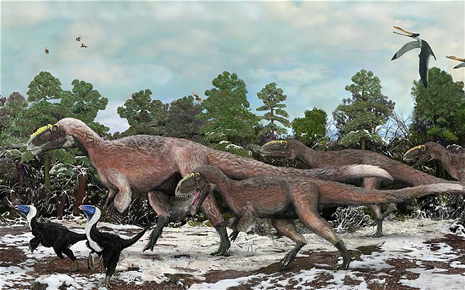
A flock of Yutyrannus.

Giant theropod with Feathers from Liaoning Province

Picture credit: Brian Choo

To read an article about the discovery of Yutyrannus hualiOne Tonne Feathered Tyrannosaur.

Yutyrannus – A Tyrannosaur Game Changer

The discovery of a large (up to nine metres long and weighing 1.4 Tonnes), tyrannosaur provided evidence that giant theropods could have been covered in a shaggy coat.  Prior to the description of Y. huali (the name means beautiful feathered tyrant), back in 2012, the only tyrannosaurs discovered with proto-feathers were much smaller animals, dinosaurs such as Dilong, (D. paradoxus), which also roamed China.  It had been thought that smaller tyrannosaurs, with their warm-blooded metabolisms evolved feathers to help keep their bodies insulated.  However, here was a much larger dinosaur, one that was also covered in feathers.

In this new research, the scientists conclude that the environment that Late Cretaceous giants such as Albertosaurus and T. rex lived in had a similar climate to the environment that Yutyrannus lived in millions of years before.  They discount the idea that the big Late Cretaceous tyrannosaurs had feathers to keep them warm.  The larger the animal, the smaller the surface area compared to their volume and therefore big creatures tend to be better at retaining heat than smaller ones.  In the paper, it is argued that a big, thick coat of feathers may have been a real hindrance to a Tyrannosaurus rex, as its active lifestyle could have given it serious problems with over-heating.

A Close View of the Skin Impression over the Pelvic Area (Ilium) of T. rex
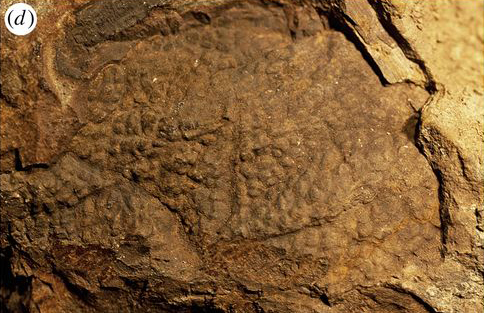
Scales on a T. rex.

T. rex integumentary covering over the ilium.

Picture credit: Biology Letters

Tyrannosauroid versus Tyrannosauridae

The assessment of these scale impressions along with the analysis of tyrannosauroid integument against body size does not necessarily mean that T. rex was definitely covered in scaly skin.  This new research may cast doubt on the idea of an adult, Late Cretaceous tyrannosaur looking like a giant chicken, but it is important to note that the researchers comment that dinosaurs such as Albertosaurus, Gorgosaurus and T. rex may have had feathers on those parts of the their body which are not represented by skin impressions in the fossil record – on their backs, or around the top of the head for example, hence the partially feathered Tyrannosaurus rex image featured in this article.

As juveniles, having an insulating covering of downy feathers does make anatomical sense.  The idea that members of the Tyrannosauridae may have had feathers at some stage of their lives cannot be discounted in the same way as that stating that T. rex may have had feathers on some parts of the body cannot be discounted as we lack the fossil evidence to disprove this statement.

The scientists do state that whilst more basal members of the Tyrannosauroidea may have had feathers, later more derived tyrannosaurs, those animals within the family Tyrannosauridae probably did not.   The key word to note is “probably”.

Let’s quickly explain what this means.

An Ancient Lineage of Dinosaurs

The tyrannosaurs are a very ancient lineage of dinosaurs, they evolved in the Jurassic and persisted right up until the Cretaceous mass extinction event.  The clade Tyrannosauroidea represents the family Tyrannosauridae, to which Albertosaurus, Tarbosaurus, Gorgosaurus, Daspletosaurus and T. rex are part, along with more basal, earlier tyrannosaurs.

Tyrannosauroids and Tyrannosauridae Explained
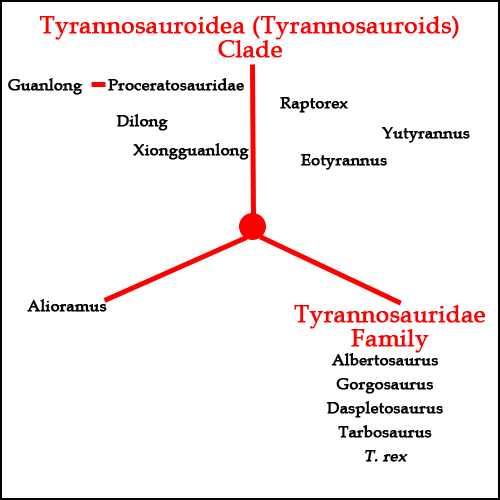
Tyrannosauroids and Tyrannosauridae members.

The difference between the Tyrannosauroidea and the Tyrannosauridae.

Picture credit: Everything Dinosaur

In the simplified diagram above, the Tyrannosauridae family is shown as being a part of the larger Tyrannosauroidea clade.  Some well-known examples of the Tyrannosauroidea clade as well as members of the Tyrannosauridae family are listed.

The Preservation Factor

Only in very exceptional circumstances can delicate feathers and proto-feathers be preserved.  Tough skin has a better preservation potential than filamentous feathers that formed a shaggy coat.  Feathers could have been present in members of the Tyrannosauridae, but they simply have not been preserved, so we have no evidence of their existence. Experiments revealing how the corpses of birds decay may help palaeontologists to better understand what happens to feathers after death and their likelihood of being preserved.

Conclusions

In what is a thought provoking and well-argued piece, the scientists comment that their findings reveal significant changes within the integument of tyrannosauroids, especially when compared to skin impressions of later members of the Tyrannosauridae.  These changes in body coverings require better understanding and further evidence to help palaeontologists to explain them.  The unambiguous loss of extensive body coverings in the Tyrannosauridae merits further discussion.

To mark the publication of the Biology Letters article, we cooked chicken.  We left the skin on and from the picture below, you can see the skin but there are no signs of the feathers that would have covered parts of the bird.  We suspect that this debate over the appearance of more derived tyrannosaurs is going to rumble on.

Commemorating the Publication with a Chicken Dish
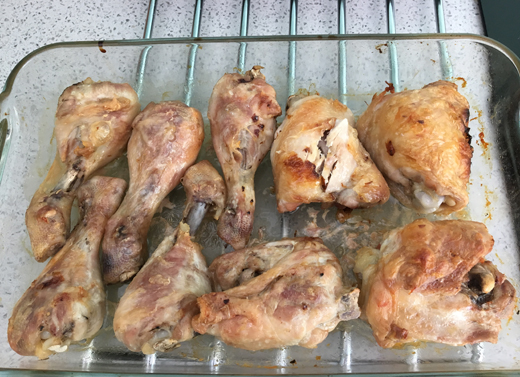
Cooked chicken showing the skin.

Cooked chicken, you can see the skin but not much evidence of feathers.

Picture credit: Everything Dinosaur

Which Do You Prefer Feathered or Non-Feathered?
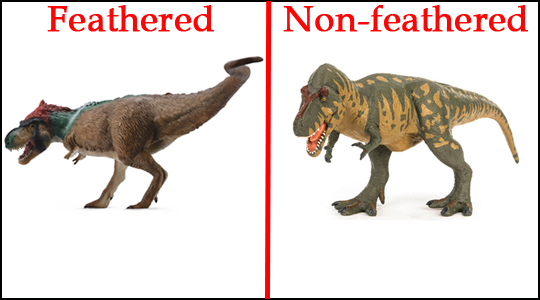
Did T. rex have feathers?

Which do you prefer a feathered or a non-feathered T. rex?

The scientific paper: “Tyrannosauroid Integument Reveals Conflicting Patterns of Gigantism and Feather Evolution”, by Phil R. Bell, Nicolás E. Campione, W. Scott Persons, Philip J. Currie, Peter L. Larson, Darren H. Tanke, Robert T. Bakker published in the Royal Society Biology Letters.

Visit the Everything Dinosaur website: Everything Dinosaur.
6 06, 2017

Foul-mouthed Study – Variation in Duck and Goose Beaks

By |2023-07-25T07:25:20+01:00June 6th, 2017|Categories: Animal News Stories, Dinosaur and Prehistoric Animal News Stories, Dinosaur Fans, Main Page|0 Comments

Diet Shaped the Evolution of the Beaks of Ducks and Geese

For Aaron Olsen, a walk in a park to see the ducks and other birds serenely swimming on the local pond has added significance.  Ducks and geese, common waterfowl that we are all familiar with, have fascinated the postdoctoral researcher at Brown University (Rhode Island, USA).  For Aaron, seeing gaggles of geese and rafts of ducks has led him to question how such a myriad of different beak forms have evolved within the waterfowl clade (Anseriformes).  Publishing in the academic journal “Functional Ecology”, the scientist has concluded that different diets and different feeding strategies are the main drivers of beak shape.

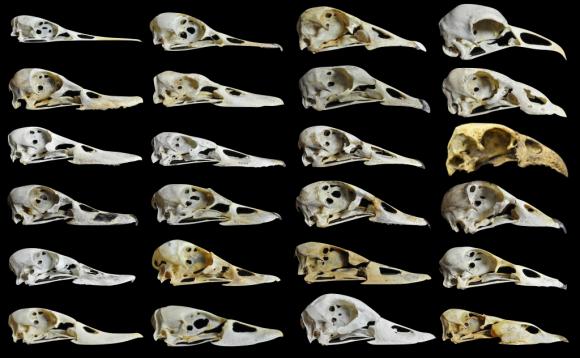
The Beaks of Ducks and Geese Come in All Shapes and Sizes

Anseriformes - skulls variation due to dietary preferences.

From left to right a gradient of duck-to-goose-skulls. Research shows that waterfowl beaks vary primarily because of differences in diet and feeding behaviour.

Picture credit: Aaron Olsen

Ancient Anseriformes (Prehistoric Ducks and Geese)

The analysis of the relationship between beak shape and diet amongst waterfowl shows that feeding is most likely to be the major influence on bill shape, but it also suggests that the early members of the Anseriformes were more like ducks than geese.  The main evolutionary driver when it comes to the shape of the beaks of waterfowl is their diet.

Commenting on his research, Aaron Olsen, of the Department of Ecology and Evolutionary Biology at Brown University stated:

“This is the most comprehensive look to date at the relationship between diet and beak shape.”

The oldest member of the Anseriformes is Vegavis (V. iaai), fossils of which have been found in Upper Cretaceous rocks (Maastrichtian faunal stage) of Antarctica.  Waterfowl, the ancestors of today’s ducks and geese were present some 66 million years ago, although their evolutionary roots probably go back further into the Mesozoic.

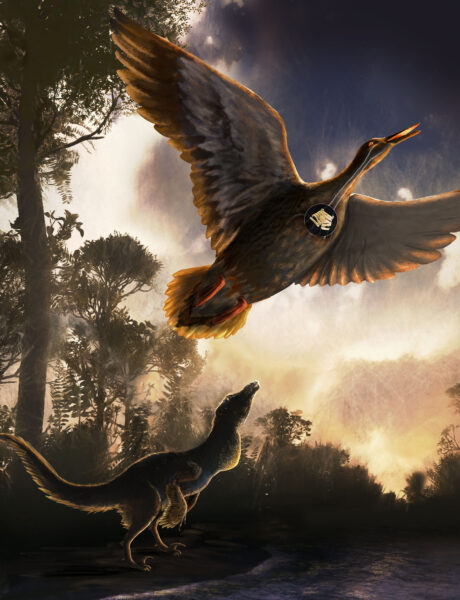
Vegavis of Late Cretaceous Antarctica

The vocalisation of dinosaurs and birds.

Vegavis takes off whilst a male theropod dinosaur vocalises close by.

Picture credit: Nicole Fuller/Sayo Art for University of Texas at Austin

Scientists have identified the vocalisation organ of Vegavis, this bird may have made a honking sound.

To read more about this research: Ancient Bird Box Sheds Light on the Sounds of Early Anseriformes.

Waterfowl – Different Beak Shapes

Whilst working at the University of Chicago and the nearby Field Museum of Natural History, Aaron set out to explore the reasons why waterfowl have such differently shaped beaks.  He suspected that diet and feeding behaviour might play a pivotal role in beak morphology, but rather than compare diets and feeding strategies he undertook a detailed three-dimensional analysis of bird skulls and their bills.  He then cross-referenced his findings with literature on the diet of each bird.  A total of 136 specimens were involved in the study, covering 46 genera and 51 species.

As well as looking at living species, the study included an analysis of the recently extinct, flightless duck Thambetochen chauliodous of the larger Hawaiian Islands (except Hawaii), which prior to the arrival of domesticated animals, were the main browsers of vegetation on the isolated archipelago.  The research also involved an analysis of the skull and beak of a much older water bird – Presbyornis spp. from the Palaeocene and the Eocene Epochs.

Extant Goose Skull and Extant Duck Skull Compared to the Ancient Anseriform Presbyornis

Comparing duck and goose skulls.

A Cape Barren goose skull (top) has a very different beak than that of a freckled duck (middle), which does resemble the fossil skull of Presbyornis (bottom).

Mathematical Analysis – Plotting Beak Evolution

Data analysis revealed that there was a strong correlation between dietary preferences and beak shape.  Ducks tend to have relatively long, wide-tipped beaks that can accommodate a lot of water. Ducks feed by filtering out food such as invertebrates and plant seeds from water, whereas geese evolved to feed on the leaves and roots of plants (although some still filter feed).  Most geese have shorter, narrower beaks better designed for browsing on plants.

Dr Olsen contends that the correlation between beak morphology and diet is so strong that other roles for beaks, such as preening and cooling would have had little influence, although he does not rule out these other functions having a role in the evolution of beak shape.

First Ducks then Geese

In a review of the scientific literature, Aaron, a specialist in anseriform research, suggests that the early ancestors of extant ducks, geese and other related waterfowl, were very duck-like.  Geese-like beaks evolved later, evolving several times in several places.  In summary, Dr Olsen concludes a duck-like beak is ancestral for most waterfowl with several independent transitions to a more goose-like beak shape occurring over time.

Next time you are in the park, take a look at the ducks and other water birds, the ancestors of these birds lived alongside the dinosaurs.  It’s also worth noting that ducks and geese are technically dinosaurs too, after all, they are all members of the Theropoda.

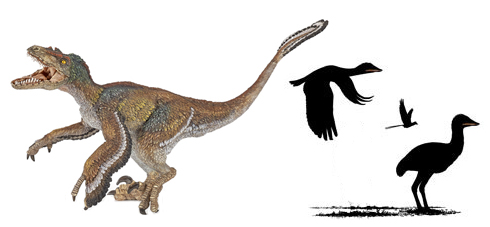
Non-Avian Dinosaurs and Avian Dinosaurs (Birds)

Dinosaurs and birds.

Avian and non-avian dinosaurs.

Picture credit: Everything Dinosaur

The scientific paper: “Feeding Ecology is the Primary Driver of Beak Shape Diversification in Waterfowl”, by Aaron M. Olsen published in Functional Ecology.

Visit the Everything Dinosaur website: Everything Dinosaur.
5 06, 2017

A Couple of CollectA Video Reviews

By |2023-07-25T07:14:47+01:00June 5th, 2017|Categories: Dinosaur Fans, Everything Dinosaur Products, Everything Dinosaur videos, Main Page, Product Reviews|0 Comments

CollectA Gigantspinosaurus and CollectA Excalibosaurus Video Reviews

Everything Dinosaur takes a look at two CollectA prehistoric animal model video reviews.

Visit Everything Dinosaur’s website: Everything Dinosaur.

Matthew the Dinosaur King’s YouTube channel has nearly 150 dinosaur and prehistoric animal themed videos on it.  In the last few days, two new videos have been posted, both reviews of new for 2017 CollectA Prehistoric Life models.  Matthew has provided a video review of the Chinese basal stegosaurid Gigantspinosaurus and the English Jurassic marine reptile Excalibosaurus and both videos are extremely informative.

Matthew the Dinosaur King Presents a Video Review of the CollectA Gigantspinosaurus

Video credit: Matthew the Dinosaur King (YouTube channel)

Matthew’s YouTube channel has over 6,000 subscribers (that’s awesome) and we at Everything Dinosaur enjoy seeing the various prehistoric animal reviews and other items that the enthusiastic channel owner posts up.  It is a great channel for fans of dinosaurs and dinosaur model collecting.

The CollectA Gigantspinosaurus Model (CollectA Prehistoric Life Series)

In the Gigantspinosaurus video, which lasts a little over five minutes, viewers are given the opportunity to have a really good look at this exotic member of the Thyreophora.  It is one of a number of armoured dinosaurs that have been added to the CollectA Prehistoric Life model series over the years, it is good to see such a wide variety of armoured dinosaurs in the range.

The narrator pays special attention to those amazing parascapular spines, although the anatomical position of these huge “comma-like” spines is still debated and their exact purpose open to some speculation, most palaeontologists would agree with the way in which these structures are portrayed in the CollectA model.  All praise to the video maker for taking time out to show the detail on the small head, including on the inside of the mouth.   In the video, the colour scheme is commented upon, like the narrator, we at Everything Dinosaur like the choice of colours.

The CollectA Excalibosaurus Marine Reptile Model

The CollectA Excalibosaurus Video Review

Video credit: Matthew the Dinosaur King (YouTube channel)

In this short video (duration 3:43), the narrator provides information about when this bizarre marine reptile lived, how big it was and where its fossils have been found.  The CollectA Excalibosaurus model is then reviewed with the model being shown at lots of different angles so that would-be collectors can get a good look at this replica.

The CollectA Deluxe Pliosaurus

Towards the end of the video the CollectA Deluxe Pliosaurus model is introduced to provide a size comparison.  It’s helpful when various models are compared side by side, although for the Excalibosaurus in this case, it does not end well, with the narrator placing the figure in the jaws of the giant Pliosaurus.

To view the CollectA Deluxe model range: CollectA Deluxe Prehistoric Animal Model Range.

Videos like these permit fans of prehistoric animal models and figures to discuss their collection, to highlight the details in certain models and to inform and educate the viewers about what scientists have deduced about these long extinct animals from their fossils.  We urge our blog readers to checkout Matthew the Dinosaur King’s YouTube channel.

To view the CollectA Gigantspinosaurus and the CollectA Excalibosaurus figures and the rest of the CollectA Prehistoric Life model range: CollectA Prehistoric Life models

4 06, 2017

Thumbing Through the Amazing Iguanodontia

By |2024-05-09T08:21:25+01:00June 4th, 2017|Categories: Dinosaur and Prehistoric Animal News Stories, Dinosaur Fans, Main Page|0 Comments

Sorting Out Eolambia caroljonesa

The Cedar Mountain Formation of the western United States has yielded a number of important dinosaur discoveries, helping to map the megafauna of America during the Cretaceous.  Iconic dinosaurs such as the armoured herbivore Gastonia and the “raptors” Deinonychus and Utahraptor are known from the various members that make up the Cedar Mountain Formation.  However, the most abundant dinosaurs in terms of the genera named are ornithopods and a team of scientists including researchers from the Field Museum (Chicago), have published a new paper helping to identify where, in the dinosaur family tree, one ornithopod – Eolambia caroljonesa should be placed.

An Ornithopod Dinosaur Riddle

The youngest member of the Cedar Mountain Formation (a member being a distinct, identifiable portion of a rock formation that can be identified as a stratigraphic unit), is the Mussentuchit Member and the most common dinosaur fossils associated with these strata relate to Eolambia caroljonesa.

This herbivorous dinosaur is known from quite extensive fossils including skull material and three bonebeds that contain the jumbled up remains of a number of juveniles.  Named by the famous American palaeontologist James Kirkland in 1998, Eolambia means “early or dawn Lambeosaur”, reflecting the proposed taxonomic position of this dinosaur as being a basal member of the lambeosaurines (crested duck-billed dinosaurs).

Eolambia caroljonesa

Over the last two decades, since the discovery and naming of Eolambia, many more iguanodontian dinosaurs have been named.  This has helped palaeontologists to better understand the evolution of ornithopods from the non-hadrosaurid forms known from the Early Cretaceous to the duck-billed dinosaurs which were prevalent during the Campanian to Maastrichtian faunal stages of the Cretaceous (Late Cretaceous).

Writing in the on-line academic journal PLOS One, the researchers describe some further postcranial remains of Eolambia from the Mussentuchit Member.  The fossils represent a sub-adult animal and as a result, these bones are more helpful when it comes to establishing autapomorphies (unique features), that help to establish where in the dinosaur family tree Eolambia should be nested.

The Eolambia Postcranial Fossils Laid Out in an Approximate Life Position

Eolambia fossils.

Eolambia postcranial fossil material laid out in approximate life position.

Picture credit: PLOS One with additional annotation by Everything Dinosaur

Calculating the Size of Eolambia caroljonesa

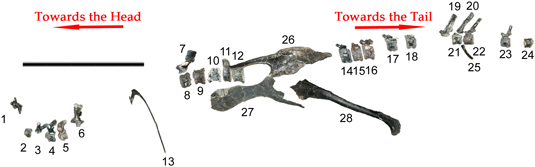
The picture above shows the newly described postcranial fossil material laid out in approximate skeletal position, using the better known iguanodontid Mantellisaurus atherfieldensis as a template.  The scale bar equals one metre.  One of the outcomes of this new study is that the research team will be able to provide a better estimate of the true size of Eolambia.

When first named by Kirkland, this dinosaur was estimated to be around eight to nine metres in length.

However, Gregory S. Paul (2010), suggested that Eolambia was considerably smaller with a total body length of around six metres.  Having to rely on juvenile material makes estimating the adult size of a dinosaur very difficult.  The ilium (number 26 in the picture above), measures a fraction under seventy-one centimetres in length.  Everything Dinosaur team members have examined their data files and compared this measurement to the size of ilia from other iguanodontids.  For example, the ilium of the Spanish iguanodontid Delapparentia turolensis measures seventy-eight centimetres long.  As Delapparentia is estimated to have been up to ten metres in length, it is likely that a fully-grown Eolambia could perhaps measure around nine metres from nose to tail.

Comparing Eolambia Pelvic Material (E. caroljonesa)

Eolambia pelvic fossils.

Eolambia pelvic material (sub-adult specimen compared to juvenile material).

Picture credit: PLOS One

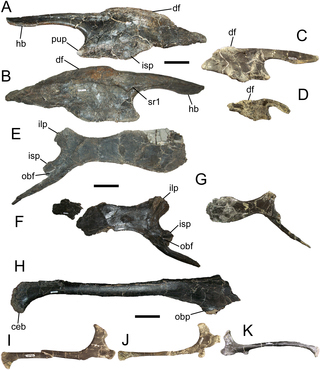
The picture above shows the sub-adult pelvic material representing the new specimen FMNH PR 3847 (A, B, E, F, H and K) compared to other known fossil material including juvenile remains (C, D, G, I and J).  The scale bar equals ten centimetres.  Histological analysis from a sample of rib bone indicates that this dinosaur was between eight to nine years of age when it died.

Eolambia in the Dinosaur Family Tree

Specimen FMNH PR 3847 provides new anatomical detail regarding the back bone and pelvic girdle of E. caroljonesa.  As the fossils come from a sub-adult, the scientists have been more confident in the phylogenetic assessment of where within the Ornithopoda Eolambia should be nested.  The researchers conclude that this dinosaur was only very distantly related to the lambeosaurines and that it was a basal hadrosauromorph closely related to Protohadros byrdi, fossils of which come from similarly aged rocks (Cenomanian faunal stage), from Texas (Woodbine Formation).

An Illustration of Eolambia

Eolambia illustration.

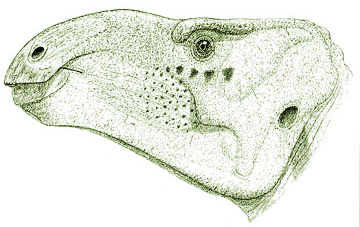
An illustration of the hadrosauromorph Eolambia.

Signs of a Predatory Dinosaur

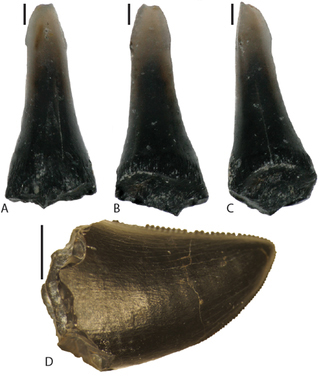
The fossils were deposited in strata that was formed in a crevasse splay feature – sediment deposited when a stream breaks its banks and deposits sediment on the flood plan.  Along with the dinosaur bones the scientists identified a large number of crocodylomorph teeth and small bones and a tooth from a gar (fish).  Intriguingly, the team also found broken teeth from a large, meat-eating dinosaur.  Although, the exact taxon cannot be pinned down, the scientists postulate that these teeth could have come from Siats meekerorum, an apex predator known from similar aged strata in Utah.

Teeth Found in Association with the Eolambia Material

Teeth found in association with Eolambia fossil material.

Views of a tooth from a gar (fish) and below a theropod tooth Siats meekerorum?

Picture credit: PLOS One

The scale bar for the single gar tooth (several views) is 0.2 centimetres, the scale bar for the theropod tooth is 0.5 centimetres.

The Eolambia species name honours Carole Jones who, along with her husband Ramal Jones, discovered the fossil site from which the first fossils of this dinosaur including the holotype material was collected.

For dinosaur models and prehistoric animal replicas: Dinosaur and Prehistoric Animal Models.

3 06, 2017

Everything Dinosaur Achieves a Remarkable 100% FEEFO Service Rating

By |2024-05-09T08:21:46+01:00June 3rd, 2017|Categories: Everything Dinosaur News and Updates, Main Page, Press Releases|0 Comments

Everything Dinosaur Sets Standard with Customer Service

Everything Dinosaur has reached the milestone of achieving 100 independent customer reviews on FEEFO with a service rating of 100%.  We would like to take this opportunity to thank all our customers who have reviewed our products and customer service on FEEFO, we are truly humbled to have received the feedback and to be able to set and continue to set such a high standard.

Everything Dinosaur Rated 100% for Customer Service

100% service rating (Everything Dinosaur).

Everything Dinosaur service rating 100%.

Picture credit: Everything Dinosaur

Everything Dinosaur and Feefo Ratings

When Everything Dinosaur launched their new website Everything Dinosaur, on the 23rd of February, one of many innovations added to the site was the FEEFO feedback section.  FEEFO collects genuine reviews from customers, giving those people who have purchased from us the opportunity to provide feedback on how we dealt with their order.  To date, we have received 119 service reviews and a staggering 225 product reviews, not too bad considering the FEEFO section has been operating for just over a hundred days!

FEEFO Rates Everything Dinosaur 100%

Feefo service rating for Everything Dinosaur 100%.

Everything Dinosaur’s current service rating (June 2017) = 100%.

Picture credit: Everything Dinosaur

FEEFO believe that dedication to excellent service should be celebrated.  The company offers a number of awards, for example, the independent Trusted Merchant accreditation.  If a business receives a hundred reviews within a year, with a service rating of 95% and over, that company has earned FEEFO’s most prestigious award the “Gold Trusted Merchant Award”.

Annual Awards

Trouble is, FEEFO’s marketing department sends out awards just once a year (March), so companies like Everything Dinosaur, which started gathering reviews late February, did not have enough time to collect the number of reviews required to win the award in 2017.  However, we think it is important to acknowledge the feedback from our customers, so today we are posting up this short article to celebrate reaching this landmark.

In addition, we have created our own badge to commemorate this achievement.

Everything Dinosaur and FEEFO

Everything Dinosaur and FEEFO customer service.

Everything Dinosaur has a 100% FEEFO service rating.

Picture credit: Everything Dinosaur

To view Everything Dinosaur’s page on the FEEFO website: Everything Dinosaur on FEEFO.

FEEFO Ratings Are Prominently Displayed on the Everything Dinosaur Website

Everything Dinosaur customer ratings.

Feefo ratings on the Everything Dinosaur website.

Picture credit: Everything Dinosaur

Visit the award-winning Everything Dinosaur website: Everything Dinosaur.

2 06, 2017

Montana’s First Definitive Camarasaurus

By |2023-07-25T06:27:47+01:00June 2nd, 2017|Categories: Dinosaur and Prehistoric Animal News Stories, Dinosaur Fans, Main Page|0 Comments

The Northernmost Camarasaurus

Scientists have announced the discovery of a Camarasaurus specimen from the state of Montana. Dinosaurs from Montana are nothing new, however, this is the first definitive evidence that this sauropod ranged as far north as the Treasure State.

Writing in the on-line academic journal PLOS One, the researchers, Cary Woodruff, the Director of Palaeontology at the Great Plains Dinosaur Museum, (Malta, Montana) and Dr John Foster (Museum of Moab, Utah) describe the partial, articulated remains of a Camarasaurus specimen from Morrison Formation exposures located in the Little Snowy Mountains, Fergus County, Montana.  The scientists conclude that further exploration of Upper Jurassic sediments may yield further dinosaur fossil material, helping palaeontologists to learn more about the ecosystem and the dinosaur fauna within it that lived in more northerly latitudes of North America.

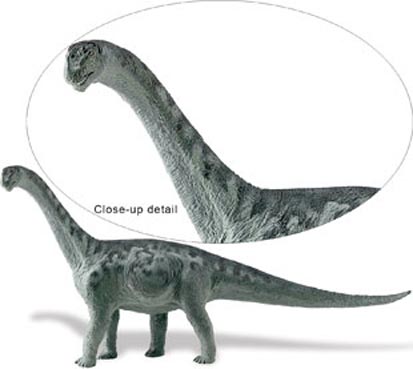
An Illustration of the Late Jurassic Sauropod Camarasaurus

Camarasaurus dinosaur model.

Camarasaurus dinosaur model.

The Curious Camarasaurus

The Camarasaurus genus was erected by the famous American palaeontologist Edward Drinker Cope in 1877.  Numerous fossil specimens have been collected from the Morrison Formation of the western United States, in fact Camarasaurus is represented in the Morrison Formation by more than 530 specimens, it is one of the most studied and therefore, best-known sauropods in the world.  Although it shared the Late Jurassic habitat of western North America with a number of other long-necked dinosaurs, animals such as Diplodocus, Apatosaurus, Brontosaurus and Brachiosaurus, it is by far, the most abundant sauropod taxon known from the Morrison Formation.  It also appears to have had one of the highest population densities amongst the large herbivorous dinosaurs during the Jurassic.

At the moment, a total of four species are recognised:

  1. C. lentus named in 1889
  2. C. grandis named in 1877
  3. C. supremus named in 1877
  4. C. lewisi named in 1988

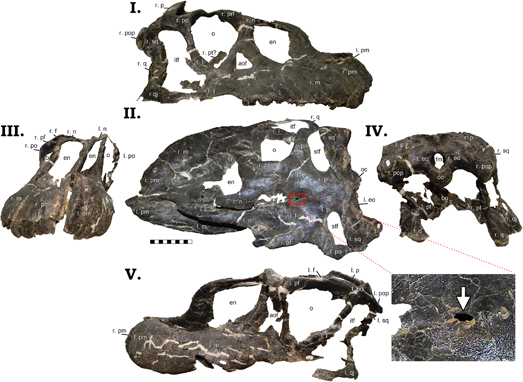
The vast majority of Camarasaurus fossil remains (82%) are only identifiable down to the genus level.  The Montana remains consisting of a nearly complete skull, articulated neck vertebra, rib fragments, part of the shoulder girdle and limb bones cannot be assigned to a species, but enough of the skeleton has been recovered to confirm the Camarasaurus diagnosis.

Views of the Skull Material of the Montana Camarasaurus (GPDM 220)

Camarasaurus skull material.

Views of the skull material of the Camarasaurus found in Montana.

Picture credit: PLOS One

The picture above shows various views of the partial Camarasaurus skull (I) – right lateral view, dorsal view (II), viewed from the front (III), viewed from the rear (IV) and left lateral view (V).

Camarasaurus Specimen Claims to Fame

The fossils had been known about for some years, and the dinosaur had been nick-named “Ralph” in honour of the rancher’s land, on which the dinosaur was discovered.  Collecting began in 2005, although it has taken some years to fully prepare the specimen.  GPDM 220 may represent the most northernmost sauropod fossils yet found in the Morrison Formation.  The fossils may also represent the most northerly sauropod remains found in North America.

Scrappy fossil material ascribed to sauropods in general and Camarasaurus in specific have been found in Montana before, but this is the first time, as far as we at Everything Dinosaur are aware, that the fossils have been substantial enough to permit identification down to the genus level.

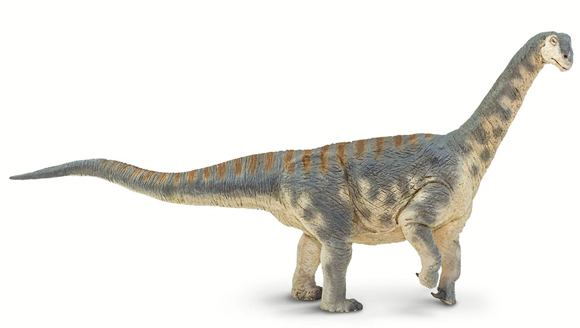
A Model of a Camarasaurus

Wild Safari Prehistoric World Camarasaurus dinosaur model.

The award-winning Wild Safari Prehistoric World Camarasaurus dinosaur model.

 Although relatively small when compared to Camarasaurus remains from Wyoming and Utah, the bones represent an adult animal, histological analysis of a core taken from the femur and an analysis of a rib bone, indicates that this dinosaur was at least thirty years old when it died (possibly older, perhaps thirty-five).  The palaeontologists speculate that Montana was not an ideal habitat for Camarasaurus, this may explain the relative small size of the specimen.  A firmer conclusion cannot be made due to the paucity of Camarasaurus specimens from northerly latitudes and the potential for under-sampling of dinosaur fossil remains in unfavourable ecosystems.

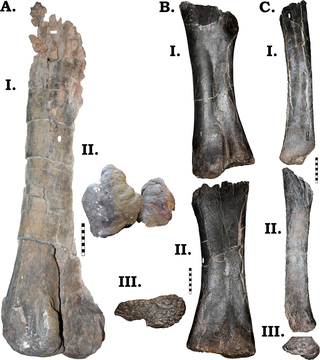
Limb Bones from the Montana Camarasaurus

Montana Camarasaurus limb elements.

Limb elements for the Camarasaurus (Montana specimen).

Picture credit: PLOS One

The picture above shows various limb elements associated with the skeleton.  An incomplete left femur (A) is shown in a posterior view (I) and distal view (II).  A partial right tibia is shown (B) in (I) anterior view, (II) posterior view and (III) distal view, whereas, (C) represents an incomplete left fibula in (I) anterior, (II) posterior and (III) distal view).  The scale bar = ten centimetres.

Hinting at More Camarasaurus Fossil Discoveries to Come

The research team are confident that further examination of Morrison Formation exposures in Montana will yield a lot more dinosaur fossil remains.  For example, the Camarasaurus fossil material was found in association with an as yet, undescribed stegosaur as well as two theropod teeth.

A spokesperson from Everything Dinosaur stated:

“The publication of this scientific paper goes to show, that the Morrison Formation, particularly those extensive exposures outside of Wyoming and Utah, can still surprise palaeontologists.  Further fieldwork will undoubtedly reveal several more specimens from Montana, adding to our knowledge of the dinosaur fauna from more northern parts of the United States in the Late Jurassic.”

Visit the Everything Dinosaur website: Everything Dinosaur.
1 06, 2017

T. rex Protein Shake as New Research Challenges Previous Studies

By |2024-05-09T08:22:34+01:00June 1st, 2017|Categories: Dinosaur and Prehistoric Animal News Stories, Dinosaur Fans, Main Page|0 Comments

Doubt Cast Over Studies that Identified Dinosaur Proteins

One of the most controversial areas of palaeontology, perhaps within the whole of scientific endeavour, is the search for evidence of dinosaur organic remains within the fossil record.  Could “Jurassic Park/Jurassic World” ever become a reality?  In the future, could you see a Stegosaurus in a zoo or a Triceratops in a safari park?  A re-analysis of an experiment carried out a decade ago, that claimed to have identified collagen in the femur of a Tyrannosaurus rex, has cast some serious doubts.

Researchers at the University of Manchester in collaboration with colleagues at the National Museums Scotland, have concluded that the protein sequences identified in the original study did not come from the Late Cretaceous, their source was somewhat more mundane and their discovery has more to do with cross contamination from bones of other animals analysed in the laboratory.

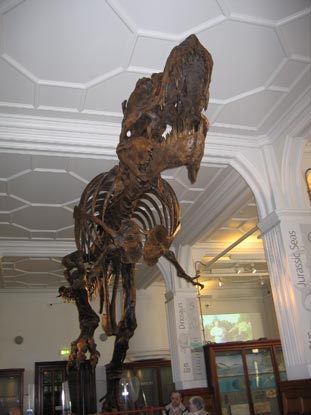
Tyrannosaurid Fossil Material – No Proteins Though

Warm-blooded dinosaurs.

T. rex skeleton on display at Manchester Museum.

Picture credit: Everything Dinosaur

The Search for Dinosaur Proteins

The claim that protein sequences (peptides) had been identified in 68-million-year-old T. rex fossils caused a sensation.  Remnants of organic material could have provided palaeontologists with tangible evidence, that one day, with ever increasing amounts of organic material being discovered, then it might just be possible to create animals reminiscent of these long extinct reptiles.  Prehistoric proteins might well have supplied the first possible glimpse of the steps towards rebuilding dinosaurs.  Think of it as “dinosaur cloning 101”.

To read an article that discusses the consequences of the original T. rex protein study: The Seemingly Impossible – the Hunt for Dino DNA.

The discovery, announced in 2005, was not met with universal acceptance and it caused much debate within the scientific community.  A second study, this time on a duck-billed dinosaur Brachylophosaurus (Brachylophosaurus canadensis), undertaken by the same team identified permineralised blood vessels and further evidence of dinosaur proteins: Ancient Proteins from Duck-billed Dinosaur.  This research was carried out in 2009 and replicated in 2017.  Writing in the “Journal of Proteome Research” scientists from North Carolina State University with colleagues from North-western University and the University of Texas – Austin, repeated the 2009 study and replicated the results – claiming proteins from dinosaur collagen had been found.

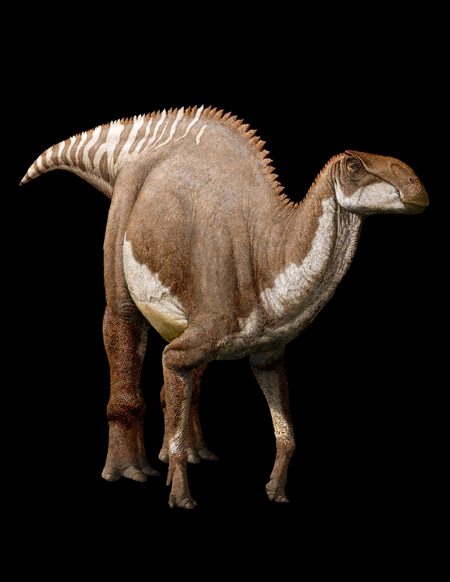
Brachylophosaurus Illustrated

The Late Cretaceous Brachylophosaurus.

Brachylophosaurus illustrated.

Picture credit: Houston Museum of Natural Science

Able to Repeat the Research and Reproduce the Results

One of the main criticisms of these experiments was that it was proving extremely difficult to repeat the work and get the same results.  In addition, preventing contamination of the samples was a challenge, with many scientists casting doubts on the original research, claiming the proteins found were as a result of bacterial contamination.

Dr Mike Buckley (University of Manchester’s School of Earth and Environmental Sciences), an author of the newly published scientific paper in the “Proceedings of the Royal Society B” explained:

“The discovery of proteins in dinosaur bones sent a shockwave around the world, both among scientists and the public.  It appeared that fiction was now being converted to fact through the application of new techniques.”

A team from Manchester University and the National Museums Scotland, led by Dr Buckley set out to explore the possibility of whether the claimed dinosaur peptides could have come from contamination from modern animals, given that ostriches and alligators were used as comparators and controls in the original research.  The scientists analysed samples of bone from three different ostriches and found strong matches to all of the originally reported fossil peptides from both the T. rex and the Brachylophosaurus.

This new study emphasises the need for robust authentication criteria when attempting to identify biomolecular sequence information from truly ancient fossilised remains.

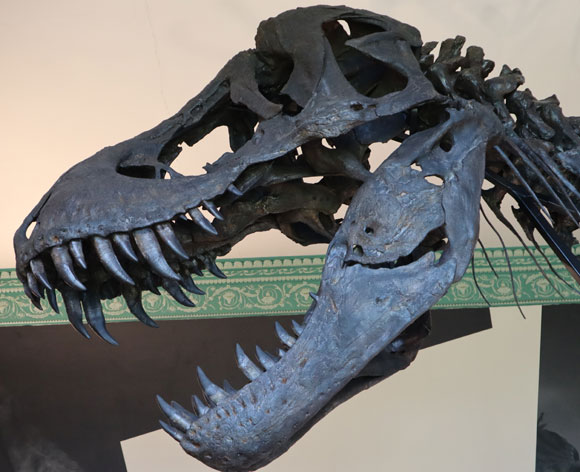
Museums Rather Than Zoos the Best Place to See a Tyrannosaurus rex

Titus the T. rex Skull and Jaws. Dinosaur extinction.

The skull of the T. rex exhibit on display at Wollaton Hall (Nottingham). Picture credit: Everything Dinosaur.

Picture credit: Everything Dinosaur

Dr Buckley stated:

“Our work set out to identify the collagen fingerprints for both ostrich and alligator and was not intending to debunk the previous studies.  However, we soon realised that our results were pulling the rug from beneath the paradigm that collagen might survive the ravages of deep time.”

Can Organic Material Survive for Millions of Years?

The big question is whether or not delicate organic remains can survive for millions of years.  There have been a number of papers published recently that have thrown up some surprising results, for example, back in 2015 Everything Dinosaur reported on the research undertaken at the Imperial College (London), that identified potential organic fibres (collagen) and cellular structures*.  

There is a growing body of evidence to suggest that the one day, we might have a much better understanding of the biology of long extinct creatures.  Microscopic remnants of collagen, a key protein within bone, has been found in several studies.  However, the survival of collagen sequences beyond 3.5 million years old has not been achieved and validated by any other team trying to replicate work carried out.

Co-author of this research and Professor of Natural History at The University of Manchester, Phil Manning, added:

“The fossil record is offering new information on a daily basis through the application of new technology, but we must never forget that when results show us something that we really want to see, that we make sure of our interpretation.  The alleged discovery of protein sequences in dinosaur bones has led many unsuccessful attempts to repeat these remarkable claims.  It seems we were trying to reproduce something that was beyond the current detection limits of our science”.

Experiments Involving the Detection of Minute Quantities of Organic Material Require the Strictest Hygiene Measures

Fossil fragment used to extract ancient DNA

“Flogging a dead horse” to extract DNA.

Picture credit: Dr Orlando

The researchers conclude that the controls used to constrain the evolutionary relationships between extinct and existing organisms have to be completely isolated from the subject of study (i.e. the dinosaur bone), so that the highly sensitive techniques do not pick-up residues of misleading contaminants.  This is leading to a false ceiling for other scientists to achieve, which in reality is highly challenging.  What was being described as dinosaur organic material, may just be the ghostly traces of the other organic material such as the protein sequences from the bird and reptile bones used in the research that are being picked up by the highly sensitive scientific instrumentation.

In conclusion, Dr Buckley stated:

“We are seeing something similar in our study, as to what happened with the ancient DNA world over twenty years ago when the scientific world had to recalibrate their aspirations when it came to the survival of this delicate molecule of life through deep time.  It seems that the idiom that exceptional claims require exceptional evidence remains.”

Regardless of the true nature of the dinosaur peptides, this new study highlights the difficulty of differentiating such sequences with confidence.  The results not only imply that cross-contamination cannot be ruled out, but that appropriate measures to test for the accuracy of the results stated should be further evaluated.

*To read more about the research undertaken by the Imperial College London: Fibres and Cellular Structures Observed in Dinosaur Fossils.

Everything Dinosaur acknowledges the help and support of the University of Manchester in the compilation of this article.

Visit the Everything Dinosaur website: Everything Dinosaur.
31 05, 2017

Oldest Swinger in Town – Torrejonia wilsoni a Remarkable Primate Revealed by New Fossil Discoveries

By |2024-05-09T08:29:32+01:00May 31st, 2017|Categories: Dinosaur and Prehistoric Animal News Stories, Main Page, Palaeontological articles|2 Comments

New Mexico’s Oldest Primate Torrejonia wilsoni

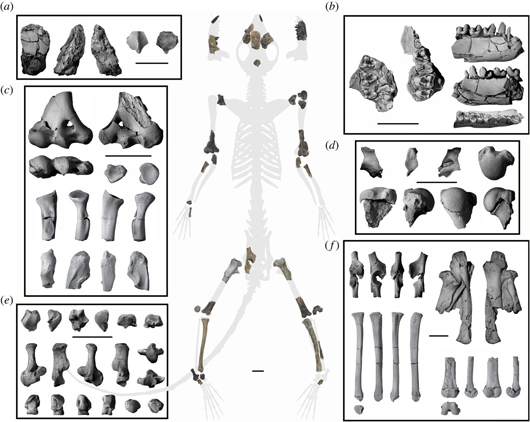
A partial fossilised skeleton of a very ancient ancestor of humans discovered in north-western New Mexico has revealed that the first primates lived in trees and that they were not obligate ground-dwellers.  More complete fossil material shows that the Palaeocene plesiadapiform known as Torrejonia wilsoni was adapted for a life in the trees.  The fossil discovery is important as most of the Palaeocene mammals associated with the first primates (Euprimates) are only known from a handful of bones and isolated teeth.

The Torrejonia wilsoni Fossil Material Indicates an Arboreal Existence

Torrejonia wilsoni fossil material (T. wilsoni).

A skeleton composite of Torrejonia wilsoni (NMMNH P-54500).

Picture credit: Royal Society Open Science

The picture shows illustrations of the fossil material of T. wilsoni (specimen number NMMNH P-54500), with the bones and teeth mapped onto a line drawing of the animal.  Scale bar equals 1 cm.

Box a = elements from the skull

b = parts of the jaws

c = arm bones

d = the shoulder blade (scapula- fragmentary)

e = elements from the astragalus (ankle)

Box f = leg bones

Getting into the Swing of Things Once the Dinosaurs Had Died Out

It may sound surprising, but one of the first groups of mammals to rapidly diversify and to become more specious after the extinction of the dinosaurs were the Euarchonta (tree shrews, colugos and primates).  These creatures have their origins in the Late Cretaceous and with the extinction of the non-avian dinosaurs, within a few million years, a number of new Euarchonta families had evolved.  The sediments that form the Early Palaeocene Nacimiento Formation (San Juan Basin, New Mexico), are one of the most important lithological units for fossils of these small mammals.

A fragmentary skeleton of the plesiadapiform Torrejonia wilsoni found in Torrejonian-aged deposits (NALMA – North American Land Mammal Ages), dating to around 62 million-years-ago, indicates that this animal had an arboreal existence.  Previously, many researchers had proposed that the plesiadapiforms, an extinct group of primitive placental mammals, close to the ancestry of primates, had been terrestrial creatures.  However, unlike most of the fossils associated with this group of mammals, this specimen of T. wilsoni provided scientists with key insights into the animal’s limbs and joints and a subsequent analysis revealed that it would have been at home in the trees.

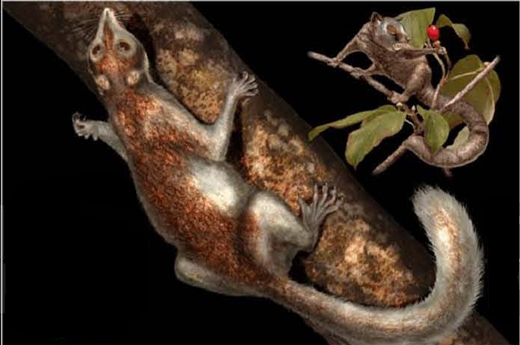
Illustrations of Typical Plesiadapiforms

Illustrations of plesiadapiforms.

Illustrations of plesiadapiforms Plesiadapis cookei (centre) and Carpolestes simpsoni (top right).

Picture credit: DMP (Princeton Field Guild to Prehistoric Mammals)

Torrejonia wilsoni

Dr Thomas Williamson (New Mexico Museum of Natural History and Science), one of the authors of the academic paper published today in the on-line journals of the Royal Society Open Science found the fossil material with his twin sons Ryan and Taylor.  Teeth associated with the skeleton allowed the researchers to identify the fossil material as T. wilsoni, no easy task as the skeleton was found jumbled up and mixed in with two other mammals, a partial skeleton of Acmeodon secans and an almost complete skeleton of Mixodectes pungens.

Lead author of the study, Stephen Chester (University of New York) stated:

“This is the oldest partial skeleton of a plesiadapiform and it shows that they undoubtedly lived in trees.  We now have anatomical evidence from the shoulder, elbow, hip, knee and ankle joints that allows us to assess where these animals lived in a way that was impossible when we only had their teeth and jaws”.

In addition, the research team contend that all of the geologically oldest primates known from skeletal remains, encompassing several species, were tree-dwellers.  It seems that the plesiadapiforms, the last of which died out in the Late Eocene, had forward facing eyes and relied more on smell than living primates do.  Analysis of the skeleton of Torrejonia wilsoni places plesiadapiforms as a transitional group between other mammals and the true primates.

Visit the Everything Dinosaur website: Everything Dinosaur.
30 05, 2017

Digging It Up in the City

By |2023-07-23T08:41:45+01:00May 30th, 2017|Categories: Dinosaur and Prehistoric Animal News Stories, Dinosaur Fans, Main Page, Photos/Pictures of Fossils|0 Comments

Dinosaur Excavation Work Starts in Yanji City

Palaeontologists at the Chinese Academy of Sciences (CAS), are used to working in all sorts of environments as they strive to excavate the wealth of dinosaur fossils to be found at key locations in China.  This week, a field team will be starting work at a new dig site, one with all the conveniences of a modern city, as the excavation work will be taking place in Yanji City, (Jilin Province, north-eastern China), with an approximate population of 400,000 people, the scientists will not be short of company.

Chinese Dinosaur Fossils

Field Team Members Begin Exploring the Cretaceous Strata

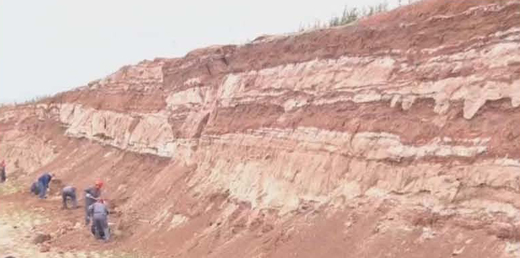
Yanji City dinosaur excavations.

Field team workers exploring the Cretaceous sediments in Yanji City.

Picture credit: Chinese Academy of Sciences

In a press release from the CAS, it is stated that the dinosaur fossil excavation will cover an area of approximately ten square kilometres and this is the first excavation of its kind to be carried out in a modern urban area.  Although the strata in the Yanji Basin is known for its substantial plant fossil remains, including flowering plants (angiosperms), this is the first time that dinosaur fossils have been discovered in Yanji City.  Experts state that the different coloured bands of strata represent non-marine sediments that were laid down when this area was experiencing climate change.

Zhang Lizhao, a researcher at the Institute of Vertebrate Palaeontology and Palaeoanthropology (IVPP) commented:

“We can see that the geological layers show different colours including red, purplish red and light colours.  The geological layer with the colour of purplish red means that, when the layer was formed, the dinosaurs lived in a hot and humid climate.  The layers with the light colours were formed during periods with dry and cold weather. We are basically sure that the geologic body here was formed between the late Early Cretaceous and the very early Late Cretaceous.”

Dinosaur Fossil Discoveries

The rocks being explored are around 100 million years of age, they represent sediments laid down between the Albian faunal stage (the last faunal stage of the Lower Cretaceous) and the Cenomanian stage, the first faunal stage of the Upper Cretaceous, a time when global sea levels were extremely high and many terrestrial animal populations were consequently isolated.  Dinosaur fossils from the Lower Cretaceous to the Upper Cretaceous transition are relatively rare and these excavations could perhaps provide new information on the evolution of different types of dinosaur especially the Titanosauriformes, Ceratopsia and theropods.

The Very Distinct and Striking Bands of Strata at the Dig Site

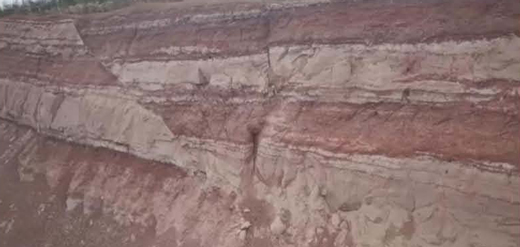
Rock formations of Yanji City (north-eastern China).

Yanji City rock formations.

Picture credit: Chinese Academy of Sciences

The picture above shows the clearly defined bands of strata.  Observers can see a defined fault line in the photograph.  Jilin Province is prone to earthquakes and other seismic activity.

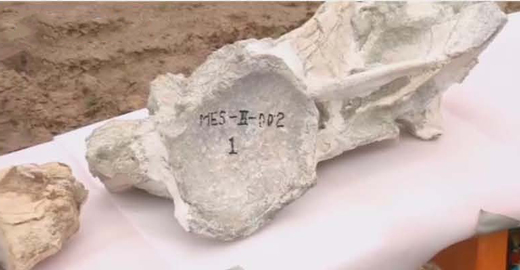
A Large Dinosaur Dorsal Vertebra (right) Partial view of Articulated Caudal Vertebrae (left)

Yanji City dinosaur fossils (vertebrae).

Isolated dorsal vertebrae (potential titanosauriform) right with partial view of two articulated caudal vertebrae on the left.

Picture credit: Chinese Academy of Sciences

The picture above shows some of the fossil found, the centrum of the dorsal vertebra has been labelled for identification purposes.  Everything Dinosaur team members have identified these bones as from probable titanosauriforms.

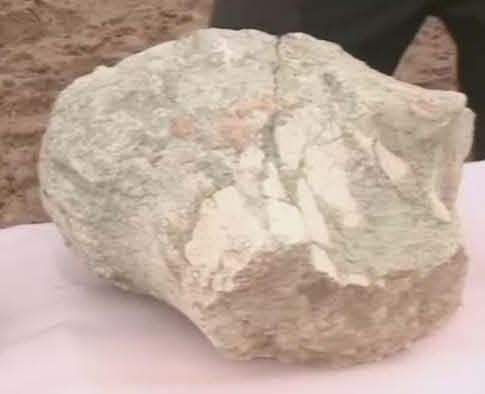
Fossil Material Uncovered at the Dig Site

Partial dinosaur limb bone.

Dinosaur limb bone (partial).

Picture credit: Chinese Academy of Sciences

Six Different Types of Dinosaur

Researchers have commented that at least six different types of dinosaur may have inhabited this part of China around 100 million years ago. They are confident that much more fossil material will be found helping palaeontologists to better understand the biota of this part of the world during a time of climate change.

A spokesperson from Everything Dinosaur commented:

“The fossils found at this extensive site in Yanji City, will add to our knowledge of terrestrial faunas during the Albian to Cenomanian transition.  It is likely that a number of new dinosaur species will be identified.”

The Everything Dinosaur website: Everything Dinosaur.
29 05, 2017

Rebor Replicas King and Queen Feature in Stunning Diorama

By |2024-05-09T08:24:16+01:00May 29th, 2017|Categories: Dinosaur Fans, Everything Dinosaur Products, Main Page, Photos of Everything Dinosaur Products|0 Comments

Rebor King T. rex and Fallen Queen Diorama

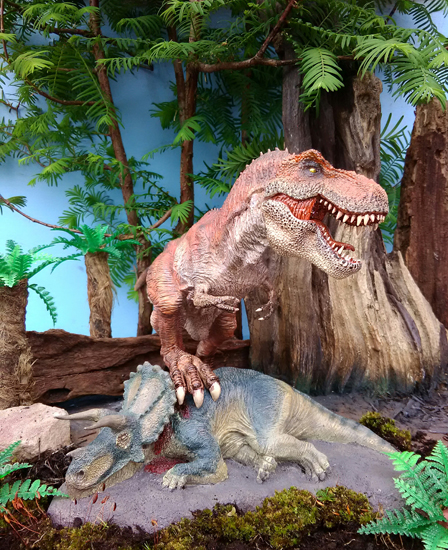
A special thank you to Paleo Paul who sent into Everything Dinosaur some photographs of his spectacular dinosaur diorama featuring the Rebor 1:35 scale King T. rex and the Rebor Triceratops “Fallen Queen”.  This is a wonderful composition that shows these two well-crafted replicas against the backdrop of a skilfully made prehistoric landscape.

The Rebor King T. rex and the Rebor Fallen Queen – Dinosaur Diorama

Rebor King T. rex and Fallen Queen (Triceratops) dinosaur diorama.

A wonderfully composed dinosaur diorama featuring two Rebor replicas.

Picture credit: Paleo Paul

Rebor Prehistoric Animal Figures

The model maker has added a couple of personal touches to these models, for example the imposing Tyrannosaurus rex is posed with its huge jaws nearly fully open, as if the predator is roaring to stake its claim over the carcase of the Triceratops.  The Rebor replica 1:35 scale T. rex has an articulated jaw permitting model enthusiasts the choice as to how they want to show their own “Tyrant Lizard King”.  The base upon which the Triceratops corpse rests also looks to have been repainted, these types of quality figures provide plenty of scope for a bit of subtle customisation.

The Triceratops figure represents a T. horridus and we think this is the original version introduced by Rebor in late 2015.  Recently, Rebor has introduced a second version of the “Fallen Queen” sculpt, this version has a different wash and offers variations in the paint effects and a slightly different colour scheme.  Version two has been brought out this spring in anticipation of the third part in this Rebor series, the adult male Triceratops which we expect to have in our warehouse in time for Christmas.

To view the Rebor prehistoric animal model range: Rebor Prehistoric Animal Models and Figures.

It’s All About the Detail

Paleo Paul has evidently thought very carefully about this composition.  The background has been constructed in such a way as to draw the eye into the diorama, the use of natural materials gives the diorama a very realistic look and when considering the best angle to photograph from, the use of two ferns at the extreme left and right of the frame helps to provide depth of perception.  It is all about the details when it comes to creating a striking prehistoric landscape and much planning has gone into constructing this prehistoric scene.

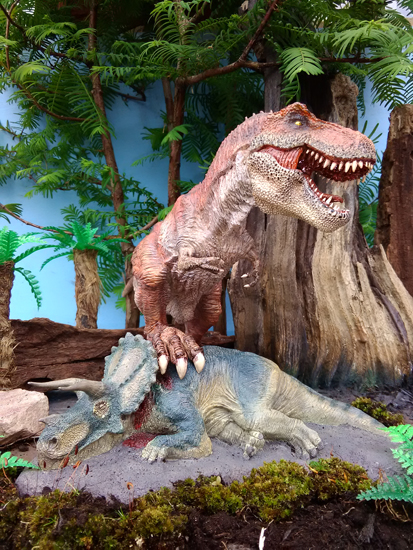
Tyrannosaurus rex Claims His Prize

Rebor King T. rex and Fallent Queen Triceratops diorama.

Rebor King T. rex and the Rebor Fallen Queen (Triceratops).

Picture credit: Paleo Paul

Clever Use of Lighting

Having created your dinosaur themed diorama, you might want to share this with the world.  To do this requires a practical approach to photography.  In this composition, (see picture above), Paleo Paul has chosen to take an image from a low angle, as if the viewer is looking up, this helps to provide an impression of size and scale.  Clever use of lighting has allowed the various hues and colours of the models to be clearly defined against the backdrop.  A few minutes considering what sort of effect you wish to create can really pay dividends when it comes to displaying your work.

At Everything Dinosaur, we enjoy seeing the creative ways in which our customers display their prehistoric animal model collections.  Our congratulations to Paleo Paul for producing such a striking dinosaur diorama.

To view the range of models and prehistoric animal replicas available from Everything Dinosaur: Prehistoric Animal Models and Figures.

Go to Top