All about dinosaurs, fossils and prehistoric animals by Everything Dinosaur team members.

Important and influential figures in science or from other related areas concerning dinosaurs and prehistoric animals.

18 11, 2015

The Remarkable Jack Horner Announces Retirement (Well Almost)

By |2024-05-05T14:55:15+01:00November 18th, 2015|Categories: Dinosaur and Prehistoric Animal News Stories, Dinosaur Fans, Famous Figures|0 Comments

Jack Horner Calls it a Day

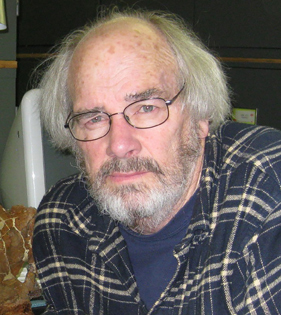
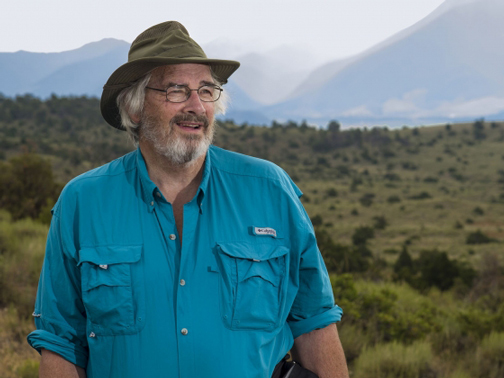
Jack Horner, one of the world’s most famous palaeontologists, has announced his retirement from the post of Curator of Palaeontology at the Museum of the Rockies after thirty-three years in the post.  John “Jack” Horner, the Regents Professor of Palaeontology at Montana State University has enjoyed a sparkling career having been thrust into the scientific limelight with the discovery of Maiasaura (M. peeblesorum) and the implications on dinosaur nesting behaviour and how dinosaurs raised their young which subsequently arose.

The Very Influential Jack Horner

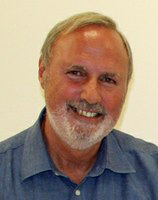
Palaeontologist John "Jack" Horner.

Palaeontologist John “Jack” Horner.

Picture credit: Montana State University

Jack Horner Announces Retirement

The scientist who advised on the Jurassic Park franchise and is credited with being the inspiration behind the character Dr Alan Grant (at least in part), will not be hanging up his geological hammer just yet.  Although he is retiring from some of his commitments, he has lots of other projects which are going to keep him busy well into his seventies.

Commenting on the announcement of his retirement, the Professor stated:

“You can be assured that I’ll not be slowing down any time soon.  I will be pursuing a number of projects, including helping another museum amass a large dinosaur collection and finishing a couple more books.  I also have a very exciting project that I’m not yet ready to announce.”

Jack Horner’s official retirement date is June 30th 2016, just shortly after his seventieth birthday.  Montana State University intends to hold a special public event on the campus to celebrate the Professor’s contribution to vertebrate palaeontology.

Shelley McKamey, (Executive Director of the Museum of the Rockies) stated:

“Jack and his team of staff and graduate students have amassed the largest collection of dinosaur fossils from the United States.  He opened the science of palaeontology to the general public and sparked the imagination of countless aspiring palaeontologists.”

A Famous Palaeontologist

Professor Horner, has championed the theory that dinosaurs were warm-blooded, he has also courted controversy in his rich and varied career, playing a pivotal role in the Tyrannosaurus rex “scavenger versus hunter” debate.

The discovery of “Good Mother Lizard” – Maiasaura, in the late 1970’s brought about a complete revision of theories relating to dinosaurs and their parenting strategies.  Jack Horner and his colleagues demonstrated that some dinosaurs provided extensive parental care (Maiasaura young were altricial – incapable of feeding themselves).

Maiasaura – Described by Jack Horner and Robert Makela in 1979

"Good Mother Lizard"

“Good Mother Lizard”

Picture credit: Everything Dinosaur

For models and replicas of ornithischians and other prehistoric animals: CollectA Prehistoric Life Models and Figures.

Long-time collaborator and University of California, Berkley professor Kevin Padian, wrote:

“It is difficult to imagine someone who, rising from such considerable obstacles, has achieved so much, given back so much to the profession, stimulated so much new investigation and supported so many younger colleagues and students.”

The search to replace John “Jack” Horner has started in earnest, however, finding a replacement with the same charisma and with the same high regard in this field of scientific endeavour is going to prove difficult.

Everything Dinosaur is grateful to Montana State University for the compilation of this article.

17 11, 2015

Remarkable Mysterious Token Linked to Mary Anning

By |2024-05-05T14:58:50+01:00November 17th, 2015|Categories: Dinosaur Fans, Famous Figures, Main Page|0 Comments

Could Metal Disc Found on a Lyme Regis Beach Once Have Belonged to Mary Anning?

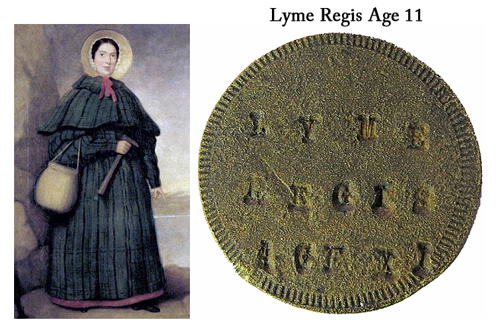
A small, round metal disc about the size of a ten pence piece has been identified as having once been the property of Dorset’s most famous resident Mary Anning.  The object may have lain buried for more than two hundred years on a Lyme Regis beach very close to where Mary found fossils of marine reptiles and Pterosaurs.

A Picture of Mary Anning (left) and the Small, Metal Disc

Did this once belong to Mary Anning?

Did this once belong to Mary Anning?

Picture credit: Lyme Regis Museum with additional annotation by Everything Dinosaur

An Exciting Discovery

The discovery was made by sixty-nine year old Phil Goodwin, a key metal detectorist who has explored the beaches surrounding the Dorset town on numerous occasions turning up such exotic finds as musket balls, old coins and a bayonet that dates from the time of Napoleon.  Experts at the Lyme Regis Museum, which is situated on the site of Mary’s home close to the sea-front at Lyme Regis, have identified it as a metal disc probably given to Mary by her cabinet maker father.

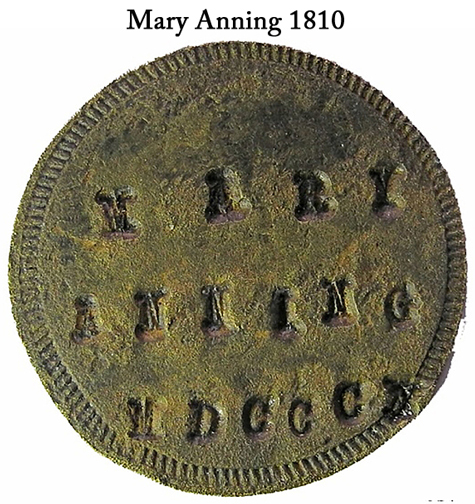
On one side of the disc the words “Lyme Regis” and “Age XI” – eleven can be clearly made out.  On the reverse, Mary’s name is stamped into the disc, along with the date 1810 in Roman numerals.

Mary Anning Disc “Mary Anning 1810”

Stamped on the disc are the words "Mary Anning and the year 1810 marked in Roman numerals.

Stamped on the disc are the words “Mary Anning and the year 1810 marked in Roman numerals.

Picture credit: Lyme Regis Museum with additional annotation by Everything Dinosaur

Speaking about his serendipitous find, Mr Goodwin stated:

“I had been there about an hour or so picking up Victorian coins and musket balls when I saw something different.  It didn’t look like a coin so I rubbed it between my fingers to clean it up and read what it said.  I saw the name and date, but it didn’t mean much to me at first.  Then I showed it to a friend who said it could have belonged to the famous fossil hunter Mary Anning.  Imagine, what are the chances of that?”

Did This Disc Really Belong to Mary Anning?

The disc could have been stamped out by Mary’s father, perhaps as a birthday gift as Mary reached eleven.  He would certainly have possessed the tools and the skills required to complete this fiddly task.  However, the disc looks in remarkable condition and as we at Everything Dinosaur can testify, the tides regularly scour the beach and if the disc had lain on the beach for more than two hundred years, then surely it would have been washed away.

Mr Goodwin and those who believe that the retired antiques dealer really has unearthed an object that once belonged to Mary Anning, explain the disc’s condition and its presence on the beach as Mary could have dropped the disc on the cliff above the beach during one of her many fossil hunting trips.  Alternatively, it could have been thrown out and ended up in the local rubbish dump.

A Victorian rubbish dump is slowly being exposed in the area of the Church cliffs to the east of the town and the frequent rock falls often deposit Victorian bottles and other debris onto the shoreline.

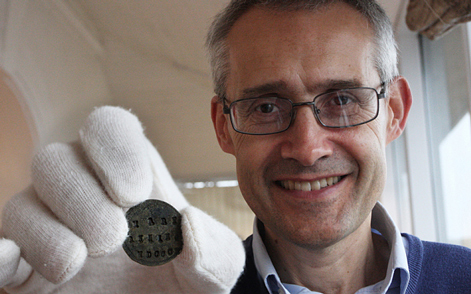
David Tucker Proudly Displays the Metal Disc

David Tucker, the Director of Lyme Regis Museum with the Anning token.

David Tucker, the Director of Lyme Regis Museum with the Anning token.

Picture Credit: Maisie Hill

The disc has been put on display at the Lyme Regis museum, the picture above shows the Museum’s director David Tucker proudly showing off, what might be a link to arguably,  the most famous female fossil collector in the world.

Historians and archivists consulted by the Lyme Regis museum are convinced this disc was once a gift given to Mary Anning.  The disc is very similar to the metal circles used by Georgian craftsmen to attach handles to drawers and other pieces of furniture.

Richard Anning

Mary’s father Richard, passed away in November 1810, six months after his daughter’s eleventh birthday.  He had been in poor health for some time.  It is quite a romantic thought to consider that this small disc was a token of affection presented to Mary by Richard, who knew that he did not have long to live and that he, her father would not see another birthday for his daughter.

Commenting on the discovery, David Tucker stated:

“He [Richard Anning] had a long term illness and she was his only surviving daughter, he would have had the tools around the house.  If he knew he wasn’t going to live long, it just seems like the kind of thing a dad would do.  We’ve discounted the idea it could have been made later as a souvenir once she became well known, as it’s rather basic and crude.”

Exploring the Cliffs of the Dorset Coast

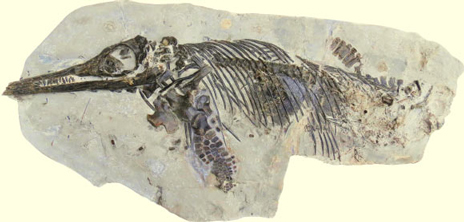
Sadly, Richard Anning would never know of his daughter’s fame.  Mary Anning spent most of her time exploring the beaches and cliffs of Lyme Regis and nearby Charmouth.  She and her brother had a remarkable record of important fossil finds.  Mary and Joseph (her brother), found the fossilised remains of an Ichthyosaurus, the first to be scientifically studied and described.  Mary also discovered a wonderfully well-preserved Plesiosaurus specimen and in 1828 the UK’s first example of a pterosaur.

For dinosaur and prehistoric animal models and figures: CollectA Prehistoric Life Models.

Recently a New Species of Ichthyosaurus was Named In Honour of Mary Anning

A new species of Ichthyosaurus.

A new species of Ichthyosaurus.

Picture credit:  Dean Lomax and Judy Massare

To read about this new Ichthyosaur discovery: New Ichthyosaurus Species Honours Mary Anning.

The beaches of Lyme Regis attract thousands of fossil hunters every year, although visitors do have to be mindful of tide times and the risk of rock falls from the dangerous cliffs.  One of the best ways to follow in Mary’s footsteps is to take a guided fossil walk, for details of such walks: Lyme Regis Fossil Walks.

7 09, 2015

Helping to Inspire Young People to Study Earth Sciences

By |2023-04-05T14:16:26+01:00September 7th, 2015|Categories: Educational Activities, Famous Figures, Main Page, Teaching|0 Comments

A Role Model for Young People – Dr Victoria Arbour

With the changes to the England’s national curriculum for schools and the greater emphasis on scientific working, team members at Everything Dinosaur often get asked to provide information about inspirational scientists to help enthuse and motivate young people.  With many schools adopting dinosaurs or the “Jurassic Forest” as a term topic and with rocks and fossils part of the curriculum at Key Stage 2, the number of requests for advice is on the increase.

The Pioneer Mary Anning

The story of Mary Anning (1799-1847), the Dorset woman of “she sells sea shells on the seashore” fame is highly appropriate.  Mary’s contribution to palaeontology and geology is well-documented, as is sadly, her shabby treatment by the male dominated academia of the 19th century.  For those teachers, homeschoolers and educationalists who want to inspire their pupils looking at the role of a scientist working today, then the work of Dr Victoria Arbour and her research on armoured dinosaurs is worth exploring.

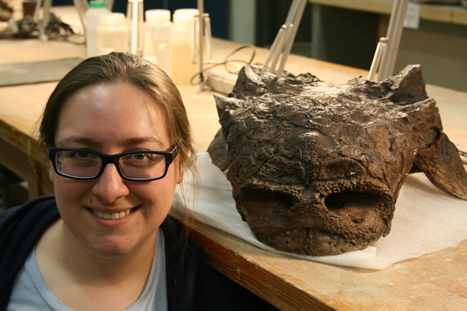
Dr Victoria Arbour  (Vertebrate Palaeontologist)

Victoria next to a skull of a Euoplocephalus tutus (University of Alberta)

Victoria next to a skull of a Euoplocephalus tutus (University of Alberta)

Picture credit: Angelica Torices

Studying Ankylosaurs

Here is a short biography of Dr Arbour, in her own words (mostly):

I’m one of those kids that never grew out of their “dinosaur phase”.  I have been interested in palaeontology as far back as I can remember.  I knew that I wanted to pursue palaeontology as a career, or find an interesting field of science related to palaeontology.  So far, so good: I’m currently working as a postdoctoral researcher at the North Carolina Museum of Natural Sciences and North Carolina State University in Raleigh, North Carolina (United States).  Prior to this, I did my MSc and PhD degrees at the University of Alberta in Edmonton, Alberta, (Canada).

My home town is Halifax, (Nova Scotia, Canada) and I studied for my BSc degree in Earth Sciences and Biology at Dalhousie University (Halifax, Nova Scotia).

Nannofossils Studied

Taking a break from her studies in the summer, Victoria spent some time identifying calcareous nannofossils (coccoliths and coccospheres et al) from the Scotian Slope, an area off the coast of the Canadian province.  However, whilst at university, Victoria helped to study the first dinosaur fossils that had ever been collected in British Columbia.  These were from a small plant-eating dinosaur, but unfortunately the remains were too fragmentary to figure out exactly what species it was.

Now based in North Carolina, Dr Arbour focuses on the Dinosauria and her office is situated in a very inspiring location.  She continues:

Every day I walk past a Tyrannosaurus skeleton to get to my office, and my office is part of the exhibits at the museum, which means I get to see people enjoying that same Tyrannosaurus as much as I do.  In the summers I head out to the field to dig up dinosaurs in places like Utah, Alberta, and even sometimes Mongolia!  The rest of the time, I’m thinking about ankylosaurs, the armoured dinosaurs with lots of spikes.

Why the Ankylosauridae?

I’ve always liked ankylosaurs (well, I’ve always liked all dinosaurs!), but I became particularly interested in them when I started to think about what kind of project I wanted to do for my MSc thesis.  I kept seeing pictures in books of armoured dinosaurs using their tail clubs to defend themselves from predators, and I wondered if there was a way we could figure out if they could have done that.  So, some of the first projects I worked on looked at how fast and hard these dinosaurs could swing their tail into something, and what would happen to the tail when they smashed it into another object.

Teachers have no need to worry about whether or not all that can be discovered about dinosaurs will have been documented by the time their young charges are ready to choose further education options.

New Dinosaurs and Perhaps New Ankylosaurs Too

New dinosaurs are being named and described all the time.  For example, in a few days, Everything Dinosaur will be writing a short article on the very latest armoured dinosaur to be described – Horshamosaurus a member of the Ankylosauria clade, but a polacanthid, an armoured dinosaur that once roamed around West Sussex (southern England).

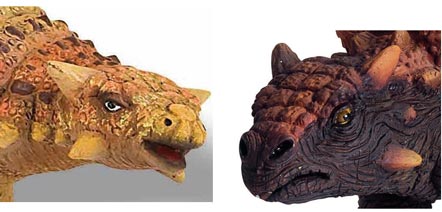
The Ankylosauria is Turning Out to be a Very Diverse Clade

Close inspection of the dinosaur models

Lots of armoured dinosaurs to study.

Picture credit: Everything Dinosaur

When asked why she specialises in studying the armoured dinosaurs, Victoria replied:

“The sneaky thing about science is that as you try to answer one question, you end up with more than you started with!  One thing led to another, and I’ve been studying lots of different aspects of ankylosaur biology – like how many species there were, how they moved between continents, and how their tail clubs evolved – and I still have lots of questions left to answer about these cool dinosaurs.”

For further information about Everything Dinosaur’s outreach work: Email Everything Dinosaur.
11 07, 2015

Wendiceratops pinhornensis from southern Alberta

By |2023-04-01T12:35:21+01:00July 11th, 2015|Categories: Dinosaur and Prehistoric Animal News Stories, Dinosaur Fans, Famous Figures, Main Page|0 Comments

North America’s Newest Centrosaurine is Also One of its Oldest

The Royal Ontario Museum (Canada) put on exhibit this week the horned dinosaur Wendiceratops (W. pinhornensis) and what a splendid new addition this exhibit is.  There has been lots of media coverage regarding this dinosaur, but we at Everything Dinosaur wanted to clarify three points that had been made in a number of publications, this is not a newly discovered ceratopsian, the bone bed containing the fossils of these one tonne dinosaurs was found way back in 2010.  It has taken over five years to prepare the bones, study them and then to publish a scientific paper on this new dinosaur.

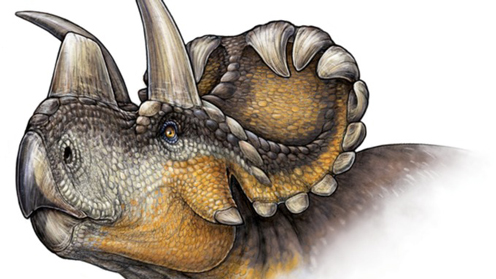
An Illustration of Wendiceratops pinhornensis

An early, very ornate Centrosaurine.

An early, very ornate centrosaurine – Wendiceratops pinhornensis.

Picture credit: Danielle Dufault

Not Closely Related to Triceratops

Secondly, this horned dinosaur that roamed southern Alberta approximately 79 million years ago (78.7 to 79.0 million, according to radiometric dating from nearby Kennedy Coulee Ecological Reserve which is believed to be of the same geological age), was not that closely related to Triceratops.

Mention a new type of horned dinosaur and Triceratops comes trotting out as a comparison.  We think this is because, since Triceratops is one of the best known of all the dinosaurs, journalists use “Trike” as a sort of “dinosaur clothes horse” upon which the story can be hung.  True, the horn configuration between Wendiceratops and Triceratops is very similar, both have large brow horns and a smaller nose horn, but in reality Wendiceratops and Triceratops are separated by at least ten million years and they are members of two different sub-families of the Ceratopsidae.

  • Wendiceratops is a member of the centrosaurines
  • Triceratops belongs to the chasmosaurine group

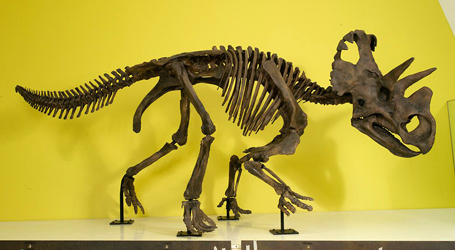
 On Display at the Royal Ontario Museum (Toronto, Canada) a Cast of Wendiceratops

A reconstruction of the dinosaur's skeleton.

A reconstruction of the dinosaur’s skeleton.

Picture credit: Royal Ontario Museum

A reconstructed skeleton of the dinosaur called Wendiceratops pinhornensis is pictured above, the fossils in the type locality represent at least four individuals, three adults and a juvenile.  This dinosaur has been described from approximately 220 bones that were found in a single bone bed.  The scientific paper that has been published reaffirms the very high diversity of North American ceratopsians and this supports the theory that around 80 million years ago there was a rapid evolutionary radiation of the Ceratopsidae.  Although a large and prominent, (although somewhat flattened) nose horn has been inferred, the nasal bone is only represented by fragmentary specimens and the actual shape of the nose horn is not known.

The Earliest Evidence of a Tall Nose Horn

Wendiceratops can claim to provide the earliest evidence of a tall nose horn being found in the Ceratopsians.  Not only does this centrosaurine tell scientists that by 79 million years ago, horned dinosaurs existed with large, nose horns, the research reveals that a large, cone-shaped nose horn evolved in this group at least twice in the evolutionary history of the Ceratopsidae.

Those Necks and Horns

It used to be thought that horn and neck frill configuration was a good methodology when it came to tell centrosaurine and chasmosaurine dinosaurs apart.  Back in the old days (pre-2000), when a lot fewer species of North American horned dinosaur had been described, a number of writers classified these types of dinosaurs based on the size, orientation and morphology of those nose horns and their accompanying neck frill.  For example, in general it was thought that centrosaurine dinosaurs such as (Brachyceratops, Einiosaurus, Xenoceratops and Centrosaurus) had short frills (relatively), combined with a large nose horn and much smaller horns over the eyes.

In contrast, the chasmosaurine dinosaurs such as Pentaceratops, Triceratops and Torosaurus had much more elongated neck frills, a small nose horn and much larger brow horns.  With the spate of recent discoveries these ideas have proved to be too simplified, Ceratopsidae classification has got a lot more complicated as new genera have been described.

A case in point is the recently described (June 2015) Regaliceratops, a member of the chasmosaurine group but with characteristics of a centrosaurine.

To read more about the research into Regaliceratops: A Right Royal Rumble.

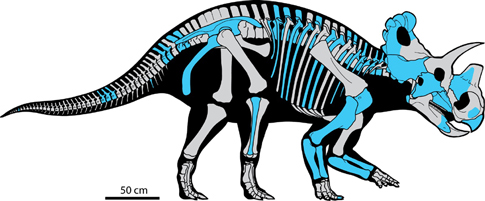
A Skeletal Drawing of Wendiceratops (W. pinhornensis)

The bones marked in blue have been found to date.

The bones marked in blue have been found to date.

Picture Credit: Danielle Dufault

Last but not Least that Trivial Name Wendiceratops pinhornensis

The third point we wanted to clear up was the specific or trivial name “pinhornensis”.   The species name has nothing to do with the shape, size or orientation of any horn, it refers to the Pinhorn Provincial Grazing Reserve in southern Alberta, where the bone bed is located.

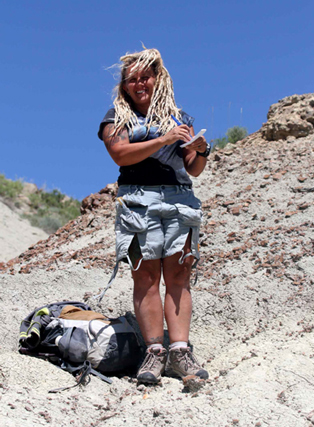
Honouring Wendy Sloboda

The genus name honours the remarkable Wendy Sloboda, who discovered the type locality back in 2010.

Wendy has a Dinosaur Named After Her

Naming a new dinosaur after Wendy.

Naming a new dinosaur after Wendy.

Picture credit: Michael J. Ryan (one of the authors of the scientific paper published in the journal PLOS One)

Today we pay tribute to all those field workers, scientists and technicians that have helped prepare the Royal Ontario Museum exhibit, special mention to all those that helped remove the enormous rock overburden that permitted the bone bed to be fully explored.  Along with the fossilised remains of a Ceratopsian, the scientists found two tyrannosaurid teeth (genera not known), along with other reptilian remains, notably turtles and crocodilian.

The Beasts of the Mesozoic range consists of a large number of ceratopsian figures including a Wendiceratops.  To view the range of models and figures: Beasts of the Mesozoic Articulated Dinosaur Figures.

6 07, 2015

Teaching Year 4 About Mary Anning

By |2023-04-01T11:35:10+01:00July 6th, 2015|Categories: Educational Activities, Famous Figures, Main Page, Teaching|0 Comments

Year 4 Learn All About Mary Anning

When Everything Dinosaur team members attended the Blackpool Celebrating Science Conference last week, they helped organise a competition for the young scientists from the schools that attended.  As well as running a fossil hunting activity and conducting four dinosaur workshops over the course of the conference, team members also provided the school children attending with information on Mary Anning.  By name dropping scientists, the children could make up a list of famous contributors to scientific endeavour.  A prize was awarded to the school which created the longest list.

Mary Anning

Naturally, with a fossil hunting activity as part of our dinosaur workshop, Mary Anning was an easy choice for ourselves.

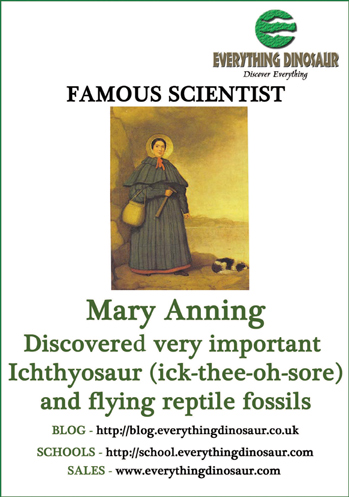
Posting Up Information on Mary Anning

Helping Year 4 to learn all about scientists.

Helping Year 4 to learn all about scientists.

Picture credit: Everything Dinosaur

The picture above is of the poster we put up on our fossil hunting workshop stand.  We put it in a prominent place so that all the children could easily spot it as they hunted for fossils on our artificial beach.  During the dinosaur workshop, which we especially created for this event, we made sure to mention the competition and Mary Anning so that the children could be encouraged to take part.

To view replicas of ammonites and belemnites, fossils of which Mary Anning collected: Replica Ammonites and Belemnites.

Dinosaur Workshop

The dinosaur workshop that we had prepared for this conference involved looking at real dinosaur fossil bones, exploring how our bodies compare to those of dinosaurs and looking at some of the very latest research.  Teachers were also invited to break a few bones, nothing to worry about though, just a clever experiment that we thought up that helped the children learn what our bones (amphibian bones, reptile, bird and mammal bones) are composed of.  Collagen was indeed the word of the day and helped to link our dinosaur workshop together as well as tying it into important aspects of the Key Stage 2 science curriculum.

To contact Everything Dinosaur about Mary Anning: Contact Mary Anning.

27 02, 2015

Sir Richard Owen Gets Exclusive Blue Plaque

By |2024-05-04T22:02:54+01:00February 27th, 2015|Categories: Dinosaur and Prehistoric Animal News Stories, Famous Figures, Main Page|0 Comments

Sir Richard Owen Honoured with Blue Plaque

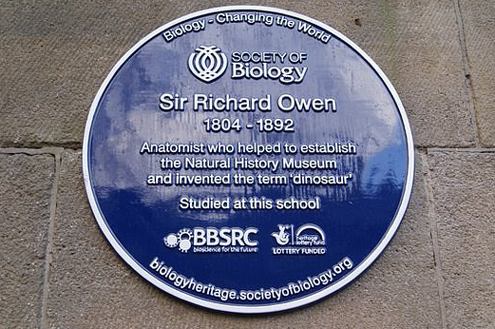
Sir Richard Owen, the 19th century anatomist and palaeontologist who first used the term dinosaur, has been honoured by the Society of Biology by having a blue heritage plaque installed at his former school, Lancaster Royal Grammar.  The plaque was unveiled yesterday at a small ceremony.  Blue plaques serve to act as a historical marker, indicating that a notable person was associated with a place or that an important, historical event occurred at that location.  This blue plaque commemorates that fact that Sir Richard (knighted in 1884), attended the school from 1809-1819.

The Blue Plaque Erected at Lancaster Royal Grammar School

Sir Richard Owen honoured.

Sir Richard Owen honoured.

Picture credit: LRGS

Sir Richard Owen

Undoubtedly, Sir Richard Owen was a very talented scientist and an extremely clever man.  Although he did not impress all his tutors whilst at Lancaster Grammar School.  One school master described him as “impudent” and doubted whether the son of a merchant would ever amount to very much.  Although Sir Richard gained a great deal of acclaim during his lifetime and certainty did make a huge contribution to science, by all accounts he had a very egregious character.

There are a number of accounts of him plagiarising the work of his contemporaries and he was very critical of the work of some of his peers.  For example, the then, plain Richard Owen disputed much of the evidence put forward to support the theory of natural selection as suggested by Charles Darwin in the “Origin of Species”, which was first published in 1859.  Richard Owen seemed to resent the success of others and he has earned a reputation (perhaps deserved), for being quick to condemn the work of others whilst desiring to talk up his own contribution.

To read another article about Sir Richard Owen: Remembering Sir Richard Owen.

A Glittering Career

In a glittering career, which saw him rise to the top of the Victorian scientific community, Sir Richard Owen was awarded many accolades.  He supervised the first “life-sized” prehistoric animal replicas as part of the Great Exhibition in 1851, he acquired one of the very first Archaeopteryx fossil specimens and studied it in great detail.  He described a vast array of extinct and extant animals and wrote a prestigious amount of academic literature.  Perhaps his most notable achievement was campaigning for and helping to set up the museum now known as the Natural History Museum.  Owen’s “cathedral to nature” opened in 1881.

Sir Richard Owen may be credited with coining the term “dinosaur”, but he was not the first person to note that the strange fossils of ancient animals being found in southern England and elsewhere represented a distinct group of animals.  The German palaeontologist, Hermann von Meyer stated that these ancient reptiles now known as dinosaurs should be considered a separate Order as early as 1832, around ten years before Sir Richard Owen coined the term “Dinosauria”.

The Society of Biology

In total ten blue plaques are been erected by the Society of Biology to commemorate the contributions to science made by “heroes of biology”.  Other recipients include: Patrick Steptoe, Jean Purdy and Robert Edwards who jointly developed IVF, leading to the world’s first test-tube baby, Louise Brown who was born in 1978, (plaque located at Dr Kershaw’s Hospice, Oldham) and Sir Anthony Carlisle, an anatomist who helped develop the concept of producing medical statistics.

There is even a plaque being erected to “Dolly the Sheep”, the first mammal to be cloned from an adult somatic cell rather than an embryonic one.  This plaque can be seen at the Roslin Institute (part of the University of Edinburgh), where Dolly lived all her life (1996-2003).  We are not sure quite how Sir Richard Owen would feel about having a plaque erected to honour him at the same time as a sheep gets one, but we suspect that he would be desperately keen to learn more about the science of genetics, which was virtually unknown when he was alive.

13 12, 2014

The Weird and Wonderful Cambrian

By |2023-03-18T11:02:54+00:00December 13th, 2014|Categories: Dinosaur and Prehistoric Animal News Stories, Famous Figures|0 Comments

Ancient Balloon Shaped Animal Sheds Light on Cambrian Fauna

A bizarre creature that resembled a “spiky balloon”, part of an amazing marine biota that thrived some 520 million years ago, has been named in honour of a Leicester scientist who died earlier this year.  The finely-grained, fossiliferous beds around Chengjiang (southern China), are believed to rival the famous Burgess Shale beds of British Columbia.  The rocks in this part of the world were once the muds and silts that collected at the bottom of an ancient Cambrian sea.

Cambrian Creature

Preserved within the layers of rock, over half a billion years old, are the remains of strange creatures that thrived at around the time of the very first animals with a notochord, the ancestor of today’s vertebrates, were evolving.

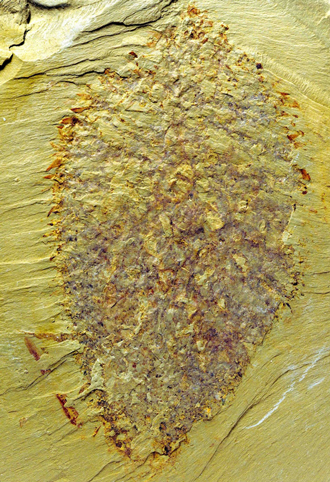
One such creature, which has a fossil described as being like “a crushed bird’s nest” has been named Nidelric pugio in honour of the late Professor Richard Aldridge, an internationally renowned palaeontologist and keen bird watcher.  He was a prominent member of the University of Leicester’s Department of Geology.  Fragmentary specimens of this creature had been found before, but this specimen preserves the majority of the animal and even though the fossil is distorted,  it has been identified as a type of chancellorid, a group of animals that have no direct descendants alive today.

Nidelric pugio

Professor Aldridge was regarded as a world leader in the research into the Cambrian fossils found in the Chengjiang locality.  This prickly specimen measures around nine centimetres in total length. It is just one of an incredible number of beautifully preserved creatures that hint at a rich and diverse marine ecosystem.  A record of which  has been preserved as fossils.

The Bizarre Nidelric pugio – Like Nothing on Earth Today

An ancient pin cushion N. pugio

An ancient pin cushion N. pugio.

Picture credit: Leicester University

Honouring the Late Professor Richard Aldridge

The name of the fossil is derived from the Latin “Nidus”, meaning bird’s nest  or a resemblance to such a structure and “adelric”, the Old English name “Aedelic”, which itself means “noble ruler”, the source for the surname Aldridge.

A Close Up of the Spikes that Surround this Animal

Ancient defences?

Ancient defences?

Picture credit: Leicester University

The “Cambrian Explosion”

One of the reasons stated for the “Cambrian explosion”, a rapid radiation and diversification of creatures during the latter stages of the Cambrian, is that food chains began to be established, whereby passive grazing and feeding as a result of serendipitous circumstances were replaced with predator/prey interactions.  The spikes that surrounded N. pugio, which measured just a few millimetres high, most likely had a defensive purpose.  The spikes probably deterred attackers.

The strata has permitted the preservation of these creatures in such perfect detail that even traces of their rudimentary nervous systems can be identified, as well as legs, guts, eyes and even that most advance element of the central nervous system – the brain.

To read more about this remarkable research: Ancient Arthropod Brain and Nervous System Studied.

Professor Aldridge, passed away in February of this year.  He had a distinguished career in palaeontology. The professor was regarded as an expert on conodonts and early marine invertebrates.  He became a professor at Leicester University in 1996 and served as Head of the Department of Geology from 1998 to 2004.  He held he prestigious title of the F.W. Bennett Professorship at the University from 2002 until his retirement from the University three years ago.

Cambrian Creature Named in Honour of Professor Aldridge

Honoured for his contribution to palaeontology.

Honoured for his contribution to palaeontology.

Picture credit: Leicester University

24 08, 2014

Remembering the Remarkable Samuel Husbands Beckles (1814-1890)

By |2024-05-02T11:56:24+01:00August 24th, 2014|Categories: Dinosaur Fans, Famous Figures, Main Page|0 Comments

Samuel H. Beckles and Iguanodonts plus Becklespinax

Whilst going over some notes in a rare office tidy up, we came across a handful of old genealogy papers relating to research on Samuel Husbands Beckles.  Who, you might ask?  One thing that is for certain, names such as Gideon Mantell, Sir Richard Owen and Mary Anning may be quite well known, but few people outside the Earth sciences (and perhaps one or two in the disciplines we group together as the  Earth sciences), may not be familiar with the name.

Samuel Husbands Beckles

Samuel Husbands Beckles was born in 1814 (April 12th we think), on the island of Barbados.  He came from a wealthy and well-to-do family and he found great success as a lawyer.  Samuel Beckles had always been keen on studying the natural world and science, although he lacked any real, formal scientific training.

Unlike people in the UK today, who might dream of early retirement in the Caribbean, Samuel decided at the grand old age of 31 to give up the vast majority of his legal work and retire in England.  As a rich, and well connected member of Georgian/Victorian high society, he did much to fund and popularise the study of the geology and fossils found in southern England (he lived at St Leonards-on-Sea, E. Sussex).

Collecting and Studying Fossils

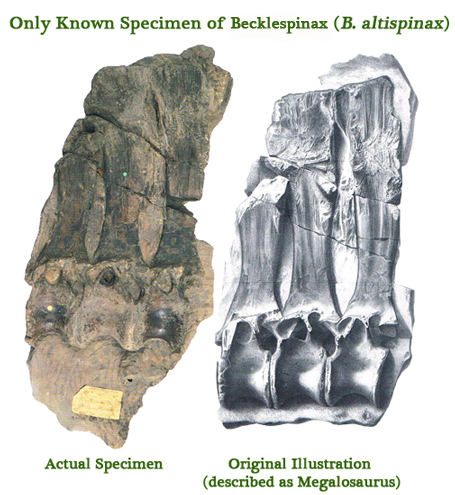
He dedicated much of the rest of his life to collecting fossils and learning about the geology of the Weald.  He is credited with the discovery of three, articulated, tall-spined dorsal vertebrae (back bones), no vertebrae fossils had ever been found that looked like these, indeed the exact location of the find remains uncertain.  We do know that these fossils were found at a site close to the small town of Battle, in East Sussex, it is probable that these fossils came from a cutting or quarry that represented strata that make ups the Hastings Subgroup of the Weald basin.  This would suggest that the fossils came from a dinosaur that lived during the Early Cretaceous.

The Fossil Material and Original Drawing (Becklespinax)

The three articulated dorsal vertebrae that represent Becklespinax.

The three articulated dorsal vertebrae that represent Becklespinax.

Picture credit: Everything Dinosaur

Becklespinax altispinax

These fossils were identified as belonging to some sort of large, carnivorous dinosaur (Theropoda).  Following  a review of the known fossil material in 1988, the genus Becklespinax was erected (Gregory S. Paul), the species name being Becklespinax altispinax.  The genus name honours the work of Samuel Husbands Beckles (the name translates as Beckles’ tall spines).

The contribution he made to palaeontology and geology was recognised in his own lifetime, when against the custom of the day, he was elected a fellow of the Royal Society of London.  Although he had accumulated a vast amount of fossil material and been actively involved in cataloguing and analysing a substantial amount of vertebrate fossil material, his close friendship with the highly influential Richard Owen may have contributed to his appointment.

An Illustration of the Humped-Back Dinosaur (Becklespinax altispinax)

Becklespinax - an English dinosaur

Becklespinax – an English dinosaur.

Picture credit: Everything Dinosaur

The design team at CollectA have introduced several dinosaur models based on British fossil finds including a Becklespinas replica: CollectA Prehistoric Animal Models.

Samuel H. Beckles

Samuel H. Beckles collected a large number of fossil specimens from the Weald of Sussex which at the time were described as belonging to the Iguanodon genus.  Iguanodon was rapidly becoming a bit of a “catch-all” when it came to large dinosaur bones with affinities to the material described by Gideon Mantell.  The Iguanodon genus was completely revised following a study in 2000 which reviewed the British “Iguanodon” material, including a lot of the fossils originally collected by Beckles and now the property of the Natural History Museum (London).

Although more closely associated with the study of dinosaur remains found in southern England, Samuel Beckles played a significant role in helping to interpret the geology and fossil material found on the Isle of Wight.  In 1854, he described a series of three-toed prints, the first to be described from the Isle of Wight (Compton Bay).

A Formal Description

In February 1862, he published a formal review of the dinosaur footprints that he had found in the quarterly journal of the Geological Society.  The paper had the snappy title – “On some Natural Casts of Reptilian Footprints in the Wealden Beds of the Isle of Wight and of Swanage”.

So today, in recognition of the 200th anniversary of the birth of Samuel Husbands Beckles we take time out to recognise his contribution to geology and palaeontology.

For further information on fossils of dinosaurs from the British Isles check out “Dinosaurs of the British Isles” by Dean R. Lomax and Nobumichi Tamura which is available from Siri Scientific Press: Siri Scientific Press.

15 08, 2014

“Dinosaur 13” Astonishing Documentary Film Released Today

By |2024-05-02T12:00:08+01:00August 15th, 2014|Categories: Dinosaur Fans, Famous Figures|0 Comments

Documentary about “Sue” the Tyrannosaurus rex in Selected Cinemas from Today

August 12th 1990 and a team from the Black Hills Institute of South Dakota, were doing what they do best, working in the field in the middle of jacketing a partial Triceratops skull that had been painstakingly excavated by removing the overlaying South Dakotan hillside rock by rock.  Susan Hendrickson, one of the team members, had slipped away from the main dig site to go scouting to see what else was slowly eroding out of the sixty-seven million year old sediment…

Tyrannosaurus rex

Just a typical day for the field team, carefully working away to extract fossilised dinosaur bone that had been entombed for millions of years.  However, what took place that afternoon was to have a significant impact on  the science of palaeontology, it changed the lives of everyone involved and the story is told in the documentary film “Dinosaur 13” which is released in the UK today.

When Pete Larson, palaeontologist, fossil collector/dealer and President of the Black Hills Institute for Geological Research (to give Pete and the Institute their full titles), looked up and saw Susan returning in the 100 degree heat he was in for quite a shock.  Sue held out her hand and revealed what she had found, two small, brown coloured, honey-combed lumps – to the casual observer not much to look at, but for “Palaeo Pete” one of the most knowledgeable people on the planet when it comes to Late Cretaceous theropod dinosaurs, he knew exactly what these fragments of bone represented.

 The First Hints of a Tyrannosaurus rex Fossil Discovery

The inside of T. rex vertebrae is riddled with holes.

The inside of T. rex vertebrae is riddled with holes.

Picture credit: Peter Larson

Dinosaur 13

The bone fragments were light and hollow, the honeycomb texture is called camellate structure and it is found in the vertebrae of birds and theropod dinosaurs.  What Sue had discovered eroding out of a cliff face some two miles or so from the Triceratops, was the fossilised remains of that most famous of all the dinosaurs – Tyrannosaurus rex.

“Dinosaur 13” documents the story of the discovery of the T. rex named “Sue” (after Susan Hendrickson), which turned out to be one of the most complete specimens of this iconic animal ever found and indeed, the biggest tyrannosaurid ever discovered.  Two years later, when the FBI and the National Guard showed up, battle lines were drawn over ownership of Sue.  The United States government, world-class museums, Native American tribes, and competing palaeontologists became the Goliath to Larson’s David as he and his team from the Black Hills Institute fought to keep their dinosaur and wrestled with intimidation tactics that threatened their freedom as well.

Sue Hendrickson Photographed Next to the Jaws of the Tyrannosaurus rex

Sue Hendrickson next to her T. rex namesake.

Sue Hendrickson next to her T. rex namesake.

Picture credit: Peter Larson

Documentary Programme

This ninety-five minute documentary chronicles an unprecedented saga in American history and details the fierce battle to possess a relic from the Late Cretaceous.  It’s a sort of custody battle, one that involves a huge, predatory dinosaur, a female to boot, with fifty-eight huge teeth in her immense jaws.  With consummate skill, director Todd Miller excavates layer after layer, exposing human emotion in a dramatic tale that is as complex as it is fascinating.

We have had the great pleasure of meeting Pete Larson, the story of “Sue” will help to highlight some important issues surrounding the excavation of fossils and how best to go about preserving fossil material.  We have not had the chance to view the documentary yet, (hopefully soon), but with Peter, his enthusiasm and love of what he does comes across very clearly.  He and his team are passionate palaeontologists and they have done much to help in our understanding of the ancient ecosystem represented by the sedimentary deposits of the western United States.

The Story of “Sue”

At Everything Dinosaur, we might not necessarily agree with the some of the media straplines heralding the Tyrannosaurus rex fossils as being the “one of the greatest discoveries in history”, however, we suspect that “Sue” now on permanent display at the Field Museum in Chicago (Illinois), has inspired many millions of young dinosaur fans to learn more about these amazing creatures.

The documentary is on release in selected cinemas from today (15th August), for further details visit the website of the documentary’s distributors: DogWoof where further information about the film and a list of venues showing the film can be found.

Neal Larson (Black Hills Institute) with “Sue’s” Lower Leg Bones – Left Leg

The red arrow points to a suspected healed break in the left fibula of "Sue".

The red arrow points to a suspected healed break in the left fibula of “Sue”.

Picture credit: Peter Larson

As for the documentary’s title, why dinosaur 13?  The answer is simple, these fossils represent the thirteenth T. rex discovered, ironic really as the number thirteen is associated with bad luck in much of the western world and it could be argued that for Pete Larson and his colleagues 13 proved to be a very unlucky number indeed.

Dinosaur 13 Trailer

Video credit: YouTube

For figures and replicas of Tyrannosaurus rex and other Late Cretaceous dinosaurs: CollectA Deluxe Scale Models.

8 05, 2014

Happy Birthday Sir David Attenborough

By |2023-03-13T09:05:07+00:00May 8th, 2014|Categories: Famous Figures, Main Page, Press Releases|0 Comments

Happy Birthday Sir David!

Today, May 8th is the birthday of the naturalist and broadcaster Sir David Attenborough.  His contribution to natural history programme making has been immense and he remains an inspiration to us all.  We at Everything Dinosaur have put together a commemorative banner to celebrate the birthday of one of Britain’s greatest broadcasters.

Sir David Attenborough

Happy Birthday Sir David Attenborough

Many Happy Returns!

Many Happy Returns!

Picture credit: Everything Dinosaur

On behalf of everyone at Everything Dinosaur, we wish Sir David, a very happy birthday.

Go to Top