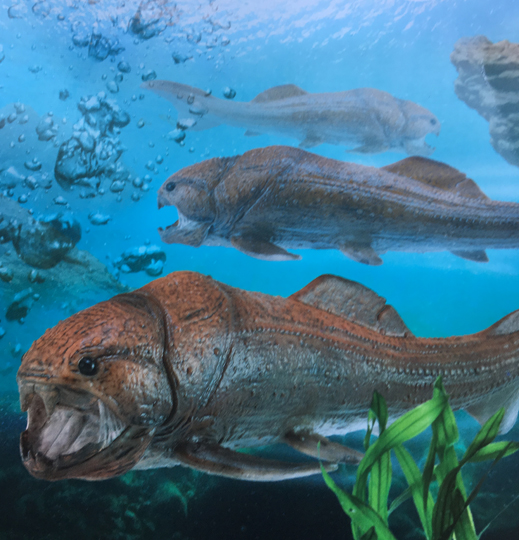
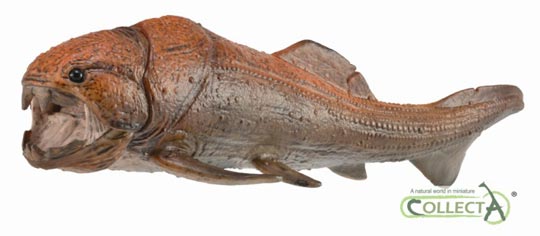
One of the iconic animals of the Devonian is the large, placoderm predator Dunkleosteus (D. terrelli). This huge, prehistoric fish with self-sharpening shears for jaws and an armoured head is just one of more than 200 genera of placoderms described to date, but as it measured around six metres in length, it competed with early sharks for the role of apex marine predator. The new for 2018 CollectA 1:20 scale replica of this carnivore is one of just a handful of models that have been produced, as such, it is very rare to have any Devonian vertebrates included in the model portfolio from a mainstream manufacturer.
The CollectA 1:20 Scale Dunkleosteus Model
The CollectA 1:20 Scale Replica of Dunkleosteus
The CollectA 1:20 scale Dunkleosteus replica which was introduced in 2018.
To view the CollectA 1:20 scale Dunkleosteus model and the other figures in the CollectA Deluxe range: CollectA Deluxe Prehistoric Life.
Dermal Armour Up to Five Centimetres Thick
The formidable, armoured head might have made up more than a third of the animal’s entire body length and there is no doubting that this fish had a ferocious bite, but scratches, puncture wounds and gouges preserved on the dermal plates (which in the very biggest specimens were up to five centimetres thick), attest to the fact that these carnivores were attacked themselves. Whether this pathology, preserved on the fossils represents a record of attempted predation, or whether these wounds were caused by intraspecific combat remains open to debate.
Intriguingly, if other Dunkleosteus fish did not cause these wounds, then what sort of marine predator did? Is there some unknown Devonian assailant still awaiting discovery in Late Devonian strata somewhere?
A Reconstructed Skull of Dunkleosteus on Display at the Senckenberg Nature Museum
A Dunkleosteus cast on display at the Senckenberg Nature Museum (Frankfurt, Germany). Picture credit: Everything Dinosaur.
Picture credit: Everything Dinosaur
The Class Placodermii
The placoderms (Class Placodermi), arose in the Early Silurian and they persisted for tens of millions of years, evolving into a myriad of forms. However, as far as the fossil record goes, there is no record of placoderms surviving into the Carboniferous. The last of these armoured fish became extinct at the end of the Devonian (Famennian faunal stage of the Late Devonian).
Win “You’re Roarsome” – Dinotastic Puns and Quotes
WIN! WIN! WIN! with Everything Dinosaur!
THIS COMPETITION IS NOW CLOSED.
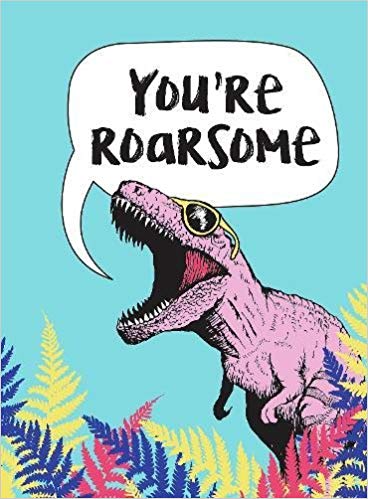
Everything Dinosaur has teamed up with those clever, creative people at Summersdale Publishers and we have two copies of their latest offering “You’re Roarsome” to give away. “You’re Roarsome” is an uplifting little book, full of dinosaur themed puns and quotes to rock your world.
Win a Copy of “You’re Roarsome” – (Front Cover Picture)
This pocket-sized, prehistoric publication is jam-packed with quotes, sayings and puns to tickle your “funny bone”, enthuse and inspire. With a pink Tyrannosaurus rex in sunglasses on the front cover and quotes from such luminaries as William Shakespeare, Nelson Mandela and Bruce Lee inside, nothing like this has been published for over 65 million years!
Win a Copy of “You’re Roarsome” Thanks to Everything Dinosaur
All you have to do is “Like” Everything Dinosaur’s FACEBOOK page, then comment on the “You’re Roarsome” front cover picture, just tell us your favourite dinosaur and we will enter you into our free prize draw.
We will draw the lucky winners at random and the “You’re Roarsome” competition closes on midnight Monday 30th July. Good luck, we hope you win this “Pterrific” little book.
To view Everything Dinosaur’s range of dinosaurs and prehistoric animal models and toys: Everything Dinosaur.
Win a copy of the “You’re Roarsome” book with Everything Dinosaur. Like our Facebook page and comment on the front cover picture by telling us your favourite dinosaur to enter this free prize draw.
Plant Fossils Pinpoint the Timing of the Uplift of South-eastern Tibet
The immense Tibetan Plateau which borders the Himalayas, is sometimes referred to as the “roof of the world”. This foreboding landscape rises thousands of metres above sea level, it harbours a unique ecosystem and is the source of some of the most economically significant rivers in the world. However, when this plateau was formed and the geological mechanisms that led to this part of Asian being uplifted to form this elevated plain, are poorly understood.
Fossilised plants may help determine when the uplift occurred. This may seem unlikely, when studying tectonic forces, but by looking at living flora, scientists can determine information about the climate and habitat that the plants are living in from their shape, leaf size and structure. These same pointers can be identified in fossil plants too.
Plant Fossils Helping to Unlock the Geology of South-eastern Asia
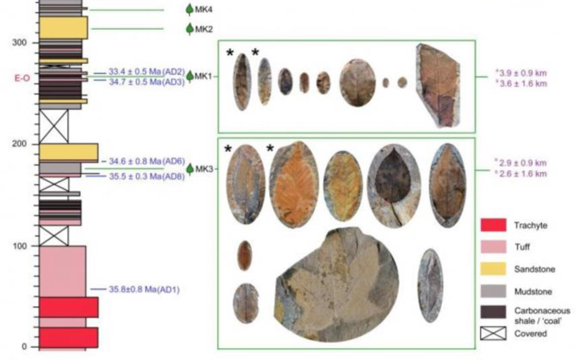
Plant fossils associated with different layers in the Markan Basin provide an indication of climate change and geological uplift.
Picture credit: Chinese Academy of Sciences
Plants Interact with Their Environment
Plants live at the Earth’s surface and have to constantly interact with the atmosphere, their leaves are very good at recording their surroundings, including properties of the atmosphere that are related to altitude.
Researchers from the Chinese Academy of Sciences (CAS), more specifically from the Xishuangbanna Tropical Botanical Garden (XTBG), have been examining plant fossils from the Lawula Formation in the Markan Basin, south-eastern Tibet. They have used plant fossil evidence to assess the date of the uplift of south-east Tibet. The mountain range building may have been accelerated when the Tibetan Plateau was already around three kilometres above sea level and rising to its present-day height.
Fortunately, the strata with plant fossils were found between volcanic ash layers that allowed them to be precisely dated using argon isotope degradation analysis. It turned out that the fossil assemblages were much older than their relatively modern appearance would suggest.
Several thousand fossil leaves were examined from four different layers of sediment. Two fossiliferous layers proved to be the most important for this study. The lower level (MK3), was dated using the isotope analysis to around 34.6 million years ago, whilst the upper layer (MK1), was dated to 33.4 million years ago. As such, these deposits span the Eocene-Oligocene Epoch Transition (around 33.9 million years ago), a time when there was dramatic climate change.
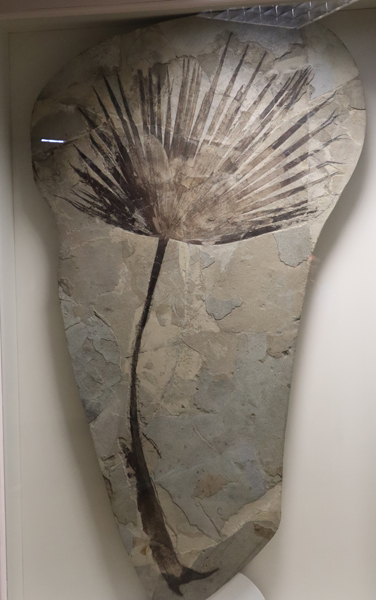
An Amazing Fossil Plant on Display at a Museum
A fossil palm frond from Wyoming (most likely). A spectacular fossil plant. Picture credit: Everything Dinosaur.
Picture credit: Everything Dinosaur
Fossil Plant Study
Intriguingly, the older layer MK3 is dominated by leaves of the ring-cupped oak and members of the birch family, whereas MK1 consists almost exclusively of alpine taxa with small leaves. The plant fossils suggest that the habitat changed from a relatively temperate evergreen and deciduous broad-leaved plant dominated flora to alpine scrub.
The CAS research team concluded that during the Eocene-Oligocene Transition, south-eastern Tibet was around three kilometres high and actively rising, close to its present-day height. The team’s results demonstrate that the onset of geological uplift took place earlier, some ten million years earlier than previously suggested.
The Elevation of Tibet
The results show that the elevation of south-eastern Tibet took place largely in the Eocene, which has major implications for uplift mechanisms, landscape development and the evolution of the flora and fauna of this region.
The argon isotope analysis of the volcanic ash layers helping to date the Markan Basin fossils, adds to a growing list of Palaeogene sites in this part of Asia, which are actually far older than biostratigraphic and lithostratigraphic data indicate.
The researchers postulate that their study supports the growing body of scientific opinion that the evolution of the highly diverse Asian biota is s Palaeogene, not a Neogene phenomenon and took place before the end of the Eocene. The evolution of modern-day ecosystems may be deeply-rooted in the Palaeogene and this may have been driven by the changing and complex Tibetan topography and resultant climate change.
The scientists from the Xishuangbanna Tropical Botanical Garden are continuing to collect plant fossils from different parts of Tibet. They hope to build a model framework which permits a much better understanding of the uplift and the forces involved over deep time.
The latest prehistoric animal scale models from CollectA along with information about the new Rebor Velociraptor “Sweeney” and the Eofauna Straight-tusked elephant figure are all included in Everything Dinosaur’s latest customer newsletter (early July 2018). Four new CollectA scale models are in stock, plus the Rebor Velociraptor “Sweeney” reserve list is now open and the Eofauna Straight-tusked elephant model (Palaeoloxodon antiquus) is due to arrive very shortly.
Everything Dinosaur’s Newsletter (Early July 2018) Features the New for 2018 CollectA Scale Models
Two new Permian prehistoric animal figure models have arrived in stock at Everything Dinosaur – CollectA Dimetrodon and the CollectA Estemmenosuchus.Picture credit: Everything Dinosaur.
Picture credit: Everything Dinosaur
Four New CollectA Scale Models
The latest CollectA scale models have arrived at Everything Dinosaur and feature in the company’s latest newsletter. Fans of CollectA have requested that more Palaeozoic figures be added to the range. Earlier this year, a 1:20 scale Dunkleosteus was added and now joining this Devonian placoderm are two Permian figures, representing Dimetrodon and the dinocephalian Estemmenosuchus. Both these figures are also in 1:20 scale.
To view the new CollectA Deluxe scale models and the rest of the CollectA scale model range: CollectA Deluxe Models.
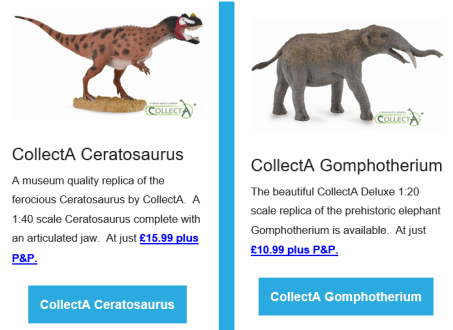
The 1:40 Scale CollectA Deluxe Ceratosaurus and the CollectA 1:20 Scale Gomphotherium Figure
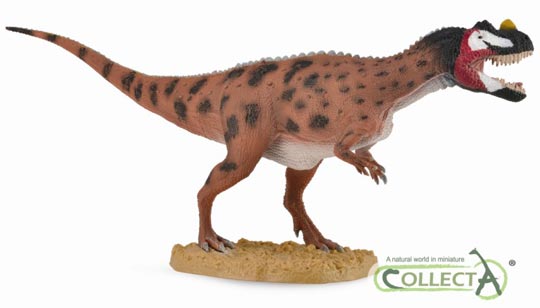
The CollectA Ceratosaurus and the CollectA Gomphotherium models.Picture credit: Everything Dinosaur.
Picture credit: Everything Dinosaur
In addition to the CollectA Dimetrodon and the CollectA Estemmenosuchus, also just in are the 1:40 scale Ceratosaurus dinosaur model and the prehistoric elephant Gomphotherium. Like the CollectA Dimetrodon figure, the 1:40 scale Ceratosaurus dinosaur model has an articulated lower jaw.
The Reserve List for the New Rebor Velociraptor “Sweeney” Has Opened
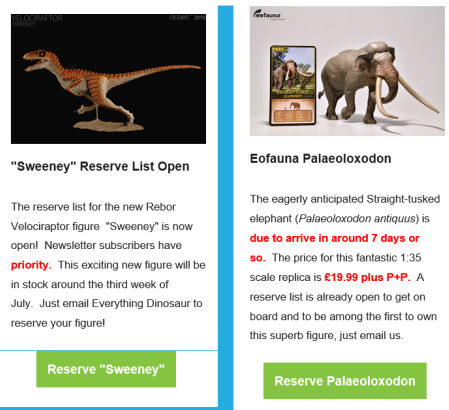
Newsletter subscribers are among the first to learn that another Rebor 1:18 scale Velociraptor replica is on the way. A reserve list has been opened for Rebor “Sweeney”, subscribers can ensure that they are able to purchase this new theropod figure when it arrives at Everything Dinosaur’s warehouse later this month.
To reserve a new Rebor Velociraptor figure “Sweeney” or to request a subscription to Everything Dinosaur’s regular company newsletter, simply drop us an email: Email Everything Dinosaur.
The New Rebor Velociraptor “Sweeney” and the Eofauna Straight-tusked Elephant
The new Velociraptor figure from Rebor “Sweeney” and the Eofauna Palaeoloxodon antiquus.Picture credit: Everything Dinosaur.
Picture credit: Everything Dinosaur
The Everything Dinosaur newsletter is a great way for subscribers to keep up with new model introductions, information about figure retirements and other news about collecting dinosaurs and prehistoric animal figures.
The New Eofauna Straight-tusked Elephant (Palaeoloxodon antiquus)
Readers of our latest newsletter were also provided with an update on the progress being made with the eagerly awaited Eofauna Straight-tusked elephant figure (Palaeoloxodon antiquus). This new prehistoric animal replica, the second in the exciting Eofauna range, is due to arrive at Everything Dinosaur’s warehouse in just a few days.
A reserve list has been opened for this popular 1:35 scale model, collectors don’t need to tie a knot in their trunks to remember, let Everything Dinosaur take care of reserving a model for you. When the stock arrives, we will set a figure aside for you and even drop you an email to let you know that this model is available to purchase.
Newsletter subscribers can look out for more updates about other new for 2018 figures shortly. At Everything Dinosaur, we do all we can to keep our readers and subscribers informed.
By Mike|2023-10-18T07:16:14+01:00July 3rd, 2018|Categories: General Teaching|Comments Off on A Very Big Trilobite
A Very Big Trilobite
The Wren’s Nest/Castle Hill site near Dudley in the West Midlands is one of the most important sites anywhere in the world for Silurian fossils. At this location there are superb exposures of Middle Silurian strata (Wenlock and lower Ludlow series). Coal seams in the surrounding hills date from the later Middle Carboniferous. The lime and coal at this location made this part of England a focal point for the industrial revolution.
There are lots of fossils to be found too, including trilobites.
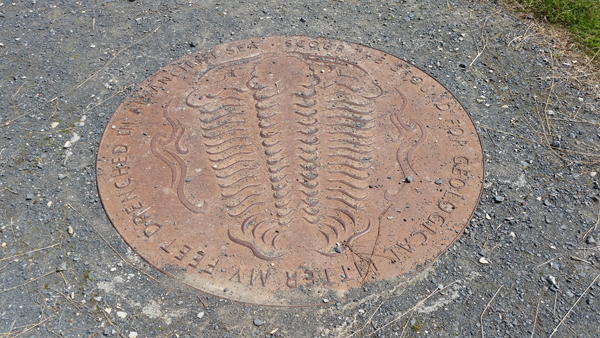
A Commemorative Plaque Recognising the Significance of Wren’s Nest
A trilobite plaque at the Wren’s nest SSSI (Dudley, West Midlands). Picture credit: Everything Dinosaur.
“Scour the ground for geological litter my feet drenched in an ancient sea.”
The fossils preserved at Wren’s Nest represent marine life on an ancient reef system which is around 420 to 425 million years old. This an amazing (and free) place to visit, a beautiful nature reserve that was designated Britain’s first National Nature Reserve for geology back in 1956.
Cracking the Code – What Eggs and Eggshells Can Tell Us
A researcher based at the University of Edinburgh has produced a “cracking” assessment on the use of eggs and eggshells of living and extinct archosaurs to obtain information about ancient environments, the behaviour and biology of vertebrates that may have lived many millions of years ago.
Writing in the open access Royal Society Open Science, Shaena Montanari (School of GeoSciences, Edinburgh University), has reviewed how the use of eggshells in the modern and fossil record allow an interpretation of a variety different archosaurs and other amniotes across deep time, providing a unique record of ancient environments and ecosystems.
A Nest of Large Dinosaur Eggs
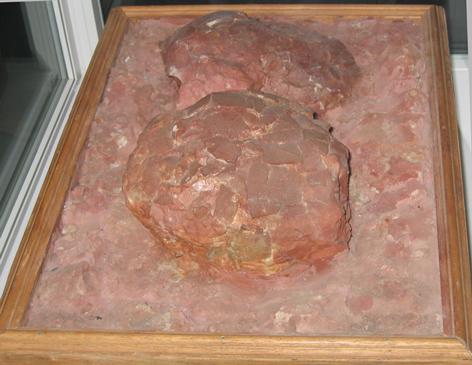
An example of titanosaur fossil eggs. Fossil eggs and eggshell can provide valuable insights into egg-layers and environments. Picture credit: Everything Dinosaur.
Picture Credit: Everything Dinosaur
Archosaur Eggs – Overlooked Body Fossils
Biologists studying living vertebrates and palaeontologists studying extinct animals can look at the skeleton (fossil bones) and make deductions. Other materials in both modern and ancient environments can be overlooked. Take for example, the shelled eggs of archosaurs, the Squamata and potentially monotremes, these, if they are preserved in the fossil or archaeological record, can provide a wealth of information to help support other areas of research.
Palaeontologists know that dinosaur eggs were not that much different from the eggs of living birds. Eggs provide another biogenically created material that can be used to reveal specific information about the egg-layers and the environments they live in when assessed with different types of geochemical, morphological and molecular techniques.
The matrix surrounding the holotype fossil material of the dromaeosaurid Deinonychus (D. antirrhopus), contained fragments of fossil eggshell, later assigned (in all probability due to the low energy depositional environment and taphonomy of the fossil material), to Deinonychus. This was the first record of a dromaeosaurid egg, however, this material was either overlooked or perhaps ignored when the dinosaur bones were first found back in the 1930s.
Examples of Fossil Eggshell
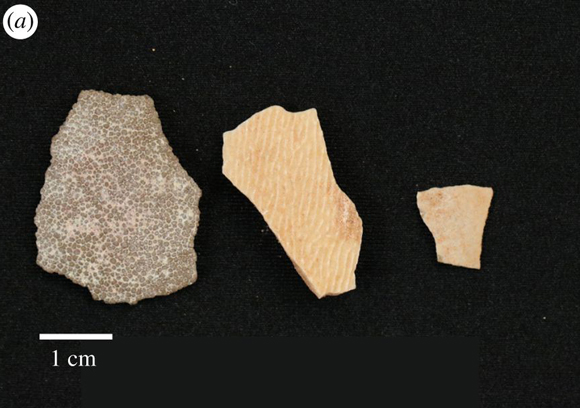
Three examples of fossil eggshell.
Picture credit: Royal Society Open Science
The photograph (above) shows three examples of dinosaur eggshell fragments from the Gobi Desert. Such items may be overlooked in the quest for more substantial body fossils but different eggshell types possess varied forms of ornamentation and can help to establish more information about the fossil biota. The three pieces in the photograph, probably represent different types of dinosaur (from left to right titanosaur, oviraptorid and potentially troodontid). Microscopic analysis of the shell structure, along with pore density and isotope data can provide information about the ancient environment and inferred nesting behaviour of long extinct creatures.
Isotope Analysis
Isotope analysis from eggshell can even provide information on the diet of the animal that laid the egg.
Post-doctoral researcher Shaena, explains in the paper that archaeologists can learn a remarkable amount about early human settlements by examining ostrich eggshells. Ostrich eggshell is found in association with human food waste dumps, as bead decorations, sometimes associated with ritual burial or as containers for water. Archaeological sites as far apart as China, India and north Africa have yielded Ostrich egg remnants. These pieces of shell could be used to provide direct evidence of environments where early communities settled.
A Selection of Whole or Virtually Complete Dinosaur Eggs
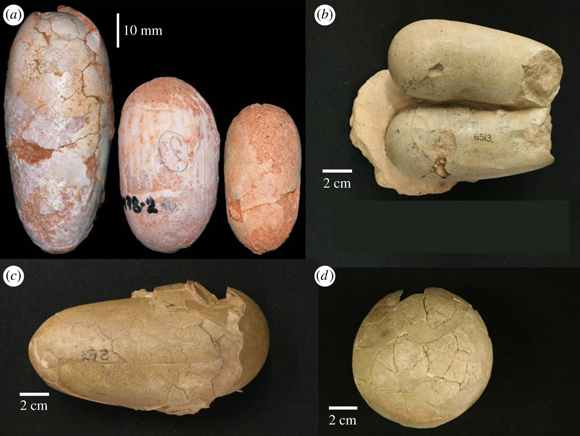
Examples of whole or partial fossilised eggs.
Picture credit: Royal Society Open Science
The photograph shows a variety of fossil archosaur eggs from Mongolia (a) three bird eggs from the Gobi Desert, (b) a pair of unidentified theropod dinosaur eggs from the Cretaceous of Mongolia (AMNH FR 6513). Photograph (c) shows an oviraptorid egg (Cretaceous of Mongolia -AMNH FR6508) and (d) is a probable Ornithopoda egg, again from the Cretaceous of Mongolia (AMNH field number 707)
Clumping Isotopes – Learning About Body Temperature
Researchers have developed a technique in which the body temperature of the dinosaur laying the egg can be calculated by plotting the presence of two rare isotopes found in calcium carbonate a key element in the formation of eggshell and a material that has a high preservation potential. From an analysis of the way in which these two isotopes clump together in the same molecule, scientists are able to infer data about the body temperature of the mother.
As the eggs are formed within the oviduct(s) of egg-laying animals, the temperature of mineral formation should reflect the body temperature of the ovulating female. In this way, such studies can inform the debate about endothermy or otherwise within the Dinosauria.
The scientific paper: “Cracking the Egg: The Use of Modern and Fossil Eggs for Ecological, Environmental and Biological Interpretation” by Shaena Montanari and published in the Royal Society Open Science.
Brindabellaspis – Placoderm Resident on Australia’s First Reef
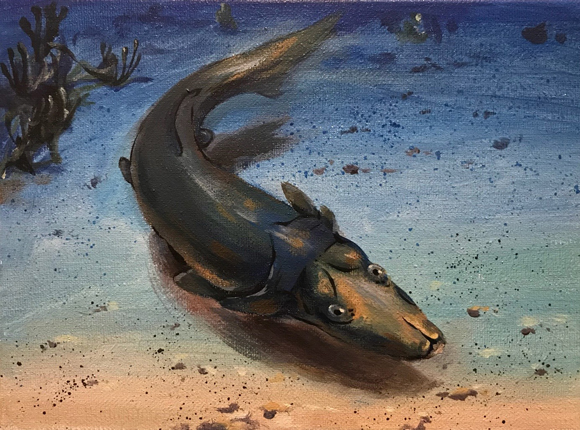
The Queensland coast (Australia), might be famous for its Great Barrier reef today, but this was not Australia’s original reef, some 400 million years ago, there was a reef, located in what is now New South Wales, mostly built by entirely different types of organisms, that was a natural wonder of the Early Devonian. Living on the bottom of the shallow sea in which this ancient reef formed was a strange-looking fish, with a sensitive beak, oddly reminiscent of another, not quite so ancient resident of “Down Under” – a duck-billed platypus. This strange animal has been named Brindabellaspis stensioi.
New Research Suggests that Brindabellaspis stensioi had a Sensitive “Beak” Like A Duck-billed Platypus
Brindabellaspis stensioi illustration.
Picture credit: Jason art Shenzhen
Brindabellaspis stensioi
The placoderm, named Brindabellaspis stensioi was originally scientifically described in 1980. However, new fossil specimens, revealed by carefully removing the rock matrix using dilute acids, have shed new light on the evolution of jaws and provided palaeontologists with evidence that the earliest fish dominated ecosystems supported a myriad of forms.
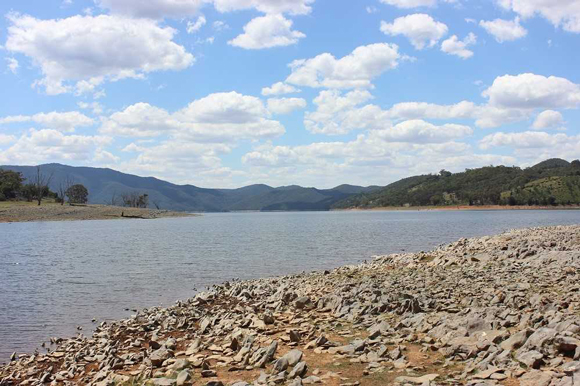
Limestone beds exposed on the shores of Lake Burrinjuck in New South Wales have preserved an extensive reef fauna. Over seventy species of fish have been identified to date, of these, it is the placoderms that dominate, with around 45 species named and described so far. Palaeontologists from Flinders University (South Australia) and the Australian National University (Australian Capital Territory), have reconstructed two of the ancient fossils and discovered that Brindabellaspis had a long bill (rostrum), extending out in front of its eyes.
The Picturesque Limestone Beds of Lake Burrinjuck
Lake Burrinjuck in New South Wales (Australia).
Picture credit: Flinders University
One of the authors of the study, published in “Royal Society Open Science” Benedict King, a Flinders University graduate stated:
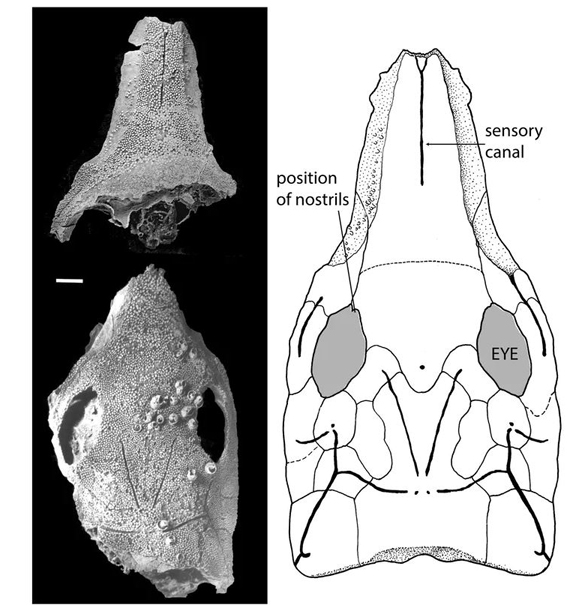
“This was one strange looking fish. The eyes were on top of the head and the nostrils came out of the eye sockets. There is this long snout at the front, and the jaws were positioned very far forward.”
A Unique Sensory System
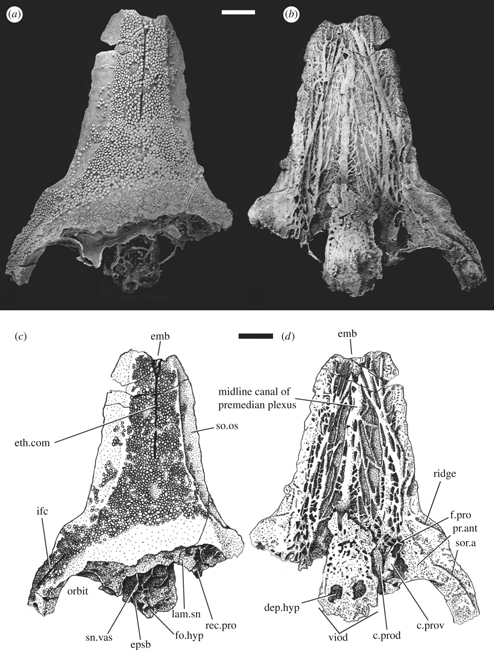
Following a comprehensive evaluation of the skull including the anterior portion (revealed for the first time with these new specimens), the researchers discovered an exceptionally long premedian bone forming an elongated rostrum, supported by a thin extension of the postethmo-occipital unit of the braincase. This seems to be a modified form of pressure sensor, perhaps used to detect prey in the muddy/sandy bottom of the seafloor.
Professor John Young (Flinders University), a world authority on ancient fish and a co-author of the paper added:
“We suspect that this animal was a bottom-dweller. We imagine it used the bill to search for prey, somewhat like a platypus, while the eyes on top of the head looked out for danger from above.”
Adding the Missing Pieces – Thirty-Eight Years Later
For Dr Gavin Young (Flinders University), the discovery of the front portions of the skull and that remarkable, sensitive rostrum helps to “flesh out” his original research on Brindabellaspis stensioi. Dr Young has spent more than five decades studying the fossil fish from the Lake Burrinjuck limestone beds, Dr Young was responsible for naming and describing this placoderm in 1980, now thanks to these new fossils and high-resolution X-ray tomography, this 400-million-year-old fish has a face, albeit a very peculiar one, but one that may demonstrate convergent evolution with the egg-laying monotreme (platypus – Ornithorhynchus anatinus).
New Specimens of Brindabellaspis stensioi Included in this Study
The rostrum and one of the new skull fossils with a line drawing. Note scale bar (left) equals 1 centimetre.
Picture credit: Royal Society Open Science
Dr Young explained:
“When we saw the dense sensory tubes on another broken snout, we immediately thought of the local platypus. I am very gratified there is finally an accurate reconstruction of this strange skull.”
Specialists and not Generalists
The scientists conclude that as Brindabellaspis was clearly such a specialist, then the ancient reef was a thriving and very diverse ecosystem with very probably, a range of specialist organisms making a living on the reef and in the surrounding shallow waters.
Professor Long commented:
“Despite this being one of the earliest well-known ecosystems including many species of fish, the inhabitants of this ancient reef were clearly not in any way primitive. The new findings show that they were highly adapted and specialised in their own right.”
The Elongated Premedian Plate (Rostrum) of Brindabellaspis stensioi
The elongate premedian plate of Brindabellaspis. ANU V3247 in dorsal (a) and ventral (b) views. (c,d). Interpretative drawings of a and b. Scale bars represent 10 mm.
Picture credit: Royal Society Open Science
The scientific paper: “New Information on Brindabellaspis stensioi Young, 1980, Highlights Morphological Disparity in Early Devonian Placoderms” by Benedict King, Gavin C. Young and John A. Long published in by Royal Society Open Science.
Everything Dinosaur acknowledges the assistance of a press release from Flinders University in the preparation of this article.
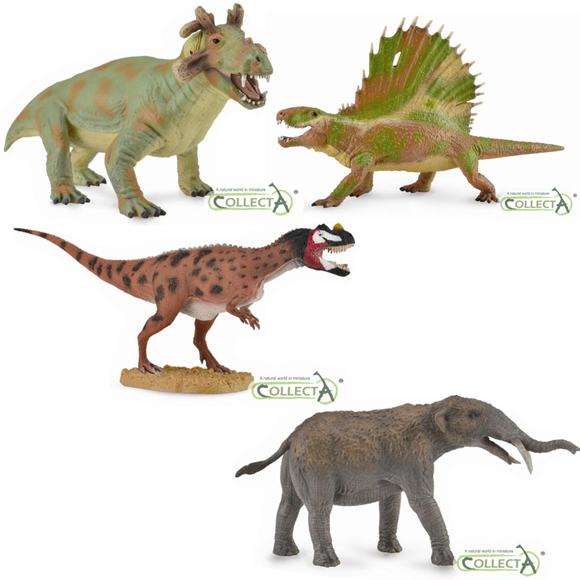
The new for 2018, CollectA Deluxe prehistoric animal models are in stock at Everything Dinosaur. The CollectA 1:40 scale Ceratosaurus, along with the CollectA 1:20 scale Dimetrodon, Gomphotherium and the amazing Estemmenosuchus. These hand-painted replicas are welcome additions to, what is already an extensive range of prehistoric animal figures offered by CollectA
CollectA Prehistoric World Scale Models in Stock at Everything Dinosaur
CollectA Prehistoric World – prehistoric animal models in stock at Everything Dinosaur.
Picture credit: Everything Dinosaur
The picture above shows the latest figures to be added to Everything Dinosaur’s CollectA inventory. In response to the requests from model collectors, the company has decided to make more models of Palaeozoic animals, hence the addition of the bizarre, “crowned crocodile” Estmmenosuchus and the iconic, sail-backed reptile Dimetrodon.
A model of the Late Devonian Placoderm Dunkleosteus was introduced by CollectA earlier in the year. Another theropod dinosaur has been added, this time it is a 1:40 scale model of the Late Jurassic predator Ceratosaurus. The last of the quartet is a superb replica of the early elephant (Gomphotherium), a timely reminder, that the elephant family was once far more diverse than it is today.
CollectA Deluxe – The Age of Dinosaurs 1:40 Scale Range
As the CollectA range has expanded, the company has undertaken a degree of rebranding. A new “Age of Dinosaurs 1:40” scale range has been introduced, although model collectors will note that it also includes pterosaurs and marine reptiles.
New to this range is the 1:40 scale Ceratosaurus, a vividly coloured meat-eating dinosaur with an articulated lower jaw. A number of species have been assigned to the Ceratosaurus genus, most of which were somewhat lighter and smaller than other hypercarnivores associated with the Morrison Formation of the United States. To achieve an accurate depiction, CollectA have cleverly depicted their Ceratosaurus figure on a sculpted base. This permits a more dynamic pose and allows the hind feet to be in appropriate proportion to the rest of the body.
The New for 2018 CollectA 1:40 scale Ceratosaurus Model
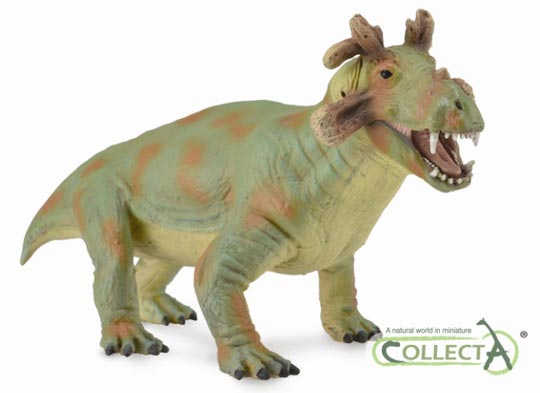
Three new models have been added to this range. There is the remarkable Estemmenosuchus, a large, robust animal, distantly related to modern mammals. Fossil of this Dinocephalian come from Europe (Russia). Two species have been described, the smaller, E. mirabilis (which we think this CollectA replica represents), was named and described fifty years ago. It is apt therefore, that on the golden anniversary of the naming of this species, CollectA should introduce a 1:20 scale replica.
Famous for the Bony Horns – Estemmenosuchus from CollectA
A Deluxe 1:20 scale Estemmenosuchus model from CollectA.
1:20 Scale Dimetrodon Model
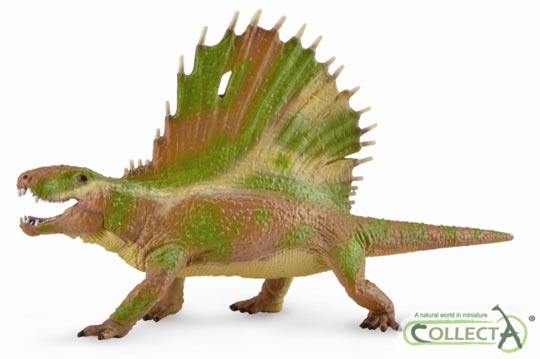
No Palaeozoic model series is complete without a replica of Dimetrodon. This pelycosaur is one of the best known of all the Permian synapsids and a number of species have been named. The new for 2018, CollectA Dimetrodon is in 1:20 scale and it shows some of the very latest thinking concerning this carnivore. That famous sail does not extend all the way up those tall spines, reflecting the views of a number of palaeontologists.
The Dimetrodon has been given a coat of camouflage, a nod to the likely predatory habits of this reptile, it was probably an ambush hunter, relying on camouflage to permit prey to approach too close, unaware of the presence of the predator. The CollectA model also has an articulated lower jaw. Note also the hole in the sail, many fossil specimens show signs of pathology, so CollectA have given their Dimetrodon figure a little bit of “battle damage”.
The CollectA 1:20 Scale Dimetrodon Model
CollectA Dimetrodon in 1:20 scale.
CollectA Deluxe Gomphotherium
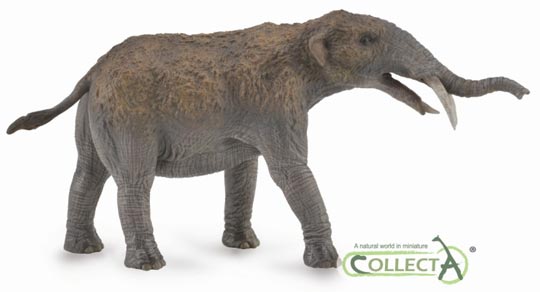
Last but not least, is the excellent CollectA Deluxe Gomphotherium figure. This model too is in 1:20 scale and it is great to see another species of prehistoric elephant being included in the model series. Although the Gomphotheres have an extensive fossil record, with some evidence suggesting the very last of them died out around 8,000 years ago, they are not that closely related to extant elephants.
The CollectA Deluxe Gomphotherium 1:20 Scale Model
The CollectA 1:20 scale Gomphotherium model.
Intriguingly, the length of the trunk is speculative, as the trunk contains no bones, it does not readily fossilise and the length of this iconic piece of a Proboscidean is not known. CollectA have opted to give their Gomphotherium figure a functional trunk.
Commenting to Everything Dinosaur when these models were first announced, designer Anthony Beeson stated:
“He [the Gomphotherium model] is an addition to our prehistoric elephants. He is a strange beast with his upper enamel-covered tusks recurving whilst the lower are thought to have been used for digging up roots or water plants. The length of the trunk is unknown, so I have calculated what I believe would be a useful length. I have given him a partial furring of hair.”
All four of these exciting replicas are now in stock at Everything Dinosaur.
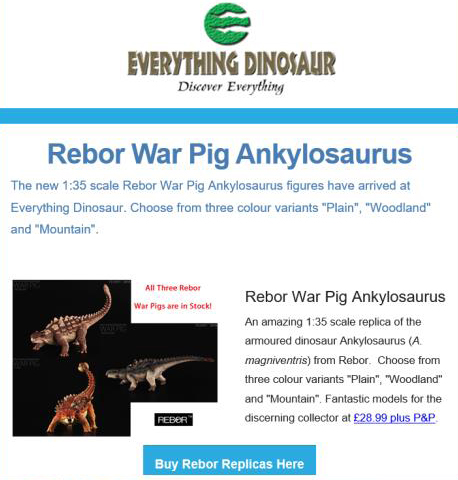
The Rebor War Pig Ankylosaurus, new Schleich models, Mojo dinosaurs, the Beasts of the Mesozoic range and Kaiyodo Tyrannosaurus rex figures all feature in Everything Dinosaur’s latest customer newsletter (end June 2018). Every once in a while, we send our subscribers an email newsletter that helps to keep them informed about developments at Everything Dinosaur and new model ranges.
Everything Dinosaur’s Newsletter (June 2018) Features the Rebor War Pig Ankylosaurus
Rebor War Pig Ankylosaurus models are in stock at Everything Dinosaur. Picture credit: Everything Dinosaur.
Picture credit: Everything Dinosaur
Rebor War Pig Ankylosaurus Figures Feature in Customer Newsletter
The new Rebor War Pig figures (Ankylosaurus), make the headlines in our latest newsletter. There are three colour variants of the War Pig Ankylosaurus, each variant represents a habitat in which this Late Cretaceous armoured dinosaur could have lived – “Plain”, “Woodland” and “Mountain”. All three of the models have been beautifully crafted and there is quite a debate amongst model collectors and dinosaur fans as to which colour scheme is favourite.
Beasts of the Mesozoic Saurornitholestes sullivani and New Mojo Models
Beasts of the Mesozoic Saurornitholestes and new Mojo models for 2018. Picture credit: Everything Dinosaur.
Picture credit: Everything Dinosaur
Beasts of the Mesozoic and Four New Mojo Models
Newsletter subscribers were the first to learn that another shipment of the very popular Beasts of the Mesozoic 1:6 scale “raptor” figures is on the way. This shipment will also include two new additions to the range that Everything Dinosaur stocks. In addition, the latest information on the new for 2018 Mojo dinosaur models was also provided. Four new models are being introduced by Mojo and a number of existing replicas have been given new paint schemes. To find out more, we recommend subscribing to our newsletter.
To request a subscription to Everything Dinosaur’s regular newsletter, simply drop us an email: Email Everything Dinosaur.
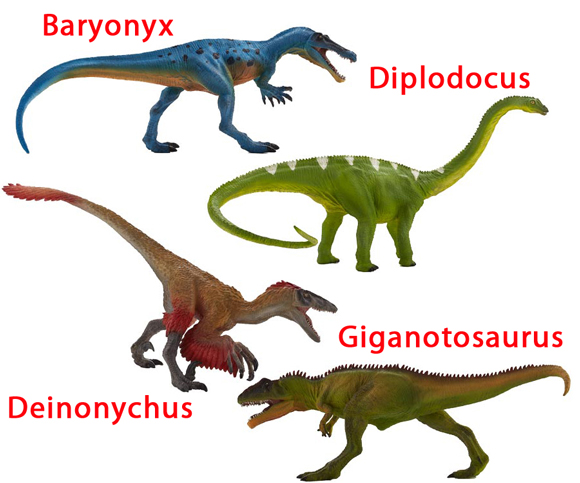
The Four New for 2018 Dinosaur Models from Mojo
Four new Mojo models.Picture credit: Everything Dinosaur.
Picture credit: Everything Dinosaur
All four of the new for 2018 Mojo models are lizard-hipped dinosaurs – Saurischia. The models represent Baryonyx, Deinonychus, Diplodocus and the giant carnivore Giganotosaurus.
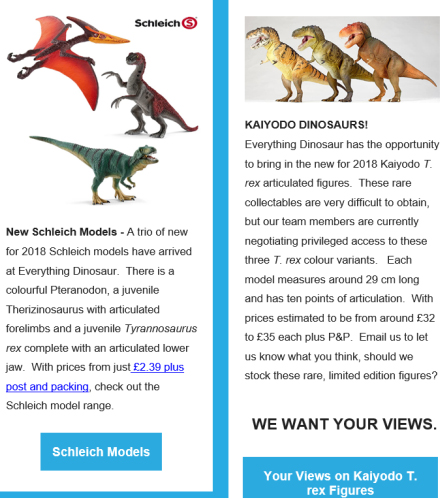
Our latest newsletter includes information on three, recently introduced Schleich figures, the last replicas to be added to their “Conquering the Earth” range for this year. The models are a very colourful Pteranodon, plus a juvenile T. rex and a juvenile Therizinosaurus. The Schleich juvenile T. rex has an articulated lower jaw, whereas, the Schleich juvenile Therizinosaurus has moveable forelimbs.
Three New Schleich Figures Plus Kaiyodo Market Research
New Schleich replicas and looking at the prospect of adding Kaiyodo figures into the Everything Dinosaur product portfolio.Picture credit: Everything Dinosaur.
Picture credit: Everything Dinosaur
Everything Dinosaur and Kaiyodo in the Customer Newsletter
In the newsletter, we explain that Everything Dinosaur has the opportunity to bring in some limited edition and quite rare Kaiyodo Tyrannosaurus rex collectables. Aimed at model collectors aged 15 and above (15+), Everything Dinosaur is considering bringing in three, articulated T. rex models. Each model measures around 29 cm long and it can be put into multiple poses (ten points of articulation on each figure).
Everything Dinosaur newsletter subscribers are asked for their comments and feedback about this exciting new range from the talented model makers at Kaiyodo.
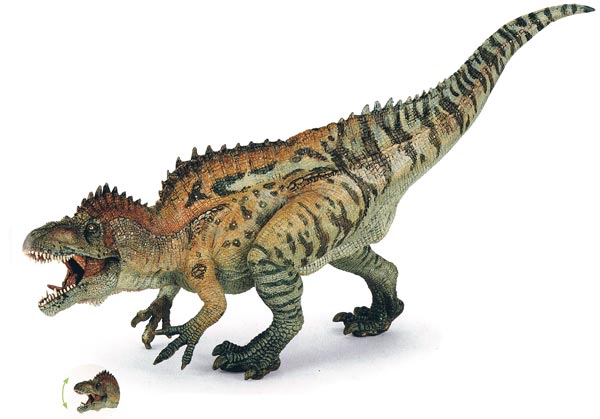
New for 2018 Papo Acrocanthosaurus Model in Stock at Everything Dinosaur
The new for 2018 Acrocanthosaurus colour variant from Papo is now in stock at Everything Dinosaur. Dinosaur fans and model collectors have been eagerly awaiting the arrival of this new version of the Papo Acrocanthosaurus replica, today, that wait came to an end. This Papo figure is going to be very popular.
The Papo Acrocanthosaurus (Colour Variant) Model is in Stock at Everything Dinosaur
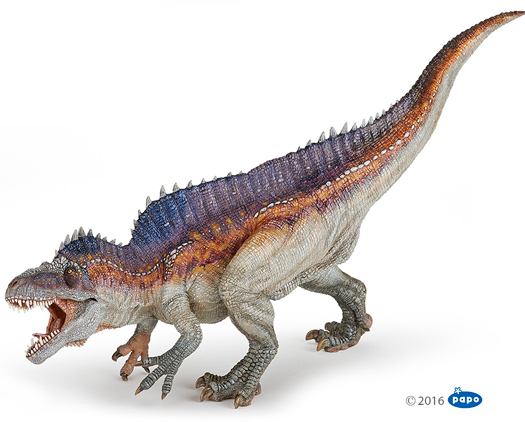
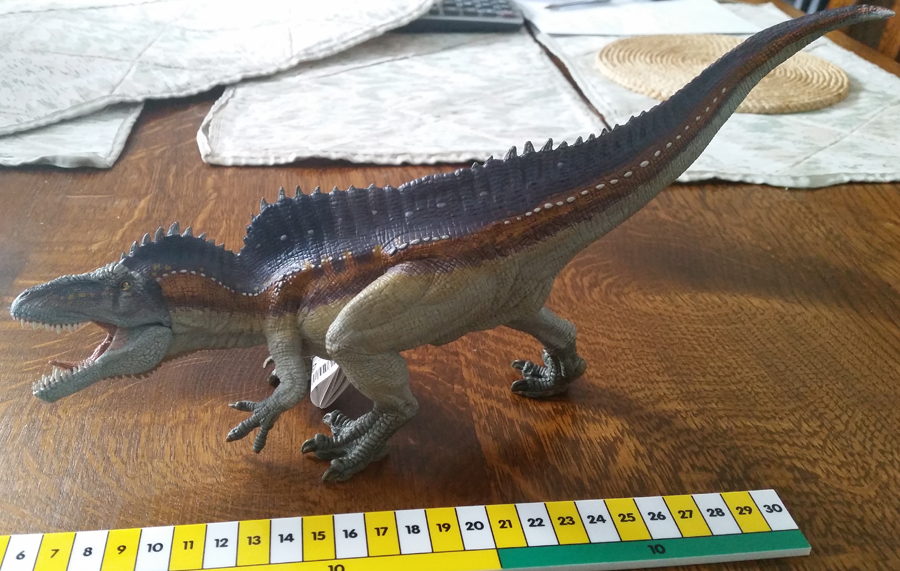
The Papo Acrocanthosaurus (new colour scheme for 2018). This model, like its Acrocanthosaurus predecessor has an articulated lower jaw.
In 2017, Papo introduced a purple-coloured version of Acrocanthosaurus, this model was intended to “whet the appetite” for Papo model fans, as it was withdrawn at Christmas. The new colour variant, nick-named “tiger stripes” replaces the purple colour scheme figure. The Papo Acrocanthosaurus with the purple colouration is no longer in production and rapidly become a rare figure.
The two Papo figures are essentially the same sculpt, but with different paint profiles and colour schemes. The models are quite sizeable, they measure a fraction under twenty-nine centimetres in length and that impressive tail tip is just under sixteen centimetres off the ground.
Fortunately, team members at Everything Dinosaur were able to secure the very last of the production run of the purple Acrocanthosaurus. This figure is available from Everything Dinosaur whilst stocks last, collectors have the opportunity to complete their collection, before this excellent figure becomes extinct.
The Papo Acrocanthosaurus (2017)
The 2017 Papo Acrocanthosaurus dinosaur model. Picture credit: Everything Dinosaur.
Picture credit: Everything Dinosaur
An Early Cretaceous Apex Predator of America
Known from Early Cretaceous strata from the United States, “high-spined lizard”, is estimated to have reached lengths in excess of eleven metres. It probably was the apex predator within the ecosystem, but its classification within the Theropoda has been debated over the years. When first scientifically described (1950), it was assigned to the Allosaurus family, indeed it might be related to the Late Jurassic allosaurs, but most palaeontologists today classify Acrocanthosaurus as a basal member of the Carcharodontosauridae (the shark-toothed lizards).
The tall neural spines associated with many of this dinosaur’s vertebrae inspired the scientific name for Acrocanthosaurus. However, they also clouded the taxonomic assessment. Acrocanthosaurus has been assigned to the Spinosauridae as well as the taxonomic Megalosaurus waste basket in the past. Affinities with the British theropod Becklespinax have also been proposed.
One thing is for certain, this new Papo model with its spectacular “tiger stripes” is going to lead to fans of the Papo model range assigning this particular figure to their model collections.