All about dinosaurs, fossils and prehistoric animals by Everything Dinosaur team members.
24 01, 2011

Best Prehistoric Animal Toy of 2010

By |2023-01-15T10:36:39+00:00January 24th, 2011|Categories: Dinosaur Fans, Everything Dinosaur News and Updates, Main Page|0 Comments

Safari Ltd Kentrosaurus Wins Award

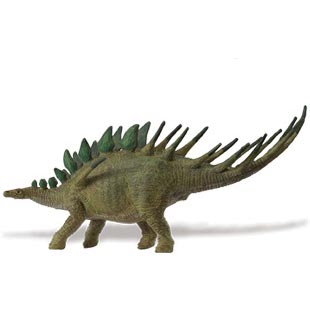
The Kentrosaurus model introduced by Safari Ltd of the United States has won the prestigious – Best Prehistoric Animal Toy of 2010 award.  This award is voted for by readers of Prehistoric Times magazine.  The Safari Kentrosaurus dinosaur model has been voted best Prehistoric Animal Toy of last year (2010).

The Safari Kentrosaurus Dinosaur Model (Wild Safari Dinos Series)

Safari Kentrosaurus dinosaur model

East African Stegosaur wins an award.

The model, which measures approximately 13 centimetres long is finely detailed and shows the latest scientific interpretation of this member of the Stegosauria clade.  Beating off a number of rivals (it helps to have many spikes on your tail), to win this accolade, including a number of new introductions from Schleich, Bullyland, Papo plus Safari themselves, the Wild Safari Dinos Kentrosaurus is a worthy winner.

To view the large range of prehistoric animal models including dinosaurs in the Wild Safari Prehistoric World model series: Safari Ltd. Wild Safari Prehistoric World Models and Figures.

23 01, 2011

Pterosaur Males were the “Peacocks” of the Mesozoic

By |2023-01-15T10:31:44+00:00January 23rd, 2011|Categories: Dinosaur and Prehistoric Animal News Stories, Main Page, Palaeontological articles|0 Comments

Pterosaur Fossil with Egg – Vital Clues to Pterosaur Reproduction

Pterosaurs, those members of the Archosauria alongside the dinosaurs that dominated life in the air for much of the Mesozoic have long fascinated scientists and ordinary folk alike.  These creatures that evolved sometime in the Triassic and went extinct at the end of the Cretaceous, dominated life in the air until the birds, those descendants from theropod dinosaurs came onto the scene.

With no extant animals even coming close to the pterosaurs, scientists had been very much in the dark about a number of aspects about pterosaur habits, life styles, breeding strategies and such like.  However, the finding of a fossilised pterosaur complete with the remains of an unlaid egg that was inside her may provide vital clues to help palaeontologists piece together more information about these fascinating, extinct flying reptiles.

It seems that pterosaurs laid leathery eggs like turtles rather than the hard-shelled eggs that birds lay.  In addition, this new fossil suggests that it was the males of the species that had large head crests, whilst the females were less conspicuous.

The report on the discovery of a pterosaur fossil with evidence of an egg, is in this months edition of the scientific journal “Science”.  The genus concerned is a small, Chinese Pterosaur known as Darwinopterus, named in 2009 to honour the bicentennial of the birth of the naturalist Charles Darwin and also to mark the 150th anniversary of the publication of Darwin’s ground breaking book outlining his theory of natural selection “The Origin of Species”.

To read more about the discovery and naming  of this pterosaur: Pterosaur Transitional Fossil.

Pterosaur Research

The fossil of Darwinopterus was found in the Liaoning Province of China, it has been dated to approximately 160 million years ago, we have put an arrow on the picture we received to highlight the egg which had been expelled by gases inside the body cavity as the organic remains of this pterosaur rotted away.  The fossil was found in sediments that formed at the bottom of an ancient lake, it seems that this little flying reptile suffered a broken wing for some reason and fell into the water, eventually settling on the still bottom where the muddy sediments preserved her remains.

Commenting on the discovery of the egg and its implications for pterosaur gender, David Unwin, a palaeobiologist at the University of Leicester (England) stated:

“In almost none of the previous collections can we tell what the gender of the fossil is.  This is the first association of an egg with an adult, so we can identify it as a female.”

Pterosaur Egg Discovery

The discovery of this fossil, it was found by a local farmer and handed over to Chinese scientists, provides evidence to support a number of theories that had been proposed by palaeontologists.  Firstly, that female pterosaurs had larger, wider pelvic areas than the males, this would permit the storage and passage of eggs.  The lack of an ornate head crest suggests that it was the males who tended to be crested – the peacocks of the Mesozoic.

A chemical analysis of the area shows that there is an absence of calcium carbonate, the mineral responsible for making bird eggs hard.

Under high powered magnification, the researchers could identify folds and pores within the egg (see black arrows on picture).  This suggests that the pterosaur egg had a similar structure to that of a modern turtles, it would have been leathery and “parchment like”.  These soft-shelled eggs, could probably swell and grow in size, absorbing water from the environment rather than having to contain all the water required to make the egg hatch as in the case of the hard-shelled eggs of birds.

Dr Unwin stated:

“By laying soft eggs that could grow in size, pterosaurs could make a much smaller investment in terms of material effort.”

This has implications for pterosaur nesting behaviour, perhaps they buried their eggs in sand, rather than brooding them as birds do.  The fact that the egg has been found in association with the egg layer provides evidence for the relationship between the pterosaur that laid the egg and the size of the actual egg laid.

Dr Unwin went onto add:

“What we now need to do, is to look at lots of pterosaurs and look at other things such as size.  Were males typically bigger or smaller than females?  And other really fundamental kinds of things that we know for living species, we can now look at in pterosaurs.”

This is evidence for a very “reptilian” form of reproduction for the pterosaurs.  This fossil suggests that these flying reptiles, laid their eggs in moist, soft ground and then abandoned them to their fate, in a similar way to turtles today.

Based on the few fossils of juvenile pterosaurs found to date, scientists believe that, unlike birds which need a degree of parental care, pterosaurs once hatched; were fully independent, miniature versions of the adults and capable of feeding for themselves.

Dr Unwin commented:

“The y looked like tiny adults.  They were highly precocious and could almost certainly fly very soon after hatching.”

Mark Witton, a pterosaur research scientist and renowned illustrator based at the University of Portsmouth, when asked about the discovery said:

“What makes this find so special is that the egg was not found in isolation.  We could identify in some cases what species the eggs belonged to, but we have never had a pterosaur egg in association with its mother before.”

Commenting on the size ratio between the mother and the egg, Chatham University palaeontologist Michael Habib stated:

“They seem to be relatively smallish eggs.  That is consistent with most egg-laying animals, but they don’t all do that.”

Pterosaur

The absence of a discernible head crest on the female suggests that it was the male pterosaurs that possessed the ornate head crests.  If this is true, then this discovery will help scientists separate the girls from the boys in other pterosaur genera.

Based on this evidence, the research team thinks only Darwinopterus males sported head crests, which they may have used to communicate with other members of their species.

Dr Unwin, a co-author of the study paper stated that the crests could be used for communication or display, being used to signal to other males that “I’m bigger than you”, or it could be used to tell females that “here I am, carrying this enormous crest, and I’m better to mate with than the chap next door who has a smaller crest.”

To view scale models of pterosaurs such as Dimorphodon and Guidraco: CollectA Deluxe Prehistoric Animal Figures.

22 01, 2011

Dinosaurs Unleashed at the O2 (London Event)

By |2024-04-21T11:58:25+01:00January 22nd, 2011|Categories: Dinosaur Fans, Main Page|0 Comments

Dinosaurs Unleashed from 18th February

Grab a piece of prehistory in London next month with the start of the Dinosaurs Unleashed experience at the O2 arena.  A chance to see Tyrannosaurus rex and Triceratops on the banks of the Thames, plus a total of 22 animatronic prehistoric animals in a unique visitor experience.

Dinosaurs Unleashed

Get up close to some of the most iconic and awesome creatures that ever walked on the Earth, or swam in the sea, or flew in the air for that matter.  Team members at Everything Dinosaur have had the chance to peruse the fantastic exhibits, personal favourites amongst our staff were the tusked, Triassic Placerias and the huge Megalosaurus plus of course the CGI aquarium that brought back to life the Jurassic marine environment with its ferocious and awe-inspiring marine reptiles.  These were just some of the exciting and amazing animatronic animals on display the last time we visited this exhibition.

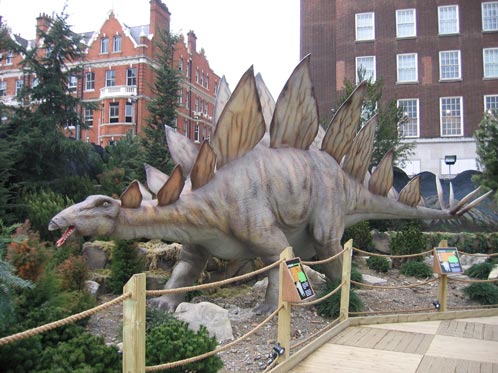
One of the Amazing Animatronic Dinosaurs – Stegosaurus

Picture credit: Everything Dinosaur

One of the really great things about the Dinosaurs Unleashed exhibition is the attention to detail on the models, they really are amazing and give you the chance to see the latest scientific reconstructions of dinosaurs and other prehistoric creatures.  It is only once you have stood alongside a Stegosaurus, like the one in the picture above, that you really appreciate just how big some of these dinosaurs were.

For further details on the Dinosaurs Unleashed exhibition at the O2 arena and for ticket information regarding dinosaur events check out the Everything Dinosaur blog.

There are something like 40 interactive and educational panels providing lots and lots of information about the latest dinosaur discoveries, where they lived, what they hunted and how they evolved.

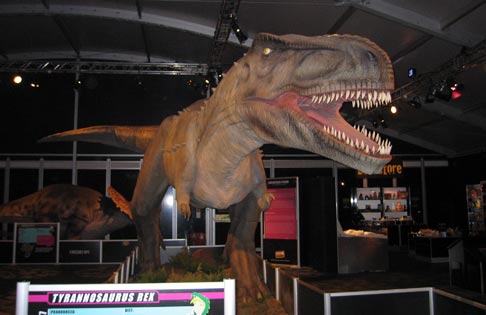
The Enormous T. rex Animatronic Dinosaur

T. rex on display. Dinosaurs Unleashed.

Ferocious T. rex on display.  Picture credit: Everything Dinosaur.

Picture credit: Everything Dinosaur

The animatronic dinosaurs can be a bit scary for very young children, but parents need not worry too much, as the young palaeontologists soon get the idea that these monsters are not going to hurt them.  We loved watching children roaring back at the big Tyrannosaurus rex and trying to avoid catching his watchful gaze.  Lots of information available on the prehistoric animals featured and a great deal of care has been taken by the organisers to pack as much educational information and material into the exhibition as possible.

Dinosaurs Unleashed opens its doors on February 18th, just in time for the half-term school break, and for dinosaur fans from two years of age to those of us considered to be “old fossils”, this exhibition would make a super day out.

To view models and replicas of many of the dinosaurs on display at this exhibition: Dinosaur Models and Figures.

21 01, 2011

Dancing with Dinosaurs – Helping to Inspire Schoolchildren

By |2024-04-21T12:00:05+01:00January 21st, 2011|Categories: Educational Activities, Everything Dinosaur News and Updates, Main Page, Teaching|0 Comments

Year 1’s Interpretation of a Mass Extinction

Yesterday, one of the team members at Everything Dinosaur was at a school, working with teachers and teaching assistants to deliver a dinosaur workshop and to conduct some outreach activities centred around the topic for the term – dinosaurs.  The eager young palaeontologists wanted to show us their dancing with dinosaurs drama routine.

Dancing with Dinosaurs

The students were all very keen and had lots and lots of questions, which were answered with our usual enthusiastic gusto.  At the end of a busy day, the children from Year 1 (aged 5-6) put on a dancing display as they interpreted how they thought the dinosaurs met their demise.  We moved to the hall, and in time to the music, the children at first pretended to be different types of dinosaurs, four-legged herbivores, giant long-necks and ferocious predators.

As the music grew louder (indicating the imminent arrival of an extraterrestrial body such as an asteroid), the “dinosaurs” became scarred and started running around in a panic.  At the crescendo of the music, the asteroid hit the Earth and all the children fell down and stayed very still, indicating the demise of the Dinosauria.

It was a very creative piece of music and movement, helping the young students to burn off some energy after they had been sitting down making dinosaur eggs, and digging for dinosaurs in the sand pit.

The teaching staff had considered how to appeal to different learning styles and to use differentiation in their teaching delivery.  The topic had been very well planned with lots of engagement for all the young students and it was a pleasure to have been a part of it.

I’m sure the children will really enjoy the rest of this term’s topic, after all, teaching about dinosaurs in school is fun.

To view the extensive range of dinosaur and prehistoric animal toys and gifts available from Everything Dinosaur’s award-winning website: Visit Everything Dinosaur.

20 01, 2011

Review of the New Prehistoric Times (Winter 2011)

By |2024-04-21T11:58:57+01:00January 20th, 2011|Categories: Dinosaur Fans, Magazine Reviews, Main Page|0 Comments

Review of Prehistoric Times (Issue 96)

Our copy of Prehistoric Times arrived yesterday, a chance for us to catch up on all things related to prehistoric animal models and palaeontology, plus it reminded us to forward on to the editor some new pictures of the Papo “Dinosaures” releases for 2011.

Prehistoric Times

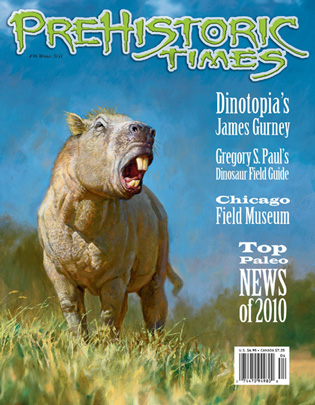
The front cover of the latest edition of Prehistoric Times features the bizarre, gigantic South American extinct rodent Josephoartigasia as painted by James Gurney.   Described as a cross between a “pig and a rhinoceros”, the author and illustrator of the Dinotopia series comments in a brief article, how he went about creating this artwork.  In another section, James outlines how he went about creating a prehistoric scene showing Titanoboa (the largest snake known to science) constricting a large crocodile.

The Front Cover of Prehistoric Times (Winter 2011)

Picture credit: Mike Fredericks

There is a special feature on those cursorial ornithomimosaurs with lots of artwork and illustrations submitted by readers and it is great to see an extensive and highly informative article on that often over looked group of animals the prehistoric giraffes (no pun intended, as if you could literally overlook a giraffe).

A very handy, double page spread written by the excellent Steve Brusatte of the American Museum of Natural History/Columbia University which highlights some of the most important palaeontological news stories of the last year, plus an informative report on the exhibits to be found at the Field Museum (Chicago) can be found in this edition.

Wonderful to read the article about dinosaur colouring books and how they have changed over the last twenty-five years and we were excited to see that there is going to be a re-issue of that amazing Tyrannosaurus rex 1:13 scale model produced originally by Aurora models back in the 1970s.  One of our team members has this kit somewhere, perhaps we should rebuild it, complete with its glow in the dark teeth and set it up in our boardroom.

Once again, a jam-packed edition and a credit to all the writers and illustrators concerned.

To visit Prehistoric Times website: Prehistoric Times.

19 01, 2011

The Remarkable Dinosaur Called “Sarah”

By |2024-04-21T11:59:33+01:00January 19th, 2011|Categories: Dinosaur Fans, Educational Activities, Everything Dinosaur News and Updates, Main Page|1 Comment

The Basal Sauropodomorph – Sarahsaurus

The other day, we were asked by a young dinosaur fan, that if she found a dinosaur could she name it “Sarahsaurus” after herself.  An interesting question, whereas there are certain rules that have to be followed when considering scientific nomenclature, technically there is nothing to stop a person describing an organism that is new to science in a way that commemorates them in some way.

However, in the case of this young girl and her ambition of being able to name a dinosaur after herself, the name Sarahsaurus has already been taken.  In the autumn of 2010, there was a paper published that described a basal sauropodomorph from North America, this animal had already been assigned the genus name Sarahsaurus (Sarahsaurus aurifontanalis).

Known from a single specimen, excavated from Lower Jurassic strata in Arizona (Kayenta Formation), this dinosaur is believed to an ancestor of the Diplodocids and Macronaria that thrived in the Late Jurassic.  Measuring approximately 4 metres in length, Sarahsaurus was much smaller than later sauropods and the fossil represents one of the most ancient (190 million years old) and most primitive long-necked dinosaur fossils discovered to date in North America.

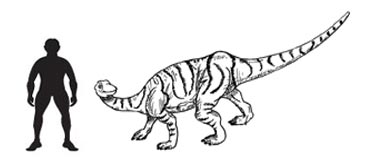
An Illustration of Sarahsaurus

An illustration of Sarahsaurus.

Sarahsaurus illustrated.

Picture credit: Everything Dinosaur

The diagram shows a man next to the Sarahsaurus sketch to give scale.  Sarahsaurus had strong hands with claws and powerful forearms.  Scientists have suggested that this dinosaur, although preferring a quadrupedal stance, could rear onto its hind legs if required.  Perhaps the hands and claws were used to break open termite nests.  By the early Jurassic, termites living in large, social colonies were becoming widespread and Sarahsaurus may have been an omnivore, supplementing its diet of plants with termites and other small animals.

Sarahsaurus was named to honour a patron and supporter of the university that led the excavation (Sarah Butler).  So for our young dinosaur fan, she will have to think up another name to use, should she be lucky enough to discover an organism that proves to be new to science.

For models and figures of Sauropodomorpha dinosaurs: Everything Dinosaur Models and Figures.

18 01, 2011

New Prehistoric Animal Models from Papo of France

By |2023-03-06T15:53:57+00:00January 18th, 2011|Categories: Dinosaur Fans, Everything Dinosaur News and Updates, Main Page|0 Comments

New Model Introductions from Papo in 2011

The pictures of the new prehistoric animal models to be released from Papo of France have been made available to Everything Dinosaur.  The models, two Cretaceous herbivores and a new model of a Smilodon (Sabre-toothed cat) are due to shipped across to us in the early Spring.  New Papo prehistoric animal models have been announced.

Papo Prehistoric Animal Models

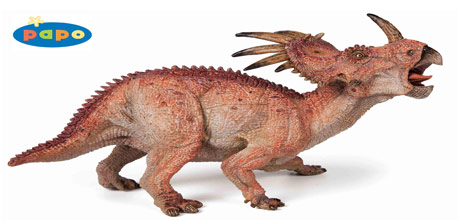
The two new dinosaurs are Styracosaurus and Ankylosaurus.  It is very appropriate to have a new horned dinosaur added to the Papo Dinosaurs range, after a Pachyrhinosaurus was added last year.  There have been a number of papers published on ceratopsians (horned dinosaurs) and a few months ago the excellent “New Perspectives on Horned Dinosaurs”, came out, a volume that provides details on some of the latest research on these large-bodied, quadrupeds.

The Styracosaurus from Papo of France

Picture credit: Everything Dinosaur

The model is very bright and colourful, a distinct contrast to other ceratopsian models.   The skin texture is very carefully done, although the position of some of the epoccipitals, particularly the pair projecting forwards from the neck shield could be debated.  We recommend the Papo Styracosaurus dinosaur model.

Papo Styracosaurus

Interestingly, the model has a row of small spines running the length of the body down to the tip of the short tail.  We are not aware of such a feature being preserved in the fossil record, however, we have to confess that we are a little rusty on this particular genus of centrosaurine.

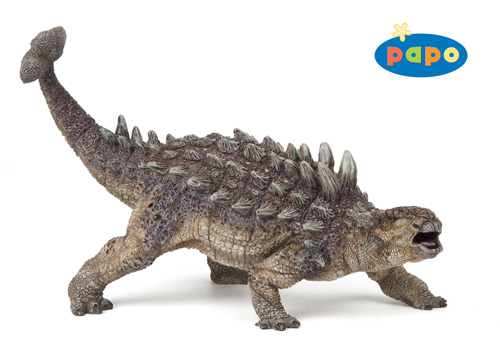
The other new dinosaur model this year from Papo is an Ankylosaurus.  This replica is again, very well made and this plant-eating dinosaur is depicted in a threatening stance.  The tail club is held high as if to see off the attentions of a patrolling tyrannosaurid.  Like all Papo figures in their prehistoric animal model range, the painting and attention to detail is excellent.  Once again, we recommend the Papo Ankylosaurus dinosaur model.

The Papo Ankylosaurus

The Papo Ankylosaurus model.

Picture credit: Everything Dinosaur

To view Everything Dinosaur’s range of Papo dinosaur models and figures and other dinosaur toys: Papo Dinosaurs and Prehistoric Animal Models.

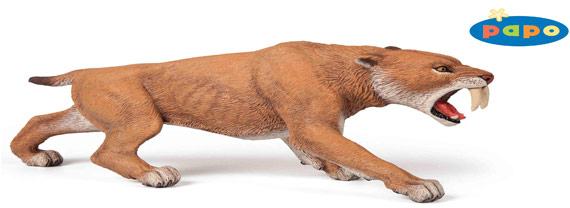
The third new model in the “Dinosaures” range is a replica of a Smilodon (Sabre-toothed cat).  This model works well with the excellent cave men figures that are already in the Papo series and given the retirements of prehistoric mammal models from other manufacturers it is pleasing to see at least one “furry” introduced,

The Papo Smilodon Figure

Papo Smilodon from Everything Dinosaur.

Picture credit: Everything Dinosaur

In total, Papo have introduced something like 80 new models and figures, it is very pleasing to see so many new introductions.  The range Papo market as “Dinosaures” now contains nineteen models.  We remain puzzled as why the entire series is named after dinosaurs as more than a third of the replicas are not actually dinosaurs at all.

17 01, 2011

Mistake in Naming of Flying Reptile

By |2023-03-06T15:55:41+00:00January 17th, 2011|Categories: Dinosaur and Prehistoric Animal News Stories, Everything Dinosaur News and Updates, Main Page|0 Comments

Ms Hubbard’s Contribution to the Discovery of Pterosaur Acknowledged

Science can be defined as the search for truth, and sometimes, despite the very best of intentions the truth can become blurred.  Take for example the announcement recently of the new pterosaur find from British Columbia – Gwawinapterus beardi

Last week we reported on the discovery of new genus of flying reptile that had been discovered in Canada, this new flying reptile, dating from the Late Cretaceous had ferocious teeth located at the front of its jaws, these teeth superficially resembled those of a piranha.

To read more about this pterosaur: New Pterosaur announced with “Piranha-like” Teeth.

Information on this discovery was published in the scientific journal the “Canadian Journal of Earth Sciences” and a number of articles relating to this new pterosaur were subsequently circulated.  However, we at Everything Dinosaur, had already picked up an inaccuracy in the discovery as it was reported by many news sources.

Flying Reptile

Graham Beard,  the curator of the palaeontological collection at the Qualicum Beach Museum and a keen fossil collector himself, was accredited with the discovery of the concretion which contained the skull material and partial jaws that led to the naming of this new genus of flying reptile.  The animal’s specific name honours him.

Unfortunately, Graham Beard did not actually find the fossil,  he was on the beach that day, but the finder of the fossil was Sharon Hubbard, a local artist who also is a passionate fossil collector.

Sharon showed her find, having cracked open the stone nodule which contained the fossil, to Graham.  Mr. Beard took the fossil away and it was eventually sent to the University of Alberta, where it resided for many years under the identifier VIPM1513 until it ended up being reviewed and studied by Victoria Arbour.

Unfortunately, the new species has been named after Mr. Beard, who had been credited with its discovery by some sources.  However, Graham did not find the fossil, Sharon Hubbard did.  We at Everything Dinosaur, were aware of this and in our article on the new pterosaur published on January 11th we were keen to point out that Graham Beard was not the finder of the fossil.

Commenting about the confusion regarding the discovery, Victoria Arbour stated that:

“the academics feel very badly.”

Occasionally, errors of this nature do occur, especially when a considerable period of time lapses between a fossil’s discovery and its scientific study.  A happy ending could be provided if the scientific name were to be altered to reflect Ms. Hubbard’s contribution.

However, this is easier said then done.  Under the conventions of the International Code of Zoological Nomenclature, renaming an already described species is extremely difficult and in this instance it is likely that the new pterosaur will remain as G. beardi.

Sharon, who was the first member of our species to hold the fossil specimen in her hands, had thought it could be called Hornbyensis humbardii, in recognition of her find.

Although not rewarded with the honour of lending her name to the new pterosaur, she has the consolation of having found a very significant fossil.  She continues to search the beach area where she found the specimen, perhaps she will be lucky again and find something else that is unique to science.

Commenting on her fossil hunting, Ms. Hubbard said:

“I tend to find the unusual, I’ve done it over and over again.  Palaeontology is only 150 years old, by finding new stuff, you’re just about an explorer.”

We wish Sharon every success with her fossil collecting, and perhaps in the light of this naming discrepancy, we can do our bit by putting up this article.  Who knows, perhaps Sharon will find another unique specimen that will become the holotype for a new species and this one will have her name.

Addendum

Subsequent research published in 2012 identified the remains as having come from a saurodontid fish.

For pterosaur replicas and flying reptile figures soar over to Everything Dinosaur’s website: Everything Dinosaur.

16 01, 2011

The Size of Velociraptor – Providing Helpful Information

By |2024-04-21T12:03:33+01:00January 16th, 2011|Categories: Dinosaur Fans, Main Page|1 Comment

Velociraptor was not Really That Big

Thank you for the question we received yesterday via email.  We get a lot of questions sent to us via email, letters and through school correspondence.  Given the fact that we were asked about how big Velociraptor actually was, we thought it time to clarify the size of this dinosaur and to rectify the mistakes made in the “Jurassic Park” films. Dinosaur fans send in pictures of their Velociraptor dinosaur model and often ask the question, how big was Velociraptor?

Velociraptor

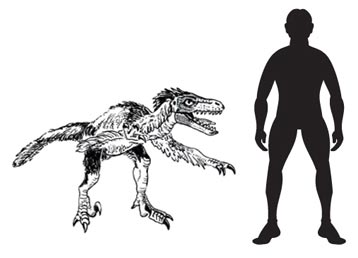
Velociraptor (V. mongoliensis) was a member of the Dromaeosauridae family.  Fast and nimble, this dinosaur was depicted in the Jurassic Park films as being around six feet tall.  In reality, an analysis of the fossil record suggests that most dromaeosaurs were much smaller than this, of course there are exceptions, but based on the fossil evidence V. mongoliensis was about 1.8 metres long (mostly tail), and stood about one metre tall.

Velociraptor was about as tall as a six-year-old child, this is how we explain the size of this dinosaur to primary school children, it gives them a very good base for a reference.

A Scale Drawing of Velociraptor (V. mongoliensis)

Velociraptor scale drawing.

A vicious Velociraptor, a scale drawing of Velociraptor.  Picture credit: Everything Dinosaur.

Picture credit: Everything Dinosaur

The weight of an adult Velociraptor has been estimated to be around 12-15 kilogrammes, about as heavy as a large turkey.  Note that in the drawing above, the Velociraptor is depicted as being covered in feathers.  Most scientists now think that Velociraptor was probably covered in fine, primitive feathers to help insulate these active little animals, although no Velociraptor fossils have yet been found with feather impressions preserved.

Velociraptor Dinosaur Model

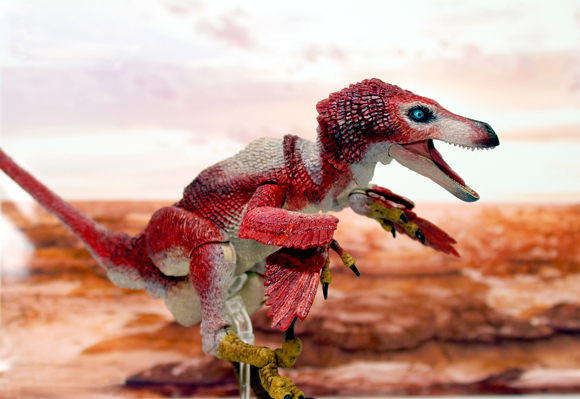
There are a large number of Velociraptor dinosaur models on the market.  The Beasts of the Mesozoic range of articulated figures includes a large number of dromaeosaurid dinosaurs including several Velociraptor replicas.

A Beasts of the Mesozoic Velociraptor osmolskae Model

V. osmolskae - Beasts of the Mesozoic

Beasts of the Mesozoic V. osmolskae.  One of two species of Velociraptor currently recognised.

To view the Beasts of the Mesozoic model range: Beasts of the Mesozoic Models and Replicas.

15 01, 2011

Remembering January 1983 – The Discovery of Baryonyx

By |2023-03-06T15:57:10+00:00January 15th, 2011|Categories: Dinosaur Fans, Main Page|2 Comments

The Start of the Baryonyx Story – January 1983

It seems such a long time ago now, Baryonyx, a strange, fish-eating theropod from the Barremian faunal stage of the Cretaceous (125 million years ago) first came to light in January 1983.  Team members at Everything Dinosaur examine the story of the discovery and look at a Baryonyx model.

Baryonyx

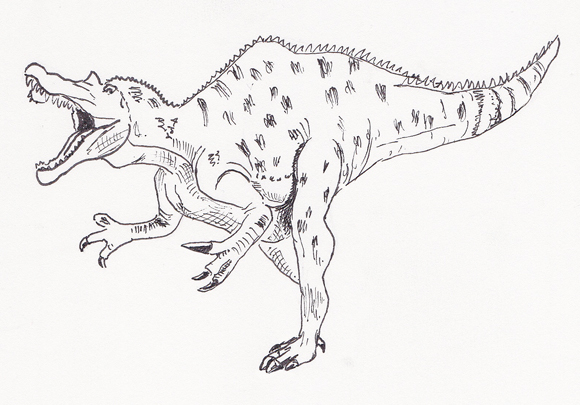
Baryonyx, a large, fish/meat-eater with its huge thumb claws and distinctive narrow jaws, lined with many more teeth than a T. rex.  With individuals growing to exceed lengths of over 10 metres this was a formidable beastie of the Early Cretaceous of Europe.

In January 1983, William Walker, an amateur fossil collector was exploring a clay pit in Surrey (southern England) when he discovered a huge fossil claw bone and other fossil material.  Helped by some friends, he was able to extract a number of fossils and after the Natural History Museum in London was contacted, a full scale excavation took place on the site.

Regarded as one of the most important Cretaceous dinosaur discoveries made in Europe over the last fifty years, almost 70% of an individual Baryonyx’s remains were removed from the clay pit.  So complete was this skeleton that the scientists and researchers were able to gain a great deal of information about the Spinosaurid family from this one specimen.

An Illustration of Baryonyx showing Scale Size (Collecta Baryonyx Dinosaur Model)

A drawing of the theropod dinosaur Baryonyx.

An illustration of the theropod dinosaur Baryonyx. Picture credit: Everything Dinosaur.

Picture credit: Everything Dinosaur

Baryonyx was formally named in 1986 (Charig and Milner).  The type specimen was named Baryonyx walkeri in honour of the amateur fossil hunter who had first made the discovery.

Baryonyx Model

We have been involved in a number of projects to make Baryonyx models, to view a model range that includes Baryonyx and a number of other “British” prehistoric animals:

CollectA Dinosaurs and other dinosaur models: CollectA Deluxe Dinosaur Scale Models.

The CollectA 1:40 Scale Baryonyx with the CollectA Age of Dinosaurs Popular Baryonyx

A pair of CollectA Baryonyx models.

The new for 2020 CollectA Prehistoric Life Baryonyx and behind, the larger 2019 CollectA Deluxe Baryonyx model. Picture credit: Everything Dinosaur.

Picture credit: Everything Dinosaur

Although, other Baryonyx fossils are known, for example some material including teeth from the Isle of Wight, and other elements including skull material from Spain, the Baryonyx specimen from the Surrey clay pit, found twenty eight years ago, remains the only near complete skeleton known.  In fact, this specimen remains the most complete individual, large theropod fossil ever found in western Europe.

To view the CollectA not-to-scale figures: CollectA Prehistoric Life Models.

Go to Top