All about dinosaurs, fossils and prehistoric animals by Everything Dinosaur team members.
17 08, 2008

Notes on the Remarkable Hypsilophodon

By |2024-04-13T08:17:05+01:00August 17th, 2008|Categories: Dinosaur and Prehistoric Animal News Stories, Main Page|0 Comments

Notes on Hypsilophodon – one of the most studied of all Dinosaurs

With the recent new research into the intercostal plates on Hypsilophodon being published we thought it an appropriate time to produce a brief article on Hypsilophodon a small, bipedal ornithopod whose importance to palaeontologists is often overlooked.

At least two species of Hypsilophodon are known, the best known and the one with the most fossil material is Hypsilophodon foxii, however, a second species of Hypsilophodon – H. wielandi has been identified from an isolated femur (thigh bone) found in the USA, but this identification and interpretation has been disputed by a number of scientists as the fossil is indeterminate.

The first remains of any hypsilophodontid to be discovered were found in the a slab of sandstone from the coast of the Isle of Wight in 1849.  The remains, which consisted of a partial skeleton were first thought to be of a young Iguanodon, an animal that had been described in 1825 and whose fossils had been found in the same strata.  By 1868 several near complete skeletons had been recovered from the same area by the amateur naturalist the Reverend William Fox.

This new material displayed several characteristics not known in Iguanodontids and it was proposed that these fossils plus the one found in 1849 did in fact represent a new species of Iguanodon.  This dinosaur was named Iguanodon foxii in honour of the Reverend’s work.

Another renowned English scientist, Thomas Henry Huxley noted that these “miniature iguanodontids” had many differences between them and other known Iguanodon species.  One notable difference was the teeth which were narrower and more sharply pointed than Iguanodon teeth.  This prompted Huxley to rename this dinosaur in 1896. He called it Hypsilophodon foxii.  The name means “high ridge tooth” in recognition of one of its most distinguishing features.  The name is pronounced – hip-sih-low-foh-don.

In 1882, James W Hulke published a paper in the highly influential scientific journal – “The Quarterly Proceedings of the Geological Society”.  He concluded that this little dinosaur was adapted for climbing over rocks and living in trees because of its long fingers and toes plus it could use its tail as a counterbalance, a bit like a modern tree-kangaroo.

A number of other anatomical features were described including the fact that Huxley believed that the first digit of the foot was reversed like a bird’s hallux claw.  This would have helped Hypsilophodon to perch on branches.  We now know this was an inaccurate interpretation and Hypsilophodon was a fleet-footed and most definitely terrestrial dinosaur.

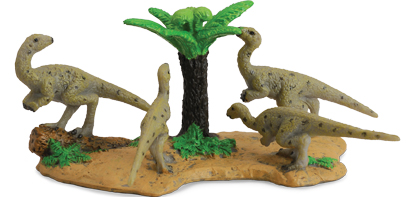
Hypsilophodon – a Dinosaur Model Set?

Hypsilophodon model. Gifts for prehistoric animal fans.

CollectA Hypsilophodon family group.

To view the CollectA model range: CollectA Prehistoric Life Models.

So much Hypsilophodontidae material has been recovered from one particular area of the Isle of Wight that the strata has been named the Hypsilophodon bed, it is unusual to find so many vertebrates preserved together in one place, the specimens show little sign of attack by scavengers and it has been suggested that these animals represent part of a herd that became trapped and perished in some inter-tidal quicksand.

Article on new Hypsilophodon research: New Insight into Hypsilophodon.

16 08, 2008

Happy Dinosaur Dressing Up – Heads or Tails

By |2024-04-13T08:21:34+01:00August 16th, 2008|Categories: Everything Dinosaur News and Updates, Main Page, Press Releases|0 Comments

Dinosaur Dressing Up

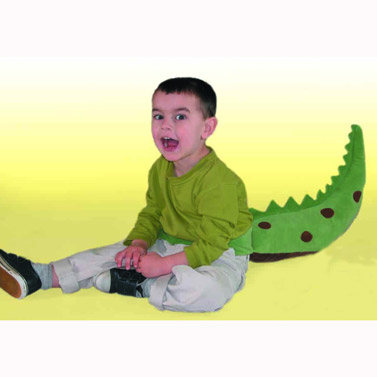
We have received many requests from customers and viewers of Everything Dinosaur’s various web sites for advice on making dinosaur dressing up costumes.  Our range of masks prove popular for this purpose but we have just added a new accessory to help with dinosaur dressing up – a dinosaur tail.

Dinosaur Dressing Up

To view the dinosaur masks and other gifts and toys: Dinosaur Toys and Gifts.

At nearly 60 cm long, this colourful, padded dinosaur tail can be the finishing touch to any dinosaur costume.  Made from soft, sponge washable velour fabric the tail easily attaches to a child’s waist using the adjustable velcro fasteners.

If you squeeze the special button built into the tail, it emits a roar, just like a dinosaur!

The Dinosaur Tail from Everything Dinosaur

Picture credit: Everything Dinosaur

Suitable for children ages 3-years and upwards, we are confident this new product from Everything Dinosaur will be a roaring success.

To view the dinosaur clothing in stock at Everything Dinosaur, clothing that is ideal for dinosaur dressing up activities: Dinosaur Clothing.

This new product is just one of the many editions to the Everything Dinosaur product range.  For example, “Spino” our new dinosaur hat shaped like the fierce, carnivore Spinosaurus should be with us in a few weeks – watch out for him!

15 08, 2008

New Insight into Hypsilophodon – The Anatomy of an Olympic Runner

By |2022-11-27T07:44:30+00:00August 15th, 2008|Categories: Dinosaur and Prehistoric Animal News Stories, Main Page|0 Comments

New Study Suggests Hypsilophodon was built for Speed

Today at the Beijing Olympics, attention turns to the beautiful National stadium affectionately called the Birds Nest Stadium as the track and field events get underway.  The heats for the 100 metres will be taking place, who will be the fastest runner on the planet?  Few commentators and pundits expect the British athletes to be amongst the medals for this particular event.  However, a new study by scientists, shows that one ancient resident of Great Britain could have given the top sprinters a run for their money.

Hypsilophodon

Although it would have stood only waist-high next to an Olympic sprinter, the small British ornithopod Hypsilophodon foxii had a fair turn of speed, and new research suggests it even may have possessed a special adaptation that prevented its ribs from rattling during its speedy runs.

This new paper, published in the scientific journal Cretaceous research helps shed light on a mystery surrounding this small, agile dinosaur.  A number of mineralised plates have been found in association with Hypsilophodon fossils.  It had been speculated that these were scutes, pieces of dermal armour that were embedded in the skin of this lightweight dinosaur.  However, such armour would have only provided limited protection from fierce meat-eating carnivores such as Neovenator and other members of the Allosauridae.  More importantly, the heavy armour would have slowed this animal down and seemed to contrast with other anatomical adaptations seen in the numerous fossil skeletons of this dinosaur that indicate a fast running animal.

These thin mineralised plates, once believed to be pieces of body armour may actually have been robust cartilage tissues that may have supported the ribs and helped regulate breathing, especially as Hypsilophodon exerted a lot of energy, running for example.

“Hypsilophodon had elongated legs and a stiffened counterbalancing tail that suggest it was almost certainly a fast runner” commented Richard Butler one of the co-authors of the study.  Richard, a member of the palaeontological team at London’s Natural History Museum added; “the plates might have functioned to support the ribcage during fast running”.

Hypsilophodon remains are relatively common in Lower Cretaceous strata of both Europe and America.  The Hypsilophodonts were a highly successful group and a number of superbly preserved fossil specimens are known.  This animal was named and described in 1869.  At the time of its formal classification, British Zoologist Thomas Huxley commented that with its five-fingered hands and light body this dinosaur could have lived in trees.  A number of illustrations were made of this arboreal dinosaur and depictions of Hypsilophodon sitting comfortably on a conifer branch can be found in many old dinosaur text books from the 1970s and 1980s.

A Small Model of the Dinosaur Called Hypsilophodon

Hypsilophodon model.

CollectA Hypsilophodon family group.

The model (above) is part of the: CollectA Prehistoric Life Model Range.

Previous descriptions of Hypsilophodon fossils describe these little plates as components of dermal armour, perhaps a double row of plates running down the spine.  Now Butler and his associates have a different explanation for the finding of these items with fossils of this particular dinosaur.  The team noted that the plates were weakly constructed and overlaid but were not actually fused to the ribs.  Butler explained the previous interpretations by saying:  “that as the body of the dead Hypsilophodon individual rotted and collapsed…the bones from the skin came to be closely associated with the internal bones.”

“Our careful reexamination of the specimens shows, however, that the bony plates are always closely associated with the outside surface of the ribs from the front end of the ribcage and are certainly not armour,” he added.

The Natural History Museum scientists believe the plates were similar to the bony structures referred to as “uncinate processes,” seen in the rib-cages of many modern birds.  Although it is not clear whether dinosaurs had the same breathing systems as birds.  Since this feature is involved in bird ribcage support, facilitating movement and breathing, the scientists now suspect the structures played a similar role in the dinosaur.

Diagrams show part of the scapula and ribs of a Hypsilophodon specimen from the London Natural History Museum, the scapula (shoulder blade is labelled “scap”, ribs are labelled as are the mineralised plates “pl”.  They do seem to be closely associated with the rib bones and not likely to be dermal armour that has fallen into the skeleton as the animal’s flesh decomposed.  Perhaps they are intercostal plates helping to regulate breathing during arduous exercise.

The British team have suggested that because evidence for similar mineralised plates has been detected in other dinosaur skeletons, the researchers further theorise that all small-bodied, bird-footed dinosaurs possessed these structures.

Darren Naish, of the University of Portsmouth’s School of Earth & Environmental Sciences, is also intrigued by the fact that the structures could be “widespread, possibly even universal” in other small, herbivorous dinosaurs.

Naish added, “People have mostly forgotten about these ‘armour plates’ in recent decades, but this new work shows that a fresh look at old specimens can still reveal new information on even the best known of dinosaurs”.

14 08, 2008

Australian Mega-Fauna wiped out by first Aussie Settlers

By |2023-02-25T18:12:38+00:00August 14th, 2008|Categories: Dinosaur and Prehistoric Animal News Stories, Main Page|0 Comments

Giant Prehistoric Kangaroos and other Beasts wiped out by First Australians

The debate over the impact of human migration as humans encounter indigenous species has been fuelled once more with the publication of a new paper speculating on the demise of the mega-fauna that once lived on the island of Tasmania.

The research, carried out by a joint Australian and British team, has been published in the prestigious American scientific journal – Proceedings of the National Academy of Sciences.  The research team have concluded it was the impact of human settlement and hunting that led to the extinction of many of the large animals on Tasmania, not climate change as had been previously argued.

Australian Mega-Fauna

It was the chance discovery of the remains of a giant prehistoric kangaroo that proved to be the catalyst for the study.  The researchers postulate that it was the human settlers who hunted to death this slow breeding animal and other very large mammals that lived on Tasmania at the time.

For a long time the fauna and flora of Tasmania had been isolated from the rest of Australia but as sea levels fell a land bridge formed between this island and mainland Australia, permitting people to settle in this area.  The arrival of such a proficient and capable predator such as man, would have had a major impact on the local ecosystem.

Human Involvement?

The debate regarding the significance of human settlement on the island’s mega-fauna centres on the skull of a giant kangaroo found in a cave in the thick rain-forest of the rugged northwest of Tasmania eight years ago.

Scientists dated the find at 41,000 years old, some 2,000 years after humans first began to live in the area.

“Up until now, people thought that the Tasmanian mega-fauna had actually gone extinct before people arrived on the island,” a member of the British and Australian study, Professor Richard Roberts, commented.

Professor Roberts and his team, considering the date of the skull, had concluded that it was likely that hunting not climate change and resulted in so many extinctions.  Large animals that perished around this time included the giant kangaroo, a wombat (another marsupial), the size of a cow and the fierce marsupial lions that were the top predators on the island prior to the arrival of man.

A Marsupial Lion

An articulated skeleton of a marsupial lion is shown in the picture, the animal is facing to the right and the strong, powerful skull can be seen in the top of the picture.  Note the huge front limbs, used to hold and overpower their prey.  The marsupial lion or Thylacoleo was perhaps the largest mammalian predator of the Australian Pleistocene, it terrorised Australia until extinction approximately 40,000 years ago.

Tasmania may have been one of the last places that a size-able population of these carnivores existed – although some people believe that marsupial lions still exist.  There have been a number of mysterious sightings and reports of large, four-footed animals across Australia, could the Thylacoleo still exist?

Discussing the potential influence of climate change on the Tasmanian ecosystem of 40,000 years ago, Professor Roberts, stated that the idea relating sudden climate change to the extinction of many of the large animals was disputed by the fact the area had a very stable climate over this critical time period.

“Things were very climatically stable in that part of Australia and yet the mega-fauna still managed to go extinct,” the Professor pointed out. “So it’s down to humans of one sort or another.”

Slow Reproduction

Roberts said because the large animals were slow to reproduce it would not have required an aggressive campaign to see them quickly die out, however, frequent predation over a sustained period would eventually put pressure on a species to survive.  The large herbivores of Tasmanian would have not encountered humans before and would not have had any natural defences or instinctive responses towards them.

Animals rapidly declining in the face of a new threat is quite common amongst isolated, island populations.  The Dodo for example, was wiped out in just a few years following the first human visitors to the island, there was some hunting, but rodents and dogs that arrived with the settlers were perhaps the main cause of this huge bird’s demise.

“A lot of people still have in their minds an axe-wielding, spear-wielding people, bloodthirsty, out there slaughtering all over the place — it wasn’t like that at all,” Professor Roberts said.

“It was basically just one joey (baby kangaroo) in the pot for Christmas. And that’s all you’ve got to go to do to drive slow-breeding species to extinction.”

Roberts said the Tasmanian results back up the theory that man was responsible for the death of the mega-fauna on mainland Australia, estimated by some to have occurred shortly after human occupation about 46,000 years ago.

The Mass Extinction of Giant Animals

The reasons behind the mass extinction of giant animals, which took place around the world towards the end of the last ice age, has been hotly contested with theories ranging from climate change to human and extraterrestrial impacts.

The finding of the latest study has already been contested, with Judith Field of the University of Sydney saying the idea that humans killed the giant creatures was “in the realms of speculative fantasy”.

“Humans cannot even be placed at the scene,” she told the Sydney Morning Herald.

It is likely that the debate over the impact of human arrival and settlement on other species will continue.  H. sapiens in various parts of the world and at various times, may have had a significant impact on habitats and ecosystems.

Whether it is the debate over the effect of Clovis man in North America, or the influence of the Cro-Magnons over European fauna, scientists will continue to theorise over the actual significance of a human population over the rest of the ecosystem.  Certainly, there is no doubt that today, humans are having an enormous impact on the planet’s other inhabitants.

At 6.7 billion we are the most common large mammal on Earth and our exploitation of resources and demands for food and living space are having a serious impact on virtually ever other species.  Indeed, some scientists have claimed that this is the period of the “sixth great mass extinction” of the Phanerozoic (visible life), with an estimated 50 species a day becoming extinct.

To view models of extinct animals: Prehistoric Animal Models.

11 08, 2008

Ready for School with Everything Dinosaur

By |2023-02-25T18:15:41+00:00August 11th, 2008|Categories: Everything Dinosaur News and Updates, Main Page, Press Releases|5 Comments

Back to School with Dinosaur Themed Back Packs and Lunch Bags

As the Summer holidays continue, many parents may be thinking about kitting out their children for the start of school in the Autumn.  This can always be a bit of a trial but for parents of young dinosaur fans, Everything Dinosaur may have the answer when it comes to choosing lunch boxes and back packs for the start of the new term.

Everything Dinosaur

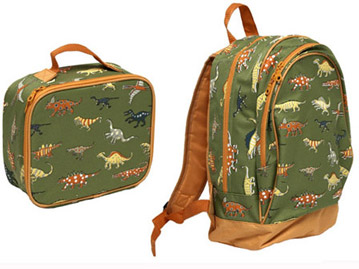
A stylish and practical dinosaur themed lunch bag plus a matching dinosaur back pack now available from Everything Dinosaur.  Made from 100% hard-wearing polyester and polyurethane linings, these handy, robust accessories are the ideal equipment for a young dinosaur fan going to school.

Dinosaur Back Pack and Matching Lunch Bag (Dinosaur Themed School Items)

Picture credit: Everything Dinosaur

Suitable for children from 4 years and upwards the back pack measures 28 cm wide by 10 cm deep and is 32 cm tall, plenty of room for the school kit and the matching lunch box fits neatly inside it.  A roomy, robust dinosaur themed backpack, has zippered main pouch, adjustable padded straps, top carry handle and front zip pocket. Just what you need for school or trips.

The matching dinosaur themed lunchbox continues the prehistoric animal motif, featuring a multitude of prehistoric animals.  It measures 26 cm by 8 cm deep and 22 cm and is a double zipped, canvas dinosaur themed lunchbox, with top carry handle and internal lid pocket.

To view dinosaur themed school items and dinosaur toys: Dinosaur Toys and Gifts.

These two items make an excellent addition to the comprehensive range of dinosaur themed stationery and school items available from Everything Dinosaur.

Just part of the huge back to school supplies and back to school stationery available to buy on line from Everything Dinosaur.

10 08, 2008

Research Indicates Duck-Billed Dinosaurs Grew fast to avoid Tyrannosaurs

By |2024-04-13T08:23:34+01:00August 10th, 2008|Categories: Dinosaur and Prehistoric Animal News Stories, Main Page|0 Comments

New Research reveals Hadrosaur Survival Strategy

Being a 30 foot long, relatively slow moving plant-eating dinosaur at the very end of the Cretaceous spells trouble when you share a habitat with Tyrannosaurus rex.  Without horns or body armour for protection such animals might find themselves vulnerable to attack from one of the most formidable predators ever to roam the planet.  However, new research from a team of American scientists have come up with an interesting survival strategy, simply grow quicker and mature faster than the animals trying to eat you.

Duck-billed Dinosaur

In a scientific paper recently published in the Proceedings of the Royal Society of London B: Biological Sciences, the growth rates of a duck-billed dinosaur called Hypacrosaurus was compared to three carnivorous dinosaurs.   The study revealed that the peaceful plant-eater grew faster than the tyrannosaurs and was able to breed at a much younger age, two evolutionary attributes that may have helped balance the scales in terms of survival for this relatively primitive lambeosaurine (the term given to describe duck-bills with ornate crests).

At least two species of Hypacrosaurus are known from the Late Cretaceous of Canada and the USA (Maastrichtian faunal stage), a number of good, well preserved specimens have been found and crucially they include eggs and youngsters in various stages of growth.  By having a number of specimens of different ages to study palaeontologists can work out something of this animal’s ontogeny (growth and development).

Drew Lee, a postdoctoral fellow in Ohio University’s College of Osteopathic Medicine and co-author Lisa Noelle Cooper, a doctoral student at Kent State University and a researcher with the Northeastern Ohio University’s College of Medicine examined the fossilised bones of Hypacrosaurus and three meat-eating theropods that were contemporaries of this hadrosaur – two tyrannosaurs, T. rex and Albertosaurus plus the much smaller Troodon.

The research suggests that it took 10 to 12 years for Hypacrosaurus to become fully grown, reaching a maximum size of 10 metres in length. Tyrannosaurs, however, reached adulthood at an older age, indicating slower growth rates.  The study indicates that T. rex for example, would have reached adult size after 20 to 30 years.

“Our duck-billed dinosaur grew three to five times faster than any potential predators that lived alongside it,” commented Lee. “By the time the duck-billed dinosaur was fully grown, the tyrannosaurs were only half grown – it was a huge size difference.”

The Hypacrosaurus seems to have reached sexual maturity at an earlier age, perhaps at only two or three years of age, being able to breed quickly is an effective survival strategy for a species.

“That’s another added bonus when facing predators – if you can keep reproducing, you’re set,” Lisa claimed. “It’s the stuff of evolution.”

Analysis Conducted

Lisa conducted the original analysis of the hadrosaur while an undergraduate student at Montana State University. Working with scientists Jack Horner and Mark Taper (both extremely knowledgeable with regards to late Mesozoic vertebrates). She looked at thin sections of the long leg bones of a specimen of Hypacrosaurus and counted and measured the growth rings, within the fossilised bones which each represent one year of life, or at least changes in growth rates to reflect dry and wet seasons.

“We were shocked at how fast they grew. If you look at a cross section of the bone of a nestling or even from within the egg, there are huge spaces in which blood supply was going through the bone, which means they were growing like crazy,” she said.

Drew Lee described Hypacrosaurus as a typical prey species for the large predators around North America at the end of the Age of Reptiles, comparing Hypacrosaurus to a common antelope of the African plains “the Thomson’s gazelle of the Late Cretaceous”.

The fossil record indicates that the duck-billed dinosaurs were an extremely successful group which is surprising as their fossilised bones don’t really give many clues to how these animals would have flourished in such a harsh environment.  The other common group of large plant-eaters, the horned dinosaurs or ceratopsians had horns and bony shields to protect them from the fierce carnivores, on first sight the hadrosaurs seem to be very vulnerable.  One factor in the hadrosaur’s survival could be that it grew up faster than the meat-eaters and it was faster growing when compared to the other large herbivores around at the time as well.

A Strategy for Survival – Grow Fast and Breed Young
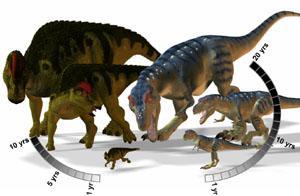
Picture credit: Ohio State University

At least one study suggests that living animals employ this survival strategy as well, Lee said. Scientists have found that Killifish, a tiny freshwater fish found mainly in the Americas, mature faster when predators lurk. Anecdotal evidence suggests that creatures such as African ungulates (hoofed animals) grow big to create an advantage over lions, cheetahs and hyenas, he said. Researchers also see signs of this phenomenon in butterflies, toads, salamanders, guppies and some birds, Cooper added.  The presence of predators may increase the pressure on a population of prey animals to survive and this may lead to faster growth rates and a decrease in the age of sexual maturity.  In a population, those animals that possess the genetic qualities to be able to extract nutrients from their diet more effectively and to grow bigger may give them an edge over other animals that may not be able to compete as effectively.  It is these “weaker” animals that fall prey to meat-eaters and the stronger animals go on to breed and pass on their genes to the next generation.  In this way, the genetic health of the population is improved and the ability to produce quickly and grow fast becomes a trait within the entire population over time.

Dinosaur Growth Rates

Although palaeontologists are careful to preserve dinosaur fossils, they’ve also learned much more about growth rates, life spans, behaviour and sexual reproduction of dinosaurs in the past decade by cutting up the bones and taking a closer look at the clues they contain.  Such research has offered a much more detailed picture of the relationships between different dinosaur species, including predator and prey.  This has helped scientists to understand a little more about the relationships between different genera that co-existed

This work on the internal structure of fossil bones is a relatively new technique, only possible through the advances made in the study of fossils and in fossil preservation techniques.  Interpreting the evidence can prove difficult, but as more specimens of certain types of dinosaur are discovered, this does allow scientists to form theories as to their growth rates and age of maturity.  The hadrosaurs were an extremely successful group of Cretaceous dinosaurs, which along with the ceratopsians dominated the plant-eating mega fauna of the Late Cretaceous.  Many species formed vast herds (evidence from trackways and bone beds), living in large herds would have been another effective survival strategy, just as is seen in herds of hoofed mammals such as caribou and zebra today.
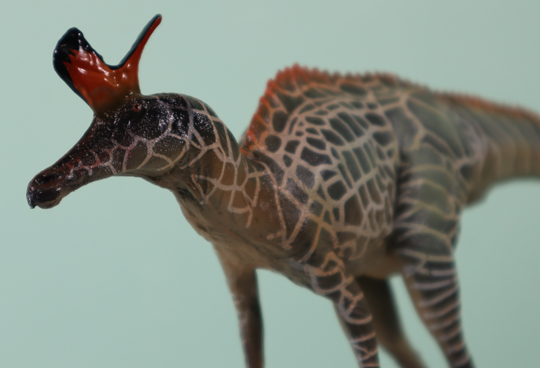
PNSO Lambeosaurus duck-billed dinosaur

A close view of the head and hatchet-like crest on the PNSO Lambeosaurus dinosaur model.  A typical duck-billed dinosaur (lambeosaurine).  Picture credit: Everything Dinosaur.

To view the PNSO model range including lambeosaurines: PNSO Age of Dinosaurs.

Recent work on another type of duck-billed dinosaur, a hadrosaurine nick-named Dakota by the research team working on the fantastically well preserved specimen, has provided another clue as to how these animals were able to survive the attentions of the tyrannosaurs.

CAT scans on the nearly complete fossil have revealed that this hadrosaur had larger hind quarters than previously thought.  The powerful back legs would have helped this animal take up a bipedal posture and run quicker than earlier studies had shown, perhaps helping to escape from predators such as Tyrannosaurus rex.  Being bigger and growing up fast may have helped these animals to escape the attentions of a pursuing predator. Without any body armour or horns to protect them, being able to outrun a meat-eater would have been a tremendous advantage.

To read more about this amazing discovery: Dinosaur Mummy unlocks Duck-Billed Dinosaur Secrets.

An update on the remarkable work being carried out on the fossil dinosaur known as “Dakota” has recently been published, to read more: Update on Dakota.

Lee, who recently published a study in the Proceedings of the National Academy of Sciences on the sexual maturity rates of dinosaurs, hopes to conduct more research on other types of dinosaur, those with reasonably numerous fossils to study.  It is hoped that further work will be carried out on communities of dinosaurs, such as those of Allosaurus, Stegosaurus and Apatosaurus from the earlier Jurassic period to draw further conclusions on the fast growth survival strategy.

“This study is a stepping stone to a larger comparative study on community changes that impacted dinosaur evolution,” Lee said.

Everything Dinosaur stocks a large range of hadrosaur models, to view the model’s section on the company’s award-winning website: Dinosaur and Prehistoric Animal Models.

This article is an extract from the following source:

Ohio University (2008, August 6). Duck-billed Dinosaurs Outgrew Predators To Survive.

9 08, 2008

British Dinosaur Company Doing Great

By |2024-04-13T08:24:06+01:00August 9th, 2008|Categories: Everything Dinosaur News and Updates, Main Page, Press Releases|1 Comment

Everything Dinosaur Doing Well

Some team members at Everything Dinosaur were given the opportunity to explain what the company was up to and how the business is progressing yesterday.  They were asked to contribute a piece to a daily, national UK newspaper, as a follow up article written about Everything Dinosaur last year.

Below is what we came up with, after a bit of coaching and assistance from the journalist.

Our Proposed Article

With tales of an economic downturn and difficult business conditions it makes a change to hear about an unusual but successful, small British firm that is bucking the current trend for bad news.  Sales at Everything Dinosaur are up and the specialist retailer of dinosaur themed toys and games has recently had to expand its warehouse and take on more help with packing orders to cope with demand.

Everything Dinosaur

For the people behind Everything Dinosaur, the last 12 months have been exceptionally busy, as the company has expanded, developing more products, growing export sales and becoming established as a supplier of prehistoric animal teaching materials to schools and colleges.

Everything Dinosaur has customers all over the world.  One of the company’s latest projects is to support teachers in Soweto, providing lesson plans and dinosaur information to South African school children.  The team have even sent dinosaurs to the North Pole!

 “Our success is down to a number of factors, everyone works very hard, we always look after our customers and we are prepared to take advice, after all, we were business novices when we started, but then the majority of people starting their own business are novices too;” commented Sue, who with her partner Mike, set the company up four years ago.

The company’s unusual blend of parents, teachers and dinosaur experts are currently gearing themselves up for the busy Christmas period, but Mike has just recently taken time out to assist with the development of a new children’s story book using dinosaur models to help teach reading skills.

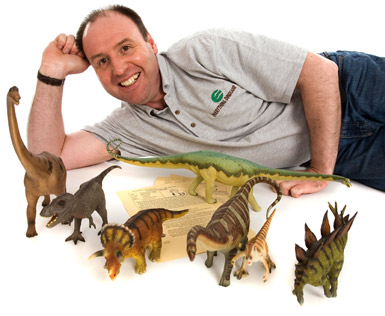
Mike and some of the Models used in the Children’s Story Book

Picture credit: Everything Dinosaur

To view the models featured in the book: Dinosaur and Prehistoric Animal Models.

Despite difficult trading conditions, the team at Everything Dinosaur are optimistic about the future and have plans to expand the company further by developing a bespoke dinosaur party themed website.  Here’s one group of dinosaurs that are not likely to be going extinct!

8 08, 2008

Olympic Dinosaurs Celebrating the Start of the Games

By |2024-04-13T08:24:44+01:00August 8th, 2008|Categories: Everything Dinosaur News and Updates, Main Page|0 Comments

Olympic Dinosaurs

Today sees the start of the Beijing Olympics, the 29th running of the games of the modern Olympiad, with over 11,000 athletes taking part in events as diverse as archery, weightlifting and tennis.  Sixteen days of intense competition will follow across the 28 different sports represented at the Games, the GB team consists of a total of 312 athletes, taking part in 20 of the sporting disciplines.

This event is likely to dominate the world’s media and just for a bit of fun we thought we would pay tribute to China for all its hard work in creating the Games, for Chinese scientists are at the forefront of some of most amazing dinosaur discoveries in recent years.

Olympic Dinosaurs

Frenchman Baron Pierre de Coubertin is accredited with helping to found the International Olympic Committee in 1894, he died in 1937, the same year as Dong Zhi-ming, perhaps China’s most famous palaeontologist was born.  Dong Zhi-ming is responsible for naming and describing over 20 different dinosaur genera.  He has led expeditions to the Gobi desert as well as helped to open up and explore the geology of China’s many fossil rich provinces.  Professor Zhi-ming is based at the impressive Institute of Vertebrate Palaeontology and Paleoanthropology in Beijing, a place well worth visiting if the many thousands of tourists fancy a break from the sporting activity.

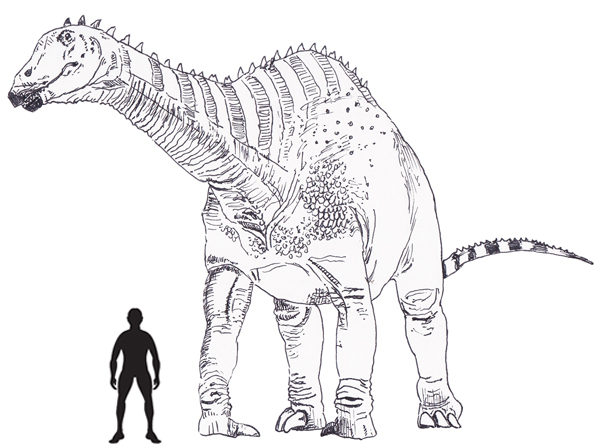
Lingwulong scale drawing

A scale drawing of Lingwulong ready for the Everything Dinosaur fact sheet. Picture credit: Everything Dinosaur.  A famous Chinese dinosaur.

A Record Breaker

The Olympic Games will provide the opportunity for many athletes to break records, the Institute of Vertebrate Palaeontology and Palaeoanthropology (known as the IVPP for short), is also a record breaker.  This institute, first set up in 1957 has an estimated 200,000 vertebrate fossil specimens, making it the home of the largest vertebrate fossil collection in the world.

The Chinese manufacturer PNSO has created a huge range of dinosaur figures, celebrating the variety of dinosaurs and other prehistoric animals known from China: PNSO Dinosaur Models.

7 08, 2008

Tuatara set to become a Father aged 111

By |2023-02-25T18:19:08+00:00August 7th, 2008|Categories: Animal News Stories, Main Page|0 Comments

Ancient Reptile set to become a Dad at the Age of 111

The number 111 is often regarded as a bad omen, especially by cricketers as when written down it resembles a wicket without the bails, an indication of being “out”, but for one reptile, 111 has turned out to be their lucky number.

An 111 year-old Tuatara is set to become a father for the first time.  After nearly 40 years in captivity, Henry, a male Tuatara and his sprightly 80 year-old mate, Mildred have produced a clutch of eleven eggs.

The Tuatara in the picture is a male, they tend to be bigger than the females and sport a more prominent crest running down their neck and back.

Henry and Mildred are residents at the Southland Museum and Art Gallery at Invercargill on the southern tip of New Zealand’s South Island.  The Tuatara is very rare and is to be found only on a few remote islands off the coast of New Zealand, although a team of scientists and conservationists are trying to establish a viable colony of these little reptiles in a secret location on South Island.

To read more about the attempts to introduce Tuataras to the mainland of New Zealand: Living Fossil helped back to Mainland.

Few plants and animals around today can be seen as relics from pre-history, such organisms are often referred to as “living fossils”.  The Tuatara is one such creature, an ancient reptile that superficially resembles a lizard but is in fact a member of the Order Sphenodontia and not part of the Order Squamata (lizards and snakes).  Tuatara is actually a Moari name, this animal is known by the genus Sphenodon (means wedge tooth), by scientists.  Henry and Mildred are certainly doing their bit to help maintain the population of these rare and special animals, however, it will be a further six months before the eggs hatch and they will need to be carefully incubated.

For many years, Henry showed no interest in mating, in fact his aggressive behaviour towards other Tuataras meant that he had to be kept in isolation.  When the keepers at the Museum first tried to mate Henry with Mildred twenty-five years ago, they certainly did not get along.  Poor Mildred had her tail bitten off by feisty Henry, so the two were separated and Henry was sent to solitary confinement.  However, the passage of time seems to have mellowed Henry and in his later years he seems to becoming a bit of a ladies man.

Back in 2002, Henry underwent surgery to have a growth removed, this growth must have caused him some discomfort which may explain why he was always so grumpy.  The eggs are doing well under incubation after getting off to a difficult start and under the watchful gaze of the keepers the little brood has a good chance of making it.

However, Henry’s handler will not be counting his Tuataras before they hatch, producing offspring is a difficult process, even under the carefully managed conditions of captivity, but the museum was able to produce 21 hatch-lings last year and they are hoping to break this record over the next 12 months.

Tuataras are certainly remarkable creatures, how remarkable has recently come to light when scientists began to study their DNA closely.  To read more about what we are learning about Tuataras from their genes: Tuatara with a surprise in its genes.

6 08, 2008

Dinosaurs in a Tin

By |2022-11-27T04:09:30+00:00August 6th, 2008|Categories: Dinosaur Fans, Everything Dinosaur News and Updates, Main Page, Press Releases|0 Comments

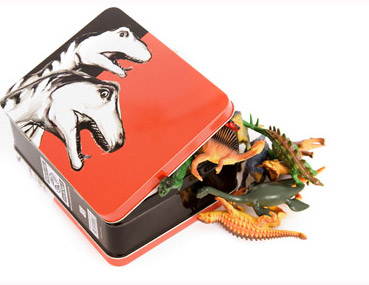
Dinosaurs in a Tin from Everything Dinosaur

Introducing the first of our new products in preparation for the Autumn and Christmas season (yes, indeed it is that time again).  Our testers have been busy looking at potential new products for the Autumn season and after such favourable reviews from young dinosaur fans and their parents we have added this new product to our shop with the minimum of delay.

Dinosaurs in a tin, a simple concept, a dozen, sturdy plastic prehistoric animal models packed into a handy dinosaur storage tin, with its own carrying handle.  We promise to add a good mix of prehistoric animals into each tin and the whole box makes a super birthday or Christmas gift, for that young dinosaur fan.   It is a super dinosaur model set.

Dinosaurs in a Tin from Everything Dinosaur

Picture credit: Everything Dinosaur

This particular item has proved very popular in our testing programmes, the children found the models a big hit and loved the colourful tin box that carries them.  As for the adults, they liked the novelty and the emphasis on encouraging creative and imaginative play.

This product is just one of our “assorted dinosaurs range”, to learn more and to see what is available from the parents and teachers of Everything Dinosaur, click onto the link below.

Assorted Dinosaurs and Dinosaur Toys: Dinosaur Toys and Dinosaur Gifts.

Go to Top