All about dinosaurs, fossils and prehistoric animals by Everything Dinosaur team members.
26 07, 2015

Take Care When Fossil Hunting on the “Jurassic Coast”

By |2023-04-01T15:54:05+01:00July 26th, 2015|Categories: Dinosaur Fans, Everything Dinosaur News and Updates, Geology, Main Page, Press Releases|0 Comments

Warning Issued to Holiday Makers

Dorset is one of the prettiest and most majestic of all the English counties.  This summer, there are going to huge numbers of holidaymakers heading down to England’s “Jurassic Coast” and we expect there are going to be great many visitors to picturesque Lyme Regis.  However, as the school holidays have started, we at Everything Dinosaur, think it appropriate to issue a warning about straying too close to the cliffs that occur along the Dorset and Devon coast.

Beautiful Charmouth and Lyme Regis – Very Popular Holiday Destinations
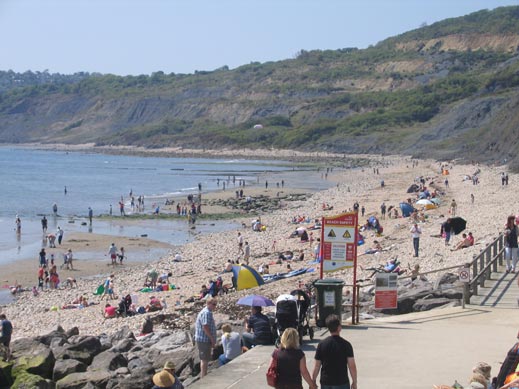
Photograph taken in 2009.

Photograph taken in 2009.

Picture credit: Everything Dinosaur

The Dorset Coast – A “Mini Climate”

Many locals tell us that this part of the world has its own “mini climate”, it most certainly has lots of sunshine and there is always plenty to do and see in this, in our opinion, one of the most attractive parts of southern England, but we would advise visitors to the beach, especially would-be fossil hunters in the Lyme Regis and Charmouth areas to steer well clear of the cliffs. Rock falls and mudslides are very common and sadly serious accidents and even fatalities can occur.

On July 25th 2012, Everything Dinosaur reported on a fatal incident that occurred at Hive Beach, near Bridport just a few miles east of Charmouth.   Last month, we reported on another landslide fatality, this time from the popular Llanwit Major area of South Wales, another favourite location with fossil hunters.

To read more about this tragic event: Woman Killed by Rock Fall at Popular Fossil Hunting Site in Wales.

Fossil Hunting

Whilst areas such as the famous “Ammonite Pavement” that can be seen to the west of the town (Lyme Regis), is located quite far from the cliffs, any rocks and other material that fall are likely to travel quite a distance so it is sensible to heed the advice of locals and ensure that you are a safe distance away from any hazards.  It is also good advice to familiarise yourself with the tide times.  As landslides have altered the shape of the coastline it is all too easy to find yourself getting cut off during an incoming tide.  Everything Dinosaur team members advise always go fossil hunting at a beach location on an outgoing tide.

With so many fossils to be found at Lyme Regis and Charmouth along the foreshore, there is no need to approach the cliffs and a lot of fun can be had searching along the shoreline for fossils in a couple of hours or so as the tide recedes.

Lots of Fossils to Spot Away from the Jurassic Coast Cliffs
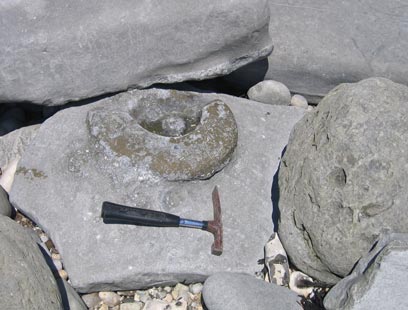
A big fossil close to the Ammonite Pavement.

A big fossil close to the Ammonite Pavement.

Picture credit: Everything Dinosaur

Do Not Get Too Close to the Cliffs

Lyme Regis fossil expert Brandon Lennon commented that there was glorious weather in the Lyme Bay area yesterday, but today, (Sunday), there was quite a gale blowing.  Despite this, large numbers of tourists were on the beach and many of them were too close to the cliffs.

Brandon said:

“People are right up under the cliffs looking for fossils and they should definitely not do this as it is incredibly dangerous.  I think it is going to be very busy in Lyme Regis this summer, even with the occasional little bit of bad weather at times.”

With the popularity of the film “Jurassic World”, the Lyme Regis area can expect record numbers of fossil hunters to visit the area over the summer, but just like Brandon, we advise visitors to the beaches to take care and heed any council notices.

Ammonite Models and Replicas

For ammonite models and replicas of other extinct invertebrates like trilobites and belemnites (whilst stocks last): CollectA Age of Dinosaurs Popular Figures.

Brandon conducts organised fossil hunting walks and these are a great way to go fossil hunting safely as well as learning about the amazing local geology.  These walks take place on Saturdays, Sundays and Mondays and private bookings can also be made, to learn more about organised, conducted fossil hunting tours: Lyme Regis Fossil Walks.

 The Amazing Ammonite Pavement (Monmouth Beach)

Falling tides reveal the extensive Ammonite Pavement sometimes referred to as the Ammonite Graveyard.

Falling tides reveal the extensive Ammonite Pavement sometimes referred to as the Ammonite Graveyard.

Picture credit: Everything Dinosaur

A spokesperson from Everything Dinosaur stated:

“Whilst fossil hunting can be a very enjoyable experience for families, we do urge all visitors to take great care when visiting locations such as Charmouth and Lyme Regis.  Landslides are a very common occurrence and going fossil collecting with an expert is a sensible option.”

25 07, 2015

A Review of the New Prehistoric Times (Issue 114)

By |2024-04-11T10:08:34+01:00July 25th, 2015|Categories: Magazine Reviews, Main Page|0 Comments

“Prehistoric Times” (Issue 114 Summer 2015) Reviewed

An opportunity to unwind from our busy Summer Term schedule of dinosaur workshops, writing lesson plans for schools and so forth with the latest edition of the quarterly magazine “Prehistoric Times”, that dropped through our office letterbox earlier this week. The timing of this super magazine’s arrival could not have been better as next week our fieldwork and summer school commitments start, so let’s jump straight in.

“Prehistoric Times”

Naturally the summer has been a very “dino heavy” one, what with the release of a certain film starring Chris Pratt et al.  “Prehistoric Times” does not disappoint, the editor Mike Fredericks, takes time out from his own busy schedule to provide a short review of “Jurassic World” and to discuss the huge range of collectibles and other merchandise that have flooded onto the market.  The focus is on the American market, but the article is well written and we loved his short, concise movie review:

“Plenty of dinosaurs and plenty of action.”

We could not have put it better ourselves,  just be careful, if you haven’t seen the film yet, the article does have a plot synopsis and therefore it contains a few spoilers.  With Universal Studios having announced a sequel, conveniently (at least until a better title comes along), entitled “Jurassic World 2” scheduled for June 22nd 2018, or thereabouts, we can expect Mike to provide another merchandise overview but this time in issue PT#126!

The Front Cover of “Prehistoric Times” (Issue 114)

Concavenator features (Sean Cooper)

Concavenator features (Sean Cooper).

Picture credit: Mike Fredericks/Prehistoric Times

Concavenator on the Front Cover

The front cover features a spectacular model of Concavenator (C. corcovatus) created by the very talented Sean Cooper.  A lengthy interview provides an insight into Sean’s work and showcases some of his amazing dioramas (built/painted by Martin Garratt).  If you look carefully you can spot another Concavenator replica by Sean but with a different colour scheme inside the magazine.

Phil Hore provides part two (a sequel)? to his excellent series on the resurrected Brontosaurus and there is some wonderful reader’s artwork on display.   Special mentions to Kurt Miller, Julius Csotonyi and Russell J. Hawley for their contributions.

Tracy Lee Ford keeps us in the Morrison Formation as he explains how to tell the boys and girls apart when it comes to the Stegosauridae.  A very insightful article it is too.  He draws upon the recently published paper on Hesperosaurus, a summary of which you can find here: Did Boy Stegosaurs Have Bigger Plates Than The Girls? If you want to know the difference between different stegosaur species this article is a great place to start.  Also, look out for a short review of Tracy’s “How to Draw Dinosaurs Volume 1” in the book review section.

The Enigmatic Auroch

The enigmatic Auroch features, a prehistoric cow responsible for more human fatalities than the whole of the Dinosauria, no matter what you might see at the cinema.  Phil Hore does a great job in explaining what the Auroch was and reports on the potential to make this bovine “de-extinct”.  He even manages to squeeze a photograph in of a few Nazis, you have to subscribe to “Prehistoric Times” to learn about this historical connection.

Amongst all the dinosaur and fossil news, look out for Britain’s Mike Howgate and his feature on the Wisbech Museum and the story of perhaps the very first prehistoric animal models ever made.  Nice one Mike, keep flying the flag for those of us on this side of the Atlantic, after all, the word Dinosauria was first coined by a Lancastrian!

A T. rex Autopsy

The National Geographic Channel’s recent documentary “T. rex Autopsy”, is featured with a very informative interview with palaeontologist Matthew T. Mossbrucker and look out for an imaginative and well-written story all about Tyrannosaurus rex – The Super Predator written by Mike Kelley.

Eagle-eyed fans of Everything Dinosaur will also be able to spot a number of familiar drawings of prehistoric animals in the What’s New in Review section.  These drawings are some of the illustrations that we commission editor Mike Fredericks to create for us to illustrate our exclusive range of prehistoric animal fact sheets.

Can you Spot the Rebor Utahraptor (Wind Hunter) Illustration

The illustration on the Everything Dinosaur Utahraptor fact sheet.

The illustration on the Everything Dinosaur Utahraptor fact sheet.

Picture credit: Everything Dinosaur

For further information on Prehistoric Times and to subscribe to this excellent magazine: Prehistoric Times Magazine.

 As ever, this is a jam-packed edition with so many highlights.  Fans of Marx toy dinosaurs won’t be disappointed as will anyone with a passing interest in Acrocanthosaurus and a special mention to Allen A. Debus for his fascinating article on the first representations of evolution in the cinema and the legal spat between Willis O’Brien and Herbert M. Dawley, that occurred at a time when stop-motion triumphs such as the Lost World and King Kong had yet to be made.

The Utahraptor illustration in this article (above) was inspired by the Rebor model range.  To view this exciting range of replicas: Rebor Models and Replicas.

All in all great stuff!

24 07, 2015

First Fossil Snake with Four Limbs Described

By |2023-04-01T15:47:57+01:00July 24th, 2015|Categories: Dinosaur Fans, Main Page, Palaeontological articles|0 Comments

How Snakes Lost Their Legs

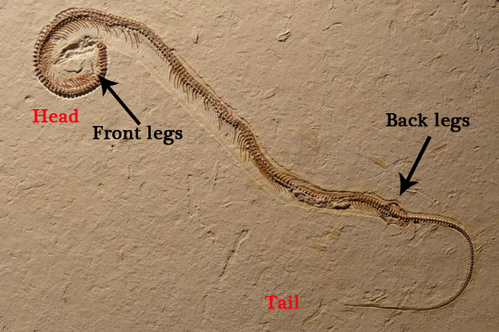
Serendipity can play a huge role in science, for Dr Dave Martill a chance encounter with a 115-million-year-old fossil whilst taking a group of third year students around a German museum, has led to a breakthrough in our understanding of how snakes evolved.   A beautifully preserved fossil snake with four limbs, the first snake fossil with four legs ever found, making this specimen a transitional form between limbed lizards and the snakes we know today, is helping scientists to piece together the puzzle of how snakes lost their legs.

Fossil Snake

Over the last fifteen years or so the University of Portsmouth has arranged a tour of German natural history museums for their third year vertebrate palaeontology students.  On a visit to one such museum, the famous Bürgermeister-Müller-Museum in Solnhofen (Southern Germany), to view the spectacular Jurassic limestone fossils including Archaeopteryx, by chance, the Museum was hosting an exhibit of much younger Cretaceous fossils from Brazil.

Dr Martill, took his students around the exhibit and to his amazement he spotted on display a small, exquisitely preserved fossil of a snake, but this snake had tiny legs.  Enquiries were made and Dr Martill working with Dr Helmut Tischlinger (Bürgermeister-Müller-Museum) and Dr Nicholas Longrich (University of Bath), have published today in the academic journal “Science” a description of this unique fossil specimen.

The Four-Legged Snake Fossil

A beautifully preserved early, limbed snake.

A beautifully preserved early, limbed snake.

Picture credit: Dr Dave Martill/University of Portsmouth with additional annotation by Everything Dinosaur

Tetrapodophis amplectus

This new snake species has been named Tetrapodophis amplectus (pronounced Tet-tra-poe-doh-fis am-pleck-tus), and it means “four-legged embracing snake”, the embracing element as the limbs were too small to be used in locomotion, they may well have served a function in holding prey or embracing mates.

Both the slab and counter slab are known but their exact provenance remains a mystery.  The fossil specimens were collected many decades ago and held in a private collection.  The fine-grained limestone matrix is dotted with occasional coprolites from an ancient fish called Dastilbe, bedding plains associated with these coprolites come from the Nova Olinda Member of the Crato Formation found in north-eastern Brazil.

Early Cretaceous Fossil

The exact age of this Formation is contentious, the lack of marine zonal fossils make dating extremely difficult, but scientists estimate that this important, highly fossiliferous strata dates from between 126 to 113 million years ago (Aptian to Early Albian faunal stages).

The snake measures around twenty centimetres in length and it was very probably a juvenile.  Just how big this snake could grow to remains unknown.  The fossil is preserved in almost complete articulation indicating a low energy fossil preservation environment and a lack of disturbance by scavengers.  This little snake ended up in a hypersaline salt lake and this is what aided its fantastic preservation.

An Illustration of the Early Snake Tetrapodophis (T. amplectus) with Prey

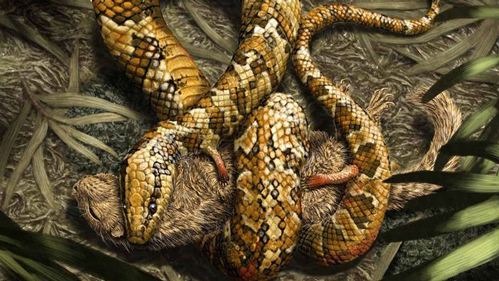
The tiny limbs may have been used to hold prey.

The tiny limbs may have been used to hold prey.

Picture credit: Julius Csotonyi

Last Meal Preserved

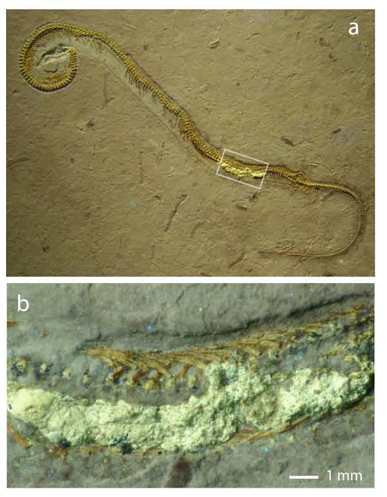
Evidence of the snake’s last meal was also preserved, however, it was not a small mammal as depicted in the excellent illustration by renowned palaeoartist Julius Csotonyi.  Dr Tischlinger, is an expert in the use of UV light to help expose hidden details of fossil specimens, a technique he has used to great effect on the finely-grained, lithographic limestone specimens of Solnhofen.  When viewed under ultraviolet light, the fossil revealed the remains of a small vertebrate, most probably a salamander.

Abdomen Viewed under Ultraviolet Light Reveals Gut Contents

Viewed under UV light the stomach contents are revealed.

Viewed under UV light the stomach contents are revealed.

Picture credit: Journal Science 

The photograph above shows the position of the gut contents (fluorescing white) – (a) and (b) phosphatised gut contents (also fluorescing white) with tiny fragments of bone (orange).

Snakes Evolved from Lizards

It is generally accepted that snakes evolved from lizards at some point in the distant past.

Commenting on the significance of this fossil Dr Martill stated:

“What scientists don’t know yet is when they evolved, why they evolved and what type of lizard they evolved from.  This fossil answers some very important questions, for example it now seems clear to us that snakes evolved from burrowing lizards, not from marine lizards.”

 Dr Longrich who has extensively studied the evolution of snakes, commented:

“It is a perfect little snake, except it has these little arms and legs, and they have these strange long fingers and toes.  The hands and feet are very specialised for grasping.  So when snakes stopped walking and started slithering, the legs didn’t just become useless little vestiges – they started using them for something else.  We’re not entirely sure what that would be, but they may have been used for grasping prey, or perhaps mates.”

Fossil Snake – Limbs for Holding not for Walking

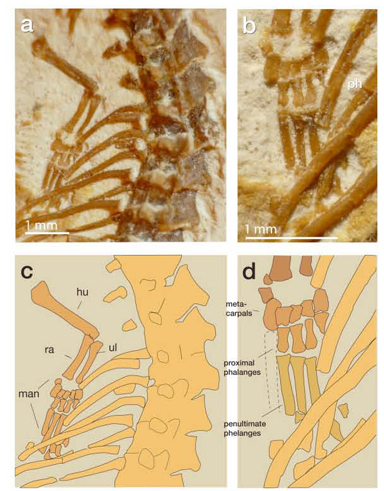
At just 4 mm and 7 mm long respectively, the tiny hands and feet were not aiding locomotion, but the well-defined claws suggest that they might have helped Tetrapodophis grasp and hold prey.  They may also have served a role as “claspers” in mating.

A Close Up of the Left Forelimb (Tetrapodophis amplectus)

A close up of the left forelimb.

A close up of the left forelimb.

Picture credit: Science Journal

The photographs and illustrations above show the T. amplectus holotype (BMMS BK 2-2), specifically a close up view of the left forelimb and hand (manus).  Photograph (a) shows the forelimb, whilst (b) is a close up view of the manus (scale bar 1 mm).  Illustrations (c) and (d)  show the layout of the bones, the dotted line in (d) indicates a missing bone.

Key

  • hu – humerus
  • man – manus
  • ra – radius
  • ul – ulna

A Close Up of the Hindlimbs (Ventral View – Looking from Underneath)

Probably used to help grasp prey or mates.

Probably used to help grasp prey or mates.

Picture credit: Science Journal

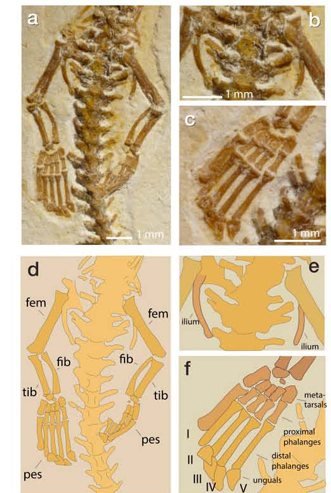
The Arrangement of the Hindlimbs

The pictures and diagrams above show the arrangement of the hindlimbs (ventral view), as seen from underneath the body.  Photograph (a) shows the hindlimbs, (d) an illustration of the hindlimbs, (b) is a close up of sacrum and pelvic area, illustrated by diagram (e).  Photograph (c) shows the delicate hind foot which measures approximately 7 mm long.  Diagram (f) shows a layout of the bones in the foot.

Key

  • fem – femur
  • fib – fibula
  • tib – tibia

The fossil suggests that snakes may have lost their limbs to help them burrow, either through sediment of through leaf litter, speculated a member of the Everything Dinosaur team.  Cladistic analysis places the origin of the snakes close to the Iguana and the Anguimorpha families, (the Anguidae family includes limbless lizards such as slow worms), although the exact phylogenetic relationship remains disputed.  The discovery of this fossil suggests that the snake family, a very widespread and diverse group of reptiles today, probably first evolved on the southern super-continent of Gondwana.

23 07, 2015

Helpful Dinosaur Workshops Aid Reading and Literacy

By |2024-04-11T10:02:23+01:00July 23rd, 2015|Categories: Educational Activities, Main Page, Teaching|0 Comments

Dinosaur Workshops Aid Reading and Literacy in Schools

A dinosaur themed term topic might be introduced into a school’s scheme of work with Key Stage 1 and Key Stage 2 to help the children learn about the properties of light, rocks, the age of the Earth and to gain an appreciation of scientific working.  However, as dinosaurs and prehistoric animals fire the imagination, this term topic can also do wonders for a child’s confidence in reading and their writing skills.  As Everything Dinosaur team members visit schools to deliver dinosaur and fossil themed workshops, we are keen to add activities and extensions that encourage children to write.

Thank You Letters to Everything Dinosaur

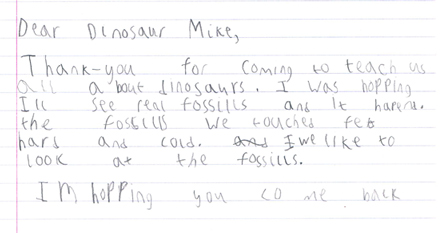
An example of our work with schools, a typical extension activity, is to ask the children to send in thank you letters to our dinosaur expert.  They can also include questions that they think of as well.  Writing a thank you letter dovetails nicely into the PSHE (personal, health and social education) of the national curriculum and it helps children gain confidence with sentence construction and the layout of written communications.  Letter writing also permits individual working and the teacher can see how much a child has learned as he/she has followed the term topic.  Letter writing makes a good, follow up exercise for the children immediately after any recall and recount activity once the dinosaur workshop has finished.

A Thank You Letter from Jayden

Dinosaurs Help with Literacy

Everything Dinosaur team members encourage letter writing.

Picture credit: Everything Dinosaur

Dinosaur Themed Term Topic

Another simple activity that involves independent learning is to have the children research individual prehistoric animals.  Explain to the children what the term dinosaurs actually means (fearfully great or terrible lizards).  Then, use an example such as Tyrannosaurus rex (pronounced tie-ran-oh-sore-us rex), which means “Tyrant Lizard King”.  Set an exercise for the children where they can research different dinosaurs and write an explanation as to how that dinosaur got its name.

Here is an example from Amy (Year 2) – part of a dinosaur themed term topic:

  • Triceratops (Try-sera-tops)
  • Means: Three Horned Face
  • Explanation: “This big plant-eating dinosaur had three horns on his face, two big ones over his eyes and a little one over his nose.”

A picture of the dinosaur can be provided, feel free to contact Everything Dinosaur, as our experts are happy to email over drawing materials and fact sheets to schools and home educators.

Contact Everything Dinosaur team members: Contact Everything Dinosaur.

The picture of the prehistoric animal can be labelled by the child and perhaps more capable learners can provide additional facts and information on that dinosaur via discovery learning.

For More Confident and Capable Learners

* More confident and capable learners can be challenged to design their own dinosaur and to come up with an explanation for the name that they give it, here’s an example from Matthew:

  • Boneahsaurus (Bone-ah-saw-us)
  • Means: Very Bony Lizard
  • Explanation: “When scientists found this dinosaur they were amazed at how many bones it had in its skeleton.”

Matthew even provided a lovely drawing of his dinosaur, it did look very bony.  Glad we did not have the job of assembling all those bones.

As dinosaurs are rarely out of the media these days and with most children having a fascination for these prehistoric animals, dinosaurs as a term topic provides plenty of scope for a creative, imaginative and very rewarding scheme of work for the class.

To learn more about Everything Dinosaur’s range of dinosaur themed term topic resources including toys and gifts: The Everything Dinosaur Website.

22 07, 2015

Still Time to Enter Everything Dinosaur’s Win a Guidraco Competition

By |2023-04-01T15:06:21+01:00July 22nd, 2015|Categories: Dinosaur Fans, Everything Dinosaur News and Updates, Everything Dinosaur Products, Main Page, Press Releases|0 Comments

Win a 1:4 Scale CollectA Guidraco Pterosaur Model with Everything Dinosaur (Contest is Closed)

Everything Dinosaur is giving away a brand new, fantastic 1:4 scale replica of the pterosaur called Guidraco.

There is still time to enter Everything Dinosaur’s fantastic prehistoric pterosaur competition.  CollectA have already introduced some super dinosaur and prehistoric animal models this year, all new additions to their excellent  range of “Prehistoric Life” replicas that we at Everything Dinosaur stock.  To celebrate these new introductions and the fact that Everything Dinosaur will be ten years old on August 1st we are holding a special competition, your chance to win a wonderful, 1:4 scale replica of a flying reptile.

CollectA Guidraco Pterosaur

CollectA have added to their “Supreme” range of large models and the new for 2015 Guidraco pterosaur with its moveable lower jaw is a fitting prize in our special ten year anniversary contest.

Celebrating Everything Dinosaur’s 10th Birthday 
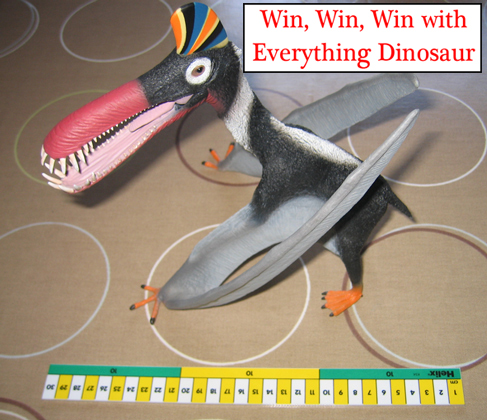
Win this 1:4 scale model!

Win this 1:4 scale model of a Chinese pterosaur!

Picture credit: Everything Dinosaur 

A Tenth Anniversary Prize Giveaway

Our tenth anniversary prize giveaway is this super Guidraco flying reptile, complete with an articulated jaw.  The replica measures more than twenty-five centimetres high and it is a generous twenty-six centimetres in length.  This beautiful model requires a name.  What name can you come up with?

Please note, this competition is now closed.

To enter Everything Dinosaur’s contest, all you have to do is “Like” Everything Dinosaur on our FACEBOOK page, share, then comment on the picture (either on Everything Dinosaur’s Facebook page or here on this Everything Dinosaur blog post), remember to include a suggested name for our Guidraco Pterosaur.

Everything Dinosaur on FACEBOOK: “LIKE” Our Facebook Page and Enter Competition.

Lots of Competition Entries

We have already received lots of competition entries, for example, Joshua suggested “Toucan”, whilst Lynette proposed “BeakyRex” and Ruth suggested “Lordfliesalot”.  We have been very impressed with the wonderful array of names we have received so far.  If you think our Guidraco should be called “Gertie”, simple comment on our Facebook page or here in the comments section of this webblog posting.

The lucky winner will be drawn at random and the Everything Dinosaur Guidraco name competition ends on Friday, July 31st.  Good luck from all of us to everyone who enters.

Just go to Everything Dinosaur’s Facebook page, give our page a “like” and then leave a comment on the picture showing the Guidraco replica at the top of our timeline.  What pterosaur names can you come up with?

“Like” Everything Dinosaur’s Page on Facebook

Like our Page (please).

Please “like” our page.

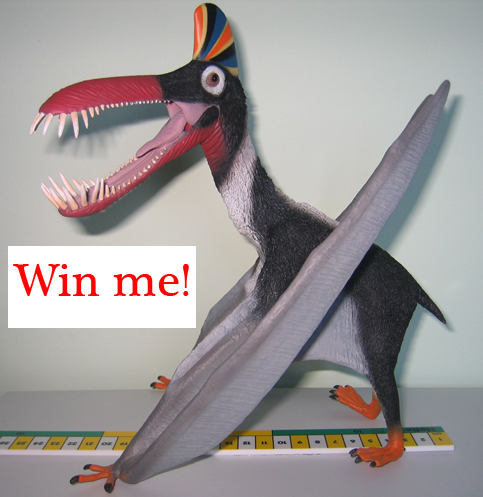
Win a Super CollectA Guidraco Pterosaur Model with Everything Dinosaur
Just like our Facebook page to enter.

Just like our Facebook page to enter Everything Dinosaur’s competition!

Picture credit: Everything Dinosaur

CollectA Models and Figures

To view the range of CollectA prehistoric animals: CollectA Prehistoric World Figures.

To see the complete collection of CollectA scale prehistoric animal replicas: CollectA Deluxe Prehistoric Life.

Terms and Conditions of the Everything Dinosaur Tenth Anniversary Competition

Automated entries are not permitted and will be excluded from the draw.

This promotion is in no way sponsored, endorsed or administered by, or associated with, Facebook.

Only one entry per person.

The prize is non-transferable and no cash alternative will be offered.

The Everything Dinosaur tenth anniversary competition runs until midnight on Friday 31st July 2015.

Winner will be notified by private message on Facebook.

Prize includes postage and packing.

For full terms and conditions contact: Contact Everything Dinosaur.

This competition is now closed.

21 07, 2015

A Special Dinosaur Hokey Cokey (Hokey Pokey) Song

By |2024-04-11T10:10:33+01:00July 21st, 2015|Categories: Educational Activities, Main Page, Teaching|0 Comments

Dinosaur Song – Hokey Cokey/Hokey Pokey

When delivering dinosaur workshops to children in Reception classes or Year 1 we like to incorporate lots of physical exercises to keep the children enthused and to help reinforce learning.  Our dedicated teaching team provide all sorts of ideas to support extension activities following one of our school visits and we dove-tail our work into the national curriculum helping the teachers to provide a rich and challenging term topic or dinosaur themed science day.

A Reception Class Prepares Questions for our Dinosaur Workshop

Questions, questions and even more questions!

Questions, questions and even more questions!

Picture credit: Everything Dinosaur

Dinosaur “Hokey Cokey”

As part of our large range of prepared extension activities we enclose a version of the “Hokey Cokey/Hokey Pokey” that has been modified so that it can be used as a song activity to support a lesson all about dinosaurs.  Everything Dinosaur recommends that the children be given plenty of space for this activity so that they have room to carry out the actions that accompany the song.

Dinosaur Song – sung to the Tune of the “Hokey Cokey/Hokey Pokey”

Don’t forget the actions, this is a great song and dance activity for budding young palaeontologists.

Verse 1 (use feet for the actions)

You put your big feet in

You put your big feet out

You put your big feet in

And you stomp them all about

You do the Dino-Pokey and you turn around

That’s what it’s all about

Verse 2 (use hands and fingers for the actions)

You put your sharp claws  in

You put your sharp claws out

You put your sharp claws  in

And you wave them all about

You do the Dino-Pokey and you turn around

That’s what it’s all about

Verse 3 (use arms to make a tail that the children can swing behind them)

You swing your long tail in

You swing your long tail out

You swing your long tail in

And you shake it all about

You do the Dino-Pokey and you turn around

That’s what it’s all about

Verse 4  (have the children pull a “scary dinosaur face”)

You put your pointy teeth in

You put your pointy teeth out

You put your pointy teeth in

And you crunch them all about

You do the Dino-Pokey and you turn around

That’s what it’s all about – Roar, Roar Roar!

A Note for Teachers and Teaching Assistants

This activity can be undertaken in a large classroom, or better still the school hall or gym.  Have the children spread out or perhaps they could form a big circle, but make sure that they have enough space so that they can perform the actions safely, we want to avoid any bumps, mishaps or bruises.

As an extension activity idea, perhaps with more confident learners, can the children write their own verse?

Everything Dinosaur provides a free download that contains all the words to the dinosaur “Hokey Cokey/Hokey Pokey” song, plus a large range of free to download teaching resources, simply go to Everything Dinosaur’s specialist teaching website and visit the free teaching downloads pages.

Everything Dinosaur’s award-winning website: Everything Dinosaur.

For inexpensive dinosaur and fossil themed teaching resources, we recommend: Dinosaur Games and Dinosaur Crafts for Kids.

These resources are all part of the support we provide with regards to dinosaur workshops in schools, teaching about dinosaurs in school.  To contact a team member to ask advice over the wide range of dinosaur themed gifts and toys we stock: Email Us.

20 07, 2015

Updating the Winged Dragon – Zhenyuanlong

By |2023-04-01T14:41:19+01:00July 20th, 2015|Categories: Dinosaur and Prehistoric Animal News Stories, Dinosaur Fans, Main Page|0 Comments

How do we Know that Zhenyuanlong was Quite Big?

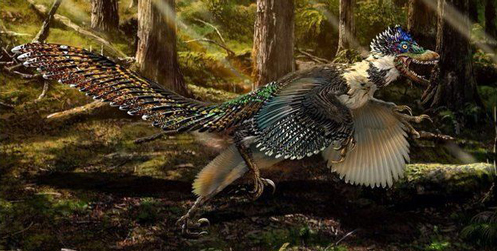
A few days ago, on July 16th, Everything Dinosaur team members published an article that featured the newly described Chinese dromaeosaurid dinosaur known as Zhenyuanlong suni.  We explained why the dinosaur called Velociraptor was used to help give this new dinosaur discovery context and outlined some of the more intriguing aspects of the fossil, that perhaps had been missed by more general media outlets.  However, we did receive an email about our article from a young dinosaur fan so we thought it best if we followed up our original article by providing some additional information about this little feathered carnivore.

To read our article (July 16th) on Z. suniThe Winged Dragon from Liaoning Province.

A Newly Described Dromaeosaurid from China

Very probably a ground-dwelling predator.

Very probably a ground-dwelling predator.

Picture credit: Zhao Chuang

Young Alex, wrote into Everything Dinosaur to ask, how do scientists know how big this dinosaur was and how big was it compared to other feathered dinosaurs found in China?  We wrote to Alex explaining in a little more detail about what the scientists who studied the fossil material concluded.

The academic paper describing this new type of “raptor” was published in the journal “Scientific Reports”.  The authors were Professor Junchang Lü (Institute of Geology, Chinese Academy of Geological Sciences, Beijing) and Dr Stephen Brusatte (School of GeoSciences, University of Edinburgh).

Early Cretaceous North-eastern China

Around 125 million years ago, the area of north-eastern China, now known as Liaoning Province was covered in a lush, temperate forest.  Large lakes featured in the environment and nearby volcanoes occasionally erupted and buried the area in fine ash, this explains the exceptional state of preservation of much of the Liaoning fossil material.

Living in the forests were a large number of different types of “raptor”, members of the Dromaeosauridae dinosaur family.  So far six genera have been described but it is very likely that more feathered dinosaur discoveries will be made in the future.

The six genera of dromaeosaurids described so far (with date described):

  1. Sinornithosaurus (named in 1999)
  2. Microraptor (named in 2000)
  3. Graciliraptor (named in 2004)
  4. Tianyuraptor (named in 2010
  5. Changyuraptor (named in 2014)
  6. Zhenyuanlong (2015)

So How Does Zhenyuanlong Compare?

The fossilised remains of Zhenyuanlong are nearly complete, but the end of the tail is missing.  The skeleton measures 126.6 cm long, when compared to the large dromaeosaurid Tianyuraptor it has been estimated that with the whole of the tail, this animal would have measured more than five feet (165 cm) in length.  It was probably not quite fully grown when it died so it might have reached a length of around 1.8 metres.

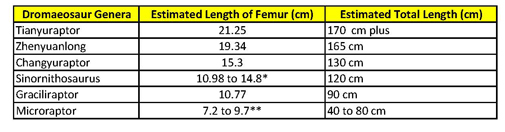
When it comes to comparing the sizes of different types of dinosaur, it is the limb bones that palaeontologists turn to.  The thigh bone (femur) for example, is often used to make comparisons between dinosaurs.  To estimate how big a dinosaur was, the length and the circumference of the femur is often measured.  In simple terms, the bigger and the more robust the femur, the bigger the dinosaur.

Comparing Other Dromaeosaurids to Zhenyuanlong suni

As all the Liaoning dromaeosaurid species discovered so far have at least one thigh bone as part of their fossil material, and as the size of the thigh bone strongly correlates to body size, measuring the length and overall size of the thigh bone is a useful way of comparing the sizes of different dinosaurs.

A Table Comparing the Femur Lengths and Overall Size of Liaoning Dromaeosaurids

Size comparisons between Liaoning dromaeosaurids.

Size comparisons between Liaoning dromaeosaurids.

Table credit: Everything Dinosaur

* Depends on the species and the specimens measured

** Depends on the species as there are three species of Microraptor currently known.

So based on the length of the thigh bone, scientists can see that Zhenyuanlong (Z. suni) is much bigger than most of the other dromaeosaurids known from Liaoning.  It seems to be about the size of Tianyuraptor.

What Does Zhenyuanlong suni Mean?

Time to answer one other question about this new dinosaur, this time sent in by Sophie.  Sophie asked what does Zhenyuanlong mean?

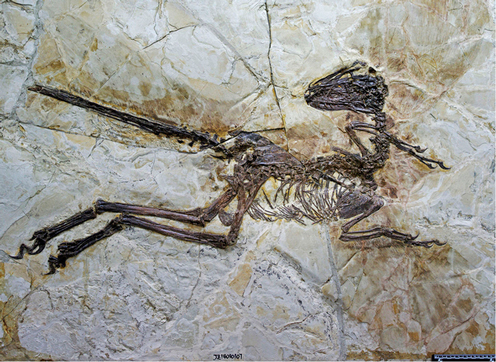
The Holotype Specimen of Zhenyuanlong suni

 Large-bodied, short-armed Liaoning dromaeosaurid

Large-bodied, short-armed Liaoning dromaeosaurid

Picture credit: Chinese Academy of Geological Science

Zhenyuanlong suni means “Mr Zhenyuan Sun’s dragon”.  The word “long” means dragon in Chinese (hence other dinosaur names such as Guanlong and Dilong) and the rest of the name honours Mr Zhenyuan Sun, who was able to acquire the holotype specimen for the scientists to study.

There is a spectacular modelof Zhenyuanlong in the Beasts of the Mesozoic model series: Beasts of the Mesozoic Figures and Models.

19 07, 2015

Countdown to the New CollectA Models

By |2023-04-01T14:37:11+01:00July 19th, 2015|Categories: Dinosaur Fans, Everything Dinosaur News and Updates, Everything Dinosaur Products, Main Page, Press Releases|0 Comments

New CollectA Models Due in Shortly

The majority of the new for 2015 CollectA prehistoric animals should be in stock at Everything Dinosaur very shortly.  The models, which include the 1:4 scale Guidraco pterosaur replica and the feathered Tyrannosaurus rex are currently on the water and they should be arriving at Everything Dinosaur’s warehouse by the end of the month.

CollectA Models

The CollectA ranges, including the “Supreme” range, to which the Guidraco scale model belongs, have earned themselves a big reputation amongst dinosaur model fans and collectors for their beautiful designs and attention to detail.  The ranges have been extended recently and new additions will include the “war pig” Daeodon as well as the huge Moropus.

The genus Moropus contains a number of species, all members of the “knuckle-walkers” group of prehistoric mammals (Chalicotherioidea).  New dinosaurs from CollectA include an eagerly awaited Acrocanthosaurus model (expect more news from Rebor on this dinosaur shortly) and more stocks of the popular 1:40 scale CollectA Carcharodontosaurus.

Coming Soon to Everything Dinosaur

New models all available from Everything Dinosaur.

New models all available from Everything Dinosaur.

Picture credit: Everything Dinosaur

Lots of New Figures and CollectA Models

As you can see from the picture above, a marine reptile is also included in these new releases.  The marine reptile is a Temnodontosaurus and it is depicted giving birth, showing that these superbly adapted marine creatures were viviparous (live birth).  Emerging from behind the head of the fearsome Daeodon is the new Smilodon replica, and what a beautiful Sabre-tooth cat model it is too.

To view Everything Dinosaur’s range of CollectA models: CollectA Prehistoric World Models.

The not to scale series now contains over a hundred prehistoric animal replicas, all of which are available from Everything Dinosaur, we have seen a number of these replicas already and they really are top quality.  The feathered T. rex and the Acrocanthosaurus (A. atokensis) are both new additions to the scale model range (both these dinosaurs are sculpted in 1:40 scale).

CollectA Deluxe Scale Models

To view the scale model series made by CollectA: CollectA Deluxe/Supreme Prehistoric Animal Models.

 Earlier this year, the first of the 2015 prehistoric animals from CollectA were released.  These replicas included a 1:40 scale Pliosaurus, two horned dinosaurs (Medusaceratops and Nasutoceratops), plus the Chinese tyrannosaurid Xiongguanlong and the enormous titanosaur known as Daxiatitan.

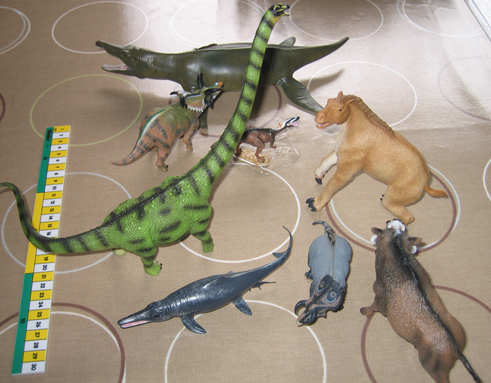
Some of the New for 2015 Prehistoric Animal Models (CollectA)

A wide variety of prehistoric animal models.

A wide variety of prehistoric animal models.

Picture credit: Everything Dinosaur

A Field Ruler Shows the Scale

The inclusion of one of our field rulers in the photograph above gives readers and idea of the size of these hand-painted replicas.  The picture shows just some of the new CollectA models, from left to right (as you view the photograph),  we have the green and black, long-necked Daxiatitan, the ichthyosaur Temodontosaurus, Medusaceratops then at the back the 1:40 scale Pliosaurus model complete with Lampreys attached to its body.

The Xiongguanlong can be seen on its base in the centre of the photograph, close to the sandy coloured Moropus and the grey Nasutoceratops.  The Daeodon, prehistoric mammal figure is in the bottom right corner of the photograph.  It certainly is a very eclectic bunch of prehistoric animals.

18 07, 2015

Schleich World of History Giganotosaurus (orange) Review

By |2023-04-01T14:33:09+01:00July 18th, 2015|Categories: Dinosaur Fans, Everything Dinosaur Products, Main Page, Product Reviews|0 Comments

A Review of the Schleich World of History Giganotosaurus (Orange)

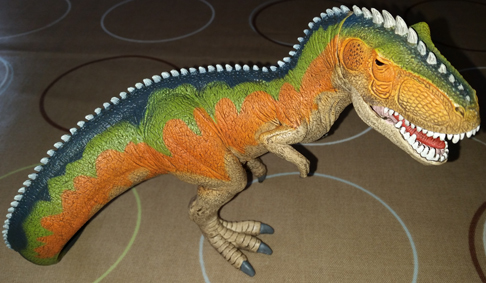
Schleich have added another meat-eating dinosaur model to their World of History collection.  It is a Giganotosaurus (the name means Giant Southern Lizard), the most colourful of all the Giganotosaurus replicas that this German manufacturer have made.  This Schleich dinosaur model is referred to as Giganotosaurus (orange), helping to distinguish it from earlier versions of this dinosaur made by Schleich.  The name is very appropriate as it has a most striking orange colouration running down the side of the neck, the flanks and along the base of the broad, powerful tail.

The New for 2015 Schleich Giganotosaurus (orange)

Giant Southern Lizard.

Giant Southern Lizard.

Picture credit: Everything Dinosaur

Schleich World of History Giganotosaurus

The picture above shows just how colourful this Schleich dinosaur model actually is.  The bright orange paintwork sets off the dark blue of the spine and the green band that runs from the top of the snout down to the end of the tail.  There is also a row of bony scales that resemble small horns running down the body.

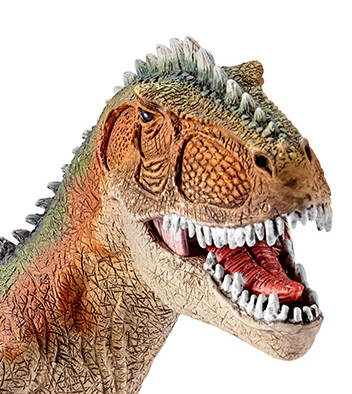
All the models are hand-painted and when pictured using a flash, the colours really do stand out.  There might be a little variation in each model, after all, they are hand-painted but the underlying sculpt provides an excellent base with much to be admired.  Of particular note are the carefully depicted large scales on the broad feet and the detailing of the skull.  This model, like the majority of Schleich meat-eating dinosaur models has an articulated jaw.

The Schleich Giganotosaurus (orange) has an Articulated Jaw

With an articulated jaw.

With an articulated jaw.

Picture credit: Everything Dinosaur

An Unusual Pose

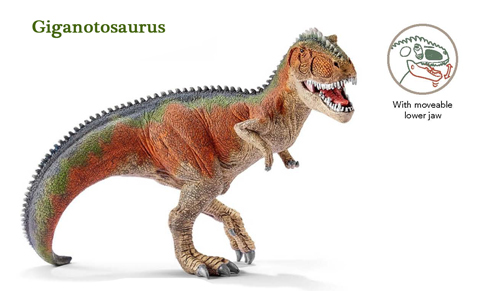
The pose is most unusual.  The tail is bent round and provides support for the model, this permits the left hind foot to be slightly raised off the ground giving this Schleich dinosaur replica quite a unique look.  Credit to the design team at Schleich for coming up with this.

The Schleich Giganotosaurus (orange) is Beautifully Balanced

With articulated jaw and beautifully balanced.

With an articulated jaw and beautifully balanced.

Picture credit: Everything Dinosaur

One small drawback of the pose is that when you measure the model it is around twenty-four centimetres in length, but once that curved tail is taken into account its true length is nearly thirty-two centimetres, making this Schleich dinosaur model quite a sizeable beast.  Fitting really when you consider that Giganotosaurus was one of the largest and heaviest terrestrial carnivores known to science.

Model Measurements

The head height is around seventeen centimetres allowing this dinosaur to be a match for the two tyrannosaur models introduced by Schleich into their World of History range.  The Schleich Giganotosaurus reflects a trend from the company to introduce more colourful and bright prehistoric animal figures.  Although there is much to be admired with this latest addition, it is aimed broadly at young dinosaur fans.  Certainly, the model will stand up well to robust, creative play.

 To view the complete range of large Schleich dinosaur and prehistoric animal models: Schleich World of History Prehistoric Animal Models.

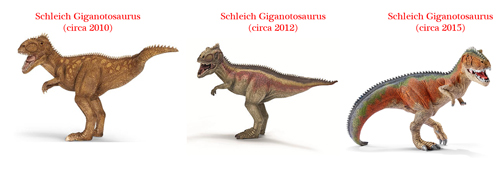
With Schleich having produced three large Giganotosaurus models within the last five years, there is an interesting debate taking place as to which is people’s favourite.

Schleich Giganotosaurus – Which One is Your Favourite?

Which one is your favourite?

Which one is your favourite?

Picture credit: Everything Dinosaur

17 07, 2015

Fossilised spermatozoa preserved in Annelid Cocoon from the Eocene

By |2023-04-01T14:30:20+01:00July 17th, 2015|Categories: Dinosaur and Prehistoric Animal News Stories, Main Page, Photos/Pictures of Fossils|0 Comments

Fossilised Spermatozoa from Ancient Annelid

Dinosaurs and other large vertebrates might grab all the headlines when it comes to fossil discoveries but share a thought for those parts of the Kingdom Animalia which do not readily fossilise.  Invertebrate palaeontologists working on the Annelida (segmented worms and leeches), soft bodied creatures, have very few body fossils to study.  As a result, the dedicated scientists which work on them don’t have anything like a complete fossil record of these extremely important creatures.

Trace fossils, such as preserved burrows can help, but the evolutionary history of these ancient animals remains poorly understood.

Cocoon Fossils

In contrast, the distinctive egg cases, often referred to as cocoons of the worms that make up the Class Clitellata, are relatively common in the fossil record.  Everything Dinosaur team members have read published papers that explore the fossilised remains of the cocoons from worms that once lived in freshwater environments back in the Triassic.  These preserved cocoons provide valuable additional information as to the diversity of micro-faunas within ancient biotas.  Unfortunately, little work has been carried out so far on the possibility of using such fossils to establish phylogenetic relationships between families and genera.

Class Clitellata

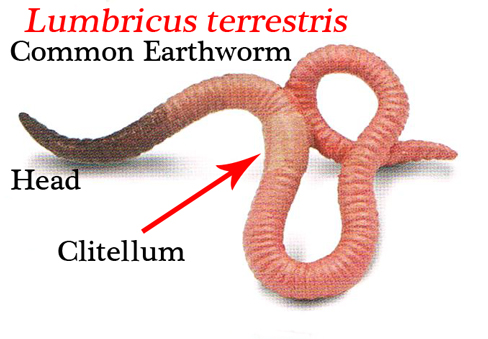
The worms that make up the Class Clitellata are distinguished from other types of segmented worm, in that they have a “collar”.  It is this “collar”, called the clitellum that gives this Class its name and it is from the Clitellum that the reproductive cocoon is formed.

A Diagram of a Common Earthworm Showing the Clitellum

The Clitellum is marked by an arrow.

The clitellum is marked by an arrow.

Picture credit: Everything Dinosaur

Fossilised Spermatozoa

A team of scientists from the University of Milan, the Swedish Natural History Museum and the Museo de la Plata (Argentina) have published a paper in the academic journal “Biology Letters” that details the discovery of fossilised spermatozoa (sperm) preserved within the secreted wall layers of a fifty-million- year-old clitellate cocoon found in Antarctica.  This material represents the oldest fossil animal spermatozoa yet described.

The specimen was collected during a field expedition to the remote Seymour Island, one of a group of small islands at the tip of the Antarctic Peninsula.  The Island is extremely significant to palaeontologists as the strata exposed dates from the Late Cretaceous, the Palaeogene and into the early part of the Neogene (Eocene Epoch).  Fossils found on Seymour Island include marsupials, proving that in the past terrestrial mammals lived on Antarctica, but the rocks have proved most useful in helping scientists to plot climate change, including the global cooling during the Eocene that led to the glaciation of the Poles.

Fossil is Approximately 50 Million Years Old

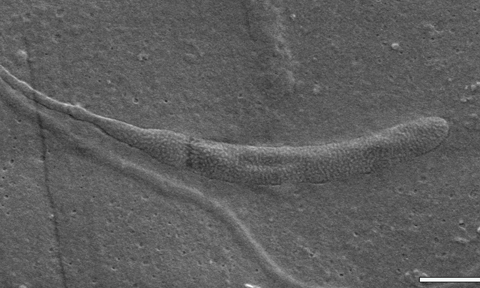
Strontium isotope dating gives an age of approximately fifty million years for the fossilised spermatozoa (Ypresian faunal stage of the Eocene), the fossil find was made by chance as a single worm fragment just 0.8 mm wide was studied using a scanning electron microscope.  A three-dimensional model was then created using sections of the fragment that had been examined under X-ray microscopy.

A Fragment of the Fossilised Worm Spermatozoa

Ancient remains - scale bar = 1 micron.

Ancient remains – scale bar = 1 micron.

Picture credit: Swedish Museum of Natural History (Department of Palaeobiology)

When closely examined, the clitellate was found to consist of a solid inner wall, just one fortieth of a millimetre thick.  In addition, there was a spongy, outer layer of loosely interwoven cables between 100th and 200th of a millimetre in thickness.  The scientists were able to observe images of the microscopic cells embedded in the cocoon wall, including rod-shaped structures with a whip-like tail.

Modestly commenting on the discovery, Benjamin Bomfleur, a palaeobotanist at the Swedish Natural History Museum remarked:

“It was an accidental find.  We were analysing the fragments to get a better idea of the structure of the cocoon.  When we zoomed into the images, we started noticing these tiny biological structures that look like sperm.”

A Worm Mystery

Working with biologists the team were able to conclude that the fossils resemble the sperm of extant freshwater crayfish worms (Branchiobdellida), although since these worms are only found in the Northern Hemisphere it remains a mystery as to whether or not the Antarctic fossil specimen is closely related.  How the fossils came to form in the first place is a little bit of a puzzle too.

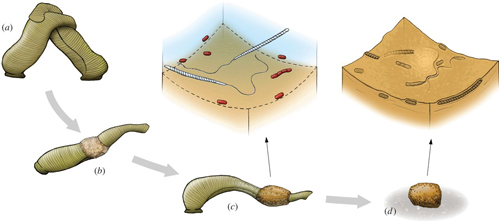
Diagram Illustrating the Inferred Method of Fossilisation of Microorganism (Clitellate Cocoons)

Inferred fossilisation process.

Inferred fossilisation process.

Picture credit: Biology Letters

In the diagram above, the common medicinal leech is used to illustrate a potential theory of how the fossil preservation occurred.  Two leeches mate (a), a cocoon is secreted from the clitellum (b), then eggs and sperm are released into the cocoon before the animal retracts and eventually deposits the sealed cocoon on a suitable substrate.  Spermatozoa and microbes become encased in the solidifying inner cocoon wall (d).

The scientists anticipate that this accidental discovery will permit systematic surveys of cocoon fossils coupled with advances in non-destructive analytical techniques that will open up new opportunities to explore the evolutionary relationships of minute, soft-bodied animals that are otherwise so rarely found in the fossil record.

Visit Everything Dinosaur’s award-winning website: Everything Dinosaur.

Go to Top