All about dinosaurs, fossils and prehistoric animals by Everything Dinosaur team members.
27 08, 2017

A Helpful and Informative Ceratopsian Cladogram

By |2024-05-09T08:41:52+01:00August 27th, 2017|Categories: Dinosaur and Prehistoric Animal Drawings, Dinosaur Fans, Main Page, Press Releases|0 Comments

Piecing Together the Horned Dinosaur Family Tree

Plans are in place at Everything Dinosaur to create a pdf file that highlights the evolution, radiation and diversity of the Ceratopsia.  The aim is to use the numerous illustrations of horned dinosaurs that the company has built up in its extensive database to produce a simplified horned dinosaur family tree.

Dinosaur fans will be aware that over the last two decades, the number of formally described ceratopsid dinosaurs has increased significantly, mostly due to the number of new Late Cretaceous horned dinosaurs named from fossil discoveries in the United States and Canada.  Model collectors will also know that there have been several new horned dinosaur models introduced over the last few years.  This trend is set to continue.  For every named prehistoric animal model that Everything Dinosaur supplies, we send out an accompanying fact sheet with that figure.  In this way, our own image library for the ceratopsids has dramatically increased.

An Illustration of a Recently Described Horned Dinosaur

Scale drawing of the horned dinosaur Nasutoceratops.

A scale drawing of the Late Campanian horned dinosaur called Nasutoceratops. Picture credit: Everything Dinosaur.

Picture credit: Everything Dinosaur

The picture above shows a scale drawing of the centrosaurine Ceratopsian Nasutoceratops (N. titusi) which was named and described in 2013.

To read an article about the discovery and naming of Nasutoceratops: Large Nose Horn Face.

Centrosaurine and Chasmosaurine

Traditionally, whilst the Ceratopsia includes numerous basal horned dinosaurs, the Ceratopsidae family, has been classified into two sub-families based on cranial ornamentation and horn morphology -the Centrosaurinae and the Chasmosaurinae.  The large horned dinosaurs of the Late Cretaceous period, specifically the Ceratopsidae, were all quadrupedal with heavy, armoured heads.  Palaeontologists used a simple method of assigning these types of dinosaurs to a sub-family:

  • Centrosaurines – short neck frill with a large nose horn, bigger than the brow horns.  This very simplistic description does not mean that centrosaurines had short frills.  Most frills were ornamented and in the case of the centrosaurine Styracosaurus – spectacular.

A Drawing of the Spectacular “Short-frilled” Centrosaurine Styracosaurus
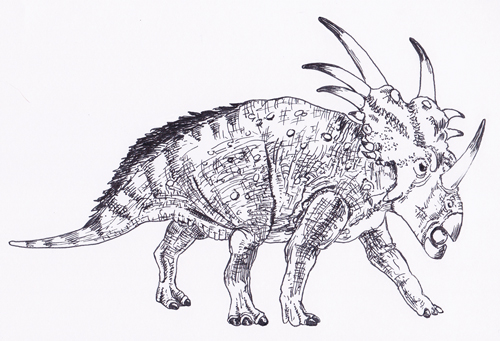
Styracosaurus illustrated.

A drawing of the horned dinosaur Styracosaurus. Picture credit: Everything Dinosaur.

Picture credit: Everything Dinosaur

  • Chasmosaurines – long neck frill with long snouts and the brow horns were usually bigger and more prominent than the nasal horn.

An Illustration of the Recently Described Chasmosaurine Regaliceratops (R. peterhewsi)
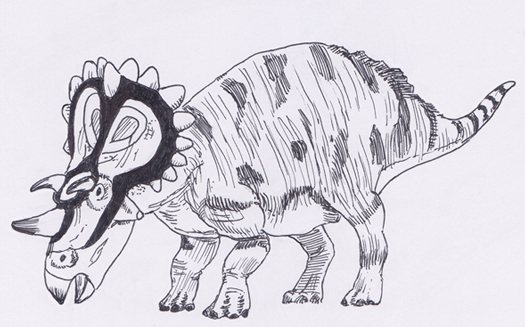
Regaliceratops drawing.

A drawing of the horned dinosaur Regaliceratops. Picture credit: Everything Dinosaur.

Picture credit: Everything Dinosaur

To view articulated ceratopsian figures: Beasts of the Mesozoic Figures.

A Ceratopsian Cladogram

As with most things related to palaeontology, the rather simplistic classification of centrosaurines and chasmosaurines has been undermined as new discoveries have been made.  A case in point, is the recently described Regaliceratops (see picture above).  It is for this reason that Everything Dinosaur team members are wanting to create their own cladogram.

We need some more illustrations to complete our data set, but once these have been commissioned we shall post up our own version of the horned dinosaur family tree.  It might be interesting to populate one cladogram using our own dinosaur illustrations, a second, identical phylogenetic analysis can be produced, but this time using the actual models to illustrate the various taxonomic positions.  It’s still a work in progress at the moment, but hopefully, we shall be able to produce something in the near future.

Visit the Everything Dinosaur website: Everything Dinosaur.
26 08, 2017

The Diversity of Early Cretaceous Feathered Theropods

By |2023-08-11T10:42:18+01:00August 26th, 2017|Categories: Dinosaur and Prehistoric Animal Drawings, Dinosaur Fans, Main Page|0 Comments

Wonderful Early Cretaceous Theropod Dinosaur Illustration

Sometimes at Everything Dinosaur, we get asked fascinating questions.  For example, we were emailed this week by a fossil collector asking how many different types of feathered dinosaur were there?  That’s a question, the answer to which, as new fossil discoveries are made, keeps changing.  Since the discovery of Sinosauropteryx in 1996 and its subsequent scientific description, numerous feathered dinosaur fossil discoveries have been made.  In all likelihood, within the Theropoda alone, there were probably hundreds of different types of feathered dinosaur.

Feathered Theropods

The diversity of the feathered theropods is beautifully illustrated in a wonderful image created by Jan Slovak.

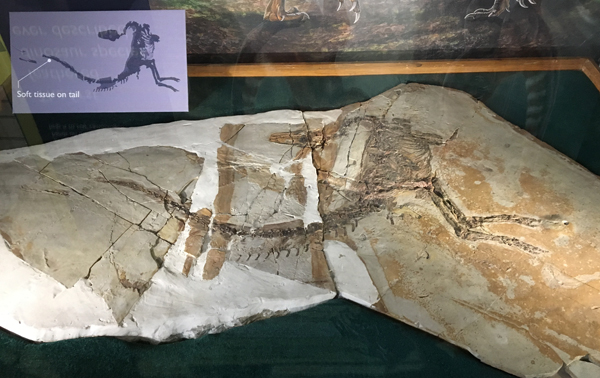
Fossil Remains of a Feathered Theropod (Early Cretaceous China)

Sinosauropteryx fossil material.

Sinosauropteryx on display – the first feathered dinosaur described. Picture credit: Everything Dinosaur.

Picture credit: Everything Dinosaur

The famous Jan Slovak image depicts part of the Liaoning biota of the Early Cretaceous.  The picture illustrates a variety of different types of feathered dinosaurs, (all Coelurosaurian dinosaurs).  A pair of Sinosauropteryx (right), chase a small mammal.  Sinosauropteryx is an example of a compsognathid theropod.  To the left, two Microraptors pursue a dragonfly.  Microraptors come from another branch of the Coelurosauria clade, the dromaeosaurids, sometimes referred to as the “raptors”.

In the background, an ornate couple of dinosaurs are displaying to each other.  They are conducting an intricate courtship display and are oblivious to what is going on around them.  This is a pair of Caudipteryx dinosaurs, complete with beautiful tail plumes.  Caudipteryx is yet another example of a type of feathered theropod.  Caudipteryx is a member of the oviraptorosaurian group.

Feathered Dinosaur Models

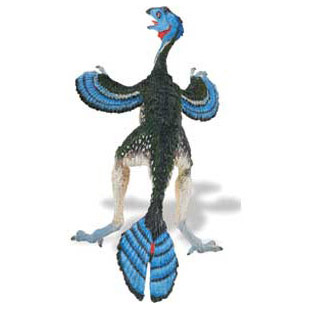
A Model of Caudipteryx

Cauditperyx. Images of feathered dinosaurs.

Included in the limb position study.

The image (above) shows a feathered dinosaur from the Safari Ltd model range:

To view the Safari Ltd range: Safari Ltd. Wild Safari Prehistoric World Models.

Our dedicated team members compiled the information required by our emailer and duly sent it off, along with some links to other articles written by Everything Dinosaur staff that illustrate some of the huge variety of different dinosaurs we listed.

Visit the Everything Dinosaur website: Everything Dinosaur.
24 08, 2017

Back to School with Everything Dinosaur

By |2023-08-11T10:23:18+01:00August 24th, 2017|Categories: Dinosaur Fans, Educational Activities, Everything Dinosaur News and Updates, Everything Dinosaur Products, Main Page, Photos of Everything Dinosaur Products, Press Releases|0 Comments

Dinosaurs Go Back to School

The summer holidays are nearly over for the majority of us and many parents, grandparents and guardians will be turning their thoughts to the time when the children have to go back to school.  For young dinosaur fans, Everything Dinosaur stocks a large range of dinosaur themed school items, everything from backpacks and metal lunch boxes to pencils and writing sets – just about all you would need to kit out a budding palaeontologist for the new school term.

Back to School Dinosaur Items

Everything Dinosaur Stocks a Large Range of Dinosaur Themed Educational Items Including Stationery

Dinosaur themed school supplies.

Get ready to “roar” back to school. Picture credit: Everything Dinosaur.

Picture credit: Everything Dinosaur

Get Your Youngsters Roaring with Excitement

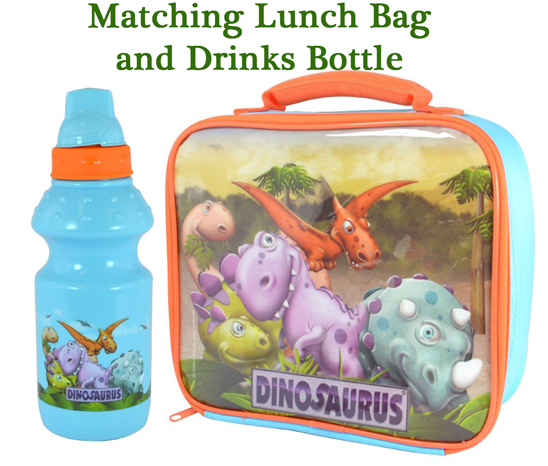
From stationery sets that feature dinosaur themed pencil cases, to a Tyrannosaurus rex backpack, Everything Dinosaur has it covered and all our products are backed by our 5-star FEEFO accredited product ratings.  Have your eager dinosaur fans roar with excitement as they stomp to school, we even have matching lunch boxes and drinks bottles – with a prehistoric animal motif of course!

A Matching Dinosaur Themed Lunch Box and Drinks Bottle – Ideal for School

Dinosaur themed lunch bag and matching drinks bottle.

Dinosaur lunch bag and matching drinks bottle.

This is a super dinosaur lunch bag and matching drinks bottle. The blue and orange lunch bag features lots of prehistoric animals on it and the sturdy 350 ml drinks bottle with its anti-spill twist cap, features an identical motif. The lunch bag even has a robust, padded handle for easier carrying.

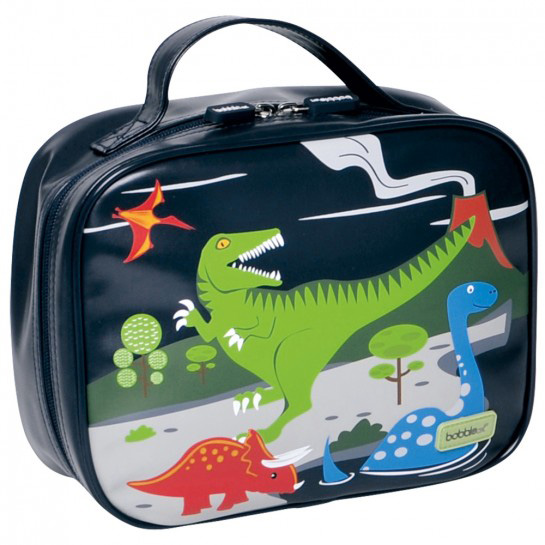
If you are looking for an insulated lunch box made from hard-wearing PVC, then look no further, as Everything Dinosaur has these types of lunch boxes in stock as well.  These high-quality products are easy to keep clean and can handle the dinosaur-sized knocks associated with being a school lunch box.

The Tough, PVC Dinosaur Themed Lunch Box

A dinosaur themed lunch box.

Lunch is sorted – dinosaur style.

Shopping for Dinosaurs

With everyone leading such busy lives these days, at least the grown-ups looking to kit out their young charges can be reassured that Everything Dinosaur has the supply of dinosaur themed school items and stationery sorted, its top marks to Everything Dinosaur when it comes to back to school.

To view the range of dinosaur themed items including notepads, school sets, pencils and pencil cases that that Everything Dinosaur stocks: Dinosaur Back to School Items.

Visit the award-winning Everything Dinosaur website: Everything Dinosaur.

23 08, 2017

New Long-Necked and Horned Stem Archosaur from India

By |2023-08-11T10:16:55+01:00August 23rd, 2017|Categories: Dinosaur and Prehistoric Animal News Stories, Dinosaur Fans, Main Page, Photos/Pictures of Fossils|0 Comments

The Weird and Wonderful Shringasaurus indicus

The Triassic had some very weird and wonderful animals.  Fantastic phytosaurs, the first pterosaurs, evolving and radiating members of the Dinosauria and joining this menagerie is the newly described Shringasaurus indicus, a large, herbivorous, horned plant-eater that superficially resembled a horned dinosaur.

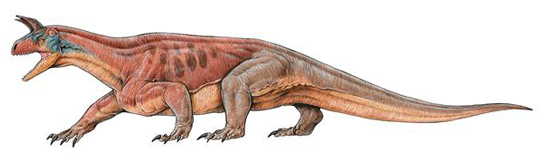
An Illustration of the Newly Described Basal Archosaur S. indicus

The Triassic stem Archosaur Shringasaurus indicus.

An illustration of the newly described Triassic stem archosaur Shringasaurus indicus.

Picture credit: Conicet

A Pair of Large Supraorbital Horns

The most surprising feature of this reptile is the pair of large, forward pointing horns located on the top of the animal’s skull.  These horns resemble those of some Cretaceous ceratopsian dinosaurs, famous beasties from the fossil record such as Triceratops, Torosaurus and Chasmosaurus.  The fossilised remains of Shringasaurus indicus were recovered from a red mudstone in the upper part of the Denwa Formation (north, central India).  At least seven individuals of different growth stages were excavated from an area of approximately twenty-five square metres.

Most of the specimens were disarticulated, with the exception of one partially articulated skeleton.  Back in the early Middle Triassic, when Shringasaurus roamed, India was located in the Southern Hemisphere, part of a super-continent called Pangaea.

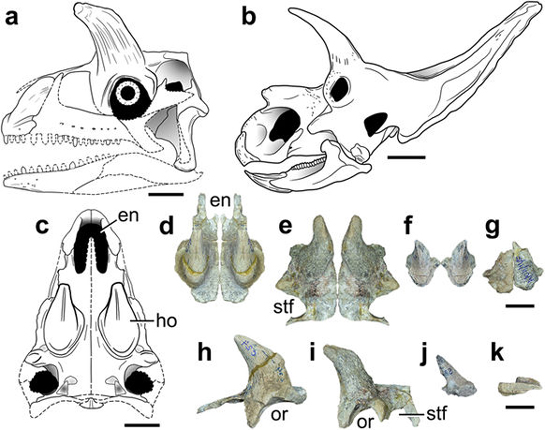
The Horns of Shringasaurus are Similar to Those of a Horned Dinosaur

Shringasaurus skull material compared to a horned dinosaur.

Cranial anatomy of Shringasaurus indicus compared to a Ceratopsian.

Picture credit: Scientific Reports

The picture above shows a line drawing (lateral view) of the skull of an adult S. indicus (a) compared to a lateral view of the skull of the Canadian, chasmosaurine dinosaur Arrhinoceratops brachyops, (b) which was distantly related to Triceratops.  The line drawing (c) shows the skull of S. indicus in dorsal view, (looking down onto the skull).  Photographs d-g show dorsal views of several individuals at different growth stages.  To produce a complete dorsal view of the skull, missing fossils have been reconstructed by digitally mirroring their preserved counterpart.

As these reptiles grew, so the horns became larger and more prominent.  Photographs h-j show lateral views of the bony horns.  Specimens d to f and h-j possess horns and the two smallest specimens, representing the youngest individual (g and k) lack horns.

Scale bar = 4 cm for (a) and (c to k), the scale bar for the ceratopsian skull is 20 cm (b)

Key

en = external naris

ho = horn

or = orbit

stf = supratemporal fenestra

The researchers conclude that these horns were probably used in intraspecific combats, perhaps over mates, or to decide the hierarchy of the herd.  This new study supports the idea of sexual selection pressure leading to the evolution of bizarre ornamentation within the Archosauria.

Recently, Safari Ltd introduced a replica of Shringasaurus.

To view this range of models and figures: Wild Safari Prehistoric World Figures.

Shringasaurus is Remarkable For its Horns

Commenting on the significance of this discovery, one of the authors of the scientific paper, Martín D. Ezcurra (CONICET–Museo Argentino de Ciencias Naturales, Buenos Aires, Argentina), stated:

“An animal like Shringasaurus is remarkable for its horns, a completely unexpected feature in this group of reptiles.  It shows that sexual selection led to the development of strange anatomical structures in the early evolutionary history of the arcosauromorphs, a group that includes dinosaurs, crocodiles and birds.”

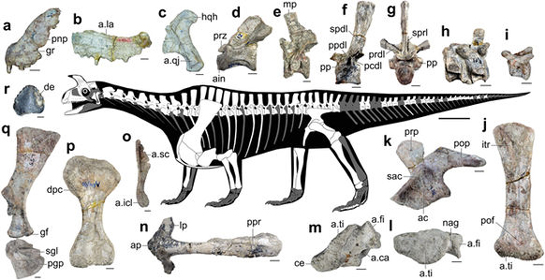
The Fossil Material Associated with Shringasaurus

Shringasaurus indicus fossil material.

Shringasaurus indicus fossils.

Picture credit: Scientific Reports

The genus name is a combination of Greek and ancient Sanskrit, it means “horned reptile”.  This unusual reptile with its pair of horns has provided an insight to the diverse range of reptiles that occupied this part of Pangaea during the Anisian faunal stage of the Middle Triassic some 245 to 243 million years ago.

Visit the Everything Dinosaur website: Everything Dinosaur.
22 08, 2017

Eofauna Steppe Mammoth Scale and Dimensions

By |2023-08-11T10:00:34+01:00August 22nd, 2017|Categories: Dinosaur Fans, Educational Activities, Everything Dinosaur Products, Main Page, Photos of Everything Dinosaur Products|2 Comments

Eofauna Steppe Mammoth Dimensions and Scale

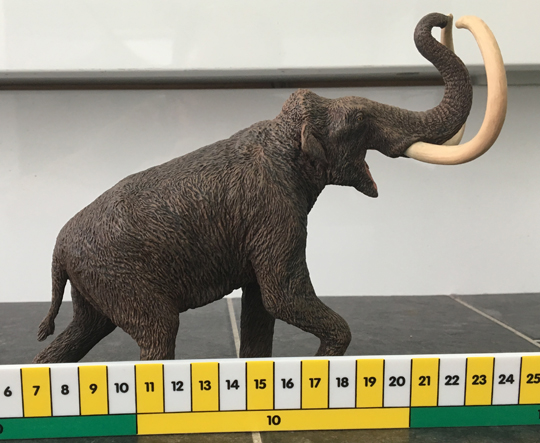
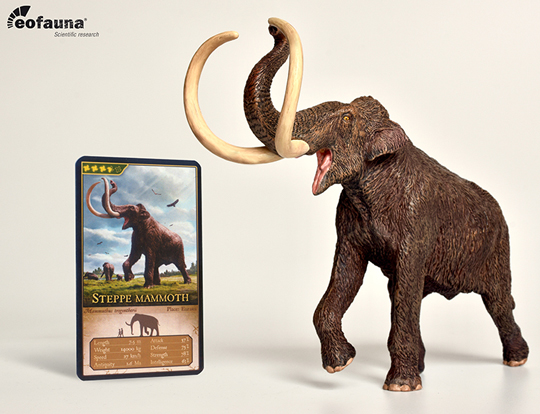
Yesterday, (August 21st), Everything Dinosaur announced that it would be selling the Eofauna Scientific Research Steppe Mammoth model.  Everything Dinosaur has been granted exclusive access to this new figure for on-line sales for a British Isles-based company.  We have already received lots and lots of enquiries about this beautiful replica and in this short blog article we shall provide information on two of the most common questions that we have been asked about this figure – how big is it?  What scale is it in?

Everything Dinosaur Providing Information About the Eofauna Scientific Research Steppe Mammoth Model

The size of the Eofauna Steppe Mammoth model.

The beautiful Eofauna Scientific Research Steppe Mammoth model. Picture credit: Everything Dinosaur.

Picture credit: Everything Dinosaur

The photograph above shows this new figure posed against one of our geology field rulers.  These rulers are handy as they photograph really clearly and instantly provide a guide to the size and scale of any given replica.

The Dimensions of the Eofauna Scientific Research Steppe Mammoth Model

Out with the tape and the callipers and these are the approximate dimensions of the figure:

  • Length approximately 19 cm (measured from the furthermost back heel to the anterior face of the raised tusks)
  • Height to shoulders approximately 11.5 cm
  • The height to top of the head approximately 12.8 cm
  • Height to tip of the raised tusks (highest part of the model) approximately 15.5 cm
  • Length of the skull approximately 3.1 cm (cranial length) – measured from the top of the head to the alveolus (socket for the tusk) skull length is 5 cm approx.
  • Width of the skull approximately 2.4 cm (cranial width)
  • Width of the model across the hip region 5 cm approximately

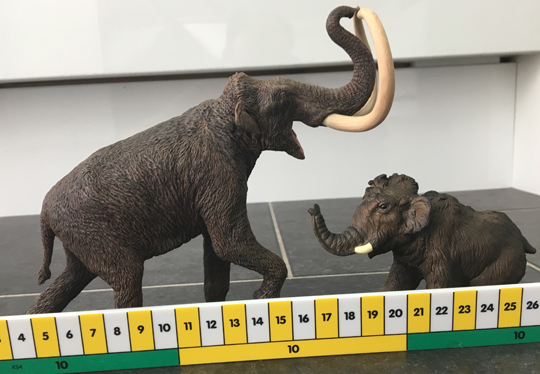
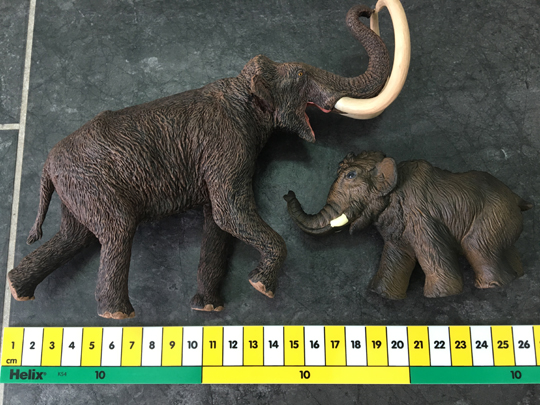
The model is officially in 1:40 scale and those clever and very talented people at Eofauna Scientific Research know a great deal about proboscideans.  Many collectors like to group their model collections together, so we took some photographs of this new Steppe Mammoth model (M. trogontherii), next to one our favourite Mammoth models, the Papo Woolly Mammoth (M. primigenius) juvenile.  These images should also help with size estimations and scaling.

The Eofauna Scientific Research Steppe Mammoth Figure Compared to the Papo Juvenile Woolly Mammoth Figure

Comparing Mammoth models.

Comparing the Eofauna Scientific Research Steppe Mammoth with the Papo Juvenile Woolly Mammoth.

Picture credit: Everything Dinosaur

To view the Eofauna range of figures in stock: Eofauna Scientific Research Replicas.

Measuring a Mammoth

Once again, one of our trusty geology field rulers helps to provide size and scale information.

Side by Side but not Necessarily in a Biostratigraphical Sense

Comparing a Steppe Mammoth model to a Papo Woolly Mammoth juvenile.

The Eofauna Scientific Research Steppe Mammoth and the Papo Juvenile Woolly Mammoth.

Picture credit: Everything Dinosaur

Superbly Detailed Steppe Mammoth Model

The dynamic pose of the Eofauna Scientific Research might make measuring tricky, but this is a small price to pay for such a beautifully crafted prehistoric animal replica.  We hope our photographs help to give collectors and prehistoric animal model fans a better impression of the size and scale of this superbly detailed Steppe Mammoth model.

If you would like larger images, further information, or if you would like to reserve a Eofauna Scientific Research Steppe Mammoth, simply email Everything Dinosaur: Contact Everything Dinosaur.

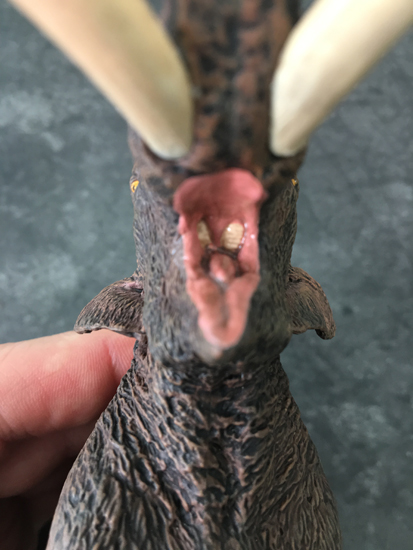
When it comes to singing this model’s praises, we thought a picture is worth a thousand words.  This is a close-up of the mouth of the Steppe Mammoth, with our packing room floor as a backdrop, check out the teeth, you can even see ridges on the molars – wow!

Let the Steppe Mammoth Model’s Quality Speak for Itself

A close view of the interior of the Eofauna Scientific Research Steppe Mammoth model. Mammal teeth can help with idenfication.

A close-up view of the mouth of the Steppe Mammoth. Picture credit: Everything Dinosaur.

Picture credit: Everything Dinosaur

Contact Everything Dinosaur

For bigger images, further information on this replica or if you would like to reserve a Eofauna Scientific Research Steppe Mammoth, email Everything Dinosaur: Email Everything Dinosaur.

To visit the company’s website: Everything Dinosaur.

21 08, 2017

Everything Dinosaur Gets Exclusive Access to New Steppe Mammoth Model

By |2023-08-11T09:45:09+01:00August 21st, 2017|Categories: Dinosaur Fans, Educational Activities, Everything Dinosaur News and Updates, Everything Dinosaur Products, Main Page, Press Releases|0 Comments

Everything Dinosaur will be Stocking Eofauna Steppe Mammoth Model

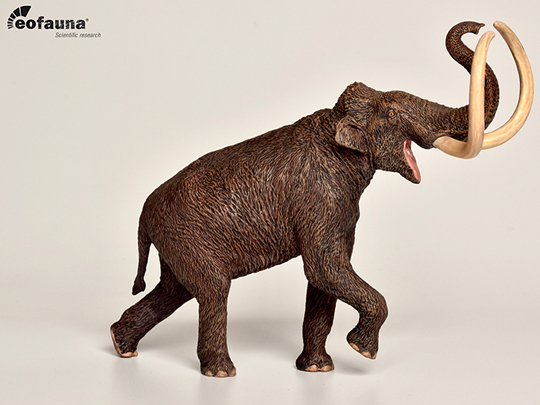
Everything Dinosaur will be stocking the new Eofauna Scientific Research 1:40 scale replica of a Steppe Mammoth (M. trogontherii).  The UK-based specialist supplier of dinosaur and prehistoric animal models has been granted exclusive access to this new figure (Steppe Mammoth model) for on-line sales for a British Isles-based company.

The beautifully sculpted PVC figure measures nineteen centimetres in length and shows some amazing detail.  Team members are currently working on the data sheet that will accompany sales of this model through Everything Dinosaur’s website.  As Eofauna Scientific Research is staffed by vertebrate fossil specialists and researchers too, this fantastic mammoth model will also be supplied with a hang tag and bonus collectable card to educate collectors about this geographically widespread, Middle Pleistocene proboscidean!

Steppe Mammoth Model

The Eofauna Scientific Research Steppe Mammoth Model

The Eofauna Scientific research 1:40 scale Steppe Mammoth model.

The Eofauna Scientific research Steppe Mammoth model.

Picture credit: Eofauna Scientific Research

A spokesperson from Everything Dinosaur commented:

“Working with the dedicated team at Eofauna Scientific Research has been a great experience.  They have done an amazing job producing what will be a highly sought after and collectable mammoth model.  It is an honour to be involved in the launch of this new, PVC model series and we can’t wait to see how this range of replicas develops.”

Mammuthus trogontherii – The Steppe Mammoth

The Steppe Mammoth (Mammuthus trogontherii) was one of the largest of all the proboscideans, with some fossil specimens indicating a bodyweight in excess of ten tonnes.  This mammoth was an evolutionary intermediary between the ancestral mammoth M. meridionalis and the better-known Woolly Mammoth (M. primigenius).  It evolved around 1,600,000 years ago and roamed much of the northern latitudes of Europe and Asia.  The elephant’s skull was shorter than those of its ancestors, this is skilfully depicted in the anatomically accurate 1:40 scale Eofauna replica and the teeth of Mammuthus trogontherii were adapted to feeding on tough grasses and sedges – check out the superbly painted upper molars that are visible in the open mouth of the model!

Coming Soon to Everything Dinosaur!

The Eofauna Scientific research 1:40 scale Steppe Mammoth model.

A 1:40 scale model of a M. trogontherii by Eofauna.

Picture credit: Eofauna Scientific Research

To view the range of Eofauna Scientific Research replicas available from Everything Dinosaur: Eofauna Scientific Research Models.

The First of a New Range of Prehistoric Animal Models

This is the first of an exciting range of PVC models, the range is being introduced with the aim of giving fans of prehistoric animals and model collectors the opportunity to build up a collection of highly accurate, museum quality figures.

General Director of Eofauna Scientific Research, Asier Larramendi explained:

“All our work is based on scientific research.  Several members of Eofauna, including myself, are scientists and our aim is to use our considerable knowledge and expertise to develop an exciting range of figures that really do reflect the fossil record.  It is fantastic for us to be teaming up with such a well-respected company such as Everything Dinosaur, who like us, share a passion for palaeontology and helping to educate the next generation of scientists.”

If the 1:40 scale Steppe Mammoth is anything to go by, then collectors and prehistoric animal fans are going to be roaring with excitement as this new range is rolled out.  Just wait until you see the dinosaurs….

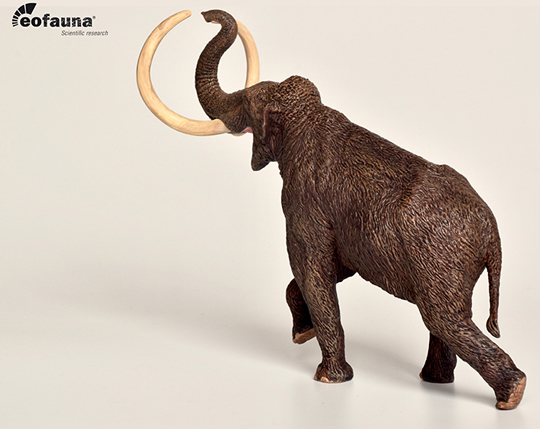
A Beautifully Sculpted Model of a Steppe Mammoth (Mammuthus trogontherii)

The Eofauna Scientific research 1:40 scale Steppe Mammoth model.

The museum quality Eofauna Steppe Mammoth replica.

Picture credit: Eofauna Scientific Research

The model is likely to be available from Everything Dinosaur in September (September 2017).

For further information about this exciting new model and to enquire about availability: Contact Everything Dinosaur.

Take a look at the Everything Dinosaur award-winning website: Visit Everything Dinosaur’s Website.

20 08, 2017

A Beautiful Thank You Letter from Thomas

By |2024-05-06T16:14:31+01:00August 20th, 2017|Categories: Educational Activities, Main Page, Teaching|0 Comments

Thank You Thomas for your Thank You Letter

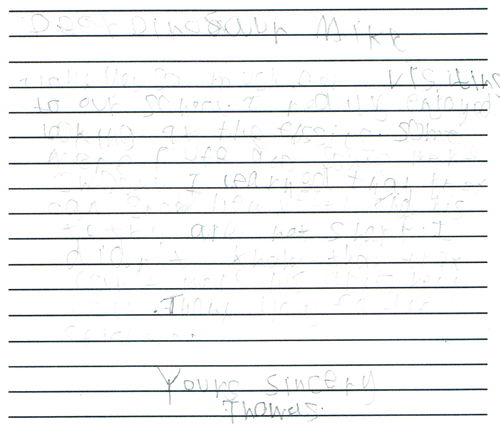
Our thanks to Thomas for sending in to the Everything Dinosaur offices a lovely letter to thank us for our recent visit to his school.  The letter got lost in the huge pile (dinosaur-sized), of correspondence and we are sorry but we did not find it until yesterday.

A Thank You Letter to Everything Dinosaur

Thomas sent in a thank you letter to Everything Dinosaur.

A thank you letter sent in to Everything Dinosaur by Thomas.

Picture credit: Thomas (Year 2)/Everything Dinosaur

Everything Dinosaur Helping to Educate Children

After delivering a dinosaur workshop at Thomas’s school we set an extension exercise that involved the excited pupils writing a thank you letter to our dinosaur expert.  For some reason, the letter from Thomas must have become detached from those of his classmates.  Not to worry, better late than never, we have published the letter today and emailed the teacher to let her know that the earlier omission of the letter from this eager, young palaeontologist has been rectified.

Thank you once again Thomas.

Visit the user-friendly Everything Dinosaur website: Everything Dinosaur.
19 08, 2017

JurassicCollectables Reviews the New Rebor “Alex DeLarge” Replica

By |2024-05-06T16:15:22+01:00August 19th, 2017|Categories: Dinosaur Fans, Everything Dinosaur Products, Everything Dinosaur videos, Main Page|0 Comments

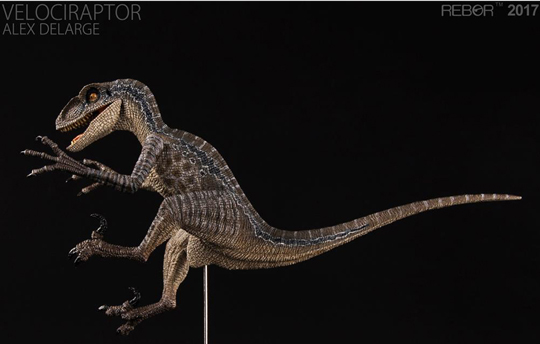
A Video Review of the Rebor Leaping Velociraptor “Alex DeLarge”

The second of the recently introduced leaping Velociraptor figures has been reviewed by JurassicCollectables.  This time, it is the stunning “Alex DeLarge”, Rebor Velociraptor in 1:18 scale, that is in the spotlight.  Rebor have been busy producing lots of “raptors” and as well as highlighting the features of “Alex”, this clever video review includes comparisons with other Rebor Velociraptor models, including “Spring-heeled Jack”, the 1:18 scale “Winston” and the juvenile “Stan”

JurassicCollectables Reviews the Rebor Leaping Velociraptor “Alex DeLarge”

“>

Video credit: JurassicCollectables

In this short video, (duration 6:12), viewers are given the chance to have a really good look at this cleverly designed, Late Cretaceous, Asian dinosaur.  The narrator discusses various aspects of “Alex DeLarge”, although the video does not give the explanation for this Velociraptor’s moniker.  Alex DeLarge is the name of the violent protagonist in the novel “A Clockwork Orange” by Anthony Burgess which was published in 1962.  The book was made into a film, directed by Stanley Kubrick in 1971.

To view the Rebor 1:18 scale replica “Alex DeLarge”, the counterpart model “Spring-heeled Jack” and the rest of the excellent Rebor prehistoric animal model range: Rebor Dinosaur and Prehistoric Animal Replicas.

Velociraptors of “Jurassic World”

It is apt for this particular Rebor model to be named after a character which has appeared in the cinema.  Alex DeLarge, liked to wield a razor, reminiscent of the “killing claw” associated with these dinosaurs, in the book and the film, Alex DeLarge roamed the streets in a gang, social, pack-hunting behaviour has been proposed for Velociraptors too.  The beautiful paint job on this particular Rebor replica is similar to the colouration of the Velociraptor called Blue which was seen in the recent dinosaur movie “Jurassic World”.  Sadly, for “off-colour Alan” his encounter with this 1:18 scale replica does not end well!

To view the range of Rebor models available from Everything Dinosaur: Rebor Models and Replicas.

The Rebor Velociraptor “Alex DeLarge” Replica

Rebor 1:18 scale "Alex DeLarge" Velociraptor replica.

Rebor 1:18 scale Velociraptor model “Alex DeLarge”.

Compared with the Rebor Tyrannosaurus rex and the Rebor Velociraptor Models

It is great to see that JurassicCollectables have included other model and figure comparisons in their video review of the Rebor “Alex DeLarge” Velociraptor.  Towards the end of the video, look out for a line-up of Rebor Velociraptors and a comparison between the Rebor King T. rex replica in 1:35 scale and this leaping Velociraptor figure.  It is also helpful to see the model posed on both the two rods that are supplied with this replica as well as seeing how the arms fit into their sockets.

The close-up shot of the head and the views of the paintwork on the tail are very well done, nothing is out of focus and videos like this really do provide the best opportunity to view a model before deciding to purchase.

YouTube Video Reviews

JurassicCollectables have an amazing YouTube channel which is full of prehistoric animal model reviews and other very interesting and carefully put together videos, including reviews of the aforementioned Rebor “King T. rex” and other Rebor replicas.

Visit the YouTube channel of Jurassic Collectables: JurassicCollectables on YouTube, please subscribe to the JurassicCollectables channel, this is a great channel for collectors as well as fans of prehistoric animals.

To view Everything Dinosaur’s blog article about the recently published JurassicCollectables review of “Spring-heeled Jack”: JurassicCollectables Reviews “Spring-heeled Jack”.

Our thanks to JurassicCollectables for their video review of Rebor Velociraptor models.

Visit the award-winning Everything Dinosaur website: Everything Dinosaur.
18 08, 2017

How the Chloroplast Got Started as New Paper Published

By |2024-05-06T16:15:02+01:00August 18th, 2017|Categories: Adobe CS5, Animal News Stories, Dinosaur and Prehistoric Animal News Stories, Main Page|0 Comments

The Origin of the Chloroplast

At the centre of most of our planet’s ecosystems are plants and algae that utilise sunlight and transform carbon dioxide and water into carbohydrates and release oxygen.  These very specialised organisms can make their own food, by using light energy combined with CO2 and H2O.  As part of this process, the water molecule is split and oxygen is produced as a by-product.  This process takes place in specialised subunits within a cell called a chloroplast.

Plants and Algae are Fundamental to Most Food Chains on the Planet

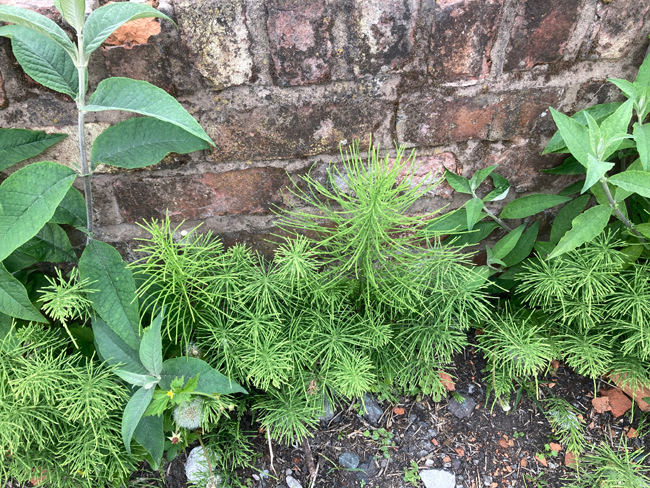
Horsetails

Horsetails (Equisetum) continue to thrive as they are able to grow in areas where other plants would find it difficult to get a foothold. Often regarded as weeds, these tough little plants are essentially living fossils as the earliest examples of the genus Equisetum date from the Early Jurassic of South America. New research provides data on the evolution of the chloroplast.  Picture credit: Everything Dinosaur.

Picture credit: Everything Dinosaur

The Origin of the Chloroplast

The theory as to how algae and plants evolved goes something like this – an ancient single-celled eukaryote absorbed a photosynthesising bacterium (blue-green algae otherwise known as photosynthesising cyanobacteria).  Such an event would normally have been disastrous for both parties, but for some reason, both the eukaryote and the cyanobacteria survived and this led to the development of a symbiotic association.  Whilst it is accepted that the cyanobacteria are the ancestors of the chloroplast, it is not clear which of the myriad of cyanobacteria are the closest relations of the chloroplast and when this association began, or indeed where on our planet this fortuitous event took place.

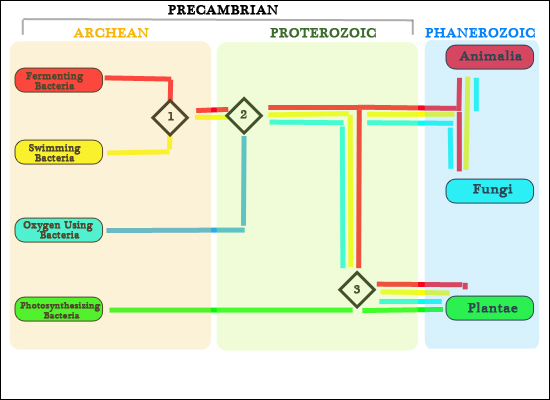
The Evolution of More Complex Life Via the Symbiotic Fusing of Different Kinds of Bacteria

The origins of complex life.

Complex eukaryote cells evolved by the symbiotic fusing of different kinds of bacteria.

The diagram above shows one theory of how more complex lifeforms evolved.  Four different types of bacteria, each with their own specific adaptations and biological characteristics may have merged to create the three main forms of multi-cellular life – animals, plants and fungi.

  • Merger 1 – Bacteria with the ability to produce food via fermentation merged with a swimming bacterium.
  • Merger 2 – An oxygen utilising bacterium invaded this first host and formed the cell mitochondria.
  • Merger 3 – Algae fused with photosynthesising cyanobacteria, which then became the cell chloroplast – the subject of the newly published study.

A Published Scientific Paper

A team of scientists, including researchers from Bristol University, may have found the answers to these questions.  Writing in the Proceedings of the National Academy of Sciences, they postulate that the chloroplast lineage split from their closest cyanobacterial ancestor more than 2.1 billion years ago and this took place in low salinity environments.  The team conclude that it took another 200 million years for the chloroplast and the eukaryotic host to be fully united into a symbiotic relationship.  Marine algae groups diversified much later, at around 800 to 750 million years ago, sometime in the Neoproterozoic Era.

Lead author of the study, Dr Patricia Sanchez-Baracaldo (University of Bristol’s School of Geographical Sciences), commented:

“The results of this study imply that complex organisms such as algae first evolved in freshwater environments, and later colonised marine environments – these results also have huge implications to understanding the carbon cycle.  Genomic data and sophisticated evolutionary methods can now be used to draw a more complete picture of early life on land; complementing what has been previously inferred from the fossil record.”

Co-author, Professor Davide Pisani (Bristol University) added:

“Our planet is a beautiful place and it exists in such a sharp contrast with the rest of the solar system.  Think about those beautiful satellite pictures where you see the green of the forests and the blue/green tone of the water.  Well, Earth was not like that before photosynthesis.  Before photosynthesis it was an alien place, uninhabitable by humans.  Here we made some big steps to clarify how Earth become the planet we know today, and I think that that is just wonderful.”

Phylogenomic and Bayesian Analytical Methods

The team used a combination of phylogenomic and Bayesian analytical methods to conclude that the chloroplast lineage branched deep within the cyanobacterial tree of life, around 2.1 billion years ago, and ancestral trait reconstruction places this event in low-salinity environments.  The chloroplast took another 200 million years to become established, with most extant (modern groups living today), forms originating much later.

Everything Dinosaur acknowledges the assistance of a Bristol University press release in the compilation of this article.

Visit the Everything Dinosaur website: Everything Dinosaur.
17 08, 2017

New Chilesaurus – Shaking the Dinosaur Tree

By |2024-05-06T16:15:46+01:00August 17th, 2017|Categories: Dinosaur and Prehistoric Animal News Stories, Dinosaur Fans, Main Page|0 Comments

Chilesaurus diegosuarezi Transitional Fossil – Root and Branch Reform of the Dinosaur Family Tree

A bizarre Late Jurassic dinosaur called Chilesaurus diegosuarezi had been described as a member of the Theropoda group, but this strange little dinosaur that seemed to possess anatomical characteristics reminiscent of sauropods, ornithischian dinosaurs as well as meat-eating theropods, has been re-described, this time as a “missing link” between the theropods and the bird-hipped, ornithischians.  The re-think has to do with the use of datasets to assess the taxonomic relationships between different types of dinosaur.  Chilesaurus may be the first dinosaur to be reassessed in the light of a new way of looking at the dinosaur family tree, chances are, it won’t be the last.

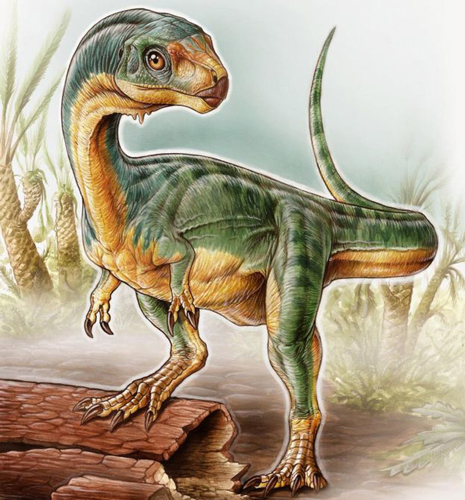
An Illustration of the Bizarre Late Jurassic Dinosaur from Southern Chile C. diegosuarezi

Chilesaurus illustration.

An illustration of Chilesaurus, once classified as a theropod now regarded as a transitional fossil towards the Ornithischia.

Picture credit: Nobumichi Tamura

Chilesaurus diegosuarezi Discovery and Description

The first fossils of this three-metre long dinosaur were found by a pair of geologists who were hiking in the remote Aysén region of southern Chile.  Scientists have mapped and explored these deposits (the Toqui Formation – Upper Jurassic) and a description of this dinosaur was published in the journal “Nature” in 2015.

To read Everything Dinosaur’s article written in 2015 reporting the discovery of Chilesaurus: Chilesaurus – a Dinosaur Designed by a Committee.

Strange Features

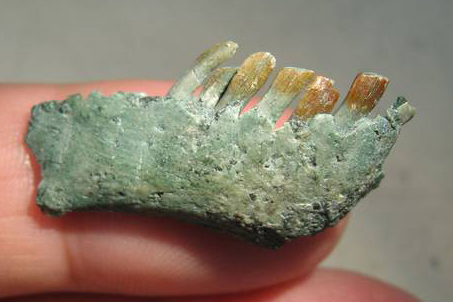
The dinosaur had some strange features that set it apart from other dinosaurs.  Some of these features, such as the over-sized claw which could be extended outwards, on the first digit on the hands of Chilesaurus were reminiscent of the large claws found on the first digits of the front limbs of primitive sauropods.  However, it had a skull similar to that seen in theropods, but the jaws were lined with spoon-shaped teeth that pointed outwards at a slight angle.  These teeth were unique in the Theropoda and suggested a plant-eating diet.

In addition, the pubic bone in the pelvis was pointing backwards not forwards as in the theropods, this pelvic arrangement was typical of a bird-hipped dinosaur, an ornithischian.  These and other anatomical features made Chilesaurus into a bit of a conundrum for the palaeontologists studying it.  This dinosaur was difficult to place on the Dinosauria family tree, because of its combination of characteristics.  In the original 2015 paper, Chilesaurus was described as a Tetanuran theropod, a member of the “stiff-tailed” group of bipedal, mainly carnivorous dinosaurs, meaning that it was distantly related to Megalosaurus, the ornithomimids and the tyrannosaurs.

The Teeth in the Lower Jaw of Chilesaurus were Unlike Any Other Teeth of a Theropod

The fossilised jaw of Chilesaurus.

Teeth adapted for cropping plants.

Picture credit: Dr Fernando Novas (Museo Argentino de Ciencias Naturales (Buenos Aires, Argentina)

New Dataset – New Classification

Researchers Matthew Baron (Cambridge University) and Paul Barrett (Natural History Museum), writing in the Royal Society journal “Biology Letters” describe how they applied a different dataset to assess the phylogenetic relationship between Chilesaurus and other dinosaurs.  When C. diegosuarezi was first described, back in 2015 the researchers used several datasets to test the interrelationships within the Dinosauria, but crucially, the focus of this analysis was on looking at the relationships within the Saurischia.  In March of this year, Matthew and his co-researchers proposed re-drawing the dinosaur family tree, in essence, resurrecting work undertaken by Thomas Huxley in the late 19th century, that unites the Saurischia and the Ornithischia together into a new clade called the Ornithoscelida.

Theropods Grouped with Ornithopods

Under this revision, the Theropoda, which are closely related to extant birds and classified as Saurischian dinosaurs (lizard-hipped), were united with the bird-hipped dinosaurs, the ornithopods, Thyreophora, ceratopsian, hadrosaurs etc.

When Chilesaurus was examined again, using the taxonomic relationships proposed by the newly drawn dinosaur cladogram, Chilesaurus was placed in a new position.  The idea that it was a Tetanuran theropod based on this dataset could be discounted.  Instead, Chilesaurus is placed at a point in the dinosaur family tree where the Ornithischia diverged from their close relatives.  The basal position of Chilesaurus within the clade and its suite of anatomical characters suggest that it might represent a “transitional taxon”, bridging the morphological gap between the Theropoda and the Ornithischia.

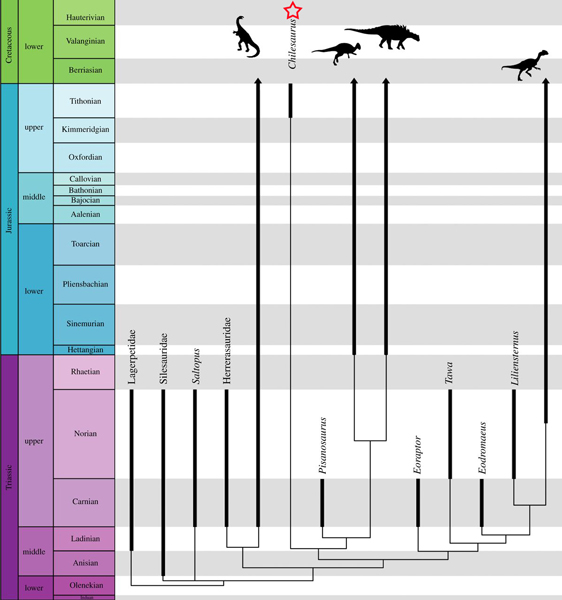
Chilesaurus “Missing Link” on the Road to the Ornithischia

Chilesaurus consensus tree.

In this new Chilesaurus study, the consensus tree formed via the phylogenetic analysis indicates this dinosaur was a basal ornithischian.

Picture credit: Royal Society Biology Letters

In the diagram above, the Chilesaurus (red star) is seen as a potential link between the saurischian Theropoda and the ornithischian dinosaurs.  Chilesaurus may therefore provide an insight into the evolutionary origins of the bird-hipped dinosaurs.  It may also have an extensive ghost lineage (thin black line), going back to the Middle Triassic.

To read the Everything Dinosaur article, published in March 2017, about the redefinition of the Dinosauria: Root and Branch Reform in the Dinosaur Family Tree.

Chilesaurus – A Puzzling Dinosaur

Co-author of the research, Professor Paul Barrett (Natural History Museum) explained the significance of this new paper:

“Chilesaurus is one of the most puzzling and intriguing dinosaurs ever discovered.  Its weird mix of features places it in a key position in dinosaur evolution and helps to show how some of the really big splits between the major groups might have come about.”

Papo have introduced a replica of Chilesaurus into their model range.

To view the Chilesaurus (whilst stocks last) and the other Papo dinosaur figures: Papo Prehistoric Animal Models.

Finding a Better Fit within the Dinosauria – Chilesaurus diegosuarezi 

The bizarre Chilesaurus.

An illustration of Chilesaurus that shows a suite of dinosaur traits.

Picture credit: Gabriel Lio

Visit the award-winning Everything Dinosaur website: Everything Dinosaur.
Go to Top