All about dinosaurs, fossils and prehistoric animals by Everything Dinosaur team members.

Dinosaur and prehistoric animal themed articles, features and stories.

28 11, 2018

JurassicCollectables Reviews the Papo Quetzalcoatlus

By |2023-11-11T12:54:09+00:00November 28th, 2018|Categories: Adobe CS5, Dinosaur Fans, Everything Dinosaur Products, Everything Dinosaur videos, Main Page, Photos of Everything Dinosaur Products, Product Reviews|0 Comments

The Papo Quetzalcoatlus Model Video Review

The hardworking production team at JurassicCollectables have made a video review of the new for 2018 Papo Quetzalcoatlus pterosaur model.  At Everything Dinosaur, the Quetzalcoatlus figure (along with the Papo Compsognathus), represent the last of this year’s models to be introduced by Papo.  Although no Quetzalcoatlus flying reptiles appear in the “Jurassic Park/Jurassic World” film franchise, the video narrator makes the point that the model’s colouration, especially around that impressive beak, is very similar to the Pteranodons seen in the various movies.

Papo Quetzalcoatlus

In the brief video, the video is a fraction under eight minutes in length (7.58), the JurassicCollectables narrator reviews this new azhdarchid pterosaur model and compares and contrasts this figure with the aforementioned Papo Compsognathus.  Also featured is the classic Papo green standing Tyrannosaurus rex model, even mathematician Ian Malcolm makes an appearance!

JurassicCollectables – Papo Quetzalcoatlus Pterosaur Model Video Review

Video credit: JurassicCollectables

JurassicCollectables have produced videos on a whole range of prehistoric animals including all the figures that Papo have produced, to see these videos and to subscribe to their amazing YouTube channel: Subscribe to JurassicCollectables on YouTube.

The Impressive Papo Quetzalcoatlus Figure
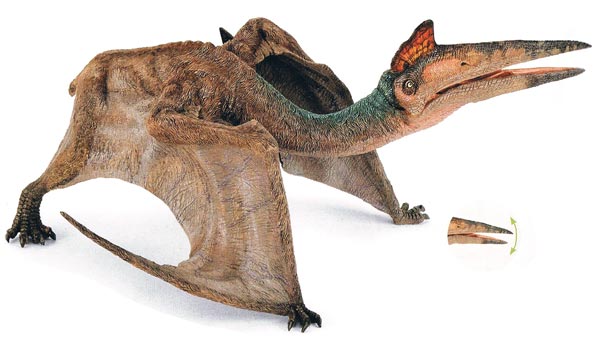
Papo Quetzalcoatlus model.
The new for 2018 Papo Quetzalcoatlus figure.  It even has an articulated beak!

The Papo Quetzalcoatlus “The Detail is Impressive”

The viewer is given a guided tour of this walking pterosaur figure, the narrator comments that the “detail is most impressive” and praises the texture given to the model by the use of “micro-feathers”, it is the pycnofibres that are being referred to.  Palaeontologists now know that many kinds of flying reptile were covered in hair-like filaments.  Quetzalcoatlus may have had a shaggy coat!

The designers at Papo have taken great care to give their figure a ruffled and naturalistic appearance, a point picked up in the video review.

To see the range of Papo prehistoric animal models available from Everything Dinosaur (including the Papo Quetzalcoatlus): Papo Prehistoric Animal Models.

In the JurassicCollectables Video the Papo Quetzalcoatlus Figure is Reviewed
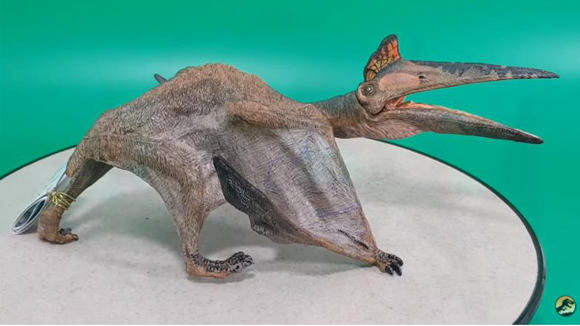
Reviewing the Papo Quetzalcoatlus pterosaur model.
JurassicCollectables reviews the Papo Quetzalcoatlus model.

Picture credit: JurassicCollectables

The picture above shows one of the studio shots from the video review of this Papo flying reptile model.  One of the great benefits of video reviews such as this, is that potential buyers can take a really good look at a figure before purchase.

A Colourful Crest and a Beautifully Painted Mouth

The narrator comments on the very colourful crest of this pterosaur model and demonstrates how the jaw articulates.  Unlike most prehistoric animal models, it is the upper jaw that articulates.  Once the beak is open, the video narrator praises Papo for the great skill and care taken in sculpting and painting the inside of the mouth.  Size measurements are made and several other figures are used to demonstrate just how big this pterosaur figure is.  For example, in one part of the review the recently introduced Papo Compsognathus model is shown in comparison with the Papo Quetzalcoatlus.

The Papo Quetzalcoatlus is Compared in Size to the Papo Compsognathus Figure

Papo Compsognathus and the Papo Quetzalcoatlus.
Comparing the Papo Quetzalcoatlus (right) with the Papo Compsognathus (left).

Picture credit: JurassicCollectables

Off-colour Alan is Missing

Regular viewers and subscribers to JurassicCollectable’s YouTube channel will know that a figure called “off-colour Alan” usually makes an appearance.  However, on this occasion, this human figure was nowhere to be found so a replica of Dr Ian Malcolm from the film Jurassic Park is used to provide an additional size comparison.   We hope that “off-colour Alan” is found soon, after all, there are a lot of prehistoric animal models coming out in the next few months, so the video review team at JurassicCollectables are going to be kept very busy.

No “Off-colour Alan” But Plenty of Views of the Papo Quetzalcoatlus Model

Reviewing the Papo Quetzalcoatlus pterosaur model.
JurassicCollectables reviews the Papo Quetzalcoatlus model.

Picture credit: JurassicCollectables

Visit the Everything Dinosaur website: Everything Dinosaur.
27 11, 2018

Special Beasts of the Mesozoic New for 2019 Newsletter

By |2023-11-11T12:36:09+00:00November 27th, 2018|Categories: Adobe CS5, Dinosaur Fans, Everything Dinosaur News and Updates, Everything Dinosaur Newsletters, Everything Dinosaur Products, Main Page, Photos of Everything Dinosaur Products, Press Releases|0 Comments

Nine New Beasts of the Mesozoic Figures Set for Spring 2019

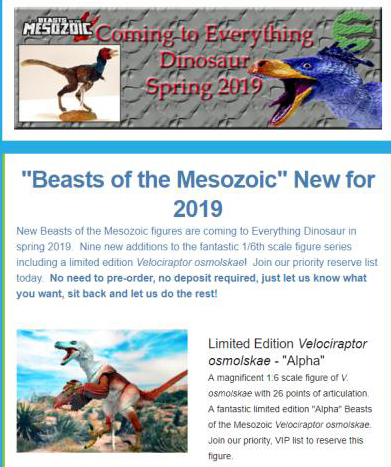
November has been a busy time for our newsletters, with so many new models and figures coming into stock, Everything Dinosaur team members have been working hard to update subscribers on all the exciting developments.  Take for example, the Beasts of the Mesozoic range.  In the spring, this very popular series of “raptor” figures is going to be extended with the addition of another nine articulated replicas, including a limited-edition Velociraptor osmolskae figure “Alpha”.

Reserve lists for all these exciting new models have been opened, but as always, it is our newsletter subscribers and social media followers who get to hear about these developments first.

New Beasts of the Mesozoic Figures Coming to Everything Dinosaur in the Spring of 2019

New additions to the Beasts of the Mesozoic range coming in 2019.
New Beasts of the Mesozoic models scheduled for spring 2019.  Look out for the limited-edition Velociraptor osmolskae figure “Alpha”, an exclusive to Everything Dinosaur in Europe. Picture credit: Everything Dinosaur.

Picture credit: Everything Dinosaur

New Beasts of the Mesozoic Dromaeosaurid Figures

The Beasts of the Mesozoic 1/6th scale “raptor” figures are stunning models and in the spring a number of new colour variants will be added to this popular range.  There will be a new Saurornitholestes model (Saurornitholestes sullivani), in a striking purple and blue colour scheme.  This model has been inspired by the famous “Road Runner” cartoon, the speedy Saurornitholestes is bound to get pulses racing.  Furthermore, there will be two new Velociraptor mongoliensis figures, the frightening Velociraptor – black and a new, colourful V. mongoliensis figure, which will replace the original Velociraptor model that came out in the first batch of Beasts of the Mesozoic releases.

There will also be a new Dromaeosaurus albertensis figure coming out in the spring, this too will be replacing the original Dromaeosaurus articulated model that was introduced in the first production run of the “raptor” series.

To view the Beasts of the Mesozoic figures, including the original Dromaeosaurus albertensis figure that is still available (whilst stocks last): Beasts of the Mesozoic Figures.

New for Spring 2019 – Four New “Raptor” Series Figures

Everything Dinosaur's newsletter features four new versions of dromaeosaurids for 2019.
Four new versions of dromaeosaurids being added to the Beasts of the Mesozoic model range in 2019. Picture credit: Everything Dinosaur.

Picture credit: Everything Dinosaur

“Eastern” and “Western” Model Sets

Breaking news for model collectors, in honour of the temporal and geographical range of these successful dinosaurs, new model sets will be introduced.

New Colour Schemes and “Eastern” and “Western” Model Sets

Beasts of the Mesozoic "raptors" for spring 2019.
New Beasts of the Mesozoic “raptors” for spring 2019. Picture credit: Everything Dinosaur.

Picture credit: Everything Dinosaur

The newsletter features a further four new figures.  There will be newly painted models in “Eastern” and “Western” model sets which reflect on the global distribution of these types of theropod dinosaurs.  A trio of white hatchings will be launched, another addition to the highly collectable “nestlings” range and Everything Dinosaur will be stocking a second colour variant of an Asian Velociraptorinae subfamily member, the enigmatic Velociraptor osmolskae.   Looks like our team members are going to have to prepare a special fact sheet to accompany sales of this figure.

Our newsletter readers are amongst the first to learn about new replicas coming into stock.   Subscribers can also be the first to join special VIP reserve lists to ensure that they can obtain new figures.  The Everything Dinosaur newsletter is sent out periodically and it is free to join.

To reserve a new for spring 2019 Beasts of the Mesozoic articulated replica figure such as our limited edition and exclusive for Europe Velociraptor osmolskae, or to request a subscription to Everything Dinosaur’s regular newsletter service, simply drop us an email: Email Everything Dinosaur.

A spokesperson from Everything Dinosaur outlined plans for the introduction of these new figures:

“These exciting, new figures should be available to Everything Dinosaur customers in the spring.  We have reserve lists open for these new additions to the Beasts of the Mesozoic range and we are giving collectors the chance to ensure that they have priority so that they do not run the risk of missing out.”

Visit the Everything Dinosaur website: Everything Dinosaur.
25 11, 2018

Newly Described Giant Dicynodont from the Late Triassic

By |2023-11-11T12:10:26+00:00November 25th, 2018|Categories: Dinosaur and Prehistoric Animal News Stories, Dinosaur Fans, Main Page, Photos/Pictures of Fossils|0 Comments

Lisowicia bojani Huge Dicynodont from the Late Triassic of Poland

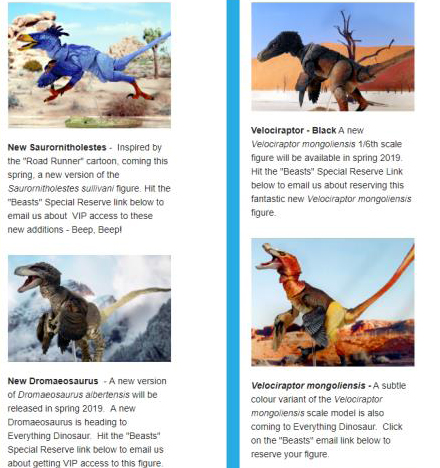
The Late Triassic of southern Poland was home to a giant “mammal-like” reptile the size of an elephant and weighing some 9 tons.  Scientists from the Polish Academy of Sciences in collaboration with colleagues from Uppsala University (Sweden), have published details on the discovery of the fossilised remains of a huge therapsid, specifically a dicynodont, that has been named Lisowicia bojani.  This super-sized, distant ancestor of modern mammals is believed to have measured around 4. 5 metres in length and stood more than 2.6 metres tall.

A Life Reconstruction of the Newly Described Giant Dicynodont Lisowicia bojani

L. bojani illustrated.
A life reconstruction of the giant dicynodont Lisowicia bojani.

Picture credit: Karolina Suchan-Okulska

More than 1,000 Bones Recovered from a Clay Pit

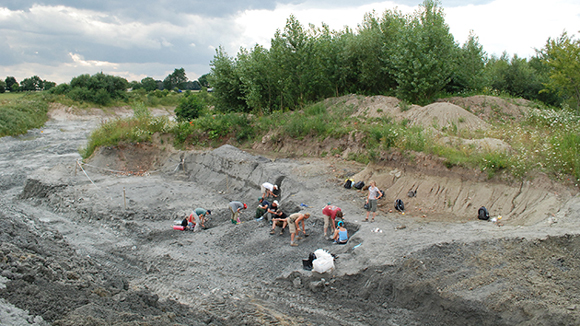
The first fossil remains were found by Polish geologists Robert Borzęcki and Piotr Menducki in 2005, when they were exploring a clay pit which represented a river deposit from the Upper Triassic.  The dig site is close to the village of Lisowice, numerous field teams have been despatched to the area and over the last few years, more than 1,000 bones and bone fragments have been collected, including the fossilised remains of a giant dicynodont.  At first the scientists thought they had discovered the fossils of a sauropod, but soon it was realised that the large and robust bones represented a therapsid.

The genus name is in honour of the nearby village, whilst the trivial name honours the German comparative anatomist Ludwig Heinrich Bojanus.

Field Team Members Excavated Fossils from the Clay Pit (Silesia, southern Poland)

Field team members at work.
Field team members working in the clay pit looking for dicynodont fossils.

Picture credit: Dr Grzegorz Niedzwiedzki (Uppsala University)

Lisowicia bojani – Defining Dicynodonts

Dicynodonts (die-sigh-no-donts), are a group of extinct, synapsids which evolved during the Permian period.  These quadrupeds were herbivorous and belong to the Order Therapsida, which includes modern mammals.  It had been thought that by the Late Triassic, these animals had died out, the discovery of L. bojani from strata estimated to be around 210-205 million years old indicates that they persisted into the Late Triassic in Europe.  The fossilised remains of Lisowicia are at least ten million years younger than any previously described dicynodont fossil material.

Commenting on the discovery, Dr Tomasz Sulej (Polish Academy of Sciences) and one of the researchers involved in this study, stated:

“The discovery of Lisowicia changes our ideas about the latest history of dicynodonts, mammal Triassic relatives. It also raises far more questions about what really make them and dinosaurs so large.”

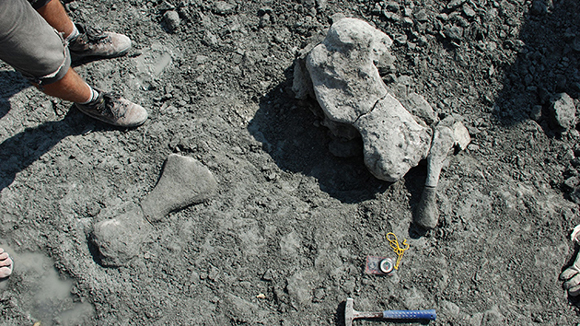
The Massive and Very Robust Limb Bones of Lisowicia bojani

Excavating the giant limb bones of Lisowicia.
The huge fossil limb bones of Lisowicia.  The large bone above the compass is a humerus (upper arm bone), the bone by the feet is a scapula.

Picture credit: Dr Grzegorz Niedzwiedzki (Uppsala University)

CollectA have produced a scale model of Lisowicia bojani: CollectA Deluxe Prehistoric Life.

The discovery of Lisowicia provides the first evidence that mammal-like elephant sized dicynodonts were present at the same time as the more well-known long-necked Sauropodomorpha dinosaurs, contrary to previous belief.  Lisowicia fills a gap in the fossil record of dicynodonts and it shows that some anatomical features of limbs thought to characterize large mammals or dinosaurs evolved also in the non-mammalian synapsid.  Furthermore, these findings from Poland are the first substantial finds of dicynodonts from the Late Triassic in Europe.  Lisowicia is at least 40% bigger than any known dicynodont.

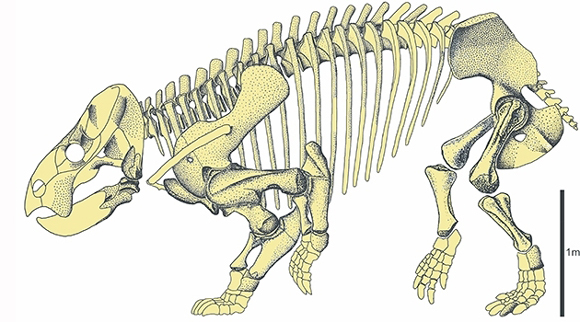
A Skeletal Drawing of Lisowicia bojani (Note Scale Bar)

A reconstruction of the skeleton of Lisowicia bojani.
Skeletal drawing of Lisowicia bojani.  Note the scale bar = 1 metre.

Picture credit: Dr Tomasz Sulej (Polish Academy of Sciences)

Commenting on the significance of the fossil find, Dr Tomasz Sulej remarked:

“The discovery of such an important new species is a once in a lifetime discovery.”

Visit the Everything Dinosaur website: Everything Dinosaur.

23 11, 2018

New CollectA Models 2019 (Part 4)

By |2023-11-11T11:03:07+00:00November 23rd, 2018|Categories: Dinosaur Fans, Everything Dinosaur News and Updates, Everything Dinosaur Products, Main Page, Photos of Everything Dinosaur Products, Press Releases|4 Comments

New CollectA Models 2019 (Part 4)

Today, we conclude our look at the new for 2019 CollectA models by revealing the last of the figures scheduled to be released next year.  We also provide information on a prehistoric animal play set that has an augmented reality (AR) component.

  • CollectA Deluxe 1:20 scale Elasmotherium model (available mid 2019).
  • CollectA Prehistoric Animals Playset with Augmented Reality (available mid 2019).

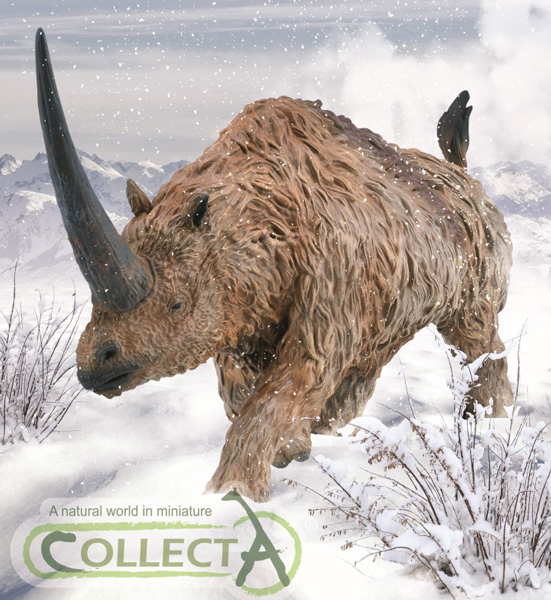
The New for 2019 CollectA Deluxe Elasmotherium Model

CollectA Deluxe 1:20 scale Elasmotheriuim.
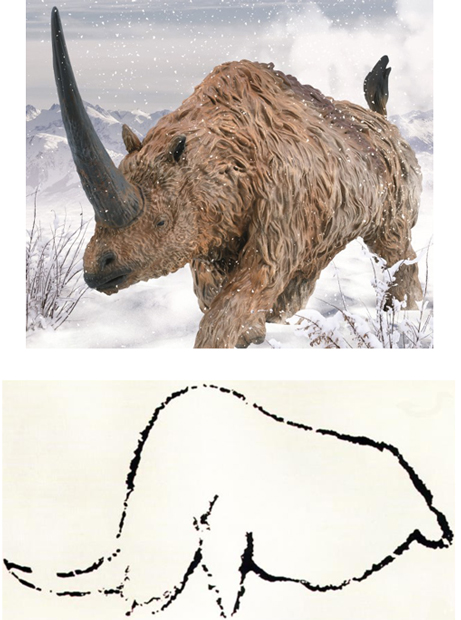
The new for 2019 CollectA Deluxe 1:20 scale Elasmotherium model.

Picture credit: CollectA

The CollectA Deluxe 1:20 Scale Elasmotherium Model

As one member of the Rhinocerotoidea superfamily is retired and out of production (the CollectA Deluxe Paraceratherium model), so it is replaced by another member of the Rhinocerotoidea, albeit from a different branch of this large taxonomic grouping, the rhinocerotid Elasmotherium and what a fantastic looking replica it is!  Several species of Elasmotherium have been identified from the numerous fossils found in Europe and Asia and CollectA have chosen to create a model of the largest known species, and what is thought to be the largest true rhino to have ever lived, the giant, five-metre-long Elasmotherium sibiricum.

Commenting on this new Deluxe figure, designer Anthony Beeson stated:

“I thought that it would be nice to do a toy Elasmotherium sibiricum for a change rather than the usual Woolly Rhinoceros.  Our Elasmotherium is quite hefty, I plumped for a hairy animal and have based the presumed horn on the Palaeolithic cave painting from Rouffignac in France that is thought to represent the creature often referred to as ‘the Siberian unicorn’.”

The Rouffignac limestone caves (Grotte de Rouffignac), are located in the Dordogne (south-western France) and this location was given UNESCO World Heritage Site status in 1979.  The cave walls depict more than 250 drawings attributed to the Magdalenian culture of the Late Pleistocene.  Many different types of animal are depicted with Woolly Mammoths (Mammuthus primigenius), predominating but there are a number of cave paintings that show Woolly Rhinos (Coelodonta antiquitatis) and one image that illustrates a powerfully built rhinoceros with a single, very large nose horn that has been interpreted as representing Elasmotherium.

The CollectA Deluxe Elasmotherium Compared to the Stylised Rhinoceros Cave Painting from Grotte de Rouffignac

Cave art compared to a prehistoric animal model (Elasmotherium).
The CollectA Elasmotherium model compared to the Palaeolithic art from Rouffignac Cave (south-western France).

Picture credit: CollectA/Wikipedia

To view the current range of CollectA Deluxe figures and replicas: CollectA Deluxe Prehistoric Life.

The CollectA Prehistoric Animal Playset

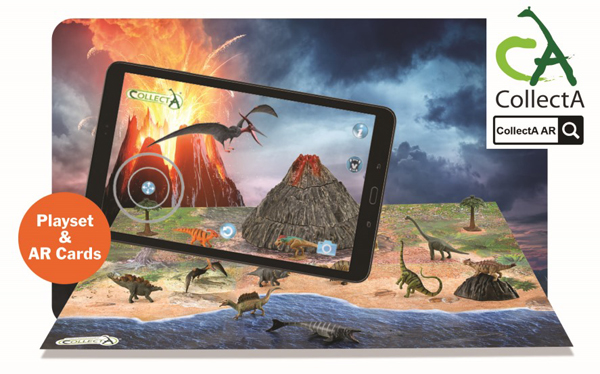
CollectA will also be introducing a prehistoric animal themed playset in 2019.  Sources close to CollectA have stated that this is to be a 38-piece playset with a dozen CollectA dinosaur cards with augmented reality (the figures come to life via the AR technology).

The New for 2019 CollectA Prehistoric Animal Playset

The CollectA augmented reality play set.
CollectA augmented reality play set.  This playset incorporates AR (augmented reality). 

Picture credit: CollectA

This playset is believed to consist of, a large playmat (estimated size 37 cm by 29 cm), two prehistoric trees, twelve mini-dinosaur figures, the twelve AR cards and a further ten accessories that permit a degree of playset landscape customisation such as the building of a volcano, a small hill or some coastal features of different shapes and sizes.  This cleverly constructed playset comes in a handy carry case and skilfully blends traditional prehistoric animal figures with cutting-edge augmented reality technology.

Model Measurements

  • The CollectA Deluxe 1:20 scale Elasmotherium – length 25.5 cm, height 13.6 cm.
  • CollectA Prehistoric Animal Playset – length of playmat 37 cm, width 29 cm.

A spokesperson from Everything Dinosaur commented:

“CollectA have continued to innovate and extend their range of replicas.  Over the next few months they will be adding scale models of Edaphosaurus, Baryonyx, Carnotaurus, the amazing pterosaur Caiuajara and a scale model of Elasmotherium.  In addition, we can expect to see Fukuiraptor and Borealopelta make an appearance plus a new mini-set of prehistoric animals and a prehistoric animal playset in which to place them.  Next year is going to be an exciting year for model collectors.”

To view the other three articles that introduce the rest of the new for 2019 prehistoric animal models from CollectA.

New CollectA models (Part 1): Part 1 (New CollectA models for 2019).

New CollectA models (Part 2):  Part 2 (New CollectA models for 2019).

New CollectA models (Part 3): Part 3 (New CollectA models for 2019).

22 11, 2018

How Did Some Dinosaur Get Their Long Necks?

By |2023-11-11T12:16:43+00:00November 22nd, 2018|Categories: Dinosaur and Prehistoric Animal News Stories, Dinosaur Fans, Main Page, Photos/Pictures of Fossils|0 Comments

Macrocollum itaquii – Oldest Long-necked Sauropodomorph is Described

A team of scientists based in Brazil have described the fossilised remains of three Triassic dinosaurs that lived some 225 million years ago that shed light on the evolution of long-necks in plant-eating dinosaurs.  The new species, a member of the Sauropodomorpha, has been named Macrocollum itaquii, the genus name comes from the Greek for “long neck”, an appropriate moniker for a prehistoric animal that is helping to unravel the developmental history of the long-necked dinosaurs bauplan.

Macrocollum itaquii

Although Macrocollum is estimated to have measured about four metres in length and weighed approximately 100 kilograms, a lot smaller than later sauropods, some of which were the largest terrestrial animals to have ever lived, it is considerably bigger than older dinosaur fossil specimens found in South America, some of the earliest dinosaurs known, that lived around ten million years earlier and represent some of the very first dinosaurs to evolve.

A Life Reconstruction of Macrocollum itaquii

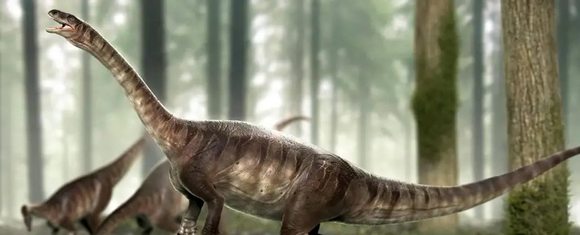
Macrocollum life reconstruction.
A life reconstruction of the newly described Macrocollum itaquii from southern Brazil.

Picture credit: SWNS

The Rise of the Sauropodomorpha

Despite a number of recent fossil discoveries, palaeontologists have a relatively poor understanding of the rise of the sauropodomorphs, a group that includes some of the most famous of all the dinosaurs, giants such as Diplodocus and Brachiosaurus.

The fossil material, representing three individuals, was collected from the upper portion of the  Candelária Sequence of the Paraná Basin, from a site in Agudo, Rio Grande do Sul (southern Brazil).  Nearby strata have been dated to the Norian faunal stage of the Late Triassic.  Writing in the academic journal “Biology Letters”, the researchers, which included biologist Rodrigo Müller from the Federal University of Santa Maria (Brazil), conclude that these three animals died together and therefore provide the oldest evidence of herding behaviour in sauropodomorphs described to date.

The proposal that the three individuals died together and as such, indicate gregarious behaviour, has been challenged by a number of academics.  It is possible that these three herbivores died at different times and the carcases just happened to be transported and ended up in association.

Commenting upon this, Rodrigo Müller explained:

“There are three articulated skeletons in five tons of rock.  This is unique.  It suggests these animals probably died together, as they share the same degree of disarticulation.  So, if they died together, these dinosaurs probably lived together.”

Long Necks and Long Thigh Bones

Two of the specimens include skull material, the holotype (CAPPA/UFSM (Centro de Apoio à Pesquisa Paleontológica da Quarta Colônia) 0001a), is virtually complete and articulated.  It is one of the best preserved Triassic dinosaur skeletons ever found.  With such exceptionally well-preserved specimens the scientists have been able to conduct an analysis looking at how the long-neck of these types of dinosaurs evolved and study the femur (thigh bone), length to give an indication in the change of body size since the first plant-eating dinosaurs evolved.  In addition, these fossils have shed light on how these animals adapted to a fully herbivorous diet.

Macrocollum Fossil Material Has Helped Shed Light on Important Evolutionary Developments within the Sauropodomorpha

Macrocollum itaquii phylogeny.
Mapping the phylogeny of Macrocollum itaquii.

Picture credit: R T Müller et al in Biology Letters

The table above shows the phylogenetic position attributed to the newly described M. itaquii.  Based on this assessment it has been assigned to the Unaysauridae family, basal members of the Sauropoda, that are known from Triassic-aged rocks from the Southern Hemisphere (India and South America).  The discovery of Macrocollum has helped palaeontologists to gain a better understanding of the evolution of the long-neck of sauropods.  The cervical vertebrae (neck bones) of M. itaquii are already much more elongated than seen in earlier representatives of the Sauropodomorpha known from around 233 million years ago.  The teeth are more spatulate in shape, indicating an adaptation to a plant-eating diet and over this 8 million year period (233-225 million years ago), femora measurements demonstrate that sauropodomorphs increased in size by 230%.

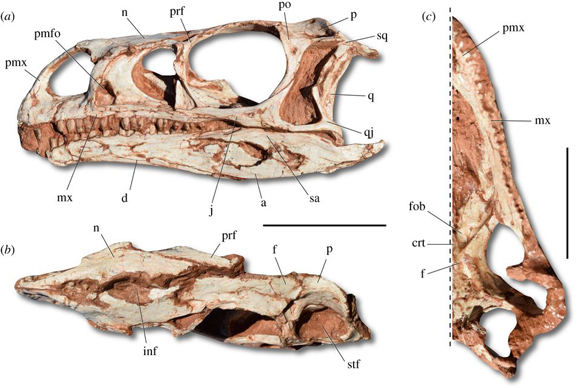
Views of Skull Material Associated with M. itaquii

View of skull material associated with Macrocollum itaquii.
(a) Skull in left lateral view (CAPPA/UFSM 0001a – holotype), (b) Skull in dorsal view (CAPPA/UFSM 0001a – holotype) and (c) part of a skull in ventral view (CAPPA/UFSM 0001b).

Picture credit: R T Müller et al in Biology Letters

The typical long neck was also established,  becoming proportionally twice as long than those necks of basal taxa.  Indeed, the new dinosaur is the oldest-known sauropodomorph with such an elongated neck, suggesting that the ability to feed on high vegetation was a key trait achieved along the early Norian.

Skeletal Reconstruction and Significant Bones Including Elongated Cervical Vertebrae

Macrocollum itaquii - skeletal reconstruction.
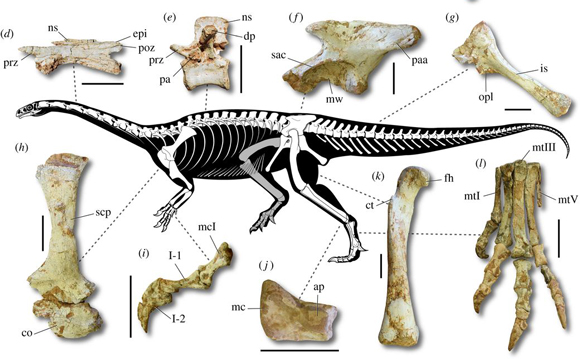
Skeletal reconstruction of Macrocollum itaquii.  Known fossil material shaded white, scale bar = 5 cm.  The elongated neck bone is (d).

Picture credit: R T Müller et al in Biology Letters

The species name honours Mr José Jerundino Machado Itaqui, one of the main drivers behind the creation of the Centro de Apoio à Pesquisa Paleontológica da Quarta Colônia and the Federal University of Santa Maria.

To read about the recent discovery of an Early Jurassic sauropod from China (Yizhousaurus sunae), that is helping palaeontologists to learn more about how some types of dinosaur were able to evolve into giants: Helping to Give Sauropod Evolution a Head Start.

To read about a giant Late Triassic sauropodomorph (Ingentia prima): Triassic Dinosaur Just Got a Lot Bigger.

The scientific paper: “An Exceptionally Preserved Association of Complete Dinosaur Skeletons Reveals the Oldest Long-necked Sauropodomorphs” by Rodrigo Temp Müller, Max Cardoso Langer and Sérgio Dias-da-Silva published in Biology Letters.

Visit the Everything Dinosaur website: Everything Dinosaur.
19 11, 2018

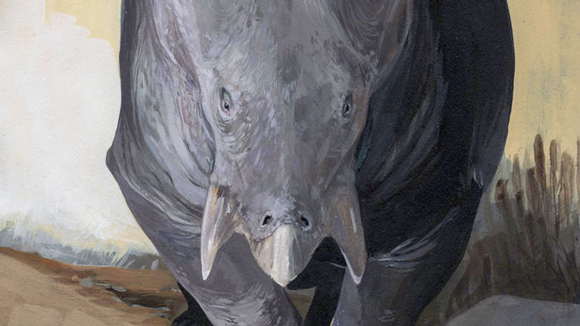
A Brilliant Video Review of Rebor Replicas

By |2023-11-11T11:28:21+00:00November 19th, 2018|Categories: Dinosaur Fans, Everything Dinosaur Products, Everything Dinosaur videos, Main Page, Photos of Everything Dinosaur Products, Product Reviews|0 Comments

A Video Review of the Rebor “Vanilla Ice” Tyrannosaurs – Mountain and Jungle

At the end of October, Everything Dinosaur introduced the two “Vanilla Ice” 1/35 scale tyrannosaurs from Rebor – Mountain and Jungle colour variants.  Those talented people at JurassicCollectables have created a video review, of not just one, but both replicas so that dinosaur model fans can see these two excellent models in all their glory.

The Video Review of “Vanilla Ice” – Mountain and Jungle by JurassicCollectables

Video credit: JurassicCollectables

Rebor “Vanilla Ice” – Mountain and Jungle

In this video review, which lasts a fraction over eleven minutes, the narrator takes us through the unboxing of a Mountain colour variant and concludes by taking a look at the Jungle colour scheme model.  At JurassicCollectables, the two colour schemes are regarded as depicting the animal during daylight, out in the open (the Mountain colour variant) and within the dappled shade of a forest canopy (the Jungle colour variant).  The video is shot in such a way so as to bring out the subtle variations between the two figures such as the different coloured tongues and the variation in the painting of the teeth.

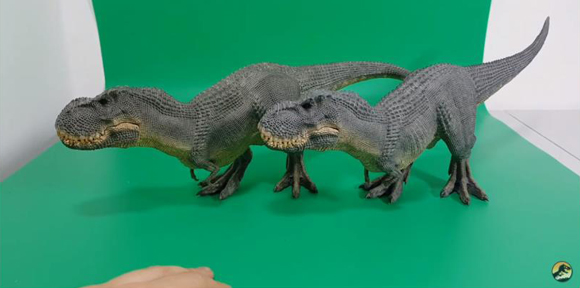
The Two Rebor “Vanilla Ice” Figures are Compared in the JurassicCollectables Video Review

The two Rebor "Vanilla Ice" tyrannosaurid figures.
“Vanilla Ice” Jungle (left) and the “Vanilla Ice” Mountain (right).

Picture credit: JurassicCollectables

Most Impressive 1:35 Scale Figures

As well as providing a guided tour of each of the figures, the video review also permits people to see the “Vanilla Ice” box compared to the box of the Rebor King T. rex figure.  These two models are later compared in the video too.  Rebor has taken great care to make both these figures and the other large Theropods in their range such as the King T. rex and the Acrocanthosaurus “Hercules”, in 1:35 scale, so all the figures can be displayed together.

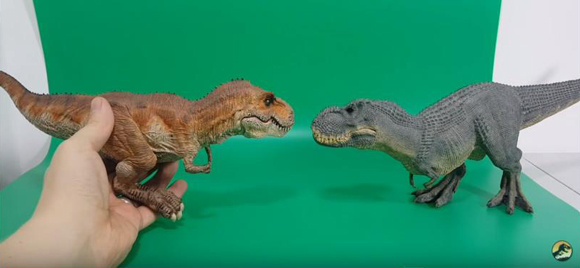
Comparing Rebor Figures (King T. rex and the “Vanilla Ice” – Mountain Colour Scheme)

Comparing Rebor replicas.
The Rebor King T. rex (left) is compared with the Rebor “Vanilla Ice” Mountain tyrannosaurid replica.

Picture credit: JurassicCollectables

Everything Dinosaur stocks the entire range of Rebor replicas including the two “Vanilla Ice” tyrannosaurid figures.  We even offer these two models together at a special discount (subject to stocks).

To view the Rebor range available from Everything Dinosaur: Rebor Dinosaurs and Prehistoric Animal Models.

Beautifully Detailed Figures

The video narrator is most impressed with the two Rebor replicas.  The articulated jaws and the poseable tails are admired and the camerawork permits viewers to get a really close-up view of all the superb texturing and osteoderm placement on the two figures.  The size dimensions are reported and size comparisons made with the classic Papo standing T. rex figure.  Particular attention is paid to the fantastic paintwork on the inside of the mouth.  Both figures have beautifully painted mouths and the inside of the jaws and teeth glisten in the light to give the impression that they are wet.

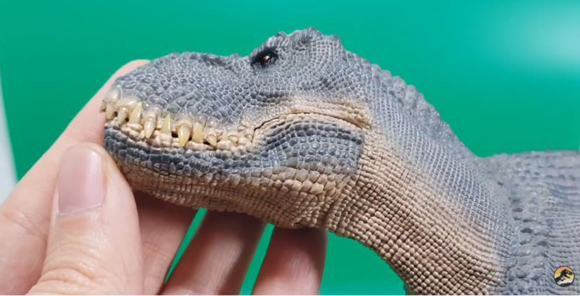
Care is Taken in the Video Review to Show the Head of the Model in Close Detail

A view of the head of the Rebor "Vanilla Ice" Mountain Tyrannosaur.
A close-up view of the head of the Rebor “Vanilla Ice” Mountain colour variant.

Picture credit: JurassicCollectables

This is a great video review of two great Rebor replicas.

Check out the stunning YouTube channel of JurassicCollectables, it is packed full of beautiful video reviews and other fantastic material for the dinosaur model enthusiast, including lots of reviews of Rebor replicas.

JurassicCollectables: Subscribe to JurassicCollectables on YouTube.

Visit the Everything Dinosaur website: Everything Dinosaur.
18 11, 2018

Very Rare Dinosaur Fossil Find in Oregon

By |2023-11-11T11:14:12+00:00November 18th, 2018|Categories: Dinosaur and Prehistoric Animal News Stories, Dinosaur Fans, Main Page, Photos/Pictures of Fossils|2 Comments

An Oregon Ornithopod

There may be many famous dinosaurs known from the United States of America, after all, when it comes to naming dinosaurs, Tyrannosaurus rex, Stegosaurus and Triceratops tend to trip off the tongue, but America’s dinosaur fossil heritage is not uniform across the whole country.  Several parts of the U.S. have no record of dinosaur discoveries, and numerous others have a very fragmentary record when it comes to the preserved remains of Dinosauria.  Oregon, the ninth largest State in terms of area, has a very poor dinosaur fossil record, however, a newly described fossil discovery made in the eastern part of the “Beaver State”, has got palaeontologists quite excited about the prospect of more dinosaur fossil finds being made.

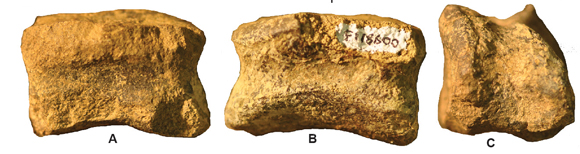
The Toe Bone from a Dinosaur (Ornithopoda)

Writing in the “Journal of Vertebrate Palaeontology”, scientists from the University of Oregon in collaboration with the University of Calgary (Canada), have published a paper on the discovery of a single toe bone from a plant-eating dinosaur – an extremely rare find considering that this part of north-western North America was underwater throughout most of the Mesozoic Era.

Various Views of the Single Dinosaur Toe Bone (Pedal Phalanx)

Indeterminate pedal phalanx (Oregon dinosaur).
Views of the single dinosaur toe bone discovered in eastern Oregon.

Picture credit: University of Oregon

The fossil bone was found by University of Oregon Earth Sciences Professor Greg Retallack during field work in 2015, near the town of Mitchell (Wheeler County, eastern Oregon).  The single bone was spotted amongst mollusc fossils exposed on a slope consisting of marine shale.  The fossil dates from the Albian fauna stage of the Cretaceous and is the first ever Oregon dinosaur fossil to be the subject of a paper in a peer-reviewed scientific journal.  Furthermore, it represents the first dinosaur fossil find from Oregon from strata not regarded as Upper Cretaceous.

Oregon might be bigger than the whole of the United Kingdom, but the Mesozoic-aged exposures represent marine sediments, that harbour very few remains of ancient terrestrial animals.

Greg Retallack stated:

“Oregon landscapes are rich with Cretaceous rocks, but they rarely contain the kinds of dinosaur remains we see elsewhere in the United States.  The rocks here are the right age but are mostly from under the sea where dinosaurs did not live or from swamps where dinosaur bones are seldom preserved.”

Not Able to Assign a Genus

Although, identified as a dinosaur bone (pedal phalanx), it is not possible to assign it to a specific species or genus, although the research team are confident that it came from a plant-eating ornithopod dinosaur.

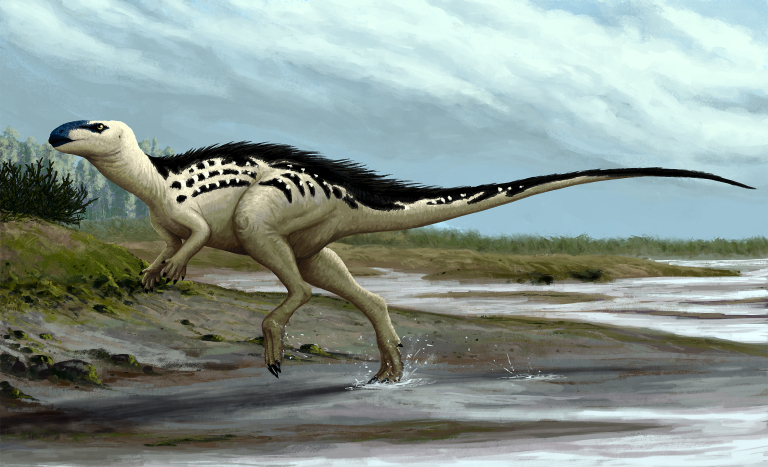
An Illustration of a Typical Ornithopod Dinosaur

Burianosaurus augustai illustrated.
An illustration of a typical member of the Ornithopoda – the basal ornithopod from the Czech Republic – Burianosaurus augustai.

Picture credit: Edyta Felcyn

Co-author of the paper, Edward Davis (University of Oregon), explained that the remains of a terrestrial animal ended up in the mollusc bed, after having been swept out to sea.

He explained:

“It’s a phenomenon we sometimes call “bloat and float”.  That is, the animal died on shore in its terrestrial habitat, then was washed out to sea, where it floated while bloated with decomposition gasses.  Eventually it burst, and only this toe bone was entombed and became a fossil.”

A Sizeable Plant-eating Dinosaur

Although very little taxonomic information can be gained from a single, isolated toe bone, a size comparison with much more complete and better known Cretaceous ornithopods such as Tenontosaurus, suggests that this dinosaur may have been about six to seven metres long and weighed around a tonne.

A spokesperson from Everything Dinosaur commented:

“Although such a fossil find in marine sediments is exceptionally rare, it just goes to show that dinosaurs fossils can be found and if there is one, then there may be more. Many of the Mesozoic-aged rocks in this part of Oregon represent near coastal marine deposits.  Given that dinosaurs would have roamed the land close to the sea for millions of years it is possible that more dinosaur remains might be found.”

To read an article published by Everything Dinosaur in 2015, which looks at which part of the United States are not associated with dinosaur fossils: Washington State the 37th U.S. State with a Dinosaur.

Visit the Everything Dinosaur website: Everything Dinosaur.
17 11, 2018

A Fantastic Rebor Model Collection

By |2023-11-11T11:08:26+00:00November 17th, 2018|Categories: Dinosaur Fans, Everything Dinosaur Products, Main Page, Photos of Everything Dinosaur Products|0 Comments

A Fantastic Rebor Model Collection

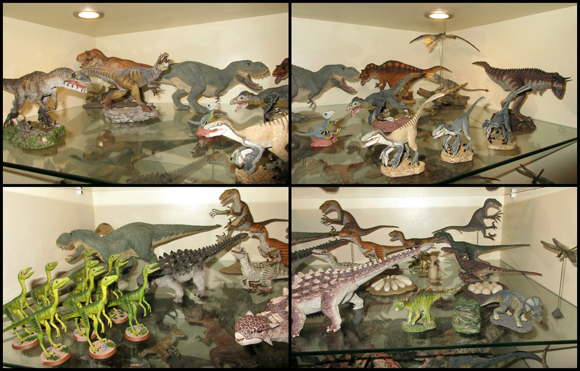
Having received the latest Rebor prehistoric animal replicas, the pair of tyrannosaurids “Vanilla Ice” – Jungle and Mountain, dinosaur fan and model collector, Maurizio kindly sent in some pictures of his dinosaur models to Everything Dinosaur.  The collection includes a large number of Rebor prehistoric animal models, the Rebor range has certainly grown in the last three years or so and Maurizio’s display cabinet is very impressive.

A Rebor Inspired Prehistoric Animal Collection on Display

An amazing collection of Rebor prehistoric animal replicas.
A fantastic collection of Rebor replicas.  Various views of the comprehensive collection of Rebor figures.

Picture credit: Maurizio

An Amazing Prehistoric Animal Model Collection

With the introduction of the two “Vanilla Ice” tyrannosaurid figures in October, the Rebor range of figures has increased to over forty and when displayed all together they make an awesome sight.  A number of figures in the collection are no longer available, so it is pleasing to see that a collector has been able to acquire from Everything Dinosaur, some of the rarer and more difficult to obtain figures.

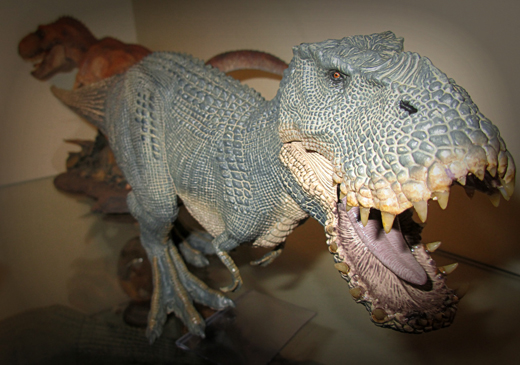
Foreground – “Vanilla Ice” – Mountain and Background The Rebor King T. rex

Rebor Vanilla Ice Mountain tyrannosaur model.
The Rebor “Vanilla Ice” – Mountain colour variation (foreground) with the second figure to be introduced by Rebor the spectacular King T. rex (background).

Picture credit: Maurizio

A Variety of Theropod Figures

The Rebor range contains a variety of theropod figures, including a number of tyrannosaurid dinosaurs.  There are other theropods including a number of dromaeosaurids – the “raptors”, within the range plus an Acrocanthosaurus, Carnotaurus and a Ceratosaurus to.

A Fine Collection of Rebor “Raptors”

Rebor "raptors" figure collection.
A fantastic collection of Rebor “raptors”.

Picture credit: Maurizio

A set of elongated, theropod dinosaur eggs can be seen in the foreground.  It is likely that dromaeosaurids such as Velociraptor laid eggs very similar to these.  The various Rebor “raptors” in the cabinet include “Sweeney”, “Winston”, “Gunn”, “Rose”, “Pete”, “Alex Delarge”, the scout series juvenile Velociraptor “Stan” and a leaping “Spring-heeled Jack”, it certainly is a most impressive collection and this dinosaur fan has built up his very own “raptor” pack, which is highly appropriate, as most palaeontologists believe that these fast-running predators were pack hunters and quite social animals.

A Close-up View of the Recently Introduced Rebor Tyrannosaurid “Vanilla Ice” – Jungle Colour Variant

Rebor Vanilla Ice Jungle tyrannosaur model.
The Rebor “Vanilla Ice” – Jungle colour variation.  A close-up view of the Rebor “Vanilla Ice” figure in the jungle green colour scheme.

Picture credit: Maurizio

The stunning details on the Rebor figures, including the beautiful articulated jaws on many of the figures can be clearly seen on these well-composed photographs.

A spokesperson from Everything Dinosaur commented:

“It is always a pleasure to see how the models and figures we supply are displayed by collectors.  We enjoy receiving photographs that showcase model collections and we are most impressed with this collection of Rebor replicas.”

To view the Rebor range of prehistoric animal models, including the two “Vanilla Ice” tyrannosaurids, available from Everything Dinosaur: Rebor Prehistoric Animal Models and Figures.

The Rebor “Vanilla Ice” – Mountain

Rebor "Vanilla Ice" - Mountain.
The Rebor “Vanilla Ice” – Mountain colour variation, close-up view.

Picture credit: Maurizio

Our thanks to Maurizio for sending in these pictures of his prehistoric animal model collection.

Visit the Everything Dinosaur website: Everything Dinosaur.
16 11, 2018

New CollectA Models 2019 (Part 3)

By |2023-11-11T10:53:23+00:00November 16th, 2018|Categories: Dinosaur Fans, Everything Dinosaur News and Updates, Everything Dinosaur Products, Main Page, Photos of Everything Dinosaur Products, Press Releases|5 Comments

New CollectA Models 2019 (Part 3)

Today, we post up the third part of our series of articles showcasing the new for 2019 prehistoric animal models from CollectA and part three introduces a pair of theropod dinosaurs from very different parts of the world.

The two new dinosaur figures are:

  • A CollectA Deluxe 1:40 scale Baryonyx (available mid 2019).
  • A CollectA Age of Dinosaurs Popular range Fukuiraptor (available mid 2019).

The New for 2019 CollectA Deluxe 1:40 Scale Baryonyx Model

CollectA Deluxe Baryonyx dinosaur model.
The CollectA Deluxe 1:40 scale Baryonyx dinosaur model.

Picture credit: CollectA

CollectA Deluxe Baryonyx with an Articulated Jaw

The CollectA Deluxe 1/40th scale Baryonyx has an articulated jaw and model collectors will note that the back has a considerable “humped” appearance.  This is because this model has been created with a view to supporting the idea that this dinosaur had elongated neural spines on its dorsal vertebrae.

The holotype Baryonyx walkeri fossil material collected from a clay pit in Surrey, represents one of the most complete theropod dinosaur skeletons ever found in Europe, even so, many of the back bones were incomplete and broken.  On a visit to the Isle of Wight, model designer Anthony Beeson had a conversation about Baryonyx with Steve Hutt, formerly with the Isle of Wight County Museums Service and a leading advocate for the establishment of a palaeontology museum on the Isle of Wight.

Steve was working on some recently discovered large theropod vertebra that had been assigned to the Baryonchidae family.  So, as a result, this figure and the other Baryonyx figures including the 1:40 scale model introduced in 2009, have a distinctive hump.

A Close-up View of the Skull and Jaws of the CollectA Deluxe Baryonyx

The head and jaws of the new for 2019 CollectA Deluxe Baryonyx.
A close-up view of the skull and the jaws of the new for 2019 CollectA Deluxe Baryonyx model.

Picture credit: CollectA

That articulated jaw has been designed to reflect the distinctive jaw-line and dentition associated with this large predator from the Lower Cretaceous of Europe.  As a dinosaur associated with aquatic environments, Anthony in collaboration with his colleague Matthias has given the Baryonyx model webbing between the toes, as befits a semi-aquatic animal.

Commenting on the hump-backed Baryonyx reconstruction, model designer Anthony Beeson explained:

“Because this new idea [elongated neural spines] did not appear in general reconstructions of Baryonyx, in 2006 I commissioned John Sibbick, who then lived nearby in Bath and was a friend of one of my close friends, to paint me a reconstruction of everyday life on the Isle of Wight in the Lower Cretaceous.  I wanted him to show a Baryonyx attending to a dead Iguanodon whilst about to be menaced by the recently discovered Neovenator, while other known Isle of Wight species went about their business in the background.”

The Artwork Commissioned Depicting the Isle of Wight in the Lower Cretaceous

A reconstruction of the Isle of Wight in the Lower Cretaceous
The prehistoric animals associated with the Wealden Group (Isle of Wight).  Note, Baryonyx is depicted with elongated neural spines providing the back with a distinctive hump.

Picture credit: John Sibbick with permission from Anthony Beeson

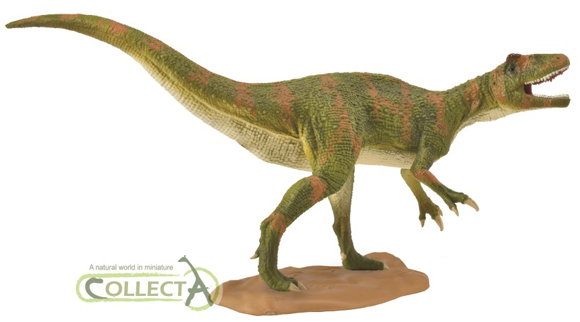
CollectA Fukuiraptor – The “Thief of Fukui”

The second carnivorous dinosaur to be announced this week comes from a very different part of the world, the fossils of Fukuiraptor (pronounced Foo-kwee-rap-tor), come from Honshu Island, the largest island in Japan.  Ironically, although Baryonyx and Fukuiraptor lived thousands of miles apart, they lived at roughly the same time during the Early Cretaceous.  The CollectA Fukuiraptor will be a new addition to the “Dinosaurs Popular” range.

New for 2019 the CollectA Fukuiraptor Dinosaur Model

CollectA Fukuiraptor dinosaur model.
CollectA Fukuiraptor model.

Picture credit: CollectA

Mistaken for a Dromaeosaur

When first discovered the heavy hand claws were thought to have come from the foot and, as the genus name indicates, it was considered to be a dromaeosaurid.  However, although its exact taxonomic affinity is debated, most palaeontologists consider this theropod to be a member of the Megaraptora clade.  The design team at CollectA have based their replica on the holotype material and the restored skeleton on display at the Fukui Prefectural Dinosaur Museum (Japan).  This dinosaur was named and described 2000 AD, its binomial name reflects the location of the fossil site and the geological formation where the fossils were found – Fukuiraptor kitadaniensis (from Fukui Prefecture and the Kitadani Formation).

Commenting on the model, Anthony Beeson stated:

“In our reconstruction I have followed the idea that megoraptorans are allosauroids.  I wanted to convey that it is a lively and lightly built carnivore.  The holotype is of an immature example and so I have scaled it up to presumed adult size.”

Is the CollectA Fukuiraptor a Scale Model?

In some of the documentation and technical files we have received from CollectA, the Age of Dinosaurs Fukuiraptor is described as being a 1:40 scale replica.  The adult size of Fukuiraptor is not known, but it is estimated that adults could have reached lengths of around five to six metres, so at a fraction under fifteen centimetres long, it could be argued that the CollectA Fukuiraptor is a 1/40th scale model.

Model Measurements

  • CollectA Deluxe 1:40 scale Baryonyx length = 26 cm, height = 8.2 cm.
  • CollectA Age of Dinosaurs Popular Fukuiraptor length = 14.7 cm and height 6.8 cm.

To view the range of CollectA Deluxe models: CollectA Deluxe Models.

To view the range of CollectA Age of Dinosaurs Popular: CollectA Prehistoric Life.

For part 1 of our new for 2019 CollectA series: CollectA New Models for 2019 – Part 1.

For part 2 of our new for 2019 CollectA series: CollectA New Models for 2019 – Part 2.

15 11, 2018

Wild Safari Prehistoric World Woolly Rhino Arrives

By |2023-11-11T08:23:45+00:00November 15th, 2018|Categories: Adobe CS5, Dinosaur Fans, Everything Dinosaur News and Updates, Everything Dinosaur Products, Main Page, Photos of Everything Dinosaur Products, Press Releases|0 Comments

Wild Safari Prehistoric World Woolly Rhino in Stock at Everything Dinosaur

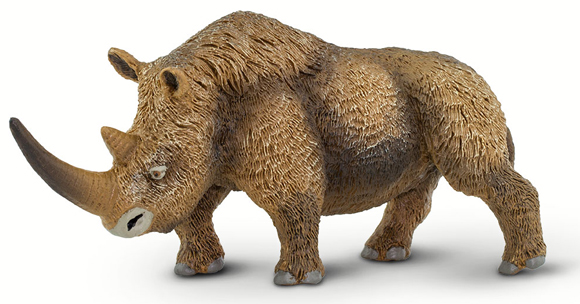
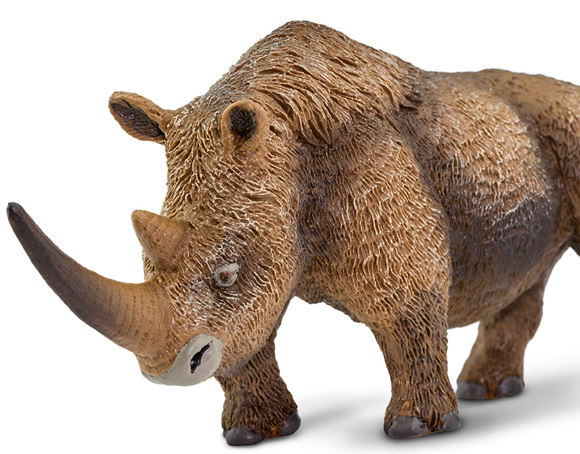
The Wild Safari Prehistoric World Woolly Rhino model is in stock at Everything Dinosaur.  This superb figure of an Ice Age rhinoceros (Coelodonta antiquitatis), arrived yesterday, it is the first of the new for 2019 figures and replicas from Safari Ltd that Everything Dinosaur will be stocking.

The New for 2019 Woolly Rhinoceros Model (C. antiquitatis)

Wild Safari Prehistoric World Woolly Rhinoceros model.
Wild Safari Prehistoric World Woolly Rhino model.

Picture credit: Everything Dinosaur

“Ancient Hollow Tooth” – Brought Bang Up to Date

The Woolly Rhinoceros, known by palaeontologists as Coelodonta antiquitatis (the name means ancient hollow tooth), has been brought bang up to date by the design team at Safari Ltd.  The model has stocky and short limbs and the figure has been painted to give the impression of a thick coat of fur covering the body.

The nostrils are large and have been given a varnish on the inside to give the impression that they are moist.  Like most rhinos, the eyesight of Coelodonta antiquitatis was quite poor but it did have an excellent sense of smell.  Large nasals also probably served to help warm air before it entered the lungs, an adaptation to living on the tundra and frozen steppe.  The large anterior horn is somewhat flattened and spatulate in shape, again, this is an accurate depiction of the horn, as it was used to help sweep snow away so that ground dwelling vegetation could be exposed permitting this large mammal to feed.

A Close-up View of that Flattened Anatomically Accurate Nose Horn

Wild Safari Prehistoric World Woolly Rhinoceros model.
Wild Safari Prehistoric World Woolly Rhino model.  The anterior nose horn is somewhat flattened, this horn, along with the enlarged nostrils and the small ears accurately reflect what is known about this extinct rhinoceros.

A spokesperson from Everything Dinosaur commented:

“Some of our customers have expressed their surprise at how quickly we were able to get this animal into stock.  At Everything Dinosaur, we do appreciate how keen model fans and collectors are when it comes to getting their hands on the latest additions to the Wild Safari Prehistoric World range and we did all we could to ensure that the Woolly Rhino model was available to them as fast as possible.  It really is a super replica of this extinct member of the Rhinocerotidae.”

More Wild Safari Prehistoric World Models to Come

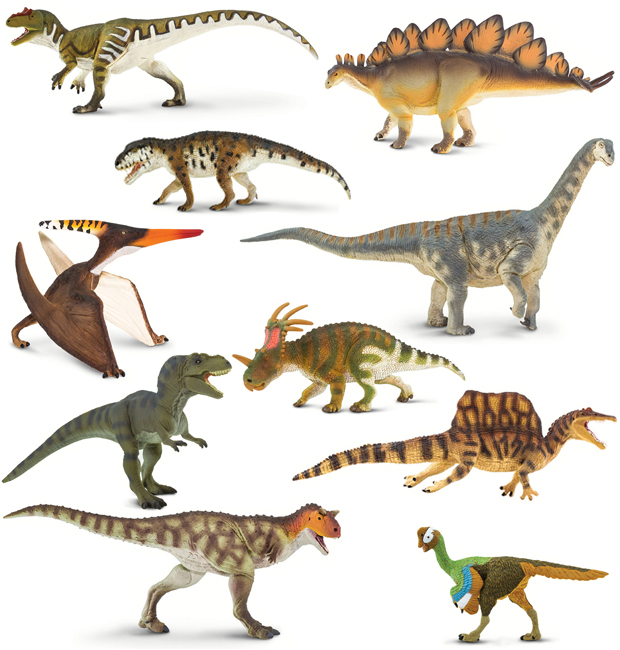
One of the reasons why the agreement that Safari Ltd had with the Carnegie Museum of Natural History came to an end was that with the termination of the agreement, the Florida based figure company could focus on producing more models and increasing its range.  A further ten prehistoric animal figures are due to be introduced in the next few months or so.  Everything Dinosaur is optimistic that more new for 2019 figures will be coming into stock before the end of the year.  The last of the 2019 model introductions should be available in the spring.

Wild Safari Prehistoric World Figures 2019 (Archosauria)

Wild Safari Prehistoric World - reptiles 2019.
The remaining new for 2019 prehistoric animal figures from the Wild Safari Prehistoric World range.  Top Allosaurus, Stegosaurus, Prestosuchus, Camarasaurus, Pteranodon, Styracosaurus, Swimming Spinosaurus, Tyrannosaurus rex, Carnotaurus and Citipati. Picture credit: Everything Dinosaur.

Picture credit: Everything Dinosaur

To see the full range of Wild Safari Prehistoric World figures, including the new for 2017 Woolly Rhino figure: Wild Safari Prehistoric World Models.

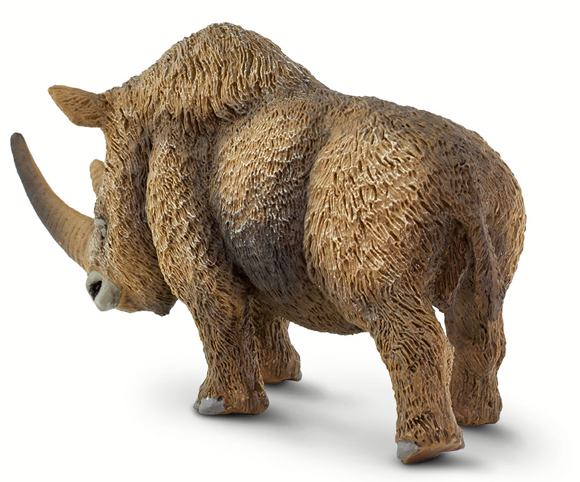
Stepping into the Limelight the Woolly Rhinoceros Figure

Wild Safari Prehistoric World Woolly Rhinoceros model.
Wild Safari Prehistoric World Woolly Rhino model.

Visit the Everything Dinosaur website: Everything Dinosaur.
Go to Top