On the 11th March (2020), Everything Dinosaur posted up a blog article featuring the discovery of a remarkably well-preserved fossil skull that had been found in amber from northern Myanmar.
Following publication, a number of academics have questioned the conclusions made by Xing et al with regards to this fossil representing a member of the Maniraptora. It is certainly true that the validity of the interpretation of the fossil skull as maniraptoran has subsequently been challenged post publication (Wang Wei et al). They comment that the shape of the skull is not unique to archosaurs, many lizards for example, show similar characteristics, the phylogenetic analysis is questioned, along with the apparent absence of an antorbital fenestra (an opening in the skull of all known archosaurs between the orbit and the naris).
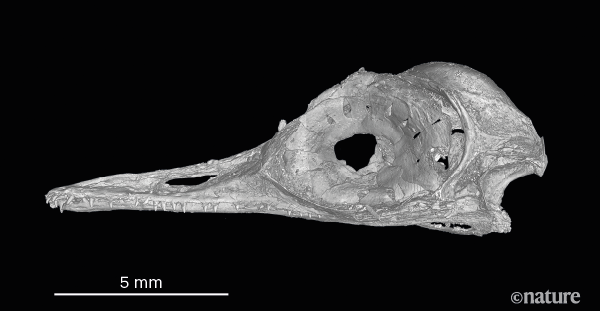
The Very Bird-like Skull of Oculudentavis khaungraae But Can Appearances be Deceptive?
Oculudentavis khaungraae computer generated image of the skull (left lateral view).
Picture credit: Xing et al (Nature)
It is suggested that the skull actually comes from a lizard and that the specimen is not from an archosaur at all.
The original publication noted that the spoon-shaped bones that make up the sclerotic ring were reminiscent of that seen in the eye sockets of lizards. Scleral bones of this shape have never been found in a dinosaur or a bird, it is suggested that these bones support the idea that the fossil is that of a lizard and not a member of the Archosauria.
Trouble with the Teeth
The roots of the tiny teeth do not seem to be located in sockets in the jawbone (thecodont dentition). This was a peculiar feature remarked upon by a number of academics once this paper had been widely circulated. Teeth located in sockets is a characteristic of toothed-archosaurs such as crocodilians and the dinosaurs. Other types of tetrapod also show this tooth morphology, but in Oculudentavis the teeth are not in sockets but either fused to the jaw (acrodont dentition) or located within grooves that can be found along the length of the jaw bones (pleurodont dentition).
The number of teeth in the jaw far exceeds that known for any type of ancient bird. The tooth line extending under the eye-socket (orbit), is also highly unusual. Such anatomical traits are associated with the Squamata (lizards and snakes), not with the Archosauria.
These arguments (along with others, such as the absence of feathers), have led some scientists to question the conclusions made in the original Nature publication. Oculudentavis might not be a bird or a dinosaur, it might represent the preserved remains of a lizard.
An Anolis Lizard (A. equestris) Displaying its Throat Sac
An Anolis lizard, note the long snout, large eyes and the jaw that extends under the orbit.Picture credit: Everything Dinosaur.
Picture credit: Everything Dinosaur
The scramble to publish can sometimes lead to a lack of peer review opportunities and a foreshortening of pre-publication correspondence amongst academics. When the “Nature” paper was published it certainly created a great deal of interest in the wider media. Sadly, we suspect that any challenge to the original paper’s conclusions or subsequent revision will not attract anywhere near as much publicity.
We shall await developments.
Perhaps, in future we could refer to such controversies as “Oculudentavism”.
Researchers from the Vrije Universiteit Brussel and the University of Ghent have used 70 million-year-old fossil bivalves to gain information about day length and seasonal variations during the Late Cretaceous. tyrannosaurids and duck-billed dinosaurs had days that were approximately 30 minutes shorter than ours, as a consequence of this their year was about a week longer.
Writing in the academic journal Paleoceanography and Paleoclimatology, the researchers conducted a series of tests on the fossilised shells of a type of bivalve (Torreites sanchezi). The fossil was found on a mountainside in Oman, but back in the Campanian stage of the Late Cretaceous, this area was a shallow, subtropical sea.
Daily Growth Rings Preserved in Fossil Bivalves Can Provide Scientists with Data About Ancient Planetary Systems
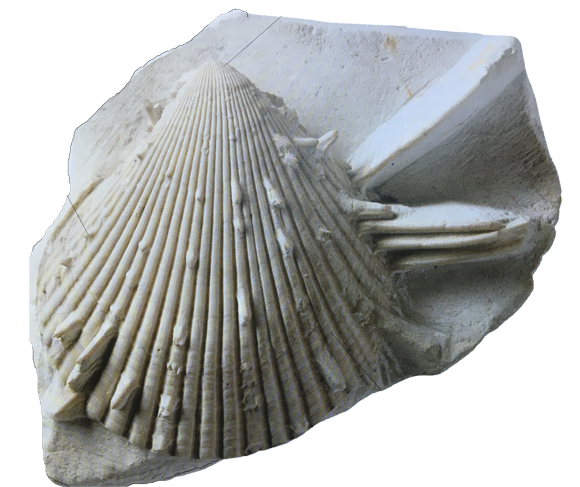
The growth rings laid down by rudist bivalves can help scientists to better understand ancient planetary systems. An example of a bivalve fossil (Spondylus) from the Cretaceous. This type of bivalve evolved in the Early Jurassic and can still be found today in tropical seas.Picture credit: Everything Dinosaur.
Picture credit: Everything Dinosaur
Laser Used to Bore a Hole in the Shell
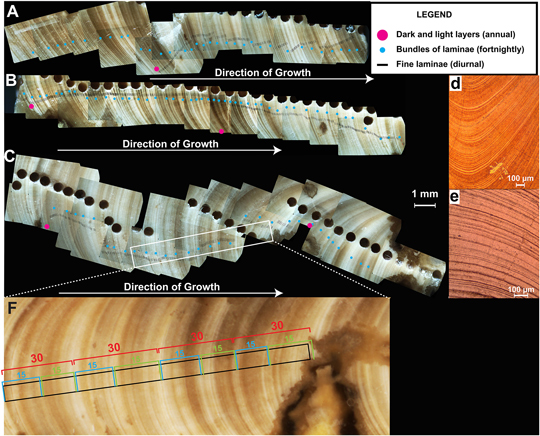
Many types of molluscs grow quickly and they lay down discernible growth rings on their shells every day. Scientists can conduct a series of tests on these markers and identify useful information about the climate and the environment in which the mollusc lived. For example, using the growth rings, the researchers were able to determine that the fossil specimen died when it was around nine years of age.
A laser was used to bore a series of tiny holes in the shell, samples were taken and analysed for trace elements. Using this information, the scientists were able to gain information on the temperature and the chemistry in the sea water in the reef environment where the mollusc lived. The marine temperatures fluctuated between summer and winter, with a peak of around 40 ˚ Celsius in summer and 30 ˚ Celsius in winter. The average annual sea temperatures were warmer than previously thought.
The Rings on the Bivalve Shell Can Provide a Lot of Information
Microscopic analysis of the fossil shell can help scientists work out day length and seasonal variations in the past.
Picture credit: Niels de Winter et al
Determining the Growth Rate of a Fossil Bivalve
In addition, the scientists determined that the bivalve grew much faster during the day than it did at night. This phenomenon is not uncommon with bivalves today, some species form symbiotic relationships with algae, it is thought that the Cretaceous species was in a similar relationship. A combination of counting layers, spectral analysis of chemical cyclicity and chemical layer counting shows that the mollusc laid down 372 daily laminae per year, demonstrating that length of day has increased since the Late Cretaceous, as predicted by numerous astronomical models and previous studies of fossil molluscs.
However, this study represents the most accurate assessment of seasonal growth, day length and annual environmental changes recorded in a fossil from the Late Cretaceous.
The Earth’s orbit around the sun does not alter that much, the extra 7 days recorded in a year, are not really a record of the Earth taking longer to make its orbit, but a reflection of the fact that the Earth was spinning faster on its axis 70 million years ago. With the Earth turning faster, a day was slightly shorter compared to what we experience in the 21st century. A day in the Cretaceous would have lasted approximately 23 1/2 hours.
An Explanation – Why is the Rotation of the Earth Slowing Down?
The Earth’s orbit around the sun does not change a great deal, but the length of a day on Earth has been steadily increasing since our planet and its moon were formed. The moon’s gravity is acting on our planet, it creates friction from ocean tides and this is gradually slowing the Earth’s rotation. At the same time, Earth’s own gravity is having an effect on the moon. The pull of the tides accelerates the moon, so the satellite is being pushed away from our planet.
When the Torreites sanchezi bivalve was alive, a dinosaur on the beach at night would have seen a moon that looks bigger than the one we see today, it was several thousand metres closer to Earth.
The research team conclude that as bivalve shell calcite preserves quite well, this study permits further work using other fossils to determine seasonality, marine temperatures and day length. This should help to document environmental change in warming ecosystems and widen our understanding of the magnitude of short‐term changes during greenhouse climates.
The scientific paper: “Subdaily-Scale Chemical Variability in a Torreites sanchezi Rudist Shell: Implications for Rudist Paleobiology and the Cretaceous Day-Night Cycle” by Niels J. de Winter, Steven Goderis, Stijn J.M. Van Malderen, Matthias Sinnesael, Stef Vansteenberge, Christophe Snoeck, Joke Belza, Frank Vanhaecke, and Philippe Claeys published in Paleoceanography and Paleoclimatology.
Scottish Island – A Dinosaur Stomping Ground Complete with Stegosaurs
Scientists led by researchers from Edinburgh University have reported the discovery of dozens of dinosaur footprints preserved in exposed mudstones at two locations on the Isle of Skye. The trace fossils preserve evidence of a variety of different types of dinosaurs, which helps palaeontologists to gain a better understanding of dinosaur distribution and diversity during the Middle Jurassic.
The tracks indicate a variety of dinosaur trackmakers, including bipedal theropods of various sizes, possible ornithopods and a quadrupedal ornithischian dinosaur, the tracks of which show a resemblance to the ichnotaxon Deltapodus, which is believed to represent a stegosaur. If these prints do represent a member of the Stegosauria, then this is the first time that evidence for this type of armoured dinosaur has been discovered on the Isle of Skye.
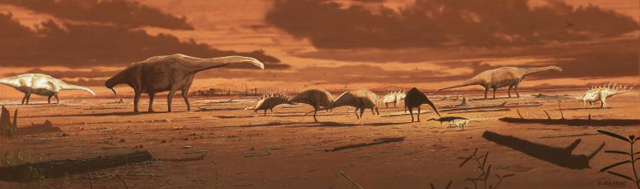
Dinosaurs Congregating Around Mudflats on the Isle of Skye (Middle Jurassic)
Life reconstruction of the Isle of Skye mudflat. Note no sauropod tracks have been identified to date at the two sites described in the newly published scientific paper.
Picture credit: Jon Hoad
Globally Important Fossil Discovery
During the Middle Jurassic the Dinosauria rapidly diversified and many new types evolved. Unfortunately, the fossil record for terrestrial vertebrates from the Middle Jurassic is particularly poor. The abundant trace fossils associated with the Isle of Skye are globally important, providing scientists with an opportunity to plot which types of dinosaurs are associated with this location. Since the first dinosaur footprint in Scotland was found in the 1980s numerous tracksites representing several ichnotaxa have been recorded.
Writing in the academic journal PLOS One, the researchers describe two new tracksites from Rubha nam Brathairean (Brothers Point). The sites are referred to as BP1 and BP3, site BP2, which revealed sauropod and theropod prints has already been reported upon: Isle of Skye Steps into the Jurassic Spotlight (2018).
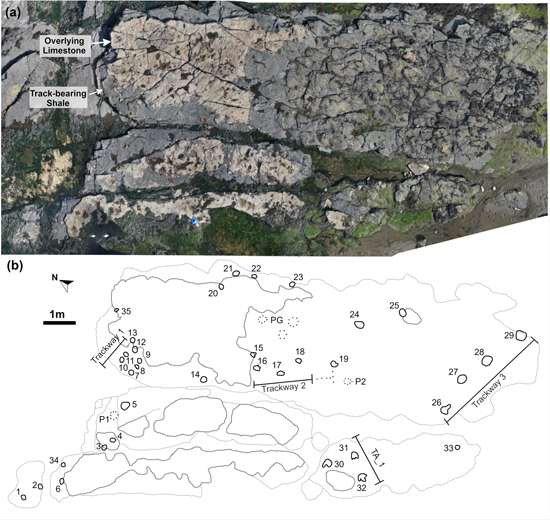
An Aerial View and Line Drawing of BP1 Showing the Distribution of the Dinosaur Tracks
Isle of Skye dinosaur tracks (BP1). All three sites BP1, BP2 and BP3 were discovered between 2015 and 2017.
Picture credit: PLOS One
An Insight into the Fauna Around a Subtropical Coastal Area
The trace fossils at both BP1 and BP3 were formed when mudflats were exposed and dinosaurs walked over them. Today, the mudstones comprise part of the Lealt Shale Formation of the Great Estuarine Group. The dinosaurs inhabited a coastal environment in what was a subtropical climate. The fossil bearing rocks might be exposed on the coast today, but the climate on the Isle of Skye today is very different to what it was like around 170 million years ago. The notorious Scottish weather prevented the researchers from using drones on several occasions in their attempts to photograph and map the sites.
An Aerial View of BP3 and Accompanying Line Drawing Showing the Various Dinosaur Tracks
Skye dinosaur tracks (BP3).
Picture credit: PLOS One
The tracks at both sites are preserved as impressions (concave epirelief) and the signs of mud cracks associated with the trace fossils suggest that the surfaces of both sites were briefly exposed before being quickly reclaimed by the return of brackish water. Whilst the dinosaur tracks at BP3 were being mapped, an articulated pterosaur skeleton was found in the overlying limestone layer. The state of the bones (largely unfractured) and the articulated skeleton suggest that the overlying limestone was deposited in a relatively low energy environment. The pterosaur is currently being studied and will be covered in a future scientific paper.
Evidence of a Scottish Stegosaur
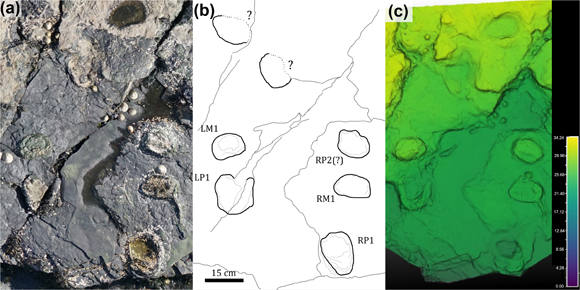
One of the tracks at location BP1 (BP1_Twy-01) shows a series of prints made by a quadrupedal dinosaur. Although the tracks are a little distorted, distinctions between the pes (rear foot) and the manus (front foot) can be made. The researchers conclude that these prints and other, single prints from this site are similar to the ichnotaxon Deltapodus. Evidence of a potential armoured dinosaur from the Isle of Skye adds to the diversity of dinosaur types known from this location.
Mapping the Ornithischian Tracks (Potential Stegosaur – Ichnotaxon Deltapodus)
Potential Scottish Stegosaur tracks from the Isle of Skye. The photograph (above) shows (a) an aerial overview of the site, (b) a line drawing showing the position of the tracks and (c), a false colour rendering of the tracks showing topography.
Picture credit: PLOS One
Together these two new tracksites demonstrate the wide variety of different types of dinosaur present in the area and will help palaeontologists gain more data on the early evolution and radiation of the Dinosauria. As the researchers conclude, essentially BP1 and BP3 provide a snapshot of a “day in the life” of a Middle Jurassic ecosystem.
A Palaeontological Puzzle
No sauropod tracks have been described to date from BP1 or BP3, although they have been found at BP2. The absence of sauropod evidence could be coincidental or perhaps an indication that during the time the mudflats were exposed, these large herbivores were not present in the area. Environmental factors could help to explain the absence of sauropods. Site BP2 represents a shallow lagoon, whilst BP1 and BP3 represent mudflats. The sauropods may have preferred to occupy the lagoons.
The scientific paper: “Novel track morphotypes from new tracksites indicate increased Middle Jurassic dinosaur diversity on the Isle of Skye, Scotland” by Paige E. dePolo, Stephen L. Brusatte, Thomas J. Challands, Davide Foffa, Mark Wilkinson, Neil D. L. Clark, Jon Hoad, Paulo Victor Luiz Gomes da Costa Pereira, Dugald A. Ross and Thomas J. Wade published in the journal PLOS One.
Oculudentavis khaungraae – Tiny Fossil Skull Could Represent the Smallest Dinosaur
Team members at Everything Dinosaur had been aware that something big was brewing amongst those members of the academia with an interest in vertebrate palaeontology. An academic paper published in the journal “Nature”, describes the beautifully preserved but very small skull of a theropod dinosaur preserved in Cretaceous amber from northern Myanmar (Burma). The fossil might just represent the smallest dinosaur known to science.
The fossil might be tiny but this wonderful discovery could have very big implications when it comes to understanding how miniaturisation occurs within vertebrates. It also provides yet another remarkable insight into the types of creatures that shared the Late Cretaceous with non-avian dinosaurs and pterosaurs. Named Oculudentavis khaungraae it probably weighed about as much as the smallest living bird, the Bee Hummingbird (Mellisuga helenae), which weighs about two grammes, that is about half the weight of a single sheet of A4 paper.
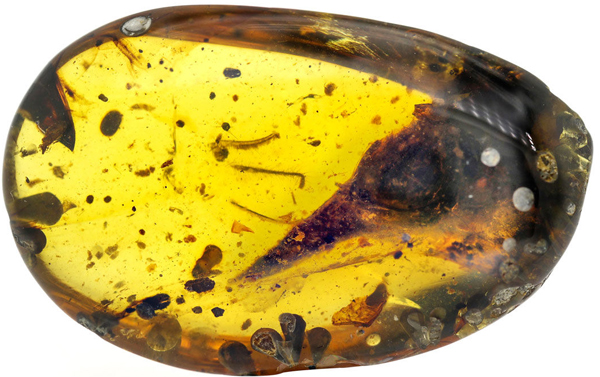
The Polished Amber Nodule Reveals a Bounty of Preserved Material Including the Tiny Skull of Oculudentavis khaungraae
Tiny fossil skull preserved in amber (Oculudentavis khaungraae).
Picture credit: Lida Xing et al
When we Say Tiny we Mean Tiny!
The amber nodule containing the beautifully preserved skull, complete with the tongue, measures a little over three centimetres in length. The skull, with its tiny jaws, lined with miniscule but pointed teeth, measures less than 1.5 cm long. It is estimated that Oculudentavis had a total body length including tail of about 9 cm. Palaeontologists have speculated that “microsaurs” – tiny dinosaurs co-existed with the giants, just as African spiny mice (genus Acomys), can be found today in the same habitats as the largest, terrestrial animals – elephants (Loxodonta).
Tantalising fossil footprints had been found that hinted at the possible existence of “microsaurs” or “tinysaurs” if you will – assuming of course that these trace fossils were not made by very young animals, with a lot of growing to do.
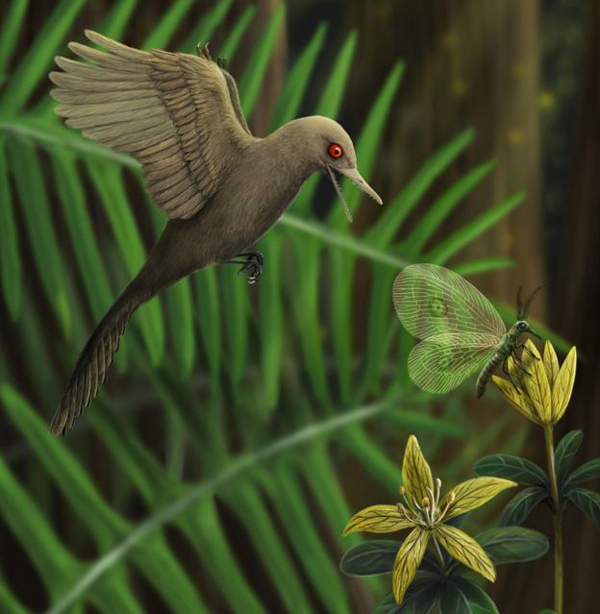
A Life Reconstruction of the Tiny Oculudentavis khaungraae
A life reconstruction of Oculudentavis. It may have been small but the numerous teeth (23 teeth in the upper jaw alone), indicate that it was a predator probably hunting insects.
Picture credit: Han Zhixin
Oculudentavis – a Possible Member of the Enantiornithes Clade
Where Oculudentavis sits on the Dinosauria family tree is uncertain. Whilst the cranial material has provided the authors, which include researchers from the Chinese Academy of Sciences and the Natural History Museum of Los Angeles County, with a wealth of data, interpreting the taxonomy is somewhat troublesome. If it is a member of the Maniraptora, this large clade includes dinosaurs as well as true birds (avians). Just how closely related to the birds or whether it is a highly specialised dinosaur remains open to debate. Oculudentavis could be an enantiornithine bird, an extinct lineage of avians that were the most common birds of the Cretaceous, or it might be more closely related to the dinosaur end of the Maniraptora spectrum.
It may be small, but the specimen does not represent a juvenile or young animal, the skull bones are sufficiently fused for scientists to confidently state that the tiny creature is an adult or at least a sub-adult.
Eye Tooth Bird
Oculudentavis demonstrates a suite of unusual anatomical characteristics. The eyes for example, are located on the side of the head, helpful for providing all round vision but not capable of delivering stereoscopic vision to aid in the capture of small prey. The orbits are huge, the eyes would have bulged out of the head somewhat and the bones that make up the sclerotic ring (the circle of bones in the orbit) are spoon shaped, which is a morphology previously only known in lizards. These scleral ossicles form a cone, similar to the bones in the eyes of owls, so it can be deduced that just like owls, Oculudentavis had exceptional vision.
What is a little more surprising is that the opening at the centre of the ossicles is narrow and restricted. This would have limited the amount of light coming into the eye, so unlike most owls this little Cretaceous creature probably operated in bright, sunny conditions – it was most likely diurnal.
A Computer Generated Image of the Skull of O. khaungraae
Oculudentavis khaungraae computer generated image of the skull (left lateral view). Note the huge size of the orbits, the small teeth in the jaws and the scale bar denoting the size of the specimen.
Picture credit: Xing et al (Nature)
Huge Eyes
Such is the size and extent of the eye socket, that they extend over the jaws and some of the upper jaw teeth are located directly under the orbit. It is this characteristic and those large eyes, that gives Oculudentavis its name, from the Latin for eye “oculus”, “dentes” teeth and “avis” for bird. The species name honours Khaung Ra who donated the specimen to the Hupoge Amber Museum.
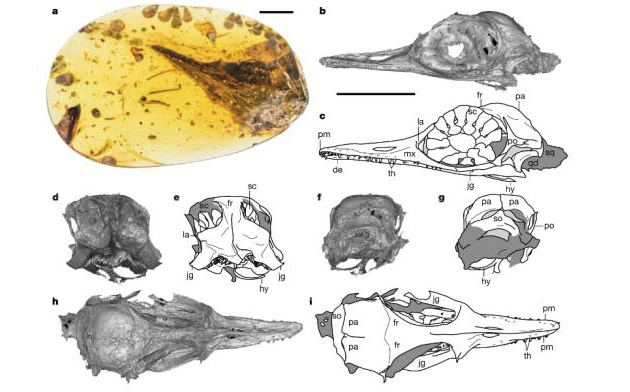
The Fossil Specimen (HPG-15-3) with Computer Generated Images and Accompanying Line Drawings
Photograph, computed tomography scans and interpretive drawings of the HPG-15-3 holotype of O. khaungraae. Scale bar size equals 5 millimetres.
Picture credit: Xing et al (Nature)
The photograph (above), shows the amber piece (a), a scan of the skull (b) with line drawing (c). Images d, f and h represent other views of the scans, whilst images e, g and h represent the associated line drawings. The amber specimen comes from the Angbamo site, close to the township of Tanai (Myitkyina district, Hukawng valley, Kachin province) in northern Myanmar. The strata are believed to represent the Cenomanian stage of the Late Cretaceous, the fossil therefore is approximately 99 million years old.
Living on an Island?
The fossil discovery represents the smallest known dinosaur of the Mesozoic and it highlights the importance of amber as a means of permitting scientists to gain an insight into the ecology of a habitat thanks to the preservation of small animals and other material that would not necessarily have been preserved under other taphonomic processes. Specimens preserved in amber are rapidly emerging as an exceptional way to study tiny vertebrates from the Late Cretaceous.
Miniaturisation in animals is commonly associated with living in isolated environments where resources are limited. The tiny Oculudentavis lends weight to the idea that the amber deposits in northern Myanmar were produced in forests that existed on islands. In addition, the size and morphology of this species suggest a previously unknown bauplan and a previously undetected ecology.
To read more articles about amazing fossil discoveries made in Burmese amber:
Following publication, a number of academics have questioned the conclusions made by Xing et al with regards to this fossil representing a member of the Maniraptora. It is certainly true that the validity of the interpretation of the fossil skull as maniraptoran has subsequently been challenged post publication (Wang Wei et al). They comment that the shape of the skull is not unique to archosaurs, many lizards for example, show similar characteristics, the phylogenetic analysis is questioned, along with the apparent absence of an antorbital fenestra (an opening in the skull of all known archosaurs between the orbit and the naris).
Is this the Skull of a Lizard?
It is suggested that the skull actually comes from a lizard and that the specimen is not from an archosaur at all.
The original publication noted that the spoon-shaped bones that make up the sclerotic ring were reminiscent of that seen in the eye sockets of lizards. Scleral bones of this shape have never been found in a dinosaur or a bird, it is suggested that these bones support the idea that the fossil is that of a lizard and not a member of the Archosauria.
The roots of the tiny teeth do not seem to be located in sockets in the jawbone (thecodont dentition). This was a peculiar feature remarked upon by a number of academics once this paper had been widely circulated. Teeth located in sockets is a characteristic of toothed-archosaurs such as crocodilians and the dinosaurs. Other types of tetrapod also show this tooth morphology, but in Oculudentavis the teeth are not in sockets but either fused to the jaw (acrodont dentition) or located within grooves that can be found along the length of the jaw bones (pleurodont dentition).
The number of teeth in the jaw far exceeds that known for any type of ancient bird. The tooth line extending under the eye-socket (orbit), is also highly unusual. Such anatomical traits are associated with the Squamata not with the Archosauria.
These arguments (along with others, such as the absence of feathers), have led some scientists to question the conclusions made in the original Nature publication. Oculudentavis might not be a bird or a dinosaur, it might represent the preserved remains of a lizard.
Luchibang xingzhe – Long-legged Chinese Pterosaur Described
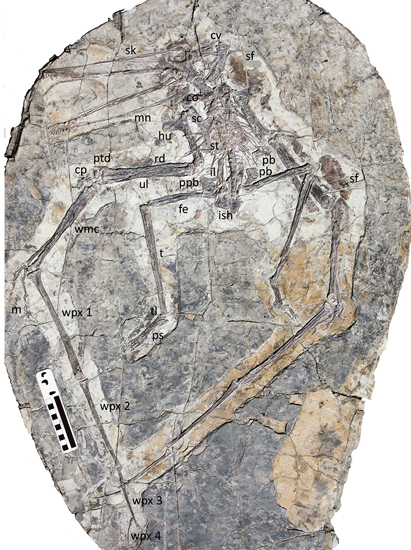
A team of international scientists including Dr David Hone (Queen Mary University of London) and colleagues from the University of Wisconsin-Madison, the China University of Geosciences and the Institute of Vertebrate Palaeontology and Palaeoanthropology (Beijing), have published a paper describing a new species of long-legged pterosaur that once flew over the skies of what is now Inner Mongolia. The new flying reptile has been named Luchibang xingzhe (pronounced Loo-chee-bang shing-hey).
The Nearly Complete Holotype Specimen of Luchibang xingzhe
The holotype specimen of Luchibang xingzhe. Note scale bar equals 10 cm. The skull is at the top, the elongated jaws are facing to the left.
Picture credit: Palaeontologia Electronica
Described from a Single Specimen
Described from a single, near complete, articulated specimen (ELDM 1000), this pterosaur has been assigned to the Istiodactylidae family, members of the Suborder Pterodactyloidea, known for their short-tails, long toe bones and very thin walls to their bones. Istiodactylid pterosaurs were geographically widespread, fossils having been found in Lower Cretaceous sediments located in North America, the Isle of Wight (southern England) and northern China.
Although the animal was immature when it died, it already had a wingspan estimated at around two metres. The fossil skeleton indicates that it was already much bigger than most other istiodactylids, suggesting a large wingspan (perhaps around five metres), as an adult. Luchibang had proportionately long hindlimbs and these, plus the teeth, suggest that this flying reptile hunted fish, perhaps stalking them in the same way as a modern heron.
The pterosaur has been named in honour of Lü Junchang, (Chinese Academy of Geological Sciences), in recognition of his research work on Chinese members of the Pterosauria and from the Mandarin word for “heron”.
Luchibang xingzhe with Robust and Elongated Hindlimbs
The fossil specimen is the most complete istiodactylid specimen described to date. The completeness of the skeleton was one of the factors that led to allegations that the fossil had been faked. Sadly, many fossils from China are “enhanced” to make them more valuable. However, after extensive analysis the specimen has been proved to be genuine, but this issue along with a debate with regards to phylogeny led to delays in publication.
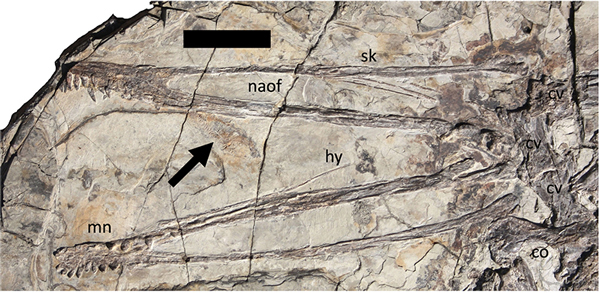
It is to the credit of the research team that they persevered and that the scientific paper has now been published. Intriguingly, the fossilised remains of two small fish (probably Lycoptera), are preserved in association with Luchibang. One fish resides between the jaws (see photograph below), whilst the second is inside the rib cage and may represent the remains of this flying reptile’s last meal. If the second fish fossil does represent gut contents, then this reinforces the idea that Luchibang was a piscivore (fish-eater).
A Close View of the Partial Skull and the Jaws of Luchibang xingzhe With Fish Remains in Association
A close view of the jaws of Luchibang showing the fish fossil in association. The scale bar equals 5 cm and the black arrow points to the fossil fish.
Picture credit: Palaeontologia Electronica
The scientific paper: “An unusual new genus of istiodactylid pterosaur from China based on a complete specimen” by David W. E. Hone, Adam J. Fitch, Feimin Ma and Xing Xu published in Palaeontologia Electronica.
Tiny Partial Shoulder Girdle Bone Fills 15 Million-year Fossil Gap
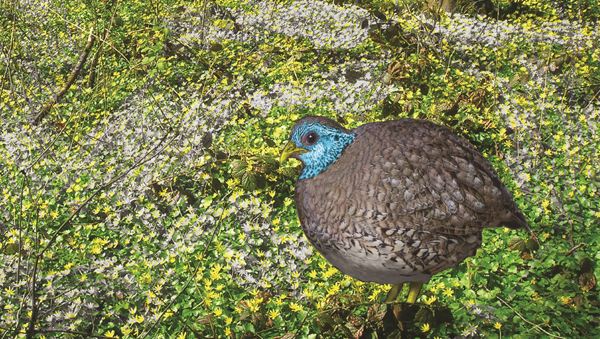
A tiny, partial bone from the left shoulder girdle of an ancient bird discovered in Utah, has helped fill a gap in the fossil record of the early relatives of chickens and turkeys (Galliformes). In addition, the fossil specimen named UMNH.VP.30891, from the Eocene Uinta Formation shares a number of anatomical traits with fossils found in Uzbekistan and Namibia which suggests the ancestors of chickens, turkeys, quail, pheasants and guineafowl, were widespread.
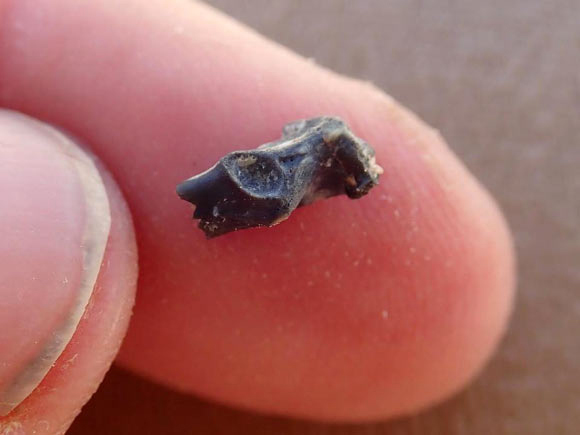
A Tiny Bone from a Bird
This fossil bird has been assigned to the Paraortygidae, an extinct group of birds that were the ancestors of modern game birds. The tiny fossil fits in a nearly 15-million-year gap in the fossil record of the galliform lineage in North America.
The Tiny Fossil Bone from the Left Shoulder Girdle of an Unnamed Member of the Paraortygidae
The coracoid of the newly described Uintan paraortygid.
Picture credit: Patricia Holroyd (University of California)
Bird Fossil from Utah
Writing in the academic journal Diversity, the researchers, which included scientists from the Chinese Academy of Sciences along with colleagues from Midwestern University (Arizona) and the Museum of Paleontology (University of California), describe the tiny fossil bone which was found in 44-million-year-old fluvial deposits in north-eastern Utah.
Commenting on the importance of this tiny fossil, which measures less than one centimetre in length, one of the co-authors of the paper, Dr Beth Townsend (Midwestern University), stated:
“The new Uinta bird fills not only a time gap, but also helps us better understand the animal community at this time. The Uinta Basin is important for understanding ecosystems during times of global warm temperatures, when forests, primates and early horses were spread across an area that is now desert.”
A Life Reconstruction of the Uinta Bird
Newly described Uintan paraortygid life reconstruction.
Picture credit: Thomas Stidham (Chinese Academy of Sciences)
Fossil Coracoid Representing the “Uintan paraortygid”
The fossil coracoid represents a new species, but it has yet to be named. It has been informally termed the “Uintan paraortygid”. This quail-sized bird from Utah is the oldest known member of the Paraortygidae. It is approximately the same body size and shape of other early paraortygids and given their widespread distribution in the fossil record (Namibia, Uzbekistan and the United States), it suggests that these little birds were confident, capable fliers. In addition, it seems likely that these birds had a flexible biology or diet that allowed them to occupy a diversity of habitats from forests and coasts to semi-arid savannahs.
The scientific paper: “Evidence for Wide Dispersal in a Stem Galliform Clade from a New Small-sized Middle Eocene Pangalliform (Aves: Paraortygidae) from the Uinta Basin of Utah (USA)” by Thomas A. Stidham, K. E. Beth Townsend, and Patricia A. Holroyd published in Diversity.
Cartilage, Proteins, Potential DNA Preserved in Juvenile Duck-billed Dinosaur
Whisper it quietly, but the debate about how long organic materials such as DNA can remain preserved with fossils without complete destruction and decay is about to be reignited. An international team of researchers have identified possible evidence of fossilised cell nuclei, chromosomes with indications of DNA within the preserved, calcified cartilage of a baby duck-billed dinosaur that roamed Montana around 75 million years ago.
This discovery does not take us one step nearer to a “Jurassic Park” scenario, but it does challenge current thinking about how long delicate organic material such as DNA can persist.
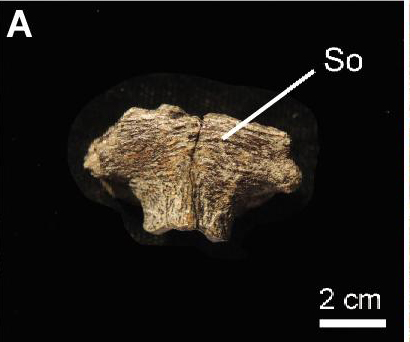
A View of the Skull Bone (Supraoccipital) of the Juvenile Hypacrosaurus
An isolated supraoccipital (So) of Hypacrosaurus in dorsal view. Note the scale bar equals 2 cm.
Picture credit: A. Bailleul et al (National Science Review)
Dinosaur DNA
Writing in the journal “National Science Review”, researchers from the Institute of Vertebrate Palaeontology and Palaeoanthropology (Chinese Academy of Sciences), report their findings in collaboration with Mary Schweitzer of North Carolina State University, a pioneer in dinosaur soft tissue research.
The fossil material was collected in 1988 by American palaeontologist Jack (John) Horner. It heralds from the Two Medicine Formation (Campanian faunal stage of the Late Cretaceous), in north-western Montana. The fossilised bone comes from a genus of the lambeosaurine hadrosaur Hypacrosaurus (H. stebingeri).
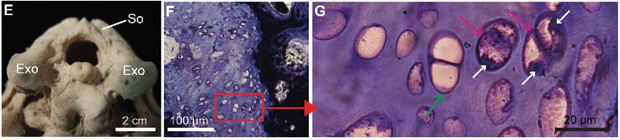
The scientists conducted a microscopic analysis of fragmentary skull bones (supraoccipital bone – located towards the back of the skull), associated with very young animals (skull length about 20 cm and total body length less than 2 metres). Corresponding author of the scientific paper, Alida Bailleul (Institute of Vertebrate Palaeontology and Palaeoanthropology), noticed a handful of beautifully preserved cell-like structures within the calcified cartilage on the edges of the skull bone. Two cartilage cells were still linked together by an intercellular bridge, morphologically consistent with the end of cell division.
Hypacrosaurus DNA Study
Caudal view of a juvenile emu skull (∼8–10 months old) showing the So and exoccipitals (Exo) in articulation. (F, G) Ground section (stained with Toluidine blue) of calcified cartilage from this emu skull showing cell doublets (pink arrows) with remnants of nuclei (white arrows) and others without intracellular content (green arrow).
Picture credit: A. Bailleul et al (National Science Review)
Dark Elongated Structures Within the Cells
Inside the cells, dark material resembling the cell nucleus was identified. One cartilage cell preserved dark, elongated thread-like structures morphologically consistent with chromosomes.
Bailleul and Schweitzer, in collaboration with Zheng Wenxia (North Carolina State University), then set out to determine whether original molecules were also preserved in the dinosaur cartilage. The researchers performed immunological and histochemical analyses on the skull of another nestling Hypacrosaurus from the same nesting ground. The immunological test supports the presence of remnants of original cartilaginous proteins in this dinosaur.
The researchers also isolated individual Hypacrosaurusstebingeri cartilage cells and applied two DNA stains, DAPI and PI. These bind specifically to DNA fragments in extant material and some of the isolated dinosaur cells showed internal, positive binding in the same pattern seen in modern cells. In essence, the fragments reacted positively to the staining suggesting some original dinosaur DNA may be preserved.
Commenting on the significance of this study, Alida Bailleul stated:
“These new, exciting results add to growing evidence that cells and some of their biomolecules can persist for a long time. They suggest DNA can be preserved for tens of millions of years and we hope this study will encourage scientists working on ancient DNA to push current limits and use new methodology in order to reveal all the unknown molecular secrets that ancient tissues have.”
Can DNA Survive for Millions of Years?
This research is likely to court controversy. The possibility that DNA can survive for seventy-five million years is not widely accepted by the scientific community. It is generally believed that the half-life of DNA is around five hundred years and that it does not persist in any form after several hundred thousand years.
For example, in 2013, Everything Dinosaur reported upon the discovery of a DNA sequence preserved in the fossil leg bone of an ancient horse that roamed Canada around 700,000 years ago. To read more about this research: Ancient Fossil Helps to Decode Horse Evolution.
If these results can be replicated and the data verified, then this would indicate that DNA, in some form, although highly degraded, might persist in the fossil record for tens of millions of years. It might be possible to recover and sequence other samples of DNA from long extinct creatures.
A Life Reconstruction of the Hypacrosaurus stebingeri Nursery
A life reconstruction of the Hypacrosaurus nesting site. A young dinosaur has died and is lying in a pool, whilst the mother investigates the corpse.
Picture credit: Michael Rothman/Science China Press
No “Jurassic Park”
However, this study does not mean that a dinosaur-themed safari park as depicted in the “Jurassic Park” franchise is just around the corner.
Bailleul explained:
“Here we have probably fossilised remnants, very minute amounts of fossilised dinosaur DNA, but that is a hypothesis at this stage. The original dinosaur DNA might be transformed chemically during fossilisation. No one really understands what happens to DNA in material so old, but our study encourages more research in ancient DNA to understand the processes of DNA fossilisation. Our data suggest some DNA may still be preserved in these dinosaur cells, but it will never be possible to recreate a dinosaur. Once a species goes extinct, it’s extinct forever.”
The research team conclude that the identification of chemical markers of DNA in Hypacrosaurus suggest DNA may preserve much longer than originally proposed. Even though it is clear that contamination does exist in fossil material and complicates identifications of original organic molecules, it can be accounted for with proper controls.
This research does not suggest that dinosaurs can be resurrected and brought back from extinction, but this study might represent a significant landmark in how ancient DNA could be identified and used to trace the evolution of life.
Everything Dinosaur acknowledges the assistance of a media release from North Carolina State University in the compilation of this article.
The scientific paper: “Evidence of proteins, chromosomes and chemical markers of DNA in exceptionally preserved dinosaur cartilage” by Alida M Bailleul, Wenxia Zheng, John R Horner, Brian K Hall, Casey M Holliday and Mary H Schweitzer published in National Science Review.
Thanks to a dedicated geologist and the careful conservation of his materials and notes a sixty-six-year-old mystery about dinosaur footprints on a cave ceiling in Queensland (Australia), has been solved. Palaeontologist Dr Anthony Romilio (University of Queensland), was able to decipher and interpret a series of dinosaur trackways preserved in Lower Jurassic strata, now exposed on a cave ceiling with the help of notes, photographs and casts of the prints stored in a cupboard under the stairs of a house in Sydney.
Dinosaur Footprints on the Ceiling
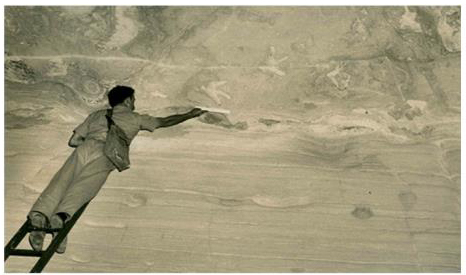
The Dinosaur Tracks from the Cave Ceiling (Insert Shows Estimated Size of Track Makers)
Dinosaur tracks from the Mount Morgan site, with (insert), a line drawing showing the estimated size of the two track makers. The photograph is circa 1954.
Picture credit: Historical Biology
Dr Romilio, of the School of Chemistry and Molecular Sciences (University of Queensland) explained:
“The town of Mount Morgan near Rockhampton has hundreds of fossil footprints and has the highest dinosaur track diversity for the entire eastern half of Australia. Earlier examinations of the ceiling footprints suggested some very curious dinosaur behaviour; that a carnivorous theropod walked on all four legs.”
There have been hundreds of dinosaur tracks reported from the so-called “fireclay caverns” in Mount Morgan. Five prints first described by Ross Staines, the geologist who made such careful notes (1954), purportedly represent a theropod dinosaur that had left a handprint (manus), the interpretation was that this theropod had been walking on all fours. Most theropods are characterised by their obligate bipedal stance. Dr Romilio set out to determine whether this particular track did indeed preserve this very untypical theropod dinosaur behaviour. Unfortunately, it was not possible to access the trace fossils “in situ”, the caverns have been closed since 2011 due to concerns about public safety.
A Line Drawing Showing the Five Tracks Studied
A line drawing showing the five tracks in the study.
Picture credit: Historical Biology
Unable to view the fossils in the cave, it would have been difficult to determine what the tracks represented.
A Stroke of Good Fortune
However, Dr Romilio had a chance meeting with local dentist Dr Roslyn Dick, whose geologist father found many dinosaur fossils over the years.
Ms Dick commented:
“I’m sure Anthony didn’t believe me until I mentioned my father’s name – Ross Staines. Our father was a geologist and reported on the Mount Morgan caves containing the dinosaur tracks in 1954. Besides his published account, he had high-resolution photographs and detailed notebooks, and my sisters and I had kept it all. We even have his dinosaur footprint plaster cast stored under my sister’s Harry Potter cupboard in Sydney.”
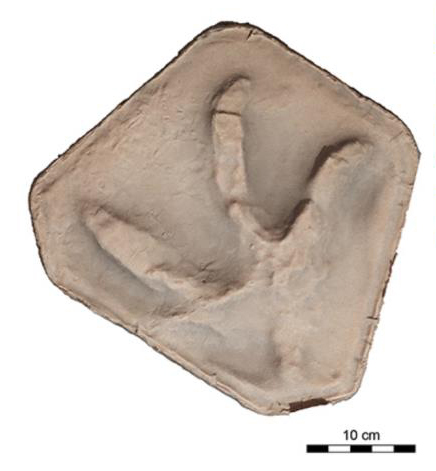
A Digitally Reconstructed Dinosaur Track Created from the Archive Material Compiled by Ross Staines
A digital reconstruction of one of the prints studied by Ross Staines.
Picture Credit: Dr Romilio (University of Queensland)
Extensive Notes and Meticulous Records
The extensive information archived by Ross Staines and carefully stored by Ms Dick and her sisters Heather Skinner and Janice Millar, permitted Dr Romilio to conduct a thorough analysis of the trace fossils. He was able to digitise the original analogue photographs and to make a virtual, computer-generated model of the dinosaur track that had been stored under the stairs. As a result, it was concluded that the five tracks were all foot (pes) impressions and that no handprint was present.
It turns out that these tracks do not represent the prints of a single dinosaur, but actually two dinosaurs produced the five tracks, one slightly smaller than the other, which led to the misinterpretation of one of the footprints as being the preserved impression of a dinosaur hand. The splayed toes and moderately long middle digit of the footprints permitted the researcher to determine that these were probably not the footprints of a theropod, but that the tracks represent the progress of a pair of ornithopods.
Dr Romilio commented:
“Rather than one dinosaur walking on four legs, it seems as though we got two dinosaurs for the price of one – both plant-eaters that walked bipedally along the shore of an ancient lake.”
Dinosaur Footprints Mystery Solved
Thanks to the careful conservation of their father’s work, this is one Australian dinosaur trackway mystery that has been solved. These tracks do not represent a theropod dinosaur walking in an uncharacteristic quadrupedal gait, as Dr Romilio explained:
“You don’t assume T. rex used its arms to walk, and we didn’t expect one of its earlier predatory relatives of 200 million years ago did either.”
The contribution of the ladies has been recognised, they are all cited as co-authors/contributors to the scientific paper. We are sure their father would have been very proud.
A Life Reconstruction of the Larger of the Two Ornithopod Dinosaurs Believed to Have Made the Tracks
A reconstruction of the Lower Jurassic ornithopod, the type of dinosaur that probably made the tracks.
Picture credit: Dr Anthony Romilio
Dinosaurs Walking on the Ceiling?
How did the trace fossil end up on the ceiling of a cave? The dinosaurs were not defying gravity, the explanation is very straight-forward. The dinosaurs were walking on the soft sediment associated with a lake around 195 million years ago (Sinemurian faunal stage of the Lower Jurassic), the impressions they made in the soft sediments were infilled with sand. Over time, the softer mudstone and shales were eroded away to expose the imprints as natural casts.
A Photograph of Ross Staines Measuring the Dinosaur Tracks
Ross Staines measuring the footprints 4.5 metres above the cave floor (circa 1954).
Picture credit: University of Queensland
Everything Dinosaur acknowledges the assistance of a media release from the University of Queensland in the compilation of this article.
The scientific paper: “Archival data provides insights into the ambiguous track-maker gait from the Lower Jurassic (Sinemurian) Razorback beds, Queensland, Australia: evidence of theropod quadrupedalism?” by Anthony Romilio, Roslyn Dick, Heather Skinner and Janice Millar published in the journal Historical Biology.
Crystal Palace Prehistoric Animals Declared at Risk by Historic England
The world-famous, Grade I listed dinosaurs and the other prehistoric animals on display at Crystal Palace Park (south London), have been added to Historic England’s Heritage at Risk Register.
Crystal Palace Dinosaurs
The now, very much inaccurate but at the time they were constructed more than 160 years ago, state-of-the-art depictions of long extinct creatures, are cracking and showing signs of distress. Dinosaurs, pterosaurs, marine reptiles and examples of ancient mammals are in danger of losing toes, tails and teeth.
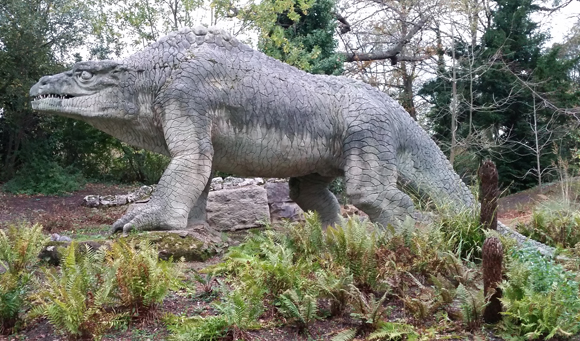
One of the Iconic Megalosaurus Statues at Crystal Palace
The Megalosaurus statue at Crystal Palace a dinosaur from 1854. This sculpture and the other prehistoric animals at the Park have been added to Historic England’s Heritage at Risk Register.Picture credit: Everything Dinosaur.
Picture credit: Everything Dinosaur
Deterioration of Iconic London Landmarks
In a press release from Historic England, it was stated that the cause of the deterioration of these iconic London landmarks was not understood, but ground movement on the artificial islands upon which many of the 30 statues are sited could be to blame.
By adding these impressive, life-size sculptures to the Heritage at Risk Register, Historic England is raising awareness of their condition and is focusing attention on their conservation and repair. Bromley Council will be taking the lead as part of a major regeneration project centred on Crystal Palace Park.
The statues, created by Benjamin Waterhouse Hawkins, with the guidance of Richard Owen, were originally put on display as part of “The Great Exhibition”. Since, their relocation to Crystal Palace the sculptures have fallen into disrepair. Extensive conservation and restoration work in 2003 and in 2016/2017 was undertaken with the support of the Office of the Mayor of London and the National Lottery.
With the dinosaurs and their fellow exhibits added to the Heritage at Risk Register, Historic England and Bromley Council can focus on their repair and conservation with a fresh impetus.
Marine Reptiles at Crystal Palace Park
A statue of an ichthyosaur at Crystal Palace Park, part of a display of prehistoric marine reptiles. Picture credit: Everything Dinosaur.
Commenting on the significance of this development, Duncan Wilson, the Chief Executive of Historic England stated:
“These wonderful creatures are in a state of disrepair and require significant conservation works. We don’t want them to become extinct again! By adding them to our Heritage at Risk Register, we can focus attention on them and ensure a lasting programme of repairs and on-going maintenance is carried out. Working in partnership with Bromley Council and the Friends of Crystal Palace Dinosaurs, we hope to secure their long-term future.”
The Magnificent Megaloceros Sculpture
A pair of magnificent Megaloceros statues. Picture credit: Everything Dinosaur.
Picture credit: Everything Dinosaur
A new project to build a bridge to the islands will reinstate access for guided, up-close-and-personal interpretation visits and maintenance has been crowdfunded by many hundreds of members of the public, businesses, the mayor’s office, and council, and supported by Historic England.
This week has seen the publication of a remarkable paper that documents the discovery of tiny one-billion-year-old fossils of green seaweeds that could be the ancestor of the first land plants.
Writing in the academic journal “Nature Ecology and Evolution”, the researchers from Virginia Tech (USA) and the Chinese Academy of Sciences, describe abundant millimetre-sized, multicellular fossils that were preserved in ancient marine sediments close to the city of Dalian in Liaoning Province (northern China).
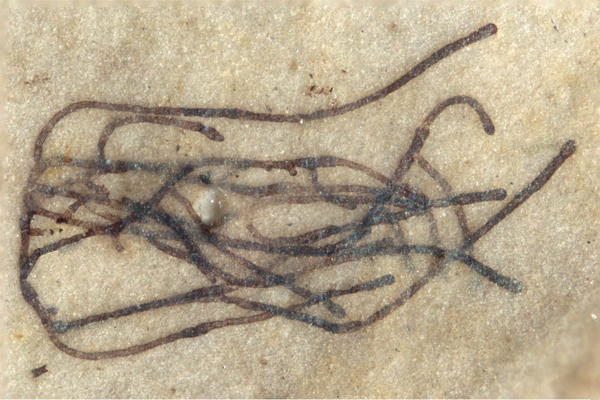
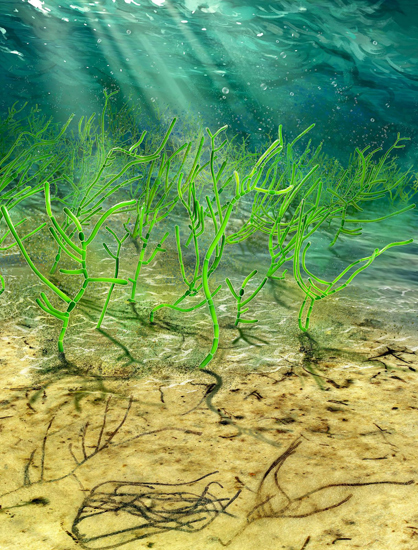
Evidence of Ancient Green Seaweed
Proterocladus antiquus fossil material. A photograph of a green seaweed fossil preserved in rocks around 1,000 million years old. The dark colour of this fossil was created by adding a drop of mineral oil to the rock in which it’s embedded, to create contrast.
Picture credit: Virginia Tech
Proterocladus antiquus
The microscopic fossils, measuring around two millimetres in length are described as a new species of green algae (Proterocladus antiquus). The fossil material is interpreted as benthic (living on the sea floor) and members of the Chlorophyta Phylum, which means that these ancient marine plants were photosynthesising 1,000 million years ago and that the fossils are the oldest evidence of green seaweeds known to science.
Shuhai Xiao (Geosciences and Global Change Centre at Virginia Tech), one of the co-authors of the scientific paper commented:
“These new fossils suggest that green seaweeds were important players in the ocean long before their land-plant descendants moved and took control of dry land. The entire biosphere is largely dependent on plants and algae for food and oxygen, yet land plants did not evolve until about 450 million years ago. Our study shows that green seaweeds evolved no later than 1 billion years ago, pushing back the record of green seaweeds by about 200 million years. What kind of seaweeds supplied food to the marine ecosystem?”
Land Plants Evolved from Green Seaweeds
One of the theories proposed for the evolution of land plants is that they originated from marine chlorophytes. These plants adapted to a life on dry land, the scientists propose that these Chinese fossils represent the ancestors of modern land plants that we see today.
However, Xiao added that not all geobiologists agree with this hypothesis, the debate as to how land plants originated goes on. For example, some scientists think that green plants first evolved in freshwater environments before adapting to a terrestrial existence.
A Life Reconstruction of the Ancient Green Seaweed P. antiquus
A digital reconstruction of the ancient green algae (Proterocladus antiquus).
Picture credit: Dinghua Yang/Virginia Tech
Different Types of Seaweed
Scientists have classified three main kinds of seaweed, commonly referred to by their predominant colour. There is brown (Phaeophyceae), green (Chlorophyta) and red (Rhodophyta). There are thousands of species of each kind. Rhodophyta (red seaweed), have a fossil record that also dates back to more than a billion years ago.
Xiao added:
“There are some modern green seaweeds that look very similar to the fossils that we found. A group of modern green seaweeds, known as siphonocladaleans, are particularly similar in shape and size to the fossils we found.”
Early Plant Fossils
The discovery of such an early photosynthetic plant represents a significant landmark in helping scientists to better understand the evolution and development of planetary ecosystems. Plants that photosynthesise are essential to the ecological balance of our planet. They produce carbon and oxygen through the process of photosynthesis and they are regarded as primary producers and comprise the basic components of most food chains.
It was Qing Tang of Virginia Tech, who discovered the micro-fossils of the ancient seaweeds, electron microscopy was used to spot the tiny specimens. To more easily see the fossils, mineral oil was dripped onto the fossil to create a strong contrast.
Tang commented:
“These seaweeds display multiple branches, upright growths, and specialised cells known as akinetes that are very common in this type of fossil. Taken together, these features strongly suggest that the fossil is a green seaweed with complex multicellularity that is circa 1 billion years old. These likely represent the earliest fossil of green seaweeds. In short, our study tells us that the ubiquitous green plants we see today can be traced back to at least 1 billion years.”
Everything Dinosaur acknowledges the assistance of a press release from Virginia Tech in the compilation of this article.
The scientific paper: “A one-billion-year-old multicellular chlorophyte” by Qing Tang, Ke Pang, Xunlai Yuan and Shuhai Xiao published in Nature Ecology and Evolution.