

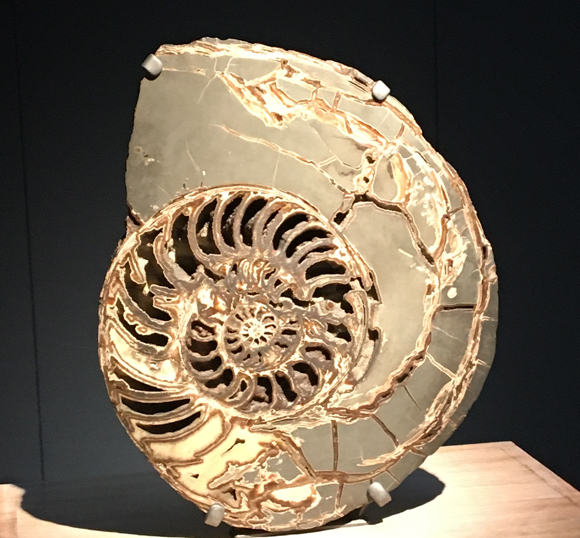
Ammonite fossils are extraordinary. Often, the preserved shells of these marine invertebrates are amongst the first fossils acquired when starting a fossil collection. Sue and I (Everything Dinosaur) field questions about ammonites frequently. We do our best to respond to all the emailed enquiries we receive. In addition, we have collected large numbers of ammonite fossils ourselves. Visitors to our offices and warehouse can be given a fossil from our collection as a souvenir of their visit. Ammonite fossils are a favourite. Moreover, we have commissioned an ammonite diagram.
The preserved shells do not give an impression of the animal. These cephalopods are known from their ubiquitous fossilised shells but very few specimens showing the actual animal have been found. However, we have created a helpful diagram that depicts a living ammonite. Furthermore, we have labelled our illustration.
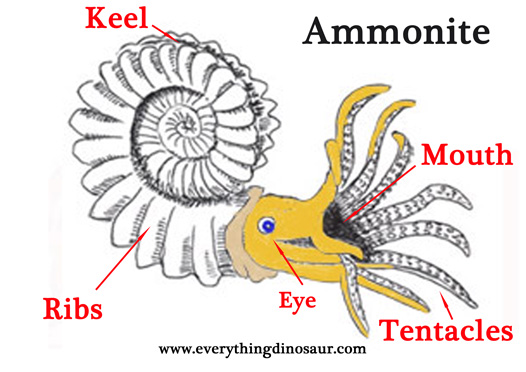
An ammonite diagram with the shell keel, the ribbing on the shell along with the eye, mouth and tentacles labelled. Picture credit: Everything Dinosaur.
Picture credit: Everything Dinosaur
An Informative Ammonite Diagram
The ammonite is shown in lateral view. The visible parts of the animal outside the shell are coloured. The shell (often preserved as a fossil), is shown in monotone. In addition, we have provided helpful labels. We could produce a more sophisticated diagram. However, we have refrained from doing so as the majority of our ammonite enquiries come from junior/primary school teachers and young fossil collectors.
Our drawing is based upon the Bullyland ammonite figure. This model is popular with fossil collectors. It is often included inside ammonite fossil display cabinets.
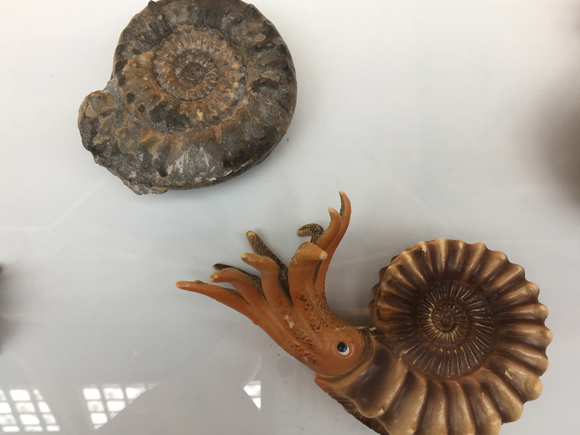
A Bullyland ammonite model is used to help illustrate a display of ammonite fossils. Picture credit: Everything Dinosaur.
Picture credit: Everything Dinosaur
To view the range of Bullyland prehistoric animal figures available: Bullyland Models and Figures.
Mike from Everything Dinosaur commented:
“Ammonites are fascinating. Their fossils are important markers in biostratigraphy and helpful in relative dating. Remarkably, these molluscs did not die out at the end of the Cretaceous. There is evidence to indicate that a few taxa survived into the Palaeocene. What amazing invertebrates!”

Leave A Comment