All about dinosaurs, fossils and prehistoric animals by Everything Dinosaur team members.
16 04, 2022

A Juvenile Diamantinasaurus – Australia’s Smallest Sauropod Found to Date

By |2023-07-04T07:21:38+01:00April 16th, 2022|Categories: Adobe CS5, Dinosaur and Prehistoric Animal News Stories, Dinosaur Fans, Main Page, Palaeontological articles, Photos/Pictures of Fossils|0 Comments

A scientific paper has just been published describing the fossilised remains of a juvenile titanosaur from the Winton Formation of Queensland, Australia. The specimen has been assigned to the Diamantinasaurus taxon (D. matildae) and it represents the smallest sauropod described from fossils found in Australia to date.
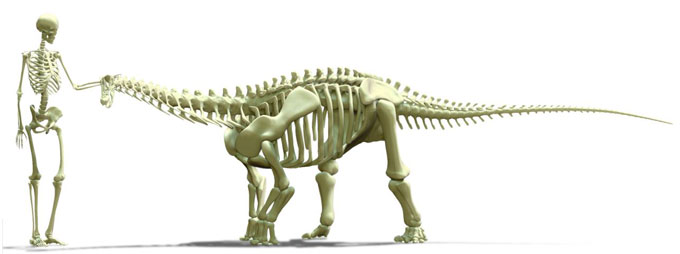
Reconstructed skeleton of the juvenile Diamantinasaurus (D. matildae) compared to a human skeleton.
A model of the reconstructed skeleton of the juvenile Diamantinasaurus (D. matildae) compared to a human skeleton. The young dinosaur is estimated to have weighed around 4.2 Tonnes. Picture credit: Australian Age of Dinosaurs Museum.

About Ten Percent of the Skeleton Recovered

The fossils were discovered on Elderslie Station land which lies some 35 miles northwest of the town of Winton (Queensland). Landowners noticed fragments of a femur and dorsal ribs exposed on the surface (2012). Staff from the Australian Age of Dinosaurs Museum along with volunteers excavated the site and found the remainder of the fossil material representing about 10% of the total skeleton about a metre below the surface.

The postcranial material consists of cervical ribs, three incomplete dorsal vertebrae, sacral vertebrae and limb bones.

Views of the juvenile Diamantinasaurus fossils (AODF 663) a right humerus and right manual ungual with accompanying digital models.
Views of the juvenile Diamantinasaurus fossils (AODF 663) a right humerus and right manual ungual with accompanying digital models. Right humerus photographs in A, dorsal, B, anterior, C, ventral, D, medial, E, posterior, F, lateral views. Right humerus digital models in G, dorsal, H, anterior, I, ventral, J, medial, K, posterior, L, lateral views. The right manual ungual in M, proximal, N, dorsal, O, anterior, P, ventral, Q, posterior views. Right manual ungual digital models in R, proximal, S, dorsal, T, anterior, U, ventral, and V, posterior views. Note scale bar for humerus equals 10 cm and for the manual ungual 5 cm. Picture credit: Rigby et al.

A Young Titanosaur from the Late Cretaceous

Although age estimates for the Winton Formation vary, it has been informally divided into lower and upper members, with the Diamantinasaurus material coming from the “upper” portion which is regarded as Cenomanian to potentially the lowermost Turonian stages of the Late Cretaceous (approximately 95-89 million years ago).

The study of the juvenile titanosaur was led by Museum Research Associate Samantha Rigby who is undertaking a Master of Science (Research) at Swinburne University of Technology (Victoria, Australia), under the supervision of Dr Stephen Poropat who was one of the co-authors of the scientific paper published in the Journal of Vertebrate Palaeontology. Each bone from the specimen was scanned to create three-dimensional models to digitally compare them with other sauropod remains.

This comparison suggests the small specimen belongs to the Diamantinasaurus taxon though with juvenile characteristics, vertebrae which are unfused, minimal muscle scarring on the bones, smooth bone texture and marked proportional bone size differences when compared to adult titanosaur material.
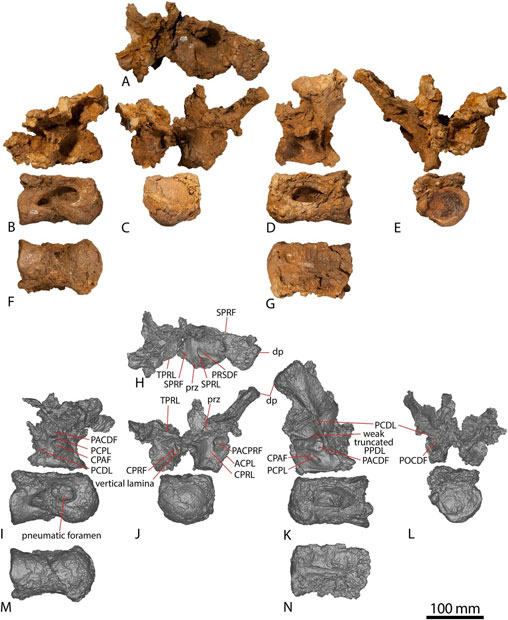
Diamantinasaurus dorsal vertebrae and digital models.
Diamantinasaurus juvenile dorsal vertebrae with digital models. Dorsal vertebra photographs in A, dorsal, B, right lateral, C, anterior, D, left lateral, E, posterior views. Dorsal vertebra digital models in F, dorsal, G, right lateral, H, anterior, I, left lateral, J, posterior views. Note scale bar equals 10 cm. Picture credit: Rigby et al.

Allometric Growth

The fossil specimen (AODF 663) nicknamed “Oliver” is only the third specimen to be referred to the taxon Diamantinasaurus matildae. D. matildae was formally named and described in 2009: A Trio of New Dinosaurs from Down Under. The research team found that the bones of this small titanosaur grew allometrically, meaning that its bones changed shape and different parts of its body grew at different rates.

The limb bones are also narrower in width when compared to other Diamantinasaurus limb bones from older individuals. This suggests that as this titanosaur grew its limb bones became thicker and more robust to help support its enormous bulk.

A Juvenile Diamantinasaurus

Fossils of juvenile titanosaurs are rare and it is hoped that “Oliver” will provide important insights into the ontogeny of titanosaurs.

Everything Dinosaur acknowledges the assistance of a media release from the Australian Age of Dinosaurs Museum in the compilation of this article.

The scientific paper: “A juvenile Diamantinasaurus matildae (Dinosauria: Titanosauria) from the Upper Cretaceous Winton Formation of Queensland, Australia, with implications for sauropod ontogeny” by Samantha L. Rigby, Stephen F. Poropat, Philip D. Mannion, Adele H. Pentland, Trish Sloan, Steven J. Rumbold, Carlin B. Webster and David A. Elliott published in the Journal of Vertebrate Paleontology.

Visit the Everything Dinosaur website: Everything Dinosaur.
15 04, 2022

Juvenile Gorgosaurus Skulls Shed Light on Tyrannosaurid Growth Patterns

By |2024-12-29T22:41:08+00:00April 15th, 2022|Categories: Adobe CS5, Dinosaur and Prehistoric Animal News Stories, Dinosaur Fans, Main Page, Palaeontological articles, Photos/Pictures of Fossils|1 Comment

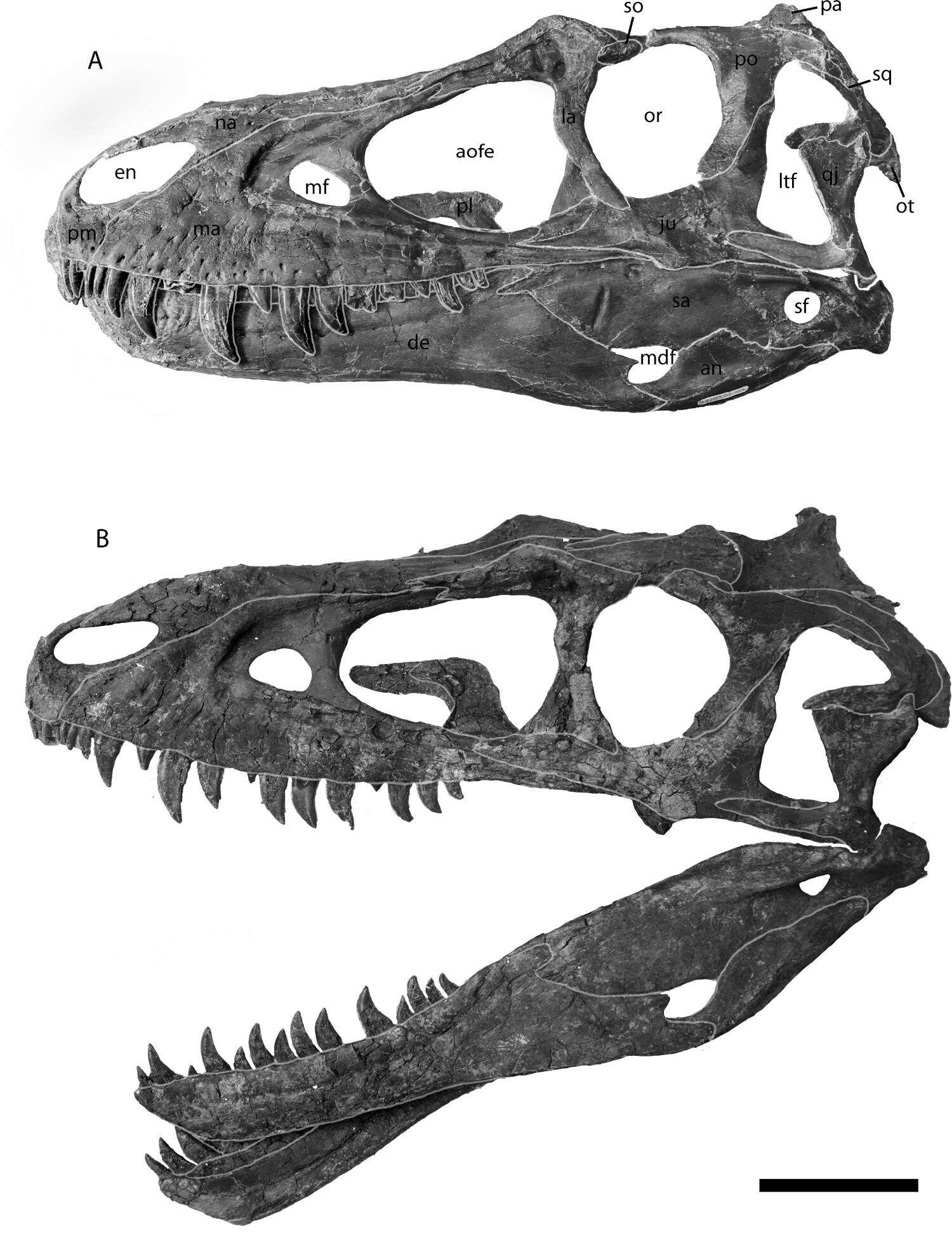
Researchers have described two beautifully preserved skulls of juvenile Gorgosaurus dinosaurs (G. libratus). The articulated specimens have enabled the scientists to build up a comprehensive picture of how these tyrannosaurids changed as they grew. Gorgosaurus and the much bigger, later tyrannosaurid T. rex exhibit similar changes in their skulls as they grow. This study will help palaeontologists to decipher tyrannosaur material and to determine the identity of previously misidentified specimens. It should also provide more evidence to help resolve the Nanotyrannus/T. rex debate.

Lateral views of juvenile Gorgosaurus skulls.

Skulls of the two new juvenile Gorgosaurus libratus specimens in lateral view. A, TMP 2009.12.14; B, TMP 2016.14.1. Note scale bar equals 10 cm. Picture credit: Voris et al.

Picture credit: Voris et al

Gorgosaurus libratus

Named and described in 1914 (Lambe), Gorgosaurus is known from dozens of fossil specimens found in the upper Campanian Dinosaur Park Formation of Alberta and Judith River Formation of Montana. It is one of the best sampled and researched of all the Late Cretaceous tyrannosaurs, but juvenile material is rare. The recent discovery of additional juvenile Gorgosaurus libratus specimens from the Dinosaur Park Formation, including two well-preserved skeletons with articulated skulls, provided researchers which include Jared Voris and Darla Zelenitsky (University of Calgary), along with collaborators from the University of Ohio, the University of Alberta and the Royal Tyrrell Museum, an opportunity to develop a map outlining how this dinosaur changed as it grew and matured.

Juvenile and adult Gorgosaurus skulls compared.

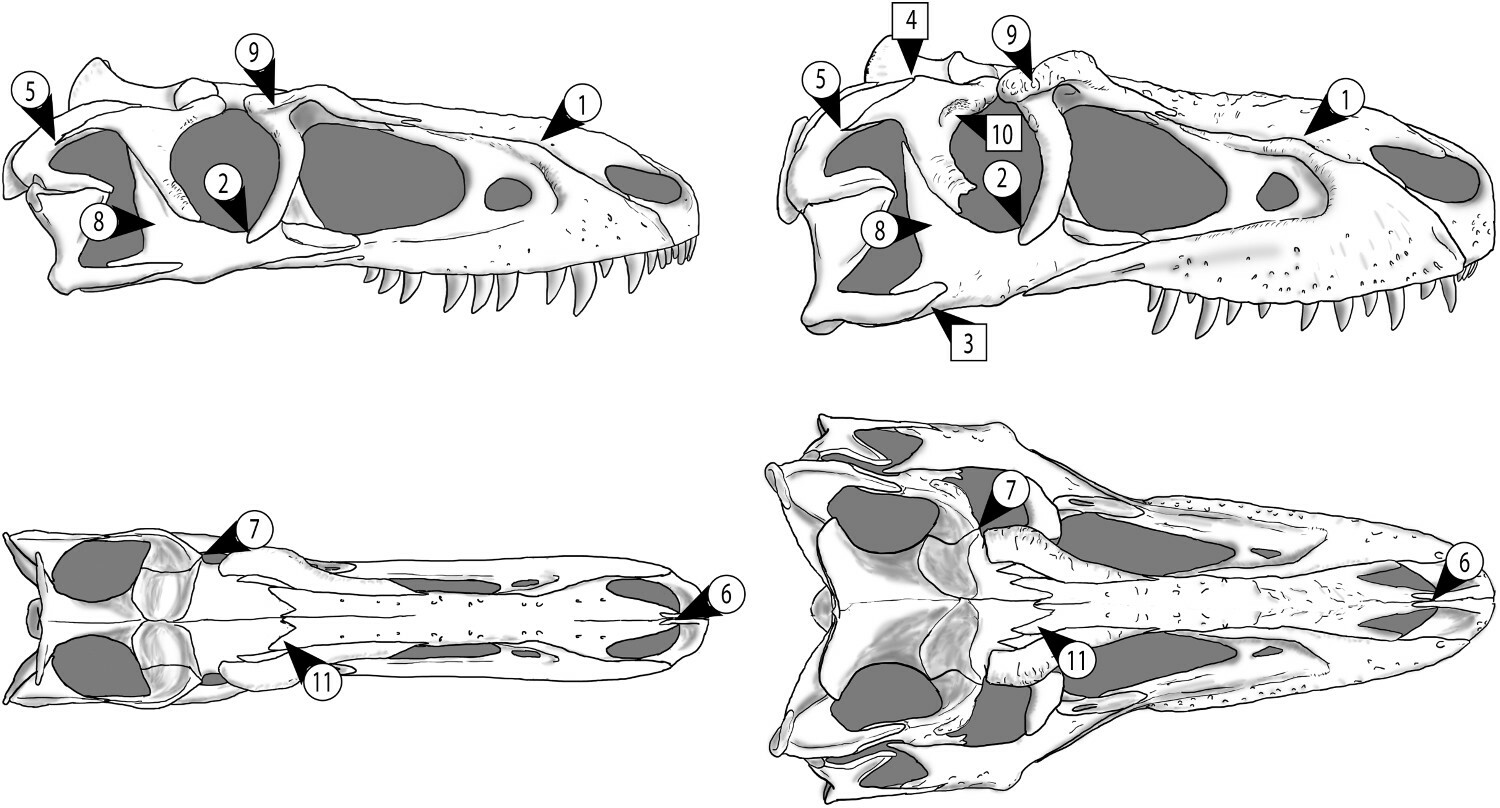
Illustrations of juvenile (left) and adult (right) skulls of Gorgosaurus in lateral (top) and dorsal views (bottom). Arrows and numbers indicate ontogenetically invariant autapomorphies of Albertosaurinae and Gorgosaurus as per emended diagnosis. Juvenile illustration based on TMP 2016.14.1 (lateral) and TMP 2009.12.14 (dorsal), adult illustration based on UALVP 10. Picture credit: Voris et al.

Picture credit: Voris et al

Sorting out Daspletosaurus Specimens

The research team, which also included Professor Phil Currie (University of Alberta), found that although the skulls of tyrannosaurs changed dramatically as they grew, several taxonomically informative traits remain present regardless of the age of the animal. This means that palaeontologists can use this information to determine which taxon is represented by juvenile fossil material.

Thanks to this research, two specimens previously identified as examples of immature Daspletosaurus individuals (coeval with Gorgosaurus) are instead confirmed as Gorgosaurus.

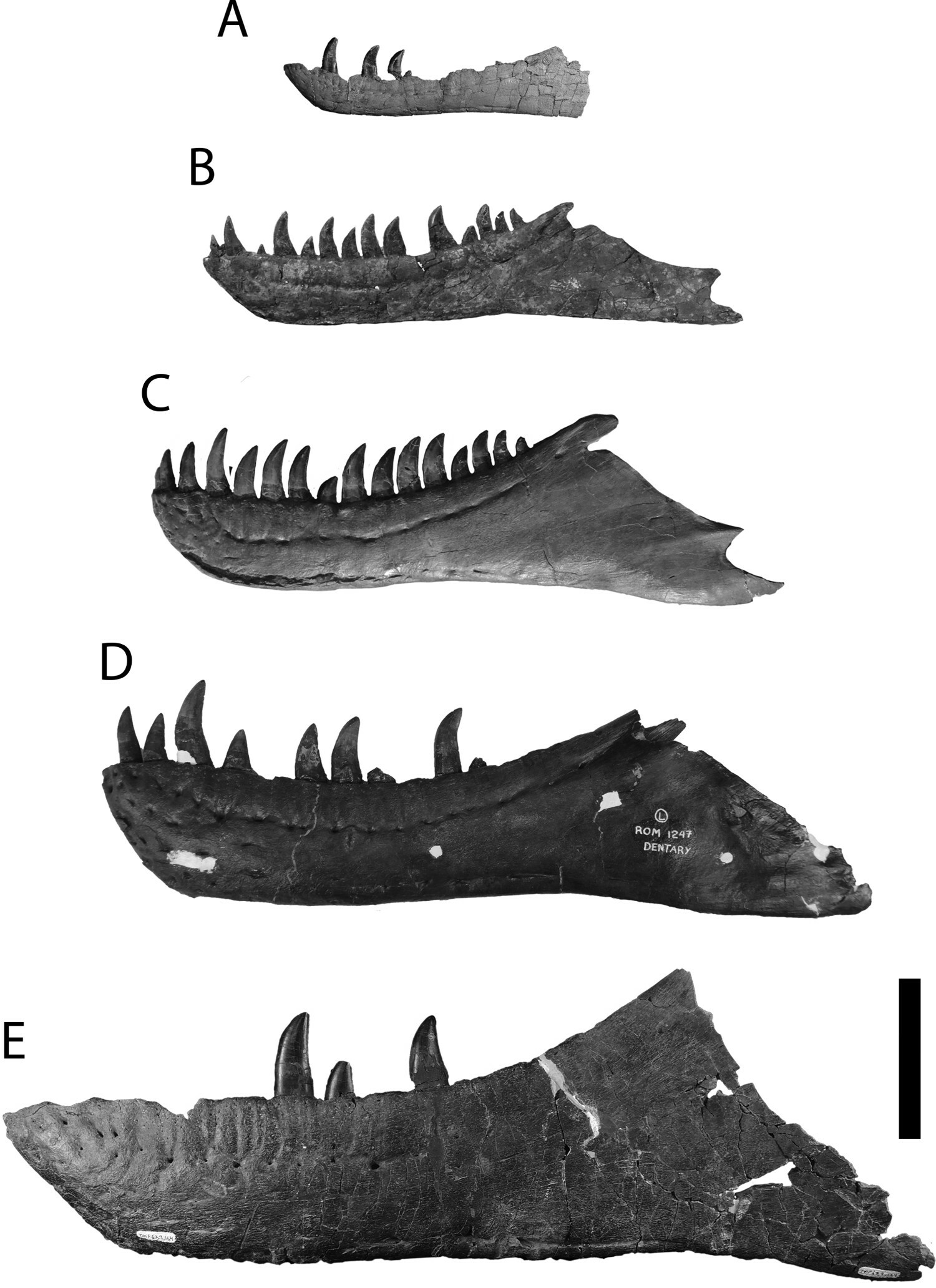
Gorgosaurus dentaries compared

Left dentaries in lateral view of A, small juvenile (TMP 1994.12.155); B, juvenile (TMP 2016.14.1); C, subadult (TMP 1991.36.500); D, young adult (ROM 1247); and E, adult (TMP 1967.9.164) specimens of Gorgosaurus libratus. Note the development of the autapomorphic dorsoventral expansion in the posterior region of the bone through ontogeny. Scale bar equals 10 cm. Picture credit: Voris et al.

Picture credit: Voris et al

Comparisons with Tyrannosaurus rex

The team also found that both Gorgosaurus and T. rex underwent similar anatomical changes over their lifespans, but at different times. The changes started later in Tyrannosaurus rex and occurred over a longer time interval, resulting in a larger size and longer lifespan for T. rex when compared to Gorgosaurus.

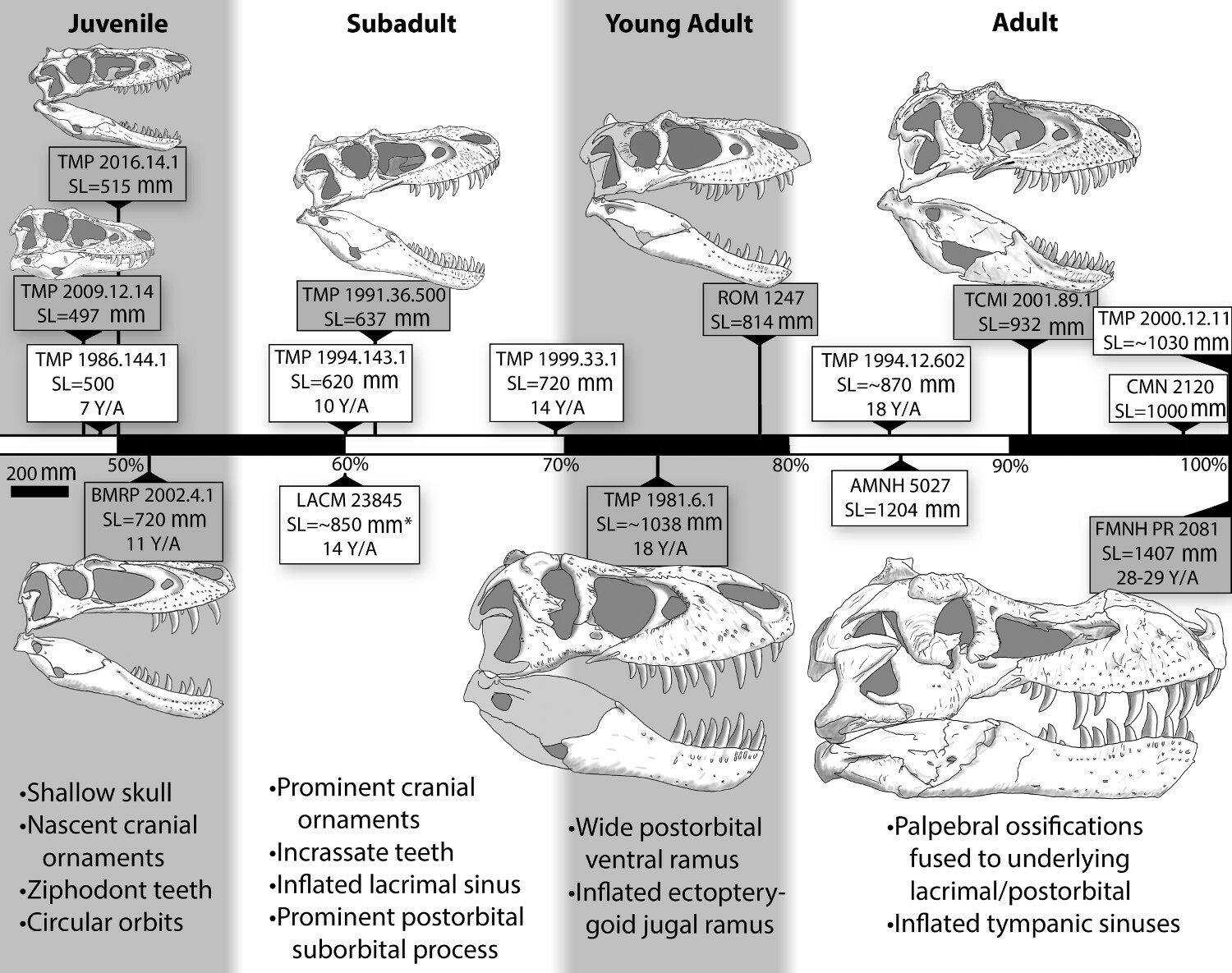
Comparing the growth stages of Gorgosaurus libratus and T. rex.

Comparison of the growth series of Gorgosaurus libratus (top) and Tyrannosaurus rex (bottom), demonstrating similar ontogenetic stages (and morphologies) occurring at similar relative size (percent of largest specimen skull length) but different body sizes and biological ages. Picture credit: Voris et al.

Picture credit: Voris et al

Implications for Nanotyrannus

Having identified a series of anatomical traits that can be relied upon to permit palaeontologists to confidently assign juvenile tyrannosaur skull fossils to a specific taxon, this allows some specimens considered small or “dwarf” forms such as Nanotyrannus (N. lancensis) to be revisited. Some of these specimens may have been misidentified, since key characteristics may not have developed in young individuals before death, but this new data set would allow closer scrutiny of the fossil material.

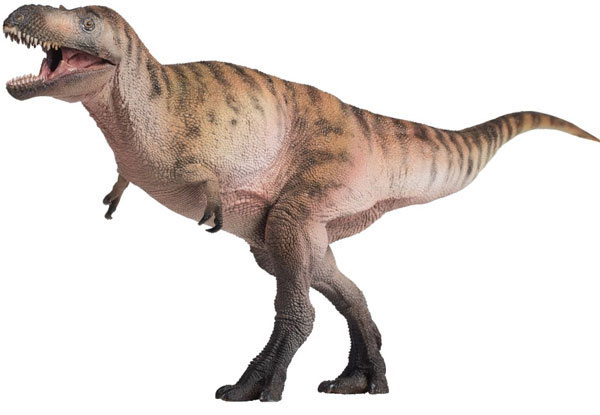
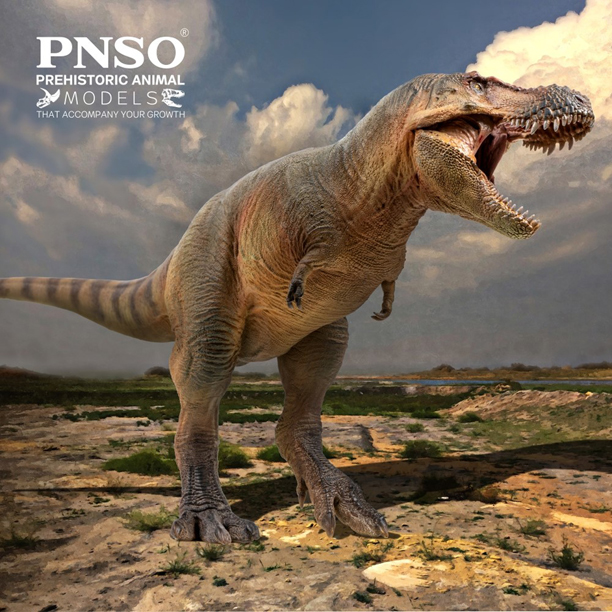
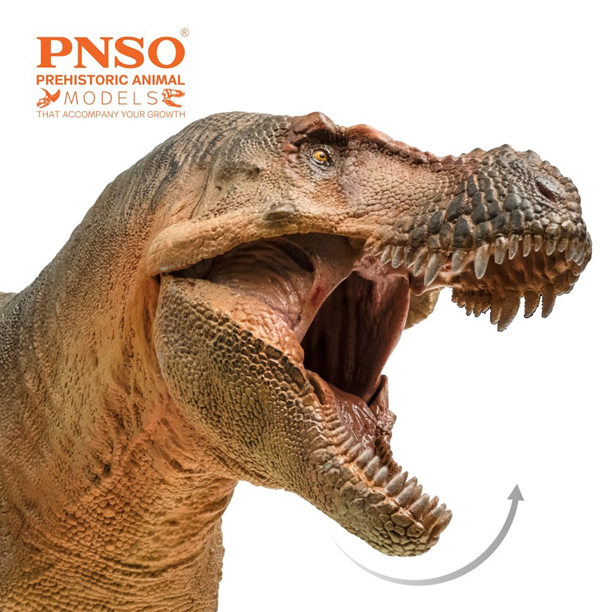
PNSO Nanotyrannus dinosaur model.

The new for 2021 PNSO Nanotyrannus dinosaur model.

The picture (above) shows a model of a Nanotyrannus by PNSO.

To view the range of PNSO prehistoric animal figures in stock: PNSO Prehistoric Animal Models.

The scientific paper: “Two exceptionally preserved juvenile specimens of Gorgosaurus libratus (Tyrannosauridae, Albertosaurinae) provide new insight into the timing of ontogenetic changes in tyrannosaurids” by Jared T. Voris, Darla K. Zelenitsky, François Therrien, Ryan C. Ridgely, Philip J. Currie and Lawrence M. Witmer published in the Journal of Vertebrate Paleontology.

Visit the award-winning Everything Dinosaur website: Dinosaur Toys.

14 04, 2022

An Important Update – Assessment Reports “Minor” Damage to Mill Canyon Track Site

By |2024-12-29T18:33:31+00:00April 14th, 2022|Categories: Adobe CS5, Dinosaur and Prehistoric Animal News Stories, Dinosaur Fans, Main Page, Palaeontological articles, Photos/Pictures of Fossils|0 Comments

An assessment of the Mill Canyon dinosaur track site north of Moab in Grand County, Utah by Bureau of Land Management regional palaeontologist Brent Breithaupt confirms that damage was caused to the Early Cretaceous tracks and trace fossils by a construction crew, but the damage is described as “minor”.

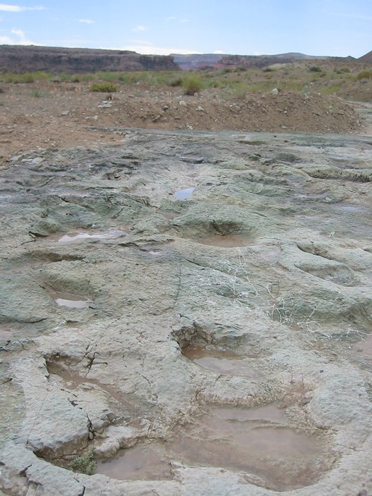
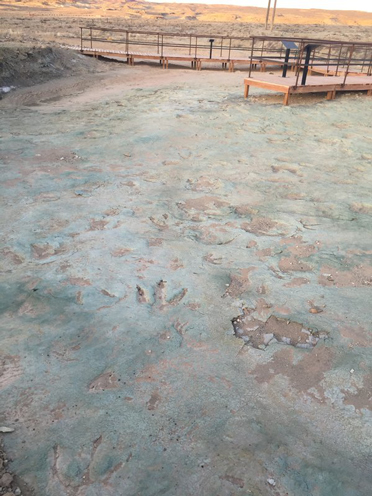
Dinosaur trackway.

Trace fossils (dinosaur footprints) preserved at Moab (Utah). Picture credit: Bureau of Land Management.

Picture credit: Bureau of Land Management

Essential Repairs and Maintenance at an Important Fossil Site

The site, which covers approximately 2.3 acres contains over 200 tracks and other trace fossils recording activity around a body of water at an Early Cretaceous lake (approximately 112 million years ago). A construction crew had been employed to undertake repairs and improvements to the site including the replacement of boardwalks. Members of the public became aware of the maintenance work and reported possible damage to the fossils caused by the construction crew.

Everything Dinosaur published a blog article on reports of the damage caused by Bureau of Land Management contractors: Dinosaur Tracksite Damaged and having had concerns raised about damage to the site, it was decided to conduct an assessment of the area in order to find the best way to protect the fossils whilst still permitting public access.

This Damage to the Track Site Should Not Have Occurred

The assessment concluded that the overall damage was minor. Even so, Brent Breithaupt wrote in the report that:

“This damage should not have occurred”.

The regional palaeontologist added, that if the project had not been stopped:

“It is likely that much greater damage would have occurred with increased construction activities”.

As the Bureau of Land Management failed to consult palaeontologists on the maintenance plans, crews did not know which areas of the site to avoid. The incident was described in the report as “unfortunate” and the damage “could have been avoided”.

Mill Canyon tracksite.

At least six different dinosaur tracks have been deciphered at Moab (Utah). Picture credit: Bureau of Land Management.

After the report was released, the Bureau of Land Management has confirmed that an additional environmental assessment would be undertaken, the public would be consulted and palaeontologists involved in future work at the location to supervise activities. The Bureau of Land Management reported that it “remains committed to protecting plant and animal fossils on our public lands”.

The Everything Dinosaur website: Dinosaur Toys.

13 04, 2022

Beautiful CollectA Scale Models

By |2024-12-29T18:13:06+00:00April 13th, 2022|Categories: Adobe CS5, Dinosaur Fans, Everything Dinosaur News and Updates, Everything Dinosaur Products, Main Page, Photos of Everything Dinosaur Products, Press Releases|0 Comments

It is true that many dinosaur model suppliers have struggled to obtain stock. Factories have struggled with production issues and problems with global logistics have caused difficulties with both the sourcing of raw materials as well as the distribution of finished products.

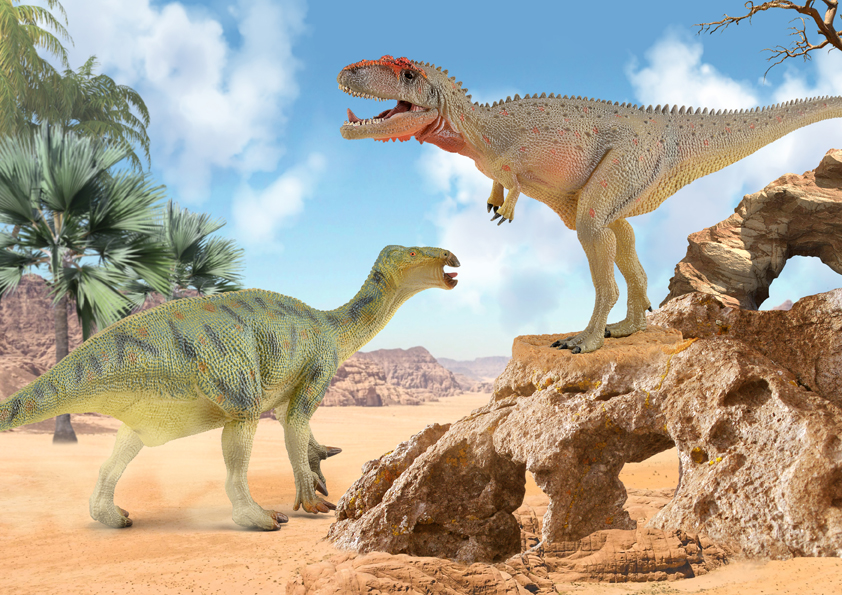
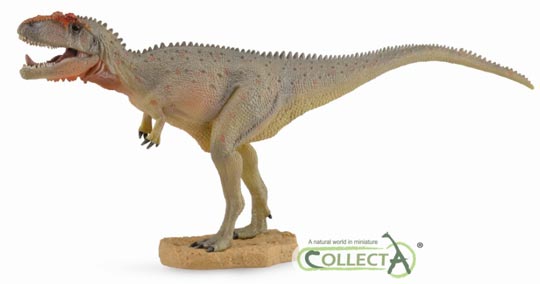
Everything Dinosaur has been able to maintain stocks of CollectA replicas including many of the scale models of dinosaurs such as the CollectA Deluxe Iguanodon and the awesome CollectA Deluxe Mapusaurus.

CollectA Deluxe Mapusaurus and the CollectA Deluxe Iguanodon

The CollectA 1:40 scale Iguanodon and Mapusaurus dinosaur models.

A spokesperson from the UK-based mail order company stated that whilst trading conditions were difficult the team at CollectA had worked diligently to continue production and to develop new figures and models.

The spokesperson went onto add:

“Sourcing prehistoric animal models and figures has been extremely challenging over the last twelve months or so. We do not anticipate issues easing for at least another nine months, perhaps longer. However, we at Everything Dinosaur have been able to source figures and whilst some lines are currently out of stock, we do expect stock deliveries in the next few weeks to replenish our inventory.”

Visit the Everything Dinosaur website: Dinosaur Models and Toys.

CollectA Deluxe Iguanodon and Mapusaurus

The CollectA1:40 deluxe Iguanodon model and the CollectA 1:40 deluxe Mapusaurus were both introduced in 2018 and they have proved to be very popular amongst model collectors and fans of dinosaurs. Despite the difficult global trading conditions, Everything Dinosaur has been able to maintain a stock of a wide range of CollectA scale model figures, including pterosaurs, prehistoric fish, prehistoric mammals and of course, dinosaurs. CollectA has continued production and put in place sensible business plans to help them accommodate the difficult global trading situation.

CollectA Deluxe 1:40 scale Mapusaurus dinosaur model.

CollectA Deluxe Mapusaurus dinosaur model.

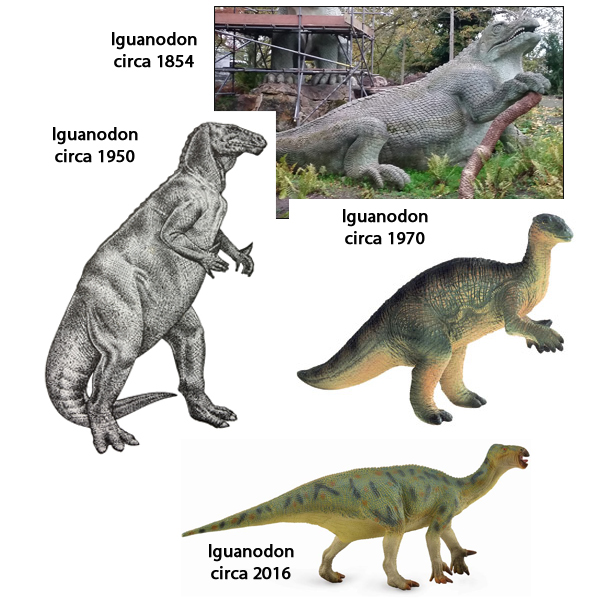
The introduction of the CollectA 1:40 scale Iguanodon replica in 2018 was particularly significant as it graphically demonstrated how our perceptions regarding this large Cretaceous ornithopod had changed. The CollectA Iguanodon figure helped to convey how the scientific description of Iguanodon has radically altered since it was formally named and described as a genus back in 1825.

Iguanodon - changing scientific interpretations.

The changing body plan of Iguanodon. Picture credit: Everything Dinosaur.

Picture credit: Everything Dinosaur

To view the range of CollectA Deluxe models and figures in stock at Everything Dinosaur: CollectA Deluxe Prehistoric Life Models.

12 04, 2022

Ichthyosaurs Had Blubber According to a New Study

By |2024-12-29T18:06:04+00:00April 12th, 2022|Categories: Adobe CS5, Dinosaur and Prehistoric Animal News Stories, Dinosaur Fans, Main Page, Palaeontological articles, Photos/Pictures of Fossils|0 Comments

Researchers from the Smithsonian Institute (Washington), the University of Oslo and the Ludwig Maximilian Universität (Munich), have published a paper that describes two ichthyosaur specimens from the famous Upper Jurassic Solnhofen deposits of southern Germany. The fossils, an almost complete Aegirosaurus (JME-SOS-08369) and a tail (JME-SOS183), reveal extensive soft tissue preservation, analysis of which indicates the presence of blubber in these marine reptiles.

Late Jurassic Aegirosaurus sp. (Solnhofen)

Late Jurassic Aegirosaurus sp. (JME-SOS-08369) shown in (A) in normal light and (B) composite picture in UV light indicating location of further close-up images included in the scientific paper. Interpretative drawing (C). Note scale bar equals 20 cm. Picture credit: Delsett et al.

Picture credit: Delsett et al

These amazing fossil specimens representing marine reptiles that lived around 150 million years ago will help scientists to better understand how soft tissue can be preserved in the carcases of vertebrates deposited on the seafloor.

For models and replicas of ichthyosaurs and other prehistoric animals: Ichthyosaurs and Prehistoric Animal Models (CollectA).

Aegirosaurus

Aegirosaurus is a genus of ichthyosaur within the Ophthalmosauridae family. Its fossils are associated with the Upper Jurassic limestone deposits of Solnhofen in southern Germany. These deposits are famous for their vertebrate fossils, although ichthyosaur material is rare. Fossils ascribed to this genus have also been found in Lower Cretaceous strata in south-eastern France (Fischer et al, 2011). This discovery suggests that most Late Jurassic ichthyosaurs came through the end Jurassic extinction and continued to thrive in the Early Cretaceous.

Aegirosaurus was an active, nektonic pursuit predator, probably feeding on small fish and squid.

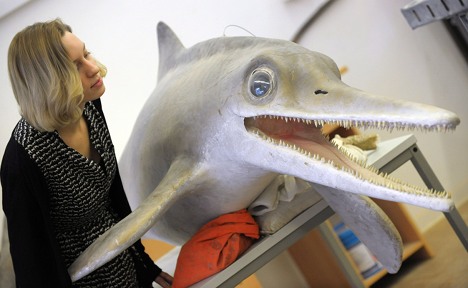
Ophthalomosaurid model

A replica of Ophthalomosaurus, an ichthyosaur similar in body shape to Aegirosaurus.  Picture credit: DPA.

Picture credit: DPA

Evidence for Blubber

The nearly complete ichthyosaur skeleton (JME-SOS-08369) was excavated in 2009, whereas the second specimen involved in this study (the tail), was originally found in 1926, but not formally described. No genus has been assigned to the tail specimen, although the researchers confidently assign it to the Ophthalmosauridae.

Ichthyosaur tail fossil.

The Late Jurassic ichthyosaur tail (specimen number JME-SOS2183) shown in (A) regular light, under ultraviolet light (B) with an interpretative line drawing (C). Note scale bar equals 10 cm. Picture credit: Delsett et al.

Picture credit: Delsett et al

Soft tissue samples were analysed using X-ray diffraction (XRD) and scanning electron microscopy (SEM) coupled with energy dispersive spectroscopy (EDS) analysis. The analyses confirm the presence of the phosphate mineral apatite, with phosphate most likely derived from the body itself. In addition, a yellow-coloured, amorphous substance was identified, the researchers postulate that this substance represents decomposed blubber.

Aegirosaurus fossil skull with interpretative line drawing.

Skull from Late Jurassic Aegirosaurus sp. (JME-SOS-08369) with (A) interpretative drawing and (B) photograph. Note scale bar equals 5 cm. Picture credit: Delsett et al.

Picture credit: Delsett et al

Identifying Adipocere

The researchers conclude that the detailed analysis of the yellowish, amorphous substance indicates that it is adipocere. This is late-stage post-mortem decomposing fatty acids produced by microorganisms under low oxygen conditions. As adipocere is a typical breakdown product of animal blubber, it is postulated that these ichthyosaurs had blubber to help insulate them, just as many extant marine mammals do. The paper does not address any endothermic implications for this conclusion.

Understanding Ichthyosaur Taphonomy

The two ichthyosaur specimens with their extensive soft tissue preservation will help scientists to interpret the taphonomy (how fossils are preserved) of Solnhofen Archipelago vertebrates. Future research will focus on microscopical and geochemical analysis of different parts of the specimens that have the potential to reveal more information about tissue types.

In addition, the beautifully preserved fossils hold the potential for investigations into the locomotion of ophthalmosaurids, helping scientists to better understand how these marine reptiles moved through the water.

The scientific paper: “The soft tissue and skeletal anatomy of two Late Jurassic ichthyosaur specimens from the Solnhofen archipelago” by Lene L. Delsett​, Henrik Friis, Martina Kölbl-Ebert and Jørn H. Hurum published in PeerJ.

The Everything Dinosaur website: Prehistoric Animal Figures.

11 04, 2022

Taking Care of a Tenontosaurus

By |2024-12-29T17:44:21+00:00April 11th, 2022|Categories: Adobe CS5, Dinosaur Fans, Everything Dinosaur News and Updates, Everything Dinosaur Products, Main Page, Product Reviews|0 Comments

Everything Dinosaur continues to set the benchmark for customer service as the UK-based mail order company has clocked up over five hundred five-star customer reviews on Feefo. Everything Dinosaur has once again, been bestowed the accolade of Feefo’s Platinum Service Award, the highest award provided by Feefo.

The Trusted Service Awards recognise companies who go above and beyond to provide the very best customer experience. Feefo have provided Platinum Trusted Service awards to businesses who have achieved Gold standard for three consecutive years. To receive a Gold Trusted Service award, businesses must have collected at least fifty reviews with a Feefo service rating of between 4.5 and 4.9 over a year. Everything Dinosaur has logged ten times this amount and now has over five hundred reviews on Feefo.

Feefo 2022 Awards.

Everything Dinosaur wins the Platinum Service Award.

Visit Everything Dinosaur’s award-winning website: Everything Dinosaur.

Wonderful! Good Range, Good Prices, Good Service

It is our attention to detail that sets us apart from other suppliers of prehistoric animal models and figures. Take for example, a recently published review concerning the supply of a CollectA Tenontosaurus model.

The reviewer, Lisa, awarded Everything Dinosaur five-stars when she was emailed by Feefo asking for feedback on her recent purchase.

Lisa commented:

“Wonderful! Good range, good prices, good service. Bought a Tenontosaurus for dinosaur obsessed child’s 10th birthday. Lovely model, arrived really quickly, nicely wrapped with bubble wrap to protect its neck. Will buy from them again.”

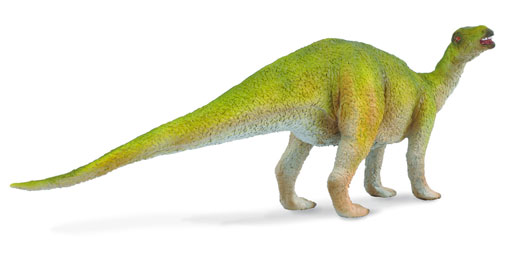
CollectA Tenontosaurus model.

The CollectA Age of Dinosaurs Tenontosaurus model.

A spokesperson from Everything Dinosaur thanked Lisa for her review and stated:

“We are grateful for all the reviews and feedback we receive. Team members read them all and we are delighted to have been able to continue to maintain our high standards of customer service in what have been challenging trading circumstances.”

To see the CollectA Tenontosaurus dinosaur model and the rest of the prehistoric animal figures in this extensive model range: The CollectA Prehistoric Life Range.

10 04, 2022

New PNSO Zhuchengtyrannus Reviewed

By |2024-12-29T17:41:09+00:00April 10th, 2022|Categories: Adobe CS5, Dinosaur Fans, Everything Dinosaur Products, Main Page, Product Reviews|0 Comments

Our thanks to dinosaur fan and model collector William who sent into Everything Dinosaur a detailed review of the recently introduced PNSO Zhuchengtyrannus.

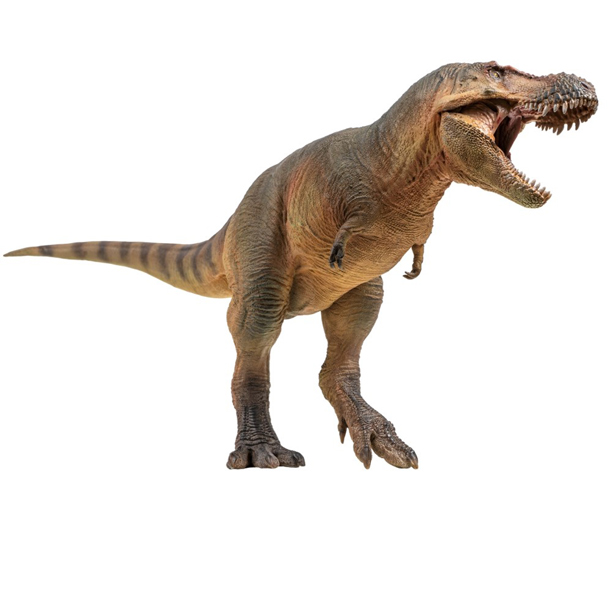
PNSO Zhuchengtyrannus dinosaur model

The new for 2022 PNSO Zhuchengtyrannus model.

PNSO Zhuchengtyrannus magnus “Lu Xiong”

The new for 2022 PNSO Zhuchengtyrannus dinosaur model is release number 58 in the PNSO prehistoric animal model range. The head is a fabulous sculpt of a classical Tyrannosaurinae skull. The skull is powerful and robust ideal to attack prey and with jaws capable of crushing bone. The PNSO Zhuchengtyrannus is depicted as an apex predator. The lacrimal horn is of the same superb standard as seen on other PNSO theropod models. William also praises the detailing associated with the mandibular fenestrae.

PNSO Lu Xiong the Zhuchengtyrannus has an articulated lower jaw.

The PNSO Lu Xiong Zhuchengtyrannus model has an articulated lower jaw.

William points out that this figure has an articulated jaw and carefully sculpted teeth and praises the ear vents, commenting that this top predator had sensitive hearing capable of picking up the subtle rumble of low frequencies.

Forelimbs, Legs and Skin Tone

The reviewer states that the now familiar but carefully crafted PNSO shoulders, arms and two fingered hands of this figure are on a par with other PNSO carnivorous dinosaurs. The limbs are particularly robust and show some wonderful detail. The left foot is slightly raised giving the impression of slow but deliberate movement.

William compliments the design team at PNSO for the care and attention they have taken over the skin texture and scales.

He comments:

“From every fold and wrinkle and right down to his bull neck and well hefted bulk of the ribcage we have a Zhuchengtyrannus magnus in his full power of his youth and prime in perfect condition. For those with an extra eye for detail we have the perfect cloaca.”

PNSO Lu Xiong the Zhuchengtyrannus dinosaur model

The PNSO Lu Xiong the Zhuchengtyrannus dinosaur model.

The Colouration of the Model

William describes the colouration of the PNSO figure explaining that the skin tone moves from a beige cream to a yellow beige with an olive-green wash running from behind the eyes down the neck and shoulders across the thighs and towards the rear of the model. He points out that dark brown and tan stripes can be observed running the length of the tail. The anterior portion of the muzzle has black scales. The eyes are painted yellow with black pupils and the lacrimal crests are tinged with a hint of orange that “bring Lu Xiong to life”.

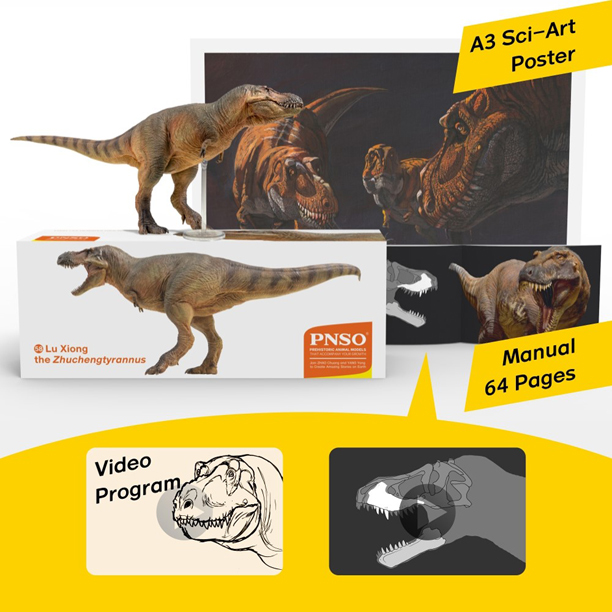
William also comments that the PNSO Zhuchengtyrannus is supplied with a clear plastic support stand, a full-colour booklet and a stunning poster showing the three recently proposed species of Tyrannosaurus (T. imperator, T. regina and Tyrannosaurus rex).

PNSO Zhuchengtyrannus supplied with booklet and posters.

The new for 2022 PNSO Lu Xiong the Zhuchengtyrannus dinosaur model is supplied with colour posters, a 64-page information booklet and the packaging has a QR code that links to a short video that explains how the figure was developed.

William Provides Scientific Details

William provides model measurements and some details outlining the discovery of this iconic Asian tyrannosaur.

Scale: 1:32-1:38 (Campanian faunal stage of the Late Cretaceous)
Length: 12 & 1/4 inches.
Height: 4 & 1/2 inches.

In 2011 the holotype was found in Shandong province of eastern China. A nearly perfect right maxilla with left dentary and teeth.

William concludes his Zhuchengtyrannus review by stating that this model lives up to its specific name “great”.

He adds:

“Remember this, some of us have waited a long time to own a Tyrannosaurinae model. Now is your chance, given to us all by PNSO. Additionally, he will pair to perfection with the previous three PNSO Tyrannosaurinae models.”

William Praises Everything Dinosaur

The reviewer praised Everything Dinosaur for supplying the model commenting that his faith and respect for Everything Dinosaur has never wavered from his first purchase many years ago to his latest acquisition “Lu Xiong”.

The Everything Dinosaur website: Dinosaur Figures.

William stated:

“In truth why I hold them in such high esteem is that the entire Everything Dinosaur company loves and care for what they do equally as they care for every customer from visiting schools to safety testing their products and creating an information sheet for every model they stock to maintaining an up to date homepage and blog and the full spread of their media accounts are fresh and informative…..They are “Everything Dinosaur.”

Our thanks to William for providing us with his PNSO Zhuchengtyrannus model review.

To view the PNSO Zhuchengtyrannus figure and the rest of the PNSO range in stock at Everything Dinosaur: PNSO Age of Dinosaurs.

9 04, 2022

New Prehistoric Times Issue 141 Sneak Peek

By |2024-12-29T17:36:29+00:00April 9th, 2022|Categories: Adobe CS5, Dinosaur Fans, Magazine Reviews, Main Page, Prehistoric Times|0 Comments

Mike Fredericks, the editor of the wonderful “Prehistoric Times” magazine has sent Everything Dinosaur a picture of the front cover artwork for the next edition (spring 2022). The illustration, depicting some of the feathered members of the Dinosauria associated with northern China in the Early Cretaceous was created by renowned British palaeoartist John Sibbick.

Prehistoric Times issue 141.

The front cover artwork for the next edition of “Prehistoric Times” magazine. John Sibbick has depicted some of the feathered dinosaurs associated with the famous Jehol Biota. Picture credit: Mike Fredericks

Picture credit: Mike Fredericks

“Prehistoric Times” Issue 141

The magazine is sent out 4 times a year and John Sibbick has produced several front cover artworks for “Prehistoric Times”. His latest contribution highlights the diversity of the feathered dinosaurs associated with the Yixian and Jiufotang Formations of north-eastern China that existed between approximately 130-120 million years ago (Hauterivian through to the early Aptian faunal stage of the Cretaceous).

Tracy Lee Ford continues the feathery theme by providing another section of his highly informative series on how to draw integumentary coverings.

The spring 2022 issue will also feature the bizarre sauropod Bajadasaurus that was named and described in 2019 and the massive Triassic ichthyosaur from the western United States – Thalattoarchon.

With the recently produced scientific paper published in “Evolutionary Biology” postulating that Tyrannosaurus rex fossils actually represent three species of closely related tyrannosaur: Are there three tyrannosaurus species? One of the co-authors, American palaeontologist Gregoy S. Paul provides a summary of the paper’s findings.

Jam-packed with fascinating articles and features, plus of course, lots of reader submitted artwork, team members at Everything Dinosaur are really looking forward to the arrival of the next edition of “Prehistoric Times”.

To subscribe to the magazine: Visit the “Prehistoric Times” website.

The Everything Dinosaur website: Dinosaur Toys and Models.

8 04, 2022

Rebor Saurophaganax “Jungle” Video Showcase

By |2024-12-29T17:33:32+00:00April 8th, 2022|Categories: Dinosaur Fans, Everything Dinosaur News and Updates, Everything Dinosaur Products, Everything Dinosaur videos, Main Page, Photos of Everything Dinosaur Products|0 Comments

Everything Dinosaur has posted up onto its YouTube channel the second video in the trilogy showcasing the Rebor Saurophaganax maximus Notorious Big 1:35 scale dinosaur models. The second video features the “Jungle” colour scheme. The short YouTube video highlighting the Rebor Saurophaganax in the “Badlands” colour scheme was posted up a few days ago, the final video in this series, showcasing the stunning “Volcanic Cavern” figure will be posted shortly.

Video credit: Everything Dinosaur

The “Jungle” Colour Variant

Saurophaganax fossil material is exceptionally rare, much rarer than its contemporaries such as Allosaurus fragilis or Ceratosaurus nasicornis. Although numerous theropods are associated with the the Brushy Basin Member, which is the youngest part of the Morrison Formation, only a handful of fragmentary fossils have been ascribed to S. maximus.

Careful and systematic study of the sedimentary characteristics of the Brushy Basin Member (Tanner et al, 2014), contradict the original conclusion that these sediments were laid down in a very wet environment with extensive lakes and marshes. The palaeoclimate suggests strong seasonal variations with semi-arid periods caused by reduced rainfall (weaker monsoons) interspersed with much wetter, sub-humid periods that resulted from much stronger monsoons. A green-coloured predator would have been camouflaged well against the background vegetation. Of all the three colour variants offered by Rebor – “Badlands, “Jungle” and “Volcanic Cavern”, arguably “Jungle” would provide the best camouflage for the predator.

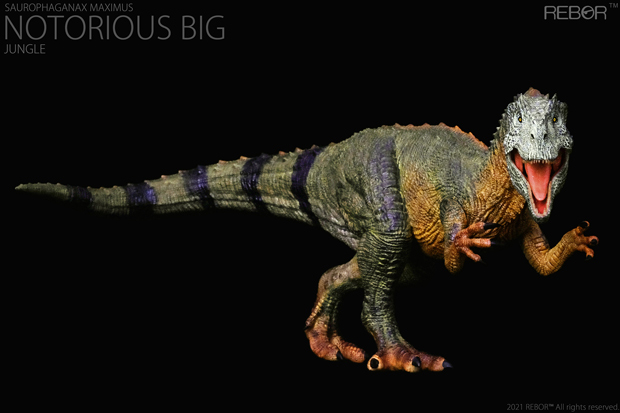
Rebor Saurophaganax dinosaur model (jungle colour scheme)

A view of the Rebor Saurophaganax maximus “jungle” colour variant (lateral view). Picture credit: Everything Dinosaur.

Picture credit: Everything Dinosaur

The award-winning Everything Dinosaur website: Dinosaur Toys.

Rebor Saurophaganax maximus “Jungle” Video Showcase

Everything Dinosaur’s Rebor Saurophaganax maximus “Jungle” video showcase starts by showing the dinosaur model on a revolving turntable, the model is held to provide a guide for size and the articulated jaw and arms are demonstrated.

Rebor Saurophaganax maximus dinosaur model (jungle colour variant).

The Rebor Saurophaganax maximus Museum Class replica in the jungle colour scheme. The video showcase of this model will be available to view on the Everything Dinosaur YouTube channel.

To view the Rebor Saurophaganax “Jungle” and the other Rebor replicas in stock at Everything Dinosaur: Rebor Models and Prehistoric Animal Figures.

Subscribe to Everything Dinosaur on YouTube: Subscribe to Everything Dinosaur on YouTube.

7 04, 2022

Evidence of Triceratops Fighting Rivals

By |2024-12-29T17:26:42+00:00April 7th, 2022|Categories: Adobe CS5, Dinosaur and Prehistoric Animal News Stories, Dinosaur Fans, Main Page, Photos/Pictures of Fossils|0 Comments

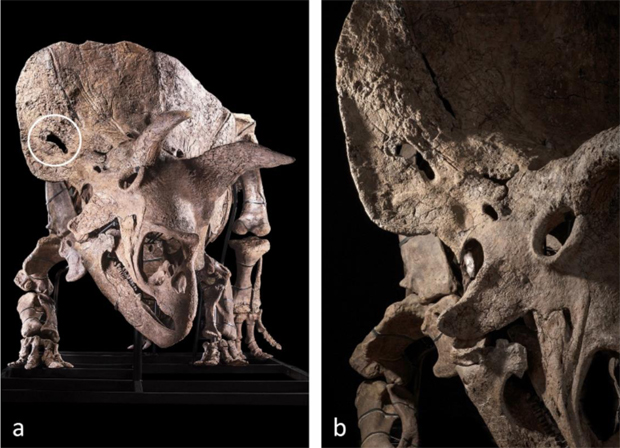
Scientists have analysed a hole in the fossil skull of a large Triceratops and concluded that the injury was caused by another Triceratops. This study suggests that Triceratops engaged in fights with other members of their species (intraspecific combat).

A specimen of Triceratops (T. horridus) referred to as Big John was discovered in 2014 in the Upper Cretaceous Hell Creek Formation (Montana, USA). There is a hole (fenestra), in the right squamosal. The neck shield is perforated and researchers from the University of Chieti-Pescara, the University of Bologna in collaboration with other research institutes conducted detailed tests on the fossilised bone surrounding this perforation.

Evidence of intraspecific combat in Triceratops.

The specimen of Triceratops horridus known as “big John” suggest that an injury to the neck frill was caused by intraspecific combat. Picture credit: Ferrara A., and Briano I.

Chemical Analysis

Extracranial fenestrae in ceratopsian neck frills had been interpreted as evidence of injuries that resulted from intraspecific combat. To evaluate this hypothesis the researchers conducted extensive tests on the fossil bone immediately surrounding the hole in the neck frill. Microscopy analysis revealed newly formed and healing bone, with histological signs typical of the bone remodelling phase associated with recovery from an injury. In addition, chemical analysis revealed typical signatures associated with bone re-growth and healing.

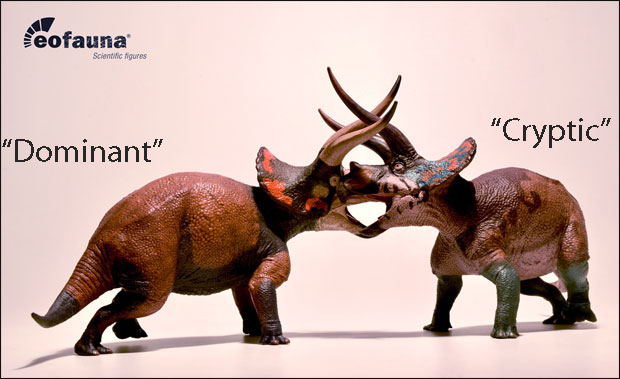
Triceratops Fighting

The picture (below) shows two Triceratops dinosaurs fighting. These are two models from the Eofauna Scientific Research model range. The models are called “Dominant” and “Cryptic”.

To view the Eofauna Scientific Research range: Eofauna Scientific Research Prehistoric Animal Models.

Eofauna Scientific Research Triceratops dinosaur models.

The Eofauna Scientific Research 1:35 scale Triceratops models do battle (Cryptic and Dominant).

The researchers conclude that histological and microanalytical analyses indicate that the squamosal fenestra of Big John is the result of a traumatic event, which might indeed have occurred during a fight with another Triceratops.

The scientific paper: “Histological and chemical diagnosis of a combat lesion in Triceratops” by Ruggero D’Anastasio, Jacopo Cilli, Flavio Bacchia, Federico Fanti, Giacomo Gobbo and Luigi Capasso published in Scientific Reports.

Visit the Everything Dinosaur website: Everything Dinosaur.
Go to Top