All about dinosaurs, fossils and prehistoric animals by Everything Dinosaur team members.
3 07, 2011

New Jersey Mine Could Provide Vital Evidence Regarding Dinosaur Extinction

By |2023-03-08T08:18:48+00:00July 3rd, 2011|Categories: Dinosaur and Prehistoric Animal News Stories, Main Page, Palaeontological articles|0 Comments

New Jersey Mine Could Show Exact Moment of Cretaceous Mass Extinction Event

A team of researchers are busily exploring a fifteen-metre-deep hole in New Jersey in a bid to find the exact moment when the Mesozoic ended and the Cenozoic began.  The site, part of a greensand mine is one of the last locations on the eastern seaboard of the United States where Cretaceous strata can be studied,  The scientists are in a race against time as the site is due to be developed and to disappear under concrete as new houses are built.

The Mesozoic

Palaeontologist Kenneth Lacovara is one of the research team members looking deep into the mine with a view to pinpointing for the exact moment, 66 million years ago, when all dinosaurs, marine reptiles and Pterosaurs perished. That secret could be harder to uncover if the fossil material at this location can no longer be unearthed after a housing and retail development is built on this open cast pit.

Lacovara, an associate professor of biology at Drexel University in Philadelphia, looks at this 40-foot plus deep hole at the end of a dirt road and sees a line in the sand where the Cretaceous period ends. Below that line are dinosaurs, above it, not a single fossil bone belonging to a dinosaur can be found.

He thinks that the creatures his team has been uncovering here all died en masse when an extra-terrestrial body struck the Earth and changed the course of the history of life on our planet. If his theory proves correct, it would be the only burial ground of its kind and provide scientists with a living laboratory to study how the dinosaurs and their cousins the marine reptiles and pterosaurs became extinct.

New Jersey as a state has a special place in the hearts of American palaeontologists.  The first nearly complete dinosaur skeleton ever discovered was a Hadrosaurus (H foulkii) found in Haddonfield (New Jersey) in 1858.   This dinosaur was named and described by the famous American anatomist Joseph Leidy.  But over the years, the numerous silt mines that made for great dinosaur digging were replaced with housing developments and shopping malls.

Today, this site in a southwestern corner of the state is the only remaining mine for greensand, a silt used for fertiliser and water softener.  It’s also the only access to the Late Cretaceous Period on the entire eastern seaboard of the United States.

Commenting on the importance of this fossil location Lacovara stated:

“This site is the last existing window into the ancient Cretaceous period in the eastern half of the United States. It’s extraordinary.”

But the township of Mantua, a community of 15,000 people, has other plans for the site.  Township officials would like to see the mine closed and a retail and lower cost housing development built in its place.  A developer has drawn up plans that include shops and affordable housing.  The fate of this location will be decided at a municipal meeting scheduled for July 15th

Inversand, the mine’s owner, has been operating the site since 1926, digging greensand.  For years, the company has had a close relationship with palaeontologists, alerting them when they came across large fossils.

Inversand President Alan Davies commented:

“If we find something beyond the routine shark tooth or clam, we call them up.”

The biggest find he recalls happened in the 1960s, when workers came across the skull of a Mosasaurus, a giant marine reptile, that now resides at the New Jersey State Museum in Trenton.  Mining for greensand is no longer economically viable for Inversand and the company would like to end operations.  If the mine were to shut down and the pump that continuously clears groundwater out of the area were to turn off, the hole would completely fill with water in a matter of weeks, transforming it into a lake. Davis says the mine could shut within three years.

Only a Few Locations in the World Have the Geology to Highlight the End of the Mesozoic
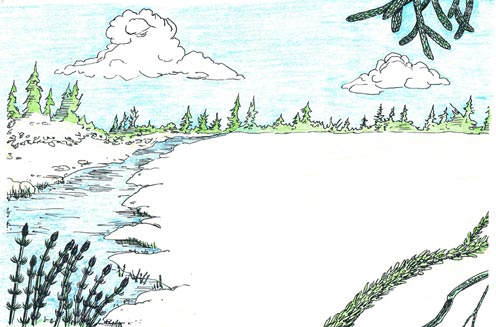
The Mesozoic landscape.

A warm and humid Earth back in the early Mesozoic. Picture credit: Everything Dinosaur.

Picture credit: Everything Dinosaur

Facing a looming deadline, Lacovara and his team have stepped up their efforts to dig, applying for grants and enlisting students and amateur palaeontologists to shovel the grey, muddy sand for pieces of natural history.

The scientists worry that without this pit, they’ll lose a historic treasure trove.  We at Everything Dinosaur, hope that a solution can be found and at least some part of the site can be kept as open access to palaeontologists to allow them to continue their studies.

For models and replicas of North American, Late Cretaeous dinosaurs and other prehistoric animals: Wild Safari Prehistoric World Figures.
2 07, 2011

Welsh Scientists Helping to Tame Real Life Dragons

By |2023-03-08T08:20:03+00:00July 2nd, 2011|Categories: Everything Dinosaur News and Updates, Main Page|0 Comments

Cardiff University Researchers Tagging Saltwater Crocodiles in Bid to Reduce Attacks

Researchers from Cardiff University, working in a field centre in Malaysia are attempting to track male Saltwater crocodiles in a bid to reduce attacks on plantation workers.  Since a summit was held last year, a symposium exploring the reasons for the dramatic increase in such incidents, steps have been taken to reduce the threat to people from these large reptiles.  The Saltwater Crocodile, otherwise known as the Estuarine Crocodile (Crocodylus porosus) is the largest extant reptile on the planet, with males reaching lengths in excess of six metres and weighing over a tonne.  They range over S.E. Asia from Sri Lanka to northern Australia and these animals have a deserved reputation for man-eating.

Estuarine Crocodiles

Now scientists and researchers from Cardiff University (Wales) have the opportunity to work with real life dragons as they seek to understand more about the movements of these large crocodiles.

Dr Benoit Goossens, School of Biosciences and Director of the Danau Girang Field Centre (DGFC), stated:

“The use of land for plantations here has considerably decreased the amounts of prey available for crocodiles.  This makes for a far more dangerous environment and attack rates on humans near plantations are extremely high compared to those in forested areas.”

The loss of game plus the increased numbers of people working in and around rivers is likely to result in even more crocodile attacks, unless measures are taken to control the crocodile population and to determine how to reduce the likelihood of crocodile/human encounters.

Dr Goossens added:

“By tagging large crocodiles, especially males which are potentially man-eaters, in plantation areas and forested areas, we will try to understand the movements of these large predators.”

The work marks the beginning of a long-term research and conservation programme, initiated following last year’s Human-Crocodile Conflict Symposium in Kota Kinabalu.

Dr Goossens, who is also leader of the Kinabatangan Crocodile Programme, said: the aim was to reduce fatal attacks by using the results from the tracking programme.  These would provide a set of guidelines for plantation workers so they could avoid areas where large crocodiles congregate.  The survey work will also benefit the crocodiles as it will lead to improved conservation methods as well as perhaps leading to a growth in “crocodile tourism”, with visitors keen to see one of the largest predators to be found in South East Asia.

Danau Girang Field Centre is a collaborative research and training facility managed by Cardiff University and Sabah Wildlife Department.  Funding from Cardiff allowed the establishment of a research laboratory, a computer room, a library, the acquisition of research equipment and the employment of a Director.

Researchers haul a recently trapped 4-metre-long male Saltwater Crocodile out of the water so that a tracking device can be fitted to the animal.  The crocodile nick-named “Girang” after the Field Centre was released shortly afterwards so that the scientists could begin to follow the creatures movements.

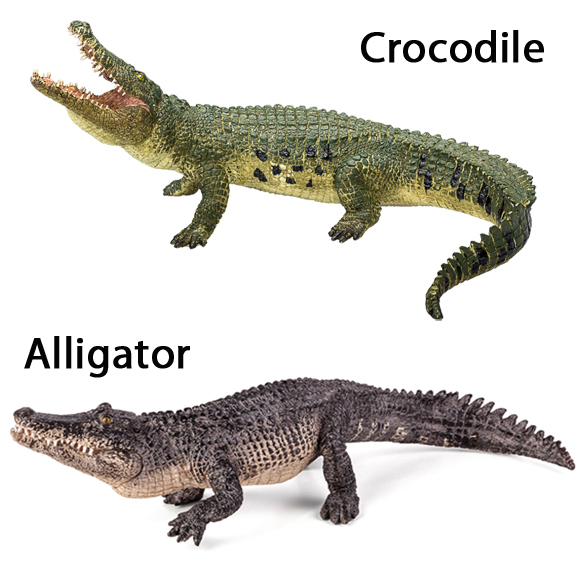
The Difference Between a Crocodile and an Alligator

Crocodile and Alligator comparison.

Crocodile (top) and Alligator (bottom).

It is situated in the Lower Kinabatangan Wildlife Sanctuary in Sabah, Malaysia and is surrounded by a mixture of lowland dipterocarp forest types, ranging from primary forest to disturbed secondary forest, in a matrix landscape with significant human impact including villages, small scale agriculture and oil palm plantations.

A team from the Danau Girang Field Centre, in collaboration with the Sabah Wildlife Department, recently fitted a four-metre-long male crocodile with a satellite tag so that its movements can be monitored.

For models of crocodiles and alligators (whilst stocks last): Mojo Fun Prehistoric Life Models.

1 07, 2011

Taking the Bio-Synthetic Pathway – On the Road to Identifying the Colour or Extinct Animals Thanks to New Research

By |2024-04-22T09:54:32+01:00July 1st, 2011|Categories: Dinosaur and Prehistoric Animal News Stories, Dinosaur Fans, Main Page, Palaeontological articles|0 Comments

Manchester University Leads the Way in Determining the Colouration of Extinct Animals

Powerful X-rays are helping scientists to determine trace element composition of fossils, these in turn are helping researchers to work out what colour long extinct animals were.  The technique applied to an Early Cretaceous bird as well as fossil fish and invertebrates in this study, has implications for all fossilised animals including dinosaurs.  Determining what colours T. rex and Triceratops were may not be long away.  We might be close to working out the colour of dinosaurs.

Published in a Journal

Publishing their findings in Science, the researchers have been able to show a remarkable relationship between copper and pigment within exceptionally preserved feathers and other soft tissues.

Results include important species such as the oldest beaked bird yet found, the 120-million-year-old Confuciusornis sanctus, and also the 110-million-year-old Gansus yumenensis, which looks similar to the modern Grebe and represents the oldest example of modern birds.

Pigment is a critical component of colour.  The team can map the presence of pigments over whole fossils, revealing original patterns.  The team’s findings indicate that pigment chemistry holds the future key to the ultimate goal of discovering the colour palette of past life, from dodos to dinosaurs and beyond.

Colour has played a key role in the processes of evolution by natural selection that have steered all life on Earth for hundreds of millions of years.  This unique scientific breakthrough can allow palaeontologists to reconstruct colour patterns in extinct animals, as well as provide an understanding of the way in which biological compounds are preserved in specific environments over deep time.

This could give them a far greater understanding of the feeding habits and environments occupied by extinct creatures, as well as shedding light on the evolution of colour pigments in modern species.

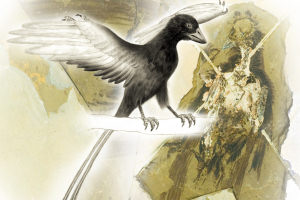
Confuciusornis sanctus Synchrontron Imaging Reveals its Colouration

Confuciusornis sanctus. Pigmentation in extinct animals.

Confuciusornis sanctus a primitive bird but it had a beak.

Picture credit: University of Manchester

The imaging technology has revealed that ancient birds like C. sanctus had dark heads and necks with paler feathers on the wings.

The X-ray team, led by Dr Roy Wogelius, Dr Phil Manning and Dr Uwe Bergmann, took the unique approach of using the synchrotron to analyse the soft tissue regions of fossil organisms.  The application of X-ray physics to palaeontology has shed new light on the tangled tale of prehistoric pigments in deep time and how to recognise its chemistry in fossils that are hundreds of millions years old.

Dr Wogelius, lead author on the paper and University of Manchester geochemist, said:

“Every once in a while we are lucky enough to discover something new, something that nobody has ever seen before.   For me, learning that copper can be mapped to reveal astonishing details about colour in animals that are over 100 million years old is simply amazing.  But even more amazing is to realise that such biological pigments, which we still manufacture within our own bodies, can now be studied throughout the fossil record, probably back much further than the 120 million years we show in this publication.”

To unlock the stunning colour patterns, the Manchester researchers teamed up with scientists at SLAC National Accelerator Laboratory (USA) and used the Stanford Synchrotron Radiation Lightsource to bathe fossils in intense synchrotron X-rays.   The interaction of these X-rays with the chemistry of each fossil allowed the team to recognise the chemistry of eumelanin, the molecule that provides the dark coloured pigmentation, in feathers from some of the most pivotal species of dino-birds and even pigment from within the eye of a 50-million-year-old fish.

Extinct Animals

The key to their work was identifying and imaging trace metals incorporated by ancient and living organisms into their soft tissues, in the same way that all living species do today, including humans.

Without essential trace metals, key biological processes in life would fail and animals either become sick or die.  It is these essential trace metals that the team has pinned down for the first time.

Dr Phil Manning, a senior author on the paper and University of Manchester palaeontologist, added:

”The fossils we excavate have vast potential to unlock many secrets on the original organism’s life, death and subsequent events impacting its preservation before and after burial.  To unpick the complicated chemical archive that fossils represent requires a multidisciplinary team that can bring in to focus many areas of science.  In doing this, we unlock much more than just palaeontological information, we now have a chemical roadmap to track similar pigments in all life.”

Results show that chemical remnants of pigments may survive even after the melanosome (biological paint pots) containing pigment has been destroyed.  Some of the samples they publish clearly preserve a chemical fossil, where almost all structure has been lost in the sands of time.  The chemical residue can be mapped to reveal details of the distribution of dark pigment (eumelanin), probably the most important pigment in the animal kingdom.

This pigment gives dark shading to human hair, reptile skin, and bird feathers.  Using rapid scan X-ray fluorescence imaging, a technique recently developed at SLAC, the team was able to map the residue of dark pigment over the entire surface of a large fossil, for the first time giving clear information about fundamental colour patterning in extinct animals.  It turns out that the presence of copper and other metals derived from the original pigment gives a non-biodegradeable record of colour that can last over deep geological time.

Dr Uwe Bergmann, SLAC physicist and co-author on the paper stated:

“Synchrotron radiation has been successfully applied for many years to many problems.  It is very exciting to see that it is now starting to have an impact in palaeontology, in a way that may have important implications in many other disciplines.  To work in a team of such diverse experts is a privilege and incredibly stimulating.  This is what science is all about.”

Using this novel method to accurately and non-destructively measure the accumulation of trace metals in soft tissues and bone, the team also studied the chemistry of living species, including birds.

Dr Wogelius added:

“This advance in chemical mapping will help us to understand modern animals as well as fossils.  We may also be able to use this research to improve our ability to sequester toxic materials such as radioactive waste and to devise new strategies for stabilising man-made organic compounds”.

For models and replicas of prehistoric animals and extinct creatures: PNSO Age of Dinosaurs Models.

30 06, 2011

World’s Oldest Sophisticated Eye Fossil Discovered in Australia

By |2023-03-08T08:22:13+00:00June 30th, 2011|Categories: Dinosaur and Prehistoric Animal News Stories, Main Page|2 Comments

Sophisticated Compound Eye with 3,000 Individual Lenses in 515 Million Year Old Fossil

Trilobites may have had some of the earliest recorded eyes in the fossil record, but 515 million years ago, there was a sharp-eyed predator that probably preyed on trilobites and its eyes were the most complex and sophisticated known from the Cambrian Period.

Eye Fossil

The eyes of trilobites are compound eyes, as seen in other arthropods today such as flies and other insects.  Each eye had many lenses and each lens provided an image of the world, the more lenses the better the impression of the surroundings. The trilobite lens was made of calcite and the preservation potential of these lenses were as good as the rest of the exoskeleton, which was also made of calcite.

However, the eyes of trilobites from 515 million years ago are not a patch on the fossil eyes of as yet unknown arthropod that have been discovered on Kangaroo Island, South Australia.

Mike Lee, an evolutionary biologist who is leading the joint South Australian Museum and Adelaide University fossil study commented that the researchers were unsure at this stage what sort of creature had these advanced eyes, but they speculate it was a predator.

Dr Lee stated:

“This particular animal had by far the most powerful vision of its time.  These fossils are absolutely unique because no other fossil site in the world has produced eyes of this complexity.”

As details of the research are published in the scientific journal “Nature” other scientists can learn a little more about the Australian team’s studies of the fauna of a Cambrian marine environment.  A spokesperson for Everything Dinosaur agreed with the initial findings that the eye fossils probably belonged to a predator.

“It is a fair assumption that these eyes belonged to a predatory arthropod of some sort, perhaps some kind of large shrimp-like creature.  Firstly the eyes are very sophisticated and good vision would have been extremely useful for an animal that hunted.  In addition, at over 1 cm in diameter, the eyes are big so they probably belonged to a big animal and in the Late Cambrian predators were generally larger than prey.”

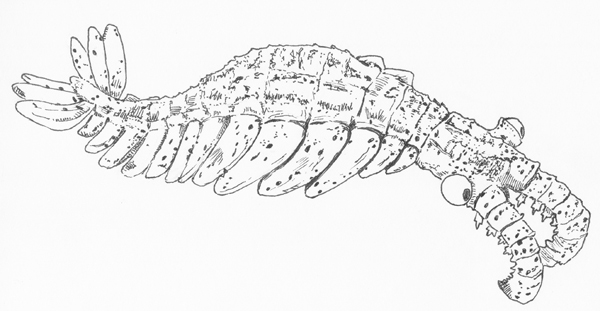
Could the fossil eyes belong to an arthropod similar to an Anomalocaris, a fearsome predator of the Middle Cambrian, whose kith and kin survived into the Ordovician.

A Drawing of an Anomalocaris

Anomalocaris

Anomalocaris drawing. Picture credit: Everything Dinosaur.

Picture credit: Everything Dinosaur

To read about giant Anomalocarids of the Ordovician: Anomalocarids – Bigger than Previously Thought.

Dr Lee said other specimens from the Emu Bay site (Kangaroo Island) had vision equivalent to about 100 pixels, allowing them to differentiate between light and dark and perhaps pick out shapes and movement.  However, these particular eyes had the equivalent of more than 3,000 pixels, or about 3,000 individual calcite lenses, making this vision system as sophisticated as that of modern prawns.

Dr Lee went on to add:

“With 3000 pixels, you can start to tell friend from foe.”

The strata in which these fossils were found dates to around 515 million years ago (Late Cambrian).  Around 545 million years ago, one of the most significant events in the history of life on our planet occurred.  There was a sudden burst of evolution, resulting in the rapid expansion and diversification of organisms (as recorded in the fossil record).  A wide variety of creatures, especially those with hard, mineralised shells and other body parts suddenly appeared. Within a few million years, most of the animal Phyla that are in existence today had evolved.

Quite why there was this sudden burst of evolution referred to as the “Cambrian Explosion” remains unknown.  However, scientists have suggested that the evolution of an “arms race” between predator and prey may have led to this considerable advance in life on planet Earth.  Certainly, whatever sort of creature had eyes with 3,000 pixels is a testament to speed of evolution in the Cambrian Period.

Pictures show a beautifully preserved compound eye, the individual lenses can just be made out in the photograph.

The new fossils reveal that some of the earliest known arthropods had already acquired visual systems similar to those of living forms, underscoring the speed and magnitude of the evolutionary innovation that occurred during the Cambrian Explosion, the researchers conclude.  As the eyes were found isolated, researchers can’t say with certainty what sort of animal had them.   But the fossils were found in the same rock as an array of ancient marine animals, providing the scientists with an impression of what the environment and ecosystem was like for this particularly advanced animal.

With 3,000 pixels, the newly discovered ancient animals would have seen three times better than the modern horseshoe crab.  But its eyesight would have paled in comparison to the modern dragonfly, a few of which have been emerging from our office pond over the last weeks.  Extant dragonflies have over 28,000 lenses in each eye.

To view replicas of prehistoric animals like Anomalocaris and trilobites: CollectA Age of Dinosaurs Popular Model Range.

29 06, 2011

Head Butting “Bone heads” New Evidence Strikes a Blow for the Pachycephalosaurs

By |2023-03-08T08:24:12+00:00June 29th, 2011|Categories: Dinosaur and Prehistoric Animal News Stories, Main Page, Palaeontological articles|0 Comments

New Study Suggest Pachycephalosaurs may have Clashed Heads After All

The pachycephalosaurs (the name means “thick-headed lizards”) are often referred to as the “Bone-heads” as the most striking feature about these bird-hipped dinosaurs was their incredibly thick skulls, which in many cases were adorned with bony nodules.  Related to the ceratopsians, scientists believe that these bipeds evolved in the Early Cretaceous and survived up to the very end of the Age of Reptiles.

Pachycephalosaurs

Most of what we know about this particular group of dinosaurs comes from skull material as many genera have been named and described on the basis of the discovery of skull bones.  This is in stark contrast to other types of dinosaur, the sauropods for example, where bones relating to the head are exceptionally rare.  The thickened skulls with their solid bone domes had excellent fossil preservation potential.  Such thick bones could withstand the stresses of the fossilisation process.

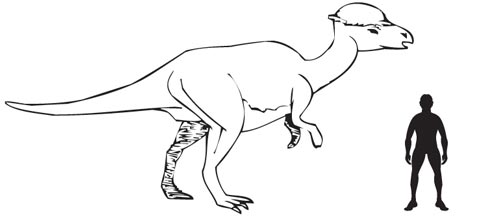
Perhaps the most famous of the pachycephalosaurids is Pachycephalosaurus wyomingensis, (from which this group of dinosaurs was named).  P. wyomingensis is known from just skull material but it has been estimated to have reached lengths in excess of 8 metres, making it the largest pachycephalosaur dinosaur discovered to date.

An Illustration of Pachycephalosaurus (P. wyomingensis)

Picture credit: Everything Dinosaur

To read more about Pachycephalosaurus: Pachycephalosaurus – The “Bone-headed” Dinosaur.

Why did these dinosaurs have such thick skulls?  It was not to protect a particularly large brain, these dinosaurs had brains no bigger than any other comparable sized ornithischian, perhaps these animals evolved well-protected heads as they engaged in head-butting contests just like some sheep and antelope do today.  The ideas of pachycephalosaurs indulging in such behaviour was first put forward by the American palaeontologist Ed Colbert in 1954.

Debating the Theory

This theory has been debated ever since.  Perhaps the most famous challenge to the theory of intra-specific conflict amongst pachycephalosaurs came in 2004 when the head-butting activities of these dinosaurs was examined by two American researchers, Mark Goodwin and John “Jack” Horner.  These researchers discovered that the radiating bone structure that was thought to provide strength to the dome of the skull was only present in juvenile specimens, and not in mature adults.  It was assumed, just like in extant animals the adults would have indulged in any head-butting, not young dinosaurs.

However, new research from the University of Calgary published in the online scientific journal “PloS One” suggests that these Cretaceous dinosaurs may indeed have used their thick heads for head butting contests.  The Canadian based research team compared the fossilised skulls of two types of pachycephalosaur with the skulls of modern herbivores some of which were known to be “head-bangers”.

Bio-mechanical Studies

They concluded that previous bio-mechanical studies may have suggested that these dinosaurs butted heads, but this had been challenged by studies on how the skull bones grew and developed as the animals matured.  However, new computer analysis and modelling using advanced statistical methodologies do support the theory first put forward by Colbert, back in 1954 – that the skulls of these dinosaurs could have withstood the impact from a clash of heads.  These dinosaurs could have been head-butters after all.

The two pachycephalosaurs involved in the study were Stegoceras validum and Prenocephale prenes.  The fossil skulls of these two dinosaurs were compared to ten skulls of artiodactyls (even-toed ungulates), known to indulge in various forms of intra-specific combat including head butting.  The team found that the bony anatomy of some pachycephalosaur domes are better at protecting the brain than in any modern head-butter.

Co-author Dr Eric Snively commented:

“Pachycephalosaur domes are weird structures not exactly like anything in modern animals. We wanted to test the controversial idea that the domes were good for head-butting.  Finding out brings us closer to their social lives: were pachycephalosaurs more likely just showing off their domes like peacocks with their tails, or were they also cracking their heads together like musk oxen?”

Using CT scanning and the new statistical method for diagnosing behaviour in fossil animals, the researchers compared the bony-headed dinosaurs with modern ungulates (hoofed animals) that engage in different kinds of combat.

Dr Snively stated:

“Our analyses are the closest we can get to observing their behaviour.  In a way, we can get inside their heads by colliding them together virtually.  We combined anatomical and engineering analyses of all these animals for a pretty thorough approach.  We looked at the actual tissue types in the skulls and heads of the animals.”

Co-author and fellow researcher Dr Jessica Theodor (Associate Professor in the Biological Sciences Dept. at the University of Calgary said:

“Head-butting is a form of male-to-male competition for access to females.  It’s pretty clear that although the bones are arranged differently in the Stegoceras, it could easily withstand the kinds of forces that have been measured for the living animals that engage in head-butting.”

Studying the Skulls

Describing the skulls of animals known to crack heads as “like a good motorcycle helmet”, the team stated that the skull of a typical head-butter was hard on the outside with a sort of spongy impact absorbing material just beneath the outer surface and then a stiff, really dense coat of hardened material to protect the brain.

Images show sections through the skulls of the dinosaur Stegoceras validum, the small African antelope known as a Duiker (Cephalophus leucogaster), regarded as morphologically close to this type of pachycephalosaur and a Bighorn sheep (Ovis canadensis).

The CT scans reveal similar dome structure. A. In the Stegoceras specimen, compact bone (z1 and z3: zones 1 and 3), occurs deep and superficial to a cancellous region (z2: zone 2:). Moderately dense compact bone shows as a green band at the base of zone 3 (white line); note cancellous bone (blue) above the line in the anterior portion of this zone. B. Cephalophus. C. Similar stratification is evident in the sectioned Ovis cranium, with nearly identical zones of cancellous and compact bone broken by a ventral sinus.

The Stegoceras had an extra layer of dense bone in the middle.  Stegoceras was a small pachycephalosaur approximately three metres long, that lived in north America during the Late Cretaceous.

The researchers concluded that Llamas would crack their skulls if they indulged in head-butting.  Giraffes would not be very good at head-banging contests – their skulls could not withstand the force of too many collisions.  Musk ox and Big Horn Sheep have the sort of adaptations to help them cope with bouts of head-butting.  In this way they have similar skulls to Stegoceras, so this could be evidence to support head-banging pachycephalosaurs.

Perhaps, Colbert was onto something after all.

To view models and replicas of pachycephalosaurs and other dinosaurs: Papo Dinosaur and Prehistoric Animal Models.

28 06, 2011

My Favourite and Most Popular Prehistoric Mammal – Woolly Rhinoceros

By |2024-01-02T06:52:47+00:00June 28th, 2011|Categories: Animal News Stories, Everything Dinosaur News and Updates, Main Page|0 Comments

Woolly Rhino – Proves to be Very Popular

At Everything Dinosaur, we get lots of letters, drawings, emails and other sorts of correspondence from young fans of dinosaurs and other prehistoric animals.  Our team members read every one and we try to respond as quickly as we can to all those that require a reply.  Today, we reveal one of our favourites the Woolly Rhinoceros.

Woolly Rhinoceros

We received one letter recently from a young boy who wanted to know more about the Woolly Rhino.  He had received as a gift one of our prehistoric mammal soft toys (the Woolly Rhino) and he wanted to ask some questions about these strange prehistoric beasts.

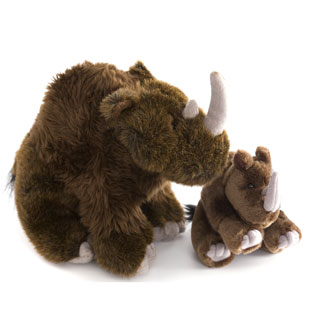
Woolly Rhino Soft Toy (Mum and Baby Woolly Rhinos)

Woolly Rhinoceros

Woolly Rhinoceros soft toys.

Picture credit: Everything Dinosaur

To view the Everything Dinosaur range of prehistoric mammal and dinosaur soft toys: Prehistoric Animal and Dinosaur Plush.

We were able to pass on the information and we ourselves find these soft toys rather cute, much more cute than the real animals would have been that’s for sure.

Woolly Rhinos were widespread during the Pleistocene Epoch, fossils have been found in China (they are believed to have originated in Asia), and as far west as Spain.  The Woolly Rhino soft toy depicts an animal called Coelodonta antiquitatis, the genus name is pronounced see-la-dont-ta, its means “old hollow teeth”.

The last Woolly Rhinos are believed to have lived in Western Siberia, but this species finally went extinct approximately 10,000 years ago, at the end of the Pleistocene Epoch.   The reason for their decline and eventual extinction is not known but it is likely that these two-tonne grazers were unable to adapt to the rapidly changing climate at the end of the last ice age.

We are delighted to hear that the Woolly Rhino still has many fans, sales of Ice Age soft toys are almost as high as sales of our dinosaur soft toys, especially when prehistoric animals such as the Woolly Rhino are featured in television programmes.

27 06, 2011

Newcastle the “Bahamas” of the North

By |2023-01-19T15:36:33+00:00June 27th, 2011|Categories: Dinosaur and Prehistoric Animal News Stories, Main Page|0 Comments

Borehole Provides Evidence of Newcastle’s Tropical Past

Newcastle upon Tyne may not be regarded as a tropical paradise today, but in the past this part of northern England looked very different.  In fact geologists working on a project to find hot water underground to heat city centre buildings have found evidence that the area was once part of a warm shallow sea that teemed with life.

In a £900,000 project funded by the Newcastle Science City Partnership and Department of Energy and Climate Change, Newcastle and Durham University geologists have been involved in the drilling of a 2,000 metre deep bore hole at a site just a free kick away from St James’ Park, the home of Newcastle United.  The team aim to tap into a reservoir of hot water heated to temperatures in excess of 80 Celsius that is being forced up through faults in a bed of granite rock.  The water could then be used to provide clean energy to heat a number of city centre buildings.

The drilling was expected to end this month, but fossils found in core samples taken from the drill site, provide a glimpse into the ancient past of this part of the world.  The cores show that in the past this part of northern England was once a shallow tropical sea, as fossils of crinoids (sea-lilies) and corals have been discovered embedded in the limestone portions of the geologist’s core samples.

Newcastle’s Tropical Past

Managers at the nearby Eldon Square Shopping Centre are excited about the project, General Manager Phil Steele stated:

“We can now look forward optimistically to using deep geothermal energy to supply part or all of our future energy needs and we look forward to working with Newcastle University to develop this major scientific enterprise for the city.”

Newcastle Institute for Research on Sustainability director Professor Paul Younger said:

“Our aim is to rise to the challenge of putting a novel form of deep geothermal energy at the very heart of city centre regeneration.  It’s an incredibly exciting project.  If we’re right and we pump up water at such elevated temperatures, it would mean a fully renewable energy supply for a large part of the city centre.  The Newcastle project is similar to one already operating in Southampton, where underground hot water is used along with oil and natural gas for a combined heat and power network.”

It seems that as well as tapping into geothermal resources the geologists and engineers responsible for the project have tapped into some interesting fossil bearing strata, revealing that once upon a time Newcastle resembled the Caribbean.

Typical Limestone Coral Fossils

Coral fossils (Carboniferous).

Picture credit: Everything Dinosaur

Team members at Everything Dinosaur think that the limestone would date from the Carboniferous Period.

For models and replicas of extinct animals from the Palaeozoic: Prehistoric Animal Models and Figures.

26 06, 2011

Female Cuban Crocodiles Endangering their Own Species According to New Study

By |2024-04-19T06:15:50+01:00June 26th, 2011|Categories: Animal News Stories, Main Page|0 Comments

New Research shows that Cuban Crocs are Hybridising with American Crocodiles

It is always refreshing to see representatives of Cuba getting on with Americans but for the Cuban crocodile (Crocodylus rhombifer) things may be going too far as new research suggests the rare Cuban crocodiles are cross-breeding with American crocodiles and this could have stark consequences for both species.

Crocodiles

A new genetic study by a team of Cuban and American researchers confirms that American crocodiles (Crocodylus acutus) are hybridising with wild populations of critically endangered Cuban crocodiles, which may cause a population decline of this species found only in the Cuban Archipelago.

Cuban crocodiles and American crocodiles have been confirmed to interbreed in captivity and were suspected to hybridise in the wild, but until this new study, there had been no scientific proof that this was happening.  This is the first genetic study that confirms wild hybridisation., between these two species of crocodile.

The study, which appears in the spring issue of the scientific publication “The Journal of Experimental Zoology”, provides definitive genetic evidence that interbreeding is taking place in the wild and that these two types of crocodile are very closely related.

The Difference Between a Crocodile and an Alligator

Crocodile and Alligator comparison.

Crocodile (top) and Alligator (bottom).

Known for their leaping ability and aggressive disposition, Cuban crocs are a charismatic and culturally significant species to Cuba.  Exact population estimates for the species remain unknown, though scientists believe that a minimum of 3,000 individuals remain in the Zapata swamp.  A smaller population exists in the Lanier Swamp on the Island of Youth.  The species was extensively hunted from the middle of the 19th Century through to the 1960s resulting in drastic population declines.

The team collected and analysed DNA from 89 wild-caught Cuban and American crocodiles and compared this genetic material with two samples from crocodiles kept in captivity.

The genetic data produced an unsuspected result,  American crocodiles in Cuba are more closely related to Cuban crocodiles than other American crocodile populations found along mainland Central America.  The study found just a 1 percent genetic sequence divergence between Cuban crocodiles and American crocodiles in Cuba yet an 8 percent divergence between American crocodiles in Cuba and other American crocodile populations living in mainland Central America.

This finding indicates that Cuban crocodiles and American crocodiles in Cuba may represent two evolutionary significant units (ESU’s), populations considered distinct for conservation purposes and represent an important component of the evolutionary legacy of the species.

The researchers say that hybridisation may be one of the most important threats to Cuban crocodiles, along with illegal hunting and habitat modification.  Hybridisation can result in both replacement and genetic mixing, and one lineage may cause the extinction of another.  The authors of the paper, whilst commenting on the significance of their discovery have expressed grave concerns over their findings for the preservation of the Cuban crocodile.  They have called upon Government agencies to take steps to avoid interbreeding in the wild and to ensure that the physical separation and segregation of these two species be considered in future conservation programmes.

The crocodiles of Central America have been in the news recently, as there have been moves to take away the protected status of the rare Mexican crocodile.

To read an article about this: Crocodile to Lose its Protected Status.

Although rare in the United States, the American crocodile has a much wider distribution than the Cuban crocodile and is therefore under less threat of extinction.

For models and replicas of crocodiles and alligators (whilst stocks last): Mojo Fun Prehistoric and Extinct Models and Figures.

25 06, 2011

Everything Dinosaur Helps Out Open University

By |2023-01-19T15:30:04+00:00June 25th, 2011|Categories: Everything Dinosaur News and Updates, Main Page, Press Releases|0 Comments

Discover a New Age of Learning with the Open University

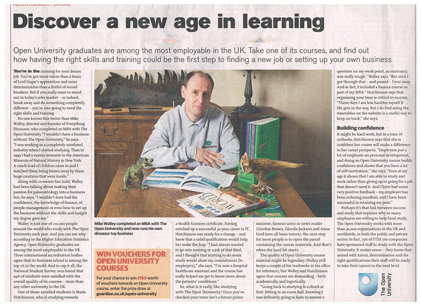
At Everything Dinosaur, we take very seriously our Open University (OU) studies, over the years a number of team members have taken courses with the OU and without the business qualifications team members have gained through their OU studies, we would not have the business we have today.  Recently, Everything Dinosaur was contacted by the Open University with a request to help them promote their work as part of a national advertising campaign for the university.

Everything Dinosaur

Having the right skills and training has never been so important, the jobs market is increasingly difficult and being able to offer an existing employer or indeed a potential employer the right skill set can help you to retain employment or indeed, move up the career ladder.  The very fact that you commit to a rigorous and demanding Open University course is proof of your willingness to work hard and to learn new skills.

Everything Dinosaur Featured in the Guardian Newspaper

Picture permission:  OU/Guardian

OU courses are hard work, but the standard of teaching and learning materials is extremely high and our team members have found their studies immensely rewarding and helpful in their business careers.

Visit Everything Dinosaur’s award-winning website: Everything Dinosaur.

24 06, 2011

Walking with Beasts Unleashed in Coventry

By |2023-01-19T15:27:57+00:00June 24th, 2011|Categories: Dinosaur Fans, Everything Dinosaur News and Updates, Main Page, Press Releases|1 Comment

Award Winning Coventry Museum gets “Beastly” for the Summer

Coventry’s Herbert Art Gallery and Museum is taking visitors back in time to meet huge prehistoric beasts such as Woolly Mammoths and fierce Sabre-toothed cats as the BBC “Walking with Beasts” exhibition takes up residence for the Summer.

So its back to the Ice Age and beyond at this award winning Coventry venue with the exhibition running from July 2nd to the 30th October giving visitors to chance to go on a prehistoric safari to meet some of the fearsome animals that our ancestors had to contend with.  It is hard to imagine  when looking at the huge, gaping jaws of a Smilodon or the immense bulk of an Coelodonta (that’s a Woolly Rhino), that these types of creature roamed around the east midlands – so if you fancy meeting some of Coventry’s earliest inhabitants – now’s your chance!

This family friendly exhibition includes original scale models and the life-size polyurethane heads of the prehistoric animals featured in the six part BBC documentary, as well as full-sized replicas of some of the most amazing creatures to ever walk the planet.  There are real fossils to see, plus the chance to get involved in touch screen interactive activities to build your own digital fossils, learn about animal camouflage and to get to grips with the topic of climate change.

Everything Dinosaur team members have had the opportunity to work with these exhibits on a number of occasions, look out for the Neanderthals – a species of human that we shared planet Earth with until about 28,000 years ago and don’t forget to try out the blue screen area, it’s great fun seeing the young, enthusiastic palaeontologists of the future putting themselves in the picture amongst all these amazing prehistoric mammals.

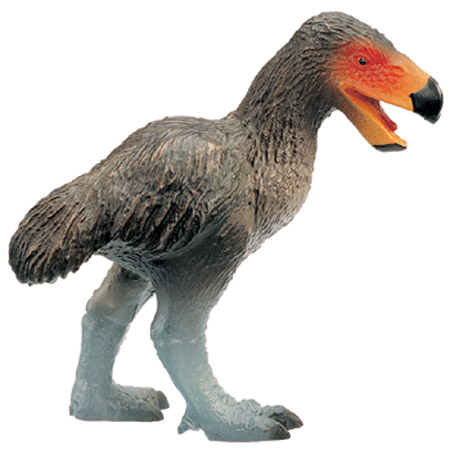
Our feathered friends get in on the act as well, it is not just the mammals that diversified after the demise of the dinosaurs.  For a time, giant birds as tall as a man and with vicious, hatchet shaped jaws ruled the world.  Visitors to the Herbert Art Gallery and Museum will get the chance to meet them – that’s if you are feeling brave enough to go eyeball to eyeball with a “Terror Bird” (phorusrhacids) – we promise you will never look at garden birds in the same way again.

Look out for the “Terror Birds” but Don’t get too Close to their Talons

Watch out for the talons.

Picture credit: Everything Dinosaur

The picture (above), shows a typical “Terror Bird” from the Cenozoic, these animals were fast enough and strong enough to catch and eat horses. This figure was part of the Bullyland range.

To view the Bullyland range of prehistoric animal models: Bullyland Prehistoric Animal Models.

This astounding exhibition lifts the lid on the technology behind the series and examines these fantastic creatures and the times in which they lived.

Exhibition Officer Dominic Bubb commented about the exhibition stating:

“As a museum we obviously showcase history but Walking with Beasts brings a whole new level to discovering the past.  With our natural history collections visitors have always had the chance explore the natural world, but now they get to see so much more thanks to this incredible exhibition.”

To learn more about the exhibition and the other exciting events taking place at the Herbert Art Gallery and Museum over the next few months: Herbert Art Gallery and Museum.

A spokesperson for Everything Dinosaur stated:

“Walking with Beasts at the Herbert Art Gallery and Museum provides visitors with a unique opportunity to learn about prehistoric animals and so gain an insight into how these creatures were brought back live and kicking onto our television screens.”

Tickets to the exhibition are £4.95 for adults, £3.95 for children over 5, FREE for under 5s and £14.00 for a family ticket that gives entry to either 1 adult and 3 children or 2 adults and 2 children. Concessions are available, for more information and to book tickets online visit the Herbert Art Gallery and Museum website.

Go to Top