All about dinosaurs, fossils and prehistoric animals by Everything Dinosaur team members.
5 01, 2025

Cetiosaurus on Display at the Wonderful Oxford University Museum of Natural History

By |2025-01-05T20:39:54+00:00January 5th, 2025|Categories: Dinosaur Fans|0 Comments

It was a great start to 2025 for fans of UK fossil sites.  The University of Birmingham sent out a media release about the investigation into extensive dinosaur trackways found in Oxfordshire. Five dinosaur trackways dating back to the Middle Jurassic had been unearthed in an Oxfordshire quarry.  Four of the trackways were made by sauropods.  The research team behind this remarkable research suggested that the footprints could have been made by a dinosaur such as Cetiosaurus (Cetiosaurus oxoniensis).  The research project was co-led by the University of Birmingham and the University of Oxford.

To read Everything Dinosaur’s blog post about the dinosaur tracks: Remarkable “Dinosaur Highway” Found in Oxfordshire.

Mike and Sue from Everything Dinosaur remembered visiting the wonderful Oxford University Museum of Natural History (OUMNH) and viewing the Cetiosaurus (Cetiosaurus oxoniensis) fossil specimens on display.

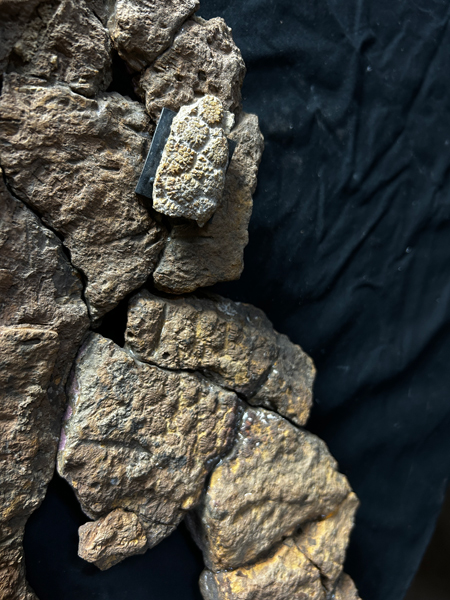
Cetiosaurus Fossils on Display

Cetiosaurus fossils on display.

Fossils ascribed to the taxon Cetiosaurus on display at the Oxford University Museum of Natural History (OUMNH). Picture credit: Everything Dinosaur.

Picture credit: Everything Dinosaur

The picture (above) shows several sauropod fossils on display at the Oxford University Museum of Natural History.  A femur is shown on far left. The large bones in the centre are a right scapula and a right humerus. The fossil bones adjacent to them are from the lower portion of the forelimb (right ulna and right radius). Above these limb bones several caudal vertebrae (tail bones) are displayed.  These fossils have been assigned to the taxon Cetiosaurus.  The fossils represent some of the very first sauropod bones to have been extensively studied.

Cetiosaurus was the first sauropod to be named (Owen, 1841).  At the time, Richard Owen thought the bones represented some sort of giant marine crocodile – hence the name which translates as “whale lizard”.

The right femur of a sauropod (Cetiosaurus) on display.

The enormous and robust right femur of a Middle Jurassic sauropod. The femur has been ascribed to the taxon Cetiosaurus. Picture credit: Everything Dinosaur.

Picture credit: Everything Dinosaur

The image (above) shows a close-up view of the huge right femur of a sauropod.  This fossil bone has been assigned to Cetiosaurus.  The text in the exhibit refers to Cetiosaurus as the “Oxford Brontosaur”.  However, the exact taxonomy of Cetiosaurus oxoniensis is disputed although it is quite certain that it was only very distantly related to diplodocids such as Brontosaurus.

Cetiosaurus and Megalosaurus

The theropod trackway has been tentatively assigned to Megalosaurus.  Megalosaurus is another iconic dinosaur that has links to the OUMNH.  Although Megalosaurus has become something of a taxon wastebasket, the only fossil remains ascribed to Megalosaurus with any degree of consensus were found in Oxfordshire.  The track site provides some tantalising evidence of sauropod and theropod interaction.  For example, some of the tracks intersect.  A theropod dinosaur walked over tracks made by a sauropod.  There is no way of knowing how much later the meat-eater walked in the same direction as the herbivorous dinosaur. Perhaps the theropod was stalking the sauropod.

As part of the University of Birmingham media release we received some wonderful artwork from the very talented Mark Witton.  In the illustration, a Megalosaurus attacks a juvenile sauropod.

A Megalosaurus attacks a Cetiosaurus.

A Megalosaurus attacks a Cetiosaurus. Picture credit: Mark Witton.

Picture credit: Mark Witton

The remarkable Oxfordshire track site will feature in a BBC Two documentary.  In addition, the OUMNH will open a special exhibition about the dinosaur tracks shortly.

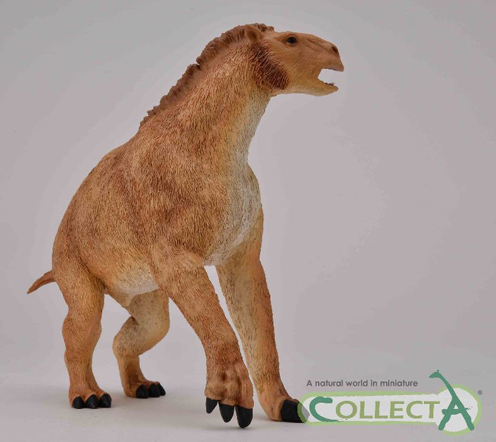
Jurassic dinosaurs. A CollectA Cetiosaurus model.

The CollectA Age of Dinosaurs Popular Cetiosaurus figure.  A model of an early sauropod that lived during the Middle Jurassic.

The picture (above) shows a Cetiosaurus model.  This dinosaur model was introduced into the CollectA Age of Dinosaurs Popular range in 2010.

To view the range of not-to-scale CollectA prehistoric animal figures in stock at Everything Dinosaur: CollectA Prehistoric Life Age of Dinosaurs Popular Figures.

Mike from Everything Dinosaur commented:

“The images we received from Birmingham University reminded us of our visit to the Oxford University Museum of Natural History.  It was wonderful to be able to view the Cetiosaurus oxoniensis fossils.  It is a fabulous museum with some amazing exhibits.”

Visit the award-winning Everything Dinosaur website: Dinosaur Models and Toys.

4 01, 2025

New Book Explores the Fossils of the Beautiful Fleet Lagoon

By |2025-01-05T17:40:00+00:00January 4th, 2025|Categories: Book Reviews|0 Comments

The beautiful Chesil Beach and the Fleet Lagoon attract over 150,000 visitors each year. The site is managed by Natural England, and it is famed for its stunning views and wildlife especially migratory birds.  However, the Fleet Lagoon (England’s largest lagoon at around 480 hectares), is a great place to visit if you are a fossil collector.   Fossils can be found along almost the entire length of the lagoon. There are exposures of the Oxford Clay, Forest Marble, Kimmeridge Clay formations and Corallian limestones.  It would be great if a visitor to this part of the UNESCO “Jurassic Coast” had a guide to help them navigate this remarkable part of the Dorset coastline.

Such a guide is now available, thanks to authors Steve Snowball and Heather Middleton.  The pair have compiled a comprehensive and informative field guide to the safe and responsible collection of fossils from the Fleet Lagoon area.

"A Field Guide to the Jurassic Fossils of the the Fleet Lagoon, Dorset"

The front cover of the new book that explores the remarkable fossils of the Fleet Lagoon of Dorset entitled “A Field Guide to the Jurassic Fossils of the Fleet Lagoon, Dorset” written by Steve Snowball and Heather Middleton.

Picture credit: Steve Snowball

Readers of this blog will be familiar with a series of guidebooks, co-authored by Steve Snowball that help fossil collectors explore various parts of the Dorset coast.  Back in 2022, we wrote about a wonderful collaboration between Steve Snowball and Craig Chivers who imagined an Edwardian gentleman visiting this picturesque part of the world.

To read Everything Dinosaur’s review of the excellent: Jurassic Fossils of the West Dorset Coast – A Time Traveller’s Guide.

Fossil Collecting on the Dorset Coast

Several excellent guides have been published about fossil hunting on the Dorset coast by Steve Snowball and Craig Chivers. Picture credit: Everything Dinosaur.

Picture credit: Everything Dinosaur

“A Field Guide to the Jurassic Fossils of the Fleet Lagoon, Dorset”

This is a comprehensive and beautifully crafted field guide.  It is illustrated in full colour throughout, and it focuses on the wide variety of fossils associated with the area and its unique geology. If you thought that Tidmoor Point and its Oxford Clay exposures was the only place to collect fossils in this area, it’s time for a rethink.  This is an up-to-date and definitive guide with superb photographs of fossil specimens and wonderful artwork by the talented palaeoartist Andreas Kurpisz.

Fleet lagoon ichthyosaurs.

A school of curious ichthyosaurs. Fossils of these marine reptiles have been found in the Fleet Lagoon area. Picture credit: Andreas Kurpisz.

Picture credit: Andreas Kurpisz

Helpful Identification Charts

Readers will be able to explore marine reptile bones and teeth from the Kimmeridge Clay as well as Corallian echinoids and stunning ammonites such as Quenstedioceras as well as Kosmoceras from the Oxford Clay.  The book contains helpful identification charts and plenty of advice on making the most of your fossil hunting adventure. All the localities along the thirteen-kilometre length of this picturesque, tidal body of water, which separates Chesil Beach from the mainland, are fully described.

The vivid artwork of Andreas Kurpisz brings to life the ancient landscapes of southern England and the huge variety of prehistoric creatures that once inhabited them.  It is a wonderful guidebook for either the keen walker, casual visitor to the area or dedicated fossil hunter.

Fleet Lagoon pterosaurs.

A trio of rhamphorhynchid pterosaurs soar over the tropical landscape of the area we now know as Dorset. Picture credit: Andreas Kurpisz.

Picture credit: Andreas Kurpisz

“A Field Guide to the Jurassic Fossils of the Fleet Lagoon, Dorset” has received praise for its informative text and illuminating photographs.  If you intend to visit this part of Dorset, it will prove to be an essential companion on your travels.

Book Details

Here is further information about this new fossil hunting guide:

Title: “A Field Guide to the Jurassic Fossils of the Fleet Lagoon, Dorset”

Authors: Steve Snowball and Heather Middleton

Illustrated by Andreas Kurpisz

ISBN: 978-1-7395570-3-4

Publisher: Siri Scientific Press

It contains 256 pages.

RRP: £24.99 and it is available on Amazon: “A Field Guide to the Jurassic Fossils of the Fleet Lagoon, Dorset”

3 01, 2025

Remarkable “Dinosaur Highway” Uncovered in Oxfordshire

By |2025-01-02T16:33:37+00:00January 3rd, 2025|Categories: Dinosaur and Prehistoric Animal News Stories|0 Comments

A remarkable and extensive series of dinosaur tracks have been uncovered by researchers from the Universities of Oxford and Birmingham.  The location (Dewars Farm Quarry) reveals a series of trackways that date back to the Middle Jurassic (Bathonian faunal stage).  The scientists have uncovered multiple, lengthy trackways that form part of a huge “dinosaur highway”.  The quarry floor is covered by hundreds of dinosaur footprints.

Theropod tracks have been recorded.  These have been tentatively assigned to Megalosaurus.  Some of these three-toed prints indicate the presence of nine-metre-long carnivorous dinosaurs.  Sauropod tracks have also been found.  The sauropod tracks have been tentatively assigned to Cetiosaurus.  Cetiosaurus was the first sauropod dinosaur to be scientifically described (Owen 1841).  Some of the tracks indicate the presence of sauropods around eighteen metres in length.

Dewars Farm Quarry excavation work.

The Dewars Farm Quarry excavation work taking place in June 2024. Picture credit: the University of Birmingham.

Picture credit: the University of Birmingham

The Remarkable Dewars Farm Quarry Dinosaur Tracks

This remarkable trace fossil site will be featured in a BBC television programme (Digging for Britain).  It will be broadcast on BBC Two on January the 8th.  A new public exhibition entitled “Breaking Ground” will be opening shortly at the Oxford University Museum of Natural History (OUMNH).  This exhibition will highlight the importance of the research into these dinosaur trackways.

A trio of fieldworkers excavating a dinosaur track.

A trio of fieldworkers excavating a dinosaur track. Picture credit: Caroline Wood (University of Oxford).

Picture credit: Caroline Wood (University of Oxford)

The site records the tracks made by dinosaurs as they crossed a wide lagoon. These extraordinary trace fossils offer a window into the lives of Middle Jurassic dinosaurs.  A snapshot revealing details about their movements, interactions, and the tropical environment that they inhabited.

The excavations were carried out at the Dewars Farm Quarry (Oxfordshire).  Five extensive trackways were uncovered, although there are probably many more prints and tracks in this area.  The longest continuous trackway measures over one hundred and fifty metres in length.  Four of these trackways were made by sauropods.  The fifth set of prints were made by a theropod.

Sauropod track SE38 (Dewars Farm Quarry dinosaur tracks).

Sauropod track SE38 picture credit: Dr Luke Meade University of Birmingham.

Picture credit: Dr Luke Meade University of Birmingham

Theropod and Sauropod Tracks Interacting

One area of the quarry preserves theropod and sauropod tracks crossing over.  This raises intriguing questions about whether and how these two dinosaurs were interacting.

Intersection of theropod and sauropod tracks (Dewars Farm Quarry dinosaur tracks)

Intersection of theropod and sauropod tracks. The theropod track is (left) with the deeper and larger sauropod behind it (right). Picture credit: Dr Luke Meade University of Birmingham.

Picture credit: Dr Luke Meade University of Birmingham

Vertebrate palaeontologist Dr Emma Nicholls (OUMNH), commented:

“Scientists have known about and been studying Megalosaurus for longer than any other dinosaur on Earth, and yet these recent discoveries prove there is still new evidence of these animals out there, waiting to be found.”

The tracks were buried under mud and came to light when quarry worker Gary Johnson felt “unusual bumps” as he was stripping the clay back with an excavator in order to expose the quarry’s limestone floor.  When the significance of the discovery was confirmed, experts were invited to the site to explore and map the trace fossils.  The Universities of Oxford and Birmingham collaborated on this research project.  A team of more than a hundred people worked at the site on a week-long excavation in June 2024.  The scientists thanked the staff at Dewars Farm Quarry and Duns Tew Quarry for their help with this project.

An aerial view of the dinosaur track site

An aerial view of the dinosaur track site taken on the 22nd June 2024. Picture credit: University of Birmingham.

Picture credit: University of Birmingham

Drone Photography and Three-dimensional Footprint Models

The week-long excavation revealed around two hundred dinosaur footprints.  The researchers used aerial drone photography to document the site and map the location of the tracks.  Computer modelling was employed to create sophisticated three-dimensional prints.  In addition, colour depth models of prints were made providing further insight into the tracks and the substrate.

A colour depth computerised image showing a theropod and sauropod track intersecting.

A colour depth computerised image showing a theropod and sauropod track intersecting. Picture credit: Dr Luke Meade University of Birmingham.

Picture credit: Dr Luke Meade University of Birmingham

Professor of Micropalaeontology at the University of Birmingham, Kirsty Edgar explained:

“These footprints offer an extraordinary window into the lives of dinosaurs, revealing details about their movements, interactions, and the tropical environment they inhabited.”

The scientists acknowledged the assistance of Duns Tew Quarry Manager Mark Stanway and his staff.  They were invaluable in providing both local expertise and operating specialist equipment such as excavators and rock saws.

Oxfordshire Dinosaur Tracks

These are not the first dinosaur tracks to have been found in Oxfordshire.  They connect to discoveries made in the area in 1997, where previous limestone quarrying revealed more than forty sets of dinosaur footprints.  Some of these trackways are up to one hundred and eighty metres long.  At the time, these tracks provided new information on the type of dinosaurs living in the area during the Middle Jurassic.

Ardley dinosaur tracks discovered in the 1990s.

The Ardley dinosaur tracks discovered in the 1990s. Picture credit: Professor Paul Barrett.

Picture credit: Professor Paul Barrett

The location was recognised as one of the most scientifically important dinosaur track sites in the world. It was subsequently designated a Site of Special Scientific Interest. However, the original site is largely no longer accessible and, since the findings predated the use of digital cameras and drones, there is limited photographic evidence. The newly discovered dinosaur tracks demonstrate the importance of this location. Even though the discoveries are separated by just thirty years, modern techniques and technology mean the prints can be recorded much more comprehensively than ever before.

Commenting on the importance of this research, Professor Richard Butler (University of Birmingham), stated:

“There is much more that we can learn from this site, which is an important part of our national Earth heritage. Our 3D models will allow researchers to continue to study and make accessible this fascinating piece of our past for generations to come.”

Documenting the Dinosaur Tracks

During the study, more than twenty thousand images of the dinosaur tracks were created. These images will provide a wealth of new data and can help provide answers to questions about dinosaur locomotion, velocity and how they interacted.

Dr Duncan Murdock, Earth Scientist at OUMNH, added:

“The preservation is so detailed that we can see how the mud was deformed as the dinosaur’s feet squelched in and out. Along with other fossils like burrows, shells and plants we can bring to life the muddy lagoon environment the dinosaurs walked through.”

Dewars Farm Quarry in the Middle Jurassic.

An artist’s reconstruction of the Dewars Farm Quarry site 166 million years ago. A Megalosaurus follows an adult Cetiosaurus with a second sauropod in the background whilst pterosaurs soar overhead. Picture credit: Mark Witton.

Picture credit: Mark Witton

The excavation was funded by the Geologists’ Association, School of Geography, Earth and Environmental Sciences at the University of Birmingham, and the University of Birmingham Alumni Fund.

CollectA Age of Dinosaurs Popular Megalosaurus in Ambush

A replica of the first “dinosaur” to be scientifically described, the CollectA Megalosaurus in ambush figure. This dinosaur was named before the term “Dinosauria” had been coined. Picture credit: Everything Dinosaur.

Picture credit: Everything Dinosaur

The picture (above) shows a replica of a Megalosaurus (M. bucklandii).  This is a modern interpretation of this iconic theropod dinosaur.  It was introduced by CollectA in 2021, and the figure is part of the Age of Dinosaurs Popular range.

To view the range of CollectA Age of Dinosaurs Popular models in stock: CollectA Age of Dinosaurs Popular Figures.

Everything Dinosaur acknowledges the assistance of a media release from the University of Birmingham in the compilation of this article.

The award-winning Everything Dinosaur website: Dinosaur Models.

2 01, 2025

A Helpful Summary of the New CollectA Prehistoric Animal Models

By |2024-12-27T15:05:24+00:00January 2nd, 2025|Categories: Dinosaur and Prehistoric Animal Models|0 Comments

During November, Everything Dinosaur in collaboration with our chums at CollectA published details of the new for 2025 CollectA prehistoric animal models.  We had been provided with exclusive images of each figure.  In addition, we received the official CollectA images of the models.  In total, seven new prehistoric animal figures for 2025 were announced.

Here is the list:

  • CollectA Age of Dinosaurs Popular Furcatoceratops.
  • A replica of an eurypterid, one of the largest invertebrates that ever lived, a CollectA Deluxe 1:20 scale Jaekelopterus rhenaniae.
  • A prehistoric mammal model, a CollectA Deluxe 1:20 scale giant short-faced bear (Arctodus simus).
  • CollectA Deluxe 1:40 scale Ingentia prima.
  • An ornithomimid model, a CollectA Deluxe 1:40 scale Gallimimus (G. bullatus).
  • CollectA Deluxe 1:40 scale Maip macrothorax.
  • CollectA Deluxe 1:20 scale Phorusrhacos.
The CollectA Age of Dinosaurs Popular Furcatoceratops model.

The CollectA Age of Dinosaurs Popular Furcatoceratops model.

The Furcatoceratops horned dinosaur figure is the only new introduction into the CollectA Age of Dinosaurs Popular range.

To view this range of CollectA prehistoric animal models: CollectA Age of Dinosaurs Popular Figures.

CollectA Prehistoric Animal Models

So, CollectA will introduce a total of seven prehistoric animal models next year (2025).  They are an eclectic bunch.  There are four dinosaurs, an invertebrate (Jaekelopterus rhenaniae) and a prehistoric mammal.  In addition, we have a “Terror Bird” the ferocious Phorusrhacos.

New for 2025 the CollectA Jaekelopterus model in 1:20 scale.

New for 2025 a scale model of Jaekelopterus rhenaniae.

The Palaeozoic is represented by a 1:20 scale model of the giant “sea scorpion” Jaekelopterus rhenaniae.  It is supplied with a model of a jawless fish.

The CollectA Deluxe giant short-faced bear model.

The CollectA Deluxe giant short-faced bear figure. This model will be in stock at Everything Dinosaur in 2025. This is the official CollectA image included in the media release.

Moving much closer to the present day, CollectA will introduce a replica of a Pleistocene prehistoric mammal.  The model of the giant short-faced bear is likely to be in stock at Everything Dinosaur in the early spring.

The Triassic is represented by the giant non-sauropod sauropodomorph Ingentia prima.  The fossils of Ingentia come from the Quebrada del Barro Formation of north-western Argentina. It lived around 210 million years ago (Late Triassic).  The CollectA model will be a 1:40 scale figure.

CollectA Ingentia prima dinosaur model.

The new for 2025 CollectA Ingentia prima dinosaur model.

Two Feathered Dinosaur Models

The two new CollectA theropods are both feathered.  The 1:20 scale figure of the ornithomimid Gallimimus sports a shaggy coat of feathers and is extremely bird-like.

The official CollectA Deluxe Gallimimus model image.

The official CollectA Deluxe Gallimimus model image. The model is shown in lateral view.

In contrast to the graceful Gallimimus, the second theropod – Maip macrothorax represents one of the apex predators from the Late Cretaceous of South America. Maip macrothorax was formally described in 2022 (Rolando et al). Its fossils come from the Chorrillo Formation of Santa Cruz, Argentina.  This giant, robust predator may have measured in excess of ten metres in length.  The CollectA figure is in 1:40 scale.

The official image of the new for 2025 CollectA Deluxe 1:40 scale Maip macrothorax figure. One of the new CollectA Deluxe models.

The official image of the new for 2025 CollectA Deluxe 1:40 scale Maip macrothorax figure.

Both the Gallimimus and the Maip are scale models.  One is in 1:20 scale, the other in 1:40 scale.  They are new additions to the CollectA Deluxe range of models.

To view the range of CollectA Deluxe figures in stock at Everything Dinosaur: CollectA Deluxe Prehistoric Life Models.

Last but not least, is the new CollectA Deluxe 1:20 scale replica of the South American Miocene terror bird Phorusrhacos.  It too is technically a theropod dinosaur.  However, genetic research into the Aves, suggests that the Phorusrhacidae family are related to extant falcons.

To read more about the phorusrhacid and falcon relationship: The Phorusrhacos “Terror Bird” and Falcons.

One of the new CollectA Deluxe models for 2025. The official image of the CollectA Deluxe 1:20 scale Phorusrhacos model.

The official image of the CollectA Deluxe 1:20 scale Phorusrhacos model.

All these exciting, new CollectA prehistoric animal models will be in stock at Everything Dinosaur in 2025.

To visit the Everything Dinosaur website: Dinosaur Toys.

1 01, 2025

Happy New Year (2025) from Everything Dinosaur

By |2025-01-01T07:12:21+00:00January 1st, 2025|Categories: Main Page|0 Comments

Just time to wish everyone a “Happy New Year”!  There are going to be some exciting new developments at Everything Dinosaur in 2025. As we step into a brand new year (2025), we want to take a moment to express our heartfelt gratitude to all our customers and social media followers. Your passion fuels our creativity and drives us to bring you the best models and collectibles.

In 2025, we are excited to continue our journey together.  We have some amazing plans, but more about them later.  We look forward to continuing our blog.  This year, we will pass the 7,000 article mark, that’s quite an achievement.

Happy New Year from Mike and Sue at Everything Dinosaur

Thank you for being part of our community. Here’s to a roaring New Year filled with adventure, discovery, and countless prehistoric moments!

Happy New Year 2025

Everything Dinosaur wishing all our customers and social media fans and followers a Happy New Year 2025. Picture credit: Everything Dinosaur.

Picture credit: Everything Dinosaur

We wish everyone a “Happy New Year”, a peaceful and prosperous one.  2025 is going to be interesting…

Stay curious and inspired!

Best wishes Mike and Sue.

Visit the award-winning Everything Dinosaur website: Dinosaur Toys and Models.

31 12, 2024

Favourite and Most Popular Blogs of 2024 (Part 2)

By |2025-01-03T09:13:09+00:00December 31st, 2024|Categories: Main Page|0 Comments

Today, we conclude our review of the Everything Dinosaur blog in 2024.  We look at our favourite and most popular articles posted up between July and December (2024). There are a lot of articles and posts to choose from. Between July 1st and today, we have written one hundred and ninety-one posts.  We have tried to cover a wide range of topics.  For example, new fossil discoveries, new dinosaurs, model updates, model collecting news, scientific discoveries and of course, information about Everything Dinosaur.

To read our first article in this short series, covering favourite blog posts in the first half of the year: Favourite and Most Popular Blog Posts of 2024 (Part 1).

The Everything Dinosaur Blog (July and August)

In July (2024) we wrote about a new deep-snouted tyrannosaur from China (Asiatyrannus xui). In addition, we examined ancient brachiopods and informed readers about changes to the Everything Dinosaur website. A Stegosaurus skeleton sold for over $44 million USD, and we introduced new PNSO models such as Tyrannotitan and Baryonyx. Moreover, we wrote about a new basal tetrapod named in honour of the late Professor Jenny Clack and a newly described Isle of Wight dinosaur that honours the late Nick Chase. There were prehistoric grapes, a mammalian brain study and Everything Dinosaur videos too.

However, our favourite post of July focused upon a paper published in the journal “Nature” that revealed that mammals in the Middle Jurassic may have lived much longer than their modern relatives.

National Museums Scotland's Dr Elsa Panciroli examines two Krusatodon kirtlingtonensis fossils.

National Museums Scotland’s Dr Elsa Panciroli examines two Krusatodon kirtlingtonensis fossils. Picture credit: Duncan Mc Glynn.

Picture credit: Duncan Mc Glynn

To read this blog post: Rare Jurassic Mammaliaform Fossils Reveal Details About Ontogeny.

The following month (August 2024), we explored dinosaurs and the autism spectrum, the evolution of cacti, the giant marsupial Diprotodon and our digital training. In addition, we visited “Snowball Earth” examined dinosaur dioramas and encountered a new titanosaur from Patagonia – Titanomachya gimenezi. Furthermore, we received a remarkable abelisaurid illustration and continued our regular reviews of “Prehistoric Times” magazine.

August was a busy time for the model manufacturer Rebor. They made several new model announcements and their remarkable “zombie rexes” came into stock.

Rebor Zombie T. rex figures (Jungle and Plain).

What an amazing pair of zombie dinosaurs! The Rebor Zombie T. rex Cannibal Corpse Jungle (left) and the Plain colour variant (right). Picture credit: Everything Dinosaur.

Picture credit: Everything Dinosaur

To view the range of Rebor models available from Everything Dinosaur: Rebor Models and Figures.

September and October on the Blog

September was a busy month on the Everything Dinosaur blog.  We continued our support for the TetZooCon (the last ever to take place), learned about a troop of monkeys that found a fossil, ghost sharks from New Zealand and how dinosaur models can help with dissertations. We looked at Albertosaurus, introduced a new duck-billed dinosaur from Mexico (Coahuilasaurus lipani) and reflected on the phylogeny of hadrosaurs.

Everything Dinosaur’s customer service record is outstanding. We were asked to take part in a video highlighting how we use digital technology to focus on helping customers. A really good video featuring us was made… but there were also plenty of bloopers.

So, we posted up a short video highlighting our mistakes in front of the camera: Everything Dinosaur and Some Brilliant Bloopers.

With darker nights and Halloween there was plenty to keep us occupied in October. Sadly, Professor Dong Zhiming one of the most influential palaeontologists of the last sixty years passed away. His contribution to the Earth Sciences will not be forgotten. At Everything Dinosaur, we received an “Exceptional” rating for customer service from Feefo. New models came thick and fast, from Haolonggood, PNSO and there were more Beasts of the Mesozoic figures. The giant arthropod Arthropleura was given a face, and we took a close look at the science behind avoiding asteroid impacts. The Pachyrhinosaurus skull “Big Sam” was on the move, and we posted up more videos.

Exceptional customer service from Everything Dinosaur.

Five out of five for customer service.

Team members were contacted about the discovery of the smallest non-avian dinosaur eggs to be described to date (Minioolithus ganzhouensis).  We were presented with fantastic dinosaur artwork.

Our favourite post revolved around the discovery of one of the oldest dinosauromorphs known. Gondwanax paraisensis is thought to be a silesaurid: Shedding Light on Dinosaur Origins.

A life reconstruction of Gondwanax paraisensis.

A life reconstruction of Gondwanax paraisensis. Picture credit: Matheus Fernandes Gadelha.

Picture credit: Matheus Fernandes Gadelha

November and December on the Everything Dinosaur Blog

New CollectA prehistoric animal models were introduced including an amazing 1:20 scale Phorusrhacos model. The artwork of Richard Bizley was celebrated, and we welcomed the Papo Ampelosaurus dinosaur model. Sue was invited to speak at a conference and a fifty-year German fossil mystery was resolved. We looked at transformational digital technology and debunked dinosaur myths with the very talented Dr Darren Naish. A new oviraptorosaur was announced (Yuanyanglong bainian) and a study was published highlighting global cooling and the rise of the Dinosauria.

One of the new for 2025 CollectA Deluxe prehistoric animal models - the 1:20 scale Phorusrhacos.

The CollectA Deluxe 1:20 scale Phorusrhacos model.

The picture (above) shows the new for 2025 CollectA Deluxe Phorusrhacos figure.

To view the range of CollectA Deluxe figures in stock: CollectA Deluxe Prehistoric Life Models.

Our favourite post featured a new scientific paper that concluded that the remarkable vertebrate fossils associated with the Yixian Formation of north-eastern China were not caused by volcanic eruptions.

To read more: Yixian Formation Fossils Not Caused by Pompeii-like Events.

The End of the Year

December was a busy month in our warehouse. We had a record number of Christmas parcels to send out to customers. Our blog was busy too. We introduced the spectacular Rebor “Kiss” island version as well as new Safari Ltd models. Innovative research highlighted the role humans played in prehistoric elephant extinction. We looked at new dinosaur books for the festive season, dinosaur-themed wrapping paper and thanked all our lovely customers for their cards and gifts.

The evolution of the jaw in the Squamata was outlined and we examined the new General Product Safety Regulations (GPSR) and checked our compliance.

Another new dinosaur from China was discussed (Archaeocursor) and we assessed the status of the taxon Saurophaganax. Model retirements from Safari Ltd were announced and we provided information on a new paper that concluded that tyrannosaurs were present in southern England during the Early Cretaceous.

Bexhill theropod dinosaurs, some of the fauna from the Wadhurst Clay Formation - Lower Cretaceous: Valanginian faunal stage.

An Early Cretaceous floodplain around 135 million years ago. A large spinosaurid chases off some tyrannosaurs (left) from the carcass of an ornithopod. Dromaeosaurids (bottom right) dart in to snatch what they can as the larger theropods are preoccupied. Picture credit: Anthony Hutchings

Picture credit: Anthony Hutchings

To read about this new theropod research: Wadhurst Clay Formation Theropods Including Tyrannosaurs.

Mike from Everything Dinosaur commented:

“This concludes our run through of our blog posts for 2024.  We had fun looking back at all the articles we had published.  In total, we wrote three hundred and seventy-five posts this year.  That’s quite an effort.  The Everything Dinosaur blog will surpass seven thousand posts in 2025. Wishing everyone a happy new year!”

Happy New Year!

The award-winning Everything Dinosaur website: Dinosaur Models and Toys.

30 12, 2024

Favourite and Most Popular Blogs of 2024 (Part 1)

By |2024-12-31T22:44:11+00:00December 30th, 2024|Categories: Main Page|0 Comments

As we approach the end of the year, it is time to reflect on some of the articles featured on the Everything Dinosaur blog.  We thought it would be interesting to review some of our blog posts.  After all, we try and post every day and as a result, we have produced over three hundred and sixty articles.

Here is part one, covering January to June (2024).

January and February 2024

Everything Dinosaur won (once again) the coveted Feefo Platinum Trusted Service Award for outstanding customer service. We examined giant, predatory worms of the Cambrian (Timoresbestia koprii) and Kuehneosaurs were confirmed in the Late Triassic of southwestern England.

Kuehneosaurus life reconstruction.

An artist’s impression of a gliding reptile Kuehneosaurus. Picture credit: Mike Cawthorne.

Picture credit: Mike Cawthorne

Our favourite article was published on January the 11th. A new species of Tyrannosaurus (T. mcraeensis) was announced.

To read the blog post about the new Tyrannosaurus species: A New Tyrannosaurus Species.

In February, we looked into the remarkable history of fossil holes, dinosaur locomotion and we recorded the earliest ever frogspawn being found in the office pond (February 18th). In addition, we wrote about a new species of Jurassic pterosaur from Scotland (Ceoptera evansae). However, our favourite story from February 2024 concerned the discovery of a new Hell Creek theropod. Eoneophron was discovered by Oklahoma State University student Kyle Atkins-Weltman when studying dinosaur limb bones.

Eoneophron infernalis limb bones.

Limb bones of the newly described Hell Creek Formation caenagnathid Eoneophron infernalis. Picture credit: Kyle Atkins-Weldman.

Picture credit: Kyle Atkins-Weldman

March and April and the Everything Dinosaur Blog

March saw us examining the oldest forest known to science as well as ancient amphibians and new insights into Spinosaurus. 2024 marks the two hundredth anniversary of the formal, scientific description of a prehistoric animal that was later to be classified as a dinosaur. Megalosaurus was named and described in 1824. This dinosaur featured in a set of new stamps introduced by Royal Mail. There were stamps celebrating the life and works of Mary Anning in circulation too.

Our favourite article discussed a new species of iguanodontian from Western Portugal (Hesperonyx martinhotomasorum). A co-author of the paper Miguel Moreno-Azanza was photographed with a titanosaur egg fossil and one of our favourite CollectA models. A CollectA Ampelosaurus figure featuring in a news story about a new dinosaur discovery. How exciting!

Hesperonyx martinhotomasorum paper co-author Miguel Moreno-Azanza, from Zaragoza University

Miguel Moreno-Azanza, from Zaragoza University, co-author of the Hesperonyx scientific paper with a titanosaur egg fossil and an Ampelosaurus model. Picture credit: Universidade NOVA de Lisboa

Picture credit: Universidade NOVA de Lisboa.

As March saw lots of new dinosaur models from Schleich, PNSO and Haolonggood being introduced it seemed fitting to include a dinosaur model in a news story.

To view the range of CollectA Prehistoric Life models in stock: CollectA Not to Scale Prehistoric Life Models.

The International Union of Geological Sciences voted to reject the Anthropocene Epoch as a unit of geological time in April. Furthermore, we looked at old dinosaur drawings and several new dinosaur models. The highlight for us was the publishing of the scientific paper describing Ichthyotitan severnensis. This Late Triassic ichthyosaur could have been as big as a blue whale.

Everything Dinosaur’s Ichthyotitan article: Ichthyotitan – A Colossus of the Late Triassic.

May and June (2024)

In May, we once again featured a wide range of news stories. For example, we reported upon the evolutionary history of the Baobab tree, Glaswegian shrimp fossils and examined how artificial intelligence could up write pages on the Everything Dinosaur website. In addition, we wrote an article that challenged the findings from a paper that proposed that T. rex could have been as clever as a primate.

Scientific paper challenged: Famous Dinosaur Not as Clever as a Monkey.

Eofauna T. rex model.

The Eofauna T. rex dinosaur model introduced in May 2024.  In addition, a scientific paper published that month refuted claims that T. rex was as clever as a primate. Picture credit: Everything Dinosaur.

Picture credit: Everything Dinosaur

June was a busy month for blog posts. We looked at new models from Haolonggood, Nanmu Studio and Beasts of the Mesozoic. In addition, a new Unenlagiine taxon was described from Patagonia (Diuqin lechiguanae). Carboniferous arachnids were examined, and we celebrated 170 years of the Crystal Palace dinosaurs.

Our favourite blog post for June 2024 featured a new taxon of horned dinosaur.  The spectacular Lokiceratops was scientifically described.

Lokiceratops rangiformis life reconstruction by Andrey Atuchin.

Reconstruction of Lokiceratops surprised by a crocodilian in the 78-million-year-old swamps of northern Montana, USA. Picture credit: Andrey Atuchin for the Museum of Evolution in Maribo, Denmark.

Picture credit: Andrey Atuchin

The Everything Dinosaur Blog Review for 2024 (Part 1)

This concludes our review of the blog for the first part of 2024 (January to June).  The second part of this series will conclude by looking at the articles we posted between July and the end of the year.

Visit the award-winning Everything Dinosaur website: Dinosaur Toys.

29 12, 2024

An Exclusive Update on Safari Ltd Model Retirements (2025)

By |2024-12-31T15:19:10+00:00December 29th, 2024|Categories: Wild Safari Prehistoric World|0 Comments

Everything Dinosaur can provide an update on Safari Ltd model retirements for 2025.  Several dinosaurs and prehistoric animal models are being retired from the Wild Safari Prehistoric World model range.  In addition, the Przewalski’s horse model from the Safari Ltd “Winners Circle” series is also going.  Collectors can expect retirements from the “Great Dinos” range too.  Furthermore, the two armoured dinosaur figures in the “Mythical Realms” range are being retired.

Safari Ltd model retirements 2025.

Ten of the Safari Ltd models due to be retired in 2025. Seven Wild Safari Prehistoric World models are due to be withdrawn. The two “Mythical Realms” armoured dinosaurs are now retired along with the Przewalski’s horse figure from the “Winners Circle Horses” series. Collectors can expect other Safari Ltd figures including some from the “Great Dinos” range to be retired. Picture credit: Everything Dinosaur.

Picture credit: Everything Dinosaur

Announcing Safari Ltd Model Retirements (2025)

Mike from Everything Dinosaur confirmed that the company had been informed about these retirements.  He explained that sometimes figures get retired to make way for new models and to ease production congestion at the factory.  Everything Dinosaur still stocks an extensive range of Safari Ltd models.  For example, the company recently received the new Therizinosaurus figure.  Moreover, the new Saltasaurus arrived recently too.

Wild Safari Prehistoric World models (Saltasaurus and Therizinosaurus).

Sue from Everything Dinosaur (left) holding the new Wild Safari Prehistoric World Saltasaurus model. Mike is holding the new Wild Safari Prehistoric World Therizinosaurus (right). Picture credit: Everything Dinosaur.

Picture credit: Everything Dinosaur

To view the range of Safari Ltd figures in stock at Everything Dinosaur: Safari Ltd. Wild Safari Prehistoric World.

Listing the Retired Models

Here is a list of the models stocked by Everything Dinosaur that are being retired by Safari Ltd.  We have included the factory model number to assist collectors.

  • Daeodon (product code 100082) first introduced in 2018.
  • Anzu wyliei (product code 100151) introduced in 2018.
  • Baryonyx (product code 100573) the most recently introduced dinosaur figure to be retired (2021).
  • Archaeopteryx (product code 302829) introduced in 2015.
  • Microraptor (product code 304129) first introduced in 2017.
  • Iguanodon (product code 305429) introduced in 2016.
  • Woolly Mammoth calf (product code 280029).
  • The armoured T. rex figure (100712) in the “Mythical Realms” series first introduced in 2021.
  • The armoured Triceratops (100733) in the “Mythical Realms” series introduced in 2021.
  • From the “Winner Circle” series the Przewalski’s horse model (153505) which was introduced in 2018.

With luck, we will be able to get more stock of these figures from the factory.  There could be some unsold inventory remaining at the factory.  However, collectors are urged to purchase these figures promptly to avoid missing out. Hopefully, this information about Safari Ltd model retirements will help collectors and dinosaur fans.

Visit the Everything Dinosaur website: Dinosaur Models and Toys.

28 12, 2024

Beautiful Dinosaur Wrapping Paper

By |2024-12-27T06:19:44+00:00December 28th, 2024|Categories: Dinosaur Fans|0 Comments

Earlier this week, we posted up some photographs of dinosaur wrapping paper.  Today, we highlight some more festive wrapping paper with a prehistoric animal theme.  Such colourful and delightful packaging material.  It is gift wrap with a Gorgosaurus and other dinosaurs in a “roarsome” display.

Dinosaur wrapping paper.

Some roarsome dinosaur wrapping paper providing seasonal cheer. Picture credit: Everything Dinosaur.

Picture credit: Everything Dinosaur

Amongst the many fir trees, a flock of dinosaurs are delivering their presents and parcels. It is certainly some very festive prehistoric animal themed wrapping paper.

To view our previous blog post highlighting prehistoric animal wrapping paper: Prehistoric Animal Themed Wrapping Paper.

Dinosaur Wrapping Paper

Dinosaur fans young and old will love this dinosaur wrapping paper.  Our thanks to the customer who sent us a present which was wrapped in this delightful gift wrap. We love the design and the bright red background colour.  The paper is so festive and cheerful.

Mike from Everything Dinosaur commented:

“To receive a gift from a customer was lovely.  To receive a gift presented to us in this beautiful prehistoric animal wrapping paper made it extra special. Our thanks to the customer for their thoughtful present.”

Visit the award-winning Everything Dinosaur website: Dinosaur Toys and Models.

27 12, 2024

New Research Suggests Saurophaganax is Not a Valid Taxon

By |2024-12-27T21:08:11+00:00December 27th, 2024|Categories: Palaeontological articles|0 Comments

A recently published scientific paper has challenged the validity of the theropod taxon Saurophaganax maximus.  The researchers conclude that S. maximus should be classified as nomen dubium and a new taxon of Allosaurus is proposed – Allosaurus anax. In Latin, nomen dubium translates as “doubtful name”. Essentially, this means that the Saurophaganax genus is not supported anymore.

Saurophaganax maximus scale drawing

A scale drawing of the giant allosaurid Saurophaganax maximus. Size estimates vary but fossils of this dinosaur could represent an individual animal between 12 and 14 metres long. The Saurophaganax genus is regarded as nomen dubium. Picture credit: Everything Dinosaur.

Picture credit: Everything Dinosaur

Sorting Saurophaganax maximus

In 1995, palaeontologist Daniel Chure erected the genus Saurophaganax (S. maximus) to describe an extremely large allosaurid dinosaur that had been excavated from the Kenton 1 Quarry in Cimarron County (Oklahoma) back in the 1930s. Unfortunately, the dig site was not that well supervised and mapped when the bones were originally excavated and removed. Several dinosaur taxa were present, and this may have led to confusion between what was defined as theropod and what was thought to be sauropod fossil bone.

In his research, Chure proposed that a dorsal neural arch (OMNH 1123) be declared the holotype specimen for Saurophaganax maximus. This theropod was much larger than Allosaurus fragilis and rivalled the giant megalosauroid Torvosaurus tanneri for the title of the biggest meat-eating dinosaur described to date from the Morrison Formation. Indeed, the Kenton 1 Quarry fossils were thought to represent one of the largest theropods known from the Jurassic of North America. Perhaps these fossils could be from one of the largest, Jurassic carnivorous dinosaurs that ever lived!

This new study proposes that the holotype (OMNH 1123), does not belong to a theropod.  The dorsal neural arch is reminiscent of that of a juvenile sauropod.  Other referred material such as chevrons and the atlas can’t be assigned to the Theropoda with certainty.  Since fossil material cannot be assigned to Saurophaganax, this taxon is considered not valid (nomen dubium).

Saurophaganax has a Chequered History

This dinosaur was named as Saurophagus maximus in 1941.  It was later revised to Saurophaganax maximus when it was pointed out that the genus name was already used to describe an extant bird.  Numerous unique characteristics were identified in the fossil material which had led to the establishment of a new dinosaur taxon.  For example, the postorbital bone in the skull lacking a postorbital boss and the atlas not having any facets for a proatlas. However, the 2024 re-evaluation shows that some of the elements originally used to distinguish Saurophaganax from Allosaurus are more parsimoniously referred to diplodocid sauropods found in the same quarry rather than an allosaurid.

This latest analysis eliminates many of the previously reported traits that distinguished the Kenton 1 Quarry allosaurid from Allosaurus.  The research team does not consider a distinct genus is warranted. Despite the similarity of the decisively theropod material to known species of Allosaurus, some elements feature subtle traits and characteristics that suggest they represent a distinct Allosaurus species. Therefore, the researchers conclude that S. maximus be classified as a nomen dubium and a new taxon of Allosaurus is proposed – Allosaurus anax.

Rebor "Badlands" Saurophaganax model

The Rebor Saurophaganax maximus model has proved to be popular with collectors.  However, a recently published scientific paper questions the validity of this taxon.  Picture credit: Everything Dinosaur.

Picture credit: Everything Dinosaur

The picture (above) shows one of the Rebor Saurophaganax replicas that were introduced in 2022.

To view the range of Rebor figures and models in stock: Rebor Figures and Models.

In summary, palaeontologists historically considered this taxon to represent a species of Allosaurus or a very large allosaurid. However, a re-examination of the attributed specimens suggests that it is a chimera of multiple dinosaur genera. Some specimens likely belong to a diplodocid sauropod, while others could be reassigned to a new species of Allosaurus (A. anax).

The scientific paper: “Chimerism of specimens referred to Saurophaganax maximus reveals a new species of Allosaurus (Dinosauria, Theropoda)” by Andy D. Danison, Mathew J. Wedel, Daniel E. Barta, Holly N. Woodward, Holley M. Flora, Andrew H. Lee, and Eric Snively published in Vertebrate Anatomy Morphology and Palaeontology.

The Everything Dinosaur website: Dinosaur Toys and Models.

Go to Top