All about dinosaurs, fossils and prehistoric animals by Everything Dinosaur team members.

Dinosaur and prehistoric animal themed articles, features and stories.

30 01, 2019

The New Schleich Dimetrodon and Schleich Giganotosaurus Reviewed

By |2023-11-21T18:18:08+00:00January 30th, 2019|Categories: Dinosaur Fans, Everything Dinosaur Products, Everything Dinosaur videos, Main Page, Photos of Everything Dinosaur Products, Product Reviews|0 Comments

Dimetrodon and Giganotosaurus (Schleich) Reviewed by JurassicCollectables

Those talented people at the JurassicCollectables YouTube channel have released another video, this time, it is a review of two of the new for 2019 Schleich prehistoric animal figures, both re-paints, the Schleich Giganotosaurus and the Schleich Dimetrodon.

JurassicCollectables Reviews the Schleich Dimetrodon and the Schleich Giganotosaurus (New for 2019)

Video credit: JurassicCollectables

New for 2019/New Colour Schemes

Both these figures are new colour schemes of previously introduced sculpts.  Providing re-painted versions of existing models can help to broaden a product range and provides a contrast to previously introduced figures.  For example, the new for 2019 Schleich Giganotosaurus has an altogether darker colour scheme than the Schleich Giganotosaurus (orange) that was launched in 2015.  The narrator points this out and goes on to provide a detailed analysis of the subtle use of airbrushing as well as commenting upon the darker colour palette associated with the skull and the airbrushing to bring out the textures in the neck.

In the Video Review, the Darker Tones of the Giganotosaurus Colour Scheme are Commented Upon
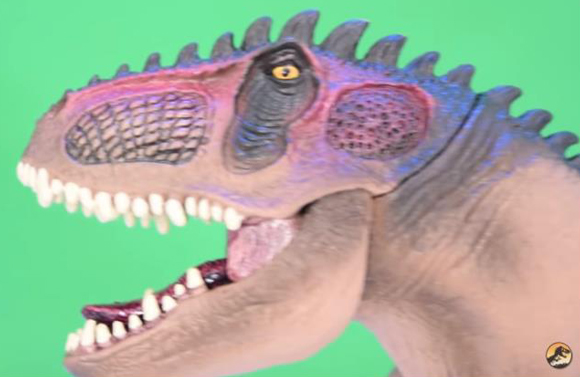
A Schleich Giganotosaurus dinosaur model.
The Schleich Giganotosaurus (2019).  This dinosaur model has a more muted and darker colour scheme than earlier Schleich figures of Giganotosaurus.

Picture credit: JurassicCollectables

Five New Schleich Prehistoric Animals

The Giganotosaurus and the Dimetrodon are two of the five new Schleich prehistoric animals to be introduced in the first part of 2019.  We will post up details of other Schleich models due to be introduced in July, but for the meantime, dinosaur fans have a Spinosaurus, Dimorphodon, an armoured dinosaur (Animantarx) and these two prehistoric animals to collect.

Schleich Giganotosaurus and Schleich Dimetrodon Size Comparison
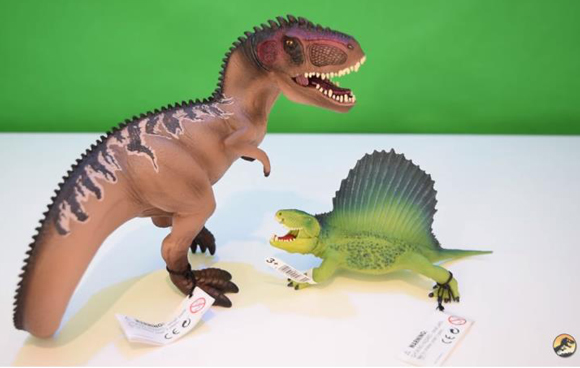
A Schleich Dimetrodon and a Schleich Giganotosaurus.
Comparing the new for 2019 Schleich Giganotosaurus and the Schleich Dimetrodon figures.

Picture credit: JurassicCollectables

Everything Dinosaur has also announced a number of model retirements from the Schleich range.

To read Everything Dinosaur’s article announcing Schleich prehistoric animal model retirements: Schleich Prehistoric Animal Model Retirements (2019).

The Schleich Dimetrodon (2019)

Dimetrodon seems to be a staple in prehistoric animal model ranges and is often described incorrectly as a dinosaur.  However, this Permian predator from Schleich is praised by the video narrator for its excellent airbrushing and fine detail, especially on the sail.  The texture on the animal’s flank and the carefully painted eyes are highlighted.

JurassicCollectables have a long history of producing dinosaur model reviews, they suggest that the colour scheme for the new for 2019 Dimetrodon reflects the original “Jurassic Park” Dimetrodon model that was introduced in the 1990s.  The narrator comments that the figure has been painted in naturalistic colours, reminiscent of many living lizards.

The New for 2019 Schleich Dimetrodon Model
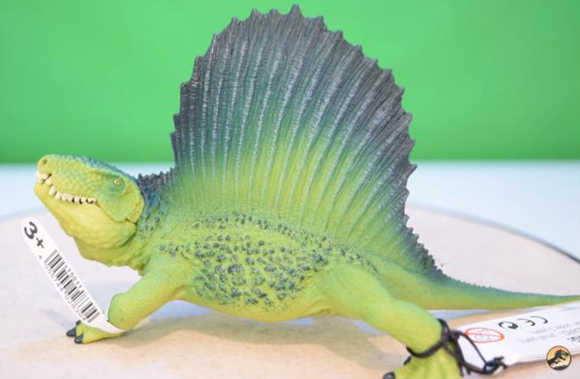
2019 Schleich Dimetrodon
The new for 2019 Schleich Dimetrodon model.

Picture credit: Jurassic Collectables

The JurassicCollectables video is just under six minutes in length.  It provides fans of prehistoric animal models with an opportunity to take a really close look at these new Schleich replicas.

Take a look at the fabulous YouTube channel of JurassicCollectables: Subscribe to JurassicCollectables on YouTube.

Everything Dinosaur will be providing information about the July releases from Schleich, they have some very exciting models to come, however, in the meantime, it is great to see these re-paints being added to the Schleich range of models.

To view the range of Schleich figures available from Everything Dinosaur: Schleich Dinosaurs and Prehistoric Animal Models.

Visit the Everything Dinoaur website: Everything Dinosaur.
29 01, 2019

Preparing to Introduce a New Oviraptorid

By |2023-11-21T18:11:23+00:00January 29th, 2019|Categories: Dinosaur Fans, Main Page, Palaeontological articles, Press Releases|0 Comments

Preparing to Introduce a New Oviraptorid

As Everything Dinosaur team members prepare to write about the formal scientific description of a new species of oviraptorid from the Late Cretaceous of southern Mongolia, we have been brushing up on our knowledge of the Oviraptorosauria clade.

No Need to Get into a Flap over the Oviraptorosauria

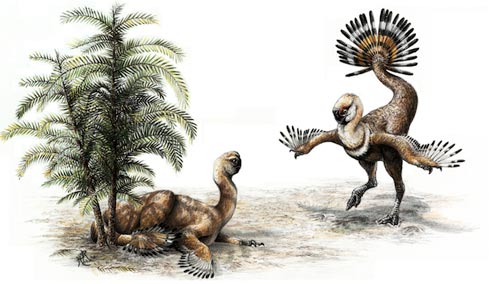
Is this an example of dinosaur courtship?
The Oviraptorosauria is a very diverse clade of theropods.

Picture credit: Sydney Mohr, University of Alberta

An Unusual Branch of the Maniraptora

The Oviraptorosauria clade is an atypical branch of the maniraptoran theropods.   They are characterised by short, deep skulls, jaws which lack teeth (edentulous in derived, advanced members of the clade), short, stunted tails and tail bones with lots of air sacs within them (pneumatised proximal caudal vertebrae).  The first of these dinosaurs were formally named and described in the 1920s (Oviraptor and Chirostenotes), over the last three decades, numerous new members of this clade have been identified, mostly from Upper Cretaceous strata.

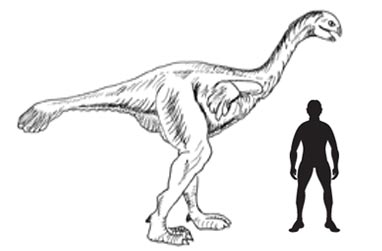
The  oviraptorosaurs are likely to have originated in Asia.  The earliest fossil record of these dinosaurs is reported from the Lower Cretaceous Yixian Formation of China.  It is likely that these dinosaurs were feathered and most of them were relatively small and light-weight.   However, there were exceptions to this rule, such as the huge Gigantoraptor (Gigantoraptor erlianensis), that stood nearly as tall as a giraffe.  Gigantoraptor was named and described in 2007: New Giant Chinese Dinosaur Described.

A Scale Drawing of Gigantoraptor Atypical of an Atypical Theropod Clade

Gigantoraptor scale drawing.
The largest feathered animal known to science. Picture credit: Everything Dinosaur.

Picture credit: Everything Dinosaur

The picture (above) reflects the CollectA Prehistoric Life Gigantoraptor figure.

To view this model range: CollectA Prehistoric Life Models.

Three Families within the Oviraptorosauria

Palaeontologists consider the Oviraptorosauria to be a very diverse clade with numerous taxa, but it can be broadly classified into three distinct families:

  1. The Avimimidae  – which for the moment contains a single genus (Avimimus), with two species from the Nemegt Formation of Mongolia. Although the provenance of the first fossils associated with this genus is not clear.
  2.  The Caenagnathidae – which are known from North America and Asia with numerous genera including the giant Gigantoraptor erlianensis.
  3. The Oviraptoridae – which are only known from Asia, although there are more genera recognised than within the more geographically widespread caenagnathids.

Of these three dinosaur families, it can be argued that the Oviraptoridae are the best understood.  Many genera are known from nearly complete fossil skeletons, whilst in the case of most caenagnathids, these dinosaurs are mostly known from highly fragmentary and far from complete material.

We look forward to publishing an article in the very near future describing a new member of the Oviraptoridae from the famous Upper Cretaceous deposits of the Nemegt Formation of Mongolia.

Note

Our article has been published, say hello to a new Asian, Late Cretaceous oviraptorid – Gobiraptor minutus.

You can read our article here: New Species of Late Cretaceous Oviraptorid Dinosaur Named.

28 01, 2019

Preparing for the CollectA Supreme Deluxe Caiuajara

By |2023-11-21T16:14:36+00:00January 28th, 2019|Categories: Dinosaur and Prehistoric Animal Drawings, Dinosaur Fans, Everything Dinosaur News and Updates, Everything Dinosaur Products, Main Page, Photos of Everything Dinosaur Products, Press Releases|2 Comments

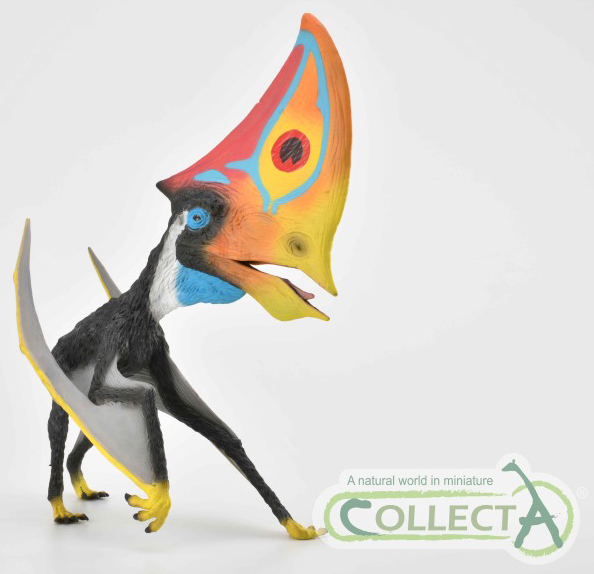
CollectA Supreme Deluxe Caiuajara

Everything Dinosaur team members are preparing for the arrival in the next few weeks or so of the CollectA Supreme Deluxe Caiuajara pterosaur model.  This beautiful and most impressive figure of a Cretaceous flying reptile from Brazil is going to be one of the first of the new for 2019 CollectA figures that arrive in our warehouse.  As part of our preparations, team members have been busy researching and writing a fact sheet all about this weird and wonderful member of the Pterosauria.

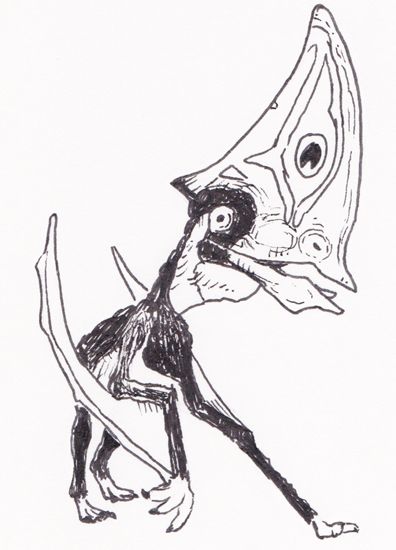
Everything Dinosaur’s Illustration of the Pterosaur Caiuajara

Everything Dinosaur has produced an illustration of the pterosaur called Caiuajara.
The CollectA Supreme Deluxe Caiuajara pterosaur illustration.  This drawing will be used by Everything Dinosaur when they produce a Caiuajara fact sheet which will accompany sales of this amazing model. A stunning illustration of the CollectA Caiuajara. Picture credit: Everything Dinosaur.

Picture credit: Everything Dinosaur

A CollectA Speciality (CollectA Caiuajara)

Large replicas of pterosaurs are becoming a bit of a CollectA speciality.  When stocks of this 2019 figure arrive at our warehouse, it will be joining two other CollectA Supreme Deluxe pterosaur models.  CollectA introduced a 1:4 scale replica of a Chinese member of the Ornithocheiridae family – Guidraco back in 2015.  This was followed in 2017 by the award winning CollectA Supreme Deluxe Dimorphodon model.  All three models will have moveable, articulated jaws.

The Colourful CollectA Supreme Deluxe Caiuajara Pterosaur Model (New for 2019)

CollectA Deluxe Caiuajara with moveable jaw.
The Age of Dinosaurs Supreme Deluxe Caiuajara pterosaur figure with a moveable jaw.

Picture credit: Everything Dinosaur

To view the range of CollectA Supreme Deluxe and CollectA Deluxe scale models of prehistoric animals in stock at Everything Dinosaur: CollectA Deluxe Prehistoric Life.

Pronouncing Caiuajara

When this pterosaur was formally named and described back in 2014, it caused quite a sensation amongst palaeontologists who specialise in studying the Pterosauria.  It is quite usual to have just a few fragments of bone to study, but in this case, the fossilised remains of more than forty individuals were recovered from a dig site in south-eastern Brazil.

This flying reptile had a remarkable crest, shaped a bit like the wing of a butterfly.  The fossil site was interpreted as a stop-over location as these animals migrated.  They were very competent flyers travelling great distances, so it is appropriate that the new for 2019 Caiuajara figure is travelling a great distance from the factory to our UK warehouse.

To read Everything Dinosaur’s 2014 article about the naming and scientific description of Caiuajara: New Species of Flying Reptile Identified from a Pterosaur Graveyard.

The fact sheet we are going to produce will also include a guide to pronunciation.  The genus name of this pterosaur is pronounced “Kay-you-ah-jar-rah”.  The CollectA Supreme Deluxe Caiuajara with moveable jaw measures around 19 centimetres in length and with that impressive and colourful crest the model’s height is about 23.5 cm.

We look forward to welcoming the CollectA Caiuajara model into our CollectA portfolio.

To contact Everything Dinosaur about prehistoric animal fact sheets and other matters: Email Everything Dinosaur.

27 01, 2019

New Prehistoric Times Issue 128 Reviewed

By |2023-11-21T16:08:09+00:00January 27th, 2019|Categories: Dinosaur Fans, Magazine Reviews, Main Page|0 Comments

Prehistoric Times Issue 128 Reviewed

The latest edition of “Prehistoric Times”, the quarterly magazine for fans of dinosaurs and prehistoric animal figures has arrived at Everything Dinosaur.  Issue 128 is jam-packed with features, articles and stories, there’s even a summary of recent dinosaur fossil discoveries and research.  This provides an opportunity to catch up with Saltriovenator, Tratayenia and Crittendenceratops – all new species of dinosaur.  In the winter 2018 edition, the focus is on celebrating the 100th anniversary of the trilogy of prehistoric animal themed novels by the acclaimed American author Edgar Rice Burroughs (The Caspak Trilogy).

The Front Cover of Prehistoric Times Pays Tribute to Edgar Rice Burroughs

Prehistoric Times magazine issue 128.
The front cover of “Prehistoric Times” magazine issue 128 (winter 2019), marks the 100th anniversary of the book “The Land that Time Forgot”.

Picture credit: Mike Fredericks

“Prehistoric Times” and the Caspak Trilogy

The three titles “The Land that Time Forgot”, “The People that Time Forgot” and “Out of Time’s Abyss”, collectively referred to as the Caspak Trilogy, after the prehistoric island where much of the action was set, are celebrated in the magazine.  Lots of readers have provided illustrations and artwork to celebrate the centenary.  The front cover artwork was created by Joshua Ballze and Phil Hore’s excellent article includes numerous illustrations, of which, for us, the contributions of Mike Landry really stand out.

Renowned Canadian palaeontologist, Phil Currie provides a perspective on the prehistoric animals within the novels and Allen Debus continues the science-fiction author theme with an article that compares and contrasts the work of Jules Verne and H. G. Wells.

Beautiful Trilobite Fossils

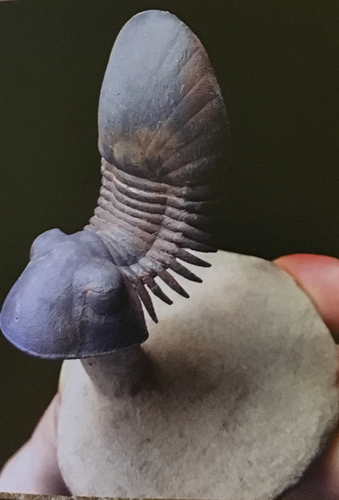
It might be cold and dark outside, but readers are transported to the high Atlas mountains of Morocco in a well-penned feature by Sergio Luis Fica Biston that showcases the stunning trilobite fossils that can be found in the ancient rocks that surround the small town of Elnif.  Finding the fossil is the start of a painstaking and long process of fossil preparation.  Some individual specimens can take upwards of thirty hours to prepare before they are ready to be put on display.

A Stunning Moroccan Trilobite Fossil

The art of Trilobite fossil preparation.
A beautifully prepared trilobite specimen from Morocco.

Picture credit: Sergio Luiz Fica Biston

“T” is for Triceratops

Tracy Lee Ford discusses the anatomy of Triceratops and provides a guide to scientific illustration.  Torosaurus is covered too, along with a helpful illustration of the fused cervical vertebrae, a characteristic shared by all ceratopsians and an explanation of the differences between the hand (manus) and feet (pes) of these horned dinosaurs.

The article concludes with an updated life restoration of “three horned face”.  Cress Kearny introduces part two of the article demonstrating the beauty and wonder of agatised dinosaur bones and stamp collecting fans have the chance to brush-up on their prehistoric animal themed stamp knowledge with a well-crafted feature on dinosaur stamps of the 1970s.

“Prehistoric Times” and the Golden Age of Palaeo-art with Burian

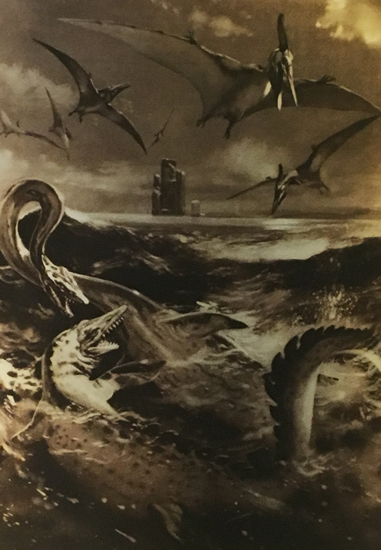
Issue 128 also includes part eleven of the comprehensive overview of the work of the Czech illustrator Zdeněk Burian by John Lavas.  In the previous issue of “Prehistoric Times” how the Plesiosauria were portrayed was covered, this edition focuses on the Mosasauridae.

A Vibrant Dynamic Depiction of the Western Interior Seaway

The Western Interior Seaway (Late Cretaceous)
Dramatic scene from the Western Interior Seaway painted by Burian.

Picture credit: Zdeněk Burian

Purchasers of the magazine will also have the chance to see pictures of new prehistoric animal model releases as well as to read an article all about Sabre-toothed cats including the Nimravidae by John Tuttle and there are lots and lots of reader submitted artworks to admire.

For further information about “Prehistoric Times” and to subscribe: Subscribe to Prehistoric Times Magazine.

Visit the Everything Dinosaur website: The Everything Dinosaur Website.

26 01, 2019

New Rebor Hatching Baryonyx Reviewed by JurassicCollectables

By |2023-11-21T07:50:01+00:00January 26th, 2019|Categories: Dinosaur Fans, Everything Dinosaur Products, Everything Dinosaur videos, Main Page, Photos of Everything Dinosaur Products, Product Reviews|0 Comments

Limited Edition Club Selection Rebor Hatching Baryonyx Reviewed by JurassicCollectables

The limited edition Club Selection hatching Baryonyx figure by Rebor has been given the video review treatment by those talented people at JurassicCollectables.  Following on from their very informative and helpful video review of the new for 2019 Schleich Spinosaurus model, JurassicCollectables have focused their camera lenses on this limited edition hatching dinosaur from Rebor.

JurassicCollectables Reviews the Rebor Club Selection Limited Edition Hatching Baryonyx “Hurricane”

Video credit: JurassicCollectables

“Hurricane” – Rebor Hatching Baryonyx

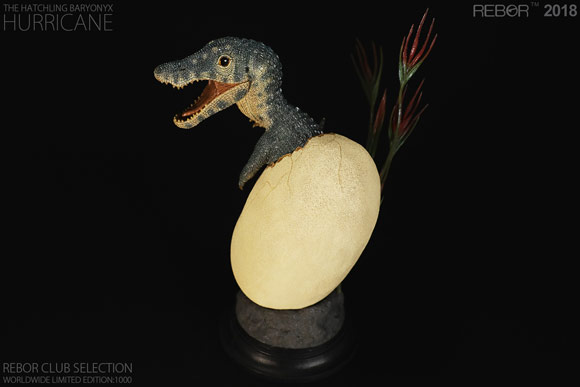
There have only been a 1,000 of these models made and the narrator begins the video by highlighting the box and the packaging.  Comments are made about taking care when it comes to removing the model out of the protective foam.  Those beautifully sculpted claws on this substantial figure might catch and get damaged, so the narrator emphasises the need to take care when opening the box and taking out the model and its accessories for the first time.

The New for 2019 Limited Edition Club Selection Rebor Hatching Baryonyx

Hatching Baryonyx by Rebor.
The Rebor limited edition Club Selection hatching Baryonyx “Hurricane”.

Why Hurricane?

At Everything Dinosaur, we have been asked why does this dinosaur figure have the nickname “Hurricane”?  Baryonyx (B. walkeri) is known from sediments that were deposited in a low-lying, flood plain environment.  When Baryonyx roamed that part of the world that we now know as the Isle of Wight, for example, large rivers meandered slowly eastwards to the sea.  This location would have been subjected to tropical storms and hurricanes from time to time and such events would have had a devastating effect on the environment.  Dinosaurs like Baryonyx would have had to endure such violent weather, so the term “Hurricane” is appropriate.  However, there is another reason for this Rebor figure’s nickname…

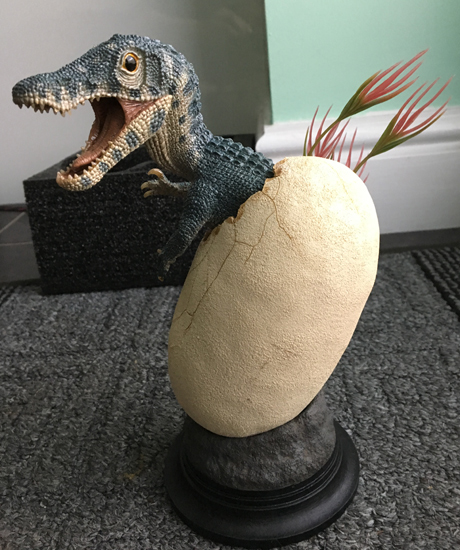
Unpacked and Set Up the Rebor Limited Edition Club Selection Hatching Baryonyx “Hurricane”

Ready for display, the Rebor hatching Baryonyx figure "Hurricane".
The Rebor Hatching Baryonyx dinosaur model ready for display. Picture credit: Everything Dinosaur.

Picture credit: Everything Dinosaur

Dinosaurs and a Famous English Football Captain

“Hurricane” honours Harry Kane, the Tottenham Hotspur and England forward.  Harry Kane is the current captain of the England football team and he helped England reach two semi-finals in 2018.  Hence this football themed dinosaur replica from Rebor, it celebrates England reaching the World Cup semi-final as well as their qualification for the semi-finals of the inaugural UEFA Nations League.

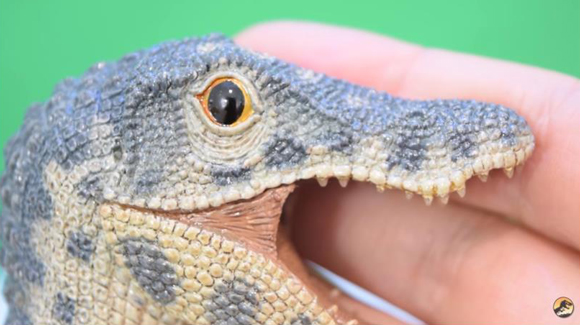
In the Video, JurassicCollectables Showcase Many Features of the Model Including the Very Life-like Eyes

He head of the Rebor hatching Baryonyx "Hurricane".
A close-up view of the glossy eye of the Rebor hatching Baryonyx figure.  In the video review, the narrator talks about the details on the head and paint scheme to be found on the inside of the mouth.

Picture credit: JurassicCollectables

JurassicCollectables have a fascinating YouTube channel.  It has attracted nearly 80,000 subscribers.  For video reviews of Rebor figures and lots of other prehistoric animal models, Everything Dinosaur recommends subscribing to JurassicCollectables: Subscribe to JurassicCollectables on YouTube.

A Detailed Video Review of the Rebor Hatching Baryonyx

In the detailed video review, the narrator comments over the subtle use of a wash that gives the replica a wet look, just like a newly hatched animal.  The shape of the egg is discussed and how to position it on its base is demonstrated and JurassicCollectables comment on the delicately shaped and realistic looking vegetation that is included with the figure.  Off-colour Alan makes his customary appearance and the recently reviewed Schleich 2019 Spinosaurus is included so that viewers can gain an appreciation as to just how big this hatching Baryonyx actually is.

The Rebor Hatching Baryonyx “Hurricane” Compared in Size to the Schleich Spinosaurus Model (2019)

Comparing the 2019 Schleich Spinosaurus to the Rebor Club Selection hatching Baryonyx.
The Schleich Spinosaurus (2019) compared with the Rebor Club Selection hatching Baryonyx.

To view the range of Rebor figures and replicas in stock at Everything Dinosaur including limited edition Club Selection figures: Rebor Dinosaur and Prehistoric Animal Figures.

Visit the Everything Dinosaur website: Everything Dinosaur.
25 01, 2019

Link Between Bird Beak Shape and Feeding Ecology Not That Strong

By |2023-11-21T07:41:44+00:00January 25th, 2019|Categories: Animal News Stories, Dinosaur and Prehistoric Animal News Stories, Dinosaur Fans, Main Page|0 Comments

Bird Beak Shape Did Not Evolve to Help Process Different Types of Food

A team of international researchers, including scientists from Bristol University, have published a new scientific paper that provides a new perspective on how the beaks of birds adapted over time. It seems that the “strong relationship” between bird beak shape and what the bird eats might not be that strong a relationship after all.

New Research Shows a Link Between Beak Shape and Feeding Ecology but it is not as Strong as Previously Suggested

bird evolution is studied
Vultures could provide us with clues about the evolution of the beaks of birds. Picture credit: Everything Dinosaur.

Picture credit: Everything Dinosaur

Darwin and the Galapagos Finches

Charles Darwin famously observed that finches on different islands of the Galapagos possessed distinctive beak shapes.  He postulated that the beak shapes had come about due to natural selection as the birds adapted to fill unique niches within the ecosystem.  It had been assumed that this form-function relationship holds true across all species of bird.  In a new study looking at a total of 176 extant avian species and published in the academic journal “Evolution”, it is suggested that the beaks of birds are not as adapted to the food types they feed upon as it is generally believed.  After all, birds use their beaks for a variety of functions not just for feeding.

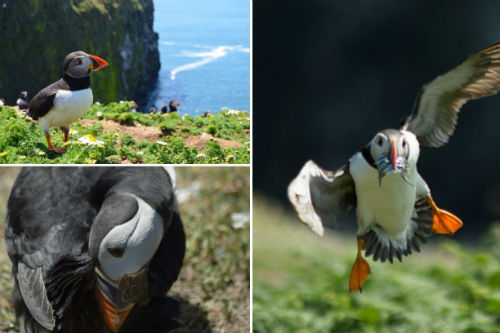
Puffins on the Island of Skomer – Beaks Perform a Variety of Tasks

Bird beaks used for various tasks not just feeding.
The beak on a bird is used for various tasks.  Functions of the beak include visual display, preening and feeding.

Picture credit: Sergio Martínez-Nebreda and Paula Medina-García

Bird Beak Evolution

The research team, consisting of scientists from the UK, the United States and Spain, used mathematical and computational statistical techniques to map the connection between beak shapes and functions in birds.  By measuring the beak shape in a wide range of modern bird species from museum collections and looking at information about how the beak is used by different species to consume different foods, the scientists were able to examine the link between beak shape and feeding behaviour.  Did feeding behaviour influence beak shape evolution?  If it did, how strong a link was this?

Co-author of the study, Professor Emily Rayfield (Bristol University), commented:

“This is, to our knowledge, the first approach to test a long-standing principle in biology: that the beak shape and function of birds is tightly linked to their feeding ecologies.”

Lead author of the research, Guillermo Navalón, a PhD student at Bristol University’s School of Earth Sciences added:

“The connection between beak shapes and feeding ecology in birds was much weaker and more complex than we expected and that while there is definitely a relationship there, many species with similarly shaped beaks forage in entirely different ways and on entirely different kinds of food.  This is something that has been shown in other animal groups, but in birds this relationship was always assumed to be stronger.”

Research co-author, Dr Jesús Marugán-Lobón from Universidad Autónoma de Madrid, explained:

“These results only made sense when you realise birds use the beak for literally everything!  Therefore, it also makes sense they evolved a versatile tool not just for getting food, but also to accomplish many other tasks.”

Important Implications for the Study of Fossil Birds

The study is part of a larger research programme by the team in collaboration with academics from other universities across Europe and the USA to better understand the main drivers of the evolution of the skull in birds, the only living members of the Theropoda.  Similar results were identified in a study of birds of prey, but this is the first time that the link between beak shape and ecology has been examined across a wide variety of bird families.

Guillermo Navalón added:

“These results have important implications for the study of fossil birds.  We have to be careful about inferring ecology in ancient birds, which we often assume based solely on the shape of the beak.”

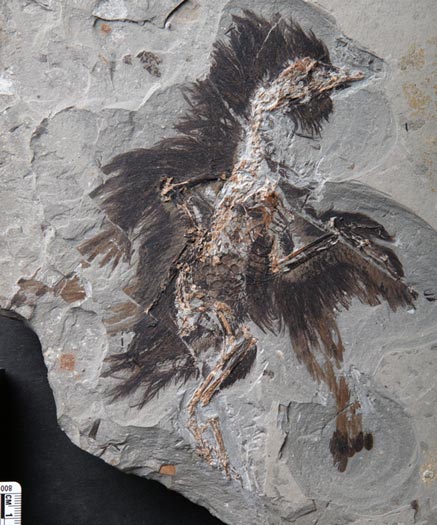
A Fossil Bird – Eoconfuciusornis

Eoconfuciusornis fossil bird.
The fossilised remains of a Lower Cretaceous bird from China (Eoconfuciusornis).  This new study has implications for how the beaks of fossil birds are interpreted.

Picture credit: Dr Xiaoli Wang (Linyi University)

What About the Pterosauria?

This study may also have implications for the Pterosauria.  Pterosaurs are extinct and they have no living close relatives, so what we know about these volant animals has to be deduced from their fossils.  There are many different types of beak associated with these flying reptiles and the link between shape and feeding ecology may not be as strong as previously thought.  The beaks of pterosaurs may not be as adapted to the food types they are thought to have fed upon.

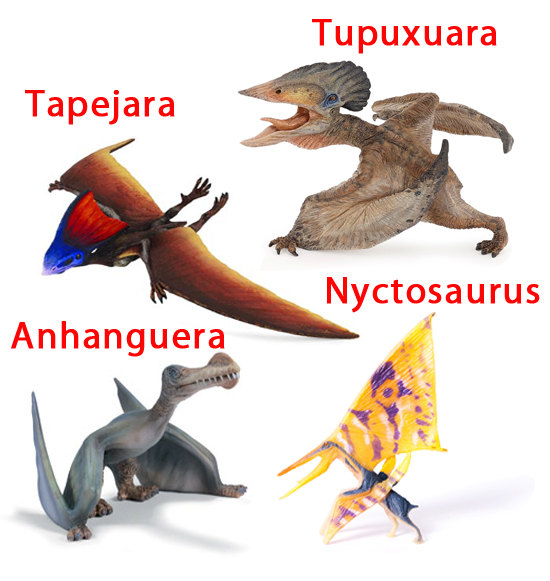
A Wide Range of Different Beak Types Demonstrated in the Pterosauria

Examples of pterosaurs from the Museum Nacional collection.
The Pterosauria exhibit a wide variety of different types of mandible. Picture credit: Everything Dinosaur.

Picture credit: Everything Dinosaur

If the mandibles of pterosaurs were employed in a variety of functions such as display, preening and visual signalling as well as feeding could their beaks be not as well adapted to the food types they fed on as is generally believed?  These reptiles had more manipulative function in their hands and fingers than extant birds, but the function of the hand would have been limited by the animal’s wing membranes.

Everything Dinosaur acknowledges the assistance of a press release from the University of Bristol in the compilation of this article.

The scientific paper: “The Evolutionary Relationship between Beak Shape, Mechanical Advantage and Feeding Ecology in Modern Birds” by G. Navalón, J. A. Bright, J. Marugán‐Lobón and E.J. Rayfield published in the journal Evolution.

Visit the Everything Dinosaur website: Everything Dinosaur.
24 01, 2019

New Papo Gorgosaurus (Sneaky Peek)

By |2023-11-21T07:31:48+00:00January 24th, 2019|Categories: Adobe CS5, Dinosaur Fans, Everything Dinosaur News and Updates, Everything Dinosaur Products, Everything Dinosaur videos, Main Page, Photos of Everything Dinosaur Products|0 Comments

New Papo Gorgosaurus Previewed

Everything Dinosaur team members had the opportunity this week to view the new for 2019 Papo Gorgosaurus dinosaur figure.  As well as taking plenty of photographs, we were able to shoot a short video demonstrating that this dinosaur model stands on its hind legs and it does not need to balance on its tail in order to stand.

Papo Gorgosaurus Model

Everything Dinosaur Previews the New for 2019 Papo Gorgosaurus Dinosaur Model

Video credit: Everything Dinosaur

A Beautiful Model that is Beautifully Balanced

In this short video, we demonstrate that the Papo Gorgosaurus does not need to rest on its tail in order to balance.  This figure is one of five new for 2019 Papo prehistoric animal models, it should be available in quarter three of this year, perhaps around June/July .  It could arrive a little sooner, it could be in stock at Everything Dinosaur a little later.  At least our customers and dinosaur model fans have had the chance of a sneak peek of this new tyrannosaurid dinosaur figure from the French manufacturer.

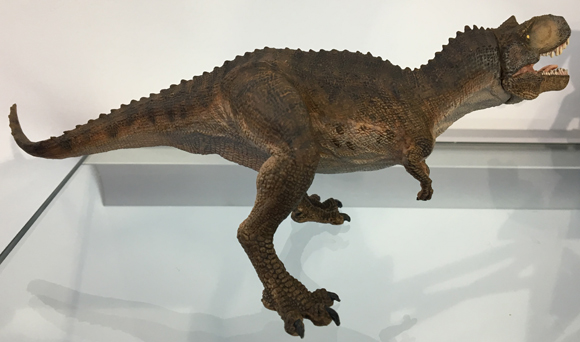
The Papo Gorgosaurus Dinosaur Model

Papo Gorgosaurus dinosaur model.
The new for 2019 Papo Gorgosaurus dinosaur model. Picture credit: Everything Dinosaur.

Picture credit: Everything Dinosaur

New Papo Models for 2019

In total, five new figures are being introduced by Papo this year, there will (most likely), be a box set released in the autumn and we are already working on new for 2020 and 2021 production ideas.

The five new Papo models are:

  • Brown Running T. rex due into stock in a few days at Everything Dinosaur.
  • Papo Allosaurus (new colour variant), also due to arrive at Everything Dinosaur, in just a few days.
  • The Papo Gorgosaurus (see images and video), which is scheduled to be available sometime in quarter 3.
  • Papo Pentaceratops – also due to be in stock sometime in quarter 3 of 2019.
  • Stegosaurus, (new colour variant), this figure is also planned for launch in quarter 3 of this year.

Everything Dinosaur has also been made aware of a number of model retirements from the Papo “Les Dinosaures” range of figures.

To read Everything Dinosaur’s article about forthcoming Papo prehistoric animal model retirements: News of Papo Model Retirements.

Coming Soon a New Gorgosaurus Figure from Papo

Papo Gorgosaurus.
The Papo Gorgosaurus dinosaur model.  This dinosaur model will have an articulated lower jaw. Picture credit: Everything Dinosaur.

Picture credit: Everything Dinosaur

To view the current range of Papo dinosaurs and prehistoric animal figures, including some of the increasingly rare retired figures: Papo Dinosaur and Prehistoric Animal Figures.

Everything Dinosaur customers will also be able to get their hands on the new for 2019 Papo consumer booklet, it’s up there on our website.

Visit the Everything Dinosaur website: Everything Dinosaur.
23 01, 2019

Prehistoric Shark Named after Video Game

By |2023-11-20T15:34:12+00:00January 23rd, 2019|Categories: Dinosaur and Prehistoric Animal News Stories, Dinosaur Fans, Main Page, Palaeontological articles, Photos/Pictures of Fossils|0 Comments

Galagadon nordquistae – Shark Resident of Hell Creek

Perhaps the most famous exhibit at the Field Museum (Chicago), is the Tyrannosaurus rex specimen named “Sue”, the most complete T. rex fossil discovered to date.  A great deal of research has been carried out on the 66 million-year-old fossilised bones of this giant, meat-eating theropod that measures over twelve metres in length.  However, the matrix that surrounded the fossil material has helped to shed light on another resident of the famous Hell Creek Formation of South Dakota.  Fossil teeth found in the matrix surrounding the bones of the most famous T. rex in the world has led to the naming and description of a prehistoric shark that lived in freshwater, say hello to Galagadon nordquistae.

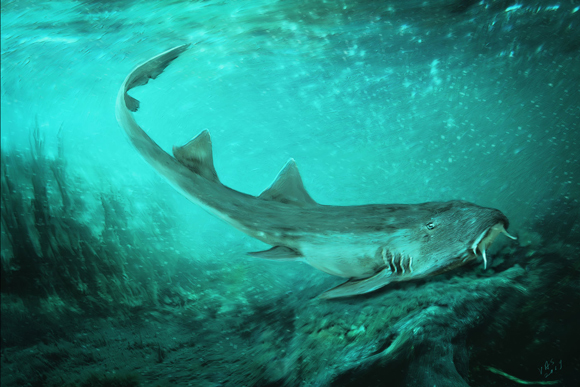
A Life Reconstruction of the Late Cretaceous Shark G. nordquistae

Galagadon nordquistae life reconstruction.
A life reconstruction of the Late Cretaceous shark Galagadon nordquistae.

Picture credit: Velizar Simeonovski (Field Museum)

Galagadon nordquistae – A Small, Freshwater Predator

Ever since the preparation work on “Sue” began in the 1990s, the leftover sediment (matrix), was carefully stored at the Field Museum.  Researchers examined this material searching for micro-fossils in a bid to build up a picture of what life was like in this part of Laramidia towards the end of the age of dinosaurs.  Teeth were found from a shark which would have measured around half a metre in length.

Peter Makovicky (Curator of Dinosaurs at the Field Museum) commented:

“This shark lived at the same as Sue the T. rex, it was part of the same world.  Most of its body wasn’t preserved, because sharks’ skeletons are made of cartilage, but we were able to find its tiny fossilised teeth.”

The shark, named Galagadon nordquistae, is described in a scientific paper published in the “Journal of Palaeontology”.

Named After a 1980s Video Game

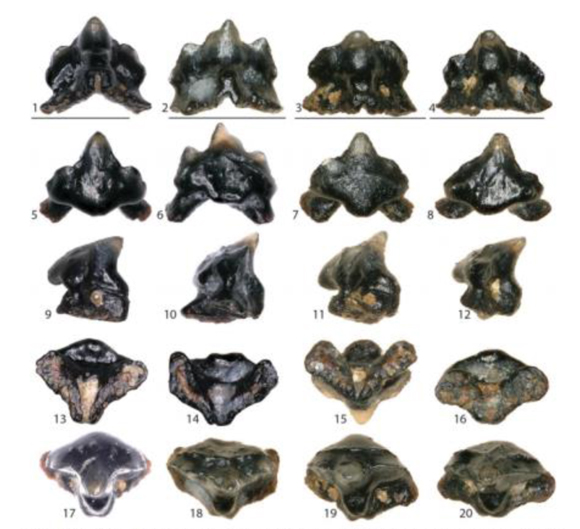
Lead author of the research, Terry Gates (North Carolina State University), explained that the shark’s name was inspired by the stepped, triangular shape of the teeth that reminded the research team of the spaceships in the 1980s video game Galaga.  The species epithet honours Field Museum volunteer Karen Nordquist who discovered the fossilised teeth in the matrix material.

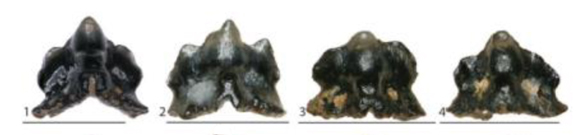
Fossil Teeth Reminded the Scientists of Video Game Spaceships

Galagadon fossil teeth.
Specimens of shark teeth (lingual view) assigned to Galagadon.  Scale bars = 1 mm.

Picture credit: Terry Gates (North Carolina State University)/Journal of Paleontology

Commentating on her fossil find, Nordquist stated:

“It [a tooth] was so tiny, you could miss it if you weren’t looking really carefully.  To the naked eye, it just looks like a little bump, you have to have a microscope to get a good view of it.”

Tiny Teeth Change our View of the Prehistoric Environment

The tiny teeth are only about a millimetre wide, about the size of a pinhead.  Galagadon was small too, estimated at around thirty to sixty centimetres in length.

Dr Makovicky added:

“Galagadon was less than two feet long, it’s not exactly Jaws.  It’s comparable to bamboo sharks living today.  It probably had a flat face and was very likely camouflage-coloured, since its relatives today have a camouflage pattern.  It would have eaten small invertebrates and probably spent a fair amount of time lying on the bottom of the riverbed.”

Galagadon may not have been huge, but its discovery has forced scientists into a re-think over what they thought they knew about the area where the T. rex named “Sue” was found.  It had been thought that the fossil locality represented a lake formed from a partially dried-up river, the presence of a shark suggests there must have been at least some connection to the sea.

Galagadon nordquistae – A Member of the Orectolobiformes

The shark has been classified as a member of the Orectolobiformes Order of sharks, making it distantly related to extant carpet sharks including bamboo sharks.  These types of shark are believed to have originated in the Jurassic and had a global distribution, today they are mostly restricted to waters in southeast Asia and Australia.

Co-author of the study, Eric Gorscak (Field Museum) explained:

“It’s surprising to find their fossils at the Sue locality.  During the Late Cretaceous, the continents continued to drift apart, further isolating dinosaurs and other land animals, and at the same time created the Atlantic and Indian oceans.  With occasional seaways connecting these young oceans, we have found fossils of marine life flourishing globally, including Galagadon and its relatives.”

Various Views of the Galagadon Teeth

Views of Galagadon teeth.
Galagadon teeth. Specimens in lingual view (1–4), labial view (5–8), lateral view (9–12), basal view (13–16), and occlusal view (17–20). Scale bars = 1 mm.

Picture credit: Terry Gates (North Carolina State University)/Journal of Paleontology

Hell Creek – More than Flashy Dinosaurs

The study also reflects the importance of learning about fossils beyond big, flashy dinosaurs.  Each species discovered helps to build up a picture of the ecosystem in which the dinosaurs and other megafauna existed.

Karen Nordquist added:

“Most people, when they think of fossils, think of big huge dinosaur bones, but in the dirt, there are the bones of tiny animals.  When you get those bones and identify them, you get an idea of the whole environment, everything that lived with the big dinosaurs.  You learn so much from micro-sorting.”

The scientific paper: “New Sharks and Other Chondrichthyans from the Latest Maastrichtian (Late Cretaceous) of North America” by Terry A. Gates, Eric Gorscak and Peter J. Makovicky published in the Journal of Paleontology.

Everything Dinosaur acknowledges the help of a press release from the Field Museum (Chicago), in the compilation of this article.

Visit the award-winning and popular Everything Dinosaur website: Everything Dinosaur.
21 01, 2019

New Research into the Evolution of Jawed Vertebrates

By |2023-11-20T07:14:41+00:00January 21st, 2019|Categories: Dinosaur Fans, Main Page, Palaeontological articles, Photos/Pictures of Fossils|0 Comments

Research Changes Views over Evolution of Jawed Vertebrates

An international team of scientists, including researchers from Manchester University, have helped unravel the secrets hidden in the fossilised remains of an ancient hagfish, a slimy, eel-like fish whose descendants still swim the oceans of the world today.

Working in collaboration with researchers from the University of Chicago (Illinois, USA), the Manchester University team have identified the first detailed fossil of a hagfish.  The Manchester team were led by Professors Phil Manning and Roy Wogelius, powerful X-rays were used to provide a detailed examination of the fossil specimen, providing a fresh perspective on the evolution of jaws in animals with back bones (vertebrates).

The Tethymyxine tapirostrum fossil Specimen Being Prepared for Synchrotron Analysis

Tethymyxine tapirostrum fossil.
Tethymyxine tapirostrum fossil being prepared for synchrotron X-ray analysis.

Picture credit: University of Manchester

The X-rays were produced using the Stanford Synchrotron Radiation Lightsource (SSRL), a cyclic particle accelerator at Stanford University (California).  Once the fossil had been scanned, the data produced helped answer the question as to when these ancient jawless fish branched-off the vertebrate evolutionary tree.

An Ancient Hagfish – An Important Discovery

This discovery is incredibly important as it changes our view of the evolutionary lineage that gave rise to modern-day jawed vertebrates (gnathostomes), from bony fish to humans.  The scientific paper is being published in the “Proceedings of the National Academy of Sciences”.  The fossil, a specimen of a hagfish from the Late Cretaceous comes from Lebanon and it measures just over thirty centimetres long.  The fossil represents a species named Tethymyxine tapirostrum.

Commenting on the importance of this research, Professor Phil Manning (Chair of Natural History at the University of Manchester) stated:

“This is an extremely significant discovery as it recalibrates our understanding of the evolutionary history of all early vertebrates, an ancestral line that leads to all jawed beasties including us. Humans!”

Professor Manning added:

“This wonderful fossil plugs a 100-million-year gap in the fossil record and shows that hagfish are more closely related to the lamprey than to other fishes.  The chemical maps produced at SSRL enabled our team to see for the first time the anatomical features so crucial to the interpretation of this very distant relative.”

Lampreys are another form of ancient, blood-sucking, jawless fish also still in existence today.  These findings show that both the hagfish and lamprey evolved their eel-like body form and strange feeding systems after they branched off from the rest of the vertebrate line of ancestry about 500 million years ago, during the Cambrian geological period.

Professor Manning at the SSRL (Stanford University)

Professor Phil Manning at the Stanford Synchrotron Radiation Lightsource (SSRL).
Professor Manning at the Stanford Synchrotron Radiation Lightsource (SSRL).

Picture credit: University of Manchester

Dr Tetsuto Miyashita, (Fellow in the Department of Organismal Biology and Anatomy at Chicago University), who led the research, explained:

“This is a major reorganisation of the family tree of all fish and their descendants.  This allows us to put an evolutionary date on unique traits that set hagfish apart from all other animals.”

The Bizarre Hagfish

The bizarre hagfish are entirely marine and are the only known living animals that possess a rudimentary skull but no vertebral column.  They do have very primitive vertebrae but instead of a back bone like other vertebrates they just have a modified notochord.  They have a unique defence mechanism to help them ward off ocean predators such as sharks.  Hagfish can produce copious amounts of slime, clouding the water in their proximity and clogging the gills of would-be attackers.  In some parts of Asia, such as South Korea, this slime is prized and used in cooking.

It was this ability to produce slime that made the Tethymyxine fossil all the more important and rare.  The discrete chemistry locked within the fossil could only be mapped using synchrotron-based imaging techniques developed by the Manchester/SSRL team.  Manchester University  is an established world leader in the synchrotron-based imaging of fossil remains.  This technique has permitted the team to identify the “chemical ghost” of the preserved soft tissue and slime glands of the fossil.  Soft tissues are rarely preserved as fossils, which is why there are so few examples of prehistoric hagfish for palaeontologists to study.

Detailed Scans of the Fossil

The detailed scans picked up the chemical signal for keratin, the same material that makes up your hair and nails.  Keratin is a crucial part of what makes the hagfish slime defence so effective.

Professor Wogelius, (Chair of Geochemistry at The University of Manchester), commented:

“Our team at Manchester has been using these increasingly sophisticated imaging techniques to help us better understand ancient fossils and resolve chemistry derived from both the organism and the environment in which they were preserved.”

Professor Manning added:

“This ‘chemical’ fossil has offered new and exciting evidence that has enabled a more robust reconstruction of the vertebrate family tree.  However, it was only made possible through the collaboration of an international team, as Darwin once said, ‘In the long history of humankind (and animal kind, too) those who learned to collaborate and improvise most effectively have prevailed’”.

Everything Dinosaur acknowledges the assistance of a media release from the University of Manchester in the compilation of this article.

Visit the Everything Dinosaur website: Everything Dinosaur.
20 01, 2019

New Eofauna Giganotosaurus with an Articulated Jaw

By |2023-11-20T07:04:47+00:00January 20th, 2019|Categories: Adobe CS5, Dinosaur Fans, Everything Dinosaur News and Updates, Everything Dinosaur Products, Everything Dinosaur videos, Main Page, Photos of Everything Dinosaur Products, Press Releases|0 Comments

Eofauna Giganotosaurus with an Articulated Jaw

One of the great things about supplying dinosaur models and prehistoric animal figures to collectors all around the world, is that we get to examine the models in our warehouse before they get allocated space on the shelves in readiness for being purchased and dispatched.  When a shipment of new models arrives, there is a lot of excitement around the office and whilst unpacking all the cases, we have the opportunity to examine up close and in detail the latest editions to Everything Dinosaur’s product portfolio.

This week has seen the arrival of the eagerly anticipated Eofauna Scientific Research Giganotosaurus model in 1:35 scale.  The model is beautifully detailed and we thought it fitting to make a short video of the articulated jaw, after all, the size estimate for this meat-eating dinosaur of around 13-14 metres in length was based on the discovery of some super-sized Giganotosaurus teeth.

Admiring the Articulated Jaw on the 1/35th Scale Giganotosaurus carolinii Dinosaur Model by Eofauna Scientific Research

Video credit: Everything Dinosaur

Visit the Everything Dinosaur YouTube channel: Everything Dinosaur on YouTube.

Fifty New Prehistoric Animal Models Coming to Everything Dinosaur in 2019

At the beginning of the year, we predicted that we would be adding approximately fifty new models to our already extensive range.  That’s just about one new model every week.  To read about our palaeontology crystal ball gazing and other predictions for 2019: Our Predictions for the Forthcoming Year.

The Eofauna Giganotosaurus is the first dinosaur model to be created by this talented company.  We knew about the introduction of this theropod many months ago, when we met up with the senior management team of Eofauna Scientific Research, we even helped with the production of the text that accompanies this beautifully-crafted dinosaur model.

We have added this figure to our own prehistoric animal model collection (we already have the two prehistoric elephants – the Steppe Mammoth and the Straight-tusked Elephant), we chose to create a short video just to demonstrate the skilfully sculpted skull and to highlight the model’s articulated jaw.

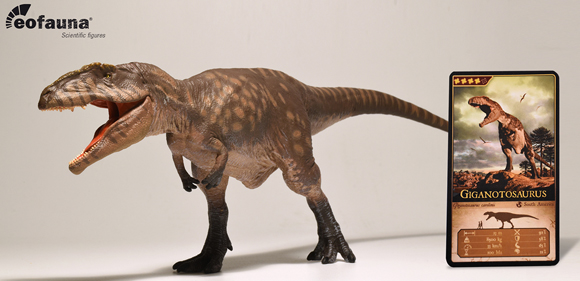
The Eofauna Giganotosaurus Dinosaur Model

Eofauna Scientific Research Giganotosaurus carolinii.
The 1:35 scale Eofauna Giganotosaurus dinosaur model has an articulated jaw.

Visit the Everything Dinosaur website: Everything Dinosaur.
Eofauna Giganotosaurus Dinosaur Model

Over the last few days we have been busy emailing all those people who had contacted us so that they could reserve a model.  We have already received lots of amazing feedback and even seen some of video reviews posted up by our customers.  We are already looking forward to the fourth model to come out from Eofauna Scientific Research.  No doubt, details about this will be posted up on this blog site and on Everything Dinosaur’s social media sites in the near future.

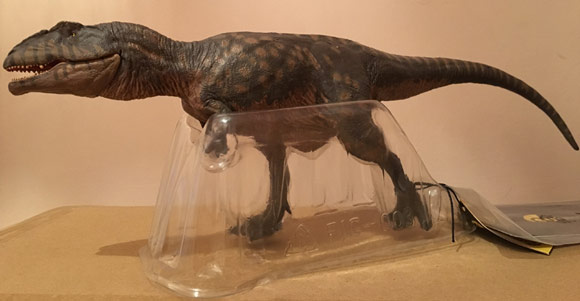
A Plastic Cradle Helps Protect the Model in Transit and Also Prevents any Issues with Legs Warping

The Eofauna Giganotosaurus dinosaur model.
Eofauna Giganotosaurus model.  The third prehistoric animal model to be created in this exciting replica range. Picture credit: Everything Dinosaur.
Picture credit: Everything Dinosaur

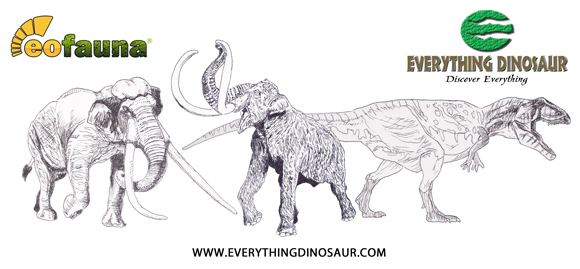
Three of a Kind – The Current Eofauna Model Range

Three Eofauna replicas illustrated.
Illustrations based on the three Eofauna replicas (left to right), Palaeoloxodon antiquus, Mammuthus trogontherii and Giganotosaurus carolinii. Picture credit: Everything Dinosaur.
Picture credit: Everything Dinosaur/Eofauna Scientific Research

To view all the models in the Eofauna Scientific Research range available from Everything Dinosaur: Eofauna Scientific Research Models.

Go to Top