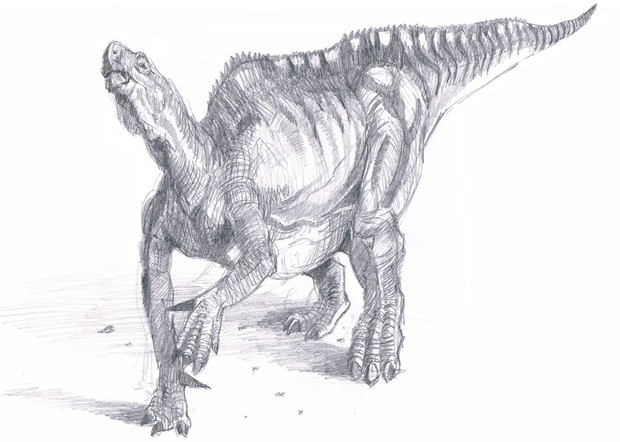
Everything Dinosaur team members get sent lots of amazing prehistoric animal drawings, we really do have some supremely talented customers. Today, we feature a pencil sketch from Ian, he has chosen to illustrate an iguanodontid. From the heavy build, we suggest that this is an illustration of Iguanodon bernissartensis, however, it could just as well be an illustration of another robust iguanodontid such as Barilum dawsoni.
Illustrating Iguanodon
Ian’s Iguanodontid Illustration Sent into Everything Dinosaur
An illustration of a robust iguanodontid, possible I. bernissartensis or B. dawsoni.
Picture credit: Ian
A Quadrupedal Stance
Ian has chosen to depict his ornithopod in a quadrupedal stance. Such a large and powerful animal would have had little to fear from the predators that shared its habitat, although if threatened and needing to make a quick getaway, these animals could rear up onto their strong hindlegs and adopt a bipedal running gait.
A spokesperson from Everything Dinosaur commented:
“Our thanks to Ian for sending into us his splendid pencil drawing of a stocky, robust iguanodontid. It is always a pleasure to receive illustrations of dinosaurs and other prehistoric animals.”
As Everything Dinosaur prepares for the arrival of the first of the new for 2020 CollectA “Age of Dinosaurs” models and figures, team members are busy sorting out scale drawings to insert into the prehistoric animal fact sheets that we are researching and writing. One of the first of the new CollectA models will be a Fukuisaurus, a replica of a bird-hipped dinosaur known from the Early Cretaceous of Japan.
Very little of the skeleton of Fukuisaurus (F. tetoriensis) is known. CollectA, just like palaeontologists who have to try to reconstruct a dinosaur skeleton, from only a limited amount of material, have based their figure on better-known iguanodontids that were probably closely related to Fukuisaurus. From the model, Everything Dinosaur team members have been able to commission their scale drawing.
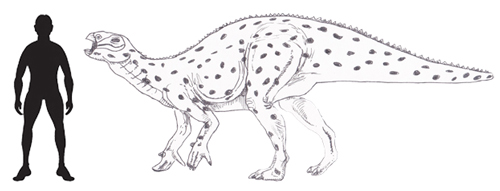
The Scale Drawing of Fukuisaurus (F. tetoriensis)
A scale drawing of the Early Cretaceous dinosaur Fukuisaurus.Picture credit: Everything Dinosaur.
Picture credit: Everything Dinosaur
Calculating the Size of Fukuisaurus
Although the actual size of Fukuisaurus is not known (due to the scarcity and paucity of the fossil material), Everything Dinosaur team members have based their scale drawing on the size estimate given by the acclaimed dinosaur expert Gregory S. Paul who postulated a body length of around four to four and half metres. The body weight of this herbivorous dinosaur would have fluctuated over the course of the year, depending on the availability of food. Just like many herbivores today, this dinosaur would have laid down fat during the times when forage was plentiful and then it would have lived on its reserves during times when food was scarce, such as in the dry season.
Everything Dinosaur team members estimate that this dinosaur probably weighed around four hundred kilograms when fully grown.
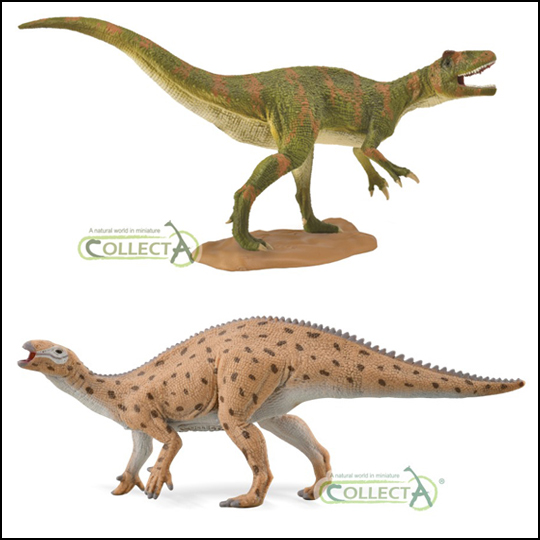
At the time when Everything Dinosaur announced this 2020 edition to the CollectA Deluxe range, model designer Anthony Beeson stated that he had been inspired to introduce another dinosaur from the famous Kitadani Formation of Japan, in response to requests from Japanese collectors. These fans will have in 2020, a model of an Early Cretaceous ornithopod to display alongside the CollectA Fukuiraptor that was introduced this year (2019).
The CollectA Fukuiraptor and the CollectA Fukuisaurus Dinosaur Models
The CollectA Fukuiraptor (top) and the CollectA Deluxe Fukuisaurus (bottom).Picture credit: Everything Dinosaur.
Fossilised Bird and Dinosaur Feathers from Australia
Palaeontologists know that dinosaurs roamed high latitudes, that is to say that fossil finds have demonstrated that dinosaurs once inhabited parts of the world that are now in the Arctic Circle and similar fossil discoveries have been made in the Southern Hemisphere demonstrating that the Dinosauria also inhabited Antarctica.
Although, the climate during the Mesozoic was much warmer than it is today, in these high latitudes the fauna and flora would still have had to endure challenging conditions, such as freezing temperatures and many months of darkness with the sun not rising above the horizon. It has been suggested that many dinosaur residents were feathered, their integumentary coverings of protofeathers and down helping to keep them warm.
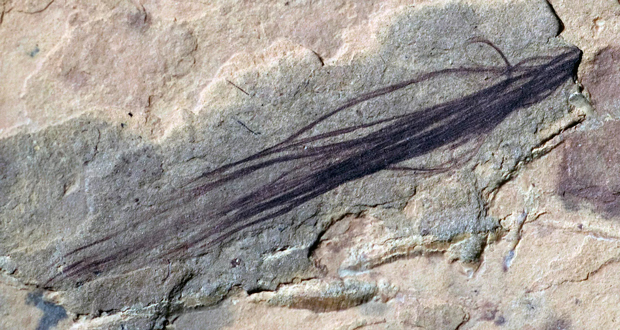
However, actual evidence of fossilised feathers was lacking, but scientists writing in the journal “Gondwana Research”, describe several feathers from the Lower Cretaceous-aged sediments at the Koonwarra Fish Beds Geological Reserve located in Victoria (Australia).
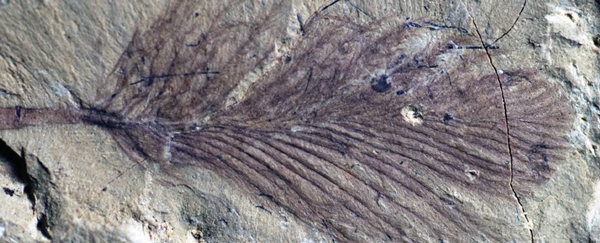
A Fossilised Feather from the Koonwarra Fish Beds Geological Reserve
A fossilised filamentous protofeather associated with the Theropoda from the Koonwarra Fish Beds Geological Reserve.
Picture credit: Kundrát et al (Gondwana Research)
Different Types of Feathers Found
Researchers from the Pavol Jozef Safarik University (Slovakia), Monash University, Swinburne University of Technology (both in Australia), Lund University, Uppsala University (Sweden) and from the Natural History Museum of Los Angeles County (USA) in collaboration with other colleagues have identified the first record of avian and non-avian integumentary structures described from Mesozoic polar regions.
In essence, feathered dinosaurs and birds were present at a latitude of around 70 degrees south between 118-115 million years ago. Finding feathers this far south reinforces the view that feathered dinosaurs were ubiquitous for much of the Mesozoic.
Importantly, the handful of fossilised feathers from this site show a lot of variation. Some fossils consist of the preserved remains of tufted body feathers, whilst others show asymmetrical bird-like flight feathers. Fossils of simple, open-vaned contour feathers reminiscent to those of the Liaoning theropod Caudipteryx have also been found.
A Tufted Body Feather from the Koonwarra Fish Beds Geological Reserve
A fossilised feather from the Koonwarra Fish Beds Geological Reserve.
Picture credit: Kundrát et al (Gondwana Research)
Bird and Dinosaur Feathers
One of the co-authors of the scientific paper, Dr Benjamin Kear (Uppsala University) commented:
“Dinosaur skeletons and even the fragile bones of early birds have been found at ancient high-latitudes before. Yet, to date, no directly attributable integumentary remains have been discovered to show that dinosaurs used feathers to survive in extreme polar habitats. These Australian fossil feathers are therefore highly significant because they came from dinosaurs and small birds that were living in a seasonally very cold environment with months of polar darkness every year”.
The Koonwarra Fish Beds Geological Reserve
The feathers come from the Koonwarra Fish Beds Geological Reserve located in South Gippsland, Victoria. The sediments represent the fine-grained clay deposits formed in a large, shallow lake. Many different fossils have been found at this location, including a fossilised flower and Ginkgo leaves. Invertebrates are well represented, the fine grained deposits preserving insects, freshwater mussels, spiders and even the remains of a horseshoe crab.
Apart from the feathers, the only evidence of vertebrates associated with this location are the remains of fish. The strata consist of alternate light and dark bands indicating an extreme seasonal environment, what you would expect in a part of the polar region where lakes would have frozen over during the extremely long winter.
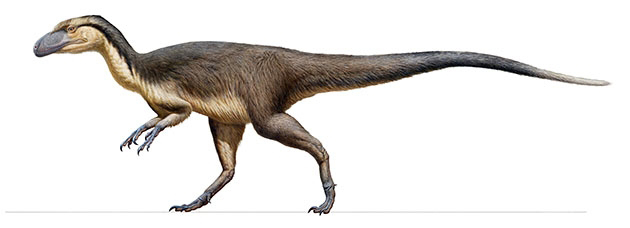
A Life Reconstruction of a Theropod Dinosaur – A Likely Inhabitant of the Polar Region
A life reconstruction of a polar theropod dinosaur. Feathers found in Victoria indicate the presence of feathered polar dinosaurs in southern Gondwana during the Early Cretaceous.
Picture credit: Peter Trusler
Dinosaur Feathers Preserved as Fossils
Feather fossils from this site were first described in the 1960s but at the time they were thought to represent bird feathers, thanks to feathered dinosaur discoveries from elsewhere in the world, most notably north-eastern China, this fossil material has been reassessed and the researchers conclude that the variety of feathers at this site augments the limited skeletal evidence for a range of insulted non-avian theropods and birds living at extreme high latitudes in the southern hemisphere.
Analysis of some of the feathers has revealed residual patterning and the preservation of rod-shaped structures at the cellular level suggests the presence of eumelanosomes which in turn could help scientists determine pigments and colouration.
The scientists infer that many of the feathers indicate a dark pigmentation, such a colouration might have provided effective camouflage or permitted the absorption of a greater proportion of the energy from the rays of the sun – very useful if you inhabit a cold, dark world for much of the year.
Everything Dinosaur acknowledges the assistance of a media release from Uppsala University in the compilation of this article.
The scientific paper: “A polar dinosaur feather assemblage from Australia” by Kundrát, M., Rich, T. H., Lindgren, J., Sjövall, P., Vickers-Rich, P., Chiappe, L. M. and Kear, B. P. published in Gondwana Research.
Everything Dinosaur team members get the chance to view all sorts of different examples of prehistoric artwork and illustrations. We are grateful for Caldey for sending into us her illustration of the Late Jurassic theropod Allosaurus, a dinosaur that is sometimes referred to as the “lion of the Jurassic”.
An Allosaurus Drawing
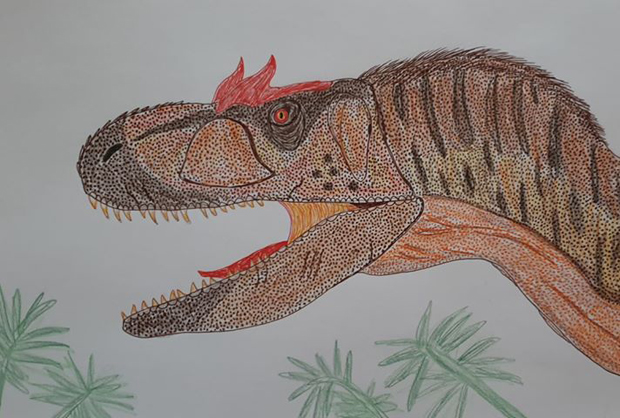
An Illustration of the Head and Neck of Allosaurus (A. fragilis)
An illustration of the fearsome Jurassic carnivorous dinosaur – Allosaurus.
Picture credit: Caldey
The Theropod Allosaurus
Like many aspiring palaeoartists, young Caldey has been experimenting by using different techniques to create the impression of the texture of reptilian skin. In her illustration of Allosaurus, she has used a different method to produce the scales of this large, meat-eating dinosaur. Coloured dots have been used to create the illusion of rough scales and we think the end result is most impressive.
The flash of red is very distinctive over the eyes. Allosaurus had a pair of small horns just above each eye-socket. These horns were actually extensions of the lacrimal bones that are located just in front of the eyes and help to form the orbit. These bones, in turn, were probably covered in keratin and they could have been quite colourful, perhaps having a role in visual displays.
This specimen has scars located on both the upper and lower jaw. These injuries could have occurred when tackling prey or perhaps during intraspecific combat, for example, face-biting behaviour has been postulated for a number of theropods.
Selecting the Colouration
Caldey has also used her own colour palette based on their environment and her research as to which habitats could have been home to this Late Jurassic predator (possible forest and plain areas). She has also mentioned that it would be great if a manufacturer would make an Allosaurus model in this colour scheme.
Our thanks again to Caldey for sending her drawing into us.
Illustrating the Famous Morrison Formation Fauna and Flora
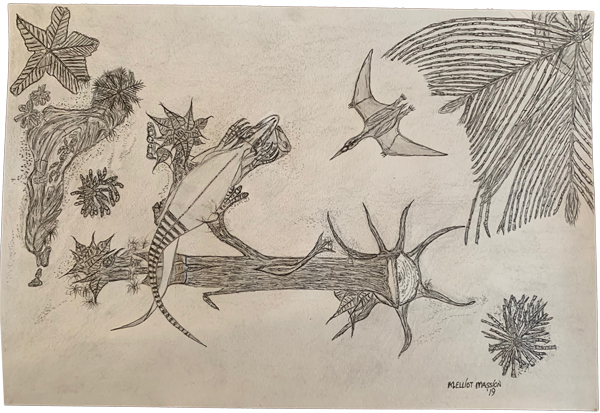
We tend to get sent a lot of drawings and illustrations depicting prehistoric life. Everything Dinosaur team members view all the images that we receive and where appropriate and if requested, we respond via email with comments. Recently, we received a drawing depicting a scene relating to the palaeofauna and palaeoflora associated with the famous Morrison Formation of western North America. Our thanks to M. Elliot Massion (Mark), for sending this illustration to us.
The scene is shown from an aerial view perspective, the viewer is looking down onto the drawing, as if the events depicted were being observed by a pterosaur flying past.
A “Bird’s-eye” View of Prehistoric Fauna and Flora (Upper Jurassic)
An aerial view of life in the Late Jurassic (Morrison Formation).
Picture credit: M. Elliot Massion
The Famous Morrison Formation
The illustrator commented:
“A ‘bird’s-eye’ view of the Morrison during the Jurassic. An Allosaurus fragilis has found a camptosaur carcase, while a Harpactognathus [rhamphorhynchid pterosaur] is drawn to the drama by the smell of blood.”
Mark went onto explain that Allosaurus was an apex predator of western North America in the Late Jurassic, but, it was certainly not above scavenging a carcase, after all, very few predators around today would let the opportunity to have a free lunch slip by. Allosaurus did not have the powerful bite force, and mega teeth of a T, rex; however, adaptations to its jaws, skull, and neck muscle attachments, allowed it to hunt huge sauropods. Its teeth and claws created massive wounds that eventually caused prey to die of shock and blood loss.
For further details about the potential hunting prowess of allosaurids, Mark recommends Robert T. Bakker’s “Brontosaur Killers: Late Jurassic Allosaurids as sabre-tooth cat analogues” in Gaia, issue 15, December 1998.
Our thanks to Mark for sending in the illustration and accompanying notes.
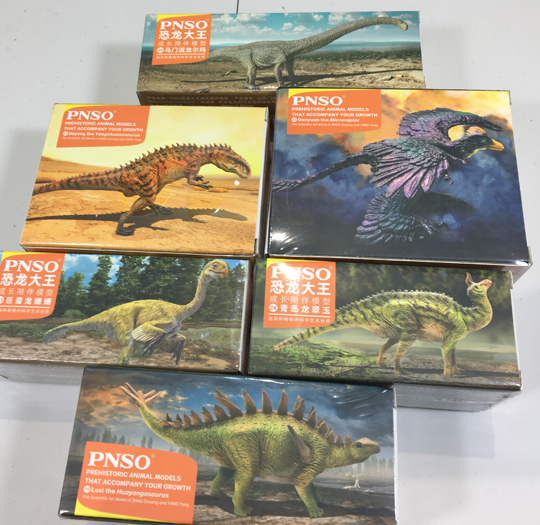
There are always lots of people willing to provide a review of a dinosaur or prehistoric animal model. At Everything Dinosaur, we take lots of photographs and videos of models however, today, we want to focus on another aspect of prehistoric animal model collecting, the product packaging. Recently Everything Dinosaur brought in new for 2019 PNSO models and figures and the artwork on the packaging, the box art is superb.
New for 2019 PNSO Prehistoric Animal Models – Great Models Great Artwork
PNSO prehistoric animal model boxes showing the artwork. The picture shows Er-ma the Mamenchisaurus (top), Dayong the Yangchuanosaurus and Gaoyuan the Microraptor (second row). Third row Shanshan the Gigantoraptor and Cuiyu the Tsintaosaurus, with Luxi the Huayangosaurus stegosaur (bottom).Picture credit: Everything Dinosaur.
Picture credit: Everything Dinosaur
PNSO Models
PNSO has long been associated with the scientific art world of the famous Chinese palaeoartist Zhao Chuang and this box art certainly reflects the high standards we have come to expect from him.
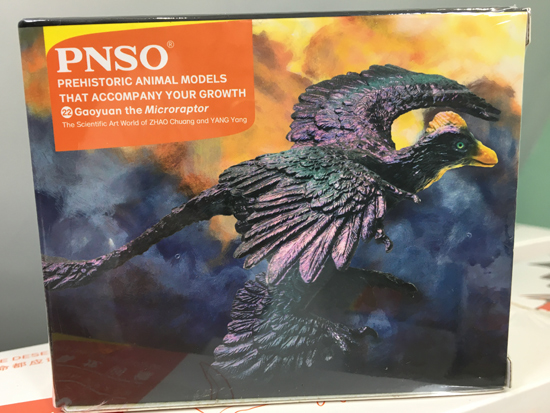
Prehistoric Animals that Accompany Your Growth – Gaoyuan the Microraptor Box Art
PNSO prehistoric animals that accompany your growth Gaoyuan the Microraptor.
Picture credit: Everything Dinosaur
The box art helps to bring out the fine detail and skilful painting of the prehistoric animal figures. The PNSO model range has certainly grown in the last two years or so, Everything Dinosaur team members have played a role in helping to develop and promote this product line and it is wonderful to see the fine artwork of Chinese illustrators being showcased in this manner.
Er-ma the Mamenchisaurus Dinosaur Model (PNSO)
The artwork on the Er-ma the Mamenchisaurus sauropod box from PNSO.Praising the packaging of PNSO models. Picture credit: Everything Dinosaur.
Picture credit: Everything Dinosaur
To view these new for 2019 PNSO prehistoric animal figures and the rest of the extensive PNSO model range available from Everything Dinosaur: PNSO Age of Dinosaurs.
Luxi the Huayangosaurus and Shanshan the Gigantoraptor
As well as introducing figure collectors to a whole new selection of prehistoric animals, many of which represent dinosaurs that are very rarely, if ever, made into models, the packaging helps to reinforce the concept of palaeoart and the importance of scientific illustration.
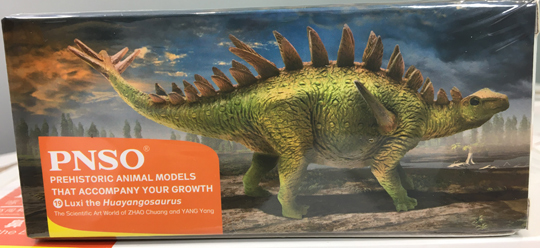
Luxi the Huayangosaurus Box Art
Luxi the Huayangosaurus box art from PNSO.Picture credit: Everything Dinosaur.
Picture credit: Everything Dinosaur
PNSO Shanshan the Gigantoraptor Box Art
Shanshan the Gigantoraptor PNSO box art. Picture credit: Everything Dinosaur.
Picture credit: Everything Dinosaur
A spokesperson from Everything Dinosaur commented:
“We get lots of enquires about how to develop a career in scientific illustration, we do our best to offer advice and support. PNSO have demonstrated that palaeoart is very important to them and these new prehistoric animals and their packaging reflects this commitment.”
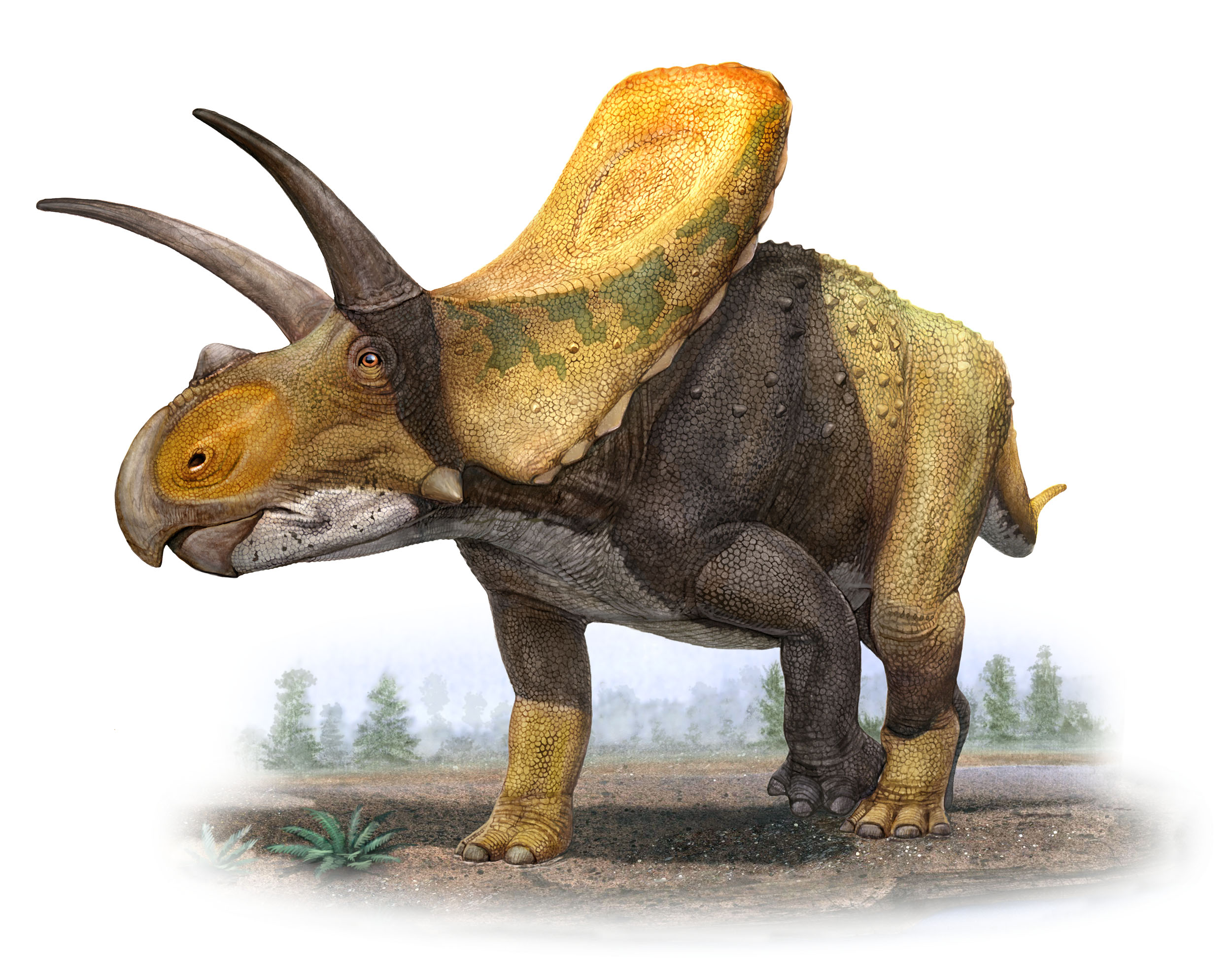
Whilst trawling our extensive database of dinosaur images on a hunt for pictures of Triassic invertebrates, we came across a rather magnificent illustration of the Late Cretaceous, North American ceratopsid Torosaurus (T. latus), by the celebrated palaeoartist Sergey Krasovskiy. The illustration had been used previously in a story about a horned dinosaur discovery from Colorado that had been thought to represent a Triceratops, but when more of the fossil material emerged, the specimen was identified as a much rarer Torosaurus latus.
The Illustration of the Ceratopsid Torosaurus (T. latus)
An illustration of Torosaurus latus (Sergey Krasovskiy).
Picture credit: Sergey Krasovskiy
Torosaurus latus
Known from fossil material found in western North America (as far south as Texas and as far north as Saskatchewan in Canada), Torosaurus was one of the larger horned dinosaur inhabitants of the Maastrichtian faunal stage of the Late Cretaceous. The absence of juveniles in the fossil record and its close relationship to Triceratops led to the hypothesis that Torosaurus was not a valid genus at all, the fossils represented very old individuals of the Triceratops genus.
The taxonomic relationship between Triceratops and Torosaurus is still debated. Research is on-going and the picture has been somewhat complicated when Nedoceratops (N. hatcheri) is added to the mix. Nedoceratops is known from a single skull specimen found in Wyoming. Some palaeontologists think that it is a valid genus, whilst others consider it nomen dubium, as the fossil might represent a growth stage of Triceratops.
If this is proved to be the case (more fossil finds of Late Cretaceous members of the tribe Triceratopsini are required), then Nedoceratops will probably become a synonym of “three-horned face”. This in itself could be controversial as Nedoceratops was formally named and described in 1868, whilst the first Triceratops species (T. horridus) was actually named twenty-one years later (1889).
The CollectA Torosaurus Dinosaur Model
The CollectA Prehistoric Life Torosaurus dinosaur model.
The image (above) shows a CollectA Torosaurus dinosaur model.
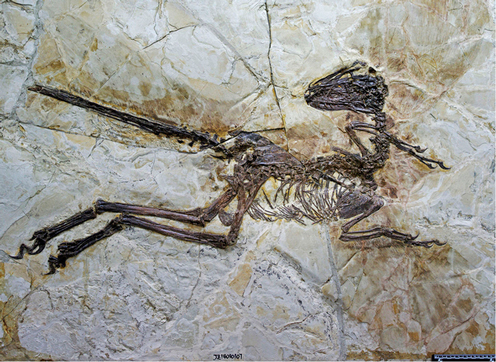
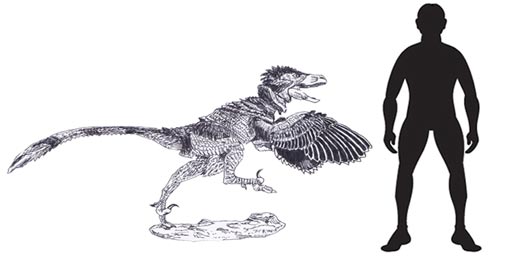
Zhenyuanlong suni, named by Lü and Brusatte in a paper published in the academic journal “Scientific Reports” back in 2015, is one of the larger of the dromaeosaurids described to date from the Yixian Formation of Liaoning Province. It is known from a single specimen (see below), which is almost complete, just a few elements including the distal portion of the tail are missing. The exact size of this theropod dinosaur is not known, as the single specimen could represent a sub-adult.
Zhenyuanlong suni
Not much is known about the fossil’s provenance as the mudstone specimen may have been unlawfully removed from a bedding plane in Jianchang County (Yixian Formation). Palaeontologists estimate that when fully grown this dromaeosaurid measured around 1.6 metres in length. The nomenclature honours Mr Zhenyuan Sun who helped secure the fossil specimen for scientific analysis.
The Holotype Fossil of Zhenyuanlong suni
Large-bodied, short-armed dromaeosaurid from the Liaoning Province of north-eastern China.
Picture credit: Chinese Academy of Geological Science
A Zhenyuanlong articulated figure can be found in the Beasts of the Mesozoic model series.
Our thanks to Caldey who sent into Everything Dinosaur her latest prehistoric animal illustration. Caldey decided to produce a drawing of a Smilodon (Sabre-toothed cat) and what a carefully drawn member of the cat family (Felidae), has been produced. Normally, we receive lots of dinosaur drawings at our offices, our postbag contains pictures of Triceratops, Stegosaurus, sauropods and of course T. rex. Being sent a Smilodon drawing is quite a rarity.
A Smilodon as Illustrated by Caldey
Caldey’s illustration of a Smilodon (Sabre-toothed cat).
Picture credit: Caldey
Sabre-tooth Cat “Knife Tooth”
Smilodon is a genus of the extinct Felidae subfamily the Machairodontinae. These cats were both geographically and temporally widespread (Smilodon is associated with both North and South America), with the very last of them surviving into the Late Pleistocene.
The powerfully built Smilodon is famous for its huge upper canine teeth and palaeontologists have undertaken a great deal of research to determine just how these teeth functioned and how these predators hunted prey. The genus has been translated from the Greek as “knife tooth”, a reference to those huge canines that in some of our specimens measure more than 18 centimetres in length (Smilodon fatalis).
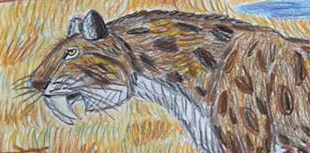
A Close-up View of the Head and Neck of Caldey’s Sabre-toothed Cat
This close up shows the fine detail on the head and neck of the Smilodon drawing.
Picture credit: Caldey
Smilodon Colouration
Although the exact coat colouration of Smilodon is unknown, there has been a recent trend to depict this animal with a mottled or spotted coat. It is thought that ancestral cats, which were small and confined to forested habitats probably had spotted coats that would have provided more effective camouflage. However, the colouration of Smilodon remains speculative.
A spokesperson from Everything Dinosaur commented:
“Caldey’s drawing show lots of amazing detail and she has taken great care to fill in the background for her big cat. We are sure that Smilodon feels very much at home in that landscape.”
The Second Velociraptor Species – Velociraptor osmolskae
The second Velociraptor species to be scientifically described – V. osmolskae, is very similar to V. mongoliensis. However, the known fossil material has sufficient autapomorphies to support the erection of a separate species.
Velociraptor mongoliensis and Velociraptor osmolskae
It is intriguing that the Djadochta and Bayan Mandahu Formations have yielded a very similar dinosaur fauna. For example, Velociraptor mongoliensis, Protoceratops andrewsi, and Pinacosaurus grangeri are synonymous with the Djadochta Formation. In contrast, V. osmolskae is associated with the Bayan Mandahu Formation, and this member of the Velociraptorinae subfamily shared its environment with Protoceratops hellenikorhinus, and Pinacosaurus mephistocephalus.
These differences in the biota associated with each geological formation might be due to some form of natural barrier separating the regions where these two deposits were formed. Evidence for any substantial barrier that would deter the movement of animals from one area to another has proved elusive. It might be and indeed, many palaeontologists favour this hypothesis, that the different faunas can be explained by there being a temporal difference between the two formations, i.e. one formation is younger than the other.
Both Velociraptor species are featured in the Beasts of the Mesozoic range of articulated dinosaur figures.
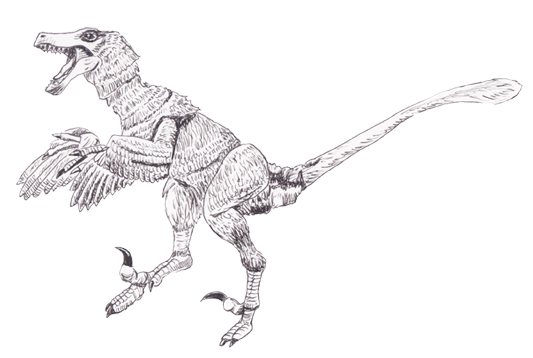
Everything Dinosaur’s Scale Drawing of Velociraptor osmolskae
A drawing of Velociraptor osmolskae. It is estimated that this little “raptor” measured around 1.8 metres in length (mostly tail), stood approximately 1 metre high and weighed around 15 kilograms.Picture credit: Everything Dinosaur.