All about dinosaurs, fossils and prehistoric animals by Everything Dinosaur team members.
3 08, 2021

When Two Caenagnathids Become One

By |2024-05-28T07:17:15+01:00August 3rd, 2021|Categories: Adobe CS5, Dinosaur and Prehistoric Animal News Stories, Dinosaur Fans, Main Page, Palaeontological articles, Photos/Pictures of Fossils|0 Comments

The clade of very bird-like dinosaurs known as the Oviraptorosauria, were very successful and widely distributed in the Northern Hemisphere during the Late Cretaceous. For example, the Nemegt Formation (Mongolia), is famous for the numerous oviraptorosaur dinosaurs that have been named and described from fossils, dinosaurs such as Conchoraptor, Rinchenia, Gobiraptor and the recently described two-fingered Oksoko (O. avarsan) that we featured in an article in October 2020: A New Species of Two-fingered Oviraptorosaur is Described.
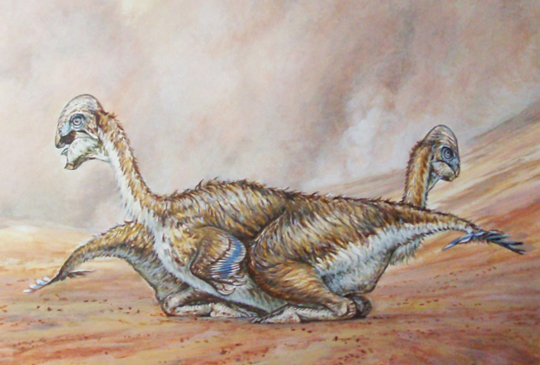
Communal roosting in oviraptorids.
Roosting oviraptorids. The discovery of fragmentary fossils attributed to Elmisaurus (E. rarus) suggests that there was only one caenagnathid dinosaur present in the Nemegt Formation biota rather than two as previously thought. Picture credit: Mike Skrepnick.

Analysis of fragmentary fossil remains attributed to the caenagnathid Elmisaurus suggests that these members of the oviraptorosaur clade (the Caenagnathidae) were actually rare in Mongolia compared to the much more numerous and diverse oviraptorids.

Researchers, which include the eminent Professor Phil Currie (University of Alberta), writing in PLOS One conclude that caenagnathids may have been outcompeted by other oviraptorosaurs and as such, caenagnathids like Elmisaurus only made up a tiny portion of the dinosaur population associated with the Nemegt Formation.

Examining the Oviraptorosauria

The Oviraptorosauria clade consists primarily of two large families of feathered dinosaur, the Caenagnathidae “recent jaws” and the closely related Oviraptoridae “egg thieves”.

Overall, the anatomy of caenagnathids is very similar to that of oviraptorids, but there are a number of differences. For example, caenagnathid jaws exhibited a distinct suite of specialisations not seen in other oviraptorosaurs. The jaws of caenagnathids tend to be relatively long and shallow, this suggests that their bite was not as powerful. The inside of the lower jaws also reveal a complex series of ridges and tooth-like processes, as well as a pair of horizontal, shelf-like ridges. Recent studies have demonstrated that as caenagnathids grew and got older they started to lose their teeth (ontogenetic edentulism).

The unusual jawbone morphology was produced by various tooth reduction patterns and this in turn, suggests that these dinosaurs changed their diet as they matured. Furthermore, the jaws of caenagnathids are unusual as the bones are hollow and air filled. In addition, in general terms caenagnathids tend to be more lightly built than the closely related oviraptorids.
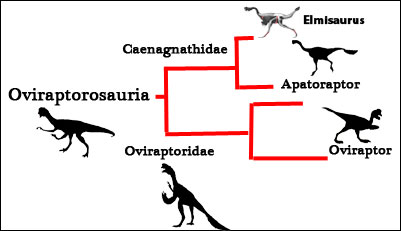
Simplified cladogram of the Oviraptorosauria.
The clade of feathered dinosaurs known as the Oviraptorosauria (egg thief lizards) contains two large families the Caenagnathidae, represented by Elmisaurus in the Nemegt Formation and the Oivraptoridae family which in the Nemegt Formation is represented by Conchoraptor, Nemegtomaia and Rinchenia. In a recently published research paper (summer 2021), scientists conclude that oviraptorids may have restricted caenagnathids to marginal roles in Late Cretaceous Asian ecosystems.  Picture credit: Everything Dinosaur.

Picture credit: Everything Dinosaur

Nomingia gobiensis Actually Elmisaurus rarus

Two members of the Caenagnathidae had been described from fossils associated with the Nemegt Formation, Elmisaurus rarus which was scientifically described back in 1981 and Nomingia gobiensis which was named in the year 2000. The research team which included Gregory Funston (University of Edinburgh), Chinzorig Tsogtbaatar (North Carolina State University), Tsogtbaatar Khishigjav (Mongolian Academy of Sciences) as well as Professor Currie, examined a partial skeleton which had been discovered in 2018, close to the site where the holotype fossils of Nomingia had been found.

The team were able to highlight similarities in the overlapping elements of Elmisaurus and Nomingia. They concluded that fossil material previously attributed to Nomingia gobiensis might represent Elmisaurus rarus and that just one species of caenagnathid is known from the Nemegt Formation.
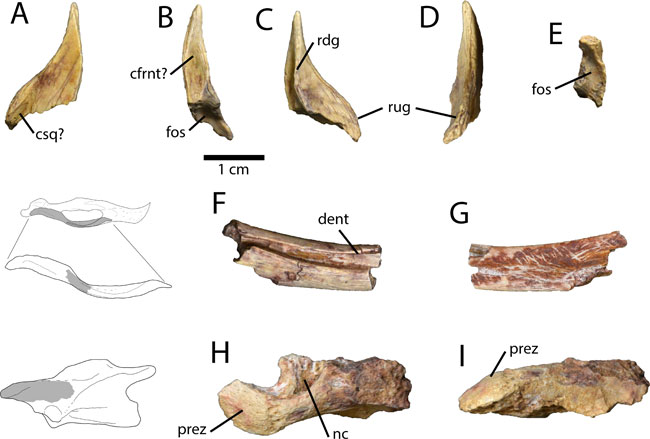
Fragmentary cranial and axial elements attributed to Elmisaurus rarus
Fragmentary cranial and axial elements attributed to Elmisaurus rarus. The researchers concluded that fossil material assigned to the genus Nomingia actually represented Elmisaurus and therefore just one caenagnathid was currently known from the Nemegt Formation. Picture credit: Funston et al.

Oviraptorids Outcompeted Caenagnathids

The researchers discount the idea that a bias in fieldwork has led to the lack of caenagnathid fossil specimens found. After all, numerous small dinosaurs such as dromaeosaurids and oviraptorids are known from Nemegt Formation. The team postulated that the caenagnathids were marginalised and out competed by the similarly sized oviraptorids.
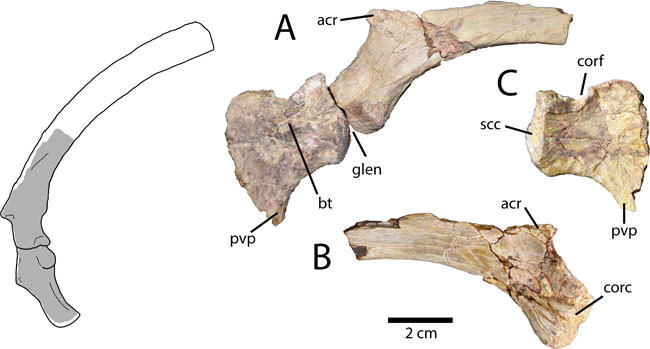
The pectoral girdle of Elmisaurus.
The pectoral girdle of Elmisaurus. Left scapulocoracoid in lateral view (A) and (B), left scapula in medial view. Left coracoid in medial view (C). Interpretive illustration of the closely related Canadian caenagnathid Apatoraptor pennatus for comparison. A fragmentary, weathered caenagnathid skeleton discovered near to the holotype quarry of Nomingia gobiensis is referable to Elmisaurus rarus, revealing more of the morphology of the skull, jaws, pectoral girdle, and pubis. Picture credit: Funston et al.

Differences in Asian and North American Late Cretaceous Ecosystems

The lack of caenagnathids reported from the Nemegt Formation might reflect competition amongst different types of small, cursorial, feathered dinosaurs. In North America, caenagnathids were the only oviraptorosaurs present (no oviraptorids are currently known from North America). In contrast, both oviraptorids and another type of oviraptorosaur closely related to the Caenagnathidae – the avimimids Avimimus portentosus and Avimimus nemegtensis were present in Mongolia during the Late Cretaceous.

The researchers conclude that although the highly diverse Nemegt Formation oviraptorids probably had very specialised diets, they may have outcompeted the caenagnathids in the niche of small omnivores.
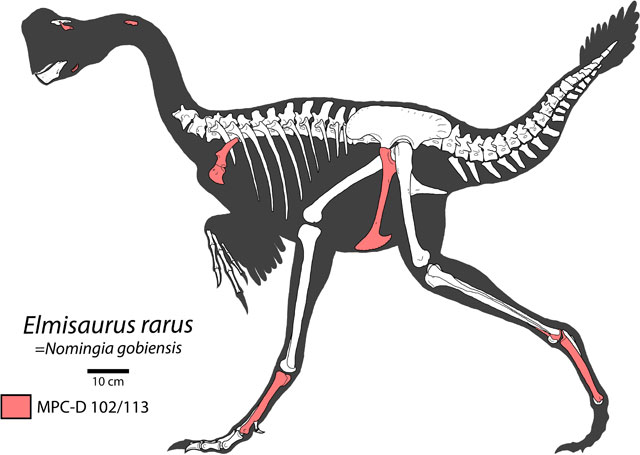
Elmisaurus rarus skeletal reconstruction
A skeletal reconstruction of Elmisaurus rarus. Fossils highlighted in red represent the recently discovered material from a site adjacent to the Nomingia holotype quarry. Analysis of the pectoral girdle suggests that Elmisaurus had quite powerful arms, adapted for rapid movements and the grabbing of prey. Picture credit: Funston et al.

As Nomingia gobiensis was named and scientifically described some nineteen years after Elmisaurus rarus, the research team postulate that Nomingia gobiensis should be regarded as a junior synonym of Elmisaurus. In addition, low caenagnathid diversity in the Nemegt Formation might reflect their inability to compete with other oviraptorosaurs, particularly oviraptorids.

The scientific paper: “A partial oviraptorosaur skeleton suggests low caenagnathid diversity in the Late Cretaceous Nemegt Formation of Mongolia” by Gregory F. Funston, Philip J. Currie, Chinzorig Tsogtbaatar, Tsogtbaatar Khishigjav published in PLOS One.

The Everything Dinosaur website: Dinosaur Figures, Models and Toys.
2 08, 2021

Recreating a Scene from a Famous Monster Movie

By |2024-05-28T07:13:52+01:00August 2nd, 2021|Categories: Adobe CS5, Dinosaur Fans, Everything Dinosaur Products, Main Page, Photos of Everything Dinosaur Products|0 Comments

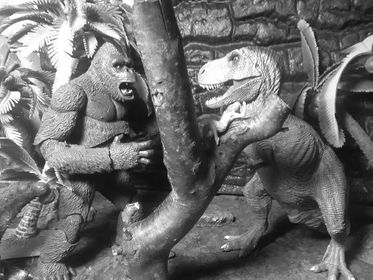
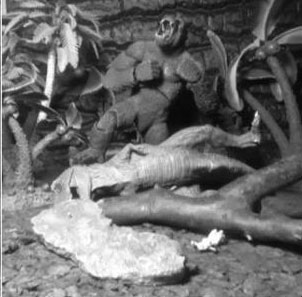
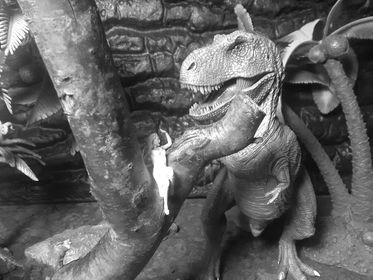
A dinosaur model fan has used his latest T. rex model purchase to depict a famous scene from the 1933 movie “King Kong”. With the acquisition of the Rebor 1:35 80s T-REX Toy HD Remastered “Californiacation” VHS figure, collector and Everything Dinosaur customer Luke sent us some photographs of the iconic King Kong and T. rex battle from the film that he had carefully recreated.

King Kong and T. rex encounter
Ann Darrow is confronted by the fearsome Tyrannosaurus rex. Picture credit: Luke.

The female lead in the film, Ann Darrow (played by Fay Wray), is found by a large, meat-eating dinosaur. Dinosaur model collector Luke has cleverly recreated the famous T. rex and Kong battle. The original fight was created using models and stop motion animation by the legendary Willis O’Brien, a pioneer in film animation and special effects.

King Kong is confronted by Tyrannosaurus rex.
The huge ape King Kong is confronted by Tyrannosaurus rex. Picture credit: Luke.

King Kong Returns

King Kong, alerted by Ann’s screams returns to confront the Tyrannosaurus rex. An illustration of T. rex created by the American artist Charles Robert Knight is believed to have been the inspiration behind the T. rex figure from the 1933 movie.

King Kong versus T. rex
The tree has been knocked down as T. rex and King Kong do battle.

To view the Rebor range of prehistoric animal models available from Everything Dinosaur: Rebor Dinosaur and Prehistoric Animal Models.

A Box Office Hit!

The film which was directed and produced by Merian C. Cooper and Ernest B. Schoedsack was a commercial success although it did not win any notable awards or indeed any Academy Award nominations. This can be explained in part as at the time of its release there was no award category for special effects.

King Kong fights T. rex
King Kong fights Tyrannosaurus rex. Depicting a famous scene from the 1933 movie. Picture credit: Luke.

It is thought the iconic T. rex versus Kong stop motion fight took 7 weeks to complete. Everything Dinosaur team members suspect that it took dinosaur model fan Luke slightly less time to produce his own homage to the 1933 film.

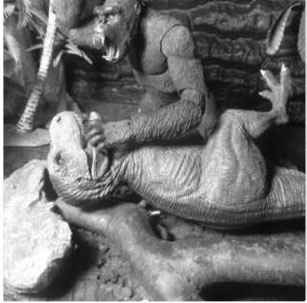
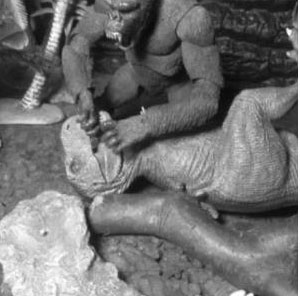
King Kong rip the mouth of Tyrannosaurus rex
The famous scene in which King Kong kills a dinosaur. Picture credit: Luke.

Spawning a Monster Movie Career

Often cited as one of the most influential movies of all time, the 1933 film has inspired numerous monster films and the giant ape character has appeared in several further pictures, most recently in the 2021 release “Godzilla versus Kong” (2021), a film directed by the American Adam Wingard which opened in March of this year (2021) to much critical acclaim and success.

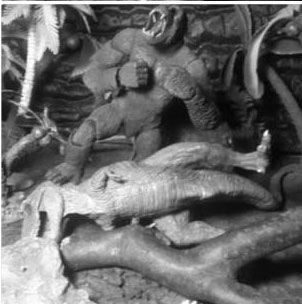
King Kong celebrates killing a dinosaur.
King Kong celebrates killing a dinosaur. A famous scene from the 1933 movie “King Kong”. Picture credit; Luke.
Recreating a famous scene from a monster movie.
Recreating a famous scene from a monster movie. King Kong celebrates his victory. Picture credit: Luke.

Using Dinosaur Models in an Innovative Way

A spokesperson from Everything Dinosaur commented that Luke had used the new Rebor 1:35 80s T-REX Toy HD Remastered “Californiacation” VHS in a very creative and innovative way and praised the collector for his imagination and ambition.

Rebor retro T. rex and Rebor Gorilla model.
A titanic confrontation! The Rebor 1:35 80s T. rex Toy HD Remastered “Californiacation” VHS stands toe-to-toe with the Rebor Alpha Male Gorilla model (Patriarch). Picture credit: Everything Dinosaur.

Picture credit: Everything Dinosaur

The Everything Dinosaur spokesperson added:

“Rebor recently introduced a 1/11th scale model of a mountain gorilla and this figure can be used with various T. rex replicas to recreate iconic scenes from monster movies. We are grateful to Luke for sharing his photographs with us“.

Visit the Everything Dinosaur website: Everything Dinosaur.

1 08, 2021

Ichthyornis Skull New Research

By |2024-05-28T07:09:32+01:00August 1st, 2021|Categories: Adobe CS5, Dinosaur and Prehistoric Animal News Stories, Dinosaur Fans, Main Page, Palaeontological articles, Photos/Pictures of Fossils|0 Comments

An Ichthyornis skull study sheds light on the evolution of brains within the Avialae.

Living birds are very diverse, globally distributed and occupy a huge number of ecological niches. Today, there are more species of birds than mammals, they are certainly extremely successful and they are the only members of the Dinosauria to have survived the end-Cretaceous extinction event. A new study published in Science Advances suggests the unique brain shape of the ancestors of modern birds may have helped them survive the mass extinction that wiped out all the other dinosaurs.

Ichthyornis skull rendering showing position of the endocast.
Rendering of the skull block showing the position of the endocast (pink) relative to the cranium and nearby preserved facial elements (translucent white). Picture credit: Christopher Torres / The University of Texas at Austin.

Studying a Fossil Skull

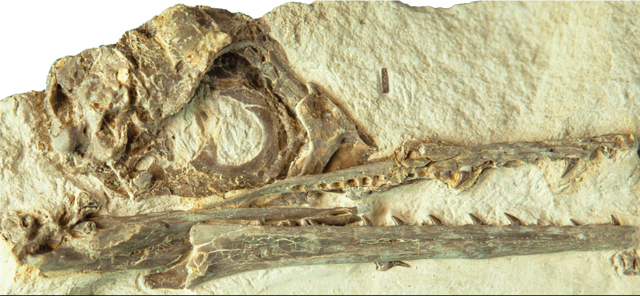
A beautifully preserved skull and jaws of the toothed stem bird (Avialae) Ichthyornis (I. dispar) was subjected to x-ray computed tomography at the University of Texas at Austin so that researchers could gain an better understanding of the shape of the brain of this Late Cretaceous bird.

Brain morphology in Mesozoic birds is very poorly understood. Only two other Mesozoic birds have had their brains mapped – Archaeopteryx lithographica from the Late Jurassic of Germany and the probable enantiornithine Cerebavis cenomanica from the Volgograd Region of Russia which is known from the Middle Cenomanian of the Cretaceous.

Ichthyornis skull specimen
Photograph of skull block including the neurocranium and partial upper and lower jaws of the Ichthyornis specimen (AMNH FARB 32773). Picture credit: Christopher Torres / The University of Texas at Austin.

With the CT-imaging data, the researchers used the skull of Ichthyornis like a mould to create a three-dimensional replica of the brain called an endocast. They then compared that endocast with ones created for living birds and more distantly related, non-avian members of the Dinosauria.

To read a blog post from 2018 about an earlier study of an Ichthyornis skull that provided new information on the evolution of the beak in birds: The First Beak Under the Noses of Scientists.

Ichthyornis Skull Study

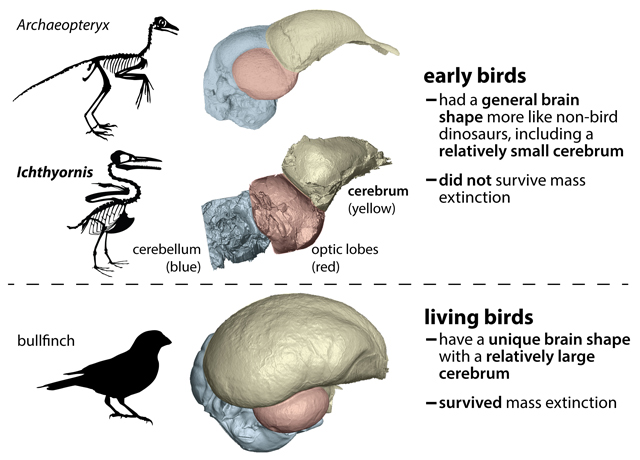
The scientists found that the brain of Ichthyornis had more in common with non-avian dinosaurs than it did with living birds. Specifically, the cerebral hemispheres – where higher cognitive functions such as speech, thought and emotion occur in humans – are much bigger in living birds than in Ichthyornis. That pattern suggests that these functions could be connected to surviving the mass extinction.

Lead author of the study, PhD student Christopher Torres (The University of Texas at Austin), commented:

“Living birds have brains more complex than any known animals except mammals. This new fossil finally lets us test the idea that those brains played a major role in their survival.”

Ichthyornis brain study.
The ancestors of living birds had a brain shape that was very different from other dinosaurs (including other early birds). This suggests that brain differences may have affected survival during the mass extinction that wiped out all non-avian dinosaurs. Picture credit: Christopher Torres / The University of Texas at Austin.

Co-author of the study Julia Clarke, a professor at the University of Texas Jackson School of Geosciences added:

“Ichthyornis is key to unravelling that mystery. This fossil helps bring us much closer to answering some persistent questions concerning living birds and their survivorship among dinosaurs.”

To read a related article published in 2013, that suggested that dinosaur brains were pre-programmed to permit complicated co-ordinated moves, helpful when evolving powered flight : Study Shows Dinosaur Brains Pre-programmed for Flight.

The scientific paper: “Bird neurocranial and body mass evolution across the end-Cretaceous mass extinction: The avian brain shape left other dinosaurs behind” by Christopher R. Torres, Mark A. Norell and Julia A. Clarke published in Science Advances.

Visit the Everything Dinosaur website: Dinosaur Toys and Models.

31 07, 2021

Everything Dinosaur Receives an Amazing 140 5* Google Reviews

By |2024-05-27T15:54:21+01:00July 31st, 2021|Categories: Everything Dinosaur News and Updates, Main Page, Press Releases|0 Comments

Everything Dinosaur, the UK-based specialist mail order company has just received its 140th Google review. Every single review has been five stars – top marks for Everything Dinosaur. The award-winning supplier of dinosaur and prehistoric animal models has chalked up a total of 140 five star Google reviews in a row.

Everything Dinosaur has received 140 5* Google reviews in a row.
Everything Dinosaur has recorded 140 five-star Google reviews in a row.  Picture credit: Feefo.

Feefo Platinum Trusted Service

The company has already been awarded Feefo Platinum Trusted Service accreditation. This is the highest award given out by the independent customer service company Feefo. The Feefo Platinum Trusted Service award was only brought out two years ago (2020) and Everything Dinosaur has been awarded top marks by Feefo and provided with Platinum Trusted Service accreditation in the two years that this award has been in existence (2020 and 2021).

Even in a global pandemic Everything Dinosaur is setting the standard for customer service.

The Feefo platinum service award.
The Feefo Platinum Service Award. Everything Dinosaur has won this top service award in the two years that this accolade has been awarded (2020 and 2021).  Picture credit: Feefo.

Prior to the introduction of this new award, Everything Dinosaur received Feefo’s Gold Trusted Service award. At the time, the highest award Feefo could give a company prior to the introduction of the platinum standards.

Google Reviews

A spokesperson from Everything Dinosaur commented:

“We appreciate that the global pandemic has been very challenging for many of our customers. We understand that on-line shopping has grown but customers want to be able to trust their supplier. We have continued to maintain our customer service and support channels and we have done all we can to help and assist our customers. Our work is reflected in our consistently high customer service rating such as the 140 Google 5* ratings in a row and our Platinum Trusted Service awards that have been awarded to us by the independent ratings company Feefo. We are truly proud and humbled to have received such praise and positive feedback from our customers over many years.”

Visit Everything Dinosaur’s website: Everything Dinosaur.

30 07, 2021

Teasing About a New Spinosaurus Figure

By |2024-05-27T15:52:35+01:00July 30th, 2021|Categories: Adobe CS5, Dinosaur and Prehistoric Animal Drawings, Dinosaur Fans, Everything Dinosaur Products, Main Page, Photos of Everything Dinosaur Products|0 Comments

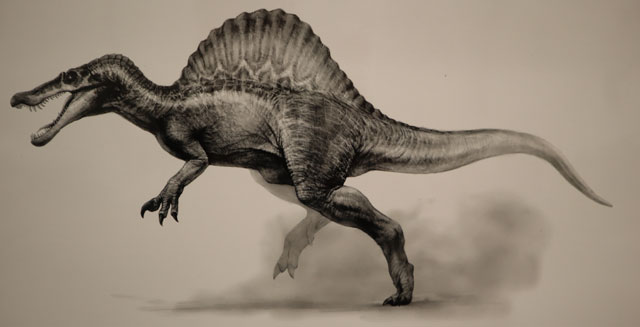
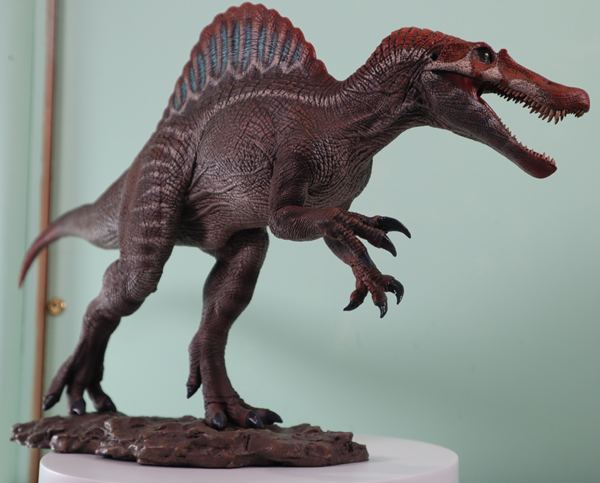
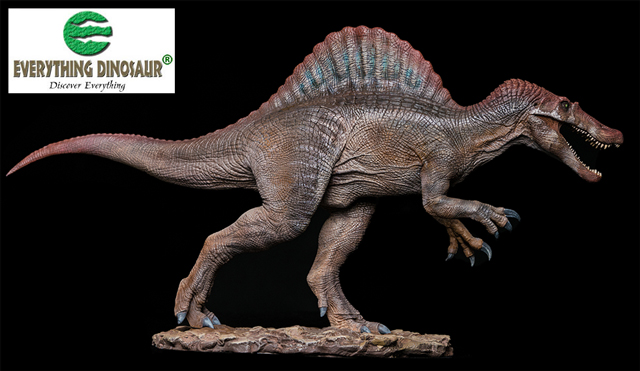
A few days ago, team members at Everything Dinosaur teased their Facebook and Instagram followers with a stunning illustration of the huge theropod dinosaur Spinosaurus. The artwork is supplied with the W-Dragon Spinosaurus (S. aegyptiacus) replica. Team members challenged followers and fans on social media to see if they could correctly identify the illustration.

Spinosaurus illustration
A stunning Spinosaurus illustration based on an interpretation of this giant theropod around 30 years ago. Fans and followers of Everything Dinosaur on social media were asked to identify the prehistoric animal model based on the illustration. Could you work out the model that comes with this splendid Spinosaurus drawing? Picture credit: Everything Dinosaur.

Picture credit: Everything Dinosaur

Clever Collectors

Our well-informed customers, dinosaur model fans and clever collectors were able to identify the Spinosaurus artwork. We are going to have to set some sterner challenges if we are to stump our fans and followers on social media.

W-Dragon Spinosaurus dinosaur model.
The W-Dragon Spinosaurus dinosaur model on its display base. This figure is supplied with superb Spinosaurus illustration. The artwork and the model honour the Spinosaurus that appeared in the third of the “Jurassic Park” trilogies – “Jurassic Park III”, the first film in this hugely successful franchise that was not based on a book by the late Michael Crichton. Picture credit: Everything Dinosaur.

Picture credit: Everything Dinosaur

A spokesperson from Everything Dinosaur commented:

“We have a very knowledgeable and discerning customer base and we like to set the occasional challenge to test how much they know about the models that we sell. Team members have been very impressed with the level of knowledge that has been demonstrated. We might have to set some harder challenges in the future.”

Visit the Everything Dinosaur website: Everything Dinosaur.

W-Dragon Spinosaurus Model

The W-Dragon Spinosaurus arrived in stock at Everything Dinosaur at the beginning of 2021. A special production run had been commissioned by Everything Dinosaur in response to requests from customers.

The W-Dragon Spinosaurus dinosaur model.
The superb W-Dragon Spinosaurus dinosaur replica.

To view the W-Dragon Spinosaurus and the rest of the models in the excellent W-Dragon range: W-Dragon Dinosaur and Prehistoric Animal Models.

29 07, 2021

New Dinosaur “Keeper of the Gates of Hell”

By |2024-05-27T15:51:00+01:00July 29th, 2021|Categories: Adobe CS5, Dinosaur and Prehistoric Animal News Stories, Dinosaur Fans, Main Page, Photos/Pictures of Fossils|0 Comments

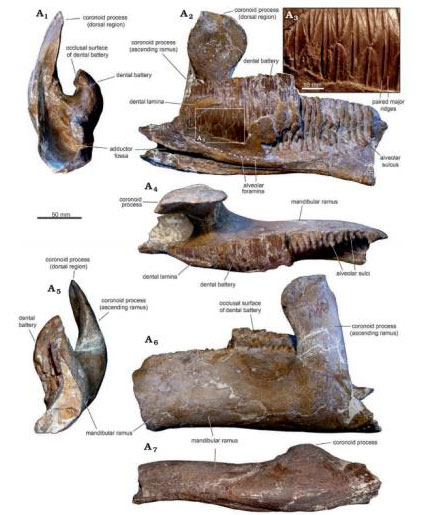
Analysis of a beautifully preserved lower jawbone found in the southern Pyrenees of Spain has led to a new species of Late Cretaceous hadrosauroid dinosaur being erected. Named Fylax thyrakolasus (F. thyrakolasus), it is the youngest non-hadrosaurid hadrosauroid described to date. This dinosaur was one of the very last of all the non-avian dinosaurs to have existed and a phylogenetic assessment places Fylax as the sister taxon of Tethyshadros which is known from north-eastern Italy and was formally named and described in 2009.

Views of the lower jawbone of Fylax thyrakolasus
Dentary of the hadrosauroid dinosaur Fylax thyrakolasus gen. et sp. nov. (IPS-36338, holotype) from the uppermost Maastrichtian Figuerola Formation. Views of the specimen in posterior (A1), medial (A2), dorsal (A4), anterior (A5), lateral (A6), and ventral (A7) views. A detailed lingual view of the tooth crowns appears in A3. Picture credit: Prieto-Márquez and Carrera Farias.

Described from a Dentary

Described from a left dentary (lower jawbone), found in Lleida Province in Spain, the researchers from The Autonomous University of Barcelona (Universitat Autònoma de Barcelona), identified several unique characteristics that enabled them to erect a new taxon. The genus name is derived from the Greek thýra which means door or gate and kólasi which means hell. This translates as the “keeper of the gates of hell” a reference to the proximity of the fossil dentary to the layers of rock that mark the end Cretaceous mass extinction event that saw the demise of the non-avian dinosaurs.

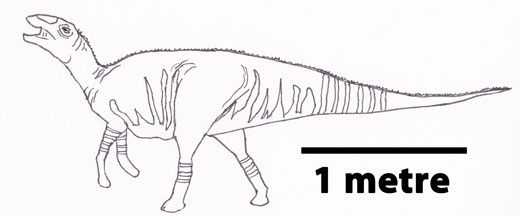
Based on analysis of more complete hadrosaurid fossil remains, Fylax is estimated to have been between 3.5 to 4 metres in length and it is the stratigraphically youngest non-hadrosaurid hadrosauroid known to date.

Fylax thyrakolasus drawing
A life reconstruction of the recently described hadrosauroid from the uppermost Maastrichtian strata of the Figuerola Formation in the southern Pyrenees of Spain. The dinosaur, one of the very last to exist, has been named Fylax thyrakolasus. Note scale bar = 1 metre. Picture credit: Everything Dinosaur.

Picture credit: Everything Dinosaur

An Asian Origin for Hadrosauroids

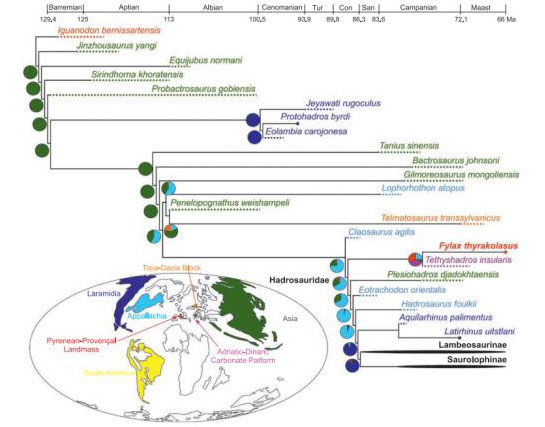
Although not the focus of their study, subsequent analysis and mapping of the geographical distribution of ornithopod fossil remains led the researchers to support the hypothesis of an Asian origin for hadrosauroids, which then subsequently dispersed to the eastern North American landmass of Appalachia. They suggest that the European archipelago that existed during the Late Cretaceous could have facilitated the westward dispersal of hadrosaurid outgroups from Asia to Appalachia.

Mapping the distribution of hadrosaurid dispersal in the Late Cretaceous.
A time calibrated cladogram showing global distribution of hadrosaurs and their close relatives. Pie charts indicate the likelihood of ancestral areas. This study suggests an Asian origin for hadrosauroids and subsequent dispersal to Appalachia, where Hadrosauridae probably evolved, from here once dispersed into Laramidia the Lambeosaurinae and Saurolophinae subfamilies evolved. The European archipelago probably provided a series of island stepping stones permitting the dispersal of hadrosaurids from Asia into North America. Picture credit: Prieto-Márquez and Carrera Farias.

The scientific paper: “A new late-surviving early diverging Ibero-Armorican duck-billed dinosaur and the role of the Late Cretaceous European Archipelago in hadrosauroid biogeography” by Prieto-Márquez, A. and Carrera Farias published in Acta Palaeontologica Polonica.

Visit the Everything Dinosaur website: Everything Dinosaur.

28 07, 2021

PNSO to Introduce new Mamenchisaurus Model

By |2024-05-27T15:49:02+01:00July 28th, 2021|Categories: Adobe CS5, Dinosaur Fans, Everything Dinosaur News and Updates, Everything Dinosaur Products, Main Page, Press Releases|0 Comments

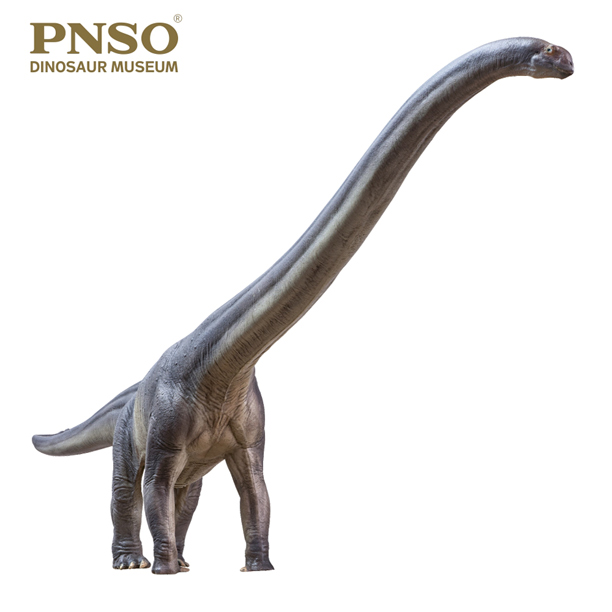
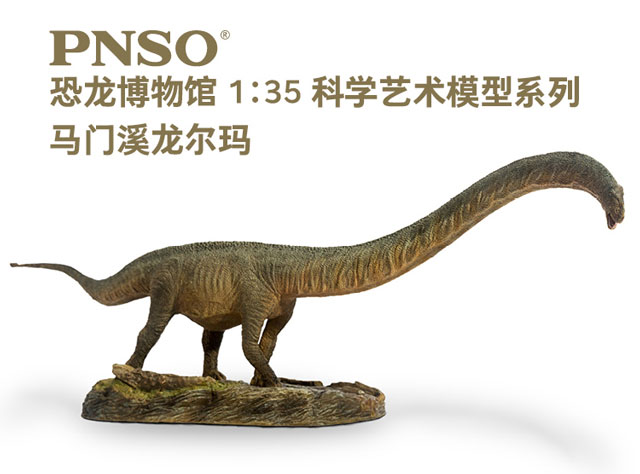
New PNSO prehistoric animal announcements continue to come thick and fast as the Chinese manufacturer announces the introduction of a new Mamenchisaurus dinosaur model in their Scientific Art range. This new version of Er-ma the Mamenchisaurus is in 1:45 scale, although it is roughly the same size as the existing PNSO Scientific Art Mamenchisaurus which has a stated scale of 1:35.

PNSO Er-ma the Mamenchisaurus dinosaur model (2021) in anterior view
A view of the giant PNSO Er-ma the Mamenchisaurus dinosaur model.

A Sauropod with a Club Tail

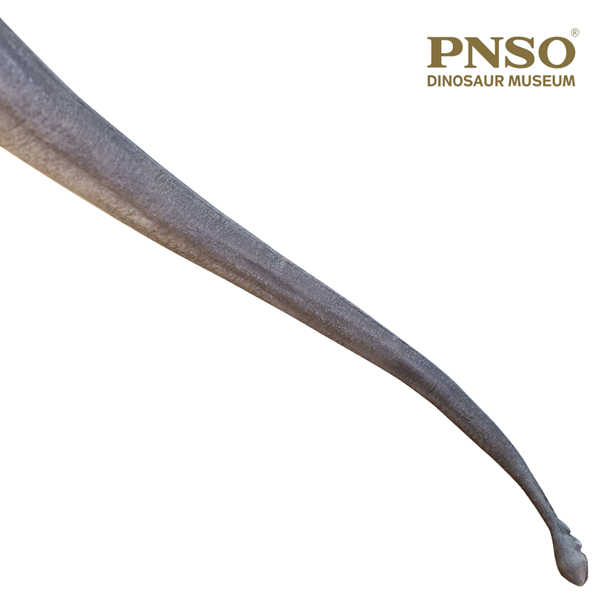
This new PNSO Mamenchisaurus figure has been given a small defensive club on the end of its tail, reminiscent of Shunosaurus. There may be some debate as to whether this dinosaur possessed such a club, fused caudal vertebrae in at least one specimen does suggest that a tail club was present.

PNSO Er-ma the Mamenchisaurus tail club.
The tail club as depicted on the new for 2021 PNSO Mamenchisaurus dinosaur model.

Several species of this Asian sauropod have been described, since the first taxon Mamenchisaurus constructus was named in 1954. In 2001, a well-preserved and nearly complete specimen assigned to the species M. hochuanensis was shown to have four fused vertebrae at the tip of its tail. These fused caudal vertebrae were not thought to have been caused by taphonomy and a pathological cause was discounted. It was proposed that these bones represented a defensive tail club or perhaps a tactile, sensory organ.

The new for 2021 PNSO Mamenchisaurus has been furnished with a tail club and in the release notes accompanying this figure’s announcement the model is described as representing M. hochuanensis.

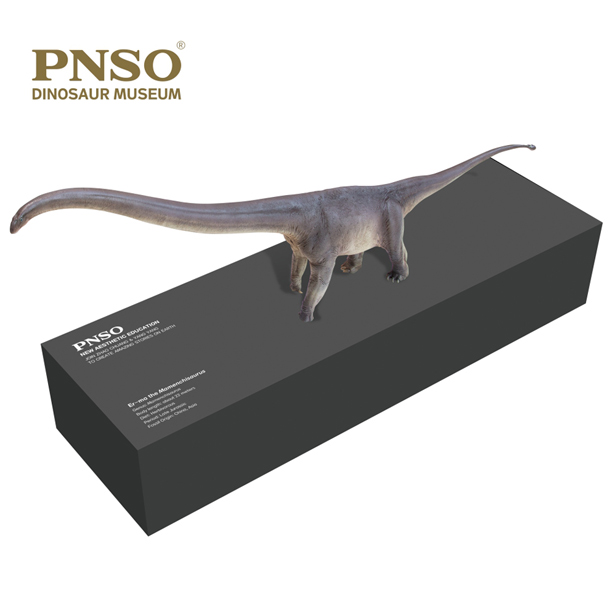
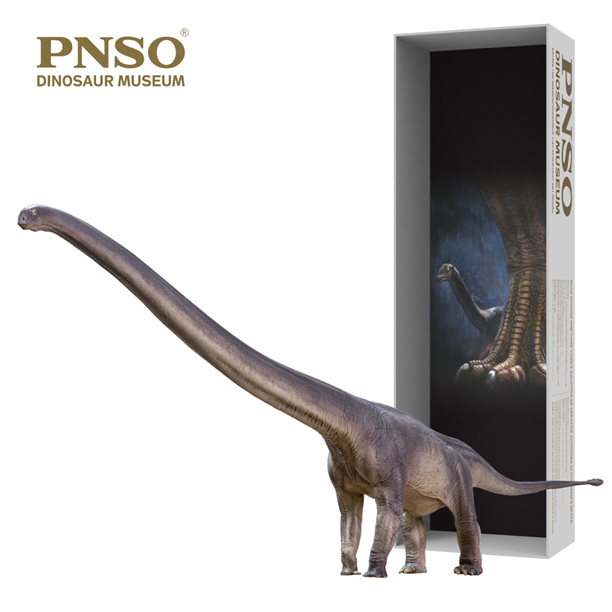
PNSO Er-ma the Mamenchisaurus dinosaur model (2021 version)
The PNSO Er-ma the Mamenchisaurus dinosaur model (2021) standing on a prototype of the product packaging.

Mamenchisaurus Model Measurements

This is the second, large Mamenchisaurus to be introduced by PNSO, after the original Er-ma figure in 1:35 scale that came into stock at Everything Dinosaur back in March 2019. Although, these two dinosaur models have different declared scales, they are approximately the same size. This can be explained by the fact that the figures have different postures and they represent different Mamenchisaurus species.

  • The 2019 Er-ma the Mamenchisaurus (1:35 scale) measures 47.5 cm in length and has a head height of 15 cm. Everything Dinosaur team members have suggested that this figure represents M. constructus.
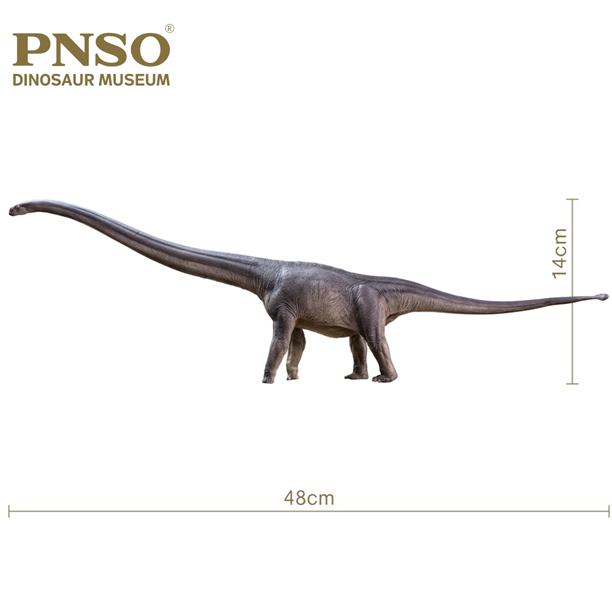
  • The new for 2021 Er-ma the Mamenchisaurus (1:45 scale) measures 48 cm long and is 14 cm tall, it represents the species M. hochuanensis.
PNSO Er-ma the Mamenchisaurus dinosaur model measurements
The PNSO Er-ma the Mamenchisaurus measures 48 cm long and the head is around 14 cm off the ground. It is reported as a 1:45 scale model.
The original PNSO Mamenchisaurus model
The original Er-ma the PNSO Mamenchisaurus dinosaur model. This is a 1:35 scale model, it is thought to represent a different species of Mamenchisaurus.

A spokesperson from Everything Dinosaur commented:

“We welcome the new for 2021 PNSO Mamenchisaurus figure. We cannot confirm or deny at this stage whether the original Er-ma Mamenchisaurus model that has proved to be so popular with collectors, will be retired and withdrawn from production. The new for 2021 figure has a different declared scale, but since the models represent different species and the actual fully-grown size for these sauropods is not known, the declared scale for a figure of this type of dinosaur is somewhat irrelevant in our view.”

The Everything Dinosaur website: Dinosaur Models and Toys.
PNSO Er-ma the Mamenchisaurus product packaging.
The new for late 2021 PNSO Er-ma the Mamenchisaurus with prototype packaging shown behind the figure.

Due in Stock Later in the Year

The new PNSO Er-ma the Mamenchisaurus is due in stock at Everything Dinosaur later in the year (2021). Sending out such a huge model will prove challenging for the team. The box that this figure is supplied in measures 54 cm in length. This might require the UK-based company to commission a special cardboard box to permit these items to be sent out to customers safely.

PNSO Er-ma the Mamenchisaurus
Er-ma the Mamenchisaurus 1:45 scale dinosaur model. A view of the proposed product packaging.

To view the current range of PNSO prehistoric animal models available from Everything Dinosaur: PNSO Age of Dinosaurs.

27 07, 2021

The New Rebor “Retrosaur” Californiacation

By |2024-05-27T15:45:43+01:00July 27th, 2021|Categories: Dinosaur Fans, Everything Dinosaur News and Updates, Everything Dinosaur Products, Main Page, Photos of Everything Dinosaur Products|0 Comments

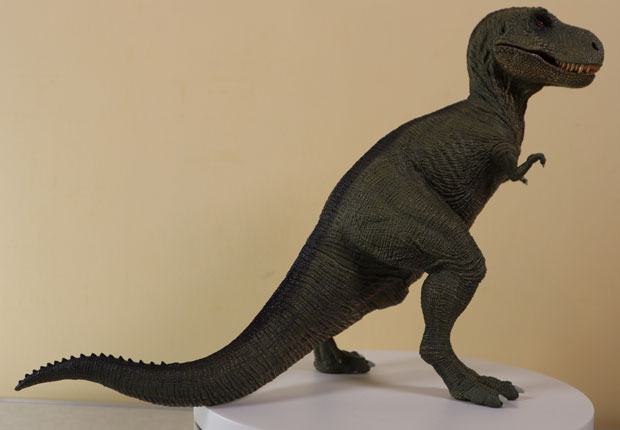
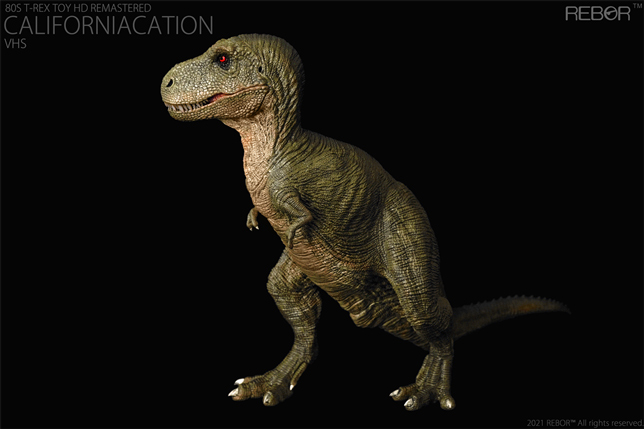
Rebor’s celebration of dinosaurs depicted in the popular media has kicked-off with the introduction of the T. rex figure entitled Rebor 1:35 80s T-REX Toy HD Remastered “Californiacation” VHS and what a splendid “old school” representation of Tyrannosaurus rex it is.

Rebor "retrosaur" Californiacation T. rex figure in lateral view.
The Rebor “retrosaur” Californiacation T. rex figure in lateral view. Picture credit: Everything Dinosaur.

Picture credit: Everything Dinosaur

T. rex from the Movies

The Rebor range of “retrosaurs” pays homage to how dinosaurs such as Tyrannosaurus rex were depicted in films in the 20th Century. For example, the Californiacation figure resembles the meat-eating dinosaur that attacked Kong in the iconic 1933 movie “King Kong”. We think Willis O’Brien, the pioneering American stop motion animator who worked on the famous monster movie would be most impressed with this new Rebor replica.

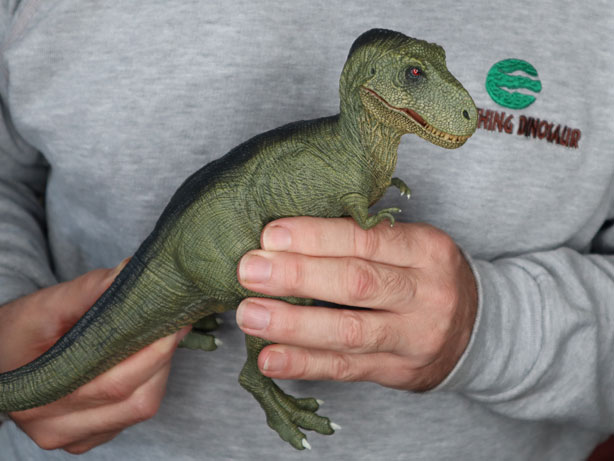
Rebor "retrosaur" a 1:35 scale T. rex dinosaur model.
The Rebor “retrosaur” a 1:35 scale T. rex dinosaur model.
Rebor retro T. rex and Rebor Gorilla model.
The Rebor 1:35 80s T-REX Toy HD Remastered “Californiacation” VHS confronts the Rebor Mountain Gorilla model “Patriarch”. Everything Dinosaur team members attempt to recreate a famous scene from the 1933 film “King Kong” in which a dinosaur does battle with the eponymous gorilla. Picture credit: Everything Dinosaur.

Picture credit: Everything Dinosaur

Visit the award-winning Everything Dinosaur website: Everything Dinosaur.

Attaching the Tail on the Rebor “Retrosaur” T. rex

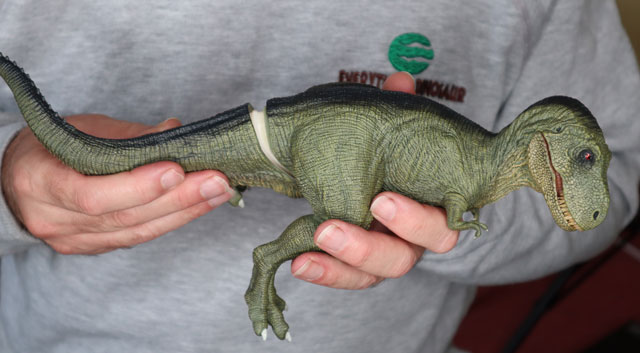
Just like many of the recent Rebor model introductions the T. rex known as “Californiacation” requires some assembly. The tail is supplied as a separate piece that has to be attached to the body. This is done to save on packaging and to insert the tail is a very simple job. Some considerable force needs to be applied to insert the tail piece, but if the tail proves difficult to insert, try dipping the connecting plug on the tail in a cup of boiling water for 2-3 seconds. This should make the plastic plug more malleable and aid assembly.

Rebor Californiacation attaching the tail
Attaching the tail piece on the Rebor 1:35 80s T. rex toy HD remastered “Californiacation” VHS dinosaur figure. Considerable force is required to insert the tail piece, but assembly can be made easier by dipping the tail plug into boiling water for a few seconds to help make the plastic more malleable. Picture credit: Everything Dinosaur.

Picture credit: Everything Dinosaur

T. rex Figure with an Articulated Jaw

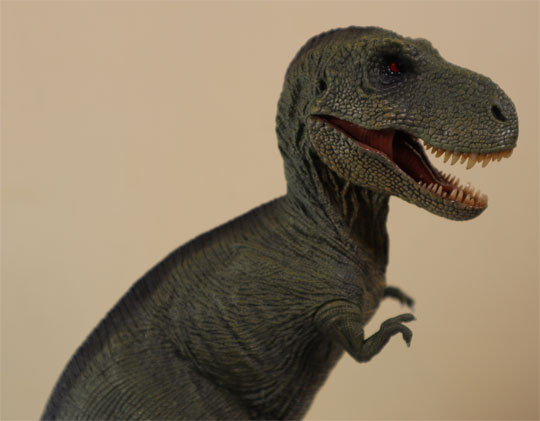
In common with many other theropod models, the Rebor 1:35 80s T-REX Toy HD Remastered “Californiacation” VHS replica has an articulated lower jaw. The forelimbs are also poseable.

Rebor "retrosaur" Californiacation T. rex figure has an articulated jaw.
The Rebor “retrosaur” Californiacation T. rex figure has an articulated lower jaw. Picture credit: Everything Dinosaur.

Picture credit: Everything Dinosaur

Rebor Californiacation T. rex dinosaur model.
Feeling very much at home at Everything Dinosaur the Rebor 1:35 80s T. rex toy HD remastered “Californiacation” VHS. Picture credit: Everything Dinosaur.

Picture credit: Everything Dinosaur

To view the range of Rebor prehistoric animal figures in stock at Everything Dinosaur: Rebor Models and Figures.

26 07, 2021

New Prehistoric Crocodile from Southern Chile is Described

By |2024-05-27T15:28:05+01:00July 26th, 2021|Categories: Adobe CS5, Dinosaur and Prehistoric Animal News Stories, Dinosaur Fans, Main Page, Palaeontological articles, Photos/Pictures of Fossils|0 Comments

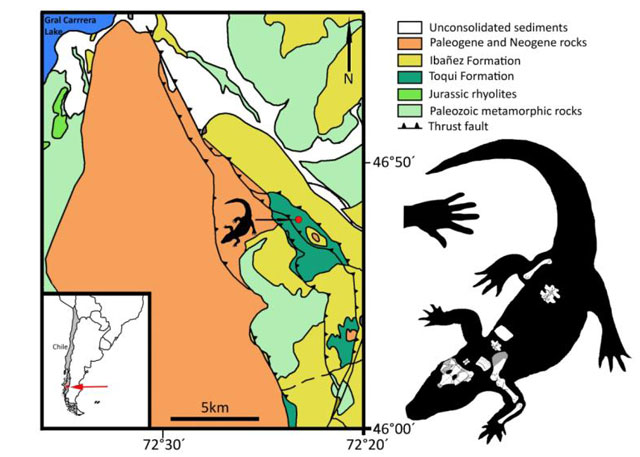
Researchers have described a new species of crocodilian from the Late Jurassic of Chile. Named Burkesuchus (B. mallingrandensis), it heralds from the Toqui Formation of southern Chile. As such, this 70-centimetre-long reptile shared its home with sauropods and the bizarre Chilesaurus (C. diegosuarezi). Analysis of the fragmentary fossil bones, including all important skull material suggests that Burkesuchus was a basal member of the Mesoeucrocodylia, the crocodilian lineage that led to modern crocodiles.

Burkesuchus fossil remains and fossil location.
A map (insert) showing the location of the fossil finds, the geology of the region and a silhouette of Burkesuchus showing location of known bones within the skeleton with a human hand silhouette to show scale.  The silhouette shows the skeletal location of the prehistoric crocodile remains.  Picture credit: Novas et al.

Shedding Light on the Fauna Associated with the Toqui Formation

Fossils of Burkesuchus were collected from outcrops of the Toqui Formation (Tithonian stage of the Late Jurassic). Analysis of zircon samples subjected to radiometric dating suggest that this small crocodilian lived around 147 million years ago. The fossils found consist of skull material, dorsal vertebrae, elements from the limbs including a right scapula and coracoid (shoulder bones) a nearly complete right femur (thigh bone) and several osteoderms (body armour).

Burkesuchus skull material and explanatory line drawings.
Photographs and line drawings of the cranium (SGO.PV 17700) of Burkesuchus mallingrandensis in (A, B) dorsal; (C, D) posterior; and (E, F) left lateral views. Note scale bar equals 1 cm. Picture credit: Novas et al.

A “Missing Link” in Crocodile Evolution

The genus name honours the American Coleman Burke for his financial support of the field work and “suchus” from Latin, meaning crocodile. The species name is a reference to Mallín Grande, the name given to this scenic, very beautiful but remote part of Chile, south of General Carrera Lake.

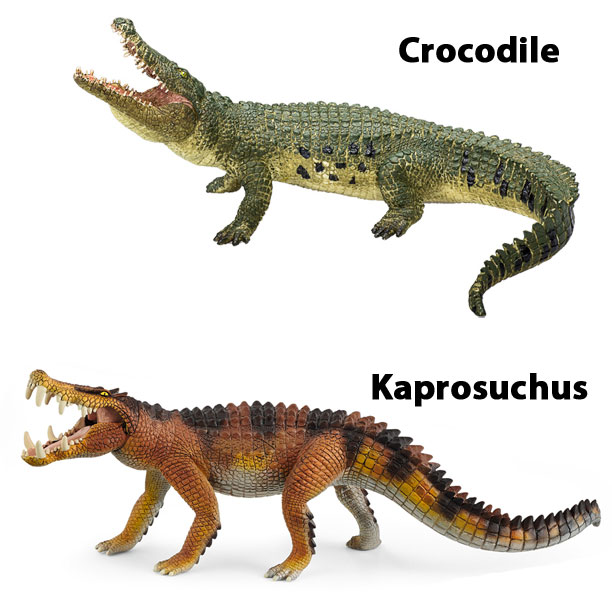
Semi-aquatic crocodilian fossils dating from the Jurassic of South America are rare. To date, the only other non-marine crocodilian known from this continent is Batrachomimus from the Upper Jurassic of Brazil, which is thought to be a paralligatorid. However, analysis of the limb bones associated with Burkesuchus reveals that it possibly represents an intermediate form between crocodilians with a more semi-erect gait and sprawling forms reflecting the gait and locomotion of modern crocodilians. Burkesuchus could represent a transitional form, helping palaeontologists to understand the evolutionary history of this important group of archosaurs.

Modern crocodile compared to Kaprosuchus
Comparing the gait of a modern crocodile (top) with that of Kaprosuchus from the Late Cretaceous of Niger. During the Mesozoic crocodyliforms occupied a wide variety of ecological niches and many different gaits were adopted. Today, modern extant crocodilians and their relatives all have a sprawling gait.  Picture credit: Everything Dinosaur.

Picture credit: Everything Dinosaur

The Significance of a Prehistoric Crocodile

The discovery of Burkesuchus expands the meagre record of non-marine crocodile representatives from the Late Jurassic of South America and the researchers conclude that Batrachomimus and Burkesuchus indicate that the evolution of more derived crocodyliforms could have occurred in South America.

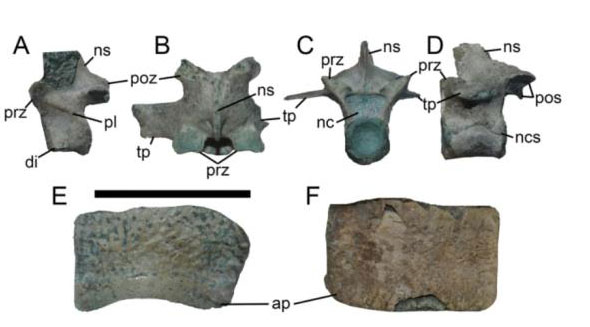
Photographs of dorsal vertebrae and an osteoderm of Burkesuchus.
Photographs of vertebrae and osteoderm of Burkesuchus mallingrandensis (SGO.PV 17700). (A) cervical vertebra in left lateral view; (B–D) dorsal vertebra in (B) dorsal, (C) anterior, and (D) left lateral views; (E–F), dorsal osteoderm in (E), dorsal and (F), ventral views. Scale bar equals 1 cm. Picture credit: Novas et al.

The scientific paper: “New transitional fossil from late Jurassic of Chile sheds light on the origin of modern crocodiles” by Fernando E. Novas, Federico L. Agnolin, Gabriel L. Lio, Sebastián Rozadilla, Manuel Suárez, Rita de la Cruz, Ismar de Souza Carvalho, David Rubilar-Rogers and Marcelo P. Isasi published in Scientific Reports.

Visit the Everything Dinosaur website: Dinosaur Figures and Prehistoric Animal Toys.

25 07, 2021

The Magnificent Seven – Beautiful Eofauna Figures

By |2024-05-27T15:24:28+01:00July 25th, 2021|Categories: Adobe CS5, Dinosaur Fans, Everything Dinosaur Products, Main Page, Photos of Everything Dinosaur Products|0 Comments

Those very kind and generous people at Eofauna shared their image which highlights all their beautiful prehistoric animal models in the company’s Eofauna Scientific Research range. Everything Dinosaur team members have been most impressed with this model series and we look forward to further additions to this exciting range in the near future.

The current range of Eofauna Scientific Research Models (July 2021)
The current range of Eofauna Scientific Research prehistoric animal models. We have titled this image “the magnificent seven”! All these stunning figures are in stock at Everything Dinosaur (July 2021).
Seven Stunning Eofauna Scientific Research Figures

The image (above) shows all seven of the current range of Eofauna Scientific Research figures in lateral view. Can you name them all?

The first of these amazing figures was introduced just four years ago (2017), since then the range has grown to include three dinosaur genera and three genera of prehistoric elephant. The team behind the Eofauna range have a particular expertise in prehistoric Proboscidea (elephants and their close relatives), hence all three of the prehistoric mammals in this series released to date are replicas of extinct members of the elephant family (Elephantiformes).

Visit the website of Everything Dinosaur: Dinosaur Toys and Figures.

Eofauna Models used to Illustrate Museum Displays

Some of these impressive figures have found themselves being used in museum displays to illustrate the variety of elephants that once roamed our planet.

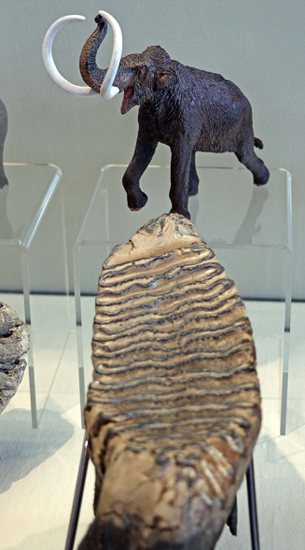
Eofauna Steppe Mammoth on display in a museum.
An Eofauna prehistoric elephant model used in a museum display. Picture credit: Dr Jan Fischer/Urweltmuseum GEOSKOP

The Magnificent Seven

For the record, here is the list of the seven models currently in the Eofauna Scientific Research range. We have produced the list in the order in which the figures were released.

Eofauna Scientific Research Models (July 2021):

  • Steppe Mammoth (Mammuthus trogontherii) – introduced October 2017.
  • Straight-tusked Elephant (Palaeoloxodon antiquus) – introduced late spring 2018.
  • Giganotosaurus (Giganotosaurus carolinii) – introduced January 2019.
  • Deinotherium (Deinotherium giganteum) – introduced October 2019.
  • Atlasaurus (Atlasaurus imelakei) – introduced November 2019.
  • Triceratops (Triceratops spp.) – introduced February/March 2021.

All seven of the Eofauna Scientific Research models are in stock at Everything Dinosaur (July 2021), to view this range and to make a purchase: Eofauna Scientific Research Prehistoric Animal Models.

Go to Top