All about dinosaurs, fossils and prehistoric animals by Everything Dinosaur team members.
6 10, 2017

New Prehistoric Crocodile with a Tough Skull

By |2023-08-16T22:16:56+01:00October 6th, 2017|Categories: Dinosaur and Prehistoric Animal News Stories, Dinosaur Fans, Main Page, Photos/Pictures of Fossils|0 Comments

Ieldraan melkshamensis – The Monster of Melksham

A new species of prehistoric marine crocodile has been described after an amazing effort by the preparators at the Natural History Museum (London), to separate this crocodile’s partial skull and fragmentary jaw bones from an extremely hard concretion, in which the fossils were entombed.  Although in very poor condition, the research team from the University of Edinburgh as well as the Natural History Museum, were able to identify enough unique anatomical traits (autapomorphies), to allow a new species to be erected.

The new marine crocodile (metriorhynchid) has been named Ieldraan melkshamensis, the species name honouring the town of Melksham in Wiltshire where the fossil material was unearthed.

Ieldraan melkshamensis – One Tough Crocodylomorph with a Very Tough Skull
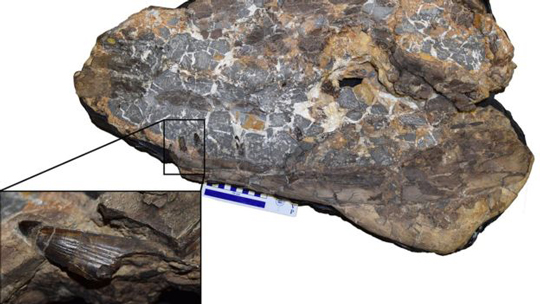
Ieldraan melkshamensis fossil material.

Ieldraan melkshamensis fossil.

Picture credit: University of Edinburgh/Davide Foffa

Prehistoric Marine Crocodile

The specimen was acquired by the Natural History Museum in 1875, but because of its poor condition it did not attract a lot of scientific attention.  The fossil being entombed within an extremely hard concretion (septarian concretion), meant any form of scientific study was extremely limited.

Mark Graham, Senior Fossil Preparator at the Natural History Museum explained the problem:

“The specimen was completely enclosed in a super-hard rock nodule with veins of calcite running through, which had formed around it during the process of fossilisation.  The work took many hours over a period of weeks, and great care had to be taken to avoid damaging the skull and teeth as they became exposed.”

Ieldraan melkshamensis – Newest member of the Metriorhynchidae

Measuring more than three metres in length, Ieldraan melkshamensis was one of the most powerful and dangerous marine predators in the warm, shallow seas of western Europe some 163 million years ago (Callovian faunal stage of the late Middle Jurassic).  The teeth with their distinctive striations (series of ridges running down the length of the teeth) indicate that this large crocodylomorph, which was very distantly related to today’s crocodilians, fed on large prey items.  It might have hunted other marine reptiles as well as preying on squid and fish.

It has been classified as member of the Metriorhynchidae family, specifically assigned to the sub-family Geosaurinae and a phylogenetic analysis places Ieldraan as the sister taxon of Geosaurus, perhaps the best-known of all the metriorhynchids, having been named and described over 100 years ago.

A Model of a Typical Metriorhynchid Crocodylomorph (Plesiosuchus)
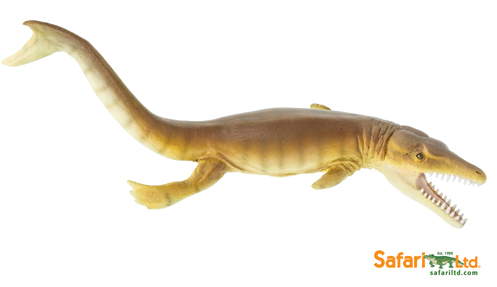
Plesiosuchus a prehistoric marine crocodile model.

Prehistoric marine crocodile – Plesiosuchus.

The Plesiosuchus model shown above is part of the Wild Safari Prehistoric World model collection, replicas of marine crocodiles are quite rare, to learn more about this model series and to view the range at Everything Dinosaur: Safari Ltd: Wild Safari Prehistoric World”.

A Sister Taxon to Geosaurus

The authors of the scientific paper, published in the “Journal of Systematic Palaeontology” conclude that if this new species is a sister taxon to Geosaurus, this places it in the Geosaurini clade and this data suggests that the major Geosaurini lineages originated millions of years earlier than previously thought.

Lead author Davide Foffa (School of GeoSciences at the University of Edinburgh), stated:

“It’s not the prettiest fossil in the world, but the Melksham Monster tells us a very important story about the evolution of these ancient crocodiles and how they became the apex predators in their ecosystem.  Without the amazing preparation work done by our collaborators at the Natural History Museum, it would not have been possible to work out the anatomy of this challenging specimen.”

Prehistoric Marine Crocodile on Patrol – Plesiosuchus manselii
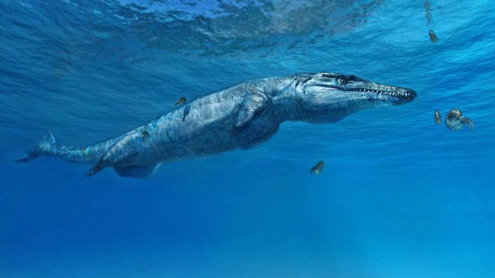
Marine crocodile (Plesiosuchus).

Plesiosuchus manselii illustrated.

Picture credit: Fabio Manucci/University of Edinburgh

Visit the Everything Dinosaur website: Everything Dinosaur.
5 10, 2017

Thailand’s Biggest Dinosaur Discovery Reported a Remarkable Fossil Discovery

By |2024-05-09T14:42:05+01:00October 5th, 2017|Categories: Dinosaur and Prehistoric Animal News Stories, Dinosaur Fans, Main Page, Photos/Pictures of Fossils|0 Comments

Fossils of Biggest Dinosaur Found to Date in Thailand Reported

Everything Dinosaur has received reports that news sources are stating that fossils of a very big dinosaur, a sauropod, have been found in Thailand.  The first dinosaur bone from Thailand was discovered back in 1976, since then, as the country’s geology has been mapped and explored, a number of exciting dinosaur fossil discoveries have been made, mostly by employees of the Department for Mineral Resources, which is part of the Ministry for Natural Resources and the Environment.

Thailand’s Biggest Dinosaur Discovery

Thailand has quite extensive Mesozoic-aged exposures from both marine and non-marine environments.  To date, team members think that the largest dinosaur known from Thailand would be Phuwiangosaurus (P. sirindhornae), which is estimated to have reached a length of about twenty metres and weighed as much as seventeen tonnes.

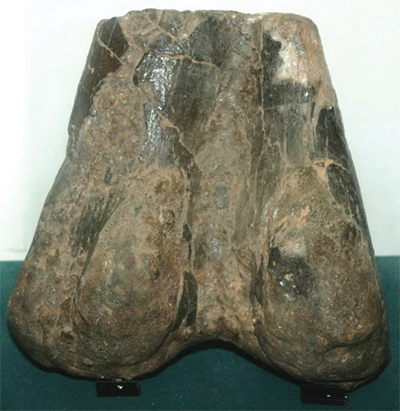
The First Every Dinosaur Fossil from Thailand

Partial sauropod femur (Thailand)

The distal end of a sauropod femur.

Picture credit: Department of Mineral Resources (Thailand)

The photograph above shows the first dinosaur fossil to have come to the attention of science found in Thailand.  The distal end (the part furthest away from the body) of a femur was found eroding out of a stream bed in 1976.  Since then, a number of dinosaur genera have been named and described including an iguanodont (Sirindhorna khoratensis) and two sizeable theropods (Siamotyrannus isanensis and Siamosaurus suteethorni).

A senior government official (Niwat Maneekut, deputy director-general of the Department of Mineral Resources), is reported to have said that the fossils come from the north-east of the country.  A single fossilised bone was found by a villager in the Nong Bua Raheo district of  Chaiyaphum province, around two hundred miles north-east of the capital Bangkok, last year, but more recent excavations led by palaeontologists from the Department of Mineral Resources had recovered a further twenty pieces of bone.

Information remains patchy, but the fossils are estimated to be around 100 million years old and scientists are conducting more research.

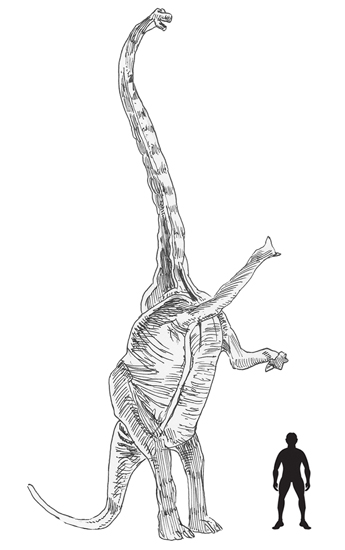
Phuwiangosaurus is Believed to be a Member of the Euhelopodidae and Therefore Similar to Euhelopus

Scale drawing - Euhelopus.

Euhelopus scale drawing. Picture credit: Everything Dinosaur.

Picture credit: Everything Dinosaur

For models of sauropods and other dinosaurs: Dinosaur and Prehistoric Animal Models.

5 10, 2017

Teaching Hot Spot at the Frankfurt Book Fair 2017

By |2023-08-16T22:05:09+01:00October 5th, 2017|Categories: General Teaching|Comments Off on Teaching Hot Spot at the Frankfurt Book Fair 2017

Hot Spot Education Highlighted at the Frankfurter Buchmesse

One of the highlights at Frankfurt Book Fair which starts next week is the “Hot Spot Education” zone in Hall 4.2.  This part of annual Frankfurter Buchmesse aims to bring education providers and prospective customers together, helping to showcase new developments in the fields of innovative teaching and learning tools.  The focus will be on distance and e-learning but there will be more than “just a nod” to traditional teaching methods.

Promoting the Joy of Reading – Frankfurter Buchmesse 2017

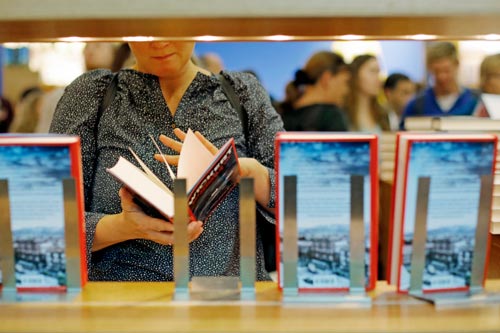
Browsing books.

Time for browsing at the Frankfurt Book Fair.

Picture credit: Frankfurt Book Fair

Helping to Bring Educational Developments to the Forefront

The “Hot Spot Education” area will provide a one-stop shop for teachers, those who home school and educational professionals to catch up with the latest learning and teaching innovations.  Everything from software and e-tools, to the latest digital whiteboards will be on display.  If you ask nicely, you might even be given the chance to try out some of these exciting new classroom tools.

In addition, this part of the Frankfurt Book Fair will look at the role play and games can have in education.  There will be information about serious games and some not so serious, but still very educational games.  Schools have seen a greater focus on the use of digital technology both within the national curriculum and the cornerstones scheme of work.  The “Hot Spot Education” zone provides exclusive access to digital providers and digital content aimed specifically at the education profession.

The Teaching Hotspot

Digital Meets Traditional Teaching at the Frankfurter Buchmesse

A section dedicated to the educational sector.

The “Education Hot Spot” area.

Picture credit: Everything Dinosaur

To view the range of educational, dinosaur themed items available from Everything Dinosaur: Learning Gifts from Everything Dinosaur.

The talented organisers of the Frankfurter Buchmesse have listed the sort of product and topic areas that this zone will cover:

  • Developers and providers of innovative educational content such as interactive learning models and whiteboard software
  • Providers of innovative teaching and learning concepts such as online learning aids, mobile learning, e-learning models and web applications
  • Developer and publishers of games and gaming activities
  • Solution providers in the SEN (Special Educational Needs) sector
  • Technology provision for educational establishments from nursery to further education

For those members of the teaching profession heading to Frankfurt next week, this is one part of the enormous Frankfurter Buchmesse that they should definitely check out.

Visit the Everything Dinosaur website: Everything Dinosaur.
4 10, 2017

Research Suggests Baby Ichthyosaurus Ate Squid

By |2024-04-02T21:36:20+01:00October 4th, 2017|Categories: General Teaching, Key Stage 1/2|Comments Off on Research Suggests Baby Ichthyosaurus Ate Squid

Fossil of New-born Ichthyosaurus Reveals Last Meal

The fossilised remains of a baby Ichthyosaurus have revealed the last meal of this early Jurassic marine reptile.  A group of UK-based researchers, including palaeontologists from the University of Manchester have identified the youngest fossil specimen of a species of Ichthyosaurus named Ichthyosaurus communis.  The new-born, had dined on squid before meeting its demise.  The scientists can’t be sure why the seventy-centimetre-long ichthyosaur died, but it’s short life (and death), have been preserved in the fossil record and its skeleton is helping palaeontologists to learn a little more about the habits of these beautifully adapted sea creatures.

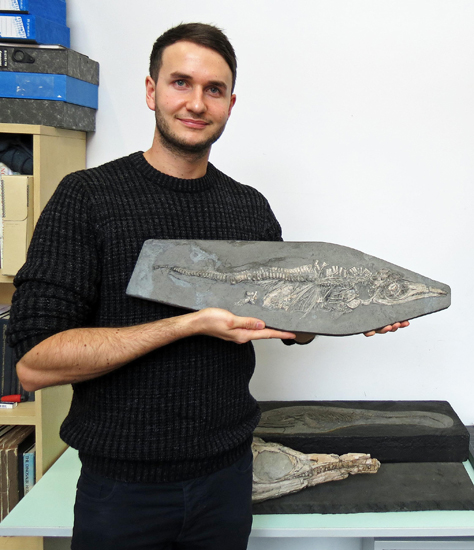
Palaeontologist Dean Lomax Holds the Ichthyosaurus communis Marine Reptile Fossil

Dean Lomax holding the neonate Ichthyosaurus fossil.

Palaeontologist Dean Lomax holding the baby Ichthyosaurus fossil.

Picture credit: Manchester University/The University of Birmingham

The Last Meal of an Animal that Lived 200 Million Years Ago

Preserved in that part of the fossil where the animal’s stomach would have been, the scientists found lots of tiny “hook-like” structures.  These hard, bony hooks come from the arms of squid and this suggests that this baby Ichthyosaurus had caught a squid and eaten it, shortly before it died.  Palaeontologists know that some young marine reptiles liked to catch and eat fish, but this baby “Fish Lizard” dined on squid before meeting its own untimely demise.

An Illustration of the Baby Ichthyosaurus Attacking a Squid

The neonate Ichthyosaurus fossil on display.

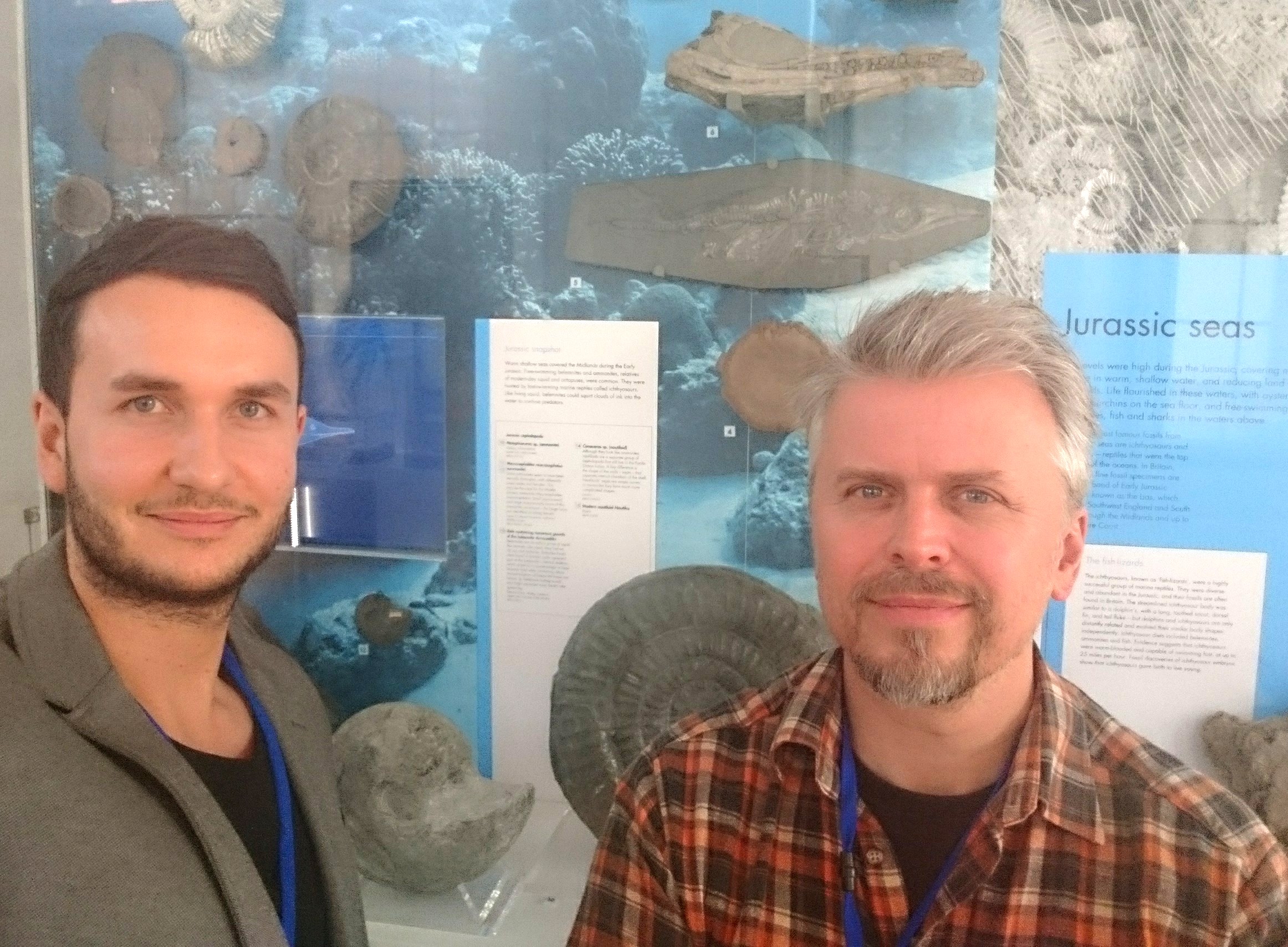
Dean Lomax (left) and Nigel Larkin (right) in front of the Lapworth Geological Museum exhibit.

Picture credit: Julian Kiely

A spokesperson for Everything Dinosaur commented:

“Finding out about what extinct animals ate by studying things found where their stomachs would have been is very exciting for scientists.  They can use this information to help build up a picture about food webs that existed millions of years ago.”

The baby Ichthyosaurus fossil is part of the University of Birmingham fossil collection and it is on display at the Lapworth Geology Museum.

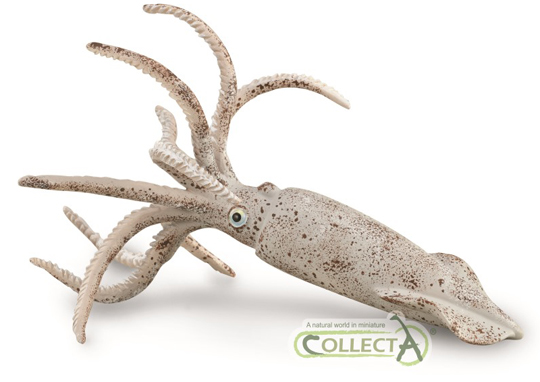
A Replica of a Belemnite (CollectA Belemnite Figure)

CollectA Belemnite model.

CollectA Age of Dinosaurs Popular Size Belemnite model.

To view the CollectA Age of Dinosaurs model range: CollectA Prehistoric Life Models and Figures.

Visit Everything Dinosaur: Everything Dinosaur.

4 10, 2017

Rebor Wind Hunter in Newsletter Spotlight

By |2023-08-15T07:46:18+01:00October 4th, 2017|Categories: Dinosaur Fans, Everything Dinosaur News and Updates, Everything Dinosaur Newsletters, Everything Dinosaur Products, Main Page, Photos of Everything Dinosaur Products|0 Comments

The Rebor Utahraptor Replica Features in the Everything Dinosaur Newsletter

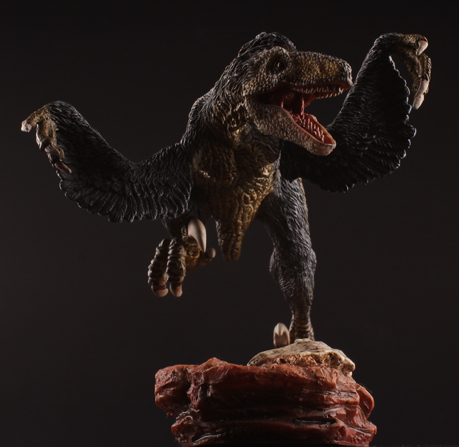
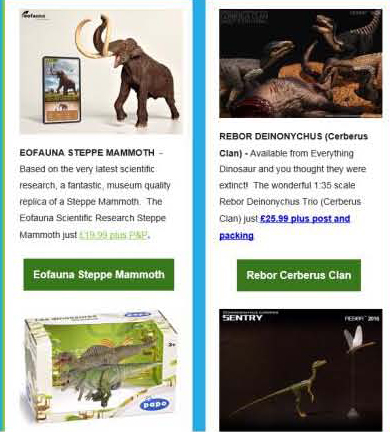
A lot of Rebor replicas have come back into stock at Everything Dinosaur, so it was fitting that a number of these fabulous scale models were featured in the latest Everything Dinosaur newsletter that came out earlier this week.  The headline highlighted the 1:35 scale Rebor Wind Hunter replica (Utahraptor ostrommaysorum), a reserve list had been opened for this eagerly awaited model and collectors were soon emailed with the good news that this model was now in Everything Dinosaur’s warehouse once again, along with the Cerberus Clan set and the 1:6 scale Compsognathus replica (Sentry).

The Everything Dinosaur Newsletter Featured the Rebor Replica Wind Hunter Model

Rebor Utahraptor model features in the Everything Dinosaur newsletter.

Rebor Wind Hunter replica features in the Everything Dinosaur newsletter.

Picture credit: Everything Dinosaur

Rebor 1:35 Scale Utahraptor Replica

The Rebor 1:35 scale Utahraptor replica was the first “raptor” model that Rebor ever produced and it remains one of the most popular figures in this range.  Since “Wind Hunter” was launched, a number of dromaeosaurid models have been added, the focus has been on Velociraptor (V. mongoliensis), but this model of Utahraptor, a dinosaur that lived long before Velociraptor evolved, has been out of production for some time and it is great to see it back.

The Rebor Utahraptor 1:35 Scale Model (Wind Hunter)

Rebor Wind Hunter (Utahraptor model).

Beautiful detail on this model – the Rebor Wind Hunter (Utahraptor).

Picture Credit: Everything Dinosaur

To enquire about the Rebor Wind Hunter model and for information on the rest of the Rebor replicas range: Email: Everything Dinosaur.

To view all the Rebor figures available: Rebor Replicas.

Eofauna Steppe Mammoth (Mammuthus trogontherii)

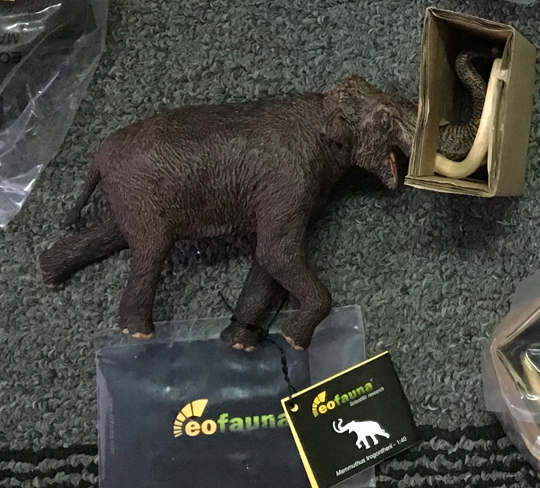
The Eofauna Steppe Mammoth model, a 1:40 scale model of a prehistoric elephant (M. trogontherii) has got a lot of collectors very excited and this fantastic, museum quality figure also featured in our newsletter.  This is the first of new series of wonderful prehistoric animal models and Everything Dinosaur team members look forward to breaking the news about what’s coming next.  Model fans and collectors won’t be disappointed.

The Eofauna Steppe Mammoth is in Stock

Steppe Mammoth model.

The amazing detail on this Steppe Mammoth model can be easily seen.

Picture credit: Everything Dinosaur

To visit the Eofauna Scientific Research section on the Everything Dinosaur website: Eofauna Scientific Research Models at Everything Dinosaur.

Compsognathus and Deinonychus in the Spotlight

Everything Dinosaur newsletter September 2017.

Lots of prehistoric animal models featured in the Everything Dinosaur newsletter.

Picture credit: Everything Dinosaur

Our brief newsletter included details of the Rebor Deinonychus trio coming back into stock, “Tooth”, “Thrill” and “Shoot” are available and ready to do battle with the Rebor Acrocanthosaurus model (Hercules) over its kill, the Tenontosaurus corpse (Ceryneian Hind).

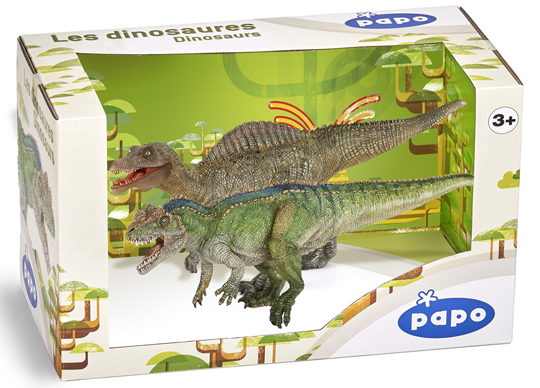
The Special Edition Papo Box Set

Papo juvenile Spinosaurus and the Papo Ceratosaurus special edition gift box.

The Papo juvenile Spinosaurus and the Papo Ceratosaurus gift box.

Picture credit: Everything Dinosaur

View the Papo prehistoric animal model range: Papo Prehistoric Animal Figures.

Opposite the news about the Rebor Sentry figure, we also included an update on stocks of the limited edition Papo box set which features a juvenile Spinosaurus.  This two-figure special edition has been selling very quickly and Papo dinosaur model fans were being urged to reserve their set or make a purchase as stocks may not last until Christmas.

To subscribe to Everything Dinosaur’s regular newsletter, simply drop us an email: Email Everything Dinosaur

3 10, 2017

Squid the Last Meal of a Baby Ichthyosaurus

By |2023-08-13T16:07:03+01:00October 3rd, 2017|Categories: Dinosaur and Prehistoric Animal News Stories, Dinosaur Fans, Main Page, Photos/Pictures of Fossils|1 Comment

Baby Ichthyosaurus communis Dined on Squid

A team of UK-based scientists have identified the youngest and therefore the smallest specimen of Ichthyosaurus communis known to science and, just for good measure, they have found what could have been the marine reptile’s last meal.  Inside the body cavity of the seventy-centimetre-long fossil, the researchers found tiny “hook-like” structures, these are the less digestible parts of squid and therefore, the scientists were able to deduce that this young Ichthyosaurus had recently fed on cephalopods.

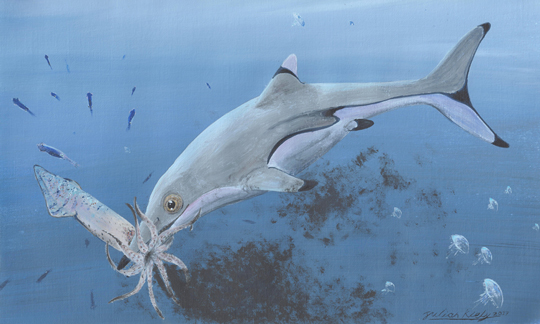
A Young Ichthyosaurus communis Attacking a Prehistoric Squid

A neonate Ichthyosaurus communis feeding on a squid.

A neonate Ichthyosaurus attacks a squid.

Picture credit: Julian Kiely

The artist Julien Kiely has kindly reconstructed the new-born in this fantastic scene, which depicts the moment a newly born Ichthyosaurus communis attacks a squid.

Commenting on the significance of this discovery, one of the authors of the scientific paper, published today in the journal “Historical Biology – The International Journal of Paleobiology”, Dean Lomax stated:

“It is amazing to think we know what a creature that is nearly 200 million years old ate for its last meal.  We found many tiny hook-like structures preserved between the ribs.  These are from the arms of prehistoric squid.  So, we know this animal’s last meal before it died was squid.”

From the Biggest to the Smallest

University of Manchester palaeontologist Dean Lomax, in collaboration with German colleagues, had recently published a paper describing the largest specimen of Ichthyosaurus communis, a female that turned out to be pregnant when she died.  Everything Dinosaur wrote an article about the research in August*, as well as having described the biggest I. communis, just a few weeks later, this new paper, describes the smallest.

Palaeontologist Dean Lomax Holds the Neonate Ichthyosaurus communis Specimen

Dean Lomax holding the neonate Ichthyosaurus fossil.

Palaeontologist Dean Lomax holding the baby Ichthyosaurus fossil.

Picture credit: University of Manchester/University of Birmingham

*To read the article about the largest Ichthyosaurus communis specimen: Palaeontologists and the Pregnant Ichthyosaurus.

Ichthyosaurus communis

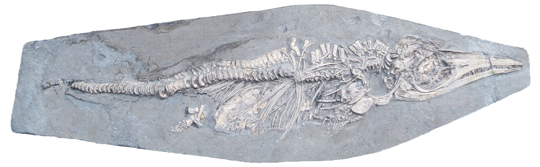
Several species of Ichthyosaurus have been identified, but Ichthyosaurus communis was the first, being named and described in 1822 from fossil material discovered by Mary Anning.  These reptiles were viviparous and a number of specimens showing embryos preserved inside their mothers are known.  However, this Ichthyosaurus is one of only a handful of fossils that represent very young animals.  As it was not preserved in association with a larger specimen (the mother) and as there are stomach contents present, it is likely that this fossil represents an independent, recently born animal, the first neonate Ichthyosaurus communis skeleton to be described.

The Ichthyosaurus Fossil on Display at the Lapworth Museum of Geology, University of Birmingham

The neonate Ichthyosaurus communis fossil specimen.

The neonate I. communis specimen.

Picture credit: University of Manchester/University of Birmingham

The fossil is definitely a new born and not a dwarf species of ichthyosaur as the scientists noted the large ring of sclerotic bone relative to the eye socket and the poorly ossified (highly cancellous) bones of the skull and other parts of the skeleton, these signs all indicate that these are the fossilised remains of a very young marine reptile.

Niche Partitioning in the Ichthyosauria

The new specimen is from the collections of the Lapworth Museum of Geology, (University of Birmingham).  Palaeontologist Nigel Larkin, a research associate at Cambridge University, cleaned and studied the specimen in 2016,  as he prepared the fossil, he became aware of its potential significance.  Nigel has recently been involved in an extensive restoration project at Biddulph Grange in Staffordshire.  He has been helping to restore the Victorian Geological Gallery at this National Trust property to its former glory.

As one of the most highly respected fossil preparators in the UK, Nigel was able to reveal the fossil’s secrets as he cleaned and helped to preserve the delicate marine reptile skeleton.

To read an article about the Geological Gallery preservation project at Biddulph Grange: Fossil Hunting at Biddulph Grange.

The discovery of squid remnants in the gut area suggests these types of ichthyosaur specialised in hunting cephalopods.  Commenting on the implications of this fossil, Dean Lomax explained:

“This is interesting because a study by other researchers on a different type of ichthyosaur, called Stenopterygius, which is from a geologically younger age, found that the small – and therefore young – examples of that species fed exclusively on fish.  This shows a difference in prey-preference in new-born ichthyosaurs.” 

Visit the website of Dr Dean Lomax: British Palaeontologist Dr Dean Lomax.

This could hint at niche partitioning, whereby similar species use different resources within an environment to reduce direct competition and to help them co-exist.

Dean Lomax and Nigel Larkin in Front of the Jurassic Seas Exhibit (Lapworth Museum of Geology)

The neonate Ichthyosaurus fossil on display.

Dean Lomax (left) and Nigel Larkin (right) in front of the Lapworth Geological Museum exhibit.

Picture credit: University of Manchester/University of Birmingham

How Old is the Fossil?

The specimen, part of the vertebrate fossil collection of the Lapworth Museum of Geology, (University of Birmingham), has no provenance data associated with it.  Unfortunately, there were no collection notes or other details to help the palaeontologists to identify where the fossil came from.  However, permission was granted for Nigel to remove a small portion of the matrix surrounding the fossil.  He passed this on to Ian Boomer (University of Birmingham) and Philip Copestake (Merlin Energy, Resources Ltd), so that they could analyse the rock for microscopic fossils.

Based on the types of microfossil preserved, the scientists were able to identify that this ichthyosaur was around 199-196 million years old, (uppermost Hettangian faunal stage to lowermost Sinemurian of the Early Jurassic).

Nigel outlined the difficulties the team faced:

“Many historic Ichthyosaur specimens in museums lack any geographic or geological details and are therefore undated.  This process of looking for microfossils in their host rock might be the key to unlocking the mystery of many specimens.  Thus, this will provide researchers with lots of new information that otherwise is lost.  Of course, this requires some extensive research, but it is worth the effort.”

In addition, establishing a microfossil signature for a fossil may also help in those cases where theft of fossil material is suspected.

Ichthyosaurus communis is Scanned in High Resolution

As part of the study, the skeleton was Micro CT-scanned and a three-dimensional digital model was created by Steve Dey of ThinkSee3D Ltd.  Using medical imaging software, Steve converted the three sets of CT cross-sectional images (from scans of the tail, middle section and head) into a single digital three-dimensional model of the whole animal.  This non-destructive technique provided further key information helping to identify the species and potentially, helping to provide new data on Ichthyosaur ontogeny.

The beautiful new-born Ichthyosaurus is on display in the recently refurbished Lapworth Museum of Geology, University of Birmingham, which was nominated for the 2017 Art Fund Museum of the Year.

The scientific paper: “The First Known Neonate Ichthyosaurus communis Skeleton: A Rediscovered Specimen from the Lower Jurassic, UK” by Lomax, D. R., Larkin, N. R., Boomer, S., Dey, S. and Copestake, published in “Historical Biology”.

Visit the award-winning Everything Dinosaur website: Everything Dinosaur.
2 10, 2017

The Eofauna Steppe Mammoth is in Stock at Everything Dinosaur

By |2023-07-22T22:01:26+01:00October 2nd, 2017|Categories: Dinosaur Fans, Everything Dinosaur News and Updates, Everything Dinosaur Products, Main Page, Photos of Everything Dinosaur Products, Press Releases|0 Comments

The Eofauna Steppe Mammoth is in Stock at Everything Dinosaur

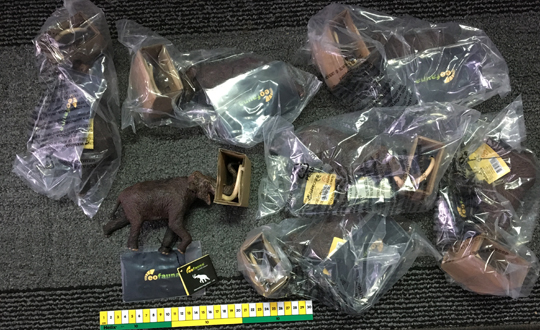
The eagerly awaited Eofauna Scientific Research Steppe Mammoth replica is in stock at Everything Dinosaur.  Team members have spent most of the day contacting all those customers and model fans who asked us to reserve one for them.  We have been so busy sorting out all the requests that we have had little time to admire this excellent representation of Mammuthus trogontherii ourselves.

The 1:40 scale Eofauna Scientific Research Steppe Mammoth Replica

The Eofauna Steppe Mammoth at Everything Dinosaur

Sorting out Eofauna Steppe Mammoth models at Everything Dinosaur.  Picture credit: Everything Dinosaur.

Picture credit: Everything Dinosaur

Checking Models Over Prior to Despatch

Stocks of this 1:40 scale model arrived around noon (BST) and prior to sending out orders, our dedicated team members inspected the models just to ensure that everyone had an appropriate data card and that the replicas were in tip-top condition.  The first orders were packed and sent on their way within two hours.  As well as the data card, Everything Dinosaur is sending out a fact sheet on the Steppe Mammoth with every model purchased.

This exciting Elephantidae replica, yes, Mammoths are members of the elephant family, (though they are more closely related to extant Asian elephants than they are to living African elephants), is the first in a new model series from Eofauna Scientific Research.  Collectors can expect more prehistoric mammal models as well as some amazing dinosaur models in the future.

To view the Eofauna Scientific Research model range: Eofauna Scientific Research Models.

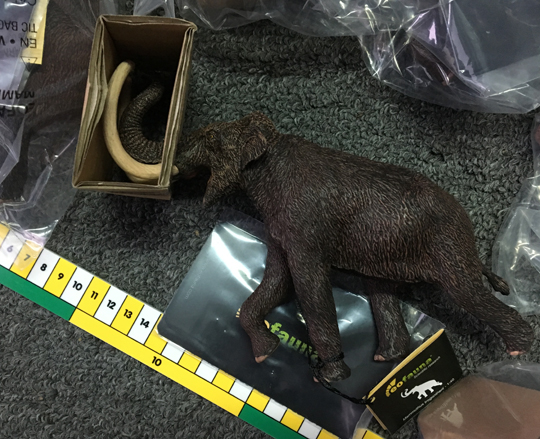
The Steppe Mammoth Model has a Dynamic Pose and Shows Amazing Detail

Steppe Mammoth model.

The amazing detail on this Steppe Mammoth model can be easily seen.  Picture credit: Everything Dinosaur.

Picture credit: Everything Dinosaur

Steppe Mammoth (Mammuthus trogontherii)

Mammuthus trogontherii was one of the largest members of the elephant family to have existed.  A fully grown adult male could weigh as much as fourteen tonnes and measure 4.5 metres high at the shoulder.  These elephants were probably cold adapted and gave rise to the much smaller, but better known Woolly Mammoth (Mammuthus primigenius).  The very last of the Steppe Mammoths are believed to have died out around 30,000 years ago.

The Eofauna Steppe Mammoth

The Eofauna Steppe Mammoth model is based on a Steppe Mammoth specimen studied by Eofauna company members in northern China.  The bones of this specimen were then scaled up to equate to the remains of the largest individual known (a specimen from Mosbach, Baden-Württemberg in south-west Germany).  The head is modelled on the only complete skull known of this species, which was discovered in Novosibirsk, Russia.

A prototype model was created initially and from this the production model came about.  Collectors and model fans can be assured that the Eofauna Scientific Research Steppe Mammoth is a highly accurate replica, one that was subjected to rigorous testing by researchers who really know their elephants.

A Handy Geology Ruler Provides a Good Scale for this Elephant Replica

Eofauna Steppe Mammoth (geology ruler provides scale).

A geology ruler provides a handy scale for the Eofauna Steppe Mammoth.  Picture credit: Everything Dinosaur.

Picture credit: Everything Dinosaur

For further information on the Eofauna Steppe Mammoth simply contact Everything Dinosaur: Email Everything Dinosaur/Contact Everything Dinosaur.

Visit the award-winning Everything Dinosaur website: Everything Dinosaur.

1 10, 2017

Pterosaur Study Sheds New Light on Jidapterus

By |2023-07-22T21:12:09+01:00October 1st, 2017|Categories: Dinosaur and Prehistoric Animal News Stories, Dinosaur Fans, Main Page, Photos/Pictures of Fossils|0 Comments

Jidapterus edentus Gets Grounded

A team of researchers, writing in the on-line, academic, open access journal PLOS One, have published a reassessment of the Early Cretaceous pterosaur Jidapterus (J. edentus).  This flying reptile, with a wingspan estimated to be between 1.6 and 1.7 metres, is one of a number of flying reptiles known from the Lower Cretaceous deposits of the Jiufotang and Yixian Formations, which between them have helped palaeontologists to build up a detailed picture about life in northern China some 125 million years ago (Jehol Biota).

In this new study, Jidapterus is identified as a valid genus (there had been some doubts raised over whether or not the single fossil specimen known represented another closely related pterosaur species – Chaoyangopterus zhangi).  In addition, the authors postulate that Jidapterus might have been a ground dwelling forager, Everything Dinosaur team members have speculated that Jidapterus only took to the trees to evade predators or perhaps to roost.

The Only Known Specimen of Jidapterus edentus with an Accompanying Line Drawing

Line drawing and holotype of Jidapterus edentus.

The holotype fossil of Jidapterus edentus and accompanying line drawing.

Picture credit: PLOS One

 Jidapterus – A Tricky Pterosaur

Named in 2003, Jidapterus is known from a single, partially articulated and nearly complete specimen (holotype RCPS-030366CY).  It is a member of an enigmatic family of pterosaurs called the Chaoyangopteridae (pronounced Chow-yang-op-tery-rid-aye).

Several species have been named, from Brazil (Lacusovagus) and from Lebanon (Microtuban), to read more about the Lebanese pterosaur, the first flying reptile to be described from this part of the world: Pterosaur Fossil Flies Home.  Most of what palaeontologists know, about this family of flying reptiles, distantly related to the giant azhdarchid pterosaurs, comes from studying the fossilised remains of chaoyangopterids from northern China.  Trouble is, these delicate flying reptile specimens associated with Liaoning Province are squashed as flat as a pancake.  The researchers identified a number of anatomical traits (autapomorphies) that reinforce the idea that Jidapterus should be considered as a distinct genus.

In addition, the scientists examined the feet and claws of Jidapterus and concluded that this flying reptile, once thought to have been a piscivore, was probably omnivorous, foraging on the forest floor for seeds and other plant material, as well as snatching up invertebrates and small creatures.  Whether or not the narrow, pointed beak (labelled in the diagram above) was entirely toothless remains open to debate.

The scientific paper: “The Toothless Pterosaur Jidapterus edentus (Pterodactyloidea: Azhdarchoidea) from the Early Cretaceous Jehol Biota and its Paleoecological Implications” by Wen-Hao Wu, Chang-Fu Zhou and Brian Andres published in PLOS One.

Visit the Everything Dinosaur models section for replicas of pterosaurs: Dinosaur, Marine Reptile and Pterosaur Models.

30 09, 2017

Strong-armed Sabre-Tooth Kittens Identified in New Research

By |2024-05-09T14:36:20+01:00September 30th, 2017|Categories: Dinosaur and Prehistoric Animal News Stories, Main Page, Photos/Pictures of Fossils|2 Comments

Sabre-Toothed Kittens and Their Strong Arms

A new study undertaken by scientists from California State Polytechnic University, the University of Wisconsin and colleagues at Bristol University, has concluded that Smilodon (S. fatalis), kittens were born with strong arms, stronger than similarly-sized modern big cats.  However, their pattern of bone development was congruent to other members of the Felidae.

Strong Kittens Grew up to be Strong Cats

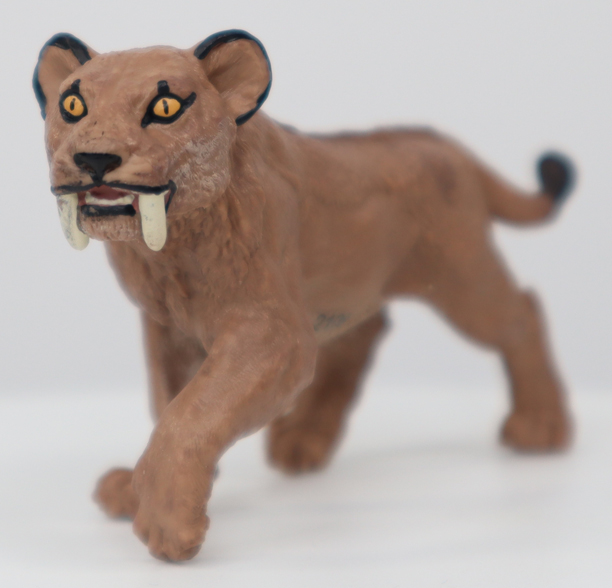
Papo young Smilodon model.

Running towards you! The Papo young Smilodon. Picture credit: Everything Dinosaur.

Picture credit: Everything Dinosaur

The picture (above) shows the Papo young Smilodon model.

To view the Papo model range: Papo Dinosaur and Prehistoric Animal Figures.

The Treasure Trove of Smilodon Fossils at La Brea

Using the extensive Smilodon fossil record preserved at the La Brea Tar Pits (Los Angeles, California), the researchers measured the limb bones of these big cats.  Only unbroken limb bones were included in the growth analysis.  Fortunately, given the huge number of Smilodon fossil specimens associated with this natural predator trap, the researchers, which included Donald Prothero, the author of “The Princeton Field Guide to Prehistoric Mammals”, that Everything Dinosaur was invited to review earlier this year* had a substantial data set to study.

For example, the scientists included thirty, Smilodon upper arm bones (humeri) representing cats at various growth stages in this study.  Their ontogenic analysis revealed that young animals had thicker and more robust bones than other members of the cat family (Felidae).  The bones did not become more robust as the cats grew, it seems Sabre-Tooths were born with big, strong arms.

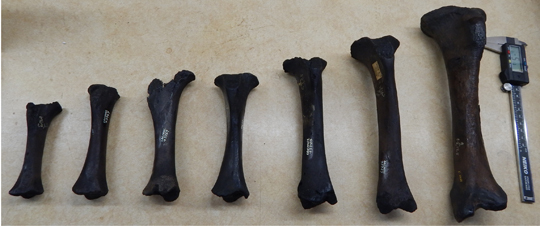
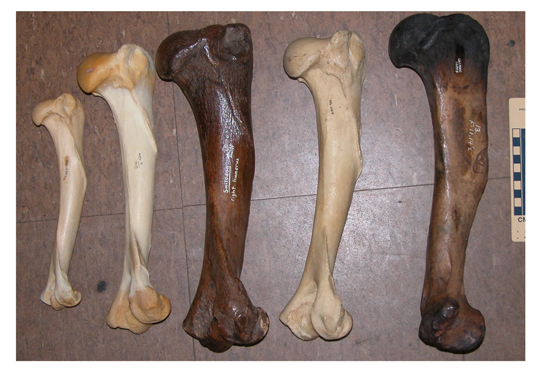
Comparing the Upper Arm Bones of Big Cats Extant and Extinct 

Sabre-Toothed Cats were born with strong arms.

Comparing the humeri of extinct and extant big cats.

Picture credit: PLOS One/DRP

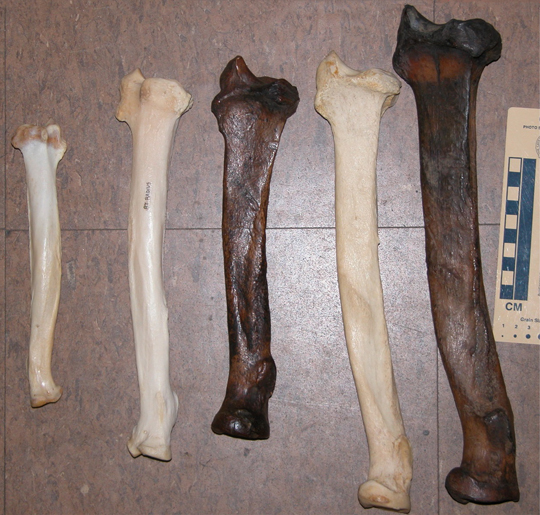
The photograph shows a comparison of five big cat upper arm bones (the humerus).   The bones come from adult animals and provide a visual guide to the forelimb size of large felids.

From the left – the first, whitish bone is the humerus of a Mountain Lion (Cougar) – Puma concolor.  The second, whitish bone is the humerus from a Tiger, Panthera tigris.  The Tiger is a much bigger and heavier than the Mountain Lion.  The bone in the middle is the humerus of Smilodon fatalis, it is much thicker and more substantial.  The third whitish bone comes from a Lion Panthera leo.  The dark bone on the far right, comes from an extinct species that was contemporaneous with Smilodon.  This is the humerus of an American Cave Lion (Panthera atrox), the P. atrox bones used in the study also came from La Brea Tar Pits.

How Did the Limb Bones of Smilodon fatalis Change as the Cats Aged?

The research team discovered that whilst the arm bones of Smilodon, were more robust than those or extant big cats, they did not become more robust as the cats got older.  Smilodon kittens had big limb bones to begin with.

Mapping the bone growth (ontogeny), using the many specimens representing animals of different ages from the La Brea fossil collection, the team found that Smilodon grew in a similar way to other, primitive members of the Felidae and in the same way that many living cat species do today.  The bones lengthen and become more slender before they thicken.  This study, published in the on-line, open access journal PLOS One suggests that Felidae growth and development is much more constrained than previously thought, even in genera with very different morphotypes and bone structures.

Comparing the Radii of Big Cats (Living and Extinct)

Smilodon Limb Growth Study.

Comparing the radius of extinct and extant cat species.

Picture credit: PLOS One/DRP

The photograph (above) shows the radii of the five species of big cat, laid out in the same order as the photograph which showed the humeri.  The radius is one of a pair of bones found in the forearm, it is the bone that is lateral to the body (facing the outside).

Left to Right:

  • Mountain Lion (Puma concolor)
  • Tiger (Panthera tigris)
  • Sabre-Toothed Cat (Smilodon fatalis)
  • African Lion (Panthera leo)
  • American Cave Lion (Panthera atrox)

Professor Prothero stated:

“Sabre-Tooth cats have extraordinarily strong front limbs for tackling and subduing prey before they slashed their throats or bellies with their sabre-like canine teeth.  Using the extraordinary collection of limb bones of Sabre-tooth kittens at La Brea, we found that their limbs don’t become more robust as they grew up, but instead retain the stereotypical growth pattern where the limbs grow longer more quickly than they grow thick.  To compensate, Sabre-tooth kittens were born with unusually robust limbs and retained that pattern as they grew.”

Analysing Felidae Limb Measurements

The limb measurements demonstrated that Smilodon fatalis kittens had the same growth curve graph as those of Tiger or Mountain Lion kittens, but they tended to be thicker from the outset.  For the same length of bone, the Sabre-Tooth kitten forelimb element (radius or humerus) always had a larger circumference than a comparably sized Mountain Lion or Tiger.

A Comparative Analysis of the Tibia of Smilodon (S. fatalis) Different Growth Stages

Smilodon tibia comparison.

Comparing the size of Smilodon leg bones (tibia).

Picture credit: PLOS One/DRP

* Everything Dinosaur’s review of “The Princeton Field Guide to Prehistoric Mammals” by Donald R. Prothero: Field Guide to Prehistoric Mammals – Book Review.

The scientific paper: “Did saber-tooth kittens grow up musclebound?  A study of postnatal limb bone allometry in felids from the Pleistocene of Rancho La Brea” by Katherine Long, Donald Prothero , Meena Madan, Valerie J. P. Syverson published in PLOS One.

Visit the Everything Dinosaur website: Everything Dinosaur.
29 09, 2017

Everything Dinosaur and an Exclusive Newsletter (Mid-September)

By |2024-05-08T20:39:17+01:00September 29th, 2017|Categories: Animal News Stories, Dinosaur Fans, Everything Dinosaur News and Updates, Everything Dinosaur Newsletters, Everything Dinosaur Products, Main Page, Photos of Everything Dinosaur Products|0 Comments

Prehistoric Elephants and Extant Elephants et al

A few days ago, Everything Dinosaur sent out their latest newsletter to their customer database.  A number of recent product introductions and one eagerly anticipated new model were featured.  Linking these two parts of the newsletter was the elephant family (Elephantidae), as the newsletter focused on the beautiful Family Zoo animal models including the fantastic African elephant (Loxodonta) and updated subscribers on the museum quality Steppe Mammoth replica coming into stock (Mammuthus trogontherii).

Everything Dinosaur’s Newsletter Features Lots of Elephants

The Everything Dinosaur Newsletter Featured the Eofauna Scientific Research Steppe Mammoth Model

Everything Dinosaur newsletter (Sept. 2017).

Everything Dinosaur newsletter (mid September 2017).  Picture credit: Everything Dinosaur.
Picture credit: Everything Dinosaur

Steppe Mammoth Strides into View (Everything Dinosaur Newsletter)

The Steppe Mammoth replica is in 1:40 scale and it is the first in a new line of museum quality replicas from Eofauna Scientific Research.  Everything Dinosaur has been given a degree of exclusive distributorship over the sales of this exciting prehistoric elephant model.  A reserve list has been opened which allows model fans to have one of these fantastic figures set aside for them.  There is no obligation to purchase, no deposit needed and no requirement to pre-order.

Customers know that there is a model allocated to them and one of our dedicated team members will email them to let them know that the model is available should they wish to buy it.

To enquire about the Eofauna Scientific Research Steppe Mammoth model and other Eofauna figures: Eofauna Scientific Research Replicas.

Living Members of the Elephant Family and Chums

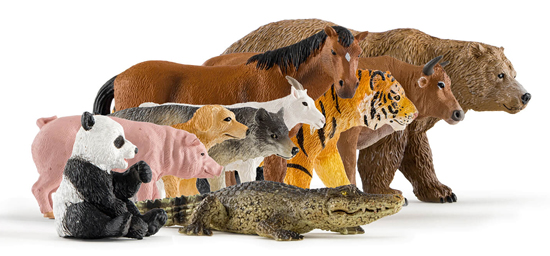
The second part of the Everything Dinosaur newsletter focuses on the superb PNSO Family Zoo range of models.  Firstly, there is the fantastic collection of ten animals from Asia.  These ten figures represent animals that are culturally very important to our species.  The hand-painted models include pandas, tigers, horses, brown bears, goats, wolves and dogs.   This collection is known as the “PNSO Family Zoo Ten Most Popular Asian Animals” and they are extremely hard to obtain.  Thankfully, Everything Dinosaur has brought a number of sets over from China, our stock even includes the rare pig model and the Siamese crocodile.

The PNSO Family Zoo Asian Animals

The PNSO Family Zoo ten most popular Asian animals.

PNSO Family Zoo 10 most popular Asian animals.

To view the PNSO range of models available from Everything Dinosaur: PNSO Age of Dinosaurs Figures.

Extant Animals Take Centre Stage in the Everything Dinosaur Newsletter

Promoting PNSO Family Zoo models.

Promoting PNSO Family Zoo.

Picture credit: Everything Dinosaur

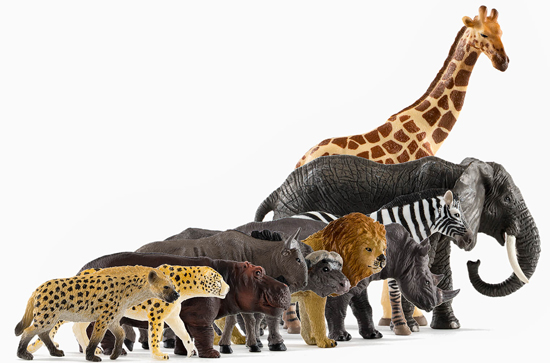
The second part of the PNSO Family Zoo range features those living creatures regarded as “free spirits”.  The models represent ten models of animals from the African Savannah.  The “PNSO Family Zoo Ten Most Popular African Animals” includes rhinos, lions, hyenas, cheetahs, zebras, wildebeest and of course a beautiful African elephant model.

The PNSO Ten Most Popular African Animals

PNSO Family Zoo Asian Animals.

PNSO Family Zoo Ten Most Popular Asian Animals.

The Everything Dinosaur Newsletter

Naturally, a newsletter from Everything Dinosaur also included dinosaurs, updates on the Rebor 1:35 scale King T. rex as this figure came back into stock, plus highlights of fossil and prehistoric animal news studies that we had covered on our various blogs and social media sites.

To subscribe to Everything Dinosaur’s regular newsletter, simply drop us an email: Email Everything Dinosaur.
To see the full range of items available from Everything Dinosaur: Everything Dinosaur.
Go to Top