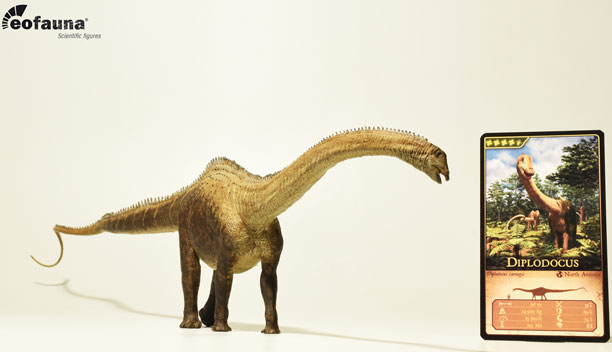
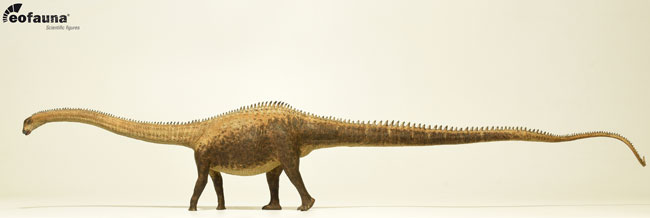
Eofauna will introduce a replica of the Late Jurassic sauropod Diplodocus carnegii. This exciting dinosaur model will be available from Everything Dinosaur in 2022 and it is expected in stock in February (2022). Several species of Diplodocus have been named, D. carnegii, named after the Andrew Carnegie, the Scottish-born, American industrialist, is arguably the best known. This species was erected in 1901 based on CM 84, a beautifully preserved specimen consisting of most of the anterior portion (excluding the skull) of a single animal from the Brushy Basin Member of the Morrison Formation (Wyoming, USA).
The new for 2022 Eofauna Diplodocus carnegii dinosaur model is supplied with a beautifully illustrated collector’s card. Everything Dinosaur team members helped with the hang tag and labelling for the new Eofauna Diplodocus.
The 8th Eofauna Scientific Research Model
The new for 2022 Diplodocus figure is the 8th prehistoric animal replica in the series and the fifth dinosaur after the introduction of Giganotosaurus, Atlasaurus and the Triceratops pair – Cryptic and Dominant, that came out earlier this year (spring 2021).
The Diplodocus figure is the longest in the range, it measures approximately 60 cm in length and that carefully crafted head is around 11 cm off the ground. The Diplodocus carnegii has a declared scale of 1:40.
The Eofauna Diplodocus carnegii model measures around 60 cm in length and stands 11 cm tall. It is a 1/40th scale model.
A spokesperson from Everything Dinosaur commented:
“It is great to hear that this amazing Diplodocus model is coming out shortly. The hard-working and dedicated staff at Eofauna have built up a deserved reputation for the quality and accuracy of their prehistoric animal figures. The arrival of this new Diplodocus replica in February 2022 or thereabouts, is being eagerly anticipated by dinosaur fans and model collectors”.
Eofauna Diplodocus carnegii dinosaur model in oblique posterior view.
Eofauna Scientific Research Models in Stock at Everything Dinosaur
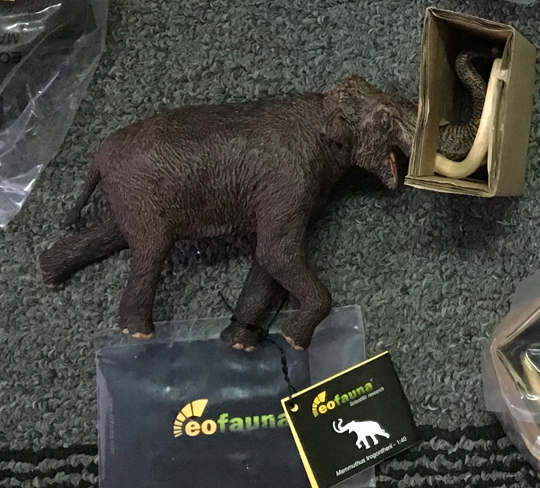
Everything Dinosaur has been proud to support his excellent range of prehistoric animal figures. The first model (Steppe Mammoth) was introduced in 2017 and this range of scale models is going from strength to strength.
The amazing detail on this Steppe Mammoth model can be easily seen. The Steppe Mammoth (Mammuthus trogontherii) was introduced in the autumn of 2017. Picture credit: Everything Dinosaur.
Picture credit: Everything Dinosaur
To see the range of Eofauna prehistoric animal models in stock at Everything Dinosaur: Eofauna Scientific Research.
Fans of the now retired Carnegie Collection series of prehistoric animal models, might remember a model of the therizinosaur Beipiaosaurus (B. inexpectus). The model, introduced in 2006 and withdrawn in 2014, might have given dinosaur fans the wrong impression when it comes to this Chinese theropod. Not that the replica made by Safari Ltd was highly inaccurate, but when the model was produced, only the skull of Beipiaosaurus had actually been studied in detail.
Now, some twenty-two years after this small therizinosaur was named, scientists including Xing Xu who was one of the authors of the paper describing the skull, have revisited the fossil material and completed their analysis by focusing on the postcranial fossils.
The Carnegie collection Beipiaosaurus dinosaur model which was retired in 2014. This model was produced at a time when only the skull of this dinosaur had been studied in detail.
Beipiaosaurus inexpectus
Named and described in 1999, from fossils found by a local farmer three years earlier, Beipiaosaurus heralds from the Lower Cretaceous Yixian Formation (Sihetun locality, near Beipiao), Liaoning Province, China. Described as a basal therizinosaur, it is thought to represent a key taxon in helping scientists to understand the evolution of the Therizinosauridae. Scientists writing in the on-line, open access journal PLOS One, provide an extensive description of the postcranial fossil material associated with the holotype specimen (IVPP V 11559). After Beipiaosaurus had been named, more bones associated with the holotype were found at the original fossil site and these fossils have helped palaeontologists to identity further unique, anatomical characteristics.
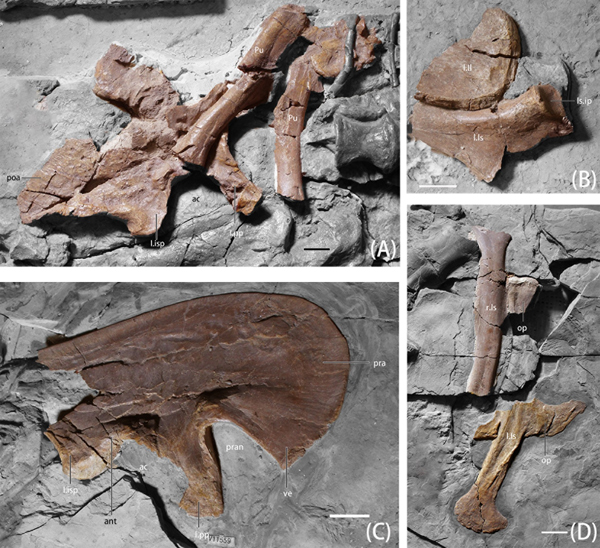
Photographs of pelvic girdle elements of B. inexpectus (IVPP V 11559). Picture credit: Liao et al.
Additional Autapomorphies
Analysis of the hip socket (acetabulum) length provided a new autapomorphy helping to distinguish Beipiaosaurus from other therizinosaurs.
The shape of the ilium, specifically the pubic peduncle (marked as I.P.P in picture C, above), provides a second unique characteristic for this genus identified in this study.
The manual ungual (finger claw bone) in digit III is the longest one in B. inexpectus. In other therizinosaurs, it is the manual ungual of digit II that is the longest. This is the third additional autapomorphy identified in this research paper.
Photographs of right forelimb elements of B. inexpectus (IVPP V 11559). The long ungual associated with digit III is unique to this taxon amongst known therizinosaurs. Picture credit: Liao et al.
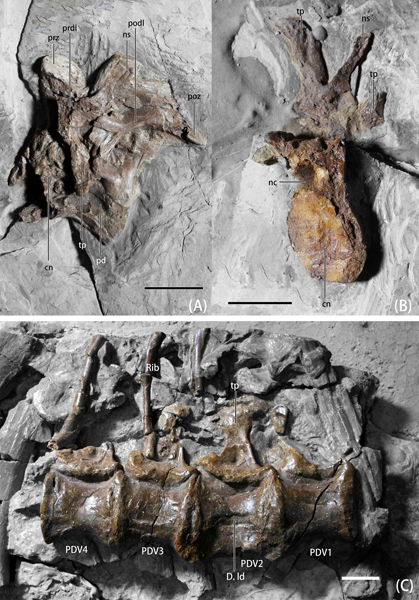
The authors of the scientific paper, provide a detailed description of the skeleton of Beipiaosaurus, including fossil bone associated with the holotype that have not been reported upon before. Their study has revised the diagnostic features associated with this dinosaur. For example, the researchers examined two dorsal vertebrae that had previously not been studied.
Photographs of the dorsal vertebrae of B. inexpectus (IVPP V 11559). This study examined in detail two dorsal vertebrae that had not been studied previously. Picture credit: Liao et al.
The new study into this feathered dinosaur that was named and described more than twenty years ago has helped palaeontologists to better understand the postcranial skeleton of Beipiaosaurus, helps distinguish it from other therizinosaurians and provides insights into therizinosaur evolution.
Furthermore, the researchers, who include Shiying Wang and Chun-Chi Liao (Chinese Academy of Sciences) and Lindsay Zanno (North Carolina Museum of Natural Sciences) as well as Xing Xu, identified several new synapomorphies helping to clarify the evolutionary history of the Therizinosauridae family. A synapomorphy is a characteristic present in an ancestral species and shared exclusively (in a more or less modified form) by its evolutionary descendants.
The scientific paper: “Postcranial osteology of Beipiaosaurus inexpectus (Theropoda: Therizinosauria” by Chun-Chi Liao, Lindsay E. Zanno, Shiying Wang and Xing Xu published in PLOS One.
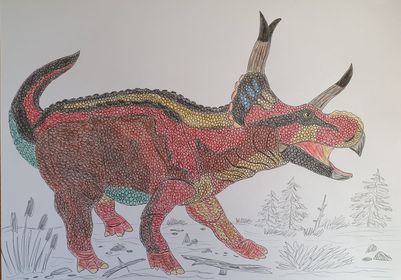
Our thanks to Caldey who sent into Everything Dinosaur another drawing of a horned dinosaur. This time Caldey has chosen to illustrate a centrosaurine, the spectacular Diabloceratops (D. eatoni), a plant-eater that roamed Utah during the Campanian faunal stage of the Late Cretaceous.
With its huge pair of horns extending beyond the headshield and its large, brow horns, Diabloceratops (devil horned face), was one very impressive-looking dinosaur.
The very colourful horned dinosaur by talented young artist Caldey. We think that Caldey drew inspiration from the Beasts of the Mesozoic Diabloceratops (D. eatoni) replica. Picture credit: Caldey.
Inspired by a Beasts of the Mesozoic Ceratopsian
Team members at Everything Dinosaur think that this colourful ceratopsian illustration was inspired by the colour scheme on the Beasts of the Mesozoic articulated Diabloceratops figure.
The Beasts of the Mesozoic articulated Diabloceratops eatoni model. This replica of a centrosaurine was part of the first wave of ceratopsian figures to be produced in the Beasts of the Mesozoic range.
The picture above shows the articulated Diabloceratops in the Beasts of the Mesozoic model range.
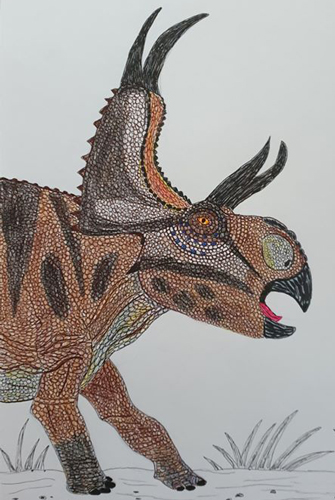
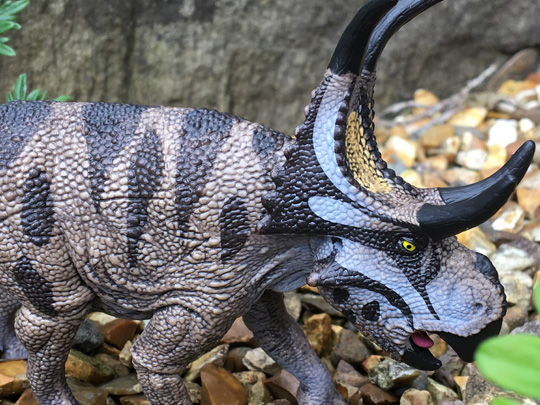
This Diabloceratops illustration we received this week is not the first Diabloceratops drawing from Caldey that we have been sent. In 2019, Schleich introduced a Diabloceratops figure, this model proved to be extremely popular and shortly after its introduction Caldey sent into Everything Dinosaur her illustration of the Schleich model.
The Schleich Diabloceratops inspired Caldey to illustrate this dinosaur back in 2019. Picture credit: Caldey.
A close-up view of the front end (anterior portion) of the Schleich Diabloceratops dinosaur model. This horned dinosaur model, introduced in 2019 inspired Caldey to produce her first illustration of Diabloceratops that was sent to Everything Dinosaur.Picture credit: Everything Dinosaur.
Picture credit: Everything Dinosaur
A spokesperson from Everything Dinosaur commented:
“Some of the spectacular horned dinosaurs that have been recently named and described have proved very popular with palaeoartists of all ages. Our thanks to Caldey for sending into us her Diabloceratops drawing. Her artwork is greatly appreciated”.
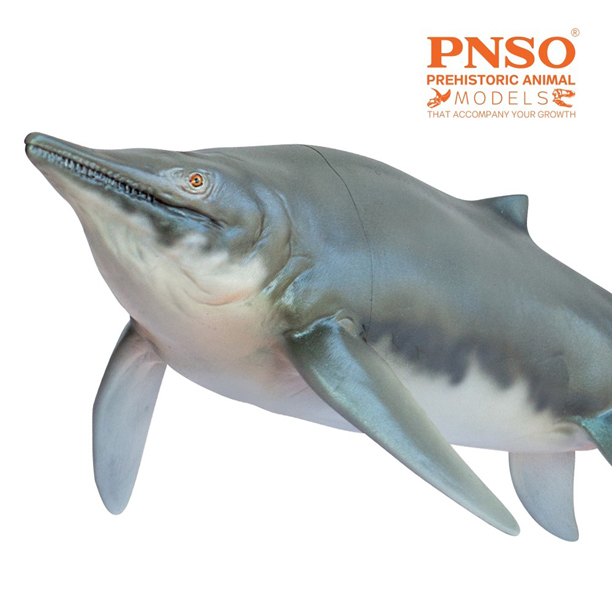
PNSO will add a replica of the giant, Late Triassic ichthyosaur Himalayasaurus to their mid-size model range. The replica called Tucson the Himalayasaurus is part of a shipment of PNSO prehistoric animal figures that are already heading towards our UK warehouse. We expect to have this exciting, new marine reptile model in stock in just a few weeks.
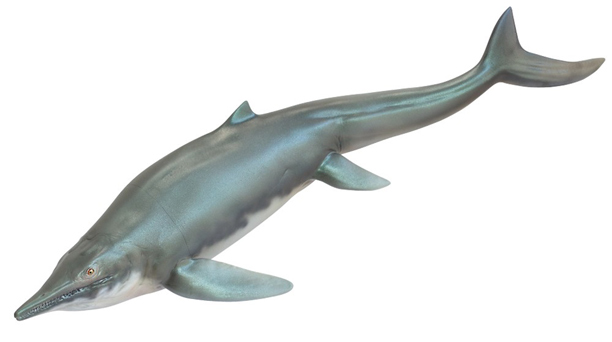
The PNSO Tucson the Himalayasaurus, a fantastic replica of a giant ichthyosaur.
Himalayasaurus tibetensis
Named and described by the highly influential Chinese palaeontologist Dong Zhiming in 1972, Himalayasaurus (H. tibetensis), is known from fragmentary remains. Its body size is uncertain, but comparisons with better-known members of the Ichthyosauria, specifically other large-bodied ichthyosaurs within the Shastosauridae family suggest that this marine reptile could have been more than 15 metres long and weighed in excess of 40 tonnes.
The new for 2021 PNSO Tucson the Himalayasaurus model.
PNSO Himalayasaurus Model Measurements
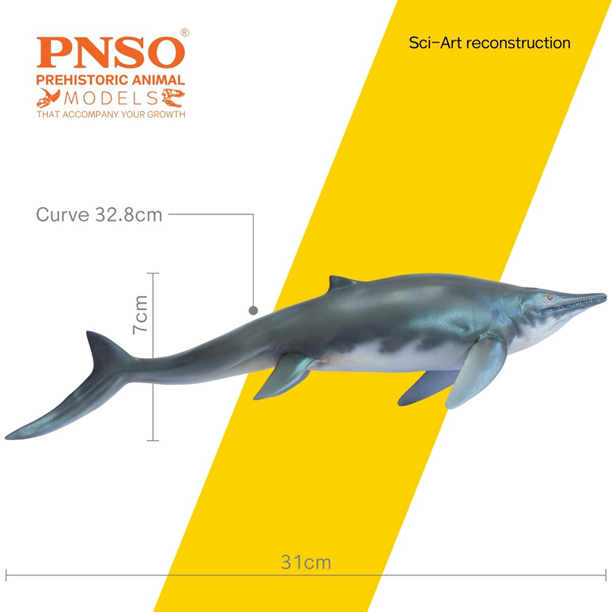
The PNSO Himalayasaurus model measures 31 cm long. The actual model measures a total of 32.8 cm when the curvature of the replica is considered. The distance between the dorsal fin and the bottom lobe of the asymmetrical caudal fin is 7 cm.
PNSO do not publish a scale for their mid-size models. However, based on the curved length of the figure and the size estimate of Himalayasaurus postulated by palaeontologists, team members at Everything Dinosaur suggest that Tucson the Himalayasaurus is in approximately 1:45 scale.
The PNSO Tucson the Himalayasaurus measures 31 cm in length. The curved length of this marine reptile model is 32.8cm and the height 7 cm.
PNSO Tucson the Himalayasaurus
Everything Dinosaur team members are not sure why this particular marine reptile model has been named “Tucson”, what we are certain about is that this stunning figure will be supplied with two transparent support stands to help the model to be displayed.
The product packaging for the PNSO Himalayasaurus marine reptile model. The figure is supplied with two transparent support stands to help the model to be displayed.
In Stock at Everything Dinosaur
A spokesperson for Everything Dinosaur confirmed that the PNSO Tucson the Himalayasaurus would be in stock at Everything Dinosaur possibly as early as November (2021). The spokesperson added:
“We have known about this exciting model for a while. The Himalayasaurus and other new for 2021 PNSO figures are already on the water heading for a UK port. It is wonderful to see PNSO bringing out more prehistoric marine animals to add to their recently introduced Helicoprion, Dunkleosteus, Basilosaurus, Tylosaurus and Kronosaurus models”.
To view the range of PNSO prehistoric animal models currently in stock at Everything Dinosaur: PNSO Age of Dinosaurs.
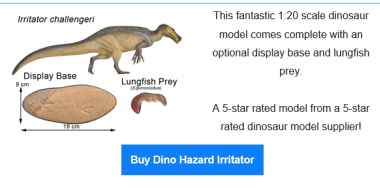
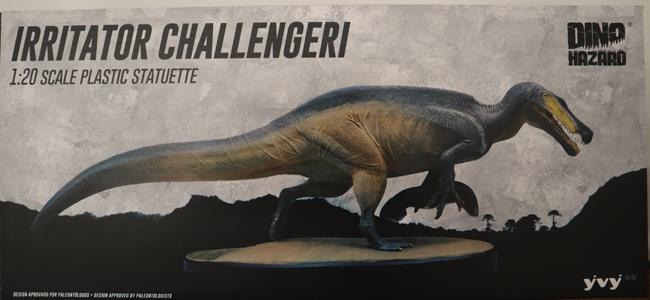
The Dino Hazard Irritator challengeri model features in the latest customer newsletter from Everything Dinosaur. This new for 2021, 1:20 scale dinosaur model of a Brazilian dinosaur designed by a Brazilian design team has been given star billing in the latest Everything Dinosaur customer newsletter.
The Dino Hazard Irritator model available from Everything Dinosaur features in the latest Everything Dinosaur customer newsletter. Picture credit: Everything Dinosaur.
Picture credit: Everything Dinosaur
Everything Dinosaur has an excellent reputation for customer service. Visit the Everything Dinosaur website: Dinosaur Toys.
In Stock After Product Testing
As a responsible importer and supplier of prehistoric animal replicas, Everything Dinosaur took responsibility for obtaining a sample and then getting this product tested by an independent testing company (Eurofins). Once the test report had come back, Everything Dinosaur was able to legally import these excellent dinosaur models from China into the company’s UK warehouse. Customer safety is at the heart of the company’s business philosophy, once the test reports had been published and team members were able to adopt the report’s recommendations, the Dino Hazard Irritator challengeri stock could be brought into the UK.
Views of the new for 2021 Dino Hazard Irritator challengeri dinosaur model, which has an articulated lower jaw. Picture credit: Everything Dinosaur.
Picture credit: Everything Dinosaur
Dino Hazard Irritator challengeri
The Irritator challengeri figure is the first dinosaur model to be made under the Dino Hazard brand by YvY Figures. The project had originally been set up as a crowdfunded operation. A spokesperson from Everything Dinosaur commented:
“We do appreciate how difficult setting up production has been in this current economic climate. We were able to work with the manufacturer and bring in a quantity of the available stock into our warehouse. By doing this, this stunning 1:20 scale figure will be available to many more collectors and dinosaur model enthusiasts”.
The 1:20 scale model is supplied with an optional display base measuring 19 cm x 8 cm and a model of a lungfish. Picture credit: Everything Dinosaur.
Picture credit: Everything Dinosaur
The Everything Dinosaur Customer Newsletter
The Everything Dinosaur customer newsletter is sent out periodically to newsletter subscribers. It is free and allows customers to be updated about new products, receive offers, take part in exclusive competitions and to be informed about product development.
Measuring around 37 cm in length and supplied with an optional display base and a model of a prehistoric lungfish, typical of the sort of prey this large theropod hunted, the arrival of the Dino Hazard Irritator challengeri figure has been greeted very enthusiastically by fans of prehistoric animal models.
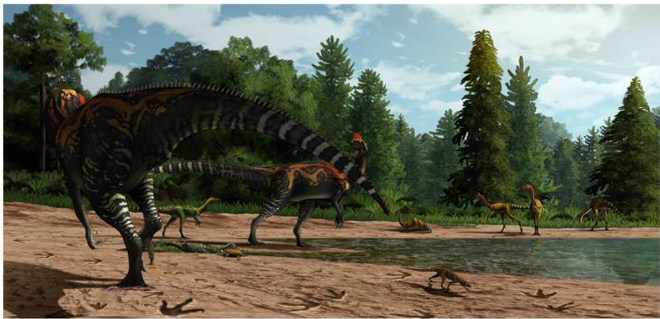
Scientists writing in the on-line, open access, academic journal “PeerJ” have reported upon the discovery of over 100 dinosaur fossil footprints. The footprints represent theropod dinosaurs and they vary in size indicating that a variety of meat-eating dinosaurs co-existed in the late Early Jurassic of Yunnan Province, China.
A life reconstruction depicting the lakeside palaeoenvironment with a variety of different theropods visiting the location. Picture credit: Yu Chen.
Yunnan Province Dinosaurs
Yunnan Province in south-western China is famous for its dinosaur fossils, the majority of which are body fossils, but there have been several published papers detailing track sites and more trace fossils from this province are due to be reported upon. The theropod assemblage track site is located close to the village of Xiyang, Jinning County in central Yunnan. The strata in which the tracks are located come from the Lower Jurassic Fengjiahe Formation and represent a lakeside environment (lacustrine). The reddish mudstone deposits that contain the tracks also preserve mud cracks that suggest the area was subject to droughts. The palaeoenvironment is believed to have been humid and warm (sub-tropical to tropical).
Theropod Tracks
The tracks have been known about for twenty years, but only recently has the site been extensively studied. Unfortunately, several prints had been lost to erosion prior to detailed analysis.
An overview of the track site with (A) an aerial photograph showing the track-bearing outcrop and (B) a line drawing showing the distribution of the theropod tracks. Morphotype A is highlighted in blue, morphotype B is highlighted in green and the single track of morphotype C is shown in red. Note scale bar equals 1 metre. Picture credit: Li et al.
Solitary Coelophysoid and Tetanuran Theropods
The Xiyang track site preserves 120 exposed footprints made by solitary theropod dinosaurs as they visited the lakeside. It is the largest theropod track site in terms of the total number of prints found, described to date from Yunnan. The prints have been assigned to three broad groups based on their size, they indicate that a variety of theropods were present in the ancient ecosystem including coelophysoid as well as larger tetanuran theropods.
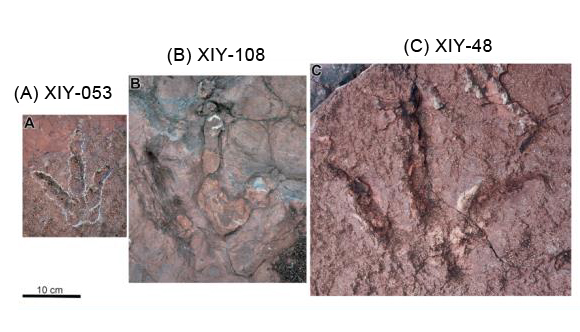
The largest print from the site (XIY-48) measures 39 cm long and 40 cm wide. Large claw marks are associated with each digit of this print. Fossils of the six-metre-long theropod Sinosaurus triassicus (formerly Dilophosaurus sinensis), are known from this area. Sinosaurus fossils from Lower Jurassic Fengjiahe Formation have been found around 500 metres away from the track site, it has been speculated that the largest print could represent a track made by a Sinosaurus, although as it is a footprint, it has been assigned to the ichnogenus Kayentapus.
Photographs showing examples of the three different footprint morphotypes associated with the Yunnan track site. Not scale bar equals 10 cm. Picture credit: Li et al.
Classifying the Footprints
Although the size of any tracks left can be influenced by many factors, the research team conclude that at least three different kinds of theropods were visiting the site frequently. The three groups of prints that the tracks have been classified into are:
Morphotype A (>8 cm to <21 cm) resembling the ichnogenus Grallator.
Morphotype B (>27 cm to<30 cm) identified as the ichnospecies Kayentapus xiaohebaensis.
Morphotype C (39 cm) an isolated print referred to the ichnogenus Kayentapus.
Line drawings comparing theropod tracks from the site with those from the Jurassic of China. XIY-053 is morphotype A (A), whilst (B) is XIY-108 morphotype B and (C) is morphotype C. Grallator yemiaoxiensis is shown (D), Kayentapus xiaohebaensis is (E) and (F) is Kayentapus hopii. Note scale bar = 10 cm. Picture credit: Li et al.
Large Predator Dinosaurs Rare in the Early Jurassic
In Yunnan, the majority of dinosaur fossils from Lower Jurassic rocks represent sauropodomorphs. Whilst the tracks of sauropodomorphs can be mistakenly identified as theropod prints, the researchers who include Hongqing Li of Yunnan University and Claire Peyre de Fabrègues (Department of Biology, Indiana University of Pennsylvania, USA), as well as colleagues from Yuxi Museum (Yunnan Province) and the Chinese Academy of Sciences are confident that this site provides a useful record of the diversity of meat-eating dinosaurs present in this region during the late Early Jurassic
Large terrestrial predators (animals in excess of five metres in length), are rare in Early Jurassic ecosystems. Large tracks are scarce at this site, but not absent. Carnivorous dinosaurs of all sizes presumably co-existed in this palaeoenvironment and were regular visitors to the lakeside in search of food or potential prey.
The scientific paper: “The largest theropod track site in Yunnan, China: a footprint assemblage from the Lower Jurassic Fengjiahe Formation” by Hongqing Li, Claire Peyre de Fabrègues, Shundong Bi, Yi Wang and Xing Xu published in PeerJ.
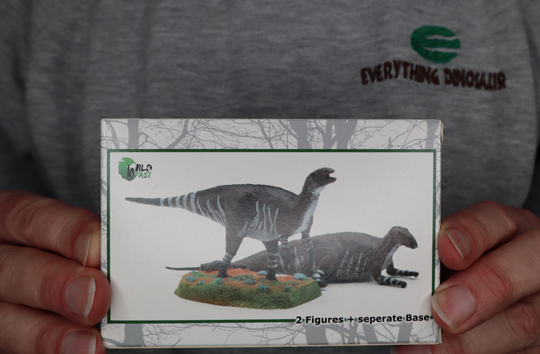
In May of this year (2021), the excellent Wild Past Tethyshadros pair arrived at Everything Dinosaur. This dinosaur figure set featured two models of the dwarf hadrosauroid from north-eastern Italy, which was formally named and described in 2009.
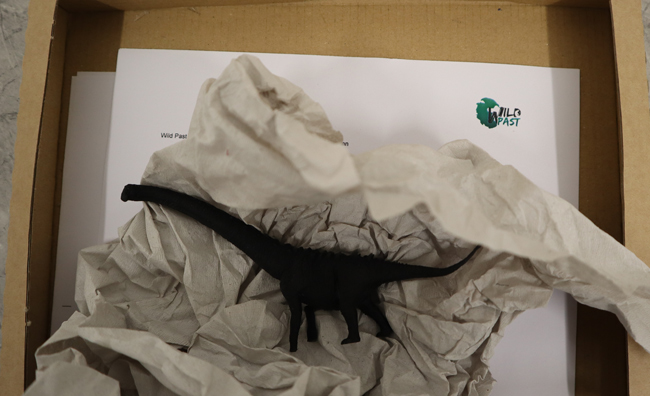
The front of the Wild Past Tethyshadros box. Whilst unpacking the Tethyshadros pair, a cardboard box was found inside one of the cartons. It turned out not to be part of the packing material to help protect the figures, but inside the box Everything Dinosaur team members found a little surprise. Picture credit: Everything Dinosaur.
Picture credit: Everything Dinosaur
As team members unpacked these models, a small cardboard box was discovered inside one of the cartons. At the time, this was thought to be part of the packing material, the box being thoughtfully added to ensure the boxes containing the 1:35 scale Tethyshadros models were fully protected. It was put to one side in our warehouse and remained unopened.
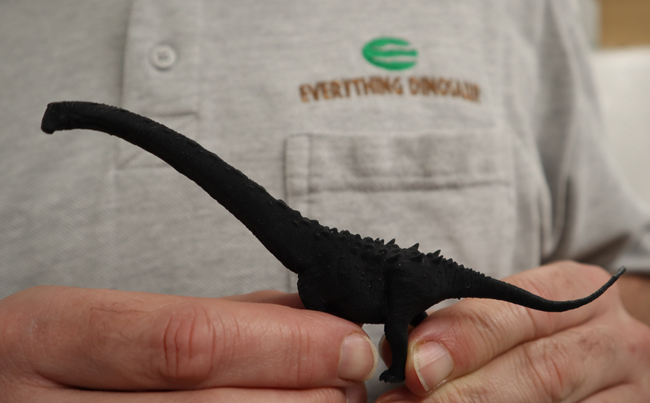
A team member came across the box this morning, curious as to what it might contain, it was carefully opened and inside a small model of the dwarf titanosaur Magyarosaurus was discovered.
The box containing the Magyarosaurus model was thought to be additional product packaging protection in the Wild Past Tethyshadros pair consignment and the model was not discovered until this morning. Picture credit: Everything Dinosaur.
Picture credit: Everything Dinosaur
A Magyarosaurus Figure
Stefan, the German entrepreneur behind the Wild Past brand had included the little model as a gift, a token of appreciation for the support and assistance provided by Everything Dinosaur.
A note from Stefan accompanying the Magyarosaurus model was also discovered, the note said:
“Additionally, to the delivery I send you a small thank you for your ongoing support. It is our little 1:35 Magyarosaurus resin model. Hope you like it”.
The Wild Past Magyarosaurus dinosaur model, a little token of appreciation sent to Everything Dinosaur. Picture credit: Everything Dinosaur.
Picture credit: Everything Dinosaur
Dwarf Titanosaur from the Hateg Basin
The Magyarosaurus genus has one certain species assigned to it (M. dacus), although slightly larger fossil material has been assigned to a second species – Magyarosaurus hungaricus but these fossils might represent a separate taxon. The beautiful model demonstrates the skill and creativity of Wild Past. The team members at Everything Dinosaur were delighted to receive their gift.
A spokesperson from Everything Dinosaur commented:
“It was very kind of Stefan to include this token of appreciation amongst the Tethyshadros models. We have emailed him and thanked him for his gift and apologised for the tardiness of our response. We did not open the box containing the model and his note until this morning”.
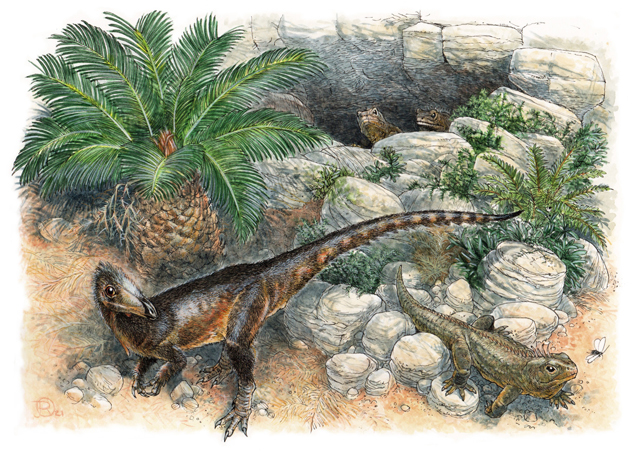
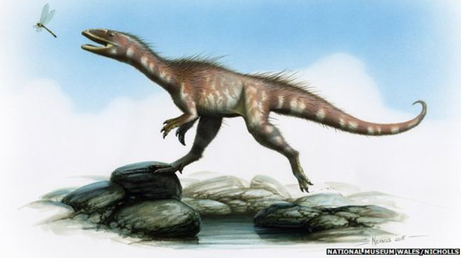
Scientists have described the oldest theropod dinosaur from the UK. The dinosaur has been named Pendraig milnerae, the scientific name honours the dinosaur’s Welsh roots and recognises the contribution of Dr Angela Milner, who sadly passed away last August.
Everything Dinosaur recently blogged about the naming of two spinosaurids described from fragmentary fossils found on the Isle of Wight. The trivial name of one of these theropods, Riparovenator milnerae, also honours Dr Milner.
Ironically, the remains of Pendraig were already ancient fossils when the Isle of Wight spinosaurids roamed. The Pendraig fossils come from limestone fissure fills of the Pant-y-ffynnon Quarry in the Vale of Glamorgan (Wales). This infilled material, deposited in Carboniferous limestone is difficult to date, but it is thought that these fossils are between 215 and 201 million years old (late Norian, latest occurrence possibly late Rhaetian).
A life reconstruction of Pendraig milnerae among the fissures of Pant-y-ffynnon with three individuals of the rhynchocephalian lepidosaur Clevosaurus cambrica for company (Late Triassic). Picture credit: James Robbins.
Misplaced Theropod Fossils
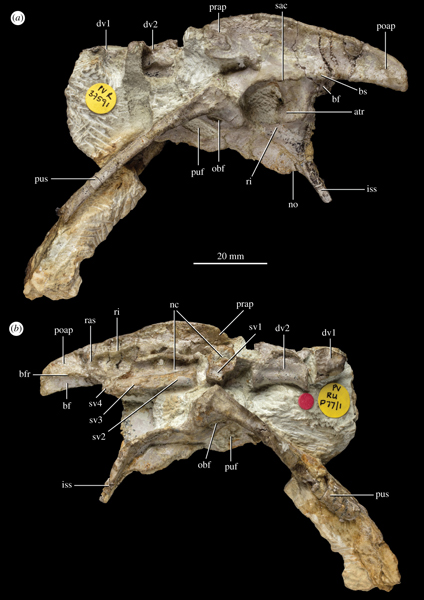
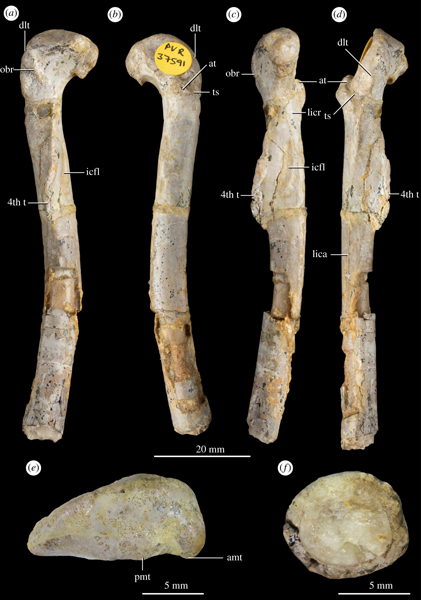
Writing in Royal Society Open Science, the researchers from the London Natural History Museum, the University of Birmingham and National Museums Scotland describe Pendraig milnerae based on an articulated pelvic girdle, sacrum and posterior dorsal vertebrae, and an associated left femur and by two referred specimens, comprising an isolated dorsal vertebra and a partial left ischium.
Co-author of the paper, Dr Susannah Maidment (London Natural History Museum), explained that the fossil material had been stored in a draw that contained crocodylomorphs. It was Dr Milner who was able to find the fossils within the vast Natural History Museum collection and to retrieve an unpublished PhD paper that had referred to them as part of a wider review of archosaurian remains associated with South Wales.
Holotype fossil of Pendraig milnerae (NHMUK PV R 37591) the articulated pelvis and vertebrae (a) left lateral view and (b) right lateral view. Picture credit: Spiekman et al.
Welsh Dinosaurs
A phylogenetic analysis indicates that was a P. milnerae non-coelophysid coelophysoid and it represents the first-named, unambiguous theropod from the Triassic of the UK. The genus name translates from Middle Welsh as “chief dragon”. During the Late Triassic, the dinosaurs were not the dominant terrestrial animals that they were later to become. Discoveries of Triassic-aged theropods can help palaeontologists to better understand the evolution of these important tetrapods, the dinosaur lineage that led directly to modern birds.
Wales might be associated with dragons, but dinosaur discoveries are extremely rare in this part of the UK. Previously, only two dinosaur genera have been named – Pantydraco (P. cauducus) a basal sauropodomorph from a limestone fissure infill from the Pant-y-ffynnon Quarry and the coelophysoid Dracoraptor (D. hanigani) which was named and described in 2016 from fossils found near the Welsh town of Penarth.
An illustration of the coelophysoid theropod dinosaur from Wales Dracoraptor hanigani. Picture credit: Bob Nicholls.
An Insular Dwarf
The palaeoenvironment in which Pendraig lived was most likely an archipelago and species that live on small islands with limited resources can become smaller than their mainland relatives due to a phenomenon known as insular dwarfism.
Measuring around 75 cm to a metre in length P. milnerae was indeed small, a characteristic that it shares with a number of other vertebrates known from the same deposits.
Lead author of the paper, Dr Stephan Spiekman (London Natural History Museum), explained:
“Because the fossil reptiles from this area, including Pendraig, are all quite small-sized, we used statistical analyses to investigate whether Pendraig might have been an insular dwarf. The results indicate that Pendraig is indeed small, even for a theropod of that time period, but not uniquely so”.
Analysis of the fossil bones, indicate that the material does not represent a juvenile or very young animal. However, the fossils do represent an animal that was probably not fully grown when it died.
Various views of the holotype femur of Pendraig milnerae from the Late Triassic of Wales. Picture credit: Spiekman et al.
The researchers conclude that Pendraig may have been a dwarf form but as some other coelophysoid taxa also show a similar size reduction (based on femur bone length comparisons), it is not possible to say with certainty that this little Welsh, Triassic dinosaur was indeed an insular dwarf.
Dr Spiekman added:
“With this in mind, we need more evidence from more species to investigate the potential for island dwarfism in this area during that time, but if we could prove it, it would be the earliest known occurrence of this evolutionary phenomenon”.
The scientific paper: “Pendraig milnerae, a new small-sized coelophysoid theropod from the Late Triassic of Wales” by Stephan N. F. Spiekman, Martín D. Ezcurra, Richard J. Butler, Nicholas C. Fraser and Susannah C. R. Maidment published in Royal Society Open Science.
A new piece of public art has been unveiled within the direct sightline of a huge dinosaur sculpture that was destroyed by fire on Southsea Common ten years ago this week. The artwork pays tribute to original the Southsea dinosaur statue.
The Luna Park dinosaur statue erected on Southsea Common. Picture credit: Strong Island. Courtesy: Aspex, 2021.
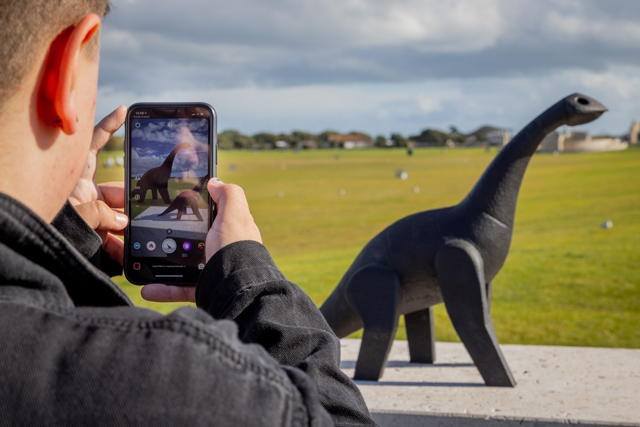
The installation consists of a bronze statue of the original “Southsea Dinosaur” sitting atop a plinth made from highly fossiliferous Portland Stone. In addition to key information about the work, a plaque on the sculpture’s plinth features a QR code which when scanned with a smartphone connects to an Augmented Reality experience, showing a digital rendering of the original, 22-metre-long dinosaur artwork seemingly in front of the user, on Southsea Common accompanied by the sounds of Portsmouth City Band, who attended the original launch
Viewers will also be able to visit Aspex’s website to visit a digital archive of memories contributed by the general public in honour of the original artwork including a video of the 2010 opening ceremony.
The Luna Park Dinosaur
In the summer of 2010, Everything Dinosaur team members reported upon the installation of a giant sculpture of a plant-eating dinosaur named Luna Park being erected on Southsea Common (Portsmouth, England). The massive statue, created by Studio Morison, stood 16 metres tall. It was so large that it could be seen from the Isle of Wight. Unfortunately, a fire in October 2010 completely destroyed this local landmark.
The art project was commissioned by Aspex, Portsmouth’s contemporary art gallery, currently celebrating its 40-year anniversary with a programme of contemporary art activities: “Aspex (life begins) at 40” at the gallery and on-line. The sculpture is the centrepiece of the gallery’s anniversary celebrations.
The QR code (quick response code) on the plinth can be scanned by a mobile phone and this provides more information about this installation and the Luna Park dinosaur. Picture credit: Strong Island. Courtesy: Aspex, 2021.
Commenting on the unveiling of the artwork to commemorate the original Southsea dinosaur, Joanne Bushell (Director of Aspex), stated:
“We are thrilled to be able to share this work – over a decade after the original Luna Park was installed on Southsea Common. The artwork is firmly and fondly lodged in the memories of local people and lives on through younger generations as a kind of myth or local legend. I stand for language, I speak for truth. I shout for history is part of Portsmouth’s heritage and we are delighted to be unveiling it this Autumn. It is hoped that the piece will generate new memories for people who live here and those visiting Portsmouth”.
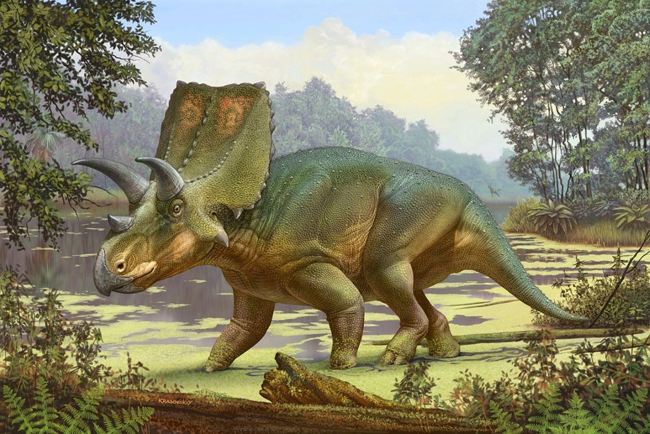
A new species of horned dinosaur has been named and described from fossils found in New Mexico. The dinosaur has been named Sierraceratops turneri and it was distantly related to Triceratops.
The new horned dinosaur classified as a member of the Chasmosaurinae, roamed New Mexico approximately 72 million years ago (latest Campanian–Maastrichtian). Sierraceratops adds to the diversity and disparity of the Chasmosaurinae in the Late Cretaceous. This discovery provides supporting evidence for the hypothesis of Laramidian endemism – the idea that species were restricted to specific regions. Together with Sierraceratops, the Hall Lake Formation dinosaur fauna suggests that the latest Cretaceous of southern Laramidia was characterised by endemic clades and distinct dinosaur communities.
A life reconstruction of the newly described chasmosaurine Sierraceratops turneri. If you look carefully, just above the tail you can see a tyrannosaur approaching in the background. Picture credit: Sergey Krasovskiy.
From Sierra County, New Mexico
The first fossil material associated with this new horned dinosaur, was discovered in 1997 by Greg H. Mack of New Mexico State University whilst undertaking a geological survey. Most of the fossils were collected from the surface, having already weathered out of the surrounding rock, but a field team from the New Mexico Museum of Natural History was despatched and additional fossils were found. The remainder of the fossil material that led to the naming of Sierraceratops was excavated between 2014-2016 by other field teams sent out to the site by the New Mexico Museum of Natural History.
The fossils include elements from the skull and jaws, along with two neckbones (cervicals), two dorsal vertebrae, the sacrum, scapulocoracoid, the ilium and limb bones. The genus name honours Sierra County where the fossils were found, whilst the species name is a tribute to Mr Ted Turner, the founder of the Cable News Network (CNN) who owned the land where the fossils were collected.
Distinct Dinosaur Regional Communities
Phylogenetic analysis suggests that Sierraceratops is a sister taxon to Bravoceratops and Coahuilaceratops, forming part of a clade endemic to the southwestern United States and Mexico. Sierraceratops adds to the diversity and disparity of the Chasmosaurinae in the Late Cretaceous and provides supporting evidence for the hypothesis of Laramidian endemism. Dinosaur fossils from the Hall Lake Formation suggest that the dinosaur biota of southern Laramida was characterised by distinct dinosaur communities. Similar types of dinosaurs could be found in other areas, but the genera were distinctive.
The discovery of Sierraceratops supports the theory that there were distinct dinosaur communities in Laramidia during the Late Cretaceous. Sierraceratops fossil location is marked by the white star and the red horned dinosaur image. It is shown in context with other ceratopsid fossil discoveries. Picture credit; University of Bath with additional annotation by Everything Dinosaur.
Recent Discoveries of Horned Dinosaurs from New Mexico
New Mexico has proved to be a happy hunting ground for new ceratopsid discoveries in recent years. For example, some of the authors of the Sierraceratops paper also worked on the publication describing Menefeeceratops (M. sealeyi), from the Menefee Formation. Menefeeceratops roamed New Mexico some 10 million years before Sierraceratops evolved. As Menefeeceratops has been classified as a member of the Centrosaurinae and Sierraceratops is regarded as a chasmosaurine, these two horned dinosaurs were only distantly related.
Sierraceratops turneri – Tyrannosaurs and Titanosaurs
Based on a comparison with better-known chasmosaurine fossil specimens, Sierraceratops is estimated to have measured around five metres in length. Its skull would have been around 1.5 metres long. The scientists behind this research, including Dr Nicholas Longrich (senior lecturer in the Department of Biology and Biochemistry at the University of Bath), predict that several more new dinosaurs will be described from Laramidia.
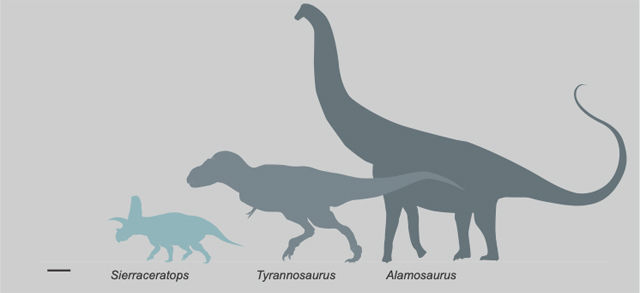
Sierraceratops shared its lush, floodplain and swamp environment with other dinosaurs including giant titanosaurs and predatory tyrannosaurids. It also highly likely that Sierraceratops was contemporaneous with other plant-eating dinosaurs such as hadrosaurids and ankylosaurids. Fossil evidence for both armoured dinosaurs and duck-billed dinosaurs have been found in other Hall Lake Formation sediments but their stratigraphical relationship to the Sierraceratops material remains undetermined.
Size comparison of typical dinosaur fauna associated with southern Laramidia. Note scale bar = 1 metre. Picture credit: Dalman et al.
Everything Dinosaur acknowledges the assistance of a media release from the University of Bath in the compilation of this article.
The scientific paper: “Sierraceratops turneri, a new chasmosaurine ceratopsid from the Hall Lake Formation (Upper Cretaceous) of south-central New Mexico” by Sebastian G. Dalman, Spencer G Lucas, Steven E. Jasinski and Nicholas R. Longrich published in Cretaceous Research.