All about dinosaurs, fossils and prehistoric animals by Everything Dinosaur team members.
2 01, 2022

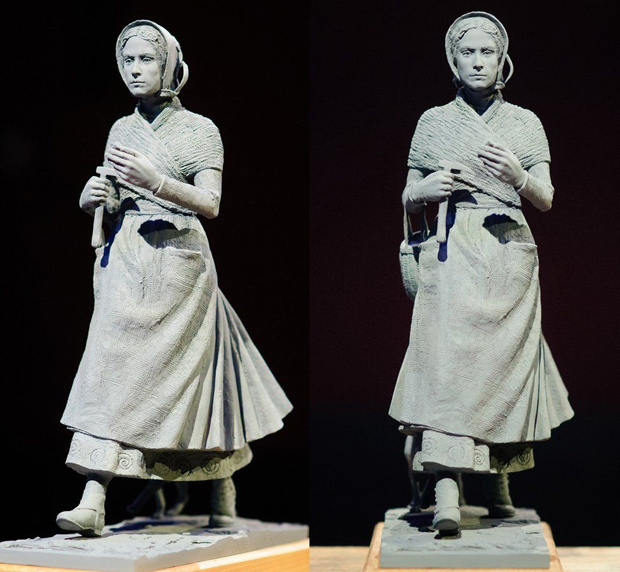
Mary Anning Statue Approved by Dorset Council

By |2024-10-10T13:08:17+01:00January 2nd, 2022|Categories: Dinosaur and Prehistoric Animal News Stories, Dinosaur Fans, Famous Figures, Main Page, Press Releases, Teaching|1 Comment

Marvellous news for the start of 2022, the plans to locate a permanent statue commemorating the work of Mary Anning and her contribution to the Earth sciences have been approved by Dorset Council. The idea to erect a permanent memorial to the most famous former resident of Lyme Regis had been proposed in the past, but it was young, fossil fan Evie Swire and her mum who kick-started the project once more in 2018 with the launch of their charity Mary Anning Rocks.

Plans have been approved to erect a life-size bronze sculpture of Mary Anning. The memorial, designed by Denise Dutton, is likely to be unveiled in the late spring of 2022 and it will, in a small way, help to redress the great imbalance between statues of men and women in the UK. Approximately eighty-five percent of all the statues erected in Great Britain acknowledge the achievements of men. It is therefore fitting that a memorial to Mary Anning should be put on permanent display close to where she made some of her most important scientific discoveries.

Mary Anning Statue Approved

Approval has been given for the erection of a permanent statue honouring Mary Anning. Picture credit: Denise Sutton/Mary Anning Rocks.

Picture credit: Denise Sutton/Mary Anning Rocks

Mary Anning Rocks

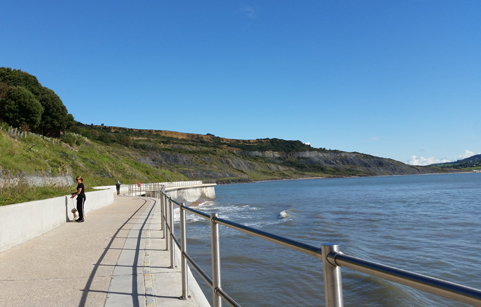
The charity, which team members at Everything Dinosaur have supported, has raised over £100,000 and plans are well advanced to place a statue of Mary Anning overlooking the beach to the east of the town of Lyme Regis. The charity wants to acknowledge and remember Mary Anning and her contribution to the nascent science of palaeontology. The statue will commemorate Mary and her dog Tray, which accompanied her on her fossil hunts. Unfortunately, the dog was killed in a landslide. The statue which will be within sight of Black Ven and Golden Cap will also provide a reminder to visitors of the dangers of straying too close to the cliffs as well as providing tourists with a focal point for remembrance and respect.

Part of the coastal defences of Lyme Regis

Part of the coastal defences at Lyme Regis. Picture credit: Everything Dinosaur.

Picture credit: Everything Dinosaur

Unveiled in May 2022

A spokesperson from Everything Dinosaur commented:

“This is fantastic news! We congratulate all those involved in helping to create this memorial to Mary Anning. The bronze, life-size statue will make a fitting tribute to one of the most influential figures in the early years of the science of palaeontology and perhaps help to inspire more girls to take up a career in the sciences.”

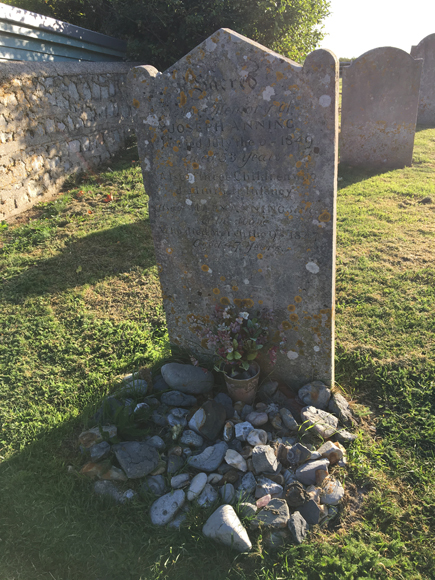
Remembering Mary Anning.

The grave of Mary and Joseph Anning. Picture credit: Everything Dinosaur.

Picture credit: Everything Dinosaur

A date for the unveiling ceremony has yet to be confirmed but it has been suggested that the unveiling will take place on Saturday 21st May (2022).

The Everything Dinosaur website: Dinosaur Toys.

1 01, 2022

Happy New Year from Everything Dinosaur

By |2024-10-10T12:57:21+01:00January 1st, 2022|Categories: Adobe CS5, Dinosaur Fans, Everything Dinosaur News and Updates, Main Page, Photos of Everything Dinosaur Products, Press Releases|0 Comments

Today, being the first day of January, it is appropriate for us at Everything Dinosaur to mark the start of 2022 by wishing all our readers, customers, fans and followers a peaceful and prosperous new year. We are certainly living in challenging times. Team members have lots of exciting plans for the next twelve months or so and we are looking forward to sharing them with you.

In the meantime, we hope everyone stays safe and we would like to take this opportunity to wish everyone a Happy New Year!

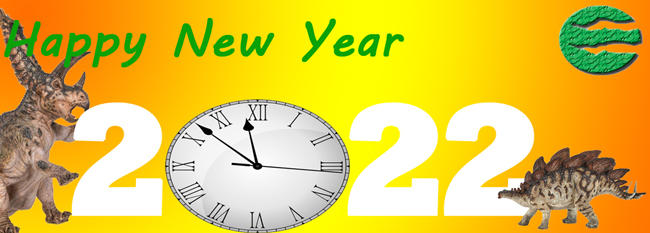
Happy New Year (2022)

Everything Dinosaur team members wish all their customers, fans and followers a happy new year! Picture credit: Everything Dinosaur.

Picture credit: Everything Dinosaur

Let’s hope there are better times ahead.

We incorporated a couple of dinosaurs into our new year banner, can you identify them?

From everyone at Everything Dinosaur, we wish everybody a Happy New Year!

The Everything Dinosaur website: Dinosaur Toys.

31 12, 2021

Favourite and Popular Blog Articles of 2021 (Part 2)

By |2024-10-10T06:27:41+01:00December 31st, 2021|Categories: Dinosaur and Prehistoric Animal News Stories, Dinosaur Fans, Everything Dinosaur News and Updates, Main Page, Palaeontological articles, Photos/Pictures of Fossils, Press Releases|0 Comments

Recently, team members at Everything Dinosaur posted about their favourite blog articles from the first six months of 2021. Today, we conclude our look at the 360 posts or so produced in 2021 by listing our favourite articles that went up from July to December.

To read part one of this series: Favourite Blog Articles of 2021 (Part 1)

July – Lots of New Dinosaur Discoveries

In July, team members announced two dinosaurs described from fossils found in Spain. We wrote about the enigmatic Late Cretaceous hadrosauroid Fylax thyrakolasus “Keeper of the Gates of Hell”, a sister taxon to Tethyshadros (more about Tethyshadros later). We also produced articles on prehistoric crocodiles from Chile, how straight shelled ammonites avoided predators, miniature alvarezsauroids, changes to European Union law that affects parcel deliveries and the first T. rex fossils to be exhibited in England for a hundred years. Other posts highlighted the evidence that some dinosaurs nested in the high Arctic and examined the respiration of Heterodontosaurus.

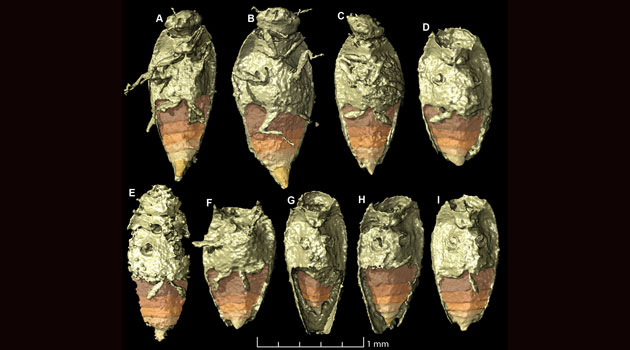
Our favourite article in July took a more scatological approach. A new genus of Triassic beetle was described after its fossil remains were found in ancestral dinosaur dung: Beetle Described from Fossil Poo.
Images of the Triassic beetle Triamyxa coprolithica

Images of the newly described Triassic beetle Triamyxa coprolithica, the first insect to be named and described from a coprolite. Picture credit: Qvarnström et al.

Picture credit: Qvarnström et al

Perfect Paraceratherium Figures

August saw Everything Dinosaur team members going on their only fossil hunt of the year, off to Wales to look for ancient corals. We marked the sad passing of Dr Angela Milner, a highly influential British palaeontologist who along with her colleague Alan Charig described Baryonyx in 1986. Our blog featured articles on two new Lower Cretaceous sauropods from China, revealed the part of space where the dinosaur killing extraterrestrial bolide came from and looked at the skull of the early bird Ichthyornis.

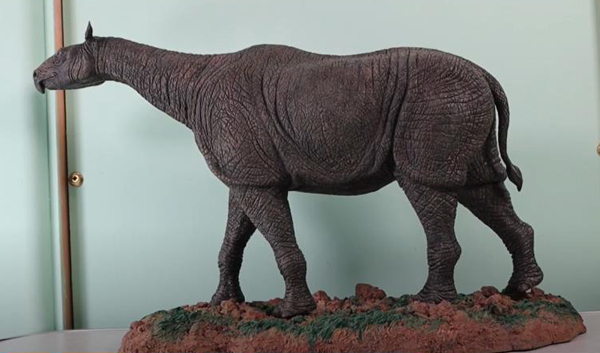
However, our favourite article documented the arrival of the eagerly awaited, super-sized Paraceratherium model from ITOY Studio. ITOY Studio are underrated, but they produce stunning prehistoric animal figures: ITOY Studio Paraceratherium Models Arrive.
The ITOY Studio Paraceratherium.

A view of the eagerly anticipated ITOY Studio Paraceratherium model. Picture credit: Everything Dinosaur.

Picture credit: Everything Dinosaur

Spinosaurids and a Giant Late Cambrian Armoured Radiodont

In September two new spinosaurids from the Isle of Wight were announced, details of the first rhamphorhynchid pterosaur from Gondwana was published, research into the evolution of snakes demonstrated that they evolved from a handful of species and scientists got under the skin of a Carnotaurus as well as providing information on the earliest ankylosaur known to science and the first from Africa. The first Late Cretaceous carcharodontosaurian from Central Asia was described (Ulughbegsaurus uzbekistanensis) and a paper about yet another new species of abelisaurid was published.

Our favourite post whisked readers back to the Cambrian, to the famous Burgess Shale deposits of British Columbia. One of the biggest animals from the Cambrian was scientifically described. The giant, armoured radiodont Titanokorys gainesi took centre stage: Titanokorys gainesi a Giant Cambrian Radiodont.

Views of the Cambrian radiodont Titanokorys gainesi

Life reconstruction of Titanokorys gainesi (a) dorsal view, (b) ventral view, (c) lateral view and (d) anterior view. Picture credit: Lars Fields/Royal Ontario Museum.

Picture credit: Lars Fields/Royal Ontario Museum

Giant Penguins and a Dinosaur from Greenland

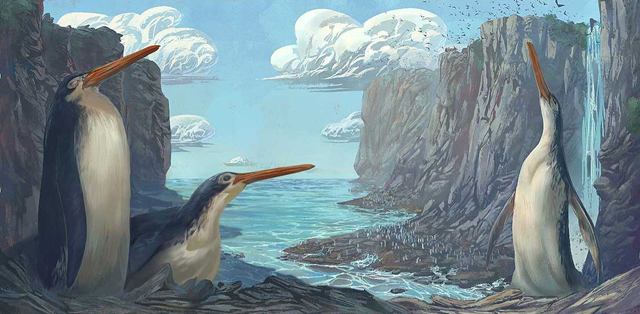
October blog posts included an assessment of organic molecules found in the cells of a Caudipteryx, a re-examination of another feathered Chinese theropod Beipiaosaurus, giant sea scorpions, a new species of horned dinosaur from New Mexico and Pendraig milnerae, a new species of dinosaur from Wales, named in honour of the recently passed Dr Angela Milner. Fossils found by school children on a field trip to a beach in New Zealand turned out to have come from a giant penguin, at 1.4 metres tall, Kairuku waewaeroa was a most impressive bird: A New Giant Penguin from New Zealand.
Giant penguin from New Zealand Kairuku waewaeroa

The Kawhia giant penguin Kairuku waewaeroa from the Oligocene of North Island (New Zealand). Picture credit: Simone Giovanardi.

Picture credit: Simone Giovanardi

Customer model reviews and drawings by young palaeoartists featured in November, along with new Isle of Wight iguanodonts, headless pterosaurs, Permian beetles and toothless Brazilian theropods. Everything Dinosaur produced articles and videos on the new for 2022 CollectA models and the Early Cretaceous ornithomimosaur Pelecanimimus came under the spotlight.

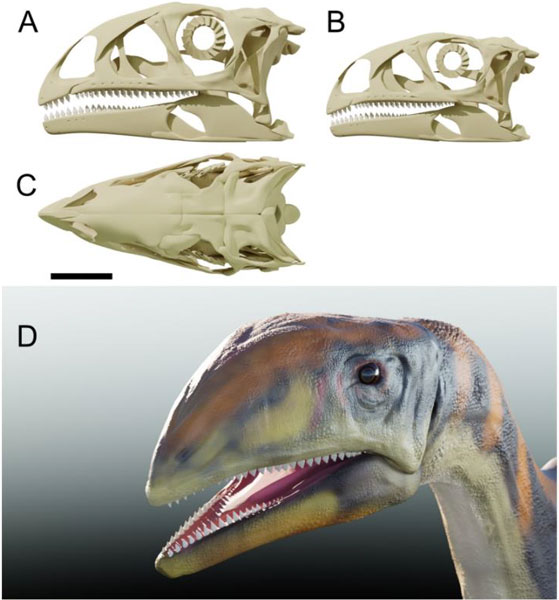
Our favourite post featured Issi saaneq, a sauropodomorph that roamed Greenland during the Late Triassic. It is the first non-avian dinosaur to be named from fossils found in Greenland: Issi saaneq “Cold Bones” from Greenland.
Computer generated models of skulls and a life reconstruction of Issi saaneq.

Digital interpretative reconstruction of the skulls NHMD 164741 and NHMD 164758 and living representation of Issi saaneq. (A) Digital interpretative reconstruction of the skull NHMD 164741 in left lateral view (A). Digital interpretative reconstruction of the smaller skull NHMD 164758 in left lateral view (B). Digital interpretative reconstruction of skull NHMD 164741 in dorsal view (C). Living representation of Issi saaneq (D). Scale bar = 50 mm.

December Yet More Dinosaurs and Upscaling Tethyshadros

As we entered the final month of 2021, we reported upon Stegouros elengassen, a new armoured dinosaur from Chile, research surrounding the KPg extinction event that postulated the extraterrestrial impact took place in the Northern Hemisphere late spring/summer and we helped a young dinosaur fan get reunited with a favourite dinosaur soft toy. Yet another dinosaur from the Isle of Wight was announced – Vectiraptor greeni, the largest fossilised remains of the giant millipede Arthropleura were discussed and palaeontologists got very excited about an exquisitely preserved dinosaur embryo inside a fossilised egg.

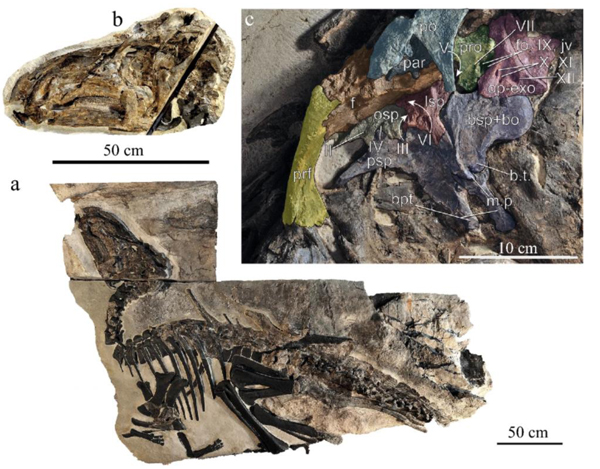
In December, we returned once again to the Late Cretaceous hadrosauriform Tethyshadros. A description of a second, much larger specimen was published and it refutes the idea that this dinosaur was a pygmy form – that Tethyshadros was an example of insular dwarfism: Sizing Up Tethyshadros.
Tethyshadros Fossils

The new skeleton of Tethyshadros insularis “Bruno” (a) preserving details of its cranial anatomy such as the nearly complete skull (b) exposing its braincase (c) adding important information for the anatomy and systematic of this taxon. Elements in black are reconstructed. Picture credit: Chiarenza et al.

Picture credit: Chiarenza et al

This completes are our run through of the blog posts of 2021. We look forward to writing about new dinosaur discoveries, fossil finds and palaeontology related news stories over the next 12 months.

The award-winning Everything Dinosaur website: Dinosaur Models and Toys.

30 12, 2021

Favourite and Popular Blog Articles of 2021 (Part 1)

By |2024-10-10T06:19:24+01:00December 30th, 2021|Categories: Dinosaur and Prehistoric Animal News Stories, Dinosaur Fans, Everything Dinosaur News and Updates, Main Page, Palaeontological articles, Photos/Pictures of Fossils, Press Releases|0 Comments

As 2021 draws to a close, it is time to reflect on some of the blog articles that we have produced over the last twelve months or so.  It has certainly been an incredible year for palaeontology with lots of new fossil discoveries although the impact of the global pandemic has continued to cause havoc when it comes to planning field expeditions. Many museums have been closed and research projects suspended or postponed. We have in our own small way tried to create a sense of normality by continuing to produce daily blog posts. Let us take a look at our favourite posts between January and June 2021 in the first of a two-part series.

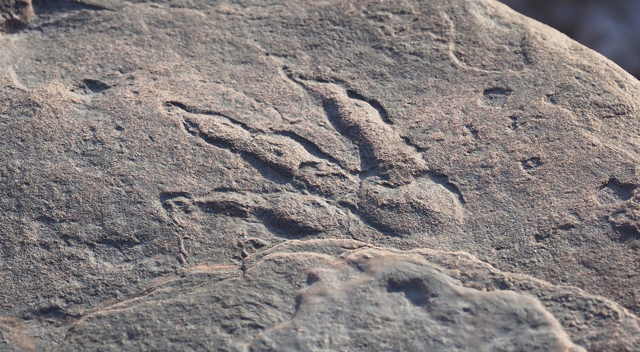
In January 2021 we reported upon a study of early sauropodomorph brains, the role of plant-eating dinosaurs in seed dispersal, oviraptorid incubation, the world’s oldest cave art on the island of Sulawesi and how Ediacaran fossils were helping scientists to piece together the evolution of the first animals. Our favourite January post concerned the discovery of a three-toed dinosaur footprint discovered near the town of Barry in South Wales. Fossilised footprints are known from Mercia Mudstone Group exposures in the Vale of the Glamorgan, but not many dinosaur tracks are discovered by four-year-olds.

Grallator fossil track (South Wales).

Grallator track spotted by a 4-year-old girl at Bendrick Rock (South Wales). Picture credit: National Museum Wales

Picture credit: National Museum Wales

Here is the blog post: Four-Year-Old Finds Dinosaur Footprint.

Mammoths and “Thunderbirds”

February saw team members admiring prehistoric animal drawings sent into us by customers, articles on why horned dinosaurs evolved elaborate frills, our work on information panels for a major exhibition, the breeding habits of Neanderthals and the confirmation of concentrated levels of iridium found at the Chicxulub impact site. Our favourite article was published on the 17th of February, scientists had recovered DNA from mammoth remains that were up to 1.2 million years old. This new data provided a fresh perspective on the evolution of prehistoric elephants.

Our mammoth DNA blog: Million-year-old DNA Sheds Light on Mammoth Evolution.

In March, team members blogged about the mystery surrounding why there were so few medium-sized theropod dinosaurs, provided confirmation of troodontid dinosaurs in Europe, the earliest titanosaur on record, discussed a scientific paper that proposed that cephalopods evolved 30 million years earlier than previously thought and examined the extinction threat to extant amphibians.

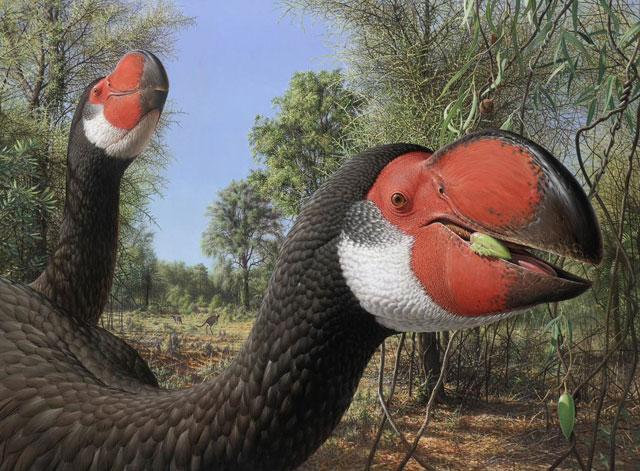
Our favourite post was put up on the last day of the month. It focused on a newly published paper that proposed that the giant flightless “Thunderbirds” of Australia were related to gamefowl: Studying the Brains of Australia’s “Thunderbirds”.

Dromornis stirtoni life reconstruction.

A life reconstruction of the giant Australian “Thunderbird” Dromornis stirtoni of the Late Miocene. Picture credit: Peter Trusler.

Picture credit: Peter Trusler

Yamatosaurus and Moroccan Marine Reptiles

In April we blogged about the origins of the Amazon Rainforest, a new abelisaurid from Argentina, the legs of trilobites, ancient mammals from southern Gondwana and a new species of pterosaur from China. Our favourite post took us to Japan as we wrote about Yamatosaurus izanagii, the second hadrosaur to be named from fossils found in the “land of the rising sun”.

Japan’s second duck-billed dinosaur: Japan’s Second Hadrosaur.

The early summer sunshine of May prompted us to write about crocodile conservation at Miami Zoo, billion-year-old microfossils from Scotland, Mongolian dromaeosaurids and dinosaur bones from the dry and parched Australian Outback. However, it was an article that described a new species of giant mosasaur from the Ouled Abdoun Basin of Morocco that ticked all the boxes for us: Giant Moroccan Mosasaur – Pluridens serpentis.

Jurassic June

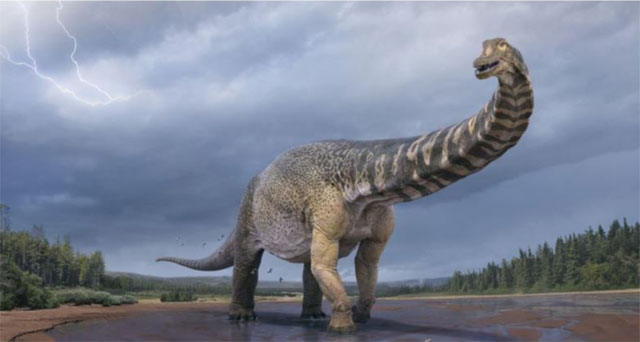
“Jurassic June” involved discussions on the PNSO Allosaurus and Torvosaurus models, the necks of Early Jurassic plesiosaurs and exploring the “Jurassic Coast” of Dorset. We also wrote about stegosaurs from the Arctic Circle, the official scientific description of the Australian dinosaur nicknamed “Cooper” (Australotitan cooperensis) and looked at a paper that reinterpreted the famous Burgess Shale of British Columbia.

Australotitan cooperensis life reconstruction

A life reconstruction of the newly named Australotitan cooperensis, the largest known animal to have ever lived in Australia. Picture credit: Queensland Museum

Picture credit: Queensland Museum

Our favourite post concerned the discovery of a remarkable series of pterosaur tracks in China. The extensive trackway consists of over 100 individual prints and it was given the moniker the “pterosaur dance floor”.

To read about “dancing” pterosaurs: A Pterosaur Dance Floor from China.

Pteraichnus pterosaur tracksite

A photograph of the tracksite with an interpretative line drawing. The tracks have been assigned to the new pterosaur ichnospecies Pteraichnus wuerhoensis. Picture credit Wei Gao.

Picture credit Wei Gao

This concludes our look at blog posts produced in the first half of 2021. We shall post up part two of this short series looking at our favourite blogs from July to December 2021, in the very near future.

The Everything Dinosaur website: Dinosaur Toys.

29 12, 2021

Penarth Prints are Rare Dinosaur Tracks

By |2024-10-10T06:11:01+01:00December 29th, 2021|Categories: Adobe CS5, Dinosaur and Prehistoric Animal News Stories, Dinosaur Fans, Main Page, Palaeontological articles, Photos/Pictures of Fossils|0 Comments

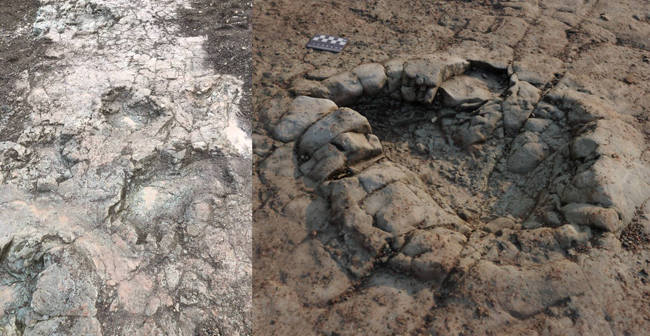
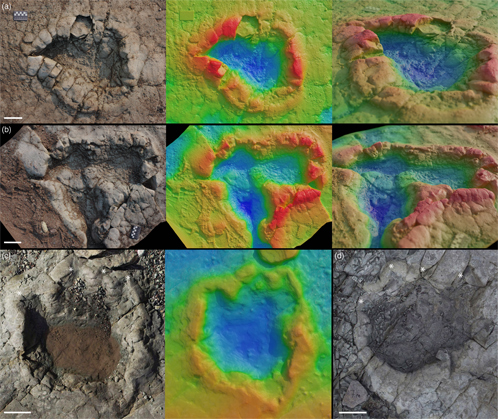
A team of researchers writing in the journal “Geological Magazine”, have confirmed that the strange impressions exposed on the beach at Penarth (south Wales), are indeed dinosaur tracks. The site had been examined back in 2009, further evidence of tracks was revealed in 2020 after more of the bedding plane was laid bare by tidal erosion. The site some 800 metres south of Penarth pier, probably represents tracks made by different types of dinosaurs but they are too badly eroded for a more precise diagnosis other than to tentatively assign the largest, rounded tracks to the ichnogenus Eosauropus.

Dinosaur trackway from south Wales.

A part of the brushed and cleaned up trackway (left) with (right) a close-up view of a single print. Picture credit: NHM/Peter Falkingham.

Picture credit: NHM/Peter Falkingham

Carefully Mapped and Recorded

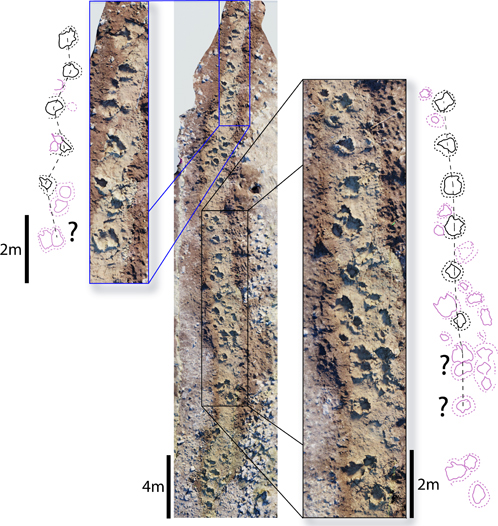
The tracks, some of which are more than 50 cm in diameter, are associated with the Upper Triassic Blue Anchor Formation. Although it is difficult to identify individual trackways, the high density of impressions suggests that the area was a trample ground that might have been visited by many individuals. Although the number of taxa making these impressions cannot be reliably inferred because of their poor preservation, based on their large size, round shape and digit impressions, the research team consider it likely that they were made by large sauropodomorph dinosaurs. As such, Late Triassic sauropodomorph tracks are exceptionally rare and the research team, which consisted of scientists from Liverpool John Moores University, the London Natural History Museum, Cardiff University, the University of Lyon and National Museum of Wales, conclude that these tracks provide additional information regarding the Late Triassic biota of the UK.

Penarth dinosaur tracks

Detail images of individual tracks. (a) Individual D-shaped impression recorded in 2020, presented as photo-textured and height-mapped digital models. (b) Two to three overlapping impressions recorded in 2020, with a displacement rim spanning the centre of the deepest areas, presented as photo-textured and height-mapped digital models. (c, d) Individual tracks recorded during 2009, but showing clearer morphology in the displacement rims that we interpret as digit impressions (marked with *) (c). White scale bar = 10 cm. Picture credit: Falkingham et al.

Picture credit: Falkingham et al.

Likely to be Eroded Away in Just a Few Years

The team highlight the rapidly eroding site, more than one metre of the exposed surface has been lost since the first examination made in 2009 and the detailed mapping carried out in 2020. The loss of the bedding surface highlights the transient and vulnerable nature of these fossils. The site has been extensively photographed and mapped digitally ensuring that a computer record of these trace fossils can be stored in perpetuity.

Dinosaur tracks Penarth Tracks

Possible trackways observed on the northern surface, photo-textured models and interpretive outlines; dashed lines indicate extent of displacement rims. Picture credit: Peter Falkingham et al.

Picture credit: Peter Falkingham et al.

Team members from Everything Dinosaur visited the area in 2019 and had planned to return the following year to help record the tracks, unfortunately, COVID-19 restrictions prevented this. Still, this new study published this week confirms the presence of sauropodomorph tracks along the coastline and provides additional information on the Late Triassic biota of the British Isles.

The scientific paper: “Late Triassic dinosaur tracks from Penarth, south Wales” by Peter L. Falkingham, Susannah C. R. Maidment, Jens N. Lallensack, Jeremy E. Martin, Guillaume Suan, Lesley Cherns, Cindy Howells and Paul M. Barrett published in the journal Geological Magazine.

28 12, 2021

New Rebor Saurophaganax Notorious Big

By |2024-10-10T06:04:26+01:00December 28th, 2021|Categories: Adobe CS5, Dinosaur Fans, Everything Dinosaur News and Updates, Everything Dinosaur Products, Main Page, Photos of Everything Dinosaur Products, Press Releases|0 Comments

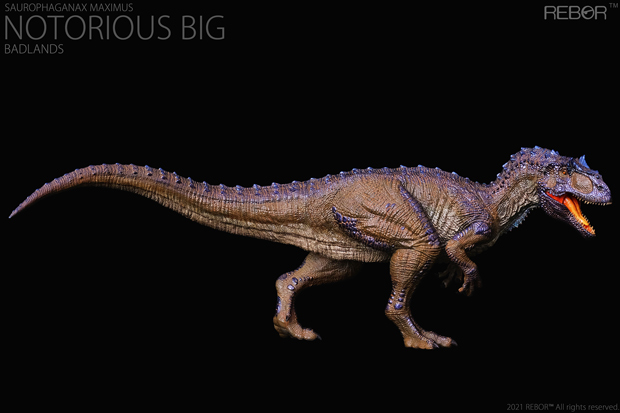
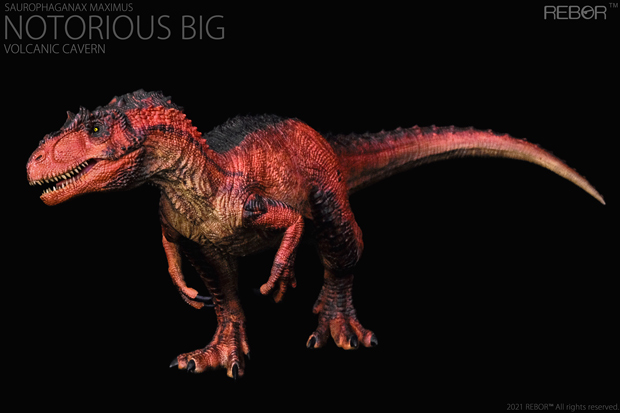
Those talented model makers at Rebor are to add a replica of the Late Jurassic theropod Saurophaganax to their range. This 1:35 scale dinosaur figure, which comes in three different colour versions should be in stock at Everything Dinosaur around March 2022.

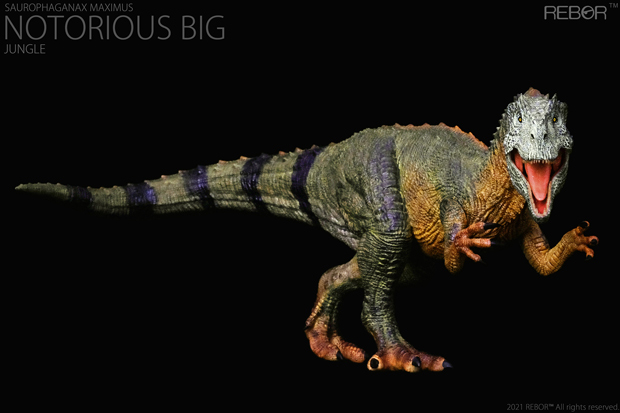
These replicas of Saurophaganax maximus will be available in “Badlands”, “Jungle” and “Volcanic Cavern” colour schemes and each dinosaur model will have an articulated lower jaw and moveable arms.

Rebor Saurophaganax dinosaur model "Badlands"

Rebor 1:35 Saurophaganax maximus Museum Class Replica “Notorious Big” in the “Badlands” colour scheme.

Saurophaganax maximus

Saurophaganax is regarded by many palaeontologists as the largest carnivorous dinosaur known from the Morrison Formation of the western United States. Size estimates vary, but it has been suggested that this huge predator could have reached a length of around 13-14 metres and weighed in excess of 3 tonnes. The original fossil material used to describe this genus was found in 1931 in Cimarron County (Oklahoma). The genus Saurophagus was erected in 1941, but it was later discovered that this scientific name was already occupied. The debate continues as to whether this dinosaur is a valid genus or examples of exceptionally large Allosaurus.

Rebor Saurophaganax maximus dinosaur model (jungle colour variant).

The Rebor Saurophaganax maximus Museum Class replica in the jungle colour scheme. All three colour variants will be available from Everything Dinosaur.

The fossil material from the 1930’s was re-examined by palaeontologist Daniel Chure and in 1995 the genus Saurophaganax was established, although it is still regarded as “nomen dubium” by some scientists. Hopefully, fossil material recently found in New Mexico will confirm the taxonomic status of S. maximus. The genus name translates as “greatest lizard-eater” whilst the trivial or specific epithet reflects the huge size of this theropod.

Rebor Saurophaganax Model Measurements

All three of these stunning, new for 2022 dinosaur models are 41.5 cm long. The head height is around 13 cm. The declared scale for these figures is 1/35th so they will fit well with other Rebor theropod replicas. Based on size estimates of between 10.5 metres and 14 metres long, team members assess the approximate scale of this figure to be between 1:25 and 1:34. Given the variation in dinosaur size proposed by palaeontologists and the difficulties of assigning a maximum size to dinosaurs, team members consider the stated scale on the packaging to be reasonable when all factors are considered.

Rebor Saurophaganax volcanic cavern colour scheme

The impressive Rebor Saurophaganax maximus dinosaur model in the “volcanic cavern” colour scheme.

Confirming that the intention was to have these figures despatched from the factory before the start of the Chinese New Year holidays, a spokesperson from Everything Dinosaur commented that they were looking forward to receiving all three colour variants and that they should be in stock sometime around March 2022.

To view the current range of Rebor dinosaurs and prehistoric animals available from Everything Dinosaur: Rebor Dinosaur and Prehistoric Animal Models.

The Everything Dinosaur website: Dinosaur Figures and Toys.

27 12, 2021

The Amazing Rebor Smilodon populator Stray Cat (Ice Age)

By |2024-10-10T05:59:32+01:00December 27th, 2021|Categories: Adobe CS5, Dinosaur Fans, Everything Dinosaur News and Updates, Everything Dinosaur Products, Main Page, Photos of Everything Dinosaur Products, Product Reviews|0 Comments

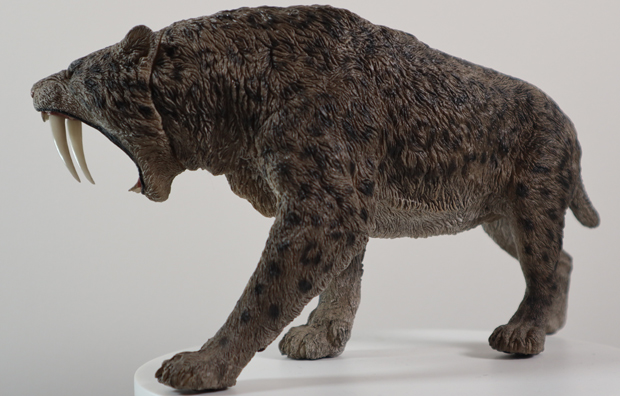
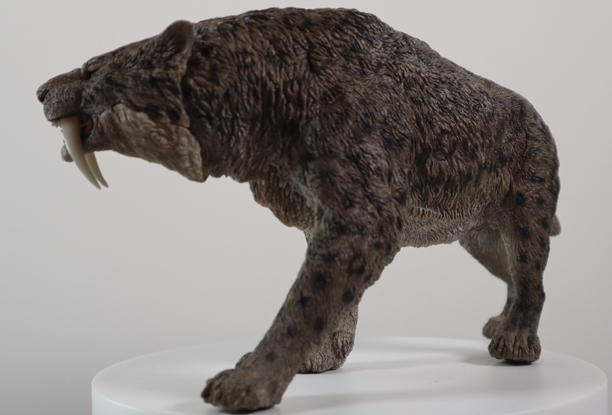
Team members at Everything Dinosaur have taken some photographs of the impressive Rebor Smilodon populator Stray Cat model in the Ice Age colour scheme. The figure is a colour variant on the Rebor Smilodon “plain” replica. The colouration would provide excellent camouflage for a predator in a snowy landscape, although there is very little fossil evidence to indicate whether Smilodon populator inhabited mountainous areas where snow might have fallen on a regular basis.

Rebor Smilodon Stray Cat (Ice Age colour scheme)

The Rebor Smilodon populator Stray Cat model in the Ice Age colour scheme. The model is shown in an oblique, lateral view and the figure has the mouth-closed head attachment. Picture credit: Everything Dinosaur.

Picture credit: Everything Dinosaur

Two Heads are Better than One

The Rebor Smilodon figures are supplied with two heads. One head depicts the mouth open, the other shows the mouth closed. The heads can be securely fixed into the body by a large peg on the back of the head. This peg fits into a socket in the neck and it cannot be seen (as demonstrated in the pictures on this post). The heads are interchangeable so collectors can display their figure with its mouth open or closed. How they choose to display the model is entirely a matter of personal choice. The use of interchangeable heads prevents the need for an articulated lower jaw, the large and obvious joint would have spoiled the look of this most impressive prehistoric cat model.

Rebor Smilodon populator Stray Cat Ice Age

The Rebor Smilodon populator 1:11 scale model. The figure is shown in lateral view with the open-mouth head attachment. The model measures approximately 26.5 cm long and stands around 13.5 cm tall. Picture credit: Everything Dinosaur.

Picture credit: Everything Dinosaur

Rebor Smilodon populator Model Measurements

Both the Rebor Smilodon populator Stray Cat models (plain and Ice Age colour variants) measure approximately 26.5 cm in length. The figures stand around 13.5 cm tall and the declared scale is 1:11. Since these figures arrived at Everything Dinosaur, they have received excellent reviews from model fans and collectors. The detail on these figures is extremely impressive, Rebor are to be congratulated for producing such beautiful Smilodon models.

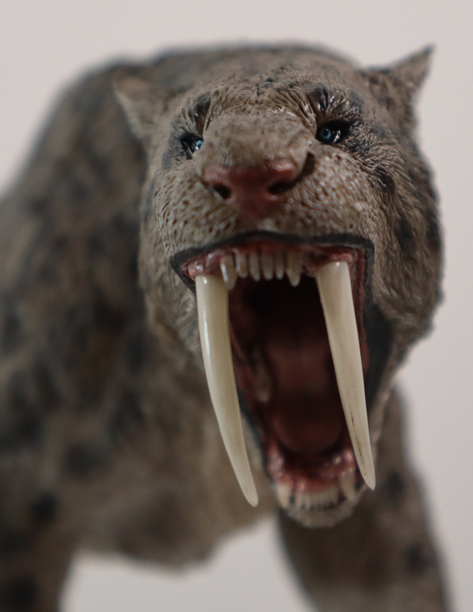
Rebor Smilodon model in the Ice Age colour scheme.

A close-up of the head of the Rebor Smilodon populator figure (mouth open head attachment). The exquisite detailing or the teeth and the inside of the mouth can be clearly seen. Picture credit: Everything Dinosaur.

Picture credit: Everything Dinosaur

To view the Rebor Smilodon populator Stray Cat model and the other figures in the Rebor range: Rebor Prehistoric Animal Models and Figures.

The award-winning Everything Dinosaur website: Prehistoric Animal Models and Toys.
26 12, 2021

The New for 2022 CollectA Triceratops Video Review

By |2024-10-09T22:24:54+01:00December 26th, 2021|Categories: Adobe CS5, Dinosaur Fans, Everything Dinosaur News and Updates, Everything Dinosaur Products, Everything Dinosaur videos, Main Page, Photos of Everything Dinosaur Products, Product Reviews|0 Comments

Everything Dinosaur has published regular updates on the company’s YouTube channel keeping dinosaur fans and model collectors informed about the new for 2022 CollectA prehistoric animal models. Our blog post today features the fourth and final video in this sort series. We provide a video review of the new, 1:40 scale CollectA Triceratops horridus model.

Video credit: Everything Dinosaur

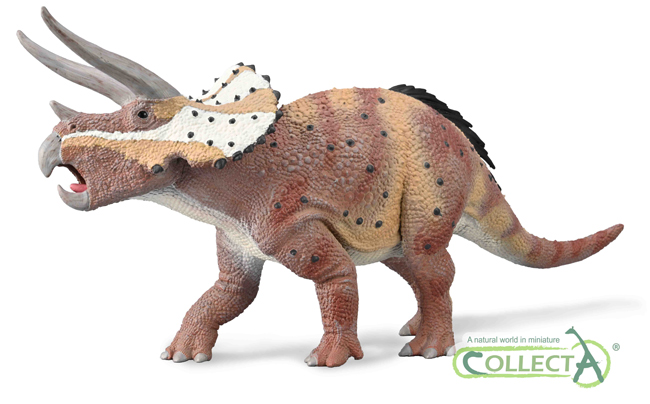
The CollectA Deluxe 1:40 Scale Triceratops horridus

Triceratops might be one of the most recognisable of all the dinosaurs, but scientists have learned a great deal about “three-horned face” over the last decade or so and the new for 2022 CollectA Triceratops (T. horridus) dinosaur model reflects some of the latest scientific thinking.

CollectA Deluxe Triceratops horridus

The new for 2022 CollectA Deluxe Triceratops dinosaur model.

The Shape of the Skull and Neck Frill

The CollectA model has been based on “Horridus”, an almost complete Triceratops horridus specimen excavated from Hell Creek Formation deposits exposed in Montana. This superbly preserved Triceratops skeleton has the most complete skull and neck frill of any Triceratops specimen described to date. It is more than 99% complete. The design team at CollectA have been able to use this skeleton to accurately depict the head and the neck frill on their dinosaur model.

A close-up view of the head of the new for 2022 Collect Deluxe Triceratops.

A close-up view of the head of the new for 2022 CollectA Deluxe Triceratops model.

Almost a Complete Tail

In total, around 87% of the entire skeleton of a single, individual animal has been recovered, including much of the tail apart from a few posterior caudal vertebrae. This has permitted palaeontologists to reconstruct the tail of this horned dinosaur. Its length, depth and relative proportions in relation to the rest of the body are reproduced in the new CollectA Triceratops figure.

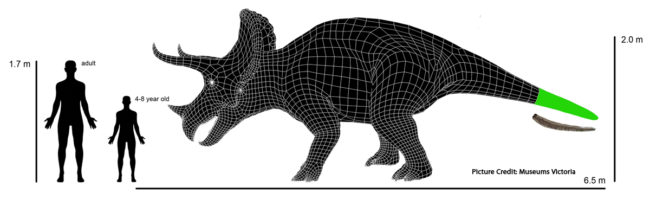
Scale drawing T. horridus

Triceratops horridus scale drawing. The design team at CollectA have been able to use the Melbourne Museum specimen “Horridus” to accurately recreate the tail of a Triceratops.

Triceratops Video Contents

In this brief video, it lasts around ten minutes and thirty seconds, the narrator looks at the science behind this new dinosaur model, provides information on when it will be in stock and highlights the model’s measurements.

To subscribe to Everything Dinosaur on YouTube: Subscribe to Everything Dinosaur on YouTube.

The Video Contents

0:00 – A New Triceratops!
0:25 – Triceratops horridus.
1:25 – Subscribe!
1:34 – The Science Behind the Model!
2:57 – Melbourne Museum Specimen.
4:11 – Triceratops Tail Length!
4:40 – Skull and Neck Frill.
5:02 – Pattern of Scales!
6:22 – Model Measurements.
7:15 – In Stock 2022?
8:04 – Question of the Day!
8:58 – Links to Previous CollectA Videos.
9:21 – Everything Dinosaur Social Media.
9:32 – CollectA Product Range!
9:52 – Our Blog Post.

The question posed in the video is:

What Other Horned Dinosaur would you like CollectA to add to their Deluxe Model Series?”

To view the range of CollectA Deluxe prehistoric animal models in stock at Everything Dinosaur: CollectA Deluxe Prehistoric Life Models.

To see the range of CollectA Prehistoric Life models: CollectA Prehistoric Life.

25 12, 2021

Merry Christmas from Everything Dinosaur

By |2024-10-09T21:38:50+01:00December 25th, 2021|Categories: Adobe CS5, Everything Dinosaur News and Updates, Main Page, Press Releases|0 Comments

Merry Christmas from Everything Dinosaur.

Just time to say on behalf of everyone at Everything Dinosaur, a very Merry Christmas to all our customers, readers and social media followers.  It has been a remarkably busy quarter four in the company, we have had the very great privilege of being able to supply a huge range of prehistoric animal themed gifts to our customers all over the world. We have worked with some super and very enthusiastic people too.  We hope that everyone has a very happy Christmas and we look forward to introducing even more prehistoric animal models and figures in 2022.

Time to show a picture of one of our festive Christmas decorations which is highly appropriate given the nature of our business.

A seasonal decoration with a dinosaur theme - a festive T. rex.

A seasonal decoration with a dinosaur theme. Picture credit: Everything Dinosaur.

Picture credit: Everything Dinosaur

We wish all our blog readers, customers, fans and followers on social media a very happy Christmas.

The Everything Dinosaur website: Dinosaur Toys and Gifts.

24 12, 2021

Red Spheres in Dinosaur Bone not Ancient Blood

By |2024-10-09T21:35:22+01:00December 24th, 2021|Categories: Adobe CS5, Dinosaur and Prehistoric Animal News Stories, Dinosaur Fans, Main Page, Palaeontological articles, Photos/Pictures of Fossils|0 Comments

Scientists from Virginia Tech and Des Moines University in the USA have challenged the idea that spheres identified under high magnification in thin sections of fossilised dinosaur bone are preserved fragments of dinosaur blood. The reddish coloured circular structures might not be remnants of blood cells, but instead they could be sediments that have been altered physically, chemically or via biological action to provide misleading data.

That is the conclusion made by the authors of a scientific paper published recently in the peer-reviewed, open-access journal PeerJ.

Has dinosaur blood been found?

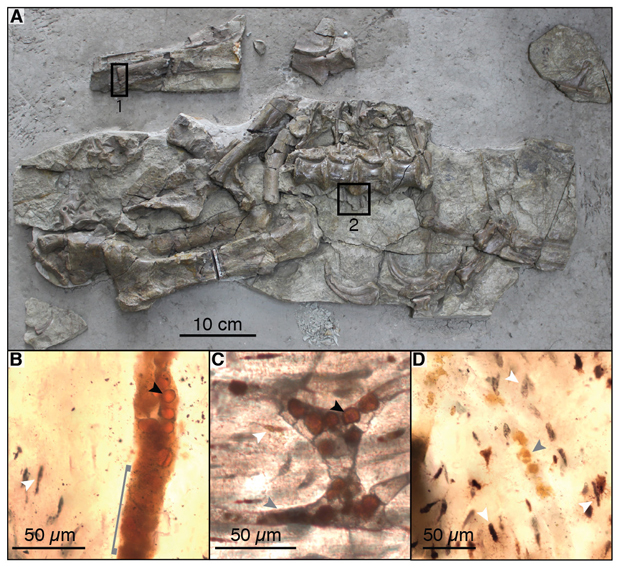
Photograph of sampled specimen (Beipiaosaurus inexpectus, IVPP V11559) (A) and transmitted light micrographs of representative thin sections (B–D). In the section images black arrows indicate spheres (putatively identified as red blood cells), white arrows indicate osteocyte lacunae and grey arrows indicate non-spherical vessel fills. The researchers suggest the spheres are not evidence of dinosaur blood. Picture credit: Korneisel et al.

Picture credit: Korneisel et al

Analysing the Holotype of Beipiaosaurus inexpectus

The researchers, who included Sterling J. Nesbitt (Department of Geosciences at Virginia Tech), analysed thin sections of bone from the holotype of the Chinese therizinosaur Beipiaosaurus inexpectus from the Jehol Lagerstätte. The fossil specimen (IVPP V11559) consists of both cranial and postcranial elements and it was found in sediments representing the Yixian Formation. This specimen was the subject of a paper earlier this year, remarkably when B. inexpectus was scientifically described only the skull elements were examined in detail. In October (2021), Everything Dinosaur published a blog post on the study of the postcranial material which provided more anatomical traits to help define this genus and clarify the evolution of the Therizinosauridae.

Our post can be found here: Beipiaosaurus Revisited.

In this study, the researchers employed a variety of sophisticated techniques including Ramon spectroscopy, X-ray spectrometry and Time of flight – secondary ion mass spectrometry to analyse thin sections of fossil bone from the Beipiaosaurus and compare them to similarly prepared thin sections of fossilised wood.

The team found that the bone had been dramatically altered by the fossilisation process (taphonomy). Vascular canals in the bone, once thought to contain preserved red blood cells, were filled with a mix of clay minerals and carbonaceous compounds. The spheres that were identified could not be analysed in isolation, but the researchers did not find any evidence of pyrite or haemoglobin fragments associated with a concentration of iron.

However, similar spheres were identified in the thin sections of fossilised wood which were found close to the Beipiaosaurus fossils and as such, had presumably been subjected to the same taphonomic processes.

Small spherical structures spotted in petrified wood

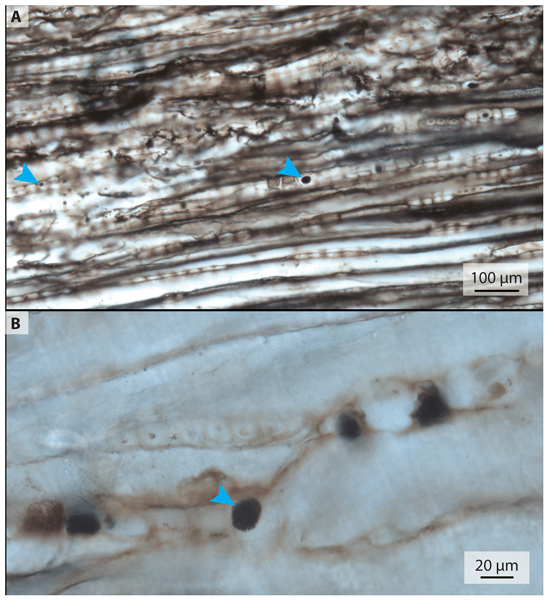
Transmitted light micrographs of fossil wood found near to the dinosaur fossil material seem to show similar, microscopic spherical structures. The blue arrows highlight small and large examples. At higher magnification (B) these spheres appear to consist of small crystals. Picture credit: Korneisel at al.

Picture credit: Korneisel et al

The researchers concluded that the reddish coloured spheres were not evidence of dinosaur blood, but more likely structures formed by diagenesis. Diagenesis is the process whereby sediments in sedimentary rocks are altered by the interaction of water, microbial activity or by physical and chemical processes.

This research suggests that further study of alleged red blood cells associated with fossil bone is required in order to confirm the assertions made in previous papers.

The scientific paper: “Putative fossil blood cells reinterpreted as diagenetic structures” by Dana E. Korneisel, Sterling J. Nesbitt, Sarah Werning and Shuhai Xiao published in PeerJ.

The award-winning Everything Dinosaur website: Dinosaur Models and Figures.

Go to Top