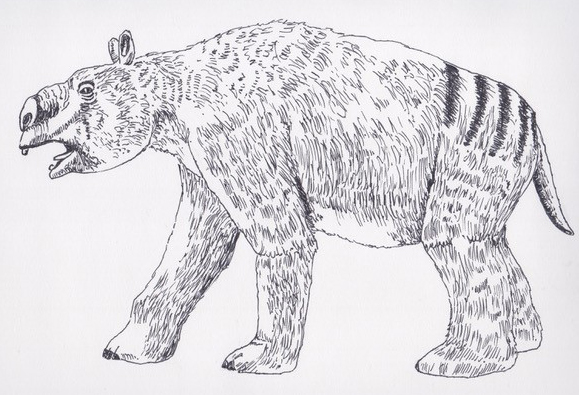
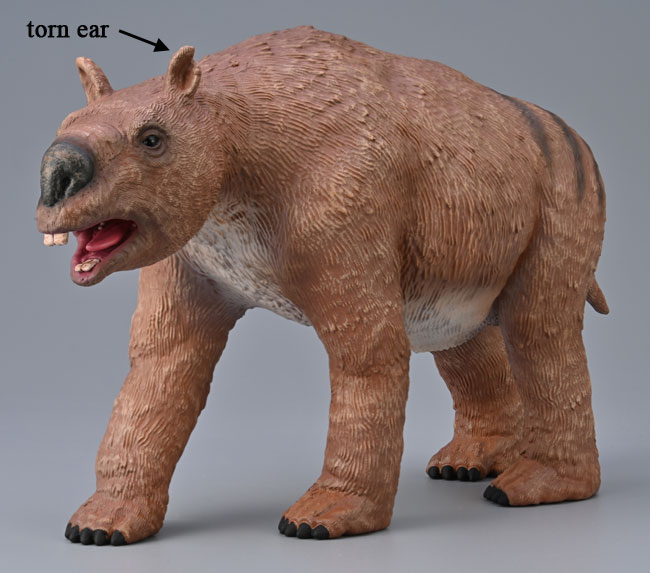
Everything Dinosaur has commissioned a CollectA Diprotodon drawing. The illustration of the largest marsupial known to science is to be used in a Diprotodon fact sheet. The fact sheet will be available from Everything Dinosaur with sales of the new for 2024 CollectA Deluxe Diprotodon model.
The recently commissioned CollectA Diprotodon drawing for use in an Everything Dinosaur Diprotodon fact sheet. Picture credit: Everything Dinosaur.
Picture credit: Everything Dinosaur
CollectA Diprotodon Drawing
The illustration will be modified, and a human figure added for scale. This drawing will then provide fact sheet readers with a visual size guide for this herbivore. The CollectA Deluxe Diprotodon is a male, and the illustration will reflect this. Males were much larger than females, perhaps reaching a length of four metres or more. The shoulder height of a fully grown male Diprotodon was around 1.8 metres.
The CollectA Diprotodon model will be available from Everything Dinosaur in 2024.
CollectA Diprotodon has a torn ear. It is likely big males fought each other for mating rates, territory and social status.
The CollectA Diprotodon figure will have a torn ear. An injury sustained most probably in a fight with another male. However, our Diprotodon illustration shows this powerful marsupial with its left ear restored.
Educating and Informing
A spokesperson from Everything Dinosaur commented that fact sheets were sent out with most of the models the company supplies as these fact sheets help to inform customers about prehistoric animals and palaeontology.
The spokesperson added:
“The fact sheet will be researched and written in plenty of time for the arrival of the CollectA Deluxe Diprotodon. We expect the Diprotodon model to be available around the middle of next year.”
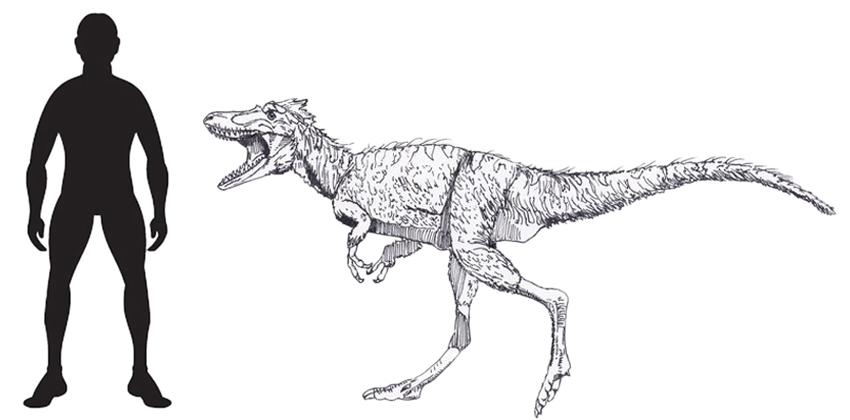
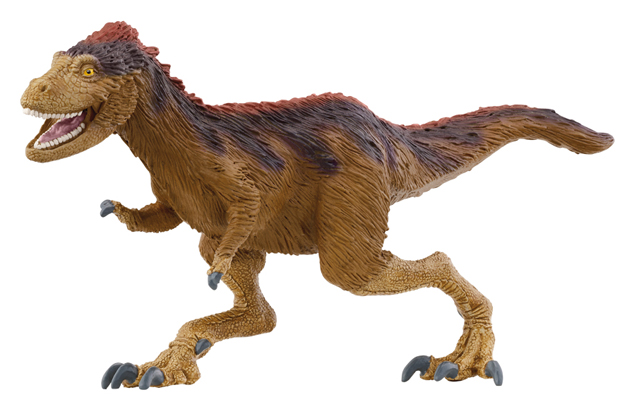
As Everything Dinosaur prepares for the arrival of the new Schleich prehistoric animal figures, we have been busy preparing fact sheets. One of our jobs was to create a Moros intrepidus scale drawing. The Schleich Moros model represents the first time we have had this tyrannosauroid in our range. We commissioned an illustration based on the image sent out with the original Moros intrepidus media release. A human figure was added to provide a scale for this three-metre-long theropod.
The recently commissioned Moros intrepidus illustration has been incorporated into a scale drawing for use in the next Everything Dinosaur fact sheet to be prepared. Picture credit: Everything Dinosaur.
A Moros intrepidus Scale Drawing
For every named prehistoric animal figure that we sell, we try to research and write a fact sheet. Our fact sheets have been well received by customers. Requests are received each week as collectors try to complete their collections. Moros intrepidus was formally named and described in 2019. At around three metres long and with it standing about 1.2 metres high at the hips, it was no giant. However, it was a distantly related forerunner of the giant tyrannosaurs that were to dominate Late Cretaceous ecosystems of North America. It lived some thirty million years before Tyrannosaurus rex.
Schleich are going to introduce six new dinosaur figures in early 2024. Some of these new models will be coming into stock at Everything Dinosaur next month (December 2023). One of these figures is a replica of Moros intrepidus, hence the need to compile a fact sheet.
The new for 2024 Schleich Moros intrepidus figure.
A spokesperson from Everything Dinosaur commented:
“We try to write a fact sheet for all the prehistoric animal models and figures we stock. As Moros is one of several new Schleich figures, we needed to create a Moros intrepidus scale drawing and fact sheet. We intend to send out the fact sheet with sales of the Schleich Moros model.”
For further information about the extensive range stocked by Everything Dinosaur, visit the company’s website: Everything Dinosaur.
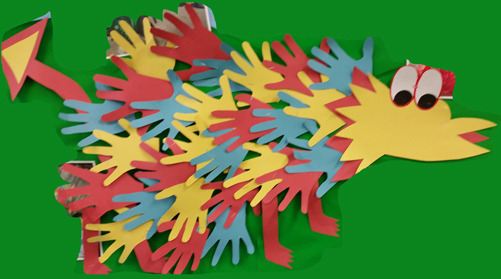
A fabulous dinosaur artwork created from drawings of children’s hands was spotted during a visit to a school to conduct a dinosaur and fossil workshop. The colourful dinosaur complete with big eyes and a pointed tail was on display outside a classroom.
A “handy” way to create a prehistoric animal in the classroom. Picture credit: Everything Dinosaur.
Picture credit: Everything Dinosaur
Dinosaur Artwork
During our many visits to schools we have seen numerous examples of dinosaur inspired artwork. This particular piece caught our eye, as its design meant that every child in the class has had the opportunity to participate. Drawings of the children’s hands made up the dinosaur’s body. In the bright and spacious classroom, the children had built prehistoric animal dioramas using shoe boxes to house their dinosaur models.
The Everything Dinosaur website is user-friendly and so easy to navigate. It is jam-packed with lots of prehistoric animal themed gifts and toys. There are drawing activity sets too. Perhaps you will be inspired to create your own dinosaur artwork.
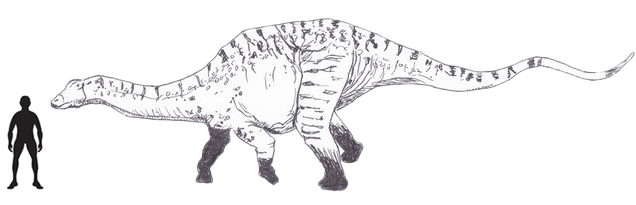
Everything Dinosaur has commissioned a Dicraeosaurus scale drawing to use in a fact sheet in anticipation of the arrival of the Haolonggood Dicraeosaurus model. The Haolonggood shipment is due to arrive at the company’s warehouse in a few days.
Everything Dinosaur has commissioned a Dicraeosaurus scale drawing to accompany the fact sheet being written in anticipation of the arrival of the Haolonggood Dicraeosaurus model. Picture credit: Everything Dinosaur.
Picture credit: Everything Dinosaur
Dicraeosaurus Scale Drawing
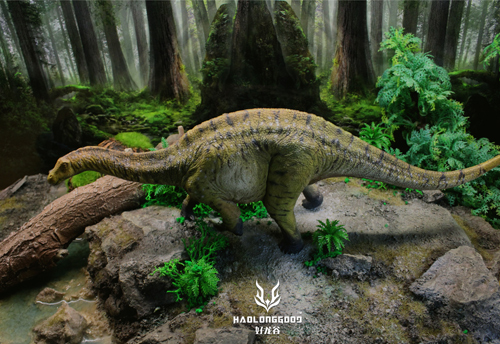
The Haolonggood Dicraeosaurus sauropod model has a scale of 1:35. The figure measures a fraction under 36 cm long. It stands approximately 9.5 cm high.
Two species have been named. Both the type species Dicraeosaurus hansemanni and the potentially geologically younger D. sattleri are known from numerous skeletons, many of which are nearly complete. Dicraeosaurus had a short neck, and a relatively large head. The jaws were more robust than those of other diplodocids. It is likely that this sauropod fed on coarse plant material.
The green Haolonggood Dicraeosaurus dinosaur model.
Dicraeosaurus is regarded as one of the largest of the dicraeosaurid dinosaurs. Palaeontologists estimate that it grew to a length of around fifteen metres.
A spokesperson from Everything Dinosaur commented that the team members were looking forward to the arrival of the Haolonggood models.
The spokesperson added:
“We expect the PNSO and Haolonggood shipments to arrive at our warehouse on the same day. It is likely that they will arrive next Wednesday [20th September]. We have made plans to ensure we can unpack the shipment rapidly and then get these sets of figures on-line quickly.We have also allocated some time that day to contact all those customers who wanted to be informed when the PNSO and Haolonggood figures arrived.”
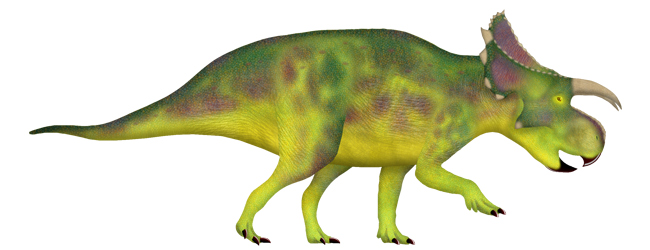
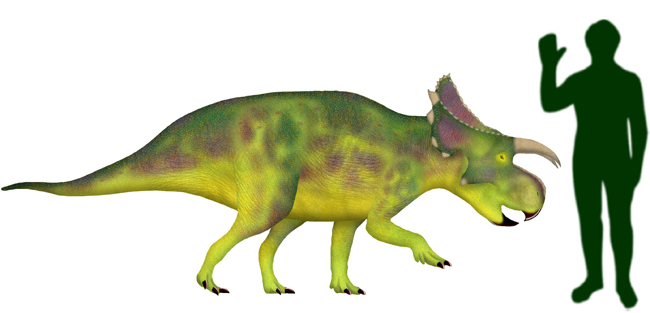
The discovery of a new species of horned dinosaur from the Judith River Formation of Montana has been announced. The new dinosaur named Furcatoceratops elucidans has been assigned to the Nasutoceratopsini subfamily of the Centrosaurinae. This ceratopsian is known from a single, sub-adult specimen (holotype number NSM PV 24660). However, the nearly complete and three-dimensionally preserved bones have the potential to yield valuable data on early centrosaurines. The fossil material was first described in 2015, it was reputed to represent an Avaceratops.
A Furcatoceratops life reconstruction. The recently described (2023), ceratopsid Furcatoceratops elucidans shown in lateral view. Picture credit: Tim Bollinger.
Furcatoceratops elucidans
The disarticulated skeleton was collected from the upper Coal Ridge Member of the Judith River Formation. The fossil material is believed to around 75.6 million years old (Campanian faunal stage of the Late Cretaceous). Postcranial material recovered included a substantial proportion of the left side of the body, including a complete left front limb and parts of the pelvis. In addition, a significant amount of skull material was excavated.
Although the fossil specimen represents a sub-adult, researchers estimate that this herbivorous dinosaur probably reached a maximum length of around four metres. It may be possible to calculate an accurate assessment of bodyweight using circumference measurements of the left femur. Consequently, it may be possible to demonstrate that a fully grown adult Furcatoceratops would have weighed over five hundred kilograms.
A scale drawing showing the newly described centrosaurine Furcatoceratops elucidans. This horned dinosaur from the Judith River Formation of Montana is thought to have been around four metres in length. Picture credit: Tim Bollinger.
A Significant Ceratopsid Fossil Discovery
The authors of the scientific paper conducted a phylogenetic assessment and concluded that F. elucidans was closely related to Nasutoceratops titusi from Utah and Avaceratops lammersi, which is also known from the Judith River Formation. Although Avaceratops lammersi was scientifically described in 1986, palaeontologists have remained uncertain with regards to classifying ceratopsid fossil material associated with other strata within the Coal Ridge Member.
The Furcatoceratops fossils will permit palaeontologists to study postcranial autapomorphies. Research on centrosaurines will be less reliant on skull fossil characteristics. Therefore, the Furcatoceratops holotype will likely be valuable for understanding previously neglected aspects of ceratopsian anatomy.
The genus translates as “forked horn face”, presumably a reference to the curved shape of the prominent brow horns. The species name comes from the Latin for “enlightening”, which reflects the significance of the holotype in terms of providing insights into ceratopsid anatomy and growth rates.
Scale Drawing and Illustration
Everything Dinosaur team members were composing a blog post about Furcatoceratops when an email was received from American artist Tim Bollinger. We checked out his DevianArt page: Total Dino Site. and discovered that he had drawn Furcatoceratops.
Tim stated:
“I love everything you are doing at Everything Dinosaur. I am a dinosaur enthusiast myself, and an aspiring palaeoartist I would love to be involved with Everything Dinosaur in any way possible.”
We explained that we get many requests such as this. However, in a bid to showcase his work, we asked and received permission to feature Tim’s illustration of Furcatoceratops in our blog post.
Everything Dinosaur acknowledges the assistance of artist Tim Bollinger in the compilation of this article.
Take a look at Tim Bollinger’s work under the moniker UnexpectedDinoLesson:
The scientific paper: “Furcatoceratops elucidans, a new centrosaurine (Ornithischia: Ceratopsidae) from the upper Campanian Judith River Formation, Montana, USA” by Hiroki Ishikawa, Takanobu Tsuihiji and Makoto Manabe published in Cretaceous Research.
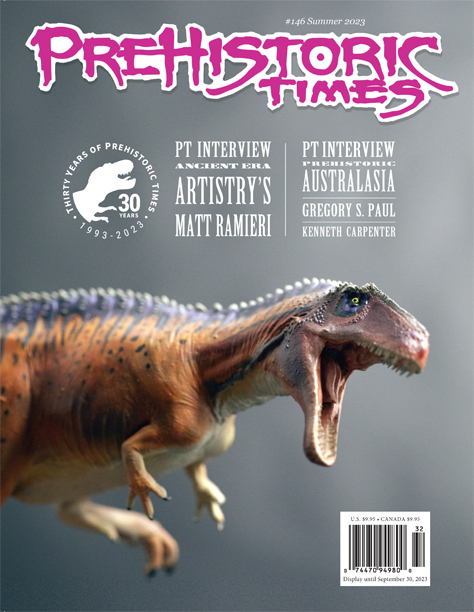
The summer edition of “Prehistoric Times” magazine has arrived at Everything Dinosaur. There is certainly a lot going on in issue 146. Tracy Lee Ford provides part two of his excellent feature on dinosaur skin. The focus is on theropods, and he provides a detailed explanation on how integumentary coverings are interpreted from fossilised skin impressions.
A theropod features on the front cover. A magnificent Acrocanthosaurus model painted by Sean Kotz. There is an article “Mud Monster” inside that explains how the figure was painted.
The front cover of the next issue of Prehistoric Times magazine (issue 146 – summer 2023). Picture credit: Mike Fredericks.
Thescelosaurus and the Tully Monster
The bird-hipped Thescelosaurus is discussed in an article written by Phil Hore and Gary Vecchiarelli. Several species have been described and this fast-running dinosaur was one of the last dinosaurs to roam the Earth. All fossil material having come from Upper Cretaceous (Maastrichtian faunal stage) strata.
The Thescelosaurus article contains lots of reader submitted artwork. Our favourites include the illustrations by Bill Unzen, Ethan Martinicky and Nick Papadimitriou. Phil Hore writes about the iconic Tully Monster – Tullimonstrum. Our congratulations to Wade Carmen, Samele Consolo and Mark Massion for their illustrations. A special mention to Diane Ramic for her striking Tullimonstrum and very colourful pink and blue Thescelosaurus.
The Tully Monster motif is continued as Andreas Forrer discusses his own personal experiences hunting for Tullimonstrum fossils and there is an article on a new book that examines the ancient fauna of Australasia.
“Prehistoric Times” Magazine
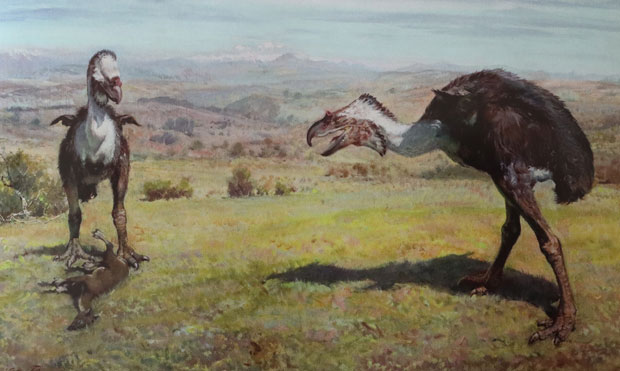
J. R. Lavas continues his long-running series documenting the art of Zdeněk Burian. In issue 146, the focus is on Burian’s illustrations of Cenozoic birds. The detailed and highly informative article features stunning artwork.
Stunning “terror bird” artwork by Burian. A pair of Phorusrhacos squabble over a recent kill.
Picture credit: Zdeněk Burian
Look out for Burian’s magnificent condor artwork which can be found on page 7 of the magazine.
All the regular articles are included too. Book reviews, news about fossil discoveries and Randy Knol’s regular column outlining developments in the dinosaur model collecting world.
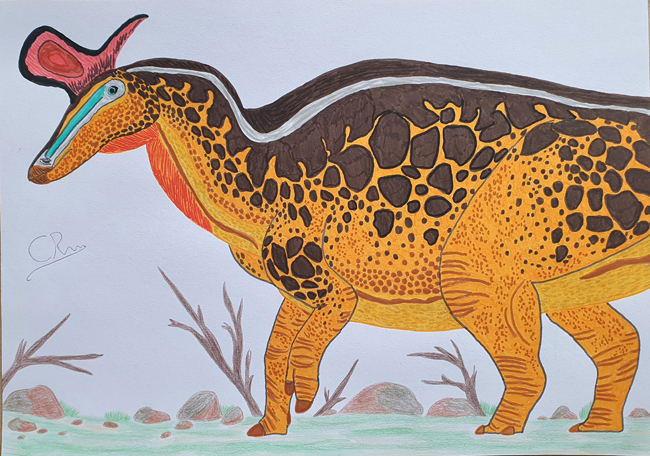
Our thanks to Caldey who sent into Everything Dinosaur and excellent, colourful and highly detailed Lambeosaurine illustration. The anterior portion of the hadrosaur is shown in lateral view. The artist has taken great care to add lots of detail to the animal’s flank and the hatchet-shaped crest has been given a pinkish hue with black highlights.
Our thanks to Caldey for sending into Everything Dinosaur a very colourful Lambeosaurine dinosaur illustration. Picture credit: Caldey.
A Lambeosaurine Illustration
The imposing dinosaur has counter shading, and the artist has taken care to depict lots of differently sized scales on the side of the body. A vivid blue strip runs from the eye down to the nostril. The throat has been coloured red. The background colours are muted, drawing the viewer’s eye to the colourful herbivorous dinosaur.
A spokesperson from Everything Dinosaur thanked Caldey for sending in her lambeosaurine illustration and commented.
“It is a wonderful dinosaur drawing. Lambeosaurus is an enigmatic duck-billed dinosaur and Caldey has done a fantastic job recreating this Late Cretaceous herbivore.”
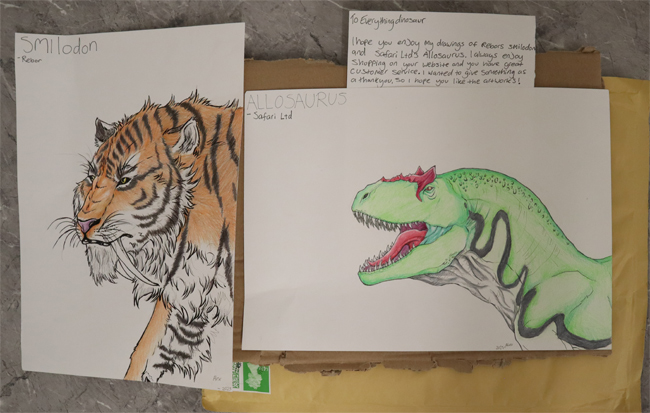
Our thanks to model collector Alex who sent into Everything Dinosaur Smilodon and Allosaurus drawings. Alex emailed to ask if we accepted fan art. We are very lucky at Everything Dinosaur, we have lots of talented customers and we get sent some amazing prehistoric animal illustrations.
Alex was inspired by the Rebor Smilodon “Year of the Tiger” figure and the Wild Safari Prehistoric World Allosaurus model.
Our thanks to Alex for sending in his superb prehistoric animal illustrations.
Thanks to Alex who sent into Everything Dinosaur two excellent illustrations. A Smilodon illustration (left) and an Allosaurus drawing (right). Picture credit: Alex.
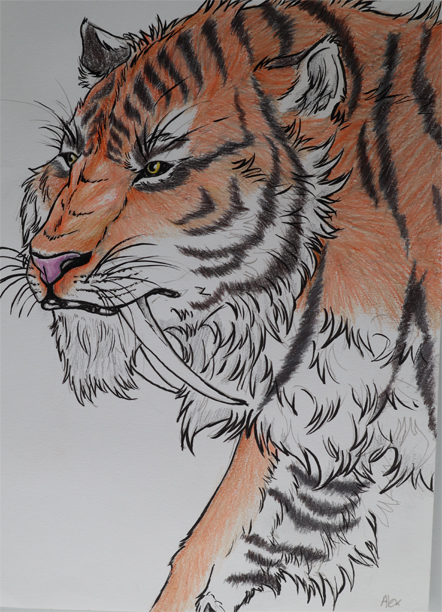
An Illustration of the Rebor Smilodon “Year of the Tiger”
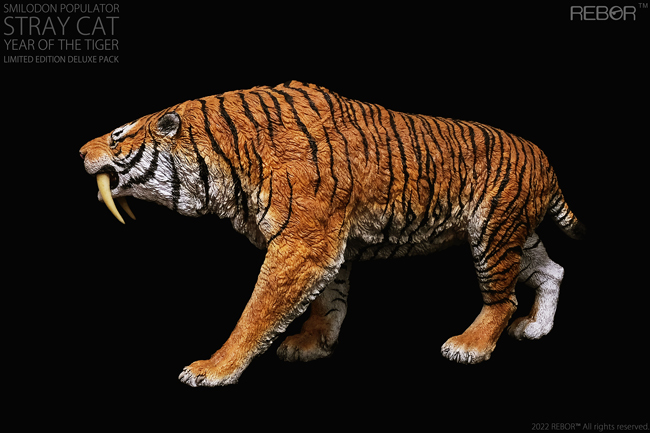
To celebrate the Chinese Year of the Tiger (2022), Rebor created a special edition Smilodon populator replica with a tiger inspired colour scheme.
Thank you Alex for sending into Everything Dinosaur a splendid Smiilodon drawing. Picture credit: Alex.
The Rebor “Stray Cat” year of the tiger figure is a limited-edition model. The beautiful coat and stunning details on the animal’s face has been carefully recreated by Alex.
A Rebor Smilodon populator in the tiger colour scheme. The figure is shown with the mouth closed head attachment.
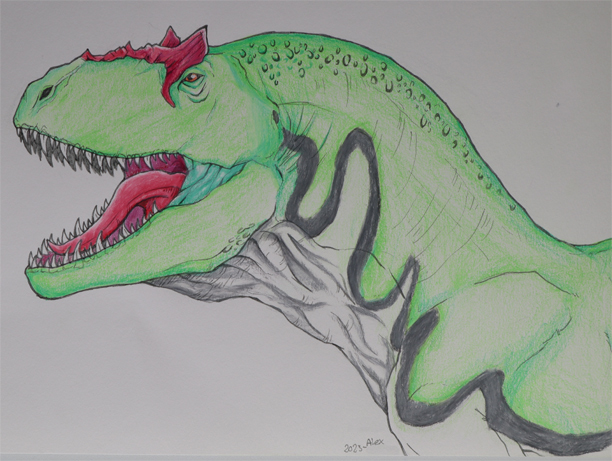
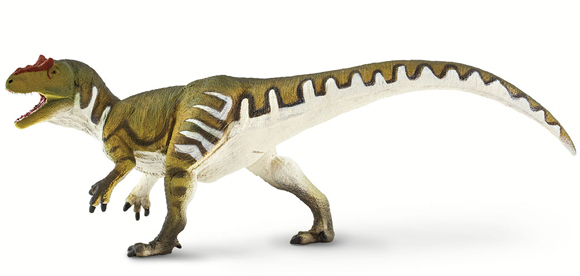
In addition to the stunning Smilodon drawing, Alex sent in an amazing Allosaurus illustration. The drawing is based on the Wild Safari Prehistoric World Allosaurus dinosaur model. The Allosaurus was introduced to this model range in 2019. It has proved to be popular with dinosaur fans and model collectors.
We congratulate Alex for the superb detail that has been incorporated into the illustration. The realistic neck folds, the carefully drawn teeth and the prominent, vivid crests on the skull.
A drawing of the Wild Safari Prehistoric World Allosaurus dinosaur model. Picture credit: Alex.
The Wild Safari Prehistoric World Allosaurus model.
In the package containing the two wonderful drawings, a note had been included too.
Alex wrote:
“To Everything Dinosaur,
Hope you enjoy my drawings of Rebor’s Smilodon and Safari Ltd’s Allosaurus. I always enjoy shopping on your website, and you have great customer service. I wanted to give something as a thank you, so I hope you like the artworks!”
Our thanks to Alex for sending in his amazing illustrations. They are most impressive artworks.
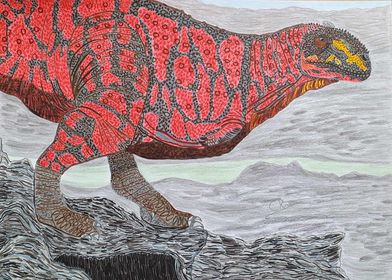
Our thanks to young artist Caldey who sent into Everything Dinosaur a beautiful Rajasaurus drawing inspired by this dinosaur’s appearance in a television series. The theropod Rajasaurus appeared in series two of the award-winning “Prehistoric Planet”. In an episode entitled “Badlands” (episode 2 of series 2), Rajasaurus is depicted feasting on recently hatched titanosaurs.
The stunning illustration of the abelisaurid from India known as Rajasaurus. Picture credit: Caldey.
Picture credit: Caldey
Rajasaurus Hunting Isisaurus Hatchlings
In a dramatic scene from the television series Rajasaurus is depicted hunting some recently hatched Isisaurus. The scientists advising the production company proposed that large titanosaurs such as Isisaurus laid their eggs in old lava flows associated with the extensive Deccan Traps. The warm ground would have helped to incubate the eggs. However, when the eggs hatched, the baby Isisaurus would have made an excellent snack for a hungry abelisaurid.
To avoid being eaten, baby Isisaurus hide amongst the many cracks and gullies in the rocky surface.
Rajasaurus (R. narmadensis) was named and scientifically described in 2003.
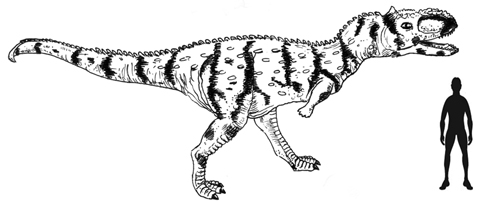
Probably an apex predator in its environment. Although recent research has suggested that this abelisaurid did not reach lengths of around 11 metres. A study into abelisaurid body size published in 2016 (Grillo and Delcourt) suggested a body length of approximately 6.6 metres. Picture credit: Everything Dinosaur.
Picture credit: Everything Dinosaur
The image (above) shows a scale drawing of R. narmadensis.
Fossils of both Rajasaurus and Isisaurus are known from the Upper Cretaceous Lameta Formation of India. These dinosaurs lived at the end of the Mesozoic (Maastrichtian faunal stage). Numerous dinosaur taxa and other vertebrates have been named and described from fossils found in these deposits.
Rajasaurus Drawing
A spokesperson from Everything Dinosaur congratulated Caldey on her artwork and commented:
“It is a superb dinosaur illustration. Caldey has taken great care to observe Rajasaurus as it was depicted in the television series. She has accurately reproduced the detailed skin texture and the body proportions of this Late Cretaceous predator.”
On thanks to Caldey for sharing her dinosaur illustration with us.
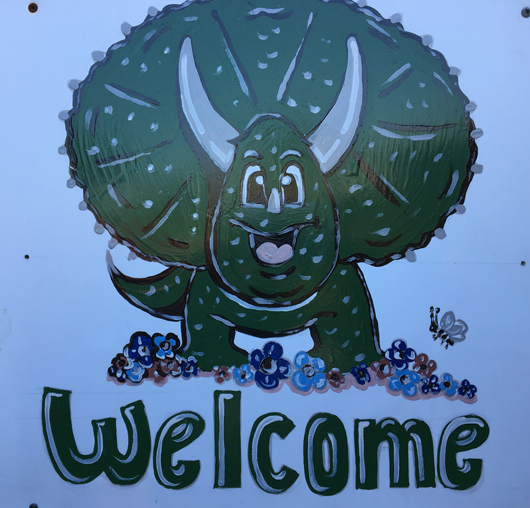
Whilst looking through their archive of school photographs, team members spotted a happy Triceratops. The artwork was on one of the gates at Thorpe Hesley Primary. Everything Dinosaur visited this school in May 2017. Children at the school were studying dinosaurs, rocks and fossils. Everything Dinosaur was invited to visit and to provide teaching support.
A friendly dinosaur is featured in the school artwork. A happy Triceratops to greet schoolchildren. Picture credit: Everything Dinosaur.
Picture credit: Everything Dinosaur
Happy Triceratops Artwork
The very friendly and happy horned dinosaur stands guard at one of the school gates. The Triceratops welcomes the children and visitors. Our congratulations to the artist for creating such a colourful piece of dinosaur-themed art.
Visit the award-winning, user-friendly website of Everything Dinosaur: Everything Dinosaur.