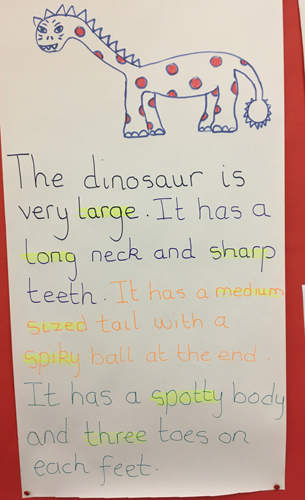
Whilst sorting our image archive, we came across a super example of a dinosaur themed teaching activity. In December 2019 Everything Dinosaur visited Greenhill Primary in Bury (Greater Manchester). The teaching team had invited us in to help with the Year 1 term topic. The children had been learning all about dinosaurs and prehistoric animals. One of the areas of learning the teachers wanted to focus upon was improving literacy.
A super example of a dinosaur themed activity helping to support Year 1 literacy. This example was spotted on a visit to Greenhill Primary in Bury. Picture credit: Everything Dinosaur.
Picture credit: Everything Dinosaur
Dinosaur Themed Teaching Activity
The dedicated and enthusiastic teaching team had prepared a comprehensive term topic. A topic that would appeal to a variety of learning styles. The children were excited and keen to demonstrate their knowledge.
Dinosaurs appeal to children. Many are fascinated by them, and a clever term topic can really engage young minds. If the children are motivated and enthused, they will quickly develop new skills and gain confidence with writing and reading.
The colourful drawings of prehistoric animals posted around the classroom helped to encourage the pupils in their own creative writing.
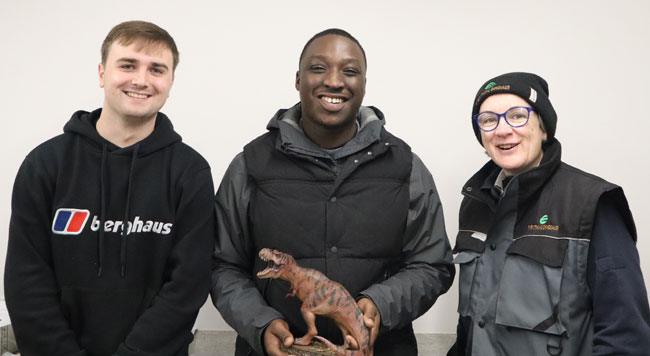
Engineering students visit Everything Dinosaur. As part of the company’s work in the community, Everything Dinosaur was visited by Tom and Bolaji, two final year engineering students at Liverpool John Moores University. Tom and Bolaji are currently working on a practical project that focuses on using state-of-the-art software and engineering skills. The project forms part of their final year studies.
Sue from Everything Dinosaur with engineering students Tom and Bolaji from Liverpool John Moores University. Picture credit: Everything Dinosaur.
Picture credit: Everything Dinosaur
Students Visit Everything Dinosaur
We hope that Tom and Bolaji found the visit to our offices and warehouse illuminating. Everything Dinosaur team members have worked on a number of student projects. Recently, we were invited to talk to students at Manchester Metropolitan University. We have been engaged in several outreach projects, it is all about giving something back to the wider community and helping to motivate the next generation of entrepreneurs.
A spokesperson from Everything Dinosaur commented:
“It was wonderful to meet the two students. Their energy, enthusiasm and approach to business problems was refreshing. Tom and Bolaji definitely have a “can do” attitude. It was great to be able to exchange ideas and consider problems in our industry from a different perspective.”
Everything Dinosaur wishes them every success with their engineering project and in their careers.
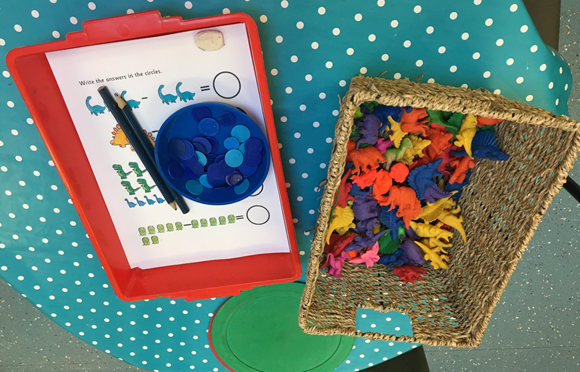
Whilst searching for an image in the Everything Dinosaur database, we came across a photograph of a counting with dinosaurs exercise. The picture had been taken on a visit to Whirley Primary in Cheshire back in 2019. The teaching team had launched an imaginative dinosaur-themed term topic. Everything Dinosaur team members were invited into the school to explain all about dinosaurs.
Dinosaurs and fossils help young children with numbers. Picture credit: Everything Dinosaur.
Picture credit: Everything Dinosaur
Counting with Dinosaurs
The reception class had been struggling with addition and subtraction. The teaching team developed some simple prehistoric-animal themed counting exercises to help the children to become more confident. After our visit, we supplied the school with some additional, free teaching resources.
A spokesperson from Everything Dinosaur commented:
“We supplied the school with some additional teaching materials. Lesson plans and supporting materials to assist with the scheme of work were emailed. It is always a pleasure to help schools. We do our best to assist the teaching teams.”
University of Bradford researchers in collaboration with other leading institutions have been awarded a substantial grant helping them to explore prehistoric landscapes.
The Submerged Landscapes Research Centre, at the University of Bradford is embarking on an ambitious project to map the Baltic and the North Sea thanks to a grant of €8 million (just under £7 million GBP). This is the largest single grant ever awarded to Bradford University.
Sea levels were much lower 20,000 years ago during the Last Glacial Maximum. The grant will permit the scientists to explore ancient landscapes that are now submerged. The funding is from the European Research Council. This research will provide a deeper understanding of how our ancestors lived in these regions. Wind farm developments are making these locations more inaccessible for scientists.
Global sea levels were 130 metres lower 20,000 years ago. Picture credit: University of Bradford.
European Union Research Funding
The EU has provided overall funding of more than €13.2 million for SUBNORDICA – a research collaboration between Moesgaard Museum, Aarhus University, the University of Bradford and the German research institute NIHK.
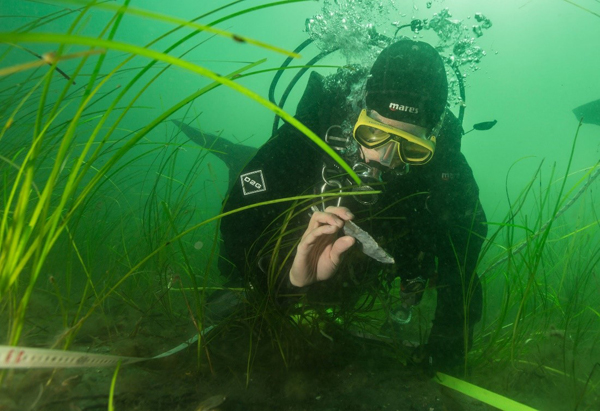
The scientists will be able to utilise the latest technologies to map and explore the seabed.
Underwater excavation, example from the NIhK excavation at Strande, Germany. Picture credit: Christian Howe.
Generative AI and computer simulation will be employed to identify areas where long lost settlements may still survive and can be mapped.
Researchers at the University of Bradford’s Submerged Landscapes Research Centre will lead exploration in the southern North Sea along with partners in Holland (TNO), Belgium (VLIZ) and the University of York. The University of Bradford will also host the project’s computing infrastructure, providing modelling and AI support in the quest to explore prehistoric landscapes.
The grant comes from the European Research Council, set up by the European Union in 2007 to fund research excellence in projects based across Europe. The funding is part of the Horizon Europe programme and is part of an overall budget of more than €16 billion from 2021 to 2027.
A Scientific Collaboration to Explore Prehistoric Landscapes
The funding will permit closer collaboration and co-operation between the participating institutions.
Leading Investigators: Dr Katrine Juul Andresen, Professor Vincent Gaffney, Dr Svea Mahlstedt, Dr Peter Moe Astrup. Picture credit: Katrine Juul Andresen.
A spokesperson from Everything Dinosaur stated:
“The University of Bradford has been at the forefront of the mapping of ancient landscapes such as Doggerland and the Irish Sea. This funding will enable the team to use innovative technology and map a far greater area of European seascape.”
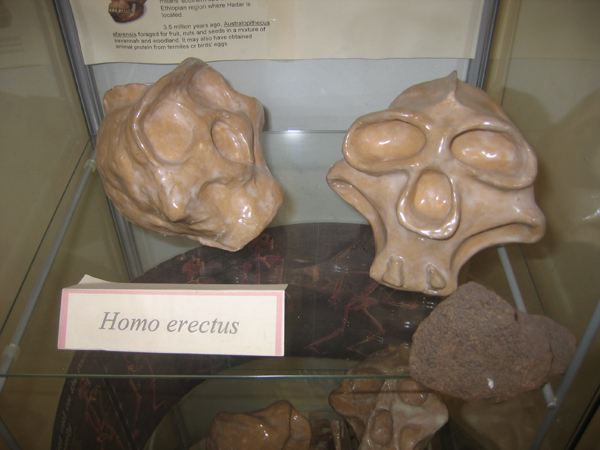
A team member from Everything Dinosaur marvelled at a display featuring a pair of Homo erectus model skulls on display at a school. A visit to Painsley Catholic College back in 2018, provided us with the opportunity to photograph the clay models. The science and art departments had collaborated to create a beautiful exhibit that documented human evolution. Many different hominin species were illustrated. Our personal favourites were the pair of Homo erectus skulls.
The teachers at Painsley Catholic College had built a display of ancient hominins using replicas of stone tools and carefully constructed clay skulls. The image shows a pair of Homo erectus skulls. Picture credit: Everything Dinosaur.
Picture credit: Everything Dinosaur
A spokesperson from Everything Dinosaur praised the teaching staff at the time for creating such an informative display.
The boom in the trade for mammoth tusks threatens extant elephant populations and their habitats. This is the conclusion of newly published research from the University of Portsmouth.
Conservationists and campaigners fear an increase in the buying and selling of mammoth tusks poses a direct threat to elephants. The trade in “ice ivory” was banned in the UK in 2018. The ban was imposed following a Portsmouth University led investigation into the British antiques trade of the material.
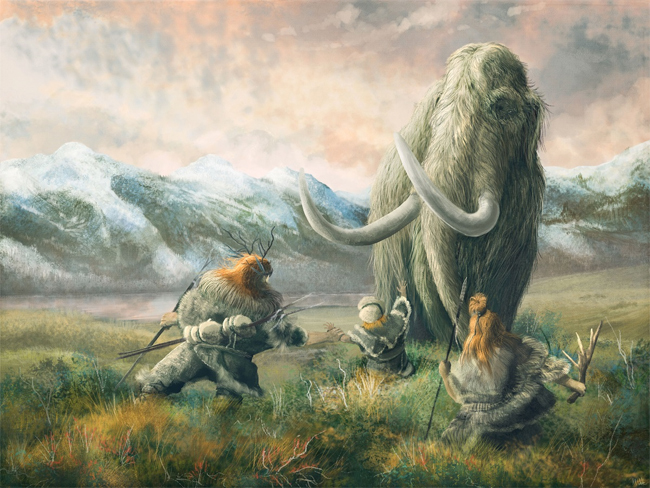
Humans encounter a Woolly Mammoth. A boom in “ice ivory” trade of mammoth tusks presents a threat to elephants and the environment. Picture credit: Mark Witton.
The Trade in Mammoth Tusks
Earlier this year (2023), it was announced the Ivory Act would be extended to protect five more endangered CITES-listed species, including the hippopotamus, narwhal, walrus, orca and sperm whale. However, new research highlights the unregulated sale of mammoth tusks needs to be addressed. The species fall outside of the regulation of the Convention on International Trade in Endangered Species of Wild Fauna and Flora (CITES). This is an international, multi-government agreement set up to ensure the survival of animals and plant species.
The authors argue that while woolly mammoths became extinct thousands of years ago, their lives and ultimate demise has much to teach us about how we conserve and protect existing elephant populations.
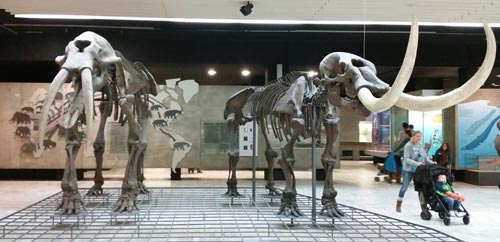
Prehistoric elephants on display at the Senckenberg Museum (Frankfurt). Picture credit: Everything Dinosaur.
Picture credit: Everything Dinosaur
What About Other Prehistoric Elephant Genera?
Everything Dinosaur notes, that many species of extinct elephant had large tusks. Whilst the tusks eroding out of melting Siberian permafrost might usually be associated with the Woolly Mammoth (Mammuthus primigenius), tusks from other extinct species might be traded too. For example, tusks from the American Mastodon (Mammut americanum) or the Columbian mammoth (Mammuthus columbi) found in North America might also be bought and sold.
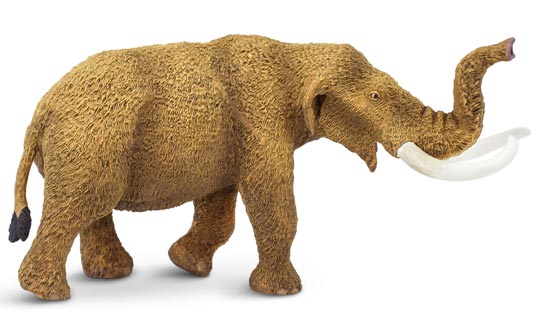
The Wild Safari Prehistoric World Mastodon model. The trade in the ivory of other prehistoric elephants would also need to be controlled.
The picture (above) shows a model of the American Mastodon by Safari Ltd.
Prehistoric Elephant Tusks Labelled as Ivory from Extant Species
Lead author in the recently published paper, Dr Caroline Cox (University of Portsmouth) commented:
“There’s evidence traders are trying to sustain the illegal ivory market with mammoth tusks, by intentionally mislabelling ice ivory as elephant ivory. Modern elephants and woolly mammoths share a common ancestor, so their tusks have close similarities. Instead of profiting from these new discoveries, we should be learning from them – how mammoths lived and how they died – to help protect their endangered relatives.”
It is estimated the illegal wildlife trade to be collectively worth between $15-22.5 billion USD a year. This puts the trade on a par with the illegal arms trade, the illegal drugs trade and the trade in human trafficking.
Schreger Lines in Elephant Ivory
Co-author of the study, Luke Hauser (University of Portsmouth) explained:
“Structurally, mammoth ivory is fundamentally identical to elephant ivory. Both have Schreger lines, which are distinct characteristics of the species.”
The majority of the ivory coming out of Siberia is woolly mammoth, but because evolution is a slow process there would have been crossovers between their characteristics and their predecessors. In theory, a trader could have a document claiming a tusk is from a Steppe Mammoth (M. trogontherii) when in fact it is actually a Woolly Mammoth (M. primigenius). Conservationists could not argue otherwise without an expensive and lengthy DNA test.
It is more than a decade since eBay announced its own complete, worldwide ban on ivory sales. An on-line post stated that the global ban would “protect buyers and sellers, as well as animals in danger of extinction”. Unfortunately, recent studies have shown that sellers of illegal wildlife products operate on the dark web, rather than more openly through on-line social media and auction platforms.
The Trade in Mammoth Tusks Damages the Fossil Record
Dr Cox explained:
“While mammoth tusks continue to be in demand, particularly in the Far East, the Siberian tusk hunters of Yakutia recover only what the buyers want – the ivory. The remains of the mammoth are left behind and lost to science.”
The mining of mammoth tusks is dangerous. It is often illegal, and it damages the environment. The law of the Russian Federation states that only mammoth tusks that have come to the surface, usually as a result of the permafrost melting, can be harvested. However, this is extremely difficult to enforce. Miners can speed up the erosion process by using high pressure hoses to blast the permafrost. The industrial mining of the permafrost also releases huge amounts of greenhouse gases such as methane. This is leading to accelerated global warming.
The paper, published in the “Journal of International Wildlife Law and Policy”, states that the best and most effective way of tackling issues surrounding the “ice ivory” trade is international cooperation from nations sharing resources and intelligence.
Everything Dinosaur acknowledges the assistance of a media release from the University of Portsmouth in the compilation of this article.
The scientific paper: “Ice Ivory to White Gold: Links Between the Illegal Ivory Trade and the Trade in Geocultural Artifacts” by Caroline Cox and Luke Hauser published in the Journal of International Wildlife Law & Policy.
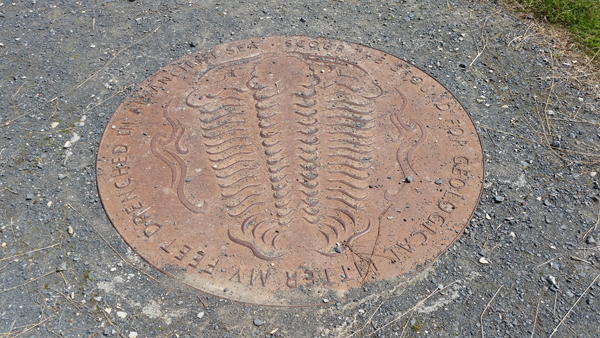
In 2015, Everything Dinosaur team members visited Wren’s Nest. This is a nature reserve and SSSI (Special Site of Scientific Interest). The exposed strata dates from the Silurian and it is full of fossils including the occasional trilobite. Whilst exploring this location, a photograph was taken of a trilobite tribute. A plaque honouring the “Dudley bug” (Calymene blumenbachii).
A trilobite plaque at the Wren’s nest SSSI (Dudley, West Midlands). Picture credit: Everything Dinosaur.
Picture credit: Everything Dinosaur
Remembering the Trilobite
The Trilobita were remarkably abundant and diverse during the Palaeozoic. These ancient marine arthropods originated in the Cambrian. The last of their kind are believed to have become extinct at the end of the Permian.
The abundant fossils to be found at the Wren’s Nest nature reserve represent life on a Silurian reef approximately 420 million years ago. Team members have visited Wren’s Nest several times. This location was designated Britain’s first National Nature Reserve for geology (1956).
The motif is an inscription it reads:
“Scour the ground for geological litter my feet drenched in an ancient sea.”
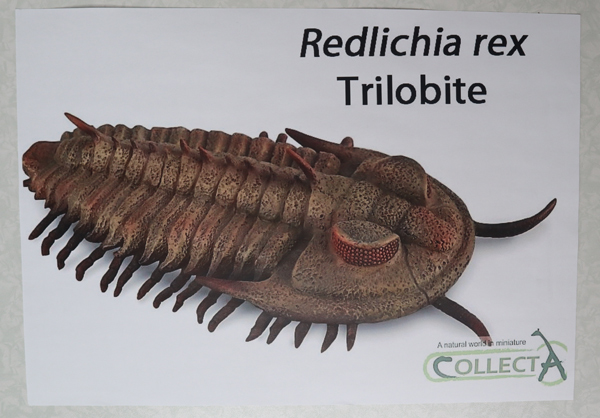
Everything Dinosaur team members have prepared some images of CollectA invertebrate models including the CollectA Age of Dinosaurs Popular trilobite model (Redlichia rex). Picture credit: Everything Dinosaur.
Picture credit: Everything Dinosaur
The picture (above) shows a CollectA trilobite model.
Over 700 different types of fossil are known from Wren’s Nest. Over eighty are unique to this location and found nowhere else on the planet.
A spokesperson from Everything Dinosaur commented:
“Wren’s Nest is a geological gem. We recommend a visit, especially in the early summer months prior to the school holidays. In the height of summer this location can get extremely busy and there is limited nearby parking”
A fabulous dinosaur artwork created from drawings of children’s hands was spotted during a visit to a school to conduct a dinosaur and fossil workshop. The colourful dinosaur complete with big eyes and a pointed tail was on display outside a classroom.
A “handy” way to create a prehistoric animal in the classroom. Picture credit: Everything Dinosaur.
Picture credit: Everything Dinosaur
Dinosaur Artwork
During our many visits to schools we have seen numerous examples of dinosaur inspired artwork. This particular piece caught our eye, as its design meant that every child in the class has had the opportunity to participate. Drawings of the children’s hands made up the dinosaur’s body. In the bright and spacious classroom, the children had built prehistoric animal dioramas using shoe boxes to house their dinosaur models.
The Everything Dinosaur website is user-friendly and so easy to navigate. It is jam-packed with lots of prehistoric animal themed gifts and toys. There are drawing activity sets too. Perhaps you will be inspired to create your own dinosaur artwork.
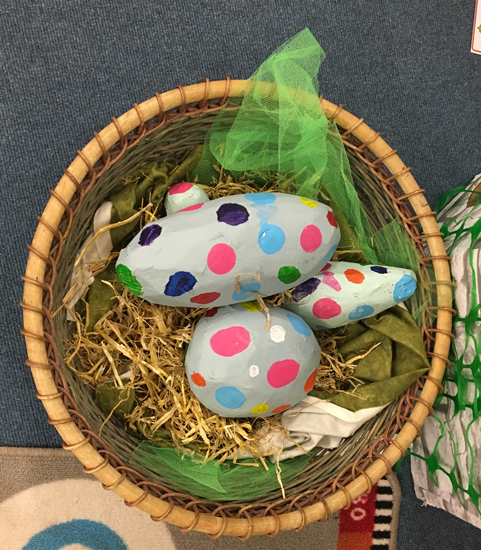
Team members at Everything Dinosaur spotted some colourful dinosaur eggs in a carefully constructed nest on a visit to a Cheshire primary school. Whilst reviewing some teaching work from early 2018, we found a picture of the beautiful dinosaur eggs.
Some beautiful and very colour dinosaur eggs spotted at Little Leigh primary school (Cheshire). Picture credit: Everything Dinosaur.
Picture credit: Everything Dinosaur
Dinosaur Eggs
The photograph of the dinosaur nest was taken on a visit to Little Leigh primary in Cheshire. Everything Dinosaur had been invited into the school to deliver a workshop to Year 1 children who were learning about dinosaurs. The dedicated teaching team created the eggs, and the children were asked about what materials could go into the nest to keep the eggs safe. This exercise was a great way for the pupils to explore the properties of materials. In addition, to learning about dinosaur eggs, the pupils had the opportunity to examine different nesting materials.
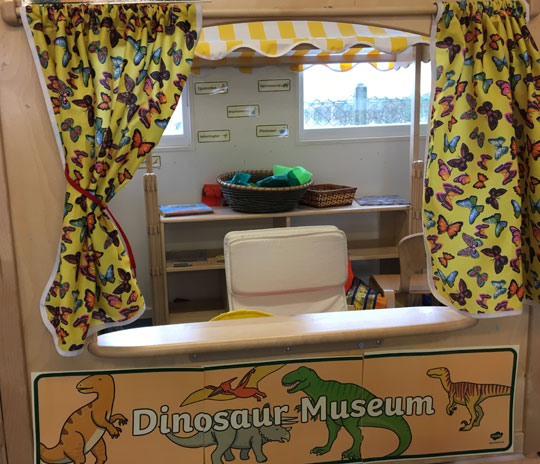
A spokesperson from the UK-based mail order company commented that they remembered the school visit. The spacious Year 1 classrooms were filled with lots of examples of the children’s work. One of the teachers had constructed a small dinosaur museum in a corner of the room.
A dinosaur museum spotted at a school. Picture credit: Little Leigh Primary/Everything Dinosaur.
Picture credit: Little Leigh Primary/Everything Dinosaur
The spokesperson added:
“The children were very enthusiastic, and they wanted to give us a tour of their classroom. We enjoyed visiting the dinosaur museum. However, we had to cut our visit short, we had a dinosaur and fossil workshop to deliver.”
Afterwards we chatted to the teaching team. They thanked us for the visit, and we congratulated them on their excellent scheme of work.
Team members were going through their image archive when they came across a beautiful dinosaur letter. The letter had been sent into Everything Dinosaur by a girl called Emma. Emma was a pupil at Streethouse Primary school when Everything Dinosaur visited in November 2017.
Team members were invited into the school to work with the Key Stage 2 class for a morning. The workshop provided a provocation for the term topic. Over the course of the morning, we challenged the children to have a go at a variety of extension activities.
A Dinosaur Letter
Cursive writing on display from Year 5/6.
Picture credit: Emma from Streethouse Primary School
We remember visiting the school back in 2017. It was a pleasure to meet such enthusiastic pupils.
In Emma’s letter she thanked Everything Dinosaur for the school visit and stated:
“You made me more confident in answering questions.”